News Posts matching #RAM

Return to Keyword Browsing

Wuchang: Fallen Feathers Dev Seemingly Disabled Native Render Resolution on Certain Hardware To Fix Performance Issues

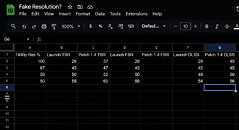
Last week, we reported on Wuchang: Fallen Feathers and its launch that was ruined by poor optimization and abysmal performance on even high-end PCs. In response to the plummeting Steam review score, 505 Games put out a patch that was supposed to improve performance by reducing RAM and VRAM usage, optimizing performance on low-end GPUs, and addressing performance and stability bugs. This patch was followed by Patch 1.4, which supposedly addressed performance on "certain hardware models." A recent analysis by Daniel Owen on YouTube has revealed that the Wuchang: Fallen Feathers 1.4 patch may have removed native rendering from the game entirely, effectively forcing players to use upscaling, even when the resolution scale is set to 100%.

As Owen demonstrates in his YouTube video, the only change in the patch notes that mentions sampling resolutions reads: "Supersampling resolution limits have been adjusted on select GPU models to prevent unintended performance degradation." This seems to imply that the option to enable higher resolution scaling options was removed for lower-end GPUs, but that may not be the case. As Owen demonstrates, before the 1.4 update, performance scales predictably with the oversampling resolution slider—if you drop the resolution below 100%, the performance increases, regardless of whether the game is using FSR, DLSS, or TSR. After updating the game to the 1.4 patch, there is a significant performance boost at the same 100% resolution scale, and the running theory is that the developers are simply capping the render resolution at somewhere below native, regardless of which settings the player enables in the graphics options. This is demonstrated when Owen drops the resolution scale to similar levels as he tested prior, and performance is just 2 FPS higher than what was observed before the update on TSR and FSR, with DLSS getting identical performance in one instance.


SK hynix Announces 2Q25 Financial Results

SK hynix Inc. announced today that it has recorded 22.232 trillion won in revenues, 9.2129 trillion won in operating profit (with an operating margin of 41%), and 6.9962 trillion won in net profit (with a net margin of 31%) in the second quarter. Both revenues and operating profits stood at all-time highs, beating the previous best results in the fourth quarter of last year. The company said that an aggressive investment by global big tech companies into AI led to a steady increase in demand for AI memory. Shipments of both DRAM and NAND flash were higher than expected, helping the company log the best quarterly results.

SK hynix expanded sales of 12-high HBM3E in the DRAM space, while registering a growth in sales of NAND for all applications. With the industry-leading competitiveness in AI memory and profitability-first management discipline, the company has maintained a positive earnings trend. With the latest financial results, the company's cash and cash equivalents increased to 17 trillion won at the end of June, up by 2.7 trillion won a quarter earlier. Its debt ratio and net debt ratio stood at 25% and 6%, respectively, as net debt fell by 4.1 trillion won, compared with the previous quarter.

Four UEFI Flaws in GIGABYTE Motherboards Expose 240+ Models to Persistent Bootkits

Firmware security firm Binarly disclosed that four serious vulnerabilities in GIGABYTE's UEFI firmware put more than 240 different motherboard models at risk of undetectable, reinstall-proof bootkits. Each of the flaws, tracked as CVE-2025-7029 through CVE-2025-7026, carries a high severity score of 8.2 on the CVSS scale and resides in System Management Mode, which activates before any operating system starts. An attacker with administrator privileges, whether local or remote, could exploit these issues to hijack System Management Interrupt handlers and inject arbitrary code into System Management RAM. Because memory controls every step of the boot process, any malicious implant remains hidden beneath the operating system and survives disk wipes and Secure Boot checks, allowing the attacker to maintain persistent control of the machine.
All four bugs originate in American Megatrends reference code that was quietly shared with OEM partners under non-disclosure agreements earlier this year. Although Gigabyte customizes that base firmware, it did not pass along the necessary fixes to end users. Binarly alerted CERT/CC on April 15, and GIGABYTE confirmed receipt on June 12, but no public advisory appeared until Bleeping Computer reporters inquired on Monday. Users should visit GIGABYTE's support page to find and install the updated BIOS versions using the Q-Flash utility, and then re-enable Secure Boot. Devices that GIGABYTE has declared end of life may never see a patch. The company also claims only Intel-based boards are affected, leaving AMD boards untouched. Users can also run Binarly's free risk Hunt scanner to check for exposure. According to Binarly CEO Alex Matrosov, these vulnerabilities highlight how inherited reference-code flaws can quietly spread through the hardware supply chain.

Transition between DRAM Generations Drives Diverging 3Q25 Price Trends; Consumer DDR4 Prices Expected to Surge Over 40%

TrendForce's latest findings show that the three major DRAM suppliers are shifting capacity toward high-end products and have begun announcing end-of-life (EOL) plans for PC and server-grade DDR4 and mobile LPDDR4X. This has triggered aggressive restocking of legacy-generation products, further fueled by traditional peak-season demand. Consequently, average contact prices for conventional DRAM are projected to rise by 10% to 15% in 3Q25. Including HBM, overall DRAM prices are expected to increase by 15% to 20%.

TrendForce notes that DDR4 demand remains strong in 3Q25, and suppliers are aiming to raise prices more aggressively. As Taiwanese manufacturers currently lack the capacity and product specifications to fully meet market needs, DDR4 supply is expected to remain tight in the short term. Moreover, DDR4 output is being prioritized for server applications, leaving limited availability for consumer-grade user.

DXVK 2.7 Optimizations Give Intel Arc GPUs a Performance Boost on Linux

Intel GPU-based Linux gamers are about to receive a performance uplift. According to the latest update to DXVK, a Vulkan-based translation layer for DirectX 8/9/10/11, Intel's "Battlemage" dGPUs and "Lunar Lake" Arc iGPUs now support memory defragmentation by default, helping Intel GPUs reduce VRAM usage and increase performance, which provides a smoother gaming experience when using the DXVK translation layer. In version 2.7, DXVK forces discrete GPUs to adhere to driver-set memory budgets whenever possible and dynamically frees unused resources to system memory when applications place a significant VRAM load. DXVK v2.7 release notes state that this will be particularly beneficial to Unity Engine and VRAM-constrained titles. This optimization will also enable higher texture quality in game settings, maintaining the same performance as before, and further building upon the memory optimization.

As a critical component of Valve's Proton software stack, this DXVK update also provides Intel-based handhelds, such as the MSI Claw, with increased performance when running SteamOS. Given that we measured a sizable crowd, comprising 3.4% of all handheld users, playing with MSI Claw, many handheld gamers considering running SteamOS on their device will find this DXVK update quite welcome.

Here is a complete DXVK v2.7 changelog.

DDR4 Module Prices Overtake DDR5 for the First Time

Usually for newer technology rollout, prices are significantly higher compared to the last-gen. However, with DRAM, the story is the opposite. For the first time since the launch of DDR5, buyers are paying more for DDR4 memory modules than for the newer standard. A combination of tariff uncertainty and rapidly depleting DDR4 inventories is the main driver behind this. TrendForce data show that some high-demand DDR4 kits rose by as much as 40% in just one week, while DRAMeXchange reports that the average spot price for a 16 Gb (1Gx16) DDR4 module at 3,200 MT/s from Samsung and SK Hynix climbed to $12.50, with peak offers hitting $24. By contrast, dual-8 Gb DDR5 kits running between 4,800 MT/s and 5,600 MT/s remain near $6 on average, rarely exceeding $9. This unexpected surge follows Micron's announcement that it will wind down DDR4 production by year's end, accelerating the depletion of existing stocks over the next six to nine months.

Samsung also announced plans earlier this spring to retire its DDR4 lines and shift its focus to DDR5 and high-bandwidth memory, while China's CXMT confirmed it will scale back its DDR4 output despite recently reaching peak production levels. Taiwan's Nanya Technology is among the biggest beneficiaries of this topsy-turvy market. In the first quarter, the company held a DDR4 inventory valued at approximately NT$37.6 billion ($1.2 billion). Nanya even paused public price quoting to manage sales at these elevated levels. Many in the tech industry worry that renewed US-China trade tensions could spark another wave of panic buying. If additional tariffs target China's remaining DDR4 supply, module costs could climb to more than three times the price of DDR5, extending this rare pricing inversion well into the next quarter.

Rising Demand and EOL Plans from Suppliers Drive Strong DDR4 Contract Price Hikes in 2Q25 for Server and PC Markets

TrendForce's latest investigations find that DDR4 contract prices for servers and PCs are expected to rise more sharply in the second quarter of 2025 due to two key factors: major DRAM suppliers scaling back DDR4 production and buyers accelerating procurement ahead of U.S. tariff changes. As a result, server DDR4 contract prices are forecast to rise by 18-23% QoQ, while PC DDR4 prices are projected to increase by 13-18%—both surpassing earlier estimates.

TrendForce notes that DDR4 has been in the market for over a decade, and demand is increasingly shifting toward DDR5. Given the significantly higher profit margins for HBM, DDR5, and LPDDR5(X), suppliers have laid out EOL plans for DDR4, with final shipments expected by early 2026. Current EOL notifications largely target server and PC clients, while consumer DRAM (mainly DDR4) remains in production due to continued mainstream demand.

DRAM Revenue Drops 5.5% in the First Quarter of 2025; SK hynix Overtakes Samsung for Top Spot

TrendForce's latest findings reveal that global revenue for the DRAM industry reached US$27.01 billion in 1Q25, marking a 5.5% QoQ decline. This downturn was driven by falling contract prices for conventional DRAM and a contraction in HBM shipment volumes. Samsung's redesign of its HBM3e products eased the HBM production squeezes. This prompted downstream players to clear inventories and extended the price declines seen since 4Q24.

Looking ahead to 2Q25, as PC OEMs and smartphone makers complete inventory corrections and ramp up system production ahead of the 90-day U.S. reciprocal tariff grace period, bit procurement momentum is expected to strengthen significantly. This will drive notable increases in supplier shipment volumes. On the pricing side, TrendForce forecasts a rebound across major application contract prices, with both conventional DRAM and combined DRAM (including HBM) contract prices expected to rise.

NVIDIA's GeForce RTX 5080 SUPER Gains 24 GB GDDR7, Keeps 10,752 CUDA Cores

With Computex 2025 in full swing, we learn that NVIDIA's next "SUPER" refresh may soon arrive: reliable leaker kopite7kimi has dropped fresh rumors surrounding the upcoming GeForce RTX 5080 SUPER. In a recent post on X, the leaker indicated that this new card will continue to use the GB203 GPU, matching the existing RTX 5080's full capacity of 10,752 CUDA cores. The only SUPER improvement lies in memory capacity and speed. Unlike the base model's 16 GB of GDDR7 running at 30 Gbps, the SUPER variant features 24 GB of GDDR7 at 32 Gbps, giving it a 1 TB/s of theoretical bandwidth. This increase in VRAM could yield noticeable benefits in high-resolution gaming and professional workloads that demand extensive frame buffers. Early bandwidth estimates suggest a 6% uplift in throughput when compared to the standard RTX 5080's 960 GB/s.

At the same time, the higher memory density requires denser 3 GB modules, similar to those already used in the RTX PRO 6000. Power requirements will rise accordingly. The SUPER model is rumored to draw over 400 W, about 40 W more than the vanilla RTX 5080's 360 W rating. Now, only NVIDIA's flagship RTX 5090—with 21,760 cores and 32 GB of GDDR7 across a 512-bit bus—will exceed the 5080 SUPER in both compute and memory resources, not counting the last-generation top-tier RTX 4090. The exact launch date remains unconfirmed. While earlier rumors pointed to a Q4 2025 release, a new schedule could see NVIDIA debut the new card by early 2026 at a major trade show such as CES. Pricing is equally speculative. A possible MSRP target would be between $1,000 and $1,500, and it would be positioned to avoid direct competition with NVIDIA's entry-level professional Blackwell GPUs. As always, until official announcements are made, specifications and launch windows should be taken with a grain of salt.

Patriot Memory Showcases Full Performance and Mobile Storage Lineup at Computex 2025

Patriot Memory, a global leader in high-performance memory, storage, and gaming-grade hardware, returns to COMPUTEX 2025 with a powerful lineup of next-generation innovations. The company will unveil record-breaking DRAM speeds and the world's first DRAM-less PCIe Gen 5 SSD, alongside intelligent storage accessories designed for today's mobile lifestyles. In parallel, ACPI, Patriot's industrial brand, will debut robust enterprise and edge AI solutions—further reinforcing Patriot's leadership in performance and reliability across global markets.

Viper Xtreme 5 CKD RGB & Non-RGB High-Performance DRAM
The Viper Xtreme 5 CKD RGB and Non-RGB modules deliver ultra-high data rates of up to 9600 MT/s. Featuring an integrated Client Clock Driver (CKD) for independent signal timing, these modules maintain exceptional stability during extreme overclocking—without relying on the CPU's internal clock. It's a breakthrough solution designed for hardcore performance enthusiasts and overclockers.

Essencore and KLEVV to Showcase Latest Products at Computex Taipei 2025

Essencore, a leading manufacturer in memory and storage solutions, with its consumer memory and storage brand KLEVV, is excited to announce its participation at COMPUTEX Taipei 2025, held from May 20th to May 23rd at the Taipei Nangang Exhibition Center.

POWER UP WITH NEXT-GEN GAMING AND PERFORMANCE MEMORY
KLEVV's premier memory solutions will be at the center of its COMPUTEX 2025 showcase, featuring a live demonstration of next-gen DDR5 modules built to run at blazing-fast speeds exceeding 10,000 MT/s, displayed across top-tier motherboards from leading vendors. This exclusive demo offers visitors a firsthand look at the performance headroom KLEVV is unlocking with its latest technology. Alongside the showcase, KLEVV's full gaming memory lineup is receiving a significant upgrade, featuring faster speeds and lower latencies to meet the demands of modern gaming and high-performance systems.

NEO Semiconductor Unveils Breakthrough 1T1C and 3T0C IGZO-Based 3D X-DRAM Technology

NEO Semiconductor, a leading developer of innovative technologies for 3D NAND flash memory and 3D DRAM, announced today the latest advancement in its groundbreaking 3D X-DRAM technology family—the industry-first 1T1C- and 3T0C-based 3D X-DRAM cell, a transformative solution designed to deliver unprecedented density, power efficiency, and scalability for the most demanding data applications.

Built on a 3D NAND-like architecture and with proof-of-concept test chips expected in 2026, the new 1T1C and 3T0C designs combine the performance of DRAM with the manufacturability of NAND, enabling cost-effective, high-yield production with densities up to 512 Gb—a 10x improvement over conventional DRAM.
"With the introduction of the 1T1C and 3T0C 3D X-DRAM, we are redefining what's possible in memory technology," said Andy Hsu, Founder & CEO of NEO Semiconductor. "This innovation pushes past the scaling limitations of today's DRAM and positions NEO as a frontrunner in next-generation memory."

Raspberry Pi Lower Prices for 4 GB and 8 GB Compute Module 4

At Raspberry Pi, our mission is to make computing accessible and affordable for everyone and for businesses at every scale, so today we're delighted to announce a reduction in the price of some of the most popular variants of Raspberry Pi Compute Module 4. From now, if you buy a standard operating temperature Compute Module 4 from a Raspberry Pi Approved Reseller, it will cost you $5 less for a 4 GB RAM variant, and $10 less for an 8 GB RAM variant.

Broader access to a proven platform
Raspberry Pi Compute Module 4 is the cornerstone of an astonishing variety of applications, from medical equipment to energy services infrastructure and from concrete monitoring to retro gaming. There is a vast number of embedded use cases that don't require the processing heft of our new (ish) Compute Module 5; by lowering the cost of the higher-memory-density variants of its predecessor, we aim to make these projects more cost-effective, and to unlock new ones that previously weren't viable. We hope the price drop will introduce new possibilities both for businesses and for enthusiasts, helping you bring into existence products and projects we'd never even imagined.

Samsung Electronics Announces First Quarter 2025 Results

Samsung Electronics today reported financial results for the first quarter ended March 31, 2025. The Company posted KRW 79.14 trillion in consolidated revenue, an all-time quarterly high, on the back of strong sales of flagship Galaxy S25 smartphones and high-value-added products. Operating profit increased to KRW 6.7 trillion despite headwinds for the DS Division, which experienced a decrease in quarterly revenue.

The Company has allocated its highest-ever annual R&D expenditure for 2024, and in the first quarter of this year, it has also increased its R&D expenditure by 16% compared to the same period last year, amounting to 9 trillion won. Despite the growing macroeconomic uncertainties due to recent global trade tensions and slowing global economic growth, making it difficult to predict future performance, the Company will continue to make various efforts to secure growth. Additionally, assuming that the uncertainties are diminished, it expects its performance to improve in the second half of the year.

2024 Global Semiconductor Materials Market Posts $67.5 Billion in Revenue

Global semiconductor materials market revenue increased 3.8% to $67.5 billion in 2024, SEMI, the global industry association representing the electronics design and manufacturing supply chain, reported today in its Materials Market Data Subscription (MMDS). The recovery of the overall semiconductor market as well as the increasing demand for advanced materials for high-performance compute and high-bandwidth memory manufacturing supported 2024 materials revenue growth.

Wafer fabrication materials revenue increased 3.3% to $42.9 billion in 2024, while packaging materials revenue grew 4.7% to $24.6 billion last year. The chemical mechanical planarization (CMP), photoresist, and photoresist ancillaries segments experienced strong double-digit growth driven by increased complexity and number of processing steps required for advanced DRAM, 3D NAND flash and leading-edge logic integrated circuits (ICs). All semiconductor materials segments, except for silicon and silicon-on-insulator (SOI), registered year-on-year increases. The demand for silicon, particularly in the trailing edge segment, remained weak in 2024 as the industry continued to work through excess inventory, resulting in a 7.1% decline in silicon revenue in 2024.

SK hynix Showcases HBM4 to Highlight AI Memory Leadership at TSMC 2025 Technology Symposium

SK hynix showcased groundbreaking memory solutions including HBM4 at the TSMC 2025 North America Technology Symposium held in Santa Clara, California on April 23. The TSMC North America Technology Symposium is an annual event in which TSMC shares its latest technologies and products with global partners. This year, SK hynix participated under the slogan "Memory, Powering AI and Tomorrow," highlighting its technological leadership in AI memory through exhibition zones including HBM Solutions and AI/Data Center Solutions.

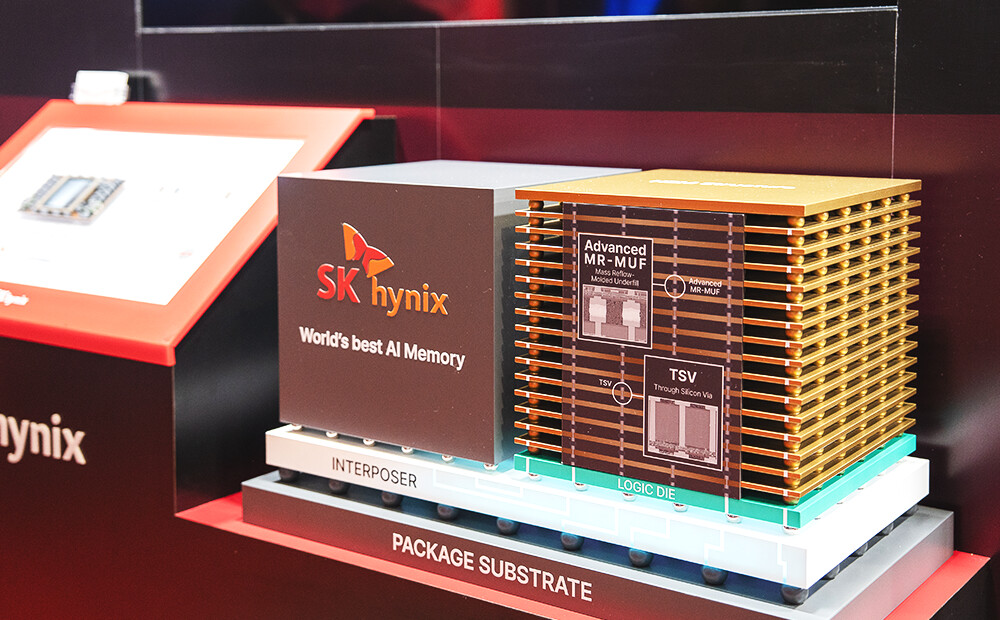
In the HBM Solution section, SK hynix presented samples of its 12-layer HBM4 and 16-layer HBM3E products. The 12-layer HBM4 is a next-generation HBM capable of processing over 2 terabytes (TB) of data per second. In March, the company announced it has become the first in the world to supply HBM4 samples to major customers and plans to complete preparations for mass production within the second half of 2025. The B100, NVIDIA's latest Blackwell GPU equipped with the 8-layer HBM3E, was also exhibited in the section along with 3D models of key HBM technologies such as TSV and Advanced MR-MUF, drawing significant attention from visitors.

Micron Announces Business Unit Reorganization to Capitalize on AI Growth Across All Market Segments

Micron Technology, Inc. (Nasdaq: MU), a leader in innovative memory and storage solutions, today announced a market segment-based reorganization of its business units to capitalize on the transformative growth driven by AI, from data centers to edge devices.

Micron has maintained multiple generations of industry leadership in DRAM and NAND technology and has the strongest competitive positioning in its history. Micron's industry-leading product portfolio, combined with world-class manufacturing execution enables the development of differentiated solutions for its customers across end markets. As high-performance memory and storage become increasingly vital to drive the growth of AI, this Business Unit reorganization will allow Micron to stay at the forefront of innovation in each market segment through deeper customer engagement to address the dynamic needs of the industry.

Trump Tariffs to Hike PC Costs at Least 20%, System Integrators Take the Biggest Blow

While semiconductors are exempt (for now at least) from Trump's tariffs, other components going into our PCs are not. According to Tom's Hardware, which spoke to multiple system integrators, tariffs are about to hike PC costs by at least 20%, with system integrators hurt the most. The tariff package imposes a 54% rate on Chinese goods, 34% on top of earlier tariffs, and significant duties on Taiwan, South Korea, and Vietnam products. These countries supply essential PC components such as SSDs, RAM, cases, and graphics cards. Wallace Santos, CEO of Maingear, highlighted the immediate effects on production: "Tariffs have a direct impact on our cost structure… which we have to pass down to our customers." He further explained that some suppliers have halted production in China, leading to scarcity and escalating costs. Santos estimates that prices for his PCs will rise "20 to 25% as a result of the tariffs."

Other company leaders express concern over the limited alternatives available. Kelt Reeves, CEO of Falcon Northwest, stated, "Sadly the overwhelming majority of PC component manufacturing is not done in the US and never has been. There's no US alternative supplier for most PC parts." Reeves added that even US-based system integrators are "facing skyrocketing costs" due to the tariffs, which are set to worsen an already challenging market situation caused by ongoing GPU shortages. Jon Bach, CEO of Puget Systems, shared his perspective in a recent blog post, noting that his company might absorb some costs to minimize consumer price increases. However, even before the latest tariff updates, Bach predicted a price rise of "20 to 45 percent by June." Critics of the tariffs warn of broader economic issues. Gary Shapiro, CEO of the Consumer Technology Association, condemned the policy as "massive tax hikes on Americans that will drive inflation, kill jobs on Main Street, and may cause a recession for the US economy." With these tariffs taking effect, the PC industry faces a period of adjustment marked by increased costs and significant supply chain challenges.

Micron Announces Memory Price Increases for 2025-2026 Amid Supply Constraints

In a letter to customers, Micron has announced upcoming memory price increases extending through 2025 and 2026, citing persistent supply constraints coupled with accelerating demand across its product portfolio. The manufacturer points to significant demand growth in DRAM, NAND flash, and high-bandwidth memory (HBM) segments as key drivers behind the pricing strategy. The memory market is rebounding from a prolonged oversupply cycle that previously depressed revenues industry-wide. Strategic production capacity reductions implemented by major suppliers have contributed to price stabilization and subsequent increases over the past twelve months. This pricing trajectory is expected to continue as data center operators, AI deployments, and consumer electronics manufacturers compete for limited memory allocation.

In communications to channel partners, Micron emphasized AI and HPC requirements as critical factors necessitating the price adjustments. The company has requested detailed forecast submissions from partners to optimize production planning and supply chain stability during the constrained market period. With its pricing announcement, Micron disclosed a $7 billion investment in a Singapore-based HBM assembly facility. The plant will begin operations in 2026 and will focus on HBM3E, HBM4, and HBM4E production—advanced memory technologies essential for next-generation AI accelerators and high-performance computing applications from NVIDIA, AMD, Intel, and other companies. The price increases could have cascading effects across the AI and GPU sector, potentially raising costs for products ranging from consumer gaming systems to enterprise data infrastructure. We are monitoring how these adjustments will impact hardware refresh cycles and technology adoption rates as manufacturers pass incremental costs to end customers.

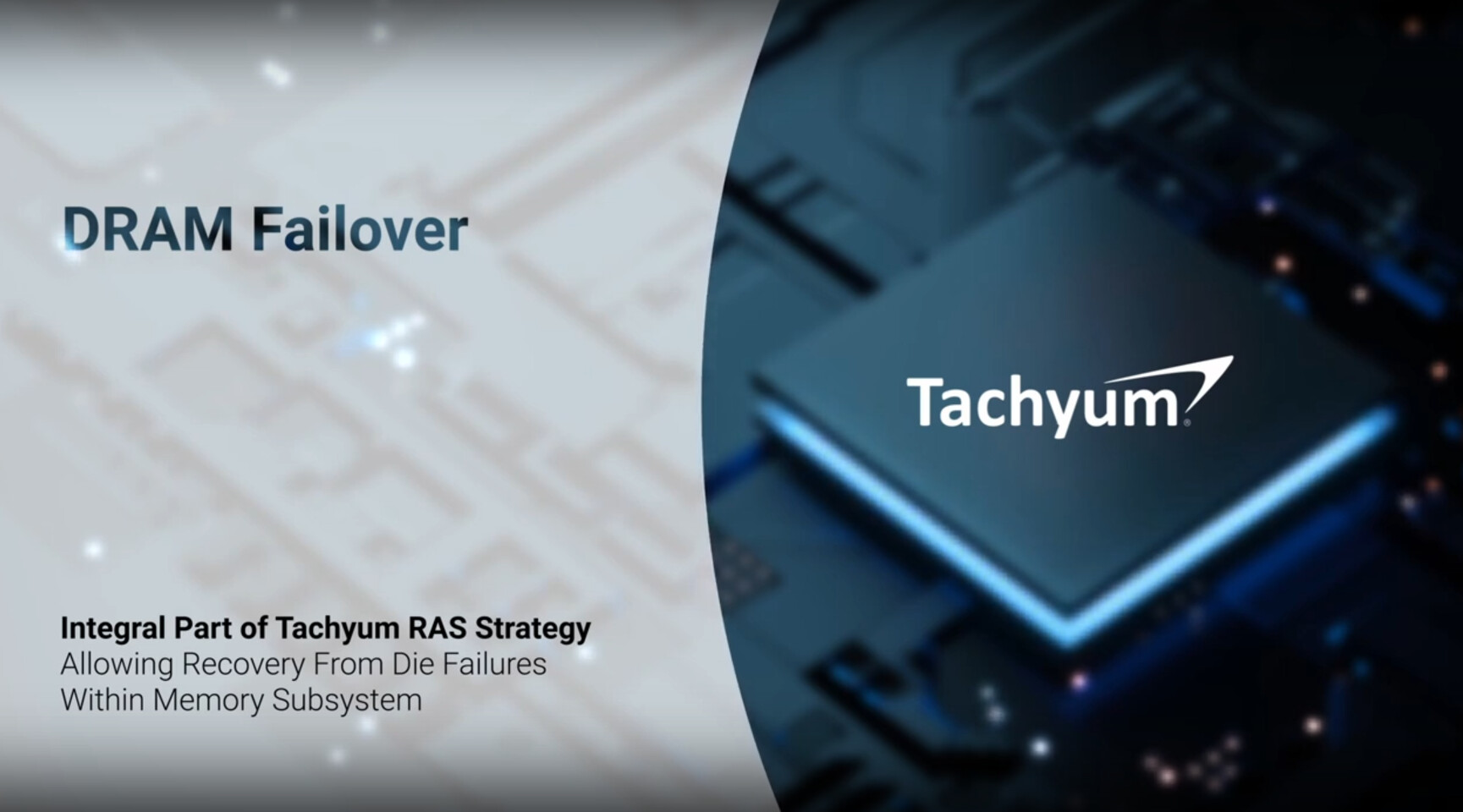
Tachyum Demonstrates DRAM Failover for Large Scale AI on Prodigy FPGA Prototype

Tachyum today announced that it has successfully enabled DRAM Failover correct system on its Prodigy Universal Processor, demonstrating enhanced reliability for even larger-scale AI and HPC applications even in the case of DRAM chip failures.

Tachyum's DRAM Failover is an advanced memory error correction technology that improves the reliability of DRAM and provides a higher level of protection than traditional Error Correction Code (ECC). DRAM Failover can correct multi-bit errors within a single memory chip or across multiple memory chips, allowing continued memory operation in the event of device-level faults in memory. With DRAM Failover, even a whole DRAM chip failure can be tolerated without affecting the system and applications.

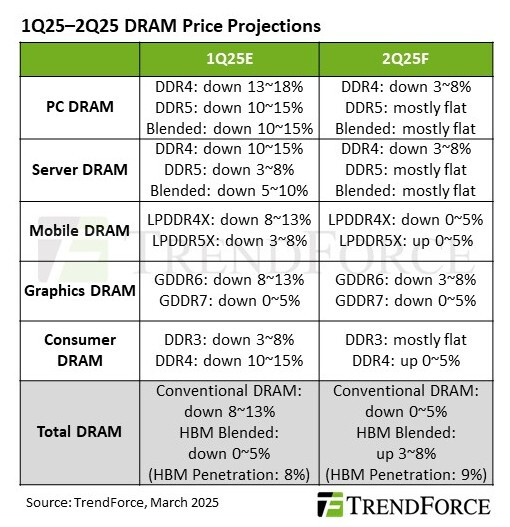
Downstream Inventory Reduction Eases DRAM Price Decline in 2Q25

TrendForce's latest findings reveal that U.S. tariff hikes prompted most downstream brands to frontload shipments to 1Q25, accelerating inventory reduction across the memory supply chain. Looking ahead to the second quarter, conventional DRAM prices are expected to decline by just 0-5% QoQ, while average DRAM pricing including HBM is forecast to rise by 3-8%, driven by increasing shipments of HBM3e 12hi.

PC and server DRAM prices to hold steady
In response to potential U.S. tariff hikes, major PC OEMs are requesting ODMs to increase production, accelerating DRAM depletion in their inventories. OEMs with lower inventory levels may raise procurement from suppliers in Q2 to ensure stable DRAM supply for the second half of 2025.

Dune: Awakening Pre-Orders Now Live; Special Editions, and PC Specs Revealed

Dune: Awakening, the multiplayer survival game inspired by Frank Herbert's legendary sci-fi novel and Legendary Entertainment's award-winning films, will launch on May 20th. Funcom is excited to share that pre-orders begin today, and gamers everywhere are now less than two months away from descending upon the most dangerous planet in the universe.

The standard edition, the Deluxe Edition, and the Ultimate Edition are now available for pre-order on Steam, with the latter including, among many other goodies, an incredible, 90-minute-long digital soundtrack. In celebration of this moment, Funcom has prepared a journey behind the scenes of the making of the music, giving viewers a unique glimpse at how award-winning composer Knut Avenstroup Haugen brought the album to life with a live orchestra at the legendary AIR Lyndhurst studio in London.

Micron Technology Reports Results for the Second Quarter of Fiscal 2025

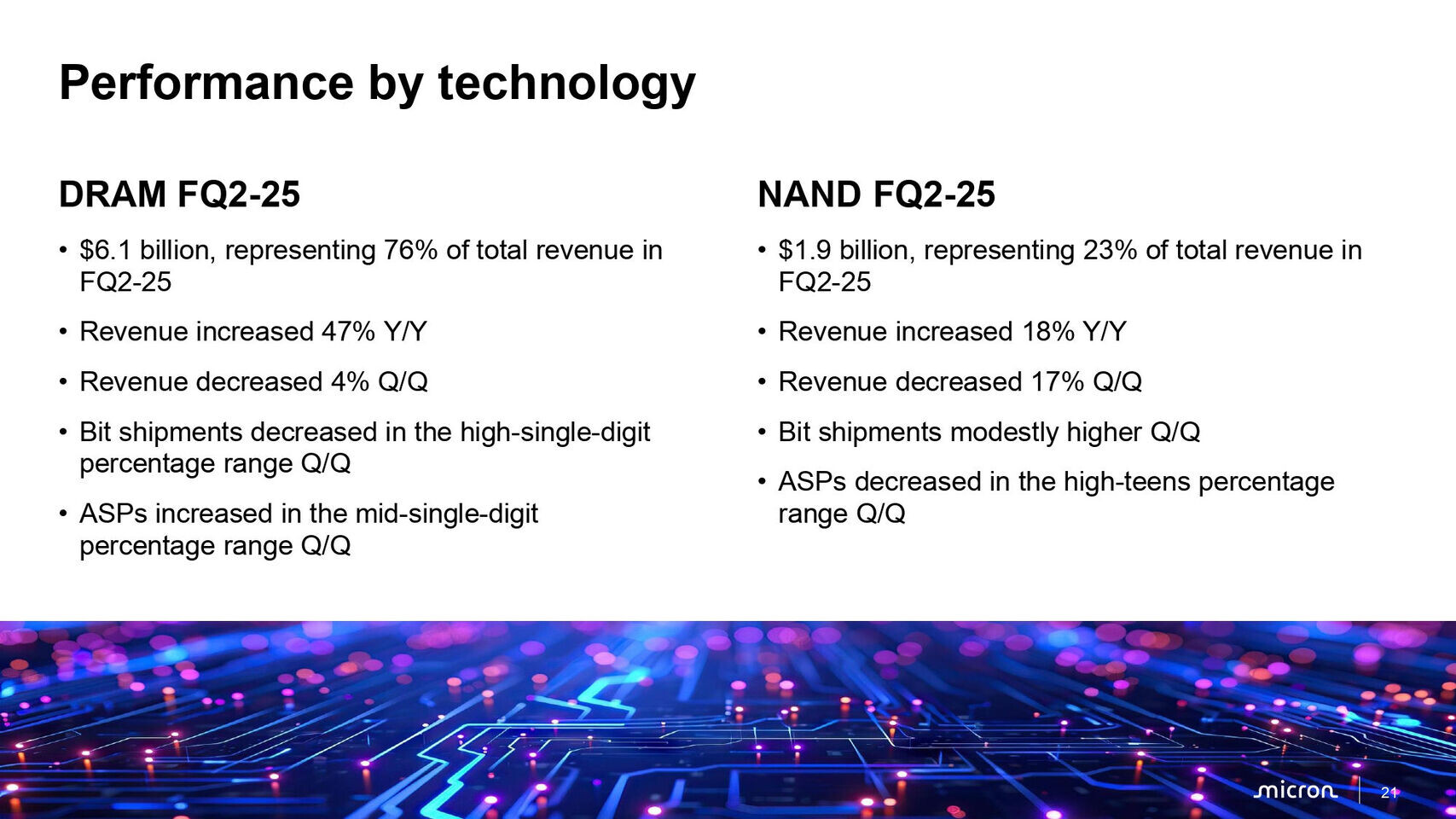
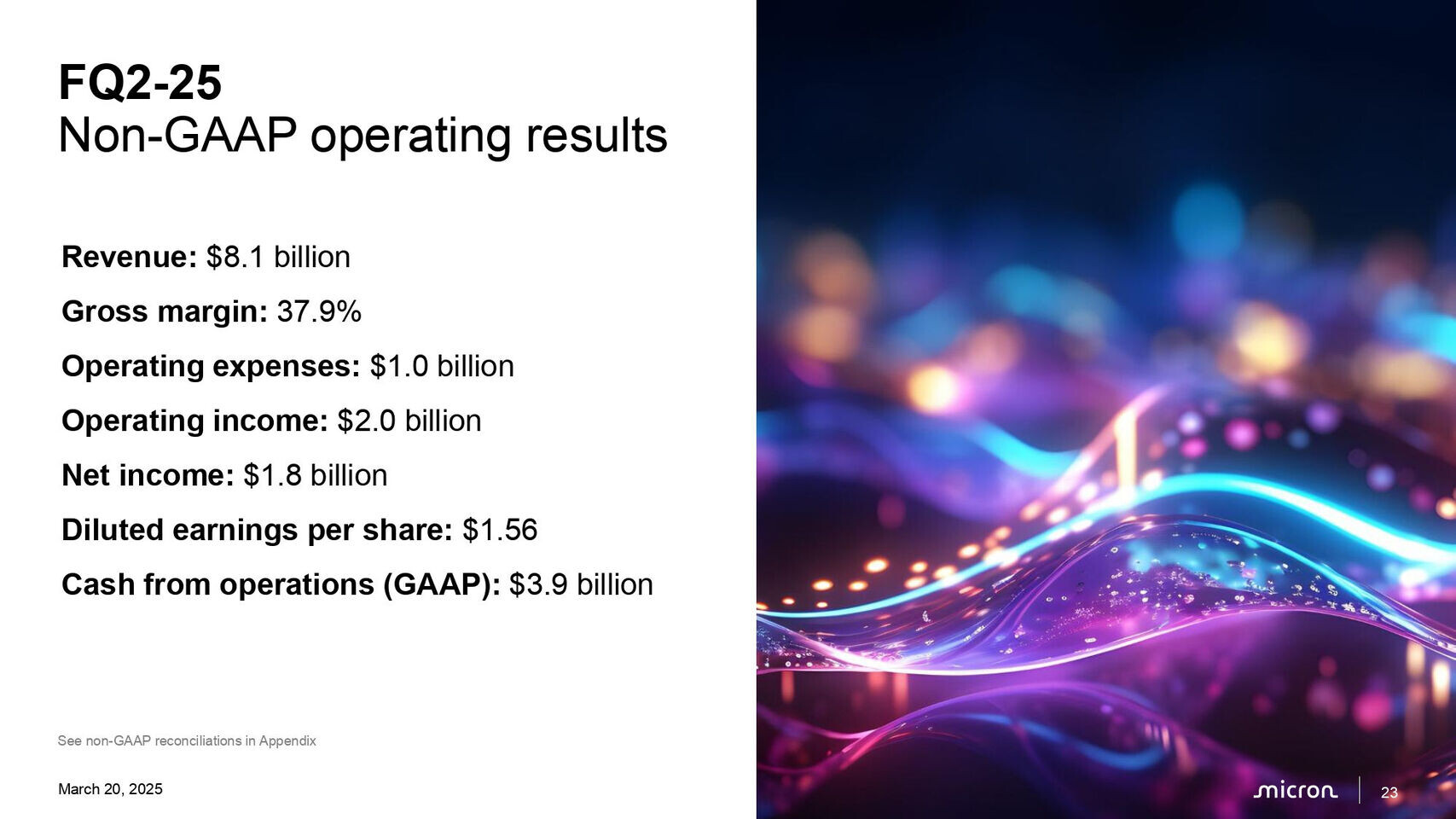
Micron Technology, Inc. (Nasdaq: MU) today announced results for its second quarter of fiscal 2025, which ended February 27, 2025.

Fiscal Q2 2025 highlights
  • Revenue of $8.05 billion versus $8.71 billion for the prior quarter and $5.82 billion for the same period last year
  • GAAP net income of $1.58 billion, or $1.41 per diluted share
  • Non-GAAP net income of $1.78 billion, or $1.56 per diluted share
  • Operating cash flow of $3.94 billion versus $3.24 billion for the prior quarter and $1.22 billion for the same period last year
"Micron delivered fiscal Q2 EPS above guidance and data center revenue tripled from a year ago," said Sanjay Mehrotra, Chairman, President and CEO of Micron Technology. "We are extending our technology leadership with the launch of our 1-gamma DRAM node. We expect record quarterly revenue in fiscal Q3, with DRAM and NAND demand growth in both data center and consumer-oriented markets, and we are on track for record revenue and significantly improved profitability in fiscal 2025."

Server DRAM and HBM Continue to Drive Growth, 4Q24 DRAM Industry Revenue Increases by 9.9% QoQ

TrendForce's latest research reveals that global DRAM industry revenue surpassed US$28 billion in 4Q24, marking a 9.9% QoQ increase. This growth was primarily driven by rising contract prices for server DDR5 and concentrated shipments of HBM, leading to continued revenue expansion for the top three DRAM suppliers.

Most contract prices across applications were seen to have reversed downward. However, increased procurement of high-capacity server DDR5 by major American CSPs helped sustain price momentum for server DRAM.

Micron Announces Shipment of 1γ (1-gamma) DRAM: Company's First EUV Memory Node

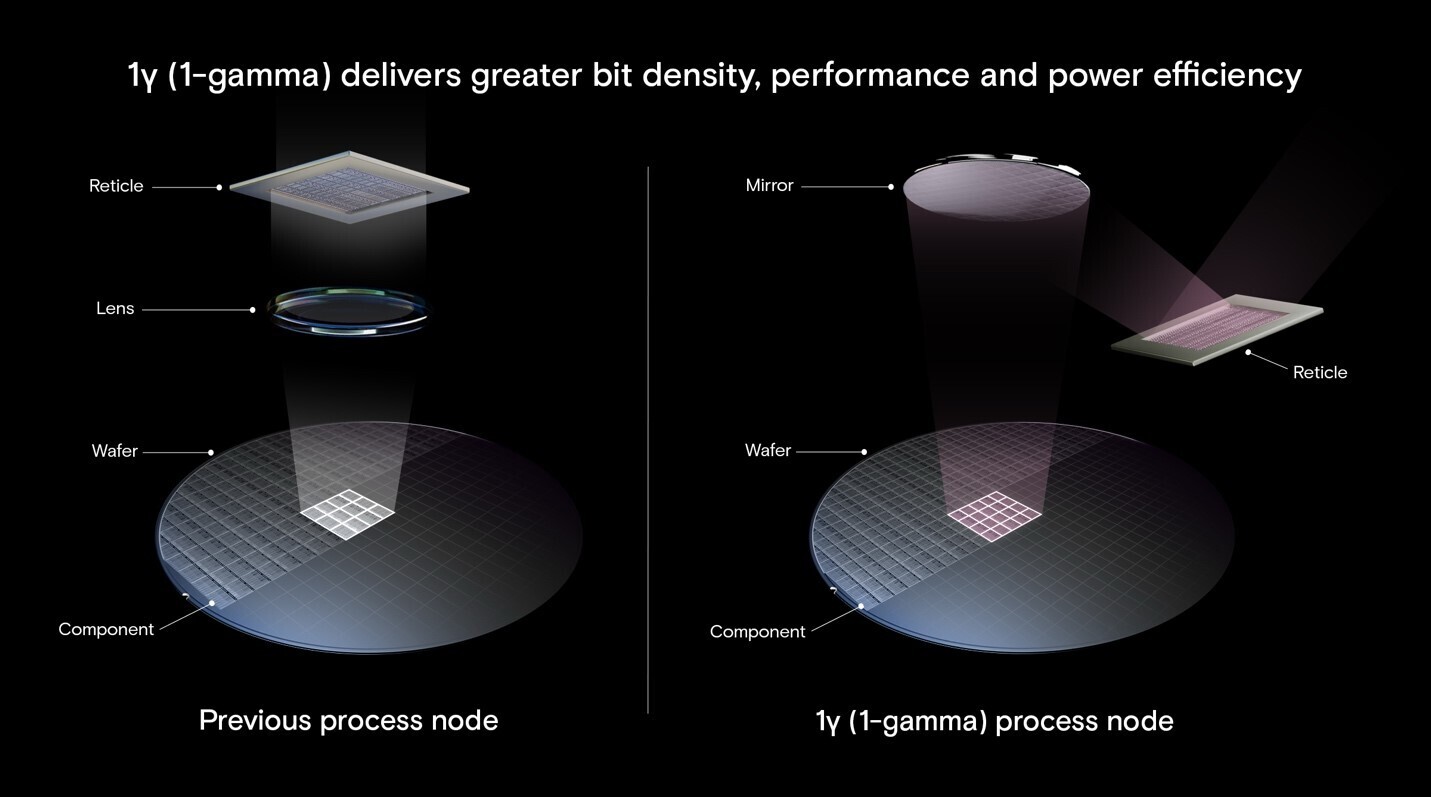
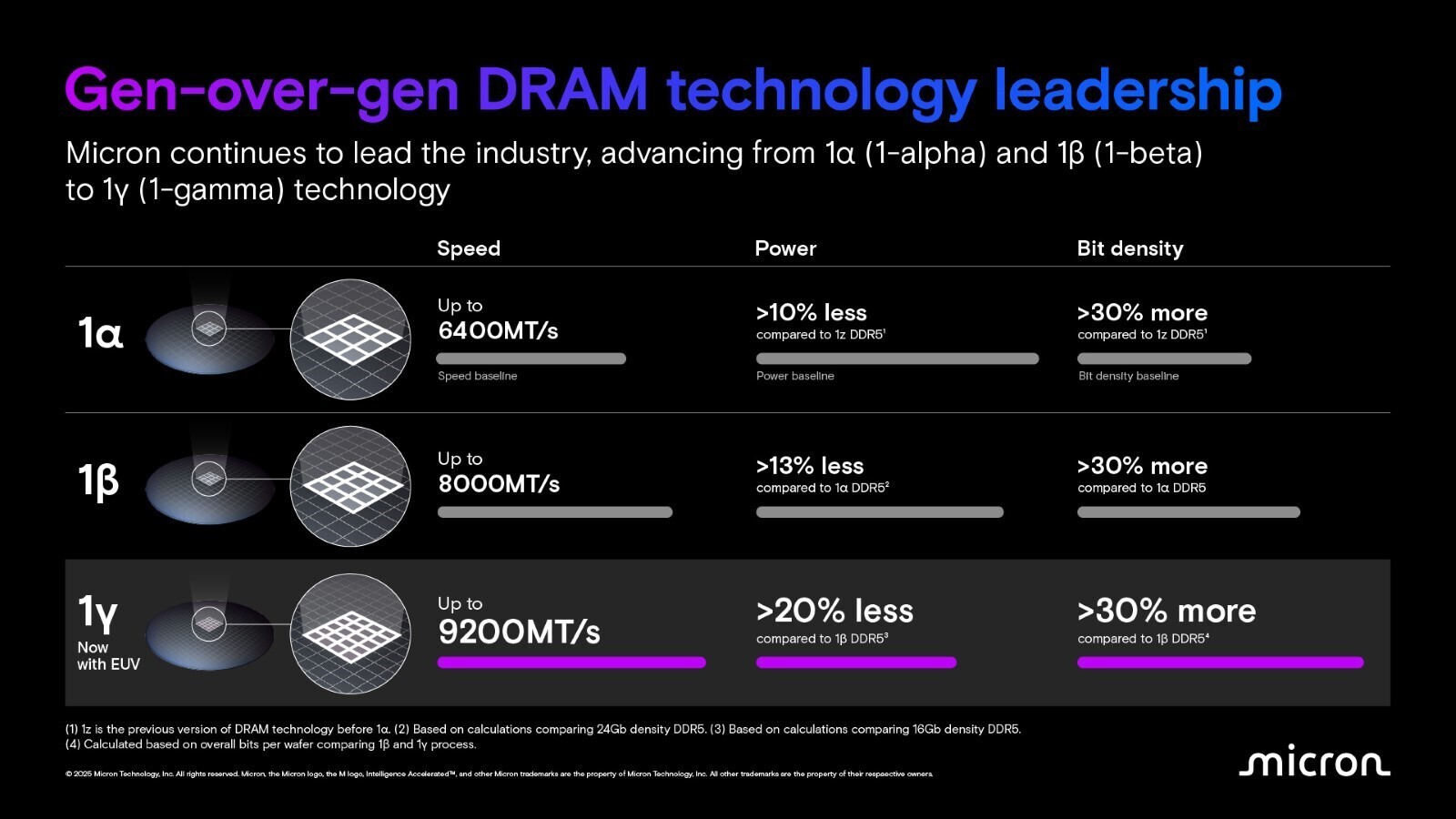
Micron Technology, Inc., today announced it is the first in the industry to ship samples of its 1γ (1-gamma), sixth-generation (10 nm-class) DRAM node-based DDR5 memory designed for next-generation CPUs to ecosystem partners and select customers. This 1γ DRAM milestone builds on Micron's previous 1α (1-alpha) and 1β (1-beta) DRAM node leadership to deliver innovations that will power future computing platforms from the cloud to industrial and consumer applications to Edge AI devices like AI PCs, smartphones and automobiles. The Micron 1γ DRAM node will first be leveraged in its 16 Gb DDR5 DRAM and over time will be integrated across Micron's memory portfolio to meet the industry's accelerating demand for high-performance, energy-efficient memory solutions for AI. Designed to offer speed capabilities of up to 9200 MT/s, the 16 Gb DDR5 product provides up to a 15% speed increase and over 20% power reduction compared to its predecessor.
Return to Keyword Browsing
Nov 16th, 2026 04:24 CST change timezone

New Forum Posts

Popular Reviews

TPU on YouTube

Controversial News Posts