FSR 4.1 Shows Massive Performance Gains on RDNA 3
When TechPowerUp spoke to AMD's Chief Software Officer and Senior Director of Software earlier in June, the executives made bold claims about the quality of its new FSR 4.1 implementation coming to older RDNA 3 GPUs, stating that, despite underlying technical differences, the actual output would have the same quality as it does on RDNA 4 GPUs. There was, however, little discussion about a potential performance hit from the upscaling tech, although it seems as though that discussion may not have been necessary at all, according to testing that has shown up on r/radeon on Reddit.
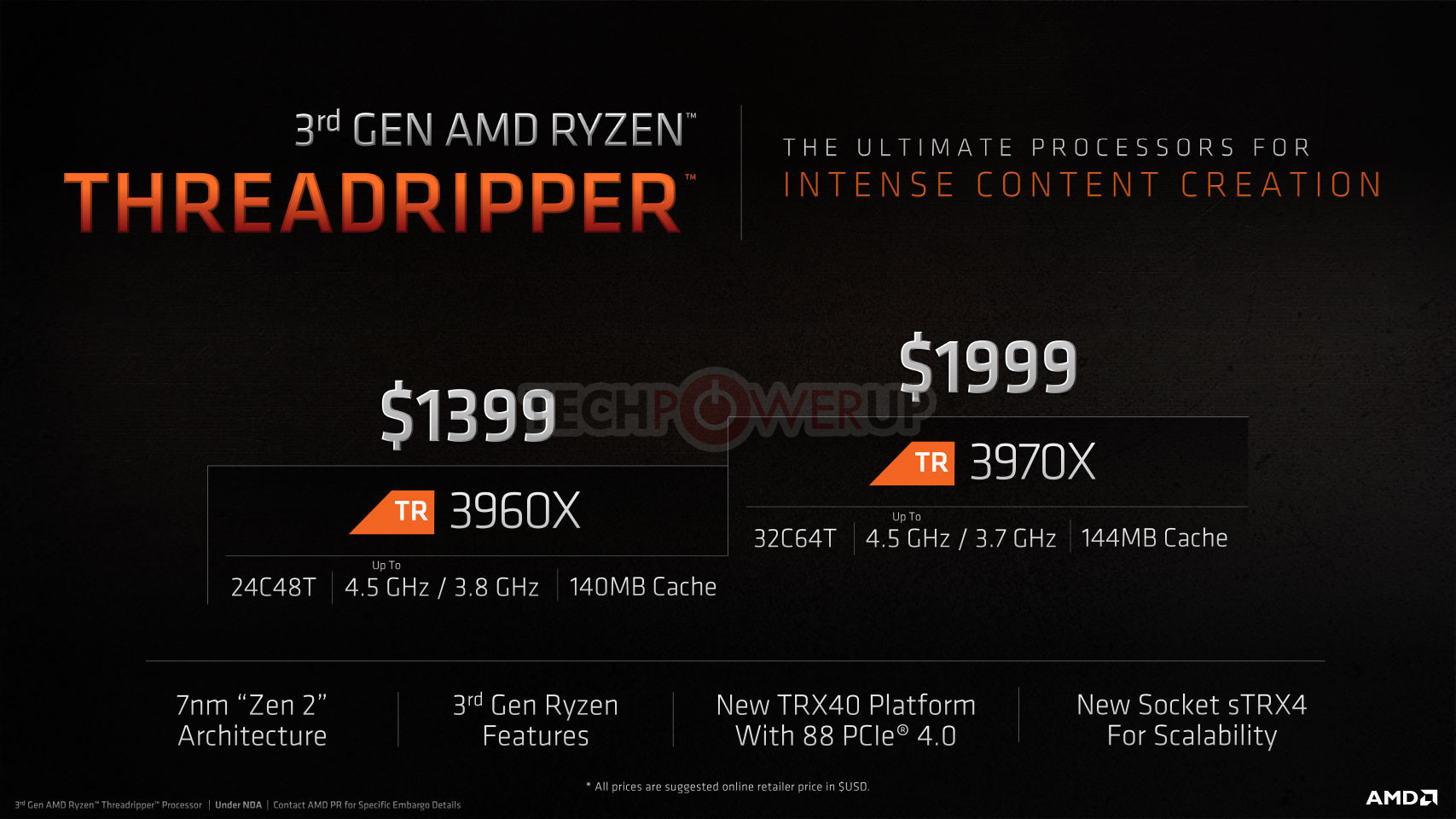
Based on the testing by the redditor, who tested AMD's FSR 4.1 in Cyberpunk 2077 on an AMD Radeon RX 7900 XTX at 3840 × 2160p resolution, high settings, and with Ray Tracing on and Ray-Traced Lighting set to Ultra, the performance improvements can be as high as 100% compared to testing conducted without the tech enabled. In benchmark screenshots shared by the redditor, the RDNA 3 GPU managed to get a 49.82 FPS average (43.46 minimum and 60.51 maximum) with FSR 4 set to Balanced and 60.81 FPS average (52.94 minimum and 73.03 minimum) with FSR 4 set to Performance. While there are no results posted, the tester claims in a follow-up comment that performance went "from 24~FPS at native to 50~FPS with FSR 4 Balanced and 61~FPS with FSR 4 Performance." These tests were conducted on a Windows 11 Pro installation with an AMD Ryzen Threadripper 3970X CPU and 128 GB of RAM, which is an unconventional setup for gaming, and it may ultimately mean that gaming performance could be higher with a more gaming-focused PC build. As the updated FSR version rolls out to older hardware, we will likely see more tests on other hardware tease out the true performance and image quality benefits, but a ~100% performance uplift is promising, especially for gaming handhelds on Radeon 780M iGPUs, for example.


Based on the testing by the redditor, who tested AMD's FSR 4.1 in Cyberpunk 2077 on an AMD Radeon RX 7900 XTX at 3840 × 2160p resolution, high settings, and with Ray Tracing on and Ray-Traced Lighting set to Ultra, the performance improvements can be as high as 100% compared to testing conducted without the tech enabled. In benchmark screenshots shared by the redditor, the RDNA 3 GPU managed to get a 49.82 FPS average (43.46 minimum and 60.51 maximum) with FSR 4 set to Balanced and 60.81 FPS average (52.94 minimum and 73.03 minimum) with FSR 4 set to Performance. While there are no results posted, the tester claims in a follow-up comment that performance went "from 24~FPS at native to 50~FPS with FSR 4 Balanced and 61~FPS with FSR 4 Performance." These tests were conducted on a Windows 11 Pro installation with an AMD Ryzen Threadripper 3970X CPU and 128 GB of RAM, which is an unconventional setup for gaming, and it may ultimately mean that gaming performance could be higher with a more gaming-focused PC build. As the updated FSR version rolls out to older hardware, we will likely see more tests on other hardware tease out the true performance and image quality benefits, but a ~100% performance uplift is promising, especially for gaming handhelds on Radeon 780M iGPUs, for example.