News Posts matching #Singapore Facility

Return to Keyword Browsing

Nintendo to Acquire Bandai Namco Singapore Studio

Yesterday, Nintendo of Japan announced that it would acquire a majority share of Bandai Namco's Singapore-based development studio. In an investment notice, Shuntaro Furukawa (Nintendo president) outlined a planned 80% takeover of the overseas outfit, with an agreed April 1, 2026 completion. The remaining portion of shares will be purchased at a later date. Earlier this month, Nintendo revealed ambitions to strengthen game development across its internal studio portfolio. Part of this initiative included an: "acquiring (of) development companies." These new subsidiaries would then augment existing development facilities.

Officially, Bandai Namco Studios Singapore (BNSS) has already contributed—as a contracted support group—to the development of Splatoon 3 (2022), a first-party Nintendo title. The rumor mill proposed that a (now scrapped) version of Metroid Prime 4 was being worked on at BNSS prior to early 2019. Otherwise, the Southeast Asia-based outfit has worked on familiar multi-platform Bandai Namco IPs: Ace Combat, Soul Calibur, and Tekken. Unlike Xbox and Sony PlayStation, Nintendo has not expanded its international games development footprint at a rapid pace.


ASE's State-of-the-Art Semiconductor Assembly System Bolstered by AMD Processors

Often, when semiconductor companies talk about chip manufacturing, they are referring to the specific process of applying masks and etching silicon wafers that takes place in advanced foundries. While these are critical steps in chip production, they don't result in a functional processor in and of themselves. Fully processed wafers are often transferred from the foundry manufacturer to an OSAT (Outsourced Semiconductor Assembly and Test) firm. There, newly built processors are mounted to underlying substrates, connected to other processors, and checked for errors.

ASE Technology Holdings is the largest OSAT in the world, with facilities in Taiwan, China, Japan, Korea, Malaysia, and Singapore. It assembles and tests electronics for semiconductor manufacturers across the planet and has collaborated with AMD to develop 2.5D interposers and other advanced packaging since 2007. But it's one thing to build parts for a customer and something altogether different to adopt that customer's hardware into your own lines of business. ASE's collective requirements run the gamut from lightweight mobile systems to data center systems with dozens to hundreds of available CPU cores.

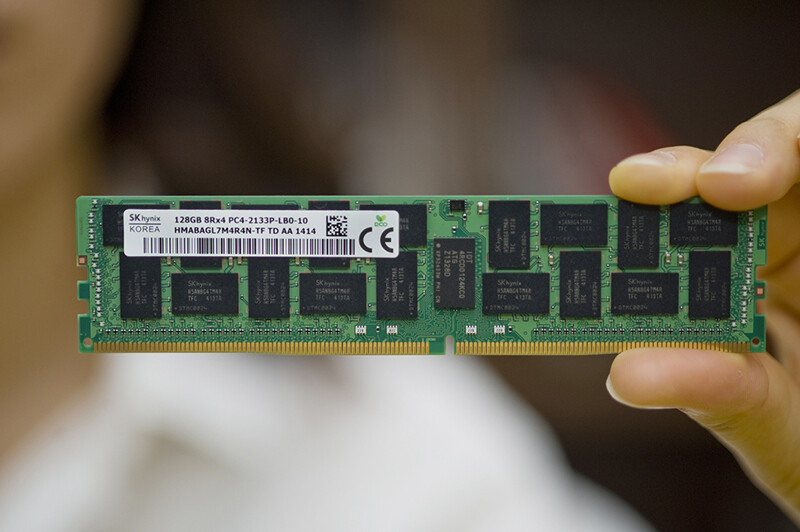
Top DRAM Manufacturers Touted to End DDR3 & DDR4 Production in 2025

Inside sources—familiar with goings-ons at leading DRAM manufacturing firms—have predicted the end of DDR3 and DDR4 production lines. According to a DigiTimes Asia report (citing Nikkei), industry observers have noticed that the DRAM market is undergoing a so-called "shift." They believe that pricing trends are decreasing due to weak demand. Samsung Electronics, SK Hynix, and Micron are named as major players; allegedly involved in devising new strategies—in reaction to fluid market circumstances. The DigiTimes insider network proposes that the big three: "may phase out DDR3 and DDR4 by 2025...by the end of 2025...anticipating a future focused on advanced memory technologies." Older standards are falling out of favor, with DDR5 and high-bandwidth memory (HBM) on the ascent. Industry watchdogs reckon that possible DDR3 and DDR4 supply shortages could occur "post-summer 2025."

Taiwan's Nanya Technology has predicted that the overall DRAM market will "bottom out" within the first half of 2025. An eventual recovery is envisioned by the second quarter; AI-related demands could help drive up demand by a large margin. Additionally, Nanya points to improved inventory management and global economic stimulus. Taiwanese DRAM production houses are expected to pick up some slack, but an unnamed "key component distributor" anticipates serious after-effects. An anonymous source believes that the: "anticipated halt in production could lead to significant supply constraints, challenging market dynamics and impacting pricing strategies." Nanya Technology and Winbond Electronics produce specialized DRAM-types; therefore are not touted to be great gap fillers. The latter is reportedly reacting to weak demand for "mature" DDR products—DigiTimes commented on this development: "Winbond Electronics is advancing its manufacturing by transitioning to a 16 nm process in the latter half of 2025. This upgrade from the current 20 nm process, primarily used for 4 Gb DDR3 and DDR4, will enable Winbond to produce 8 Gb DDR memory."

AMD Completes Sell of its Singapore Facility to HSBC Institutional Trust Services

AMD today announced that its Singapore subsidiary, Advanced Micro Devices (Singapore) Pte Ltd. (AMD Singapore), has completed a transaction to sell and lease-back its Singapore facility located at 508 Chai Chee Lane, Singapore 469032 to HSBC Institutional Trust Services (Singapore) Limited, in its capacity as trustee of Sabana Shari'ah Compliant Industrial Real Estate Investment Trust (Sabana REIT). The transaction generated proceeds of approximately SG$59 million Singapore dollars (US$46 million) net of all fees. AMD will record a gain of approximately US$16 million related to the transaction in the third quarter of 2013. AMD Singapore will continue its operations in a portion of the Singapore facility and has commenced a 10-year lease agreement with Sabana REIT with extension options.

The sale of AMD's Singapore facility is in keeping with AMD's strategy to reduce investments and capital in non-core parts of the business, including real estate. AMD launched operations in Singapore in 1984 and remains committed to the site as a vital part of the company's global operations. In 2012, AMD Singapore completed its transformation from a high-volume manufacturing site to an engineering center of excellence and currently employs approximately 500 people.
Return to Keyword Browsing
Nov 14th, 2026 19:05 CST change timezone

New Forum Posts

Popular Reviews

TPU on YouTube

Controversial News Posts