
News Posts matching #Start Menu

Return to Keyword Browsing

Windows 11 Gets Major Taskbar and Start Menu Customization in New Feature Update

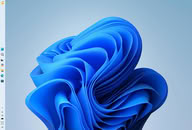
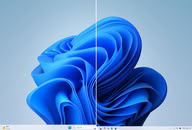
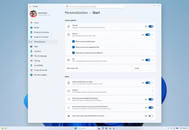
Microsoft has begun rolling out a new feature update KB5120998 for Windows 11, introducing significant visual changes to the user experience. Among the notable additions is the long-awaited expanded taskbar customization, allowing users to position the taskbar at the top, left, or right side of the display, in addition to its traditional bottom placement. Microsoft is also introducing a smaller taskbar mode that reduces both icon and taskbar size, which should be particularly useful on devices with limited screen space. The Start menu is receiving similar attention, with small, medium, and large size options, and the Recommended section has been renamed to "Recent."

Windows Search has undergone a visual and functional refresh, featuring a less cluttered search home and clearer indicators showing whether a result comes from an application, setting, file, web result, or the Microsoft Store. Users can now disable web and Store suggestions, and Windows can automatically index frequently used folders. File Explorer Home should launch faster, and its Recommended section now supports touch scrolling. Additionally, Microsoft has updated progress indicators for startup, sign-in, restart, shutdown, and update installation, while virtual desktop switching and display settings receive reliability improvements.
Windows 11 Gets Dynamic File Sizes in File Explorer, Low Latency Profile for Apps, and More

Microsoft today released its August update, KB5121003, which finally brings more user-requested features as part of a simple Patch Tuesday security update. One of the most useful changes is the way File Explorer now displays file sizes. Instead of the old method of showing everything in kilobytes, Windows 11 has switched to a dynamic system that displays file sizes in KB, MB, or GB, depending on the size of the file. This makes it easier for users to view file sizes without having to manually convert them.

Additionally, the Low Latency Profile is expanding to more applications, potentially making software launch faster on weaker hardware. Previously introduced for Microsoft-branded "in-box" applications, this feature boosts the CPU to its maximum frequency for 1-3 seconds, resulting in noticeably smoother app launches during testing. When launching Microsoft applications like Edge and Outlook, the result is about a 40% faster application launch. Other applications, such as the Start Menu and context menus across the operating system, may be up to 70% faster. Now, other applications are getting this update, meaning the overall experience will be much smoother.

Microsoft Brings Back Windows 10-Style Taskbar and Start Menu Customization in Windows 11

If you were a user of the Windows 10 operating system with a customizable Taskbar location, you were familiar with Taskbar customization and different placements. However, Microsoft kept this feature restricted in Windows 11 for a long time. The company is now introducing full support for Taskbar and Start Menu customization, which will be available to Windows Insiders in the Experimental channel over the coming weeks. Specifically, the Taskbar will be movable to the top, bottom, left, or right side of the screen. From there, users will be able to customize icon alignment for each Taskbar position, whether top-aligned, center-aligned, left-aligned, or right-aligned. All it takes is a visit to Settings > Personalization > Taskbar > Taskbar behaviors, where all of the settings will be located. Interestingly, the Taskbar will also offer smaller icons and a reduced presence, which is a nice addition for anyone looking to maximize usable space.

Additionally, Windows Insiders are testing a preview of the revamped Start Menu customization effort, which gives users more meaningful control over Start Menu behavior. One of the changes includes an option to choose between smaller and larger Start sizes, independently hide or show sections like Pinned, Recent, and All, and even remove their name and profile photo for extra privacy during screen sharing or presentations. Previously, these customizations weren't possible, as Windows 11 shipped with a generic Start Menu look for every build. Just as important, Microsoft is separating Start's file recommendations from File Explorer's recent items and jump lists, so disabling recommendations in Start will no longer affect recent activity elsewhere in Windows. At the same time, the company is trying to make the recommendation area more useful by renaming it to Recent, keeping newly installed apps visible, and refining which files appear in that section.
Return to Keyword Browsing
Nov 17th, 2026 13:53 CST change timezone

New Forum Posts

Popular Reviews

TPU on YouTube

Controversial News Posts