
Alphacool Announces Apex Thermal Putty X1
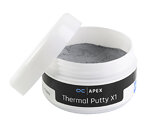
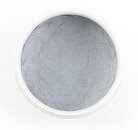
Alphacool International GmbH from Braunschweig is a pioneer in PC water cooling technology. With one of the most comprehensive product portfolios in the industry and over 20 years of experience, Alphacool now expands its lineup with the Apex Thermal Putty X1. The Alphacool Apex Thermal Putty X1 is a high-performance alternative to conventional thermal pads. As a non-curing, electrically non-conductive silicone gel, it adapts perfectly to uneven surfaces and varying gap heights with minimal contact pressure. No need to choose pad thickness, no compromises, lower temperatures.
A key advantage of the Apex Thermal Putty lies in its optimal consistency for handling and shape stability. Under light pressure, the material adapts ideally to different gap heights while remaining dimensionally stable. This reliably compensates for unevenness and tolerances between the cooler and the component, ensuring optimal contact between the heat source and the heatsink at all times. This is especially important for modern graphics cards and other sensitive electronic components, as delicate parts such as memory chips or voltage regulators are effectively protected from damage.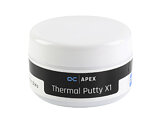
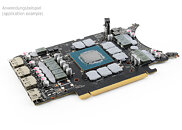
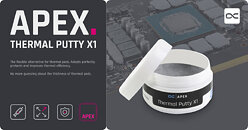
A key advantage of the Apex Thermal Putty lies in its optimal consistency for handling and shape stability. Under light pressure, the material adapts ideally to different gap heights while remaining dimensionally stable. This reliably compensates for unevenness and tolerances between the cooler and the component, ensuring optimal contact between the heat source and the heatsink at all times. This is especially important for modern graphics cards and other sensitive electronic components, as delicate parts such as memory chips or voltage regulators are effectively protected from damage.


