Ubiquiti Launches the U7 Mesh Suitable for Indoor and Outdoor Usage
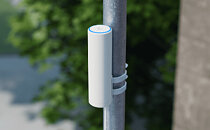
Ubiquiti has released a new member of its UniFi Mesh APs, called the U7 Mesh which has a rather novel design that works both indoors and outdoors, since it's IPx6 rated. The Wi-Fi 7 access point is admittedly only dual-band, we'd guess due to the short range of the 6 GHz band, which wouldn't make a whole lot of sense to include in an outdoors AP. The U7 Mesh is an upgraded version of its U6 Mesh, which is something of an odd sidegrade, as although it has been given a 2.5 Gbps Ethernet port, the 5 GHz Wi-Fi radio has been downgraded from 4x4 to 2x2.
The U7 Mesh offers up to 4.3 Gbps throughput in the 5 GHz, but this is limited to devices that can use 240 MHz wide channels, which not all Wi-Fi devices support, as even some Wi-Fi 7 devices are limited to 160 MHz. The 2.4 GHz band supports speeds of up to 688 Mbps. Ubiquiti has changed the antenna design to allow for omnidirectional or directional use for the 5 GHz radio, which could be useful in a backhaul type situation. The U7 Mesh is powered via PoE and has a max power consumption of 13 W. The U7 Mesh is available now for US$199.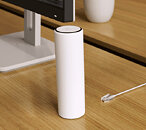
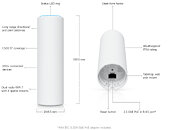
The U7 Mesh offers up to 4.3 Gbps throughput in the 5 GHz, but this is limited to devices that can use 240 MHz wide channels, which not all Wi-Fi devices support, as even some Wi-Fi 7 devices are limited to 160 MHz. The 2.4 GHz band supports speeds of up to 688 Mbps. Ubiquiti has changed the antenna design to allow for omnidirectional or directional use for the 5 GHz radio, which could be useful in a backhaul type situation. The U7 Mesh is powered via PoE and has a max power consumption of 13 W. The U7 Mesh is available now for US$199.


