
News Posts matching #bricked

Return to Keyword Browsing

ASRock Updates VBIOS Flashing Utility Following Radeon RX 7900 XT/XTX Bricking Reports

ASRock has released an updated version of the ASRVBFlash utility, version 1.0.6, which is intended to fix issues caused by the previous version, 1.0.5, for Radeon RX 7900 XT/XTX users. The earlier version led to reports of ASRock GPUs becoming bricked after users attempted to update the firmware with ASRVBFlash. ASRock has quietly released the 1.0.6 update without providing details on what changes have been made. We only know that this version aims to prevent the bricking of cards and instead properly update the GPU firmware to enhance security, which was the original intent.

The initial issue arose when users ran the ASRVBFlash 1.0.5 utility. During the process, Windows would start a reboot sequence, but the system would then fail to boot. At the time, a workaround involved reinstalling an older VBIOS, which some users downloaded from TechPowerUp's VBIOS hosting. Meanwhile, ASRock reportedly removed VBIOS version 1.0.5 from its download pages, although it remained accessible via FTP connections.
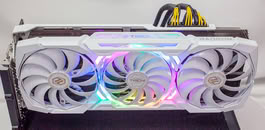

ASRock Radeon RX 7900 XT/XTX VBIOS Update Bricks Some Cards

When ASRock joined the group of AIBs patching Radeon RX 7900 XT/XTX GPUs late last month, everything seemed fine for a few days. However, multiple users are now reporting that their ASRock GPUs have been bricked after updating the firmware with the latest VBIOS. ASRock has released VBIOS updates for ten of its Radeon RX 7000 series graphics cards, joining Sapphire and GIGABYTE. The new firmware, version 1.0.5, was made available on ASRock's support pages on October 29 and includes updates for the RX 7600 XT Challenger and Steel Legend, RX 7700 XT Challenger, RX 7800 XT Challenger and Steel Legend, RX 7900 XT Phantom Gaming (including the White version), and the RX 7900 XTX Phantom Gaming and Taichi, along with the Taichi White.

However, several users have reported that VBIOS version 1.0.5 bricked their cards. The issue occurs when users start the ASRVBFlash 1.0.5 utility; Windows begins its reboot sequence, and the system then fails to boot. A solution to this problem appears to be reinstalling an older VBIOS, which some users have downloaded from TechPowerUp's VBIOS hosting. This can help if your PC is bricked by any VBIOS update, and you need to find an older version to flash.

Lenovo Addresses Legion Go BIOS Update Bricking Gaming Handhelds

It was recently revealed in a handful of Reddit posts that an official Lenovo Legion Go BIOS update (N3CN42WW) was apparently causing the handheld gaming PCs to become unresponsive, with users claiming Lenovo told them they would be on the hook for repair costs. Now, nearly three weeks after the issues initially popped up, Lenovo has confirmed in a recent forum post that the issues cause by the BIOS update were indeed "not user error," and that repairs will be conducted by Lenovo under warranty.
While the root cause has not been identified yet, it is clear it is not user error. As such it should generally be handled under warranty and, in the case of out-of-warranty devices, it should be repaired free of charge, but please check local laws.

ASRock Extends Motherboard Warranty Amid CPU Burning, but Only in Japan

We covered the issue of burning AMD Ryzen 9000 series CPU on ASRock motherboards many times. However, ASRock has been working to address this problem with BIOS version 3.40 for its AMD 800-series motherboards. Now, the company is offering an extended warranty for its motherboards, but this is limited to Japan. ASRock board users in Japan who register through the ASRock Fan Club by the end of the year will receive a three-year warranty instead of the standard two years. This campaign runs until the end of the year and is exclusive to Japanese customers, leaving the rest of the world with the usual two-year warranty.

In the past, AMD has attributed unusual behaviors, such as CPU burn, to motherboard vendors and BIOS ODMs, suggesting that these vendors may use BIOS versions that don't fully comply with AMD's official specifications. AMD is reportedly collaborating with board partners to develop and optimize BIOS updates to address these issues, but the problem appears to persist. On the unofficial r/ASRock subreddit, reports of more bricked AMD CPUs continue to accumulate. We are still awaiting ASRock's response and any new BIOS version that might prevent this issue from recurring. For users with already damaged processors, a BIOS update cannot reverse hardware failure or burn, but regularly updating your BIOS may reduce the likelihood of further incidents by enforcing safer defaults.

NVIDIA RTX 3080 Ti Owners Reporting Bricked Cards During Diablo IV Closed Beta Play Sessions

A combination of the Diablo IV Closed Beta and NVIDIA RTX 3080 Ti graphics card is proving lethal for the latter - community feedback has alerted Blizzard to take action, and they will be investigating the issue in the coming days, with assistance from NVIDIA. It is speculated that the game is exposing underlying hardware faults within an affected card, but it is odd that a specific model is generating the largest number of issues. Unlucky 3080 Ti owners participating in the closed beta are said to be experiencing unpleasant or inconsistent in-game performance at best, and BSODs followed by non-functional GPUs at worst.

A Blizzard forumite, ForANge, chimed in with their experience: "My graphics card also burned out. While playing, the fans of my Gigabyte GeForce RTX 3080 Ti suddenly started running at maximum speed. At the same time, the signal from the monitor disappeared. After turning off the power and trying to turn it back on, I couldn't get it to work anymore. The card is just under a year old. It happened during a cutscene with flowers when they showed a snowy landscape."

Nintendo Wii U Memory Failures Investigated by Homebrew Community, Hynix Chips in the Spotlight

The homebrew and modification community has delved deeper into the recent bout of bricked Nintendo Wii U consoles, unlucky owners are seeing their systems throwing up error codes that indicate an internal memory failure. As covered on TPU almost two weeks ago, it was speculated that leaving a Wii U in a long-term state of unuse was a root cause of the problem. It is now theorized that a simple choice of memory chip is the real issue behind the corruptions, and not a case of leaving your unplugged Wii U stashed in a box somewhere.

An online database has been established on hackmd.io, and a member is collecting hard data from Wii U owners across various online communities and sources. Early indications show that consoles fitted with a Hynix eMMC are leading the pack in terms of number of system failures, Samsung-equipped models are placed in a distant second place, and the Toshiba variant is reported as having zero problems.

Long Term Nintendo Wii U Owners Experiencing Bricked Systems

It has been reported by multiple users across several online communities that their Wii U consoles are no longer functioning properly. The error codes 160-0103 and 160-2155 are the dreaded indicators of memory corruption. It has been discovered that the NAND Flash within the Wii U's internal eMMC is prone to failure. According to details gleaned from teardowns of the console's hardware, Nintendo has implemented either Toshiba or Samsung flash storage boards for the various revisions of the console. There has been an uptick in the rate of bricked Wii U consoles across recent months, but the problems seem to have occurred as far back as 2015, according to archived posts on the GBA Temp forum. It is speculated that leaving the Wii U inactive for long periods of time can lead to the memory corruption issues.
Return to Keyword Browsing
Nov 11th, 2026 07:01 CST change timezone

New Forum Posts

Popular Reviews

TPU on YouTube

Controversial News Posts