News Posts matching #computex

Return to Keyword Browsing

Team Unveils the Mighty Team Xtreem DDR5 Memory at Computex

Team Group unveiled its mighty Team Xtreem DDR5 memory for overclocking, at the 2023 Computex. These modules are designed such that their PCBs are shorter than their height, and instead of cramming RGB LEDs on top, the 2 mm-thick aluminium heat spreader turns into an extruded heatsink. Some of the higher speed versions of these run at DRAM voltages as high as 1.45 V, so the heatsink design should come in handy. The T-Force Xtreem comes in speeds ranging between DDR5-6400 and DDR5-8266, and in capacities ranging from 16 GB (2x 8 GB), going all the way up to 96 GB (2x 48 GB). The T-Force Xtreem RGB has an additional design element in the form of an acrylic RGB LED diffuser, although from the looks of it, this acrylic bit seems to be covering the fins of the heat spreader. It comes in the same speed-based and capacity based variants, as the regular Xtreem DDR5.

Akasa's Gecko Turbo Cooler for SSDs Features a Blower Fan

There has been no shortage of various SSD coolers to date, but none seems to have implemented a blower fan as yet. Well, Akasa decided that it was a product that was needed in the market and was showing off its Gecko Turbo Cooler at Computex. The heatsink part of the cooler is dwarfed by the blower fan that sits on top of it, making for a rather amusing looking device. As to the noise level, we can only guess, as it wasn't plugged in, but blower fans don't tend to be the quietest fans around. That said, it's likely to bring the best airflow of any M.2 SSD cooler to date, even though it might be a tad excessive, even for PCIe 5.0 SSDs.

Akasa's Cypher X133 is a Premium Custom Chassis for Intel's NUC 13 Extreme

Akasa might be the most well known third party housing manufacturer for Intel's NUC series of devices, most of which offer passive cooling and full aluminium construction. At Computex, Akasa was showing off its Cypher X133 which the company has been selling to system integrators for some time already, but there hasn't been a public announcement. The reason for keeping this product on the low is because it's using a low profile, server grade liquid cooling solution which takes some skill to install in the compact chassis. That said, the entire internals slide out on rails, which should make most parts much easier to access than in a typical chassis this size.

Even though it's a compact chassis, it can house an NVIDIA RTX 4090 graphics card, in addition to the NUC 13 Extreme, which is no small feat. That said, the width limit sits at 3.9 slots for the GPU, so some custom models with wider coolers might not work. The chassis is very much a premium product with a very nice finish that is easily comparable to high-end notebooks. Hopefully Akasa will figure out a way to make a more DIY friendly version of this chassis, although it's possible that the price tag will be too high for this to make sense as a DIY build.

Thermaltake Brings New Toughpower SFX Power Supplies to Computex 2023

Thermaltake has unveiled a whole new range of Toughpower SFX power supplies at the Computex 2023 show in Taipei. Since smaller SFF builds are becoming quite popular these days, it does not come as a surprise that Thermaltake is pushing this PSU form-factor to a whole new level. Thermaltake is not a stranger when it comes to SFX power supplies but its current Toughpower SFX Gold lineup will be expanded with new higher output models and given an ATX 3.0 specification, and it is introducing the new Toughpower SFX Platinum series.

The Thermaltake Toughpower SFX Gold lineup was already available in 450 W, 550 W, 650 W, and 750 W versions, but now, Thermaltake is bringing new 750 W, 850 W, and 1000 W models, which are all compatible with ATX 3.0 specifications and feature a native PCIe 5.0 12+4-pin modular interface. The Toughpower SFX Gold 750 W and 850 W models will use a standard SFX form-factor, while the 1000 W model will be based on a slightly longer SFX-L form factor. The star of the PSU show is the Toughpower SFX Platinum series, also coming in 750 W, 850 W, and 1000 W models, and as the name suggests, these have 80 Plus Platinum efficiency. The Toughpower SFX Platinum will also be compatible with ATX 3.0 specifications and feature the same native PCIe 5.0 12+4-pin modular interface. Both the Toughpower SFX Gold and the Toughpower SFX Platinum series are bundled with SFX to ATX adapter bracket. We expect them both in retail/e-tail soon.

ASUS Demoes GeForce RTX 4070 with No External Power Connector

During the Computex 2023 show, ASUS had some interesting designs to showcase. Specifically, ASUS has made a GeForce RTX 4070 GPU concept without an external power connector. With NVIDIA's reference 16-pin power connector melting due to an insufficient connection, ASUS has decided to experiment by removing the connector from its GPU and placing the power source as an extra bus connector on the motherboard. Called GeForce RTX 4070 Megalodon, ASUS has made a custom power connector that goes hand-in-hand with the ASUS TUF Gaming Z790 BTF motherboard that supports this connector, and the PSU cables go on the backside of the board.

Similarly to NVIDIA's 16-pin 12VHPWR connector, this custom design is also rated for up to 600 Watts of power delivery. This results in a design that facilities the user error of not correctly pushing the 16-pin connector and causing melting. For now, the connector is referred to as GC_HPWR, but there will be an official name at launch as the company plans mass production of this concept. You can see the design of the RTX 4070 Megalodon alongside the accompanying ASUS TUF Gaming Z790 BTF motherboard.

CORSAIR DOMINATOR Titanium DDR5 Memory and its Unique DHX Fanless Cooling Snapped

At the 2023 Computex, we caught CORSAIR's flagship PC memory line, the DOMINATOR Titanium DDR5 series. These are built to, well, dominate the overclocking and benchmark records scene, and come in several high-speed models, such as DDR5-8000 and DDR5-8266, and capacities as high as 192 GB (4x 48 GB kits). The company also has a limited batch of 500 "First Edition" kits, which feature a gold-on-white color scheme, and the company's highest grade of manual binning.

A defining feature about the DOMINATOR Titanium DDR5 series is their heat spreader design, which consists of 2 mm-thick aluminium making contact with the DRAM chips, which connect to an upper copper heatsink with RGB LEDs studded. The edges of the top have mount-holes, so a set of 2 or 4 of these DIMMs can be bolted onto the company's latest DHX cooling module. This is essentially a chunky slab of anodized aluminium that soaks up and dissipates heat from the DIMMs, and has slats that let the RGB lighting through. CORSAIR is backing these with lifetime warranties, and plans to launch them in July 2023.

ASRock Partners with GLORIOUS, G.Skill, and FSP on Gaming Peripherals, Memory, and PSU

At the 2023 Computex, ASRock special co-branded editions of GLORIOUS PC Gaming Race gaming peripherals, G.Skill memory, and FSP power supplies. This are essentially variants of popular GLORIOUS peripherals, such as the Model D mouse, GMMK 2 and GMMK PRO gaming keyboards; FSP Hydro PTM X Pro series power supplies, and G.Skill Trident Z5 RGB DDR5 memory, with ASRock Phantom Gaming co-branding. As part of the co-branding, these products get the distinctive red-on-black color scheme characteristic of the Phantom Gaming brand. The products will be marketed by their respective brands, but the PG co-branding allows boutique system-builders to build brand-purist gaming PC builds.

Gigabyte Shows AI/HPC and Data Center Servers at Computex

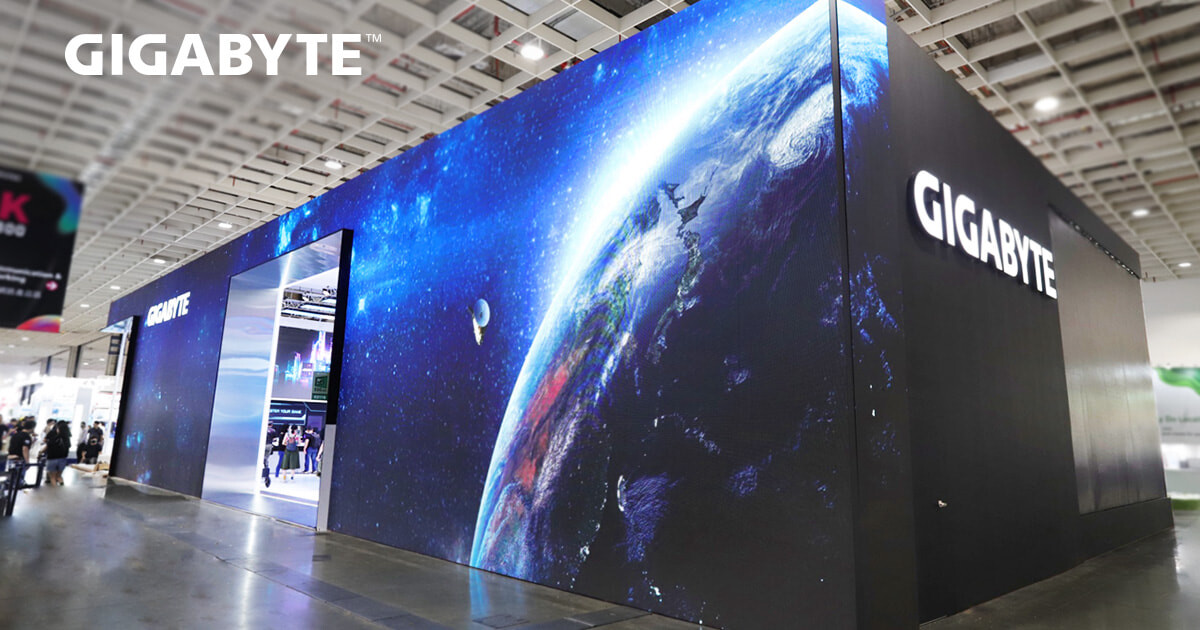
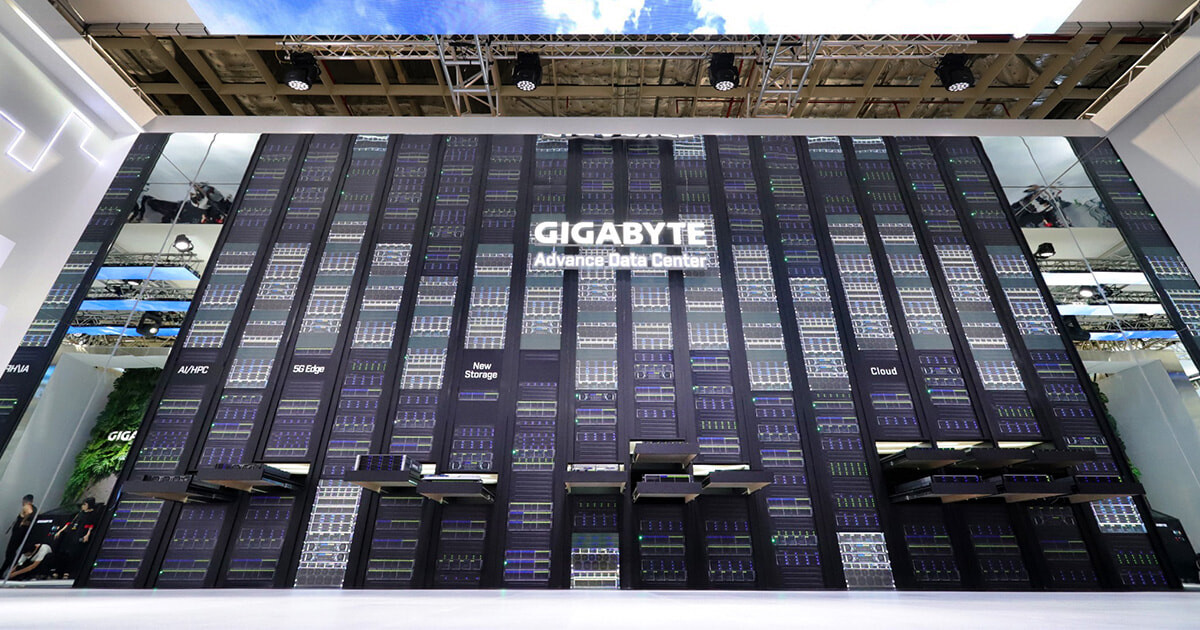
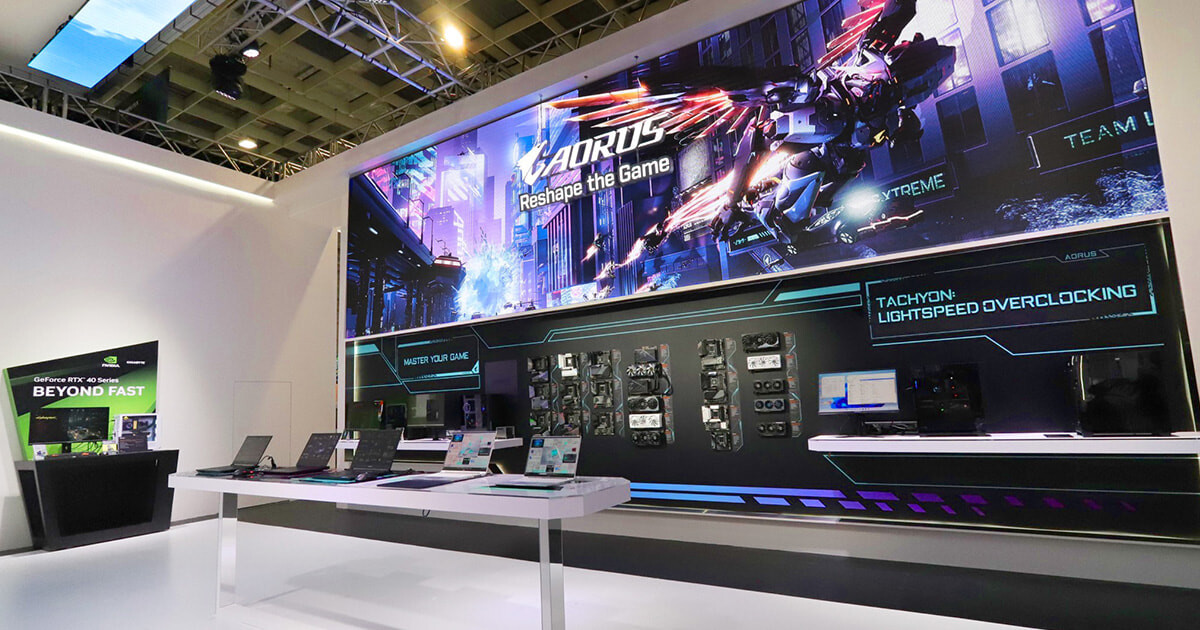
GIGABYTE is exhibiting cutting-edge technologies and solutions at COMPUTEX 2023, presenting the theme "Future of COMPUTING". From May 30th to June 2nd, GIGABYTE is showcasing over 110 products that are driving future industry transformation, demonstrating the emerging trends of AI technology and sustainability, on the 1st floor, Taipei Nangang Exhibition Center, Hall 1.

GIGABYTE and its subsidiary, Giga Computing, are introducing unparalleled AI/HPC server lineups, leading the era of exascale supercomputing. One of the stars is the industry's first NVIDIA-certified HGX H100 8-GPU SXM5 server, G593-SD0. Equipped with the 4th Gen Intel Xeon Scalable Processors and GIGABYTE's industry-leading thermal design, G593-SD0 can perform extremely intensive workloads from generative AI and deep learning model training within a density-optimized 5U server chassis, making it a top choice for data centers aimed for AI breakthroughs. In addition, GIGABYTE is debuting AI computing servers supporting NVIDIA Grace CPU and Grace Hopper Superchips. The high-density servers are accelerated with NVLink-C2C technology under the ARM Neoverse V2 platform, setting a new standard for AI/HPC computing efficiency and bandwidth.

AZZA Unveils New Shapes and Sizes at Computex 2023

AZZA, a leading manufacturer and provider of computer cases, power supplies, and PC components, presents new show-stopping cases and unveils a community project at Computex 2023. Starting off with the Sanctum 810, a spacious square glass enclosure with powerful airflow capabilities, and the Mesa 811 a stunning, asymmetrical clear-cut showpiece with individually removable glass and aluminium sheets.

The showcase also includes the Neo 500, a new mid-tower case with subtle front fans inside a chic mesh front panel, and Augment 510, a sturdy, premium aluminium enclosure encompassing mesh front and top panels. AZZA will officially unveil Design Beyond Limits, a community project that invites creatives to collaborate on creating a new case design. AZZA will be at Nangang Exhibition Hall 1, 4F booth no. L0401a from May 30th to June 2nd, 2023.

Askey WiFi 7 Routers on Display at Computex

For those relying on their ISP for their router, Askey might have good news for you, as the company had a pair of WiFi 7 routers destined for ISPs on display at Computex. The first model might see some retail brand, as it's a bog standard WiFi 7 router based on Qualcomm hardware. It sports no less than three radios with a combined data rate of 18.6 Gbps, although broken down per radio, that's 1,376 Mbps on 2.4 GHz, 5,765 Mbps on the 5 GHz band and 11,530 Mbps on the 6 GHz band using a 320 MHz wide channel, all radios being 4x4. It also sports a pair of 10 Gbps, one for WAN and one for LAN and an additional three 2.5 Gbps ports. Other features include mesh support, Bluetooth/ZigBee support and remote management for ISPs.

The second model is for ISPs only and is based on a solution as it's using XGSPON to connect towards the internet. It too gets a 10 Gbps WAN side port, but the integrated switch is only Gigabit. The WiFi 7 radios are configured identically to the model above, but Askey has added support for DECT as well as two VoIP ports on this model, requirements that some ISPs have. It's unclear when either device would hit the market, but it's a first sign that WiFi 7 products shouldn't be too far away.

MaxLinear's 8-port 2.5 Gbps Switch is Tiny Single-chip Solution

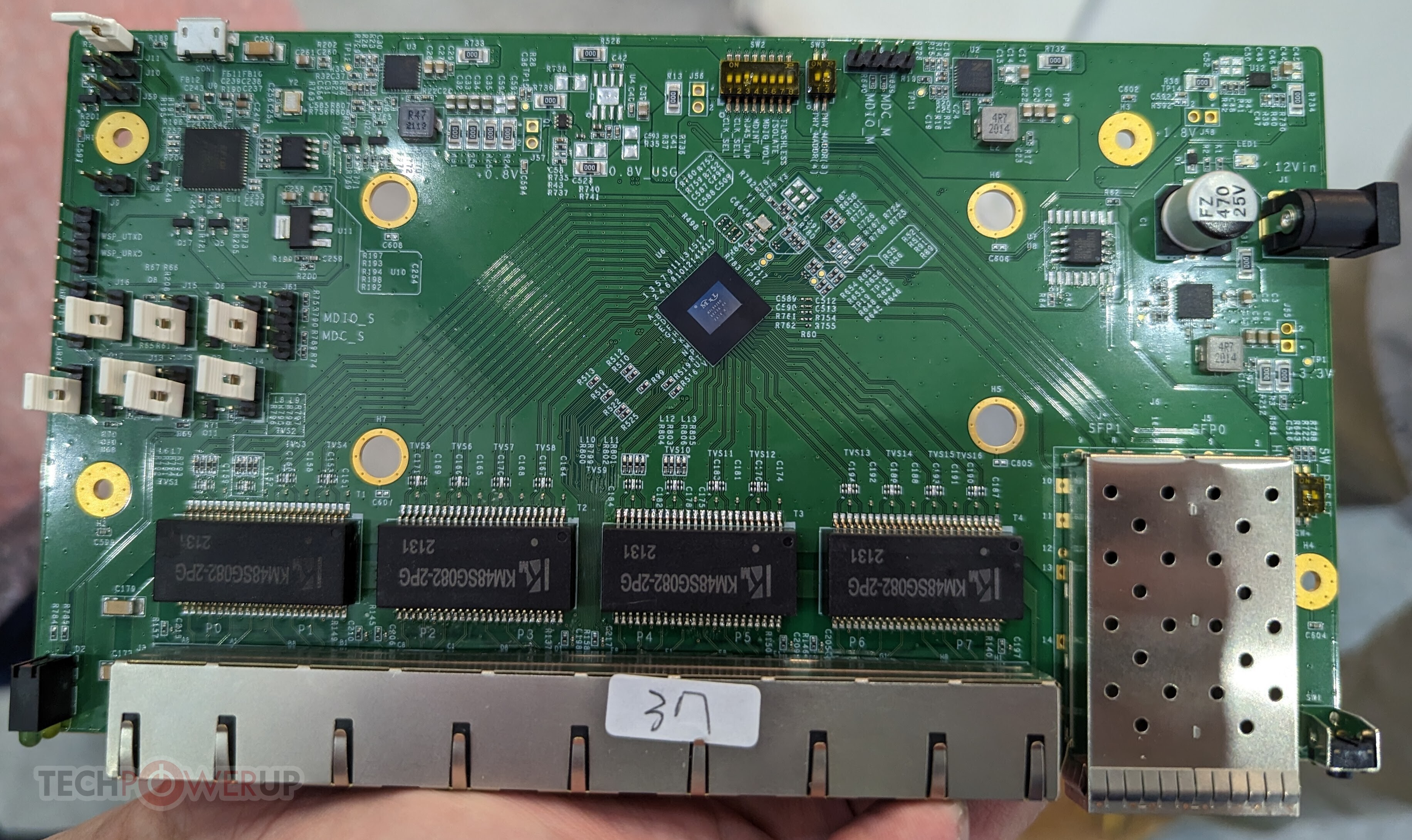
TPU managed to get an early sneak peek of MaxLinear's recently announced 8-port 2.5 Gbps switch IC, ahead of Computex official start tomorrow. The MXL86280 is going to bring some serious competition to the 2.5 Gbps switch market, as thanks to it being a single chip solution that integrates the Ethernet MAC and PHY, costs can be kept lower than competing two chip solutions that have a separate MAC and PHY. Although we weren't giving exact pricing, we were told that the MXL86280 should allow for more affordable 2.5 Gbps switches than those available in the market today, but not quite as affordable as the equivalent Gigabit switch.

MaxLinear also appears to have been fortunate with their chip design, as everything was working at the first tape-out, which is less common than you'd think when it comes to advanced chips The MXL86280 will be the first in what is expected to be a series of 2.5 Gbps switch solutions from MaxLinear, as the company is planning to release 5- and 6-port solutions in the future, which the company is hoping to win business in the router market space with. The test board that the company will have on display during Computex also features a pair of 2.5 Gbps SFP+ ports, which should be ideal for those with older 2.5 Gbps routers, cable modems or GPON equipment that only has fibre outputs. That said, the exact design of retail products might differ, so we'll have to wait and see what kind of products launch next year based on the MXL86280.

ASRock to Show New Gaming Monitors and More at Computex 2023

ASRock, a global leader in motherboards, graphics cards, monitors, and small form factor PCs, is excited to announce its participation in the upcoming COMPUTEX Taipei 2023 after years of anticipation. ASRock will showcase a range of breathtaking innovative products and highly anticipated technology demonstrations. Attendees will have the opportunity to explore the ASRock latest products and solutions firsthand; also, get the immersive gaming experience at ASRock booth.

Unveiling the Next-Gen ASRock Monitors
ASRock is set to showcase an exciting lineup of monitors at COMPUTEX 2023, featuring six existing products along with new gaming and business models. The spotlight will be on the PG558KF and PG32UMF, two high-end monitors.

MaxLinear Expands its Diverse Ethernet Portfolio with 2.5G Ethernet Switches and Eight Port 2.5G Enterprise PHYs

MaxLinear, Inc., a global leader in wired network solutions, today announced it is deepening its commitment to expanding its next-gen Ethernet portfolio with a new line of 2.5G Ethernet products. The family is comprised of new 2.5G Ethernet switches and eight port 2.5G Enterprise PHYs. The chipsets will anchor MaxLinear's already robust Ethernet portfolio - which includes 10/100, 1G, and 2.5G bridges, PHYs and switches. MaxLinear will demonstrate the new 2.5G solutions at Computex 2023, May 30 - June 2, 2023 in Taipei, Taiwan.

The demand for more robust Ethernet products is growing as 2.5G speeds expand into enterprise, retail, and industrial single and multiport applications, and more PCs offer 2.5G Ethernet ports. With new access technologies like xGPON and new Wi-Fi standards increasing the demand for higher LAN bandwidth, gigabit Ethernet is giving way to 2.5G Ethernet which can extend the bandwidth over existing CAT5e cable infrastructure by a factor of 2.5 comparatively. According to 2022 research by Allied Market Research, the global ethernet switch market was valued at $17.2 billion in 2021, and is projected to reach $26.1 billion by 2031, growing at a CAGR of 4.4% from 2022 to 2031. The rising demand for effective network infrastructure for varied application requirements is expected to contribute to this growth.

Zotac to Show First Mini-PC with Solid-State Active Cooling and More at Computex 2023

ZOTAC returns to COMPUTEX 2023 to showcase new innovations, from the world's first Mini-PC to feature Frore Systems' AirJet solid-state active-cooling chip, to various B2B solutions aimed at AI edge computing.

Event Highlights:
  • ZBOX PI430AJ with AirJet, the world's first solid-state active-cooled Mini-PC
  • ZBOX MAGNUS ONE and MAGNUS EN, with GeForce RTX 40 series and additional refreshed hardware
  • ZBOX C-Series Mini PC with an Intel Alder-Lake N processor
  • A full-range of B2B solutions, including NVIDIA JETSON systems, ZOTAC ZBOX PRO line-up, and NVIDIA Embedded GPU products
  • A showcase of ZOTAC's partnership with Sony Animation's SPIDER-MAN: ACROSS THE SPIDER-VERSE, including a movie-inspired booth, graphics cards and custom PC casemods

Streacom and CALYOS Tease the Unfashionably Late and Beleaguered SG10 for Computex 2023

Streacom have announced that they'll be hosting a booth at Computex with CALYOS, where they'll be showing the fruits of their labors on the long awaited SG10 passive-cooled chassis. If you're unfamiliar with the story of the SG10: back in late 2016 CALYOS made waves in the tech sphere with a novel new passively cooled ATX chassis prototype called the NSG S0. Their passive design relied on phase-change evaporator blocks and 'Loop Heat Pipe' runs out to condenser-finstack cooling zones that consumed the entire rear and front panels of the chassis to cool the GPU and CPU. The total thermal dissipation of this design was estimated at the time to allow for up to 600 W of heat, with final numbers to be determined after the design had been finalized. CALYOS opened a Kickstarter for the NSG S0 in early 2017 which attracted 461 backers and a quarter million Euro to fund the project goal of €150K. Many of the top contributors were told they would be receiving the finished NSG S0 by the end of 2017. A promise that fell immediately flat as the chassis never materialized for backers of the project. Dozens of project updates, excuses, executive changeovers, private funding campaigns, and empty promises finally led to Streacom being involved as the experienced party to redesign and deliver a product on the initial NSG S0 premise.

AMD Radeon RX 7600 Early Sample Offers RX 6750 XT Performance at 175W: Rumor

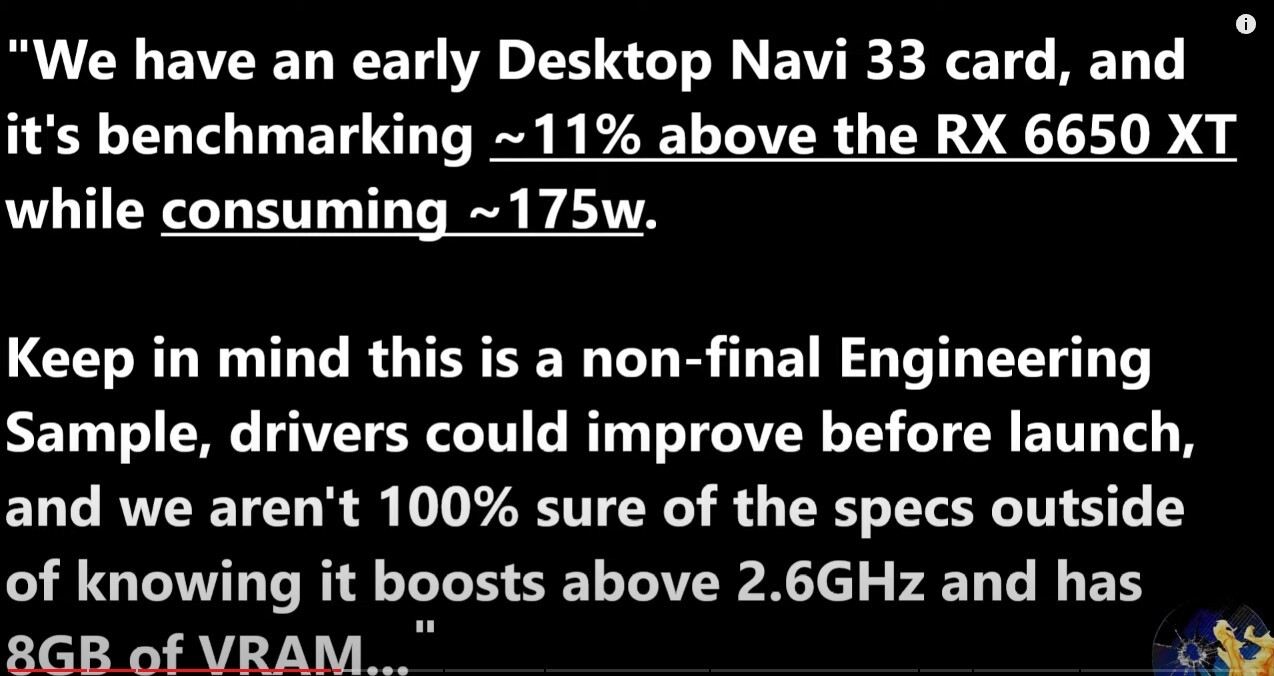
AMD is expected to debut its performance-segment Radeon RX 7600 RDNA3 graphics card in May-June 2023, with board partners expected to show off their custom-design cards in the 2023 Computex (June). Moore's Law is Dead reports that they've spoken to a source with access to an early graphics card sample running the 5 nm "Navi 33" silicon that powers the RX 7600. This card, with development drivers (which are sure to be riddled with performance limiters); offers a 11% performance uplift over the Radeon RX 6650 XT, and a gaming power draw of 175 W (the RX 6650 XT pulls around 185-190 W).

This is still an early sample running development drivers, but a 11% performance boost puts it in the league of the Radeon RX 6700 XT. Should a production RX 7600 with launch-day drivers put on another 5-7% performance over this, the RX 7600 could end up with performance roughly matching the RX 6750 XT (a slim performance lead over the RTX 3070 in 1080p gaming). Should its power draw also hold, one can expect custom-design graphics cards to ship with single 8-pin PCIe power connectors. A couple of nifty specs of the RX 7600 also leaked out in the MLID report: Firstly, that 8 GB will remain the standard memory size for the RX 7600, as it is for the current RX 6650 XT. Secondly, the RX 7600 engine clock is reported to boost "above" 2.60 GHz.

NVIDIA CEO Jensen Huang Confirmed as Headline Speaker at Computex 2023

Taiwan's External Trade Development Council (TAITRA) has announced the keynote speaker for Computex 2023 - NVIDIA co-founder and current CEO Jensen Huang is confirmed as the main host of the opening ceremony event. The forthcoming computer trade show will have a general opening on May 30, with a keynote address delivered by Huang scheduled for the day before. Computex 2023 is set to be hosted at the Taipei Nangang Exhibition Center (Hall 1 & Hall 2) until June. Co-organizer TAITRA boasts that 1000 exhibitors (from 17 nations) will participate in show floor activities. 3000 individual booths will be setup for exploration by prospective attendees.

Huang is one of several key electronics company CEOs announced as participants in conference events. He joins key representatives from firms such as Qualcomm, Acer, NXP Semiconductors and Supermicro. NVIDIA's leader was named in Time's 100 List of Most Influential People for the year 2021, and is a winner of numerous other awards, so it is no wonder that he gets top billing at Computex 2023. Attendees have a lot to look forward to, not limited to a (potentially) dynamic keynote speech delivered by Huang, since this year's show will be an open door affair. A return to proceedings last experienced in 2019, prior to global shutdowns.

TAITRA Announces Computex 2023—Over 3,000 Booths, 1,100 Exhibitors

Taiwan welcomes visitors back and you will no longer be required to quarantine on arrival. Don't miss out on the opportunity to network face-to-face with leading ICT, IoT, computing, CE, gaming, tech related companies, etc. from Taiwan at COMPUTEX TAIPEI. The show will have over 1,100 exhibitors from 16 countries with more coming soon in 3,000 booths. There will be over 30,000 visitors attending the show. Within the COMPUTEX show, we have a start-ups tradeshow focused on tech innovation called InnoVEX in which last year there were 195 startups from 14 countries and 500 VCs (Venture Capitalist), accelerators, and partners.

Gigabyte's Aorus Model S 12th is a Compact Mini-ITX Gaming System That Doesn't Rely on Liquid Cooling

Gigabyte has tried its luck at building compact gaming systems in the past, mainly part of its BRIX family of mini PCs, but none really took off. Last year the company introduced the Aorus Model S, although it didn't seem to garner much traction either, but it seems like Gigabyte is ready to give it another try, as the Model S 12th was introduced at Computex last week. Unfortunately there was no-one at the Gigabyte booth at the time that could tell us anything about it, so we had to go and dig up some details on our own. The base model appears to come with an Intel Core i7-12700K processor, which is fitted to a Z690 based Mini-ITX motherboard, paired with 32 GB of DDR5 4800 MHz memory. There's also a GeForce RTX 3070 graphics card with 8 GB of memory and a 2 TB PCIe 4.0 NVMe SSD.

However, what makes this system a bit special, is that it has a massive combined CPU and GPU cooler, with the entire system being cooled by one 120 mm and one 140 mm fan. The design is reminiscent of the Corsair One, albeit a bit more square and not quite as refined. The Model S 12th comes with all the features you'd expect from a higher-end PC these days, such as 2.5 Gbps Ethernet, WiFi 6, Bluetooth 5.2, a USB-C 3.2 Gen 2x2 (20 Gbps) port and a 750 W 80 Plus gold rated PSU. The system measures 190 x 189 x 400 mm (WxDxH) and has a volume of 14 litres. A decent, if not spectacular specification, although as we don't know the pricing, it's hard to say if it'll be good value or not.

Micron Moving to EUV Lithography in Taiwan

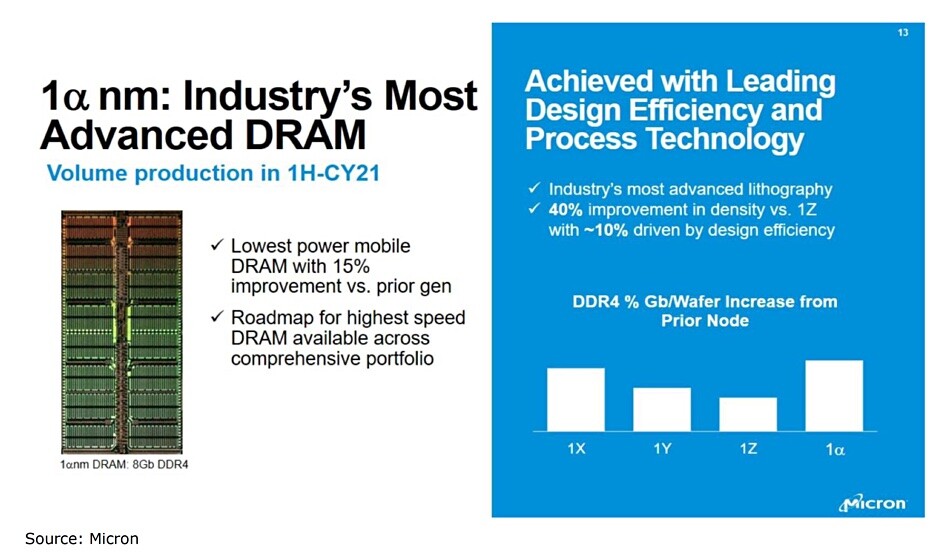
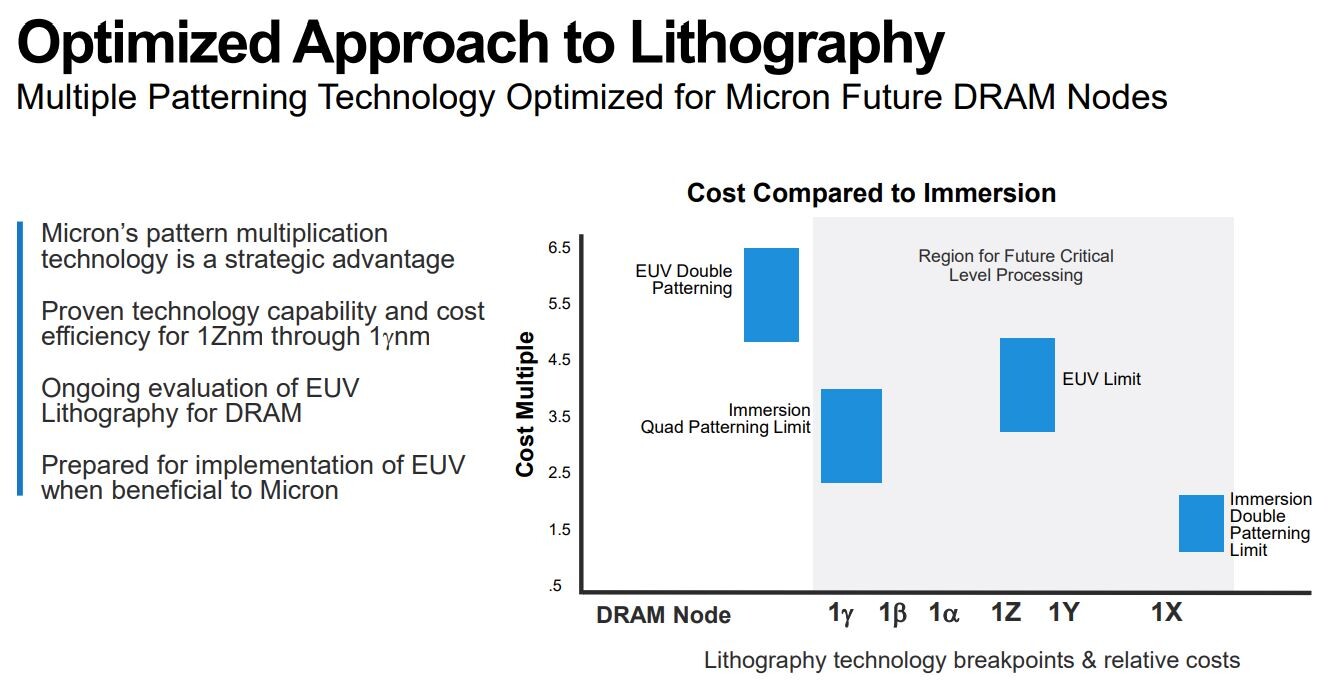
Although Micron is a predominantly US company, it also has some fabs in Japan, Singapore, the PRC and Taiwan, many of which became part of Micron after it bought other companies. Based on Micron's Computex presentation, it's getting ready to upgrade one of its three fabs in Taichung with extreme ultraviolet (EUV) lithography technology later this year. This is in preparation for the company to move to what it calls its 1-gamma process node for DRAM. Initially this seems to be a R&D node to help the company prepare for a wider rollout of EUV technology. Micron's current DRAM is based on its 1-alpha node and it's planning to move its 1-beta node into volume production next year, in its Taiwan fabs.

Micron's current 1-alpha node is based on DUV technology and was introduced last year, with the company claiming it had a 40 percent improvement in memory density over its previous 1Z node. Micron no longer mentions its die size in the commonly used nanometer measurement, but its 1Z node is said to have been around 11 to 13 nm, so it's likely that the 1-beta node will end up below 10 nm, if its 1-alpha node isn't already below 10 nm. Micron's longer term roadmap also includes a 1-delta node, which was meant to be its first EUV product, but this now seems to have been moved forward to its 1-gamma node. It's likely that Micron will be moving its other fabs to EUV in due time as well, but DRAM has so far not benefitted as much from node shrinks compared to most other types of integrated circuits, so it'll be interesting to see what gains EUV might bring.

xMEMS Microspeakers Should Start to Arrive in Headphones Later This Year

MEMS or microelectromechanical systems have been around for some time and the technology has allowed for the miniaturisation of a wide range of things. If you're not familiar with MEMS, then the quick version is that it's a way of making movable parts out of the same type silicon used to make semiconductors out of, in the same kind of fabs. xMEMS is a company that has specialised in making what the company calls microspeakers using MEMS technology and the first headphones based on its microspeakers should arrive later this year. The company was demoing a 3D printed mockup together with an OEM manufacturer called Vencer at Computex and we got some hands and ear on time with them.

The 3D printed units aren't what you'd call amazing looking and the fit was far from perfect, especially as the foam eartips that were installed didn't form a proper seal for yours truly. As such it was impossible to make any kind of sound quality judgement on the show floor, but it would appear that MEMS earphones share a lot with balanced armatures, in that a good seal is needed for them to sound good. The demo unit connected via USB-C and what's not in the picture, was a rather big and unsightly three button control unit on the cord, which also contained a CX31988 audio codec from Synaptics. One interesting aspect of MEMS speakers is that they can be used in both open and closed modes, where the open mode would be used for things like having phone calls or instead of enabling ambient mode on ANC type earbuds. The closed mode would work like a normal pair of driver units inside your earbuds. Hopefully we won't have to wait too long for a final product to arrive and put it through its paces, but we weren't given any indication on when retail products could be available, beyond sometime later this year.

340 Watt GaN Charger for Gaming Laptops Displayed at Computex

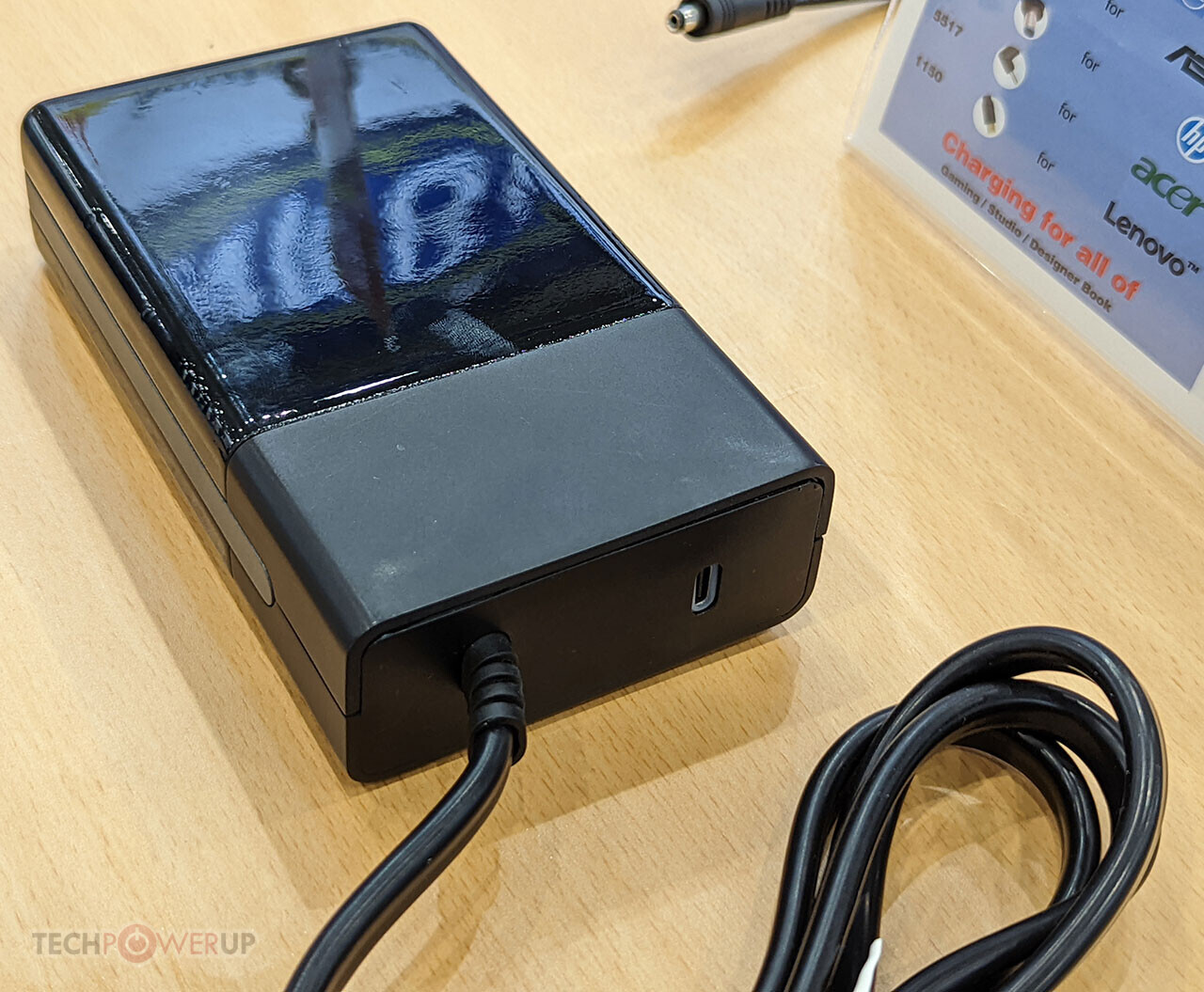
Somewhat unexpectedly, there were a handful of exhibitors from the PRC at Computex and walking around the mostly empty show, we spotted a company called Wii Power (no relation to Nintendo) that had a range of rather interesting Gallium Nitride or GaN chargers on display. The headline product wasn't even the most interesting model on display, but at 340 W, it's by far the most powerful GaN based charger we've seen to date. Although it wasn't a final product based on the looks of the housing, it gives us some insight into what to expect from future laptop chargers. It's still a rather large power brick at 150 x 86 x 34 mm, but it can deliver 20 V at up to 17 A over the fixed power cable. In addition to that, it also has a USB-C port with support for USB PD and a range of other charging standards that can deliver up to 45 W.

The company showed off another charger that has a combined output of 240 W and the primary USB-C port supports revision 3.1 of the USB PD standard and can deliver 140 W on its own. The secondary USB-C port can deliver another 100 W, but what makes this product interesting outside of this, is that Wii Power offers an adapter that can combine both of these outputs into a single 240 W output for charging more demanding laptops. There's even a third USB-C port and a USB-A for peripheral or phone charging, although each port is limited to 30 W and the total output can never exceed 240 W. A built-in display shows the Voltage, Amperage and Wattage that's being put out. It's still rather chunky at 130 x 80 x 32 mm, but considering the power it can put out, it's more compact than most similar non GaN chargers. Finally the company had a compact USB PD 3.1 travel charger that can again deliver up to 140 W, which is the equivalent of 28 V at 5 A. We're not expecting to see any of these products in their current guise in retail, but it's a clear sign of what to expect in terms of future charging products.

ASRock Reveals More Details About its Range of X670E Motherboards

Although there was a leak with a partial picture of the ASRock X670E Taichi board just days before Computex 2022 kicked off, it was hard to draw any real conclusions from it. The company has revealed more details about it, alongside the X670E Taichi Carrara, X670E Steel Legend and the X670E Pro RS. Let's start with the plain X670E Taichi, since this was the board that leaked. As is obvious now, the board doesn't feature a fan on the chipset heatsink, but rather a set of cogs, something we've seen before from ASRock. The board has very limited expansion options when it comes to PCIe slots, with a pair of x16 slots, which are sharing the 16 PCIe 5.0 lanes from the CPU and that's it. ASRock has gone for four M.2 slots, of which one is PCIe 5.0, most likely the one next to the memory slots. Interestingly, ASRock has kitted out the X670E Taichi with Thunderbolt 4, which means we're looking at an Intel chip here and there should also be support for USB4 and the two ports are located around the back of the board.

MSI Reveals the MEG 342C QD-OLED Display at Computex 2022

Rather unexpectedly, MSI has become the third company to reveal a QD-OLED based display, after Alienware and Samsung. The MEG 342C QD-OLED as the monitor is called, uses—just like the Alienware—a curved 34-inch QD-OLED panel. However, MSI has gone for FreeSync Premium Pro over G-Sync Ultimate, which should hopefully result in a lower retail price. The resolution is also the same as on the Alienware, 3440x1440 and the two also share the same 175 Hz refresh rate, 1800R curvature, 1000 nits peak HDR brightness and DisplayHDR True Black 400 certification. MSI claims the same DCI-P3 colour gamut of 99.3 percent, but the MEG 342C has a lower sRGB colour gamut of 139.1 percent versus 149 percent for the Alienware.

MSI has added a few features that the Alienware lack, such as a USB Type-C input with DisplayPort Alt Mode, KVM functionality and some MSI specific features such as a low blue-light mode and what the company calls "gaming intelligence". MSI also supports Picture-in-Picture and Picture-by-Picture, something that it's unclear if the Alienware supports or not. The MEG 342C is said to ship factory calibrated with a dE <2, which might not matter to most gamers, but should be important to anyone planning to use the display for video or photo editing work. MSI didn't disclose any pricing, nor any availability date.

Hands on With the Acer SpatialLabs View 3D Displays at Computex 2022

Last week, Acer unveiled its first two consumer implementations of its SpatialLabs 3D displays and the company is demoing its SpatialLabs technology at Computex this week, which gave TPU a chance to get some hands, or rather eyes on time. At the time Acer released the press release, it wasn't really clear how these displays work and we can now provide a lot more details on what makes these displays so special. The displays rely on a special lenticular lens, a pair of eye-tracking cameras and some very clever software algorithms. When the 3D mode is disabled, it looks just as sharp as any other display and there weren't any visible distortions or other distractions on the panel. Acer had multiple demos at its booth, of which one was an interactive demo with hand tracking, where you could pick items out of a treasure chest. Another demo showed various 3D renders and in both cases, the objects were protruding out of the display, as well as extending inwards and it was very convincing 3D demos, especially considering no glasses were involved.

The demos that matter more to the TPU readership should be the game demos, of which the main one was God of War running on a desktop PC. Acer claims to support some 500 game titles today and although a custom launcher is required to get the 3D effect in games, Acer told us that games from Steam, Epic etc. should work just fine via its launcher. Here the 3D effect is more of a depth effect, since unless the game in question incorporates support for the display, there's no way to get objects in the game to protrude out of the display. The game did get that extra 3D dimension that older solutions that rely on glasses had, but the overall feeling was very different. Sadly there's no way of presenting what it was like using the display, but it was very much an impressive experience.
Return to Keyword Browsing
Nov 20th, 2026 09:22 PST change timezone

New Forum Posts

Popular Reviews

TPU on YouTube

Controversial News Posts