News Posts matching #quantum computer

Return to Keyword Browsing

IBM Announces Quantum Nighthawk r3 Processor, Plans to Scale Beyond 1,000 Qubits in 2027

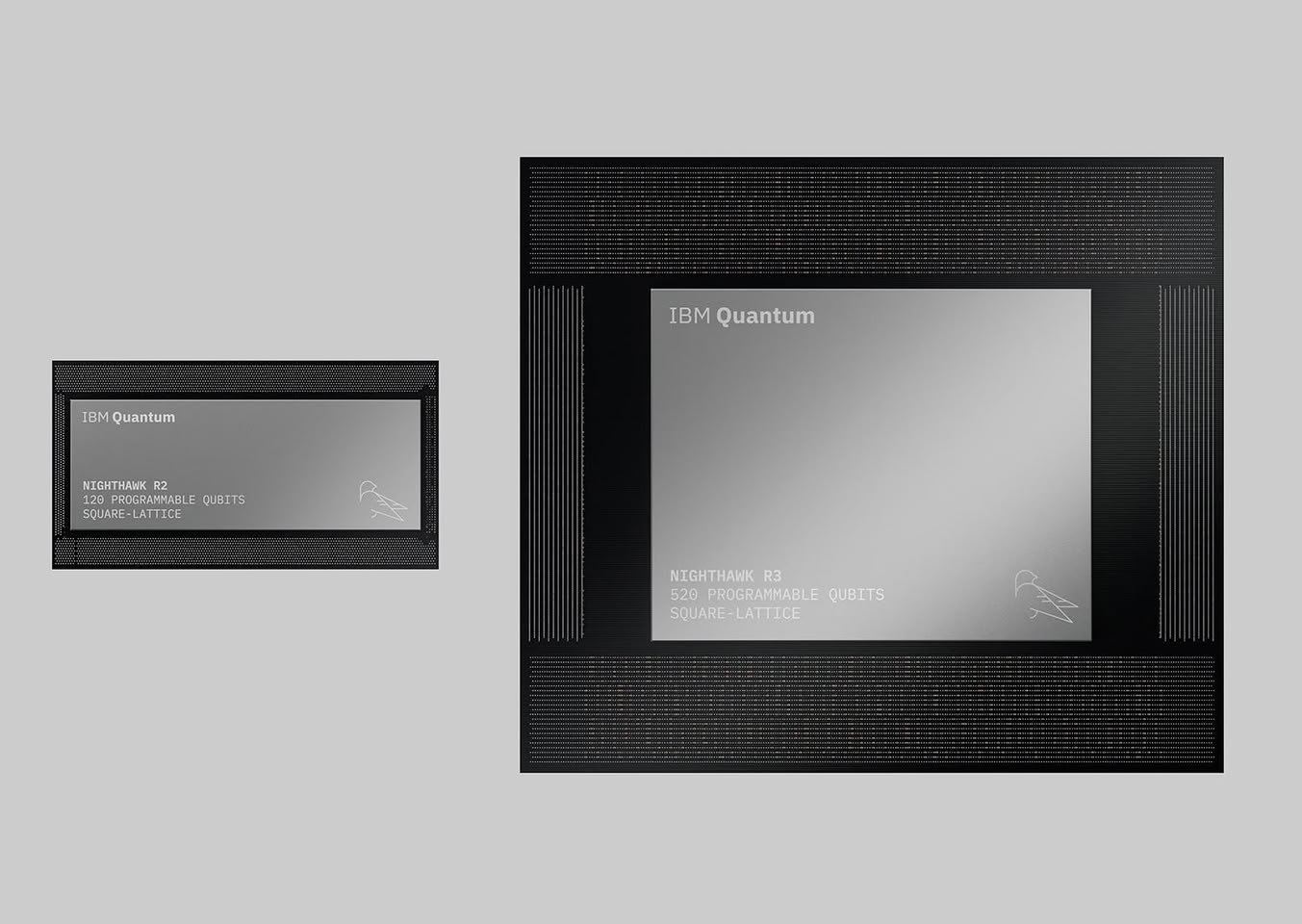
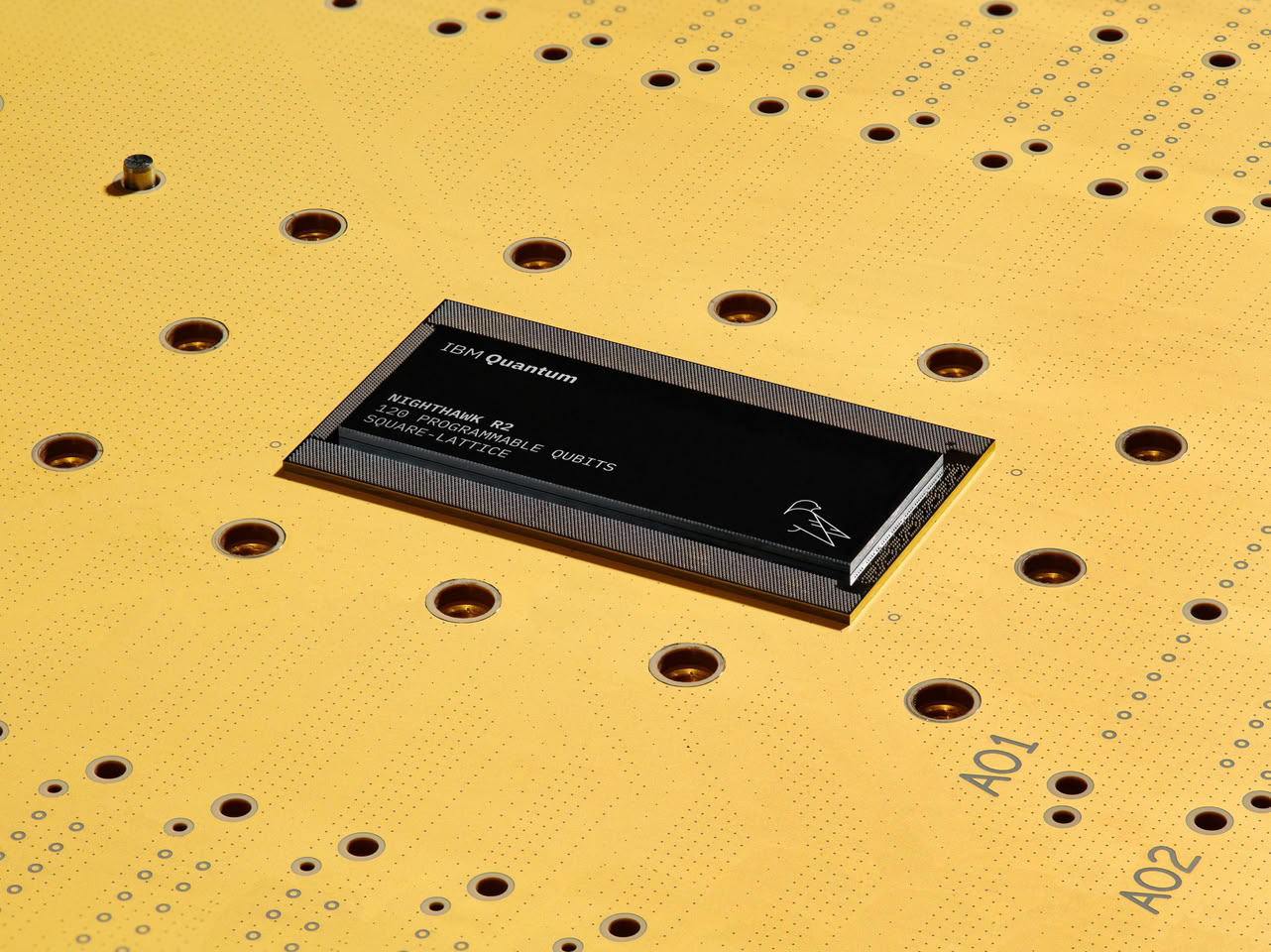
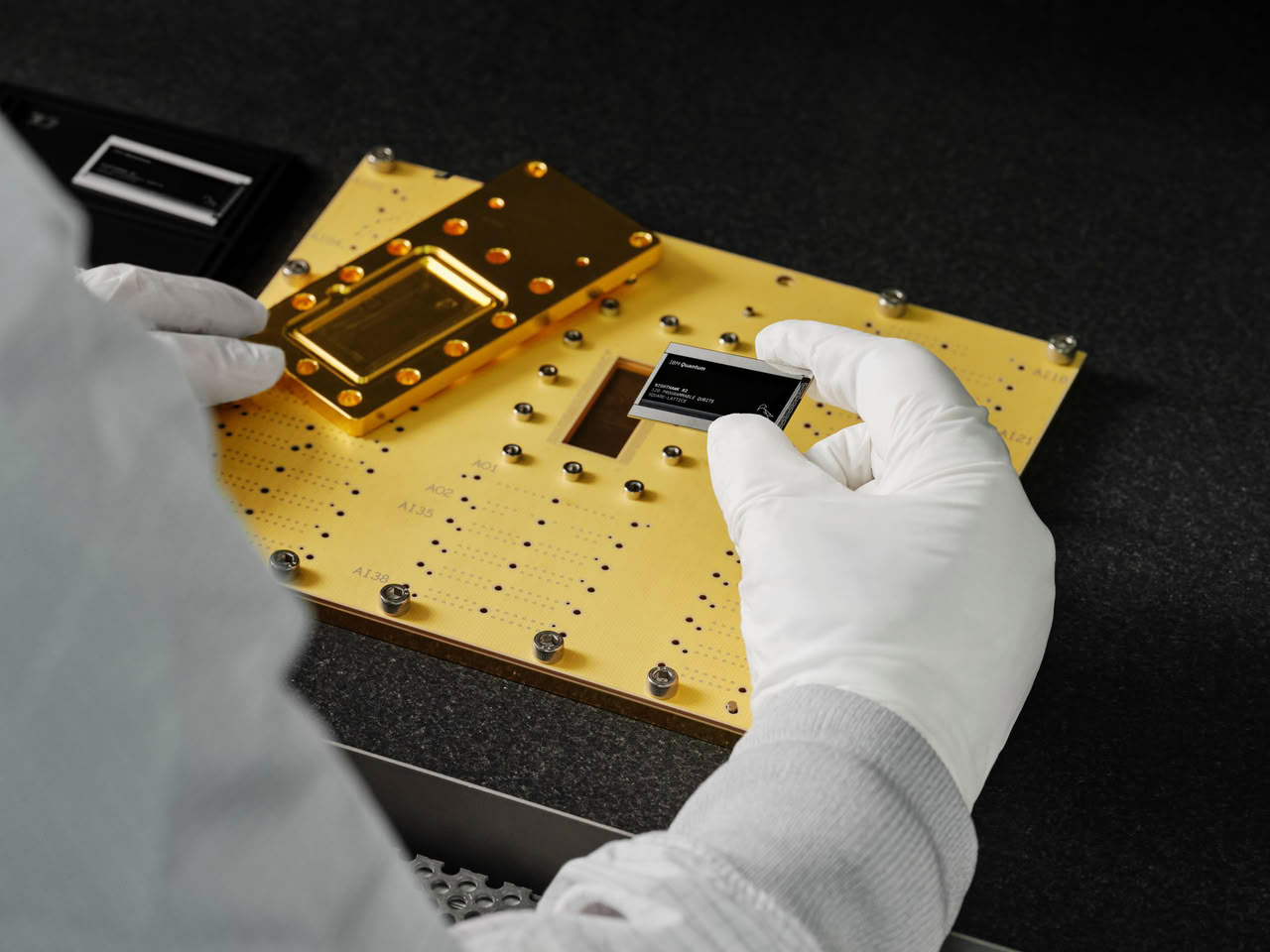
IBM (NYSE: IBM) today announced IBM Quantum Nighthawk r3, its next-generation processor, will be built to accurately execute 10,000 quantum operations across 520 qubits to tackle larger, more complex problems while maintaining the speed and quality demonstrated by the current generation Nighthawk available today. In 2027, IBM plans to link two Nighthawk r3 processors into a single system with more than 1,000 qubits.

To be at the frontier of quantum computing, industry-relevant applications demand both computational quality and speed. Speed matters because a quantum computer delivers its answer in samples: each run of a quantum circuit returns one result. Applications increasingly require circuits executing thousands of quantum operations on approximately 100 qubits or more, generating millions to billions of samples. Scale and quality enable increasingly complex computations, but speed determines whether these demanding workloads can be completed in practical timeframes and at a reasonable cost.

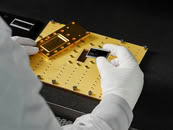
HRL Demonstrates a Silicon Quantum Processor That Runs Itself

HRL Laboratories published a quantum computing milestone in Nature today: a quantum processor that runs itself. Quantum computers normally depend on racks of external electronics to generate every control signal. HRL replaced those racks with a custom control chip that sits near the qubits, in the extreme cold. The combined system autonomously ran error correction, an essential routine for any future quantum computer.

HRL's approach addresses a central obstacle for all quantum computing platforms: how to control the enormous number of qubits that a useful machine will require without an unmanageable tangle of wiring and electronics.

IBM and U.S. Department of Commerce Announce America's First Purpose-Built Quantum Foundry

Today, IBM and the U.S. Department of Commerce (DoC) announced a Letter of Intent (LOI) to build an American quantum chip foundry, securing the nation's global quantum leadership and fueling the country's growing quantum ecosystem. The CHIPS incentive from the DoC will support the research and development efforts of a new IBM company: Anderon, which will be America's first pure-play quantum foundry. This initiative represents one of the most significant commitments by the U.S. Government to date in quantum R&D to position the United States to manufacture most of the world's quantum wafers.

In addition to the $1 billion in CHIPS incentives provided by the DoC, IBM will contribute $1 billion of cash into Anderon, along with IBM investing significant intellectual property, assets, and a skilled workforce, with additional investors expected as Anderon grows. Headquartered in Albany, New York as a standalone company, Anderon will operate as a state-of-the-art 300-millimeter quantum wafer foundry. It will help the nation solidify its leadership at the center of a thriving new quantum industry that is estimated to generate up to $850 billion in economic value by 2040 and spur American economic growth while also bolstering national security.

NVIDIA Launches Ising Open AI Models to Accelerate the Path to Useful Quantum Computers

NVIDIA today announced the world's first family of open source quantum AI models, NVIDIA Ising, designed to help researchers and enterprises build quantum processors capable of running useful applications. To achieve useful quantum applications at scale, significant breakthroughs are needed in quantum processor calibration and quantum error correction. AI is key for turning today's quantum processors into large-scale, reliable computers. Open models empower developers to build high-performance AI while maintaining total control over their data and infrastructure.

Named after a landmark mathematical model that dramatically simplified the understanding of complex physical systems, the NVIDIA Ising family provides high-performance, scalable AI tools for quantum error correction and calibration — two of the most critical challenges in building hybrid-quantum classical systems. Ising models run the world's best quantum processor calibration and enable researchers to tackle much larger, more complex problems with quantum computers by delivering up to 2.5x faster performance and 3x higher accuracy for the decoding process needed for quantum error correction.

Quantum Machines Launches Open Acceleration Stack Alongside NVIDIA and AMD

Today Quantum Machines launches The Open Acceleration Stack, a first-of-its-kind framework allowing users to integrate any classical processor (XPU) into their quantum control stack. This novel architecture allows quantum computers not only to be Quantum Error Correction (QEC)-ready and AI-ready, but also QEC- and AI-native.

The Open Acceleration Stack marks a significant expansion of Quantum Machines' Orchestration Platform, the industry's leading hardware and software framework for the control and operation of quantum processors. Using Quantum Machines' OPNIC (OPX Network Interface Card) and NVIDIA NVQLink, the framework enables an ultra-low, microsecond-level latency link between its proprietary Pulse Processing Unit (PPU) and high-performance accelerators, including GPUs, CPUs, FPGAs and ASICs.

Europe Launches Euro-Q-Exa Quantum Computer in Germany

Euro-Q-Exa, the first EuroHPC Joint Undertaking quantum computer deployed in Germany, has been unveiled at the Leibniz Supercomputing Centre (LRZ) in Garching, Munich. The deployment marks a significant step in Europe's effort to build long-term quantum capability as part of its sovereign digital infrastructure, alongside world-leading high-performance computing (HPC).

Installed, hosted, and operated at LRZ, Euro-Q-Exa is designed not merely to provide access to quantum computing, but to enable European researchers to build, operate, and scale quantum capabilities locally. By embedding the system within an established HPC environment, the system supports the development of hands-on expertise, operational know-how, and sustainable research capacity within Europe.

Quantum Art Raises $100M Series A to Drive Scalable, Multi-Core Quantum Computing

Quantum Art, a developer of full-stack quantum computers based on trapped-ion qubits and a proprietary scale-up architecture, today announced that it has closed a $100 million Series A funding round. The investment accelerates the company's path toward commercializing its systems, achieving quantum advantage, scaling its platform to enable quantum processors with thousands of qubits, and supporting Quantum Art's expansion from early revenues into significant commercial scale.

Bedford Ridge Capital led the round. The financing brings Quantum Art's total funding to date to $124 million following a seed round in 2022. The funding accelerates the development of Perspective, a 1,000-qubit multi-core system aimed at achieving quantum advantage, and supports prototyping of the company's third-generation 2D architecture targeting thousands of qubits for high-impact, real-world applications.

IBM and Cisco Announce Plans to Build a Network of Large-Scale, Fault-Tolerant Quantum Computers

Today, IBM and Cisco announced an intention to collaborate on the groundwork for networked distributed quantum computing, to be realized as soon as the early 2030s. By combining IBM's leadership in building useful quantum computers with Cisco's quantum networking innovations, the companies plan to explore how to scale large-scale, fault-tolerant quantum computers beyond IBM's ambitious roadmap. Additionally, they will work to solve fundamental challenges towards a quantum computing internet.

Within five years, IBM and Cisco will aim to demonstrate the first proof-of-concept for a network that combines individual, large-scale, fault-tolerant quantum computers, enabling them to work together to run computations over tens to hundreds of thousands of qubits. This network would allow problems to be run with potentially trillions of quantum gates, the fundamental entangling operations required for transformative quantum applications such as massive optimization problems, or the design of complex materials and medicines.

Broadcom Intros Brocade G820 Quantum-Safe Gen 8 128G SAN Switch

Broadcom Inc. (NASDAQ:AVGO), a global leader in semiconductor and infrastructure software solutions, today announced the availability of the Brocade X8 Directors and Brocade G820 56-port switch, the industry's first 128G Fiber Channel platforms designed for today's mission-critical workloads and enterprise AI applications. Brocade Gen 8 Fiber Channel safeguards storage for the quantum era and automates infrastructure management through embedded SAN AI technology.

"Brocade has been the trusted leader in Fiber Channel for more than 30 years. Our new Gen 8 Fiber Channel platforms advance the enterprise storage industry by securing storage networks against emerging quantum-era threats and by utilizing embedded SAN AI technology to automate application infrastructure management," said Dennis Makishima, vice president and general manager, Brocade Storage Networking, Broadcom. "These new 128G platforms establish a robust foundation for mission-critical and enterprise AI workloads."

IBM Delivers New Quantum Processors, Software, and Algorithm Breakthroughs

At the annual Quantum Developer Conference, IBM (NYSE: IBM) today unveiled fundamental progress on its path to delivering both quantum advantage by the end of 2026 and fault-tolerant quantum computing by 2029.

"There are many pillars to bringing truly useful quantum computing to the world," said Jay Gambetta, Director of IBM Research and IBM Fellow. "We believe that IBM is the only company that is positioned to rapidly invent and scale quantum software, hardware, fabrication, and error correction to unlock transformative applications. We are thrilled to announce many of these milestones today."

Quantinuum Announces Commercial Launch of New Helios Quantum Computer

Quantinuum, the world leader in quantum computing, today announced the launch of Helios, the world's most accurate general-purpose commercial quantum computer, designed to accelerate quantum computing adoption by enterprises. With the highest fidelity of any commercial system and a first-of-its-kind real-time control engine, Helios enables developers to program a quantum computer in much the same way they program heterogeneous classical computers. A new, modern Python-based programming language called Guppy allows developers to seamlessly combine hybrid compute capabilities—quantum and classical—in a single program. Helios is now available to customers through Quantinuum's cloud service and on-premise offering.

"The next computing inflection point starts today," said Dr. Rajeeb Hazra, President & CEO of Quantinuum. "For the first time enterprises can access a highly accurate general purpose quantum computer to drive real world impact, transforming how industries innovate - from drug discovery to finance to advanced materials."

NVIDIA Introduces NVQLink — Connecting Quantum and GPU Computing for 17 Quantum Builders and Nine Scientific Labs

NVIDIA today announced NVIDIA NVQLink, an open system architecture for tightly coupling the extreme performance of GPU computing with quantum processors to build accelerated quantum supercomputers.

Researchers from leading supercomputing centers at national laboratories including Brookhaven National Laboratory, Fermi Laboratory, Lawrence Berkeley National Laboratory (Berkeley Lab), Los Alamos National Laboratory, MIT Lincoln Laboratory, the Department of Energy's Oak Ridge National Laboratory, Pacific Northwest National Laboratory and Sandia National Laboratories guided the development of NVQLink, helping accelerate next-generation work on quantum computing. NVQLink provides an open approach to quantum integration, supporting 17 QPU builders, five controller builders and nine U.S national labs.

The Basque Government and IBM Inaugurate Europe's First IBM Quantum System Two

The Basque Government and IBM (NYSE: IBM) today unveiled the first IBM Quantum System Two in Europe at the IBM-Euskadi Quantum Computational Center in San Sebastián. The installation of this system marks a milestone in the partnership between the two parties, which began in 2023 within the framework of the BasQ - Basque Quantum initiative, promoted by the Basque Government to help make Euskadi an international hub for quantum technologies.

The system installed on the Ikerbasque Foundation's main campus, at the IBM-Euskadi Quantum Computational Center, was inaugurated at a ceremony featuring remarks from the President of the Basque Country Government, Mr. Imanol Pradales; Jay Gambetta, Director of IBM Research; Juan Ignacio Pérez Iglesias, Minister of Science, Universities, and Innovation of the Basque Government; Eider Mendoza, Deputy General of Gipuzkoa; Eneko Goia, the Mayor of San Sebastián; and Horacio Morell, General Manager of IBM Spain, Portugal, Greece and Israel. The opening ceremony was also attended by, among others, the First and Second Vice-Lehendakari, Ibone Bengoetxea and Mikel Torres; and the Deputies General of Álava and Bizkaia, Ramiro González and Elixabete Etxanobe; in addition to representation from academia, government, and industry.

IBM and AMD Collaborate with Zyphra on Next Generation AI Infrastructure

IBM (NYSE: IBM) and AMD (NASDAQ: AMD) today announced a collaboration to deliver advanced AI infrastructure to Zyphra, an open-source AI research and product company based in San Francisco, California. Under a multi-year agreement between IBM and Zyphra, IBM is positioned to deliver a large cluster of AMD Instinct MI300X GPUs on IBM Cloud for Zyphra to use for training frontier multimodal foundation models. This collaboration is expected to deliver among the largest advanced generative AI training capabilities to date powered by an AMD stack running on IBM Cloud.

Zyphra recently closed a Series A financing round at a $1B valuation to build a leading open-source/open-science superintelligence lab focused on advancing fundamental innovations in novel neural network architectures, long-term memory, and continual learning.

IonQ Achieves Record Breaking Quantum Performance Milestone of #AQ 64

IonQ, the leader in the quantum computing and networking industries, today announced it has achieved a record algorithmic qubit score of #AQ 64. This milestone was achieved on an IonQ Tempo system, three months ahead of schedule, establishing IonQ as the only company to reach #AQ 64 setting a new standard for quantum systems.

#AQ benchmarks measure a quantum system's ability to run quantum algorithms of increasing complexity and size while maintaining high fidelity. Achieving #AQ 64 indicates that IonQ's quantum systems can address a set of increasingly complex real-world applications such as energy grid distribution improvements, computational drug discovery, engineering simulation modeling, supply chain optimization, and enhanced fraud and anomaly detection.

Jülich Supercomputing Centre to Deploy World's First HPC NVIDIA DGX Quantum System

Quantum Machines, Arque Systems, and the Jülich Supercomputing Centre (JSC) announced today the first deployment of an NVIDIA DGX Quantum-powered quantum computer at a major supercomputing center, positioning Europe at the forefront of hybrid quantum-classical computing globally. This milestone at JSC, operator of Europe's fastest supercomputer JUPITER (ranked #4 globally) and the continent's first exascale system, represents a significant leap in integrating quantum computing capabilities into real-world high-performance computing environments. The deployment at this pioneering facility, which has led European HPC innovation for nearly two decades, provides researchers with unprecedented access to integrated quantum resources within one of the world's most powerful computational infrastructures.

DGX Quantum combines NVIDIA's Grace Hopper Superchip with Quantum Machines' OPX1000 hybrid quantum-classical controller, enabling seamless interaction between classical and quantum computing resources. The integration enables round-trip data transfer with latency under 4 microseconds - a 1000-fold improvement over previous implementations.

Quantum Motion Delivers the Industry's First Full-Stack Silicon CMOS Quantum Computer

Quantum Motion has delivered the industry's first full-stack quantum computer to be built using a standard silicon CMOS chip fabrication process - the same transistor technology used in conventional computers. Deployed at the UK National Quantum Computing Centre (NQCC), this is the first full-stack quantum computer to use mass manufacturable 300 mm silicon CMOS wafer technology and the first silicon spin-qubit computer installed under the NQCC's Quantum Computing Testbed Programme.

The system integrates the company's Quantum Processing Unit (QPU) with a user interface and control stack compatible with industry standard software frameworks, such as Qiskit and Cirq, making it a full-stack solution. The system has a data-centre-friendly footprint of just three 19" server racks, housing the dilution refrigerator and integrated control electronics. Auxiliary equipment is designed to sit separately, enabling it to fit in standard data-centre environments and supporting upgrades to much larger QPUs without any change to the system footprint.

PsiQuantum Raises $1 Billion to Build Million-Qubit Scale, Fault-Tolerant Quantum Computers

PsiQuantum today announced it has raised $1 billion in funding for its Series E round to build the world's first commercially useful, fault-tolerant quantum computers. This funding will equip the company to break ground on utility-scale quantum computing sites in Brisbane and Chicago, deploy large-scale prototype systems to validate systems architecture and integration, and further advance the performance of its quantum photonic chips and fault-tolerant architecture.

Led by funds and accounts managed by affiliates of BlackRock, along with Temasek and Baillie Gifford, this fundraising values the company at $7 billion and brings in new investors, including entities administered by Macquarie Capital, Ribbit Capital, NVentures (NVIDIA's venture capital arm), Adage Capital Management, Qatar Investment Authority (QIA), Type One Ventures, Counterpoint Global (Morgan Stanley), 1789 Capital, and S Ventures (SentinelOne). The round also included participation from existing investors including Blackbird, Third Point Ventures, and T. Rowe Price Associates, Inc.

IBM and AMD Join Forces to Build the Future of Computing

Today, IBM and AMD announced plans to develop next-generation computing architectures based on the combination of quantum computers and high-performance computing, known as quantum-centric supercomputing. AMD and IBM are collaborating to develop scalable, open-source platforms that could redefine the future of computing, leveraging IBM's leadership in developing the world's most performant quantum computers and software, and AMD's leadership in high-performance computing and AI accelerators.

Quantum computing is a completely different way to represent and process information. While classical computers use bits that can only be either a zero or one, quantum computers' qubits represent information according to the quantum mechanical laws of nature. These properties enable a much richer computational space to explore solutions to complex problems beyond the reach of classical computing alone, including in fields such as drug discovery, materials discovery, optimization, and logistics.

Fujitsu Starts Official Development of Plus-10,000-Qubit Superconducting Quantum Computer Targeting Completion in 2030

- Fujitsu today announced that it has started research and development towards a superconducting quantum computer with a capacity exceeding 10,000 qubits. Construction is slated for completion in fiscal 2030. The new superconducting quantum computer will operate with 250 logical qubits and will utilize Fujitsu's innovative "STAR architecture," an early-stage fault-tolerant quantum computing (early-FTQC) architecture also developed by the company. Fujitsu aims to make practical quantum computing possible, particularly in areas like materials science where complex simulations can unlock ground breaking discoveries, and to this end will focus on advancing key scaling technologies across various technical domains.

As part of this effort, Fujitsu has been selected as an implementing party for the "Research and Development Project of the Enhanced Infrastructures for Post-5G Information and Communication Systems" publicly solicited by the NEDO (New Energy and Industrial Technology Development Organization). Fujitsu will be contributing to the thematic area of advancing the development of quantum computers towards industrialization. The project will be promoted through joint research with Japan's National Institute of Advanced Industrial Science and Technology (AIST) and RIKEN, and will run until fiscal year 2027.

Keysight Installs World's Largest Commercial Quantum Control System in Japan

Keysight Technologies, Inc. has delivered the world's largest commercial quantum control system (QCS) to the National Institute of Advanced Industrial Science and Technology (AIST) in Japan. The system has been integrated into the Global Research and Development Center for Business by Quantum-AI Technology (G-QuAT). This control system is now part of the new evaluation testbed at G-QuAT, which will push the limits of what is possible with quantum computing in terms of both scale and performance.

All quantum computers require a control system to translate from the classical world of code and cables to the quantum world of photons and qubits. As quantum computers grow in size, complexity, and performance, requirements for the control system become much more stringent. Any gap in the control system performance can compromise the capabilities of the quantum computer, so it was important for AIST to select the right partner for this critical component.

D-Wave Quantum Announces Strategic Development Initiative for Advanced Cryogenic Packaging

D-Wave Quantum Inc., a leader in quantum computing systems, software, and services, today announced a new strategic development initiative focused on advanced cryogenic packaging. Designed to advance and scale both gate model and annealing quantum processor development, the initiative builds on D-Wave's technology leadership in superconducting cryogenic packaging and will expand the company's multi-chip packaging capabilities, equipment, and processes. By bolstering its manufacturing efforts with state-of-the-art technology, D-Wave aims to accelerate its cross-platform technology development efforts while maintaining and expanding fundamental components of its supply chain.

As part of this initiative, D-Wave is leveraging deep expertise and processes at the NASA Jet Propulsion Laboratory ("JPL"), a research and development lab federally funded by NASA and managed by Caltech. Harnessing JPL's superconducting bump-bond process, D-Wave has demonstrated end-to-end superconducting interconnect between chips, work that D-Wave expects will serve as an important foundation for scaling both D-Wave's annealing architectures and its fluxonium-based gate-model architectures. D-Wave believes that superconducting bump bonds will be key to the scalable control of fluxonium and to interconnectivity in multi-chip quantum processor architectures. D-Wave is also acquiring equipment and developing processes with a goal to increase circuit densities in its pioneering superconducting printed-circuit-board ("PCB") manufacturing, required for both scaling to larger processors and supporting analog-digital quantum computing technology.

IBM and RIKEN Unveil First IBM Quantum System Two Outside of the U.S.

IBM and RIKEN, a national research laboratory in Japan, today unveiled the first IBM Quantum System Two ever to be deployed outside of the United States and beyond an IBM Quantum Data Center. The availability of this system also marks a milestone as the first quantum computer to be co-located with RIKEN's supercomputer Fugaku—one of the most powerful classical systems on Earth. This effort is supported by the New Energy and Industrial Technology Development Organization (NEDO), an organization under the jurisdiction of Japan's Ministry of Economy, Trade and Industry (METI)'s "Development of Integrated Utilization Technology for Quantum and Supercomputers" as part of the "Project for Research and Development of Enhanced Infrastructures for Post 5G Information and Communications Systems."

IBM Quantum System Two at RIKEN is powered by IBM's 156-qubit IBM Quantum Heron, the company's best performing quantum processor to-date. IBM Heron's quality as measured by the two-qubit error rate, across a 100-qubit layered circuit, is 3x10⁻³ (with the best two-qubit error being 1x10⁻³)—which is 10 times better than the previous generation 127-qubit IBM Quantum Eagle. IBM Heron's speed, as measured by the CLOPS (circuit layer operations per second) metric is 250,000, which reflects another 10x improvement in the past year, over IBM Eagle.

NVIDIA NVL72 GB200 Systems Accelerate the Journey to Useful Quantum Computing

The integration of quantum processors into tomorrow's supercomputers promises to dramatically expand the problems that can be addressed with compute—revolutionizing industries including drug and materials development.

In addition to being part of the vision for tomorrow's hybrid quantum-classical supercomputers, accelerated computing is dramatically advancing the work quantum researchers and developers are already doing to achieve that vision. And in today's development of tomorrow's quantum technology, NVIDIA GB200 NVL72 systems and their fifth-generation multinode NVIDIA NVLink interconnect capabilities have emerged as the leading architecture.

IBM Plans "Quantum Starling" Fault-Tolerant Quantum Supercomputer

IBM has announced a detailed plan to create the world's first large-scale, fault-tolerant quantum computer by 2029. This system, named IBM Quantum Starling, will be located in a new Quantum Data Center in Poughkeepsie, New York. It is being developed to perform approximately 100 million quantum operations on 200 logical qubits, representing a significant leap, about 20,000 times more powerful than today's leading machines. Logical qubits are fundamental to the construction of error-corrected quantum processors. Each one encodes a single unit of quantum information across several physical qubits that continuously monitor each other for errors. By greatly reducing the error rates of logical qubits through this method, IBM intends to run complex algorithms with high reliability. This will open up new possibilities in fields like drug discovery, materials science, chemistry simulations, and large-scale optimization.

A key feature of Starling's design is its use of quantum low-density parity-check (qLDPC) error-correcting codes. These advanced codes need up to 90 percent fewer physical qubits compared to previous standard methods, which significantly lowers the required resources and infrastructure. IBM's research documents show how it will manage instruction sequencing, operation execution, and the real-time decoding of qubit measurements using conventional electronics like FPGAs or ASICs. IBM's updated Quantum Roadmap outlines several intermediate goals with processors named after birds. In 2025, IBM Quantum Loon will test long-range "C-coupler" interconnects and essential qLDPC components. Following that, in 2026, the modular Kookaburra chip will combine quantum memory with logical processing. In 2027, Cockatoo will connect multiple modules using "L-couplers," simulating the nodes of a larger system.
Return to Keyword Browsing
Nov 21st, 2026 14:04 PST change timezone

New Forum Posts

Popular Reviews

TPU on YouTube

Controversial News Posts