News Posts matching #quantum computing

Return to Keyword Browsing

IBM Quantum System One Quantum Computer Installed at PINQ²

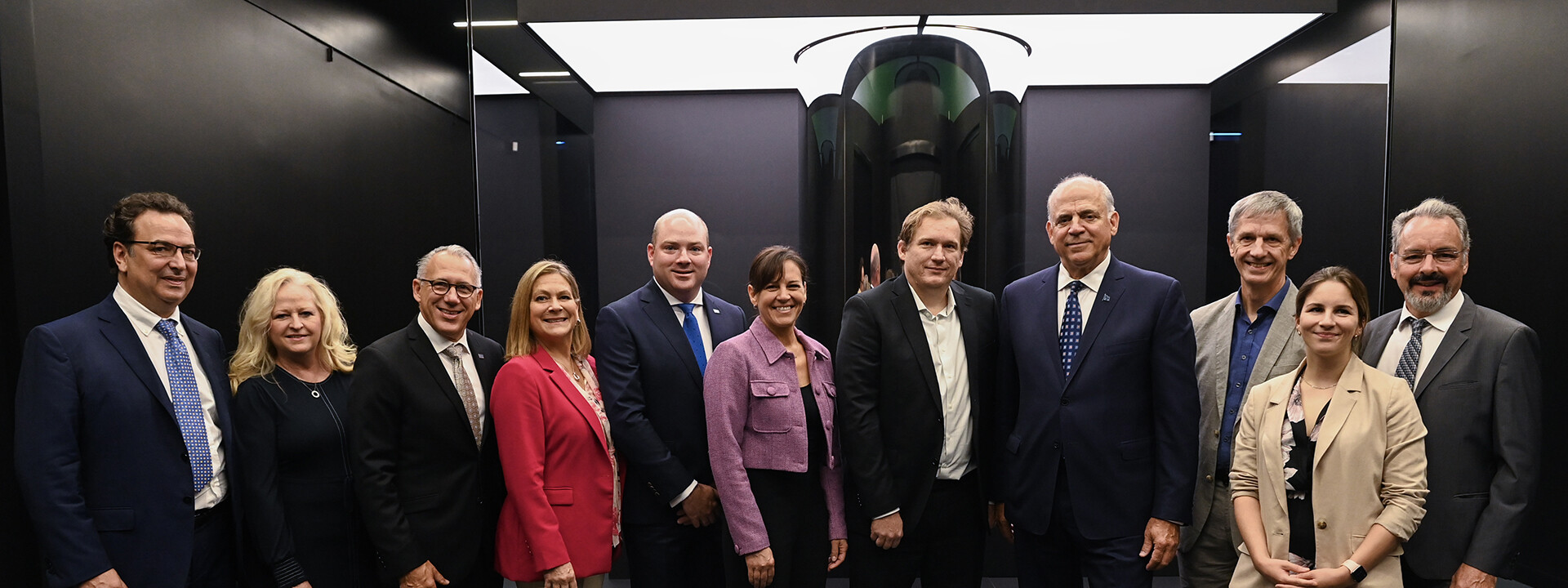
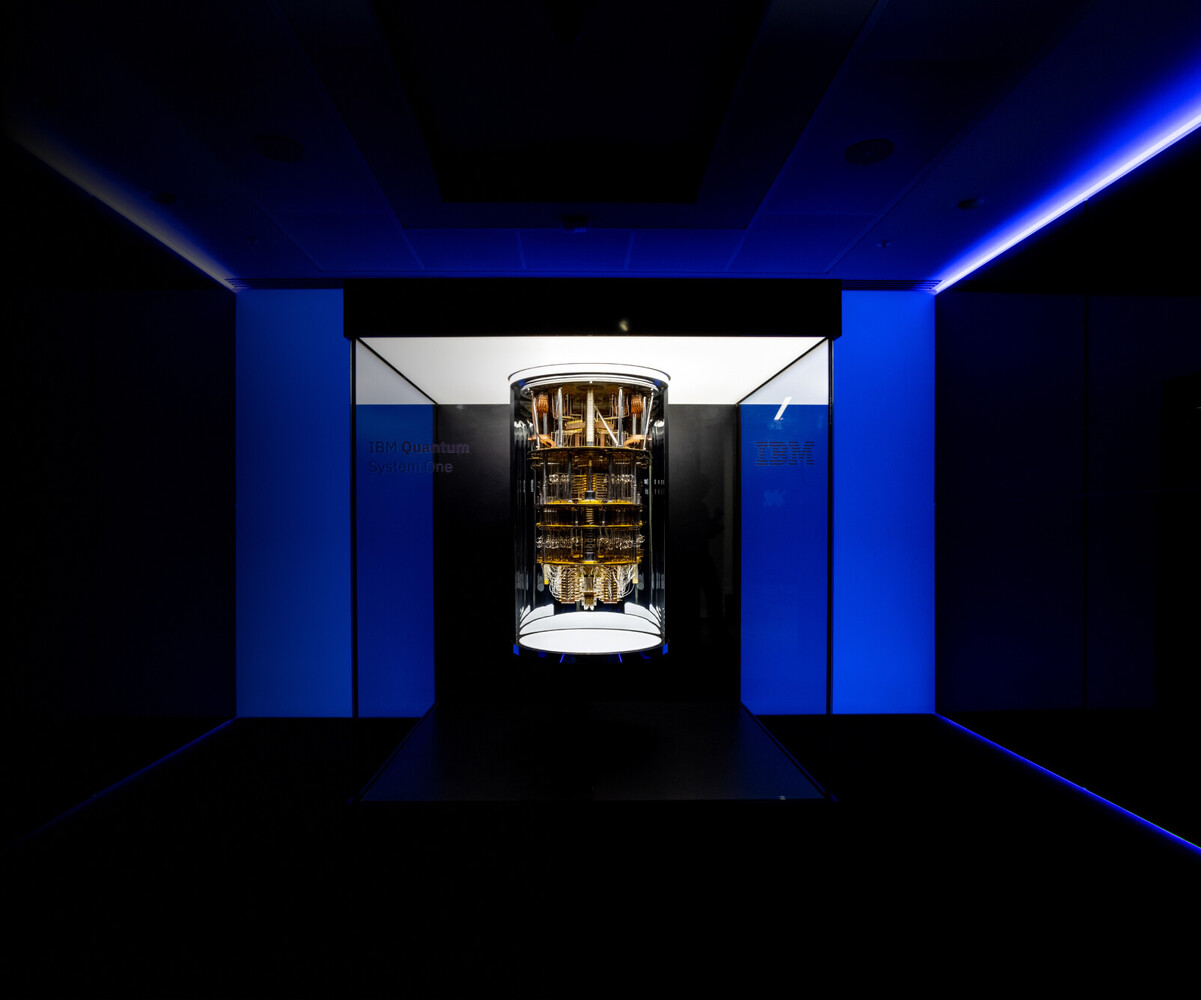
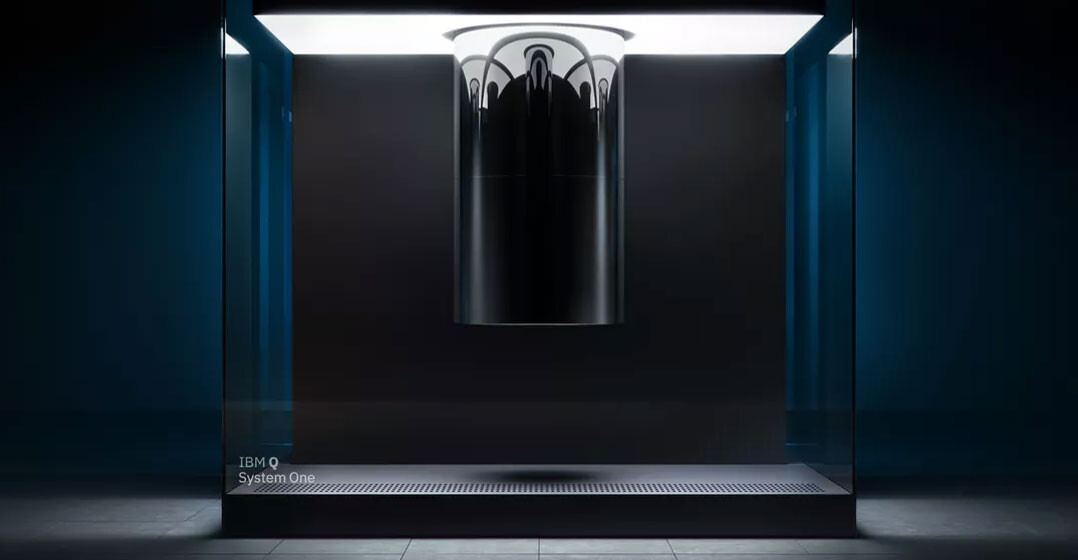
The Platform for Digital and Quantum Innovation of Quebec (PINQ²), a non-profit organization (NPO) founded by the Ministry of Economy, Innovation and Energy of Quebec (MEIE - ministère de l'Économie, de l'Innovation et de l'Énergie du Québec) and the Université de Sherbrooke, along with IBM, are proud to announce the historic inauguration of an IBM Quantum System One at IBM Bromont. This event marks a major turning point in the field of information technology and all sectors of innovation in Quebec, making PINQ² the sole administrator to inaugurate and operate an IBM Quantum System One in Canada. To date, this is one of the most advanced quantum computers in IBM's global fleet of quantum computers.

This new quantum computer in Quebec reinforces Quebec's and Canada's position as a force in the rapidly advancing field of quantum computing, opening new prospects for the technological future of the province and the country. Access to this technology is a considerable asset not only for the ecosystem of DistriQ, the quantum innovation zone for Quebec, but also for the Technum Québec innovation zone, the new "Energy Transition Valley" innovation zone and other strategic sectors for Quebec.

NVIDIA CEO Meets with India Prime Minister Narendra Modi

Underscoring NVIDIA's growing relationship with the global technology superpower, Indian Prime Minister Narendra Modi met with NVIDIA founder and CEO Jensen Huang Monday evening. The meeting at 7 Lok Kalyan Marg—as the Prime Minister's official residence in New Delhi is known—comes as Modi prepares to host a gathering of leaders from the G20 group of the world's largest economies, including U.S. President Joe Biden, later this week.

"Had an excellent meeting with Mr. Jensen Huang, the CEO of NVIDIA," Modi said in a social media post. "We talked at length about the rich potential India offers in the world of AI." The event marks the second meeting between Modi and Huang, highlighting NVIDIA's role in the country's fast-growing technology industry.

Quantum Machines Introduces OPX1000 - a Quantum Control Solution Built For Scale

Quantum Machines, the provider of breakthrough quantum control solutions that accelerate the development of practical quantum computers, today launched its new advanced quantum control solution, OPX1000. Designed for quantum computers at scale, OPX1000 leads the industry across key performance metrics including feedback capabilities, runtime, analog performance and channel density. Building on the company's proven technology which is currently used in over 200 quantum computing facilities, OPX1000 is the ideal control solution for builders of the largest and most advanced quantum computers in the world. The solution is now being deployed with select customers at leading quantum research laboratories and will be generally available later this year.

Major technology companies like IBM and Microsoft have unveiled ambitious roadmaps to build quantum computers with over 100,000 qubits in the next decade. As the industry steadily progresses towards practical large-scale quantum computers, laboratories around the world will have systems with hundreds and even thousands of qubits within the next few years. Running a system at this scale requires a quantum control solution that provides stellar performance, while supporting advanced capabilities like automated setup, embedded calibration, real-time error correction and more.

IDC Forecasts Worldwide Quantum Computing Market to Grow to $7.6 Billion in 2027

International Data Corporation (IDC) today published its second forecast for the worldwide quantum computing market, projecting customer spend for quantum computing to grow from $1.1 billion in 2022 to $7.6 billion in 2027. This represents a five-year compound annual growth rate (CAGR) of 48.1%. The forecast includes base quantum computing as a service as well as enabling and adjacent quantum computing as a service.

The new forecast is considerably lower than IDC's previous quantum computing forecast, which was published in 2021. In the interim, customer spend for quantum computing has been negatively impacted by several factors, including: slower than expected advances in quantum hardware development, which have delayed potential return on investment; the emergence of other technologies such as generative AI, which are expected to offer greater near-term value for end users; and an array of macroeconomic factors, such as higher interest and inflation rates and the prospect of an economic recession.

RPI Announced as the First University to House IBM's Quantum System One

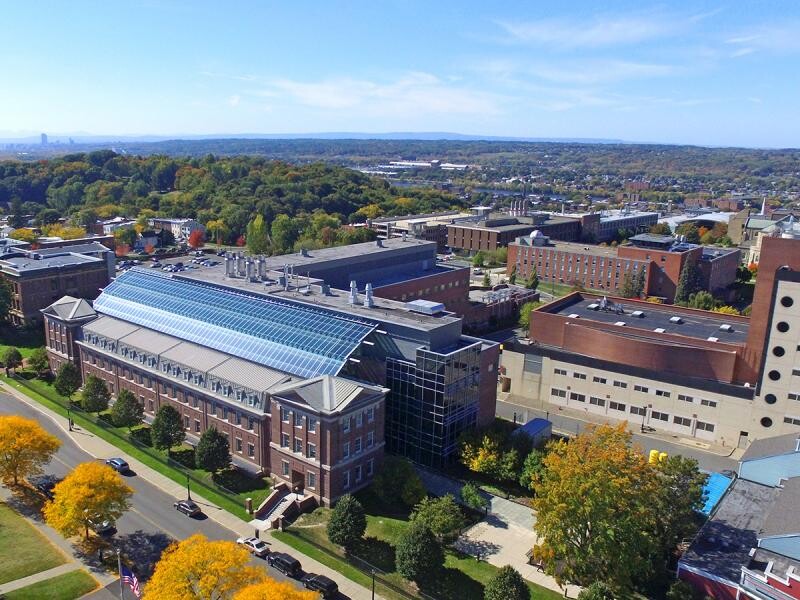
Today, it was announced that Rensselaer Polytechnic Institute will become the first university in the world to house an IBM Quantum System One. The IBM quantum computer, intended to be operational by January of 2024, will serve as the foundation of a new IBM Quantum Computational Center in partnership with Rensselaer Polytechnic Institute (RPI). By partnering, RPI's vision is to greatly enhance the educational experiences and research capabilities of students and researchers at RPI and other institutions, propel the Capital Region into a top location for talent, and accelerate New York's growth as a technology epicenter.

RPI's advance into research of applications for quantum computing will represent a more than $150 million investment once fully realized, aided by philanthropic support from Curtis R. Priem '82, vice chair of RPI's Board of Trustees. The new quantum computer will be part of RPI's new Curtis Priem Quantum Constellation, a faculty endowed center for collaborative research, which will prioritize the hiring of additional faculty leaders who will leverage the quantum computing system.

Pasqal Building Secondary Quantum Computer Production Facility in Canada

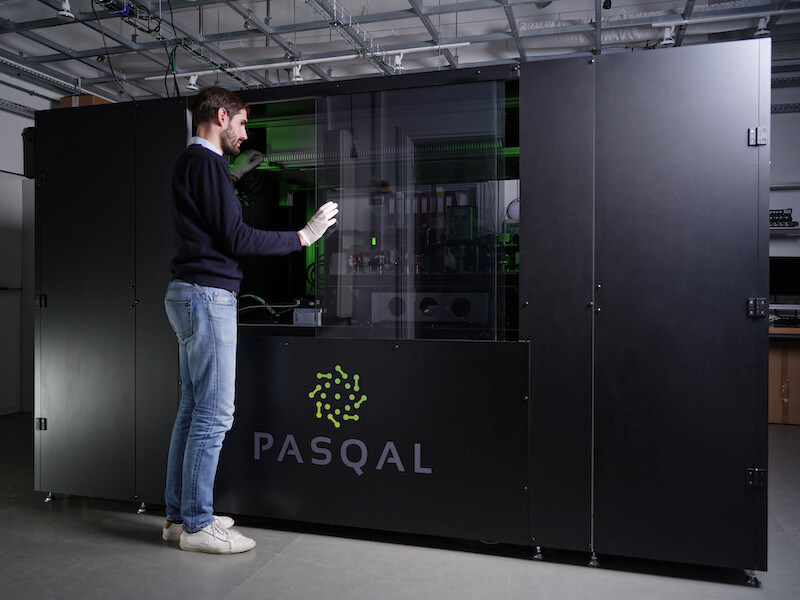
Pasqal, a French neutral atoms quantum computing startup, yesterday revealed that it was in the process of setting up its first North American production facility for quantum computers. The new premises will be located in Sherbrooke, Canada, at the Espace Quantique 1 of DistriQ - Quantum Innovation Zone. The company's (already established) primary manufacturing space - operating outside of Paris, France - will continue to serve the company's European client base, and the southern Quebec division will serve the North America market. Pasqal CCO Benno Broer informed EE Times Europe that: "We have already sold two quantum computers for on-premise install in Germany and France, which will be commissioned by the end of this year...We also already offer cloud access to our quantum computers located in our Paris-based datacenter."

Pasqal is aiming to open its new 4,600-square-meter facility in Sherbrooke, Canada in Q3 2023. Broer continued to talk about this expansion: "Our Canada operations are an extension of our existing successful European operation. Europe has been our primary market since 2019." Last November Pasqal, EDF, Excision and the Quantum Innovation Zone announced a joint venture and creation of a center of excellence to develop sustainable energy solutions, harnessing the potential of high-performance computing and quantum computing. They hope to have the first sustainable quantum-based solutions ready by 2024.

IBM Study Finds That CEOs are Embracing Generative AI

A new global study by the IBM Institute for Business Value found that nearly half of CEOs surveyed identify productivity as their highest business priority—up from sixth place in 2022. They recognize technology modernization is key to achieving their productivity goals, ranking it as second highest priority. Yet, CEOs can face key barriers as they race to modernize and adopt new technologies like generative AI.

The annual CEO study, CEO decision-making in the age of AI, Act with intention, found three-quarters of CEO respondents believe that competitive advantage will depend on who has the most advanced generative AI. However, executives are also weighing potential risks or barriers of the technology such as bias, ethics and security. More than half (57%) of CEOs surveyed are concerned about data security and 48% worry about bias or data accuracy.

IBM and UC Berkeley Collaborate on Practical Quantum Computing

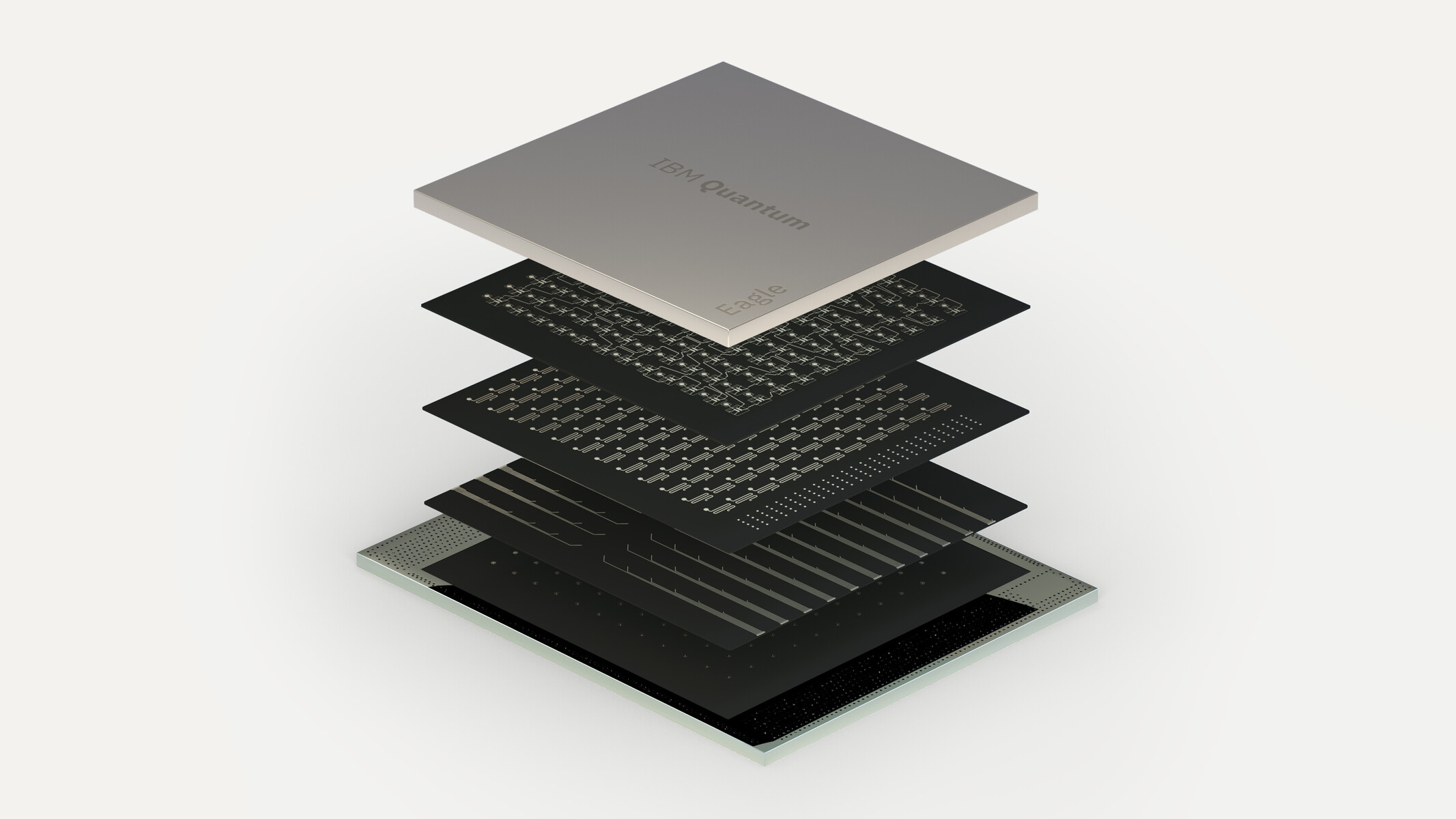
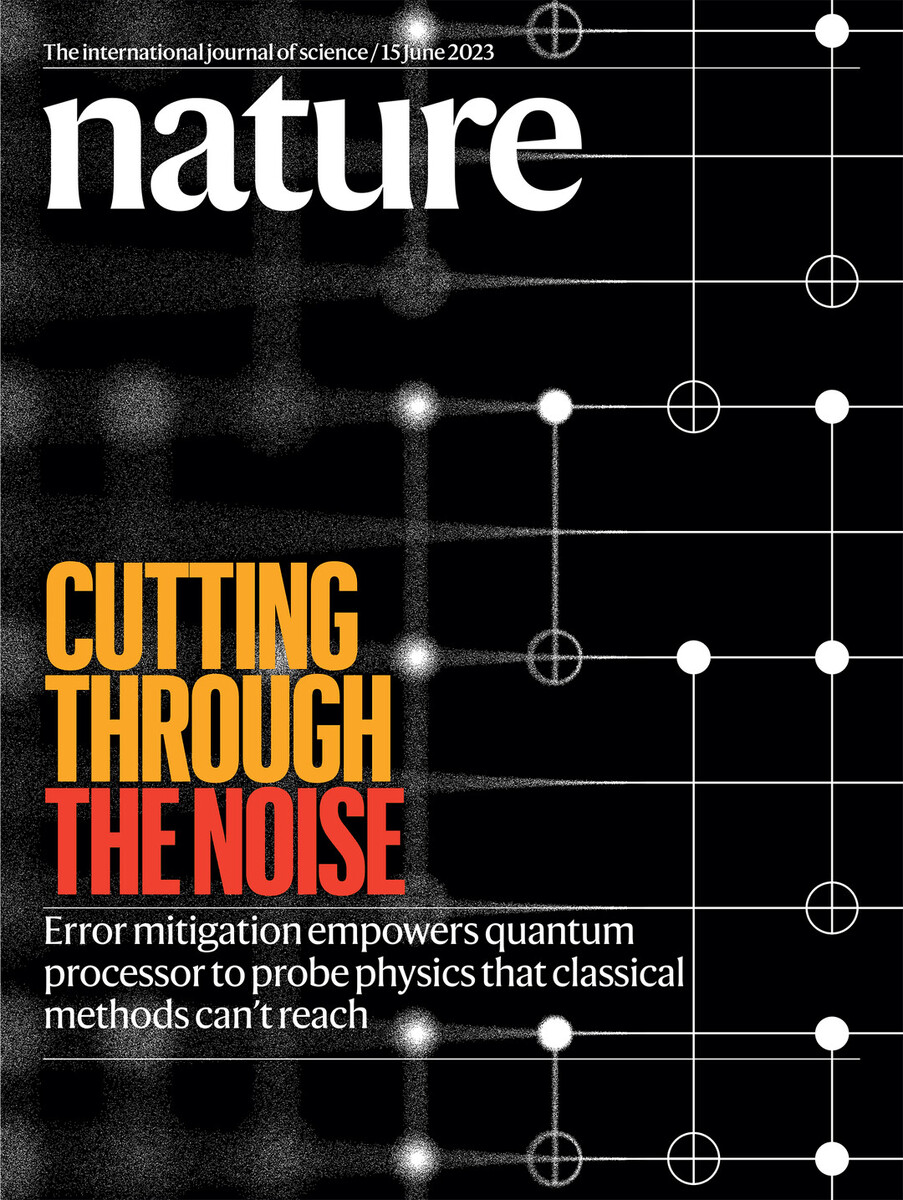
For weeks, researchers at IBM Quantum and UC Berkeley were taking turns running increasingly complex physical simulations. Youngseok Kim and Andrew Eddins, scientists with IBM Quantum, would test them on the 127-qubit IBM Quantum Eagle processor. UC Berkeley's Sajant Anand would attempt the same calculation using state-of-the-art classical approximation methods on supercomputers located at Lawrence Berkeley National Lab and Purdue University. They'd check each method against an exact brute-force classical calculation.

Eagle returned accurate answers every time. And watching how both computational paradigms performed as the simulations grew increasingly complex made both teams feel confident the quantum computer was still returning answers more accurate than the classical approximation methods, even in the regime beyond the capabilities of the brute force methods. "The level of agreement between the quantum and classical computations on such large problems was pretty surprising to me personally," said Eddins. "Hopefully it's impressive to everyone."

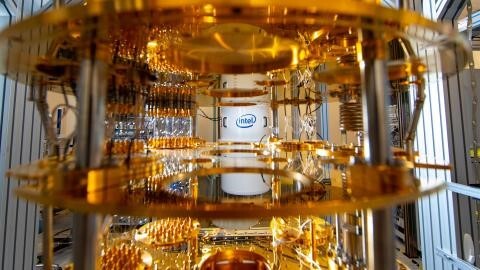
Intel's New Chip to Advance Silicon Spin Qubit Research for Quantum Computing

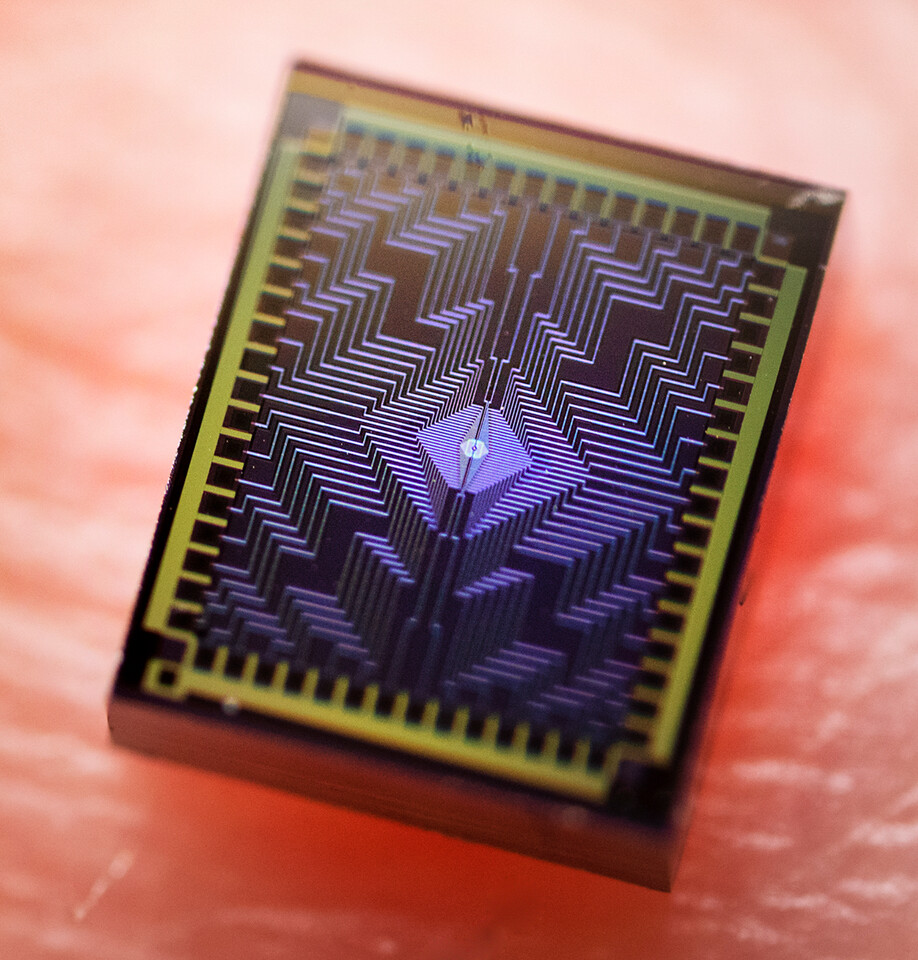
Today, Intel announced the release of its newest quantum research chip, Tunnel Falls, a 12-qubit silicon chip, and it is making the chip available to the quantum research community. In addition, Intel is collaborating with the Laboratory for Physical Sciences (LPS) at the University of Maryland, College Park's Qubit Collaboratory (LQC), a national-level Quantum Information Sciences (QIS) Research Center, to advance quantum computing research.

"Tunnel Falls is Intel's most advanced silicon spin qubit chip to date and draws upon the company's decades of transistor design and manufacturing expertise. The release of the new chip is the next step in Intel's long-term strategy to build a full-stack commercial quantum computing system. While there are still fundamental questions and challenges that must be solved along the path to a fault-tolerant quantum computer, the academic community can now explore this technology and accelerate research development."—Jim Clarke, director of Quantum Hardware, Intel

RIKEN and Intel Collaborate on "Road to Exascale"

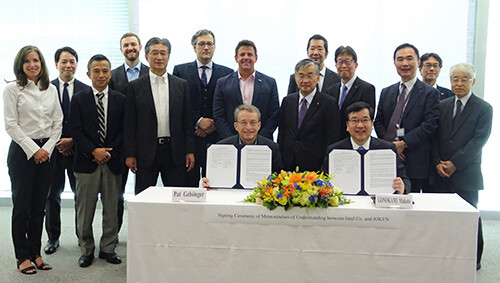
RIKEN and Intel Corporation (hereafter referred to as Intel) have signed a memorandum of understanding on collaboration and cooperation to accelerate joint research in next-generation computing fields such as AI (artificial intelligence), high-performance computing, and quantum computers. The signing ceremony was concluded on May 18, 2023. As part of this MOU, RIKEN will work with Intel Foundry Services (IFS) to prototype these new solutions.

IonQ Aria Now Available on Amazon Braket Cloud Quantum Computing Service

Today at Commercialising Quantum Global 2023, IonQ (NYSE: IONQ), an industry leader in quantum computing, announced the availability of IonQ Aria on Amazon Braket, AWS's quantum computing service. This expands upon IonQ's existing presence on Amazon Braket, following the debut of IonQ's Harmony system on the platform in 2020. With broader access to IonQ Aria, IonQ's flagship system with 25 algorithmic qubits (#AQ)—more than 65,000 times more powerful than IonQ Harmony—users can now explore, design, and run more complex quantum algorithms to tackle some of the most challenging problems of today.

"We are excited for IonQ Aria to become available on Amazon Braket, as we expand the ways users can access our leading quantum computer on the most broadly adopted cloud service provider," said Peter Chapman, CEO and President, IonQ. "Amazon Braket has been instrumental in commercializing quantum, and we look forward to seeing what new approaches will come from the brightest, most curious, minds in the space."

Quantinuum Solves Quantum Computing Error Correction With System H2 Model

Quantinuum is proud and excited to announce this significant step towards fault tolerant quantum computing. This achievement has been uniquely enabled by the release of Quantinuum's System Model H2 - the highest performing quantum computer ever built. The official launch of Quantinuum's H2 quantum processor, Powered by Honeywell, follows extensive pre-launch work with a variety of global partners and was essential to the controlled creation and manipulation of non-Abelian anyons. The precise control of non-Abelian anyons has been long held as the path to using topological qubits for a fault tolerant quantum computer.

Tony Uttley, President and COO of Quantinuum, stated "With our second-generation system, we are entering a new phase of quantum computing. H2 highlights the opportunity to achieve valuable outcomes that are only possible with a quantum computer. The development of the H2 processor is also a critical step in moving towards universal fault tolerant quantum computing." He added "This demonstration is a beautiful proof point in the power of our H-Series hardware roadmap and reinforces our primary purpose which is to enable our customers to tackle problems that were previously beyond the reach of classical computers. The implications for society are significant and we are excited to see how this technology truly changes the world."

43rd Symposium on VLSI Technology & Circuits to Focus on Multi-chiplet Devices and Packaging Innovations as Moore's Law Buckles

The 43rd edition of the Symposium on VLSI Technology & Circuits, held annually in Kyoto Japan, is charting the way forward for the devices of the future. Held between June 11-16, 2023, this year's symposium will see structured presentations, Q&A, and discussions on some of the biggest technological developments in the logic chip world. The lead (plenary) sessions drop a major hint on the way the wind is blowing. Leadning from the front is an address by Suraya Bhattacharya, Director, System-in-Package, A*STAR, IME, on "Multi-Chiplet Heterogeneous Integration Packaging for Semiconductor System Scaling."

Companies such as AMD and Intel read the tea-leaves, that Moore's Law is buckling, and it's no longer economically feasible to build large monolithic processors at the kind of prices they commanded a decade ago. This has caused companies to ration their allocation of the latest foundry node to only the specific components of their chip design that benefit the most from the latest node, and identify components that don't benefit as much, and disintegrate them into separate dies build on older foundry nodes, which are then connected through innovative packaging technologies.

NVIDIA Announces New System for Accelerated Quantum-Classical Computing

NVIDIA today announced a new system built with Quantum Machines that provides a revolutionary new architecture for researchers working in high-performance and low-latency quantum-classical computing. The world's first GPU-accelerated quantum computing system, the NVIDIA DGX Quantum brings together the world's most powerful accelerated computing platform - enabled by the NVIDIA Grace Hopper Superchip and CUDA Quantum open-source programming model - with the world's most advanced quantum control platform, OPX, by Quantum Machines.

The combination allows researchers to build extraordinarily powerful applications that combine quantum computing with state-of-the-art classical computing, enabling calibration, control, quantum error correction and hybrid algorithms. "Quantum-accelerated supercomputing has the potential to reshape science and industry with capabilities that can serve humanity in enormous ways," said Tim Costa, director of HPC and quantum at NVIDIA. "NVIDIA DGX Quantum will enable researchers to push the boundaries of quantum-classical computing."

Intel Releases Quantum Software Development Kit Version 1.0 to Grow Developer Ecosystem

After launching its beta version in September 2022, Intel today released version 1.0 of the Intel Quantum Software Development Kit (SDK). The SDK is a full quantum computer in simulation that can also interface with Intel's quantum hardware, including Intel's Horse Ridge II control chip and Intel's quantum spin qubit chip when it becomes available this year. The kit allows developers to program quantum algorithms in simulation, and it features an intuitive programming interface written in C++ using an industry-standard low-level virtual machine (LLVM) compiler toolchain. As a result, Intel's SDK offers seamless interfacing with C/C++ and Python applications, making it more versatile and customizable.

"The Intel Quantum SDK helps programmers get ready for future large-scale commercial quantum computers. It will not only help developers learn how to create quantum algorithms and applications in simulation, but it will also advance the industry by creating a community of developers that will accelerate the development of applications, so they are ready when Intel's quantum hardware becomes available," said Anne Matsuura, director of Quantum Applications & Architecture, Intel Labs.

IonQ to Open First Quantum Computing Manufacturing Facility in the US

IonQ, Inc. (NYSE: IONQ), an industry leader in quantum computing, today announced plans to open the first known dedicated quantum computing manufacturing facility in the U.S., located in the suburbs of Seattle, Washington. The new facility will house IonQ's growing R&D and manufacturing teams, as they develop systems to meet continued customer demand. With public support from U.S. Senator Patty Murray (D-WA) - an early proponent of the CHIPS and Science Act - and Congresswoman Suzan DelBene, US representative from Washington's 1st congressional district,today's announcement is part of IonQ's broader intent to invest $1 billion through expansion in the Pacific Northwest over the next 10 years.

"IonQ making the decision to open the first ever quantum computing manufacturing facility in the country right here in Bothell is a very big deal—and it's great news for Washington state," said Senator Murray. "Opening this facility will absolutely help ensure Washington state continues to be a leader in innovation and cutting-edge technologies—but it also means jobs that will be an investment in our families and their futures. These are the kinds of investments that happen when we pass legislation like the CHIPS and Science Act to invest in American manufacturing and build the economy of the future right here at home."

Intel Research Fuels Moore's Law and Paves the Way to a Trillion Transistors by 2030

Today, Intel unveiled research breakthroughs fueling its innovation pipeline for keeping Moore's Law on track to a trillion transistors on a package in the next decade. At IEEE International Electron Devices Meeting (IEDM) 2022, Intel researchers showcased advancements in 3D packaging technology with a new 10x improvement in density; novel materials for 2D transistor scaling beyond RibbonFET, including super-thin material just 3 atoms thick; new possibilities in energy efficiency and memory for higher-performing computing; and advancements for quantum computing.

"Seventy-five years since the invention of the transistor, innovation driving Moore's Law continues to address the world's exponentially increasing demand for computing. At IEDM 2022, Intel is showcasing both the forward-thinking and concrete research advancements needed to break through current and future barriers, deliver to this insatiable demand, and keep Moore's Law alive and well for years to come." -Gary Patton, Intel vice president and general manager of Components Research and Design Enablement

Intel Accelerates Developer Innovation with Open, Software-First Approach

On Day 2 of Intel Innovation, Intel illustrated how its efforts and investments to foster an open ecosystem catalyze community innovation, from silicon to systems to apps and across all levels of the software stack. Through an expanding array of platforms, tools and solutions, Intel is focused on helping developers become more productive and more capable of realizing their potential for positive social good. The company introduced new tools to support developers in artificial intelligence, security and quantum computing, and announced the first customers of its new Project Amber attestation service.

"We are making good on our software-first strategy by empowering an open ecosystem that will enable us to collectively and continuously innovate," said Intel Chief Technology Officer Greg Lavender. "We are committed members of the developer community and our breadth and depth of hardware and software assets facilitate the scaling of opportunities for all through co-innovation and collaboration."

Baidu Releases Superconducting Quantum Computer and World's First All-Platform Integration Solution, Making Quantum Computing Within Reach

Baidu, Inc., a leading AI company with strong Internet foundation, today announced its first superconducting quantum computer that fully integrates hardware, software, and applications. On top of this, Baidu also introduced the world's first all-platform quantum hardware-software integration solution that provides access to various quantum chips via mobile app, PC, and cloud. Launched at Quantum Create 2022, a quantum developer conference held in Beijing, this new offering paves the way for the long-awaited industrialization of quantum computing.

A revolutionary technology that harnesses the laws of quantum mechanics to solve problems beyond the reach of classical computers, quantum computing is expected to bring ground-breaking transformations in fields like artificial intelligence (AI), computational biology, material simulation, and financial technology. However, a significant gap remains between quantum devices and services.

US President Biden Signs Off on the CHIPS and Science Act

In President Biden's first year in office, the Biden-Harris Administration has implemented an industrial strategy to revitalize domestic manufacturing, create good-paying American jobs, strengthen American supply chains, and accelerate the industries of the future. These policies have spurred an historic recovery in manufacturing, adding 642,000 manufacturing jobs since 2021. Companies are investing in America again, bringing good-paying manufacturing jobs back home. The construction of new manufacturing facilities has increased 116 percent over last year.

Today, President Biden will sign into law the bipartisan CHIPS and Science Act of 2022, which will build on this progress, making historic investments that will poise U.S. workers, communities, and businesses to win the race for the 21st century. It will strengthen American manufacturing, supply chains, and national security, and invest in research and development, science and technology, and the workforce of the future to keep the United States the leader in the industries of tomorrow, including nanotechnology, clean energy, quantum computing, and artificial intelligence. The CHIPs and Science Act makes the smart investments so that American to compete in and win the future.

EuroHPC Joint Undertaking Announces Five Sites to Host new World-Class Supercomputers

JUPITER, the first European exascale supercomputer, will be hosted by the Jülich Supercomputing Centre in Germany. Exascale supercomputers are systems capable of performing more than a billion billion calculations per second and represent a significant milestone for Europe. By supporting the development of high-precision models of complex systems, they will have a major impact on European scientific excellence.

Introducing IonQ Forte, Improving Quantum Performance with a Software-Configurable Dynamic Laser System

IonQ, an industry leader in quantum computing, announced IonQ Forte, its latest generation of quantum systems. The system features novel, cutting-edge optics technology that enables increased accuracy and further enhances IonQ's industry leading system performance. Forte is expected to be initially available for select developers, partners, and researchers in 2022 and is expected to be available for broader customer access in 2023. Forte is the latest evolution towards a "software-configurable quantum computer," which is designed to allow the company to optimize the computing hardware for targeted user problems-ultimately, giving users customized algorithmic performance. The new system features acousto-optic deflector (AOD) technology, which allows IonQ to dynamically direct laser beams that drive quantum gates towards individual ions. The AOD is designed to minimize noise and overcome variations in ion position, improving fidelity in long chains of trapped ions, which is crucial for scaling quantum computers. In addition, key parameters, including qubit and gate configuration, can be tailored to user needs, creating a truly dynamic and flexible system.

Forte joins IonQ Aria as the company's second system with capacity of up to 32 qubits, has AOD systems capable of addressing up to 40 individual ion qubits, and is currently configured to use 31 of them. With this technological leap, IonQ furthers its commitment to building ever more powerful quantum computers with an increasing number of algorithmic qubits, an application-oriented performance metric for quantum computers. The new announcement follows IonQ's announcement of open-source access to native gates, which allows quantum application developers to explore software breakthroughs on top of IonQ hardware without having to choose from a set menu of gates.

Fujitsu launches "Fujitsu Computing as a Service (CaaS)," delivering customers access to world-leading computing technologies via the public cloud

Fujitsu today announced the launch of its new service portfolio "Fujitsu Computing as a Service (CaaS)" to accelerate digital transformation (DX) and empower customers globally by offering access to some of the world's most advanced computing technologies via the cloud for commercial use. The new service encompasses advanced computing resources like Fujitsu's quantum-inspired Digital Annealer technology, the computing technology at the heart of the world's fastest supercomputer, Fugaku, and software applications that allow a wide range of users to solve problems with AI and machine learning. Fujitsu will begin delivery of these new services to the Japanese market starting in October 2022 with a global rollout to international regions including Europe, Asia Pacific, and the Americas to follow.

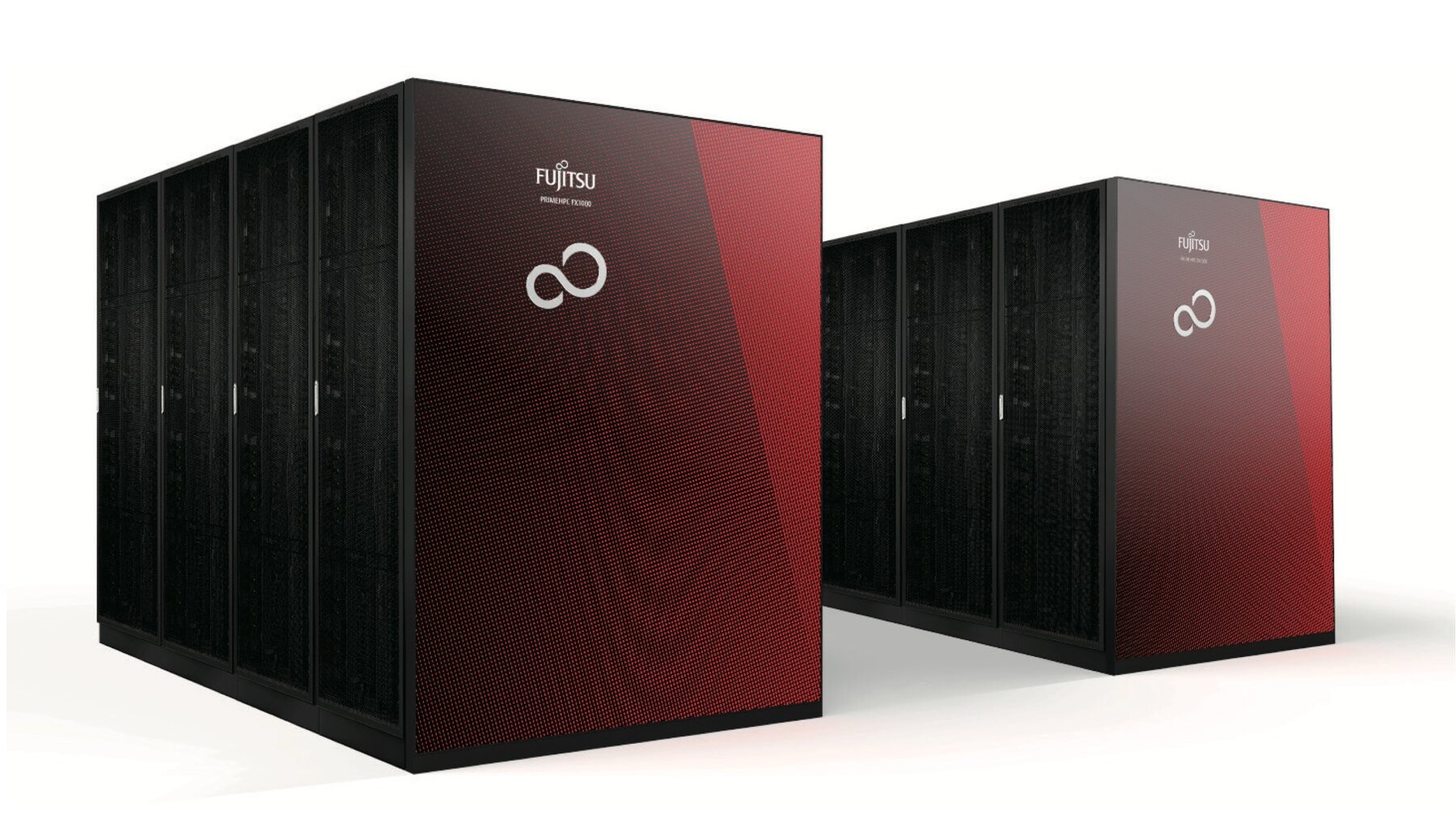
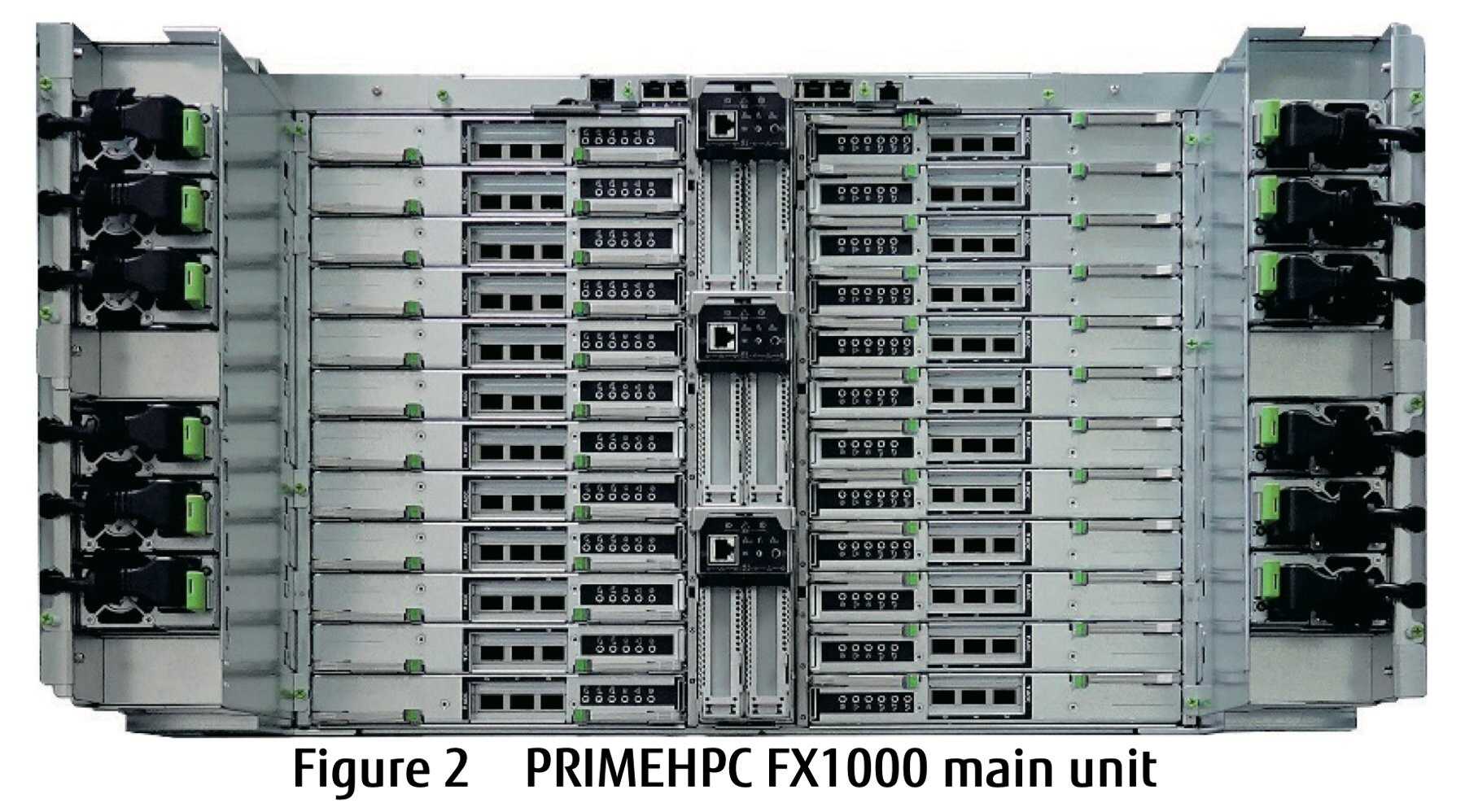
As the first step, Fujitsu will begin preorders for "Fujitsu Cloud Service HPC," which offers the computing power of the "Fujitsu Supercomputer PRIMEHPC FX1000," which shares the same CPU at the heart of the supercomputer Fugaku. Fujitsu will begin sales of the service for the general public and organizations in Japan starting April 6, 2022, with delivery to commence from October. In the months ahead, Fujitsu will further add services for its Digital Annealer technology and AI cloud services to its service lineup in order to provide further value-added services that seamlessly integrate various solutions.

Announcing IBM z16: Real-time AI for Transaction Processing at Scale and Industry's First Quantum-Safe System

IBM today unveiled IBM z16, IBM's next-generation system with an integrated on-chip AI accelerator—delivering latency-optimized inferencing. This innovation is designed to enable clients to analyze real-time transactions, at scale -- for mission-critical workloads such as credit card, healthcare and financial transactions. Building on IBM's history of security leadership, IBM z16 also is specifically designed to help protect against near-future threats that might be used to crack today's encryption technologies.

IBM innovations, including the IBM z16, have formed the technology backbone of the global economy for decades. Today's modern IBM mainframe is central to hybrid cloud environments, valued by two thirds of the Fortune 100, 45 of the world's top 50 banks, 8 of the top 10 insurers, 7 of the top 10 global retailers and 8 out of the top 10 telcos as a highly secured platform for running their most mission critical workloads. For example, according to a recent IBM commissioned study by Celent "Operationalizing Fraud Prevention on IBM Z," IBM zSystems run 70% of global transactions, on a value basis. "IBM is the gold standard for highly secured transaction processing. Now with IBM z16 innovations, our clients can increase decision velocity with inferencing right where their mission critical data lives," said Ric Lewis, SVP, IBM Systems. "This opens up tremendous opportunities to change the game in their respective industries so they will be positioned to deliver better customer experiences and more powerful business outcomes.

Fujitsu Achieves Major Technical Milestone with World's Fastest 36 Qubit Quantum Simulator

Fujitsu has successfully developed the world's fastest quantum computer simulator capable of handling 36 qubit quantum circuits on a cluster system featuring Fujitsu's "FUJITSU Supercomputer PRIMEHPC FX 700" ("PRIMEHPC FX 700")(1), which is equipped with the same A64FX CPU that powers the world's fastest supercomputer, Fugaku.

The newly developed quantum simulator can execute the quantum simulator software "Qulacs"(3) in parallel at high speed, achieving approximately double the performance of other significant quantum simulators in 36 qubit quantum operations. Fujitsu's new quantum simulator will serve as an important bridge towards the development of quantum computing applications that are expected to be put to practical use in the years ahead.
Return to Keyword Browsing
Nov 26th, 2026 00:23 CST change timezone

New Forum Posts

Popular Reviews

TPU on YouTube

Controversial News Posts