News Posts matching #quantum computing

Return to Keyword Browsing

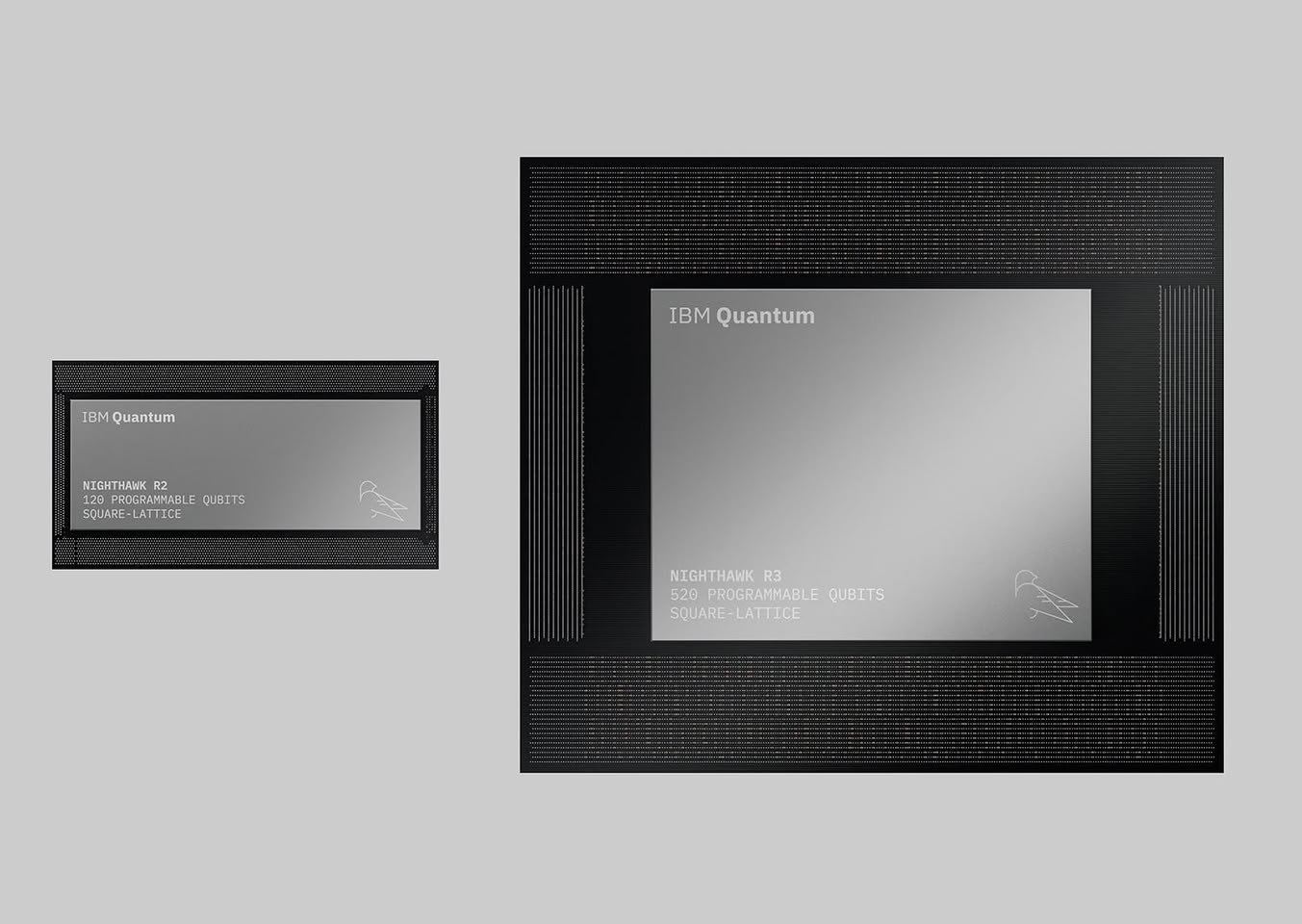
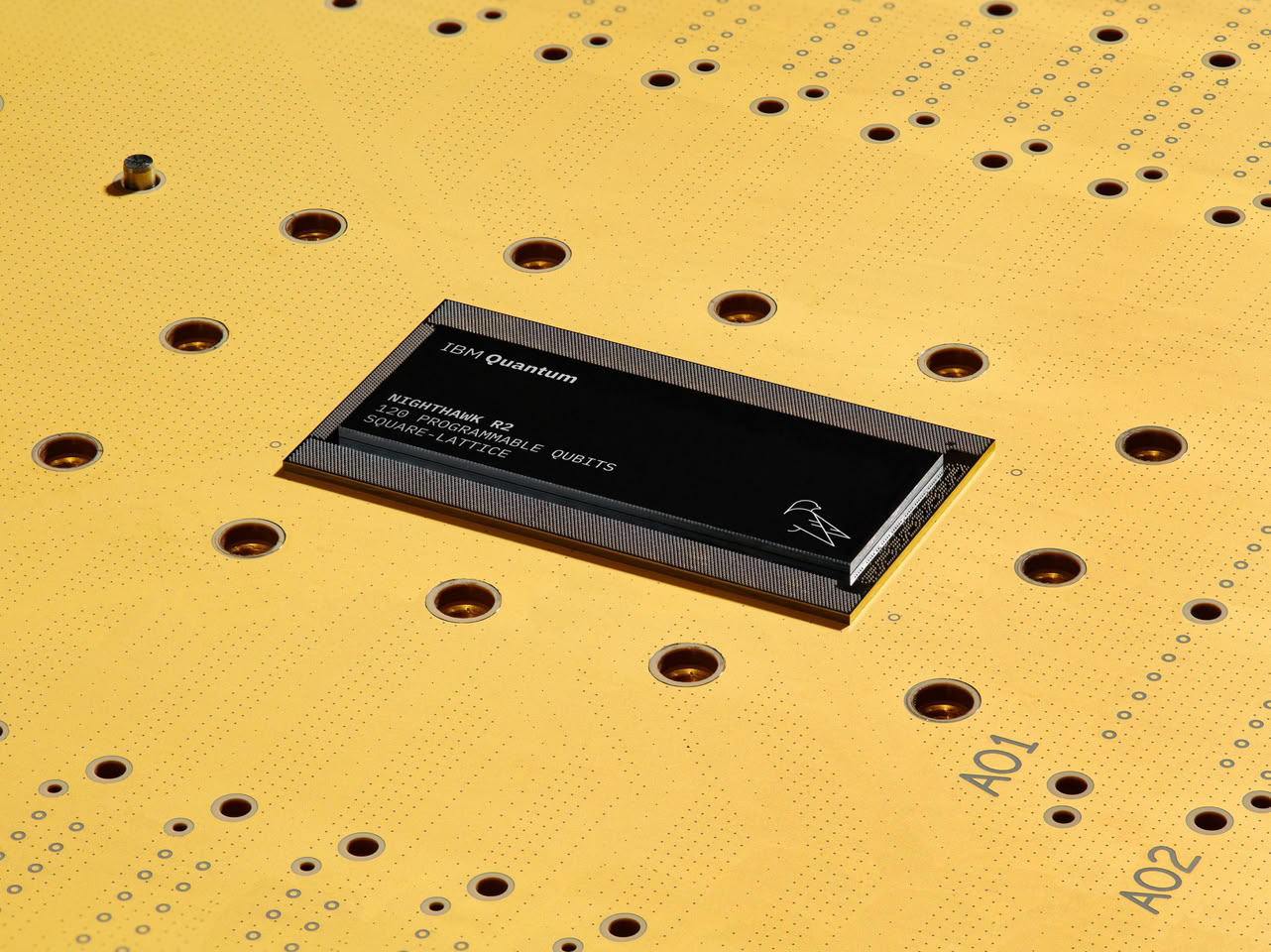
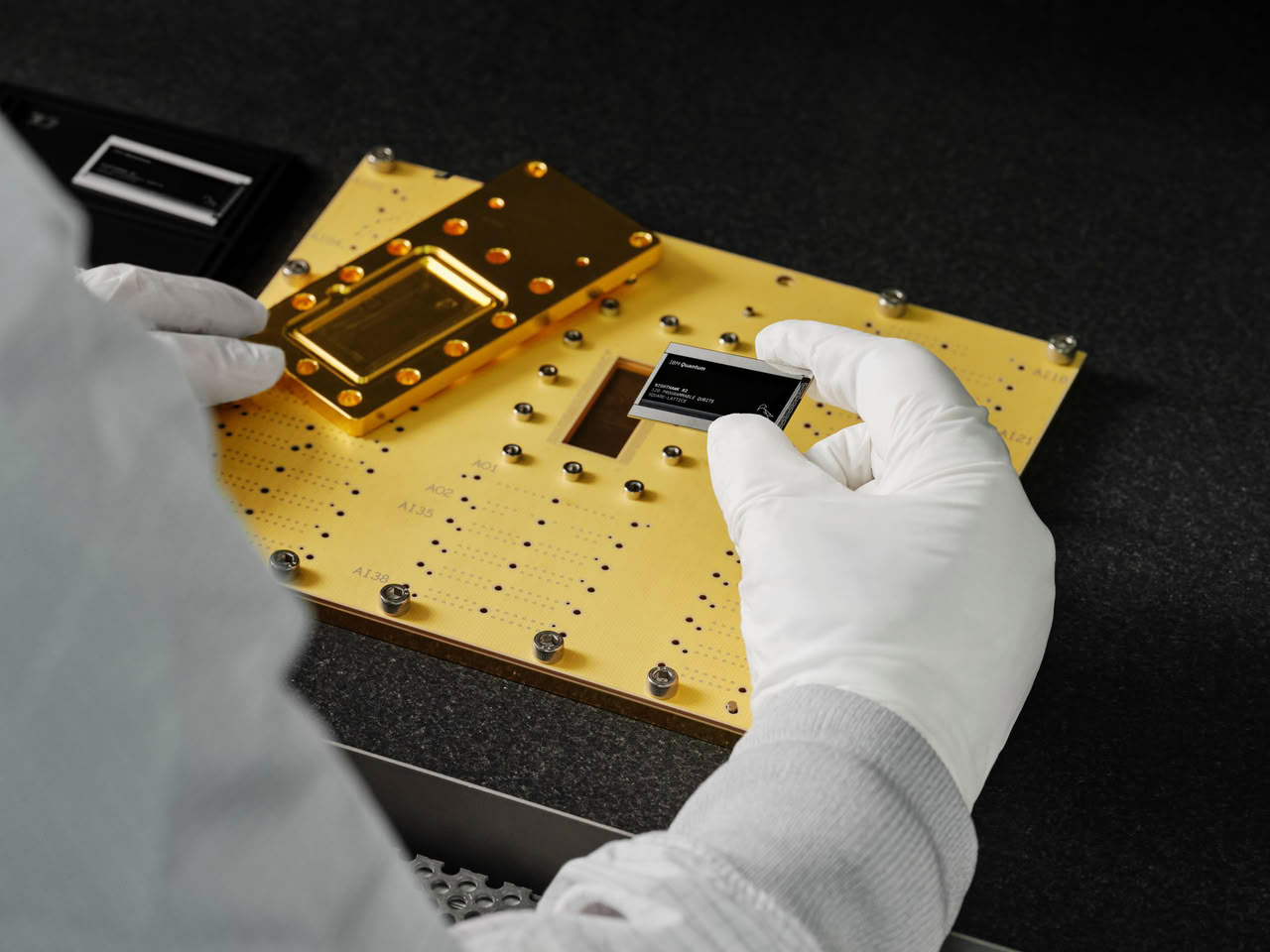
IBM Announces Quantum Nighthawk r3 Processor, Plans to Scale Beyond 1,000 Qubits in 2027

IBM (NYSE: IBM) today announced IBM Quantum Nighthawk r3, its next-generation processor, will be built to accurately execute 10,000 quantum operations across 520 qubits to tackle larger, more complex problems while maintaining the speed and quality demonstrated by the current generation Nighthawk available today. In 2027, IBM plans to link two Nighthawk r3 processors into a single system with more than 1,000 qubits.

To be at the frontier of quantum computing, industry-relevant applications demand both computational quality and speed. Speed matters because a quantum computer delivers its answer in samples: each run of a quantum circuit returns one result. Applications increasingly require circuits executing thousands of quantum operations on approximately 100 qubits or more, generating millions to billions of samples. Scale and quality enable increasingly complex computations, but speed determines whether these demanding workloads can be completed in practical timeframes and at a reasonable cost.

Intel to Acquire Classiq to Create a Full-stack Quantum Computing Platform

Intel Corporation today announced that it has entered into a definitive agreement to acquire Classiq, a leading provider of quantum computing software. The combination of Classiq's synthesis platform with Intel's spin-qubit manufacturing and existing software would create a user-friendly full-stack quantum computing platform, enabling the promising technology to mature into a mainstream computing business.

More than forty years ago, the invention of Electronic Design Automation (EDA) and Computer-Aided Design (CAD) software transformed silicon chip design and classical computing by providing a common software platform that could abstract the ability to design chips from the complexity of the underlying hardware. Classiq plays a similar role in quantum computing, providing a unifying software platform that is agnostic to the underlying qubit modality and hardware. Providing this high-level abstraction enables quantum computing to scale beyond custom hand-crafted circuits and applications to become a mainstream computing platform.

Synopsys and Amazon Announce Strategic, Multi-year IP Agreement for Custom Silicon

Synopsys, Inc. (Nasdaq: SNPS) today announced a strategic agreement with Amazon to accelerate Amazon's custom silicon innovation and advance the development of increasingly complex AI-powered products and cloud infrastructure. The multi-year agreement marks the expansion of Synopsys' silicon IP business to serve increasing demand for application-optimized IP with Amazon as its lead customer.

Amazon continues to build on its leadership and longstanding investment in a broad portfolio of purpose-built chips, including Nitro for cloud security, network and storage, Graviton for general-purpose computing, and Trainium for AI training and inference workloads. Building on more than 15 years of collaboration, the agreement expands Amazon's use of Synopsys' IP to include application-optimized silicon IP. The agreement also expands Amazon's use of Synopsys EDA, simulation and analysis (S&A), and agentic AI technologies. Synopsys and Amazon will work to accelerate multiphysics solutions on Trainium and Graviton.

HRL Demonstrates a Silicon Quantum Processor That Runs Itself

HRL Laboratories published a quantum computing milestone in Nature today: a quantum processor that runs itself. Quantum computers normally depend on racks of external electronics to generate every control signal. HRL replaced those racks with a custom control chip that sits near the qubits, in the extreme cold. The combined system autonomously ran error correction, an essential routine for any future quantum computer.

HRL's approach addresses a central obstacle for all quantum computing platforms: how to control the enormous number of qubits that a useful machine will require without an unmanageable tangle of wiring and electronics.

HPE Showcases Cray Supercomputing GX5000 Featuring 6th Gen AMD EPYC Processors

Today, at AMD Advancing AI 2026 in San Francisco, HPE showcased its latest engineering innovation in supercomputing with the HPE Cray Supercomputing GX5000 featuring 6th Gen AMD EPYC processors. The GX5000 builds on the success of previous HPE supercomputing architecture that broke the exascale speed barrier, and dominates the world's top 10 list of fastest supercomputers, to support the most complex scientific and engineering problems involving AI and quantum.

The GX5000 delivers the industry's highest density performance with 40% more AMD EPYC 9996 cores per rack than the market's next densest offering. The GX5000 also maximizes capacity for growing HPC and AI workloads and improves operational efficiency by reducing carbon footprint with 25% less floor space compared to the previous generation and an increase of warm facility water by 25%, with up to 40C heating capacity, through next-generation direct-liquid cooling capabilities from HPE.

IBM Debuts World's First Sub-1 Nanometer Chip Technology

IBM (NYSE: IBM) today unveiled a major semiconductor breakthrough with the introduction of the world's first sub-1 nanometer (nm) chip technology, featuring a revolutionary transistor architecture at the 0.7 nm, or 7 angstrom node. The achievement marks a landmark moment for an industry facing the physical limits of traditional chip scaling. Semiconductors play critical roles in everything from computing, to appliances, to communication devices, transportation systems, and critical infrastructure.

IBM's new sub-1 nm chip packs nearly 100 billion transistors onto a chip the size of a fingernail, nearly twice the density of IBM's 2 nm chip, unveiled in 2021. Enabled by a series of structural and material innovations, including IBM's groundbreaking three-dimensional nanostack architecture, the technology demonstrates how continued gains in performance and efficiency remain possible even as chip features approach atomic dimensions.

IBM and U.S. Department of Commerce Announce America's First Purpose-Built Quantum Foundry

Today, IBM and the U.S. Department of Commerce (DoC) announced a Letter of Intent (LOI) to build an American quantum chip foundry, securing the nation's global quantum leadership and fueling the country's growing quantum ecosystem. The CHIPS incentive from the DoC will support the research and development efforts of a new IBM company: Anderon, which will be America's first pure-play quantum foundry. This initiative represents one of the most significant commitments by the U.S. Government to date in quantum R&D to position the United States to manufacture most of the world's quantum wafers.

In addition to the $1 billion in CHIPS incentives provided by the DoC, IBM will contribute $1 billion of cash into Anderon, along with IBM investing significant intellectual property, assets, and a skilled workforce, with additional investors expected as Anderon grows. Headquartered in Albany, New York as a standalone company, Anderon will operate as a state-of-the-art 300-millimeter quantum wafer foundry. It will help the nation solidify its leadership at the center of a thriving new quantum industry that is estimated to generate up to $850 billion in economic value by 2040 and spur American economic growth while also bolstering national security.

Quantum Machines Launches Open Acceleration Stack Alongside NVIDIA and AMD

Today Quantum Machines launches The Open Acceleration Stack, a first-of-its-kind framework allowing users to integrate any classical processor (XPU) into their quantum control stack. This novel architecture allows quantum computers not only to be Quantum Error Correction (QEC)-ready and AI-ready, but also QEC- and AI-native.

The Open Acceleration Stack marks a significant expansion of Quantum Machines' Orchestration Platform, the industry's leading hardware and software framework for the control and operation of quantum processors. Using Quantum Machines' OPNIC (OPX Network Interface Card) and NVIDIA NVQLink, the framework enables an ultra-low, microsecond-level latency link between its proprietary Pulse Processing Unit (PPU) and high-performance accelerators, including GPUs, CPUs, FPGAs and ASICs.

NVIDIA CEO Jensen Huang and Global Technology Leaders to Showcase Age of AI at GTC 2026

NVIDIA today announced that GTC, the world's premier conference on AI and accelerated computing, will take place March 16-19 this year in San Jose, California. More than 30,000 attendees— spanning developers, researchers, business leaders and AI-native companies—will gather from over 190 countries to explore how AI is becoming essential infrastructure, powering a new industrial era.

"GTC is the epicenter of the AI industrial era," said Jensen Huang, founder and CEO of NVIDIA. "AI is no longer a single breakthrough or application—it is essential infrastructure. Every company will use it. Every nation will build it. From energy and chips to infrastructure, models and applications, every layer of the stack is advancing at once, and you'll see that all come to life at GTC."

Comcast, Classiq and AMD Demonstrate Quantum Algorithm for More Resilient and Reliable Internet

Classiq, the leading quantum computing software company, Comcast and AMD today announced the completion of a groundbreaking trial aimed at improving Internet delivery by leveraging quantum algorithms to supercharge network routing resilience.

"What our customers want is simple: fast, secure and reliable connectivity, but when you operate a network as large and dynamic as ours, delivering on that promise is complex, especially in the face of growing network demand," said Elad Nafshi, Chief Network Officer, Comcast Connectivity and Platforms. "We launched these trials with Classiq last year with the goal of understanding how quantum software and technology could tackle real network challenges. Our results have shown that quantum computing for network optimization isn't theoretical - it's practical, scalable, and grounded in the needs of our customers."

Europe Launches Euro-Q-Exa Quantum Computer in Germany

Euro-Q-Exa, the first EuroHPC Joint Undertaking quantum computer deployed in Germany, has been unveiled at the Leibniz Supercomputing Centre (LRZ) in Garching, Munich. The deployment marks a significant step in Europe's effort to build long-term quantum capability as part of its sovereign digital infrastructure, alongside world-leading high-performance computing (HPC).

Installed, hosted, and operated at LRZ, Euro-Q-Exa is designed not merely to provide access to quantum computing, but to enable European researchers to build, operate, and scale quantum capabilities locally. By embedding the system within an established HPC environment, the system supports the development of hands-on expertise, operational know-how, and sustainable research capacity within Europe.

Arm Flexible Access Helps Startups Build Chips Faster

Arm Flexible Access is evolving, unlocking broader startup eligibility, expanded edge AI capabilities, and a more flexible way to design, test, and bring silicon to market. Innovation in silicon design thrives on iteration. For startups and established design teams alike, the ability to explore, test, and refine without financial friction is essential. That's why Arm Flexible Access is evolving to make that journey even easier.

Arm Flexible Access already offers up-front, low-cost or no-cost access to a wide portfolio of Arm technology, tools, and training. This "try before you buy" model allows teams to build and test designs freely, only paying licensing fees for the technologies used in production silicon. It's helped launch over 400 chips across more than 100 companies.

Xanadu & A*STAR Expand Advanced Photonic Quantum Computing Partnership

Xanadu Quantum Technologies Inc., a leading photonic quantum computing company, has announced that it has signed a Memorandum of Understanding ("MoU") with the Agency for Science, Technology and Research ("A*STAR") in Singapore. This agreement builds on Xanadu's existing partnership with (A*STAR IME) and extends to include the A*STAR Institute of High Performance Computing (A*STAR IHPC) and A*STAR Quantum Innovation Centre. Together, Xanadu and A*STAR intend to advance research and development in quantum technologies, with the goal of establishing long-term research collaborations and exploring the potential of creating joint quantum laboratories and operations in Singapore.

Quantum technology developments are advancing rapidly as governments and industries increase investments to bring practical value to various industries such as AI, aerospace, pharmaceuticals, chemistry, and more. A*STAR has strong capabilities in photonics heterogenous integration, quantum sensing, quantum software and algorithms, quantum materials and devices, semiconductors, and advanced packaging. Combining Xanadu's deep expertise in photonic quantum computing hardware, software, and algorithms with A*STAR's leading reputation in research and technology translation is expected to strengthen critical research efforts and has the potential to support future quantum technology developments.

Quantum Art Raises $100M Series A to Drive Scalable, Multi-Core Quantum Computing

Quantum Art, a developer of full-stack quantum computers based on trapped-ion qubits and a proprietary scale-up architecture, today announced that it has closed a $100 million Series A funding round. The investment accelerates the company's path toward commercializing its systems, achieving quantum advantage, scaling its platform to enable quantum processors with thousands of qubits, and supporting Quantum Art's expansion from early revenues into significant commercial scale.

Bedford Ridge Capital led the round. The financing brings Quantum Art's total funding to date to $124 million following a seed round in 2022. The funding accelerates the development of Perspective, a 1,000-qubit multi-core system aimed at achieving quantum advantage, and supports prototyping of the company's third-generation 2D architecture targeting thousands of qubits for high-impact, real-world applications.

Qolab's 1st Superconducting-qubit Device Deployments Feature Quantum Machines Hybrid Control Tech

QM Inc. has announced that the Israeli Quantum Computing Center (IQCC) has become the world's first facility to deploy Qolab's pioneering superconducting qubit device. Professor John Martinis, Qolab founder and 2025 Nobel Prize winner in Physics, made the announcement yesterday in Tel Aviv, Israel, together with IQCC executives. The collaboration marks a major milestone in the quantum computing field, introducing a new generation of robust, scalable superconducting qubits engineered for hardware research scientists.

Qolab's superconducting device, now installed at the IQCC, introduces a new class of superconducting hardware optimized for high-fidelity, fabrication repeatability, and scalability - core requirements for transitioning quantum computing from fragile laboratory systems to dependable computing platforms. The quantum processor is based on the foundational physics that earned Prof. Martinis the Nobel Prize earlier this year, recognizing his decades-long contributions to superconducting qubits and macroscopic quantum phenomena. At Qolab, these scientific breakthroughs have been transformed into precision-engineered qubits designed to reduce flux noise and decoherence and to support reliable manufacturing using advanced semiconductor processes.

IBM and Cisco Announce Plans to Build a Network of Large-Scale, Fault-Tolerant Quantum Computers

Today, IBM and Cisco announced an intention to collaborate on the groundwork for networked distributed quantum computing, to be realized as soon as the early 2030s. By combining IBM's leadership in building useful quantum computers with Cisco's quantum networking innovations, the companies plan to explore how to scale large-scale, fault-tolerant quantum computers beyond IBM's ambitious roadmap. Additionally, they will work to solve fundamental challenges towards a quantum computing internet.

Within five years, IBM and Cisco will aim to demonstrate the first proof-of-concept for a network that combines individual, large-scale, fault-tolerant quantum computers, enabling them to work together to run computations over tens to hundreds of thousands of qubits. This network would allow problems to be run with potentially trillions of quantum gates, the fundamental entangling operations required for transformative quantum applications such as massive optimization problems, or the design of complex materials and medicines.

Eviden Unveils its BullSequana XH3500, a Converged Supercomputing Platform for the AI-HPC Era

Eviden, the Atos Group product brand leading in advanced computing, today announces the launch of BullSequana XH3500, its latest supercomputer built to support convergence of High-Performance Computing (HPC) and Artificial Intelligence (AI) workloads. Designed to scale beyond exascale performance, the BullSequana XH3500 combines cutting-edge hardware with a comprehensive software and application ecosystem, helping organizations accelerate scientific discovery, industrial innovation, and AI-driven breakthroughs.

Building on over two decades of HPC leadership, Eviden introduces the BullSequana XH3500 as a natural progression from the BullSequana XH3000, refining its hybrid computing strategy and harnessing the technological foundations laid by its predecessor.

IBM Delivers New Quantum Processors, Software, and Algorithm Breakthroughs

At the annual Quantum Developer Conference, IBM (NYSE: IBM) today unveiled fundamental progress on its path to delivering both quantum advantage by the end of 2026 and fault-tolerant quantum computing by 2029.

"There are many pillars to bringing truly useful quantum computing to the world," said Jay Gambetta, Director of IBM Research and IBM Fellow. "We believe that IBM is the only company that is positioned to rapidly invent and scale quantum software, hardware, fabrication, and error correction to unlock transformative applications. We are thrilled to announce many of these milestones today."

Quantinuum Announces Commercial Launch of New Helios Quantum Computer

Quantinuum, the world leader in quantum computing, today announced the launch of Helios, the world's most accurate general-purpose commercial quantum computer, designed to accelerate quantum computing adoption by enterprises. With the highest fidelity of any commercial system and a first-of-its-kind real-time control engine, Helios enables developers to program a quantum computer in much the same way they program heterogeneous classical computers. A new, modern Python-based programming language called Guppy allows developers to seamlessly combine hybrid compute capabilities—quantum and classical—in a single program. Helios is now available to customers through Quantinuum's cloud service and on-premise offering.

"The next computing inflection point starts today," said Dr. Rajeeb Hazra, President & CEO of Quantinuum. "For the first time enterprises can access a highly accurate general purpose quantum computer to drive real world impact, transforming how industries innovate - from drug discovery to finance to advanced materials."

NVIDIA to Build Seven New AI Supercomputers for U.S. Government

NVIDIA today announced that it is working with the U.S. Department of Energy's national labs and the nation's leading companies to build America's AI infrastructure to support scientific discovery, economic growth and power the next industrial revolution.

"We are at the dawn of the AI industrial revolution that will define the future of every industry and nation," said Jensen Huang, founder and CEO of NVIDIA. "It is imperative that America lead the race to the future—this is our generation's Apollo moment. The next wave of inventions, discoveries and progress will be determined by our nation's ability to scale AI infrastructure. Together with our partners, we are building the most advanced AI infrastructure ever created, ensuring that America has the foundation for a prosperous future, and that the world's AI runs on American innovation, openness and collaboration, for the benefit of all."

NVIDIA Introduces NVQLink — Connecting Quantum and GPU Computing for 17 Quantum Builders and Nine Scientific Labs

NVIDIA today announced NVIDIA NVQLink, an open system architecture for tightly coupling the extreme performance of GPU computing with quantum processors to build accelerated quantum supercomputers.

Researchers from leading supercomputing centers at national laboratories including Brookhaven National Laboratory, Fermi Laboratory, Lawrence Berkeley National Laboratory (Berkeley Lab), Los Alamos National Laboratory, MIT Lincoln Laboratory, the Department of Energy's Oak Ridge National Laboratory, Pacific Northwest National Laboratory and Sandia National Laboratories guided the development of NVQLink, helping accelerate next-generation work on quantum computing. NVQLink provides an open approach to quantum integration, supporting 17 QPU builders, five controller builders and nine U.S national labs.

IBM Runs Quantum Computing Algorithm on AMD FPGA Chips

IBM says it has successfully executed one of its key quantum computing algorithms in real time on AMD field-programmable gate arrays (FPGAs), marking a step toward cheaper and more practical hybrid quantum systems. The algorithm, designed to dynamically detect and correct quantum errors, was first announced in June and is now running on widely available AMD reconfigurable hardware rather than costly, custom-built control units. Jay Gambetta, IBM's VP of Quantum, told Reuters that the FPGA-based implementation performs 10× faster than required for live error correction, calling it "a big deal" for real-world quantum computing. The demonstration suggests IBM's development timeline is a full year ahead of schedule for its 2029 Starling quantum system roadmap. Quantum computers use qubits that can show both 0 and 1 at the same time but often face problems from outside factors that lead to errors in calculations. IBM's new method tackles this issue by keeping an eye on and fixing these errors as they happen, which keeps the system steady during quantum tasks. By running this quantum computing algorithm on regular AMD chips, we see how classical and quantum systems are coming together more and more opening doors to mixed setups where normal hardware handles fixing errors and running things in real time.

IBM's approach might help close the gap between the early quantum machines we have now and future ones that don't make mistakes. By showing that off-the-shelf chips you'd find in data centers can do this job well, IBM cuts down on costs and makes things simpler while also making it easier to improve performance as systems get bigger. These are big steps in moving quantum computing out of labs and into the business world. The partnership between IBM and AMD appears to be bearing fruit. Back in August, the two companies announced a close collaboration to develop next-generation computing architectures that combine quantum computing and high-performance computing, a concept known as quantum-centric supercomputing. More recently, in early October, IBM and AMD also revealed a joint effort to deliver advanced AI infrastructure to Zyphra, an open-source AI research and product company based in San Francisco. Under a multi-year agreement, IBM will provide Zyphra with a large cluster of AMD Instinct MI300X GPUs hosted on IBM Cloud, enabling the training of next-generation multimodal foundation models.

Google's Willow Quantum Processor Achieves 13,000× Speed Advantage Over Classical Supercomputers

Google has announced a major breakthrough in quantum computing with its new Willow processor claiming a 13,000× performance advantage over the world's fastest supercomputers. The 105-qubit chip successfully executed a physics simulation using a new algorithm called Quantum Echoes completing in seconds what classical systems would take days to compute. The experiment simulated out-of-time-order correlators (OTOCs), a benchmark for complex quantum interference, marking what Google calls the first verifiable demonstration of quantum advantage with real-world applications. The Quantum Echoes algorithm was built to leverage quantum parallelism showing both high speed and accuracy.

Google says the achievement, announced on October 22 demonstrates practical potential for quantum workloads in molecular modeling, materials science, and NMR spectroscopy. While widespread applications remain several years out, the company notes that the result validates its long-term roadmap pairing hardware like Willow with custom algorithms to achieve scalable, fault-tolerant quantum computation. Meanwhile, IBM 1,121-qubit Condor processor announced in December 2023 has yet to demonstrate comparable real-world performance. However, the scope of IBM's Condor quantum processor was to pave the way for its smaller 156-qubit Heron processor integrated into IBM's Quantum System Two. Despite Willow's smaller qubit count Google's results highlight the importance of algorithmic efficiency and error correction, suggesting that raw qubit numbers alone are no longer the key determinant of quantum computing progress.

The Basque Government and IBM Inaugurate Europe's First IBM Quantum System Two

The Basque Government and IBM (NYSE: IBM) today unveiled the first IBM Quantum System Two in Europe at the IBM-Euskadi Quantum Computational Center in San Sebastián. The installation of this system marks a milestone in the partnership between the two parties, which began in 2023 within the framework of the BasQ - Basque Quantum initiative, promoted by the Basque Government to help make Euskadi an international hub for quantum technologies.

The system installed on the Ikerbasque Foundation's main campus, at the IBM-Euskadi Quantum Computational Center, was inaugurated at a ceremony featuring remarks from the President of the Basque Country Government, Mr. Imanol Pradales; Jay Gambetta, Director of IBM Research; Juan Ignacio Pérez Iglesias, Minister of Science, Universities, and Innovation of the Basque Government; Eider Mendoza, Deputy General of Gipuzkoa; Eneko Goia, the Mayor of San Sebastián; and Horacio Morell, General Manager of IBM Spain, Portugal, Greece and Israel. The opening ceremony was also attended by, among others, the First and Second Vice-Lehendakari, Ibone Bengoetxea and Mikel Torres; and the Deputies General of Álava and Bizkaia, Ramiro González and Elixabete Etxanobe; in addition to representation from academia, government, and industry.

NTT Research Collaboration Breaks the "One Device, One Function" Paradigm with World's First Programmable Nonlinear Photonics Chip

NTT Research, Inc., a division of NTT, announced that its Physics and Informatics (PHI) Lab, working with Cornell University and Stanford University, has developed the world's first programmable nonlinear photonic waveguide that can switch between multiple nonlinear-optical functions on a single chip. The breakthrough fundamentally alters how nonlinear photonic devices operate, breaking the "one device, one function" paradigm, and significantly expands the applications for tunable light sources, optical and quantum computation, and communication.

Ryotatsu Yanagimoto, a scientist at NTT Research, led the research under the supervision of Peter L. McMahon, an associate professor at Cornell University. The paper, "Programmable On-Chip Nonlinear Photonics," was published by leading scientific journal Nature online on Oct. 8, 2025. It will be published in print by Nature on Nov. 13, 2025.
Return to Keyword Browsing
Nov 26th, 2026 00:33 CST change timezone

New Forum Posts

Popular Reviews

TPU on YouTube

Controversial News Posts