News Posts matching #ssd

Return to Keyword Browsing

Cooler Master Announces HAF 5 Pro and NR2 Pro Prebuilt Desktops

Cooler Master, a leading provider of PC components, gaming peripherals, and tech lifestyle solutions, today announced the launch of two groundbreaking PC systems: The HAF 5 Pro, and NR2 Pro. These new systems exemplify Cooler Master's dedication to delivering high-performance computing solutions with innovative design and advanced cooling technology.

"At Cooler Master, we strive to blend cutting-edge technology with innovative design. The HAF 5 Pro, and NR2 Pro exemplify our commitment to excellence," said Jimmy Sha, CEO of Cooler Master. "We are excited to bring these revolutionary systems to our users."

Micron Announces Volume Production of Ninth-Generation NAND Flash Technology

Micron Technology, Inc., announced today that it is shipping ninth-generation (G9) TLC NAND in SSDs, making it the first in the industry to achieve this milestone. Micron G9 NAND features the industry's highest transfer speed of 3.6 GB/s, delivering unsurpassed bandwidth for reading and writing data. The new NAND enables best-in-class performance for artificial intelligence (AI) and other data-intensive use cases from personal devices and edge servers to enterprise and cloud data centers.

"The shipment of Micron G9 NAND is a testament to Micron's prowess in process technology and design innovations," said Scott DeBoer, executive vice president of Technology and Products at Micron. "Micron G9 NAND is up to 73% denser than competitive technologies in the market today, allowing for more compact and efficient storage solutions that benefit both consumers and businesses."

DapuStor Expands Marvell Collaboration to Introduce Innovative FDP Technology for QLC SSDs

DapuStor Corporation, a pioneer in high-performance data storage solutions, announced today that it is expanding its collaboration with Marvell to deliver breakthrough Flexible Data Placement (FDP) technology optimized for Quad-Level Cell (QLC) and Triple-Level Cell (TLC) Solid-State Drives (SSDs). This collaboration aims to revolutionize the storage industry by addressing the inherent challenges of QLC SSDs, enhancing their performance, endurance, and capacity, thereby providing a robust and cost-effective solution for data centers, cloud computing, and high-performance computing environments.

Unlocking the Potential of QLC SSDs with FDP Technology
QLC SSDs are renowned for their ability to store four bits of data per memory cell, offering significant capacity advantages and a lower Total Cost of Ownership (TCO) compared to other SSD types. Despite these benefits, QLC SSDs face challenges such as lower endurance and slower write speeds. The innovative FDP technology supported in the Marvell Bravera SC5 SSD controller with firmware level solution developed by DapuStor directly addresses these issues.

Team Group Launches the T-Force GC PRO Gen 5 SSD

Team Group today introduced the T-Force GC PRO, its new performance-segment M.2 NVMe Gen 5 SSD. The new T-Force GC PRO is not to be confused with the T-Force GE PRO that Team Group launched in January 2024, although the two appear almost identical. The newer GC PRO is powered by the same InnoGrit "Tacoma" IG5666 controller as the GE PRO, but with slightly toned down speeds.

The GC PRO comes in 2 TB and 4 TB capacity variants, with maximum sequential speeds of 12,500 MB/s reads, with 11,000 MB/s writes. For comparison, the flagship GE PRO does 14,000 MB/s max sequential reads, albeit with the same 11,000 MB/s max sequential writes. The GC PRO is hence designed to stike a slightly lower price point which could see it square off against pre-Max14um Phison-powered SSD models. Both the 2 TB and 4 TB models offer identical sequential transfer speeds, but differ with endurance—1,200 TBW and 2,400 TBW, respectively. Although a heatsink is recommended by the manufacturer, the drive comes with a graphene-coated metal-foil heatspreader. The company didn't reveal pricing, the drives are backed by 5-year warranties.

ADATA Introduces SC750 External SSD

ADATA Technology Co., Ltd., the world's leading memory brand, launches its latest SC750 external solid-state drive (SSD) which supports the USB 3.2 Gen 2 transmission interface with read/write speeds up to 1,050/1,000 MB/s. Adopting the mainstream Type-C connector, the SC750 requires no data cable and can be directly connected to a mobile phone or tablet for plug-and-play access. It supports the latest iPhone 15 series and Android Type-C smartphones. The SC750 combines performance and portable design to meet the ever-increasing demand for transfer speed and storage produced by today's hectic lifestyles, making it a convenient companion for video creators who often venture outdoors to collect resources. The SC750 cuts down on wait time when transferring large files and improves efficiency when multitasking with several project files simultaneously.

The SC750 external SSD inherits the exterior design of the popular SE880, which sports a greatly reduced form factor and eliminates the need for an additional data cable. Users no longer need to worry about finding a matching data cable when busy working on a project. About the size of a flash drive, the SC750 is easy to carry, lightweight, and does not take up much space. It is perfect for work or travel. Slide out its Type-C connector to get started transferring large files instantly or edit and access these files directly on the SC750 to greatly improve work efficiency.

Micron Introduces 9550 NVMe Data Center SSD

Micron Technology, Inc., today announced availability of the Micron 9550 NVMe SSD - the world's fastest data center SSD and industry leader in AI workload performance and power efficiency. The Micron 9550 SSD showcases Micron's deep expertise and innovation by integrating its own controller, NAND, DRAM and firmware into one world-class product. This integrated solution enables class-leading performance, power efficiency and security features for data center operators.

The Micron 9550 SSD delivers best-in-class performance with 14.0 GB/s sequential reads and 10.0 GB/s sequential writes to provide up to 67% better performance over similar competitive SSDs and enables industry-leading performance for demanding workloads such as AI. In addition, its random reads of 3,300 KIOPS are up to 35% better and random writes of 400 KIOPS are up to 33% better than competitive offerings.

Memory Industry Revenue Expected to Reach Record High in 2025 Due to Increasing Average Prices and the Rise of HBM and QLC

TrendForce's latest report on the memory industry reveals that DRAM and NAND Flash revenues are expected to see significant increases of 75% and 77%, respectively, in 2024, driven by increased bit demand, an improved supply-demand structure, and the rise of high-value products like HBM.

Furthermore, industry revenues are projected to continue growing in 2025, with DRAM expected to increase by 51% and NAND Flash by 29%, reaching record highs. This growth is anticipated to revive capital expenditures and boost demand for upstream raw materials, although it will also increase cost pressure for memory buyers.

Team Group Launches the PD20 Mini External SSD

Team Group Inc., the world's leading provider of premium storage solutions, today introduced the Team Group PD20 Mini External SSD, featuring ultra-fast transfer speeds and a full range of storage capacity options. Its exquisite and compact design features a convenient hanging hole for maximum portability. The PD20 Mini External SSD's small size can easily fit into a briefcase or hung on a bag, combining high-speed read/write performance with portability and fashion. This mini yet powerful solution meets all your storage needs.

The Team Group PD20 Mini External SSD is specifically designed for business travelers and professionals on the go. This palm-sized, lightweight SSD weighs 22 grams and offers storage capacities from 1 TB to 4 TB. With transfer speeds of up to 2,000 MB/s, it provides a portable, high-speed data storage solution that enables users to back up files anytime, anywhere. The USB 3.2 Gen 2 x2 Type-C interface ensures broad compatibility with computers, tablets, and smartphones, making it ideal for storing large videos, photos, and documents. The PD20 Mini's sleek and stylish design features a convenient hanging hole for easy attachment to bags, offering a minimalist, lightweight, high-speed, and large-capacity portable storage solution tailored to the needs of business professionals.

Micron Unveils Crucial P310 2230 Gen4 NVMe SSD

Micron Technology, Inc., today announced the availability of the Crucial P310 2230 Gen 4 NVMe solid-state drive (SSD), which empowers enthusiasts of handheld gaming and users of mini PCs and ultrathin laptops to store more games and data-intensive content at their fingertips without sacrificing speed or performance. With read and write speeds of 7,100 and 6,000 megabytes per second (MB/s), respectively, and capacities up to 2 terabytes (TB), the P310 2230 SSD packs a unique punch, offering high performance and capacity in a compact, power-efficient form factor.

"Today's contemporary games are storage- and performance-hungry, and this is especially true for handheld gamers who want to be able to quickly access all their favorite games at their fingertips," said Jonathan Weech, senior director of product marketing for Micron's Commercial Products Group. "We've built our Crucial P310 2230 Gen 4 SSD to satisfy this need for speed and more capacity, providing a dynamic, power-efficient SSD that allows gamers to build their dream gaming libraries, load multiworld games faster and extend battery life for a richer gaming experience on the go."

Western Digital Intros 8TB Variant of WD Black SN850X SSD

Western Digital stealthily introduced a spacious 8 TB variant of its performance WD Black SN850X M.2 NVMe Gen 4 SSD. The drive debuted in 2022 and had topped off at 4 TB. The new 8 TB variant is priced at $849 for the bare drive (without heatsink, model number WDS800T2X0E), and $899 with the PS5-friendly heatsink (model: WDS800T2XHE). The drive combines an in-house controller by Western Digital, with KIOXIA-sourced 3D TLC NAND flash. We're not sure if it's using the same 112-layer BiCS5 that the 4 TB variant does.

Western Digital claims performance figures of up to 7200 MB/s sequential reads, up to 6600 MB/s sequential writes, and up to 1.2 million IOPS 4K random reads/writes. The read speed is a touch lesser than the 7300 MB/s max sequential reads of the 4 TB variant. The write endurance of the 8 TB variant is rated at an impressive 4,800 TBW. Built in the M.2-2280 form-factor the drive takes advantage of the PCI-Express 4.0 x4 interface. Western Digital is backing these drives with 5-year warranties.

ASUS Previews Intel's "Lunar Lake" Platform with ExpertBook P5 14-Inch Laptop

ASUS has revealed its upcoming ExpertBook P5 laptop, set to debut alongside Intel's highly anticipated "Lunar Lake" processors. This ultrabook aims to boost AI-capable laptop market, featuring an unspecified Intel Lunar Lake "Core Ultra 200V" CPU at its core. The ExpertBook P5 boasts impressive AI processing capabilities, with over 45 TOPS from its Neural Processing Unit and a combined 100+ TOPS when factoring in the CPU and GPU. The NPU provides efficient processing, with additional power coming from Lunar Lake's GPU with XMX cores, featuring the Xe2 Battlemage architecture. This is more than enough for the Copilot+ certification from Microsoft, making the laptop debut as an "AI PC." The ExpertBook P5 offers up to 32 GB of LPDDR5X memory running at 8333 MT/s, up to 3 TB of PCIe 4.0 SSD storage with two drives, and Wi-Fi 7 support.

The 14-inch anti-glare display features a 2.5K resolution and a smooth 144 Hz refresh rate, ensuring a premium visual experience. Despite its powerful internals, the ExpertBook P5 maintains a solid profile weighing just 1.3 kg. The laptop is housed in an all-metal military-grade aluminium body with a 180-degree lay-flat hinge, making it both portable and versatile. ASUS has also prioritized cooling efficiency with innovative technology that optimizes thermal management, whether the laptop is open or closed. Security hasn't been overlooked either, with the ExpertBook P5 featuring a robust security ecosystem, including Windows 11 secured-core PC framework, NIST-155-ready Commercial-Grade BIOS protection, and biometric login options. While an exact release date hasn't been confirmed, ASUS is preparing ExpertBook P5 and other Lunar Lake-powered laptops to hit the market in the second half of 2024.

AAEON MAXER-2100 Inference Server Integrates Both Intel CPU and NVIDIA GPU Tech

Leading provider of advanced AI solutions AAEON (Stock Code: 6579), has released the inaugural offering of its AI Inference Server product line, the MAXER-2100. The MAXER-2100 is a 2U Rackmount AI inference server powered by the Intel Core i9-13900 Processor, designed to meet high-performance computing needs.
The MAXER-2100 is also able to support both 12th and 13th Generation Intel Core LGA 1700 socket-type CPUs, up to 125 W, and features an integrated NVIDIA GeForce RTX 4080 SUPER GPU. While the product's default comes with the NVIDIA GeForce RTX 4080 SUPER, it is also compatible with and an NVIDIA-Certified Edge System for both the NVIDIA L4 Tensor Core and NVIDIA RTX 6000 Ada GPUs.

Given the MAXER-2100 is equipped with both a high-performance CPU and industry-leading GPU, a key feature highlighted by AAEON upon the product's launch is its capacity to execute complex AI algorithms and datasets, process multiple high-definition video streams simultaneously, and utilize machine learning to refine large language models (LLMs) and inferencing models.

ATP Announces I-Temp Operable 8 TB E1.S SSDs

ATP Electronics, the global leader in specialized storage and memory solutions, proudly unveils the N651Si Series E1.S solid state drives (SSDs), which offer best in class performance, endurance, and data retention capabilities for the most demanding applications.

Supporting industrial temperature operating range (-40°C to 85°C) along with hardware power loss protection (HW PLP), the new SSDs offer the highest levels of reliability and total cost of ownership value in harsh environments, making them especially beneficial for mission-critical applications running under extreme temperatures, such as automotive, data logger, data centers, and defense/aerospace. Engineered for 1U Edge servers, the EDSFF offering with 9.5 mm symmetrical enclosure is available with up to 8 TB capacity and is constructed with 512 Gb prime NAND die 176-layer 3D triple level cell (TLC).

Samsung Introduces 61.44 TB BM1743 SSD with 176-Layer V-NAND

Samsung has introduced its latest BM1743 SSD, boasting an impressive 61.44 TB of storage capacity. The BM1743 utilizes Samsung's seventh-generation 3D NAND (V-NAND) technology, featuring 176 layers of memory cells. This represents a significant leap from its predecessor, the BM1733, which debuted in 2020 with 96-layer technology and a maximum capacity of 32 TB. Performance-wise, the BM1743 doesn't disappoint. It delivers up to 1.6 million random read IOPS and 110,000 random write IOPS, with sequential read and write speeds of 7.2 GB/s and 2.0 GB/s, respectively. These figures position the drive as a highly capable solution for read-intensive workloads. Samsung claims that the new SSD offers double the sequential read and write speeds of its fifth-generation technology, with random reads quadrupling in performance. This advancement suggests that quad-level cell (QLC) SSDs are now approaching the performance levels of their triple-level cell (TLC) counterparts while offering superior storage density.

The BM1743 is available in the traditional U.2 form factor, with an E3.S variant supporting PCIe Gen 5 also in the lineup, thanks to the custom Samsung controller. Samsung has enhanced the durability and data retention capabilities of the BM1743. The new drive boasts an improved endurance rating of 0.26 drive writes per day (DWPD) throughout its warranty period, a notable increase from the BM1733's 0.18 DWPD. Additionally, the BM1743 extends its power-off data retention to three months, tripling the one-month period of its predecessor. In a hint of things to come, Samsung has suggested that a 122.88 TB model may be on the horizon, potentially doubling the capacity of the BM1743. This new offering puts Samsung in direct competition with Solidigm's D5-P5336, which has dominated the high-capacity SSD market for the past year. High-density storage solutions are becoming more important as AI and HPC tasks require and produce massive amounts of data.

Kioxia Introduces 2 Tb QLC Flash Memory with the Latest BiCS FLASH Technology

Kioxia Corporation, a world leader in memory solutions, today announced that it started sample shipments of 2 Tb (Tera bit) Quad-Level-Cell (QLC) memory devices with its eighth-generation BiCS FLASH 3D flash memory technology. This 2 Tb QLC device has the highest capacity in the industry, elevating storage devices to a new capacity point that will drive growth in multiple application segments including AI.

With its latest BiCS FLASH technology, Kioxia has achieved both vertical and lateral scaling of memory die through proprietary processes and innovative architectures. In addition, the company has implemented the groundbreaking CBA (CMOS directly Bonded to Array) technology, which enables the creation of higher density devices and an industry-leading interface speed of 3.6 Gbps. Together, these advanced technologies are applied in the creation of 2 Tb QLC, resulting in the industry's highest capacity memory device.

Panmnesia Uses CXL Protocol to Expand GPU Memory with Add-in DRAM Card or Even SSD

South Korean startup Panmnesia has unveiled an interesting solution to address the memory limitations of modern GPUs. The company has developed a low-latency Compute Express Link (CXL) IP that could help expand GPU memory with external add-in card. Current GPU-accelerated applications in AI and HPC are constrained by the set amount of memory built into GPUs. With data sizes growing by 3x yearly, GPU networks must keep getting larger just to fit the application in the local memory, benefiting latency and token generation. Panmnesia's proposed approach to fix this leverages the CXL protocol to expand GPU memory capacity using PCIe-connected DRAM or even SSDs. The company has overcome significant technical hurdles, including the absence of CXL logic fabric in GPUs and the limitations of existing unified virtual memory (UVM) systems.

At the heart of Panmnesia's solution is a CXL 3.1-compliant root complex with multiple root ports and a host bridge featuring a host-managed device memory (HDM) decoder. This sophisticated system effectively tricks the GPU's memory subsystem into treating PCIe-connected memory as native system memory. Extensive testing has demonstrated impressive results. Panmnesia's CXL solution, CXL-Opt, achieved two-digit nanosecond round-trip latency, significantly outperforming both UVM and earlier CXL prototypes. In GPU kernel execution tests, CXL-Opt showed execution times up to 3.22 times faster than UVM. Older CXL memory extenders recorded around 250 nanoseconds round trip latency, with CXL-Opt potentially achieving less than 80 nanoseconds. As with CXL, the problem is usually that the memory pools add up latency and performance degrades, while these CXL extenders tend to add to the cost model as well. However, the Panmnesia CXL-Opt could find a use case, and we are waiting to see if anyone adopts this in their infrastructure.
Below are some benchmarks by Panmnesia, as well as the architecture of the CXL-Opt.

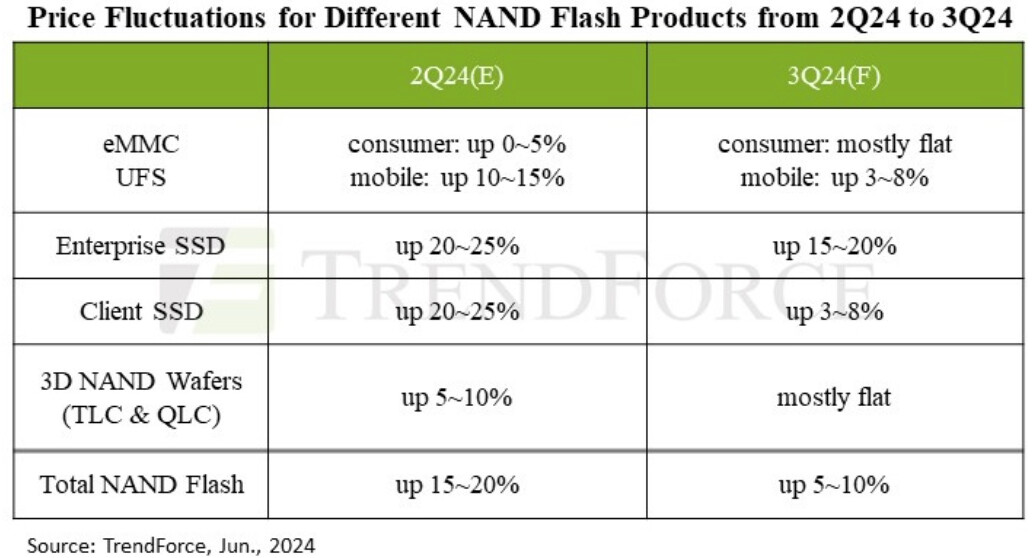
Q3 Contract Prices of NAND Flash Products Constrained by Increased Production and Lower End-User Demand; Estimated to Rise by 5-10%

TrendForce reports that while the enterprise sector continues to invest in server infrastructure—especially with the rising adoption of AI driving demand for enterprise SSDs—the consumer electronics market remains lackluster. This, combined with NAND suppliers aggressively ramping up production in the second half of the year, is expected to push the NAND Flash sufficiency ratio up to 2.3% in the third quarter, curbing the blended price hike to a modest 5-10%.

This year, NAND Flash prices saw a robust rebound as manufacturers kept production in check during the first half, helping them regain profitability. However, with a noticeable ramp-up in production and sluggish retail demand, wafer spot prices have dropped significantly. Some wafer prices are now over 20% below contract prices, casting doubts on the sustainability of future price hikes.

SK Hynix Develops PCB01 NVMe SSD for AI PCs

SK hynix announced today that it developed PCB01, an SSD product with the industry's best specifications, for on-device AI PCs. The product marks the first case where the industry adopts the fifth generation of the 8-channel PCIe technology and brings innovation to performance including the data processing speed. The company expects the latest advancement in the NAND solution space to add to its success stories in the high-performance DRAM area led by HBM, enhancing its leadership in the overall AI memory space.

With a validation process with a global PC customer underway, SK hynix plans to mass produce and start shipping the products to both corporate customers and general consumers within this year. PCB01 comes with the capabilities of sequential read and write speeds of 14 GB and 12 GB per second, respectively, bringing the performance of an SSD to the level unseen before. The speeds allow the operation of a large language model or LLM, for AI training and inference, in a second.

Acer FA100 M.2 SSD Tops the Market for All Users

In the contemporary digital landscape, Solid State Drives (SSDs) play a pivotal role by providing crucial attributes such as speed, reliability, and efficiency. These attributes facilitate rapid data retrieval, elevate system responsiveness, enable seamless multitasking, and significantly reduce boot times and application launch delays. Among the top contenders in the SSD market, Acer's FA100 M.2 SSD has successfully secured the top place, capturing the discerning consumer's attention with its cutting-edge performance and unwavering reliability. It stands out as the preferred choice for users who demand excellence in their storage solutions.

Acer FA100 NVMe PCIe SSD
The Acer FA100 M.2 SSD is renowned for its exceptional speed and efficiency, boasting read speeds up to 3300 MB/s and write speeds up to 2700 MB/s. It supports ECC error correction technology and the S.M.A.R.T. function, based on 4K LDPC, which enhances error correction capabilities and ensures secure data storage. Additionally, it supports multiple technologies such as modern standby and ultra-low power consumption. Designed to elevate user experience, the Acer FA100 combines high performance with robust durability, making it ideal for gamers, content creators, and professionals alike.

Arctic Unveils the M2 Pro SSD Cooler

Small, fast, hot—M.2 SSDs. The compact power packs require additional cooling to ensure consistently high performance. ARCTIC offers the right solution with the M2 Pro. M.2 SSDs are true speed miracles. However, they tend to reach high temperatures quickly during intensive use and reduce performance early to avoid overheating. The M2 Pro was specifically designed for 2280 M.2 SSDs. Thanks to its additional mass, it not only keeps the temperature under control, but also ensures that the SSD can cool down more quickly. This enables reliable performance and a long service life. The cooler is extremely compact at 73 x 24.2 x 10.5 mm and comes with two precisely fitting ARCTIC TP-3 Premium Performance thermal pads.

Western Digital Quietly Launches the SN5000 Budget NVMe SSD

Western Digital has released a new budget friendly SSD that got a serious jump in model number, since the company decided to call it the SN5000. Its predecessor is the SN580 launched just under a year ago and price wise, it's the better option of the two. The new SN5000 uses the same BiCS 5 TLC NAND as the SN580 on the 500 GB to the 2 TB SKU, but according to Anandtech, the 4 TB uses BiCS 6 QLC NAND. The SN5000 is still a PCIe 4.0 x4 NVMe drive, but the overall performance has been significantly improved. If we use the 1 TB SKU for comparison, then the sequential read speeds have gone up by 1 GB/s from 4150 MB/s to 5150 MB/s. The sequential write speed is up 750 MB/s from 4150 MB/s to 4900 MB/s.

As for random performance, the read IOPS are up from 600K IOPS to 730K IOPS and the write IOPS are up slightly from 750K to 770K. The 4 TB QLC SKU is said to deliver even better performance with the exception of the random read IOPS. The 1 TB SKU is said to have a write endurance of 600 TBW, but the 4 TB SKU only offers 1200 TBW. That's 0.33 drive writes per day (DWPD) for the 1 TB SKU vs. 0.16 DWPD for the 4 TB SKU, showing the weakness of the QLC NAND. A new feature for the SN5000 series compared to previous WD Blue NVMe drives is support for TGC Pyrite 2.01 encryption. The WD SN5000-series starts at US$70 for the 500 GB model, going up to US$80 for 1 TB, US$140 for 2 TB and topping out at US$280 for the 4 TB model. WD only seems to have the 500 GB model in stock, with all the others being available in 3-4 weeks time. All SKUs come with a five year warranty.

Samsung Files Paperwork for 990 EVO Plus and 9100 PRO M.2 NVMe SSDs

Samsung Electronics just filed trademark paperwork for two unreleased client SSD models, the SSD 990 EVO Plus, and the SSD 9100 PRO. Having exhausted the three-digit model number sequence with the 990 PRO, Samsung is going with the 9000 series for the next nine generations of its flagship M.2-2280 client SSDs, beginning with the 9100 PRO, which will likely be succeeded in the future by the 9200 PRO, 9300 PRO, and so on. Nothing yet is known about the 9100 PRO, but we predict it to be Samsung's answer to the latest crop of Gen 5 drives that offer over 14 GB/s of sequential read speeds, and over 12 GB/s of sequential writes.

The Samsung 990 EVO Plus could be a whole different drive from the current 990 EVO, designed to compete with the value end of Gen 5 SSDs that are based on the new Phison E31T DRAMless Gen 5 controller with around 11 GB/s of sequential transfer speeds on tap. This is something the current 990 EVO cannot achieve, as its controller has a wacky logic that either uses Gen 4 x4 or Gen 5 x2 (it lowers the lane count upon detecting Gen 5). Samsung will probably remove this limitation with the 990 EVO Plus, allowing Gen 5 x4, and getting its performance in the league of the E31T-powered drives.

Panasonic Connect Announces its First AI-Enabled TOUGHBOOK PC

Panasonic Connect Canada, Division of Panasonic Corporation of North America, today announced enhancements to the fully rugged and modular TOUGHBOOK 40 laptop. This second generation of the TOUGHBOOK 40, the Mk2, is the company's first PC to feature Intel Core Ultra processors, incorporating the latest CPU, GPU, and NPU technology advancements and up to 16 cores. Its dedicated NPU accelerates artificial intelligence (AI)-driven tasks for customers across law enforcement departments, federal agencies, and utility companies. Compared to the previous generation of Intel processors, these new processors deliver up to 143% faster AI application performance, 73% faster generative AI, and up to 40% lower processor power for AI-enhanced collaboration.

"We are dedicated to developing solutions that not only address the current needs of our customers, but also anticipate their future requirements," said Dominick Passanante, Vice President and GM of Panasonic Connect. "The TOUGHBOOK 40 Mk2, equipped with advanced AI capabilities, is another example of how we're providing the mobile workforce with tools to enhance productivity and efficiency on the job."

SK hynix Showcases Its New AI Memory Solutions at HPE Discover 2024

SK hynix has returned to Las Vegas to showcase its leading AI memory solutions at HPE Discover 2024, Hewlett Packard Enterprise's (HPE) annual technology conference. Held from June 17-20, HPE Discover 2024 features a packed schedule with more than 150 live demonstrations, as well as technical sessions, exhibitions, and more. This year, attendees can also benefit from three new curated programs on edge computing and networking, hybrid cloud technology, and AI. Under the slogan "Memory, The Power of AI," SK hynix is displaying its latest memory solutions at the event including those supplied to HPE. The company is also taking advantage of the numerous networking opportunities to strengthen its relationship with the host company and its other partners.

The World's Leading Memory Solutions Driving AI
SK hynix's booth at HPE Discover 2024 consists of three product sections and a demonstration zone which showcase the unprecedented capabilities of its AI memory solutions. The first section features the company's groundbreaking memory solutions for AI, including HBM solutions. In particular, the industry-leading HBM3E has emerged as a core product to meet the growing demands of AI systems due to its exceptional processing speed, capacity, and heat dissipation. A key solution from the company's CXL lineup, CXL Memory Module-DDR5 (CMM-DDR5), is also on display in this section. In the AI era where high performance and capacity are vital, CMM-DDR5 has gained attention for its ability to expand system bandwidth by up to 50% and capacity by up to 100% compared to systems only equipped with DDR5 DRAM.

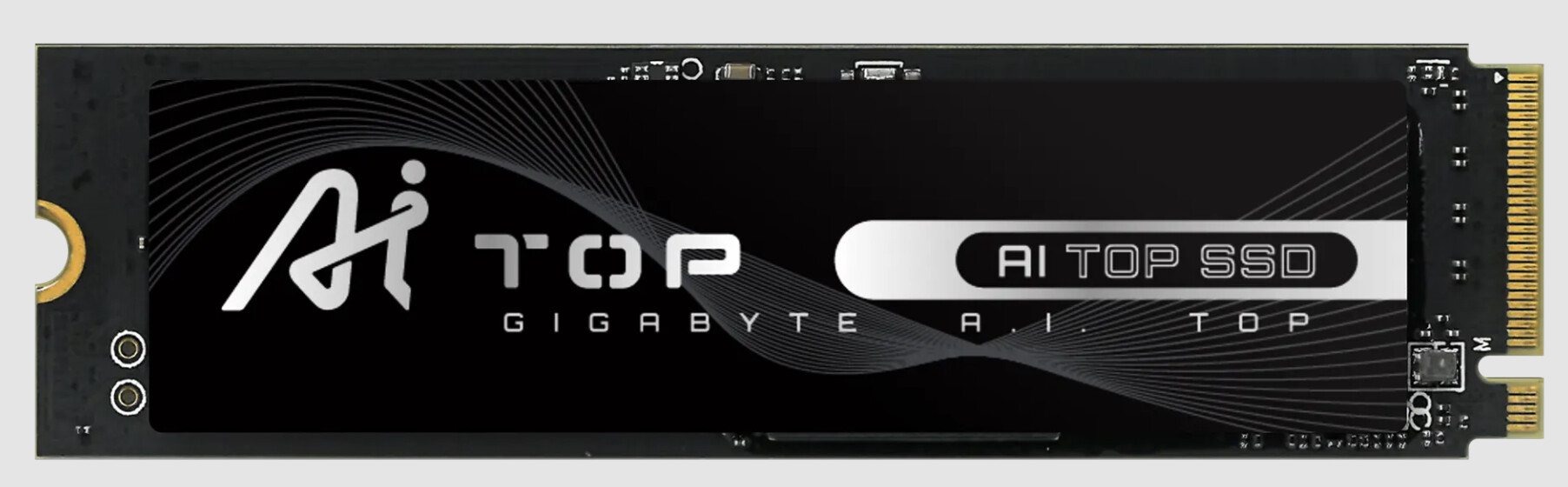
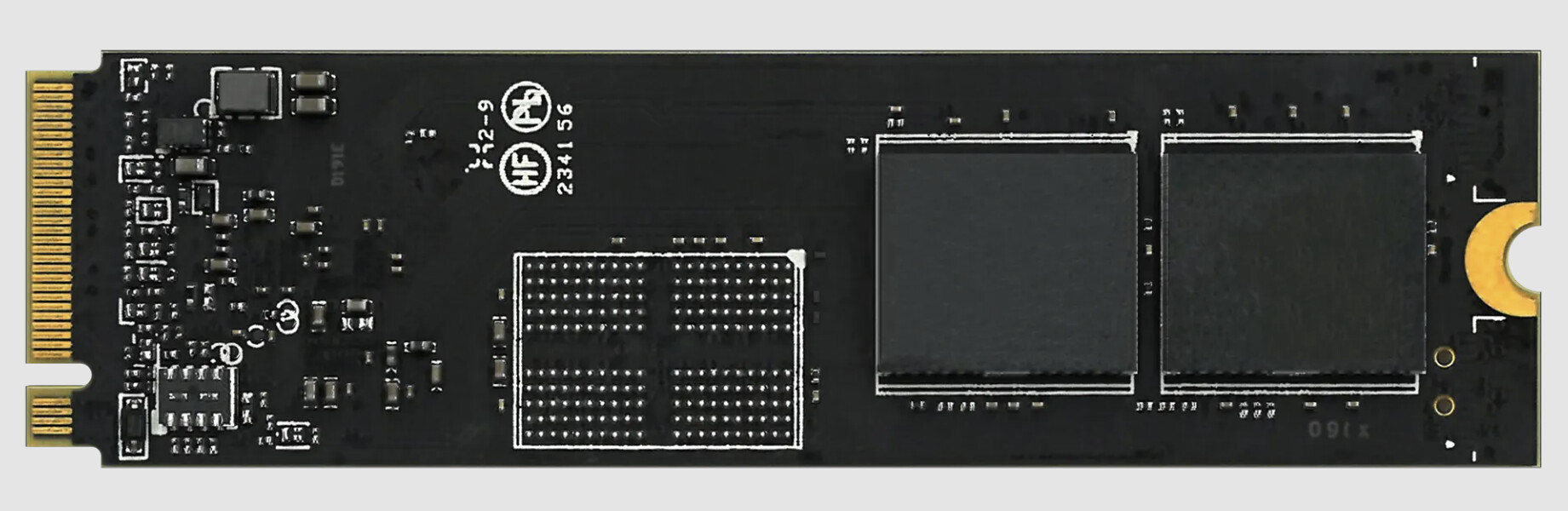
Gigabyte Promises 219,000 TBW for New AI TOP 100E SSD

Gigabyte has quietly added a new SSD to its growing lineup and this time around it's something quite different. The drive is part of Gigabyte's new AI TOP (Trillions of Operations per Second) and was announced at Computex with little fanfare. At the show, the company only announced that it would have 150x the TBW compared to regular SSDs and that it was built specifically for AI model training. What that 150x means in reality is that the 2 TB version of the AI TOP 100E SSD will deliver no less than 219,000 TBW (TeraBytes Written), whereas most high-end 2 TB consumer NVMe SSDs end up somewhere around 1,200 TBW. The 1 TB version promises 109,500 TBW and both drives have an MTBF time of 1.6 million hours and a five-year warranty.

Gigabyte didn't reveal the host controller or the exact NAND used, but the drives are said to use 3D NAND flash and both drives have a LPDDR4 DRAM cache of 1 or 2 GB depending on the drive size. However, the pictures of the drive suggest it might be a Phison based reference design. The AI TOP 100E SSDs are standard PCIe 4.0 drives, so the sequential read speed tops out at 7,200 MB/s with the write speed for the 1 TB SKU being up to 6,500 MB/s, with the 2 TB SKU slightly behind at 5,900 MB/s. No other performance figures were provided. The drives are said to draw up to 11 Watts in use, which seems very high for PCIe 4.0 drives. No word on pricing or availability as yet.
Return to Keyword Browsing
Nov 19th, 2026 00:16 PST change timezone

New Forum Posts

Popular Reviews

TPU on YouTube

Controversial News Posts