News Posts matching #ssd

Return to Keyword Browsing

Team Group Announces the All New Compact & Solid L5 LITE Solid State Drive

Team Group, the world's leading memory brand, today announces the launch of the all new L5 LITE solid state hard drive. Using SATA III 6Gbps transfer interface, L5 LITE solid state hard drive is both lightweight and has a powerful read/write performance. The sequential read/write speed is up to 500 and 400 MB/s. It can help you improve your work efficiency quickly by save time and storage space, so your purpose for upgrading can be perfectly satisfied. L5 LITE offers consumers the best solution in entry level solid state drives. It not only greatly improves the performance of the computer, but also the best bargain for upgrading your desktop computer or laptop.

Team Group Introduces its Fastest SSD for Gamers with T-FORCE CARDEA M.2

Team Group, the world's leading memory brand, today officially announces the launch of its fastest storage solution designed for gamers with the introduction of the T-FORCE CARDEA M.2 solid-state drive. The T-Force CARDEA M.2 SSD utilizes x4 PCIE 3.0 for up to 2600MB/s read speeds along with NVMe and TRIM support. The custom-made T-FORCE cooling module enhances looks as well as endurance for continuous high-intensity usage. This combination of high-speed data transfer, aggressive looks and effective cooling makes the T-FORCE CARDEA the perfect upgrade for gamers who want the best for their system.

Named after the Goddess of Storm, the T-FORCE CARDEA utilizes new-generation PCIE Gen3 x4 to breakneck 2600 MB/s read and 1450 MB/s write sequential performance and with up to 180K/140K IOPS in random read/write operations. The T-FORCE CARDEA's speed brings fast boot-up along with a responsive operating system that loads games and application faster for a smoother experience with reduced loading time.

NGD Systems Announces the Industry's Highest Capacity SSD

NGD Systems, a pioneer creating intelligent solid state drives (SSD) for public and private cloud data centers, today announced the availability of the industry's highest density storage solution. Shipping immediately and currently being qualified at leading OEMs, the Catalina SSD is available in capacities up to 24TB with 3D TLC flash in a PCIe edge card form factor.

"The Catalina is the industry's highest capacity PCIe NVMe SSD, designed and optimized for applications requiring consistent and low latency mass storage," said Nader Salessi, founder and chief executive officer of NGD Systems. "We are setting a new metric for energy and storage density to meet a key concern within data center and cold storage applications alike."

Toshiba Now Shipping Samples of 64-Layer, 512-gigabit 3D Flash Memory

Toshiba Corporation has today unveiled the latest addition in its industry-leading line-up of BiCS FLASH three-dimensional flash memory with a stacked cell structure, a 64-layer device that achieves a 512-gigabit (64-gigabytes) capacity with 3-bit-per-cell (triple-level cell, TLC) technology. The new device will be used in applications that include enterprise and consumer SSD. Sample shipments of the chip started this month, and mass production is scheduled for the second half of this calendar year.

Toshiba continues to refine BiCS FLASH, and the next milestone on its development roadmap is the industry's largest capacity, a 1-terabyte product with a 16-die stacked architecture in a single package. Plans call for the start of sample shipments in April 2017. For the new 512-gigabit device, Toshiba deployed leading-edge 64-layer stacking process to realize a 65% larger capacity per unit chip size than the 48-layer 256-gigabit (32-gigabytes) device, and has increased memory capacity per silicon wafer, reducing the cost per bit.

Intel Launches Site Detailing Optane Requirements: Skylake Users Need Not Apply

Microprocessor giant Intel has launched a new page dedicated to its 3D XPoint-based Optane memory solution, a technology that it jointly developed with memory manufacturer Micron back in 2015, and was supposed to be on the market by 2016. The company missed that date; however, the technology is still interesting to enthusiasts and power users alike, due to its promises of both high speed and large capacity, a seemingly unattainable combo in today's markets.

Unfortunately, it seems that any system built around when Optane was announced will not be able to run Optane-based SSDs. In the system requirements section of its page, Intel has indicated that Optane will not run on anything earlier than a Kaby Lake based CPU. No exceptions. Yes, that includes Skylake, Broadwell, and pretty much everything else besides Kaby Lake. You will also need a 200-series chipset or newer.

BIOSTAR RACING Series Motherboard Lineup for AMD RYZEN Announced

BIOSTAR is proud to announce the newest entry in its RACING Series family of high-performance motherboard with its debut entry for AMD with the BIOSTAR RACING X370 and B350 motherboard line up. Featuring the latest 2nd-generation RACING Series technology, the race to the future has just become more intense with support for the new AMD RYZEN processors.

True to the legacy of the BIOSTAR RACING series, the new motherboards for the Super 5 concept as well as the BIOSTAR's revolutionary VIVID LED Armor and 5050 LED Fun Zone. In conjunction with this are BIOSTAR's new improvement to component stability and performance with its new feature of Digital Power+ for overclocking and M.2 Cooling Protection. Also debuting with this model is the FLY.NET network performance software that works in tandem with the new DRAGON gaming LAN solution designed for gamers that want absolute network performance without lag when every second counts.

ADATA Releases the XPG SX950 SSD and EX500 Enclosure

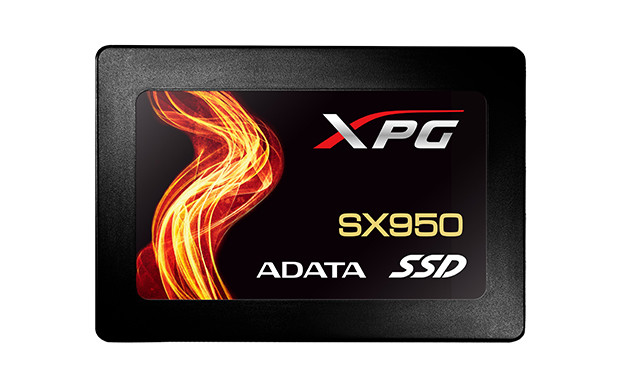
ADATA Technology, a leading manufacturer of high performance DRAM modules, NAND Flash products, and mobile accessories today launched the XPG SX950 SSD and its accompanying gaming-styled EX500 drive enclosure. Loaded with up to 960GB of 3D MLC NAND and driven by a SMI controller, the SX950 utilizes a custom ADATA PCB and is backed by an extra-strict chip sorting process to ensure an SSD that can handle prolonged high demand. Performance reaches 560MB/s read and 530MB/s write. Bearing the signature XPG look, the EX500 is aimed at gamers and case modders, boasting a textured enclosure and a vibrant yet aggressive feel. It arrives with a spacer and bracket for easy install on desktops and notebooks. For users that would like to use the SX950 as external storage, the EX500 offers a stylish, durable, and easy-install enclosure that pairs instantly with desktops, notebooks, and game consoles via high speed USB 3.1.

ADATA is completing its transition to stacked memory, or 3D NAND. This allows for SSDs with bigger capacities without a correlating increase in prices paid by end users. The SX950 uses durable 3D MLC (multi-level cell) NAND Flash and SMI controller. Consumers can choose from 240GB, 480B, and 960GB versions of the SX950. Not only denser (higher capacity), 3D NAND is also roughly 10% faster than 2D NAND and so the SX950 outpaces its predecessor, the SX930 - reaching 560MB/s read and 530MB/s write.

ADATA Intros the XPG SX950 SSD with 3D MLC NAND

ADATA launched the XPG SX950 line of performance segment SSDs, which it unveiled at the 2017 International CES expo. Available in 240 GB, 480 GB, and 960 GB capacities, these drives combine a Silicon Motion made controller with 3D MLC NAND flash memory, to belt out performance of up to 560 MB/s sequential reads, with up to 530 MB/s sequential writes; and up to 90,000 IOPS 4K read/write random access performance. The controller features SLC caching, with which the drives treats a small portion of the MLC NAND user area as SLC NAND, and juggles hot data in and out of this portion, for improved performance. Built in the 7 mm thick 2.5-inch form-factor, the drives take advantage of SATA 6 Gb/s interface. The company is backing these drives with an interesting 6-year product warranty.

Intel Optane DC P4800X with 3D XPoint Offers 21x Endurance Over MLC NAND

Intel is readying a fleet of new SSDs based on its new 3D XPoint non-volatile memory, a technology that Intel hopes will replace NAND flash in the years to come. The company developed this technology in collaboration with Micron Technology, under its IMFlash Technologies banner. The first Intel SSDs with this memory will be sold under the Optane brand. There are several sub-brands targeting the various market segments (client, enterprise, data-center, etc.), and technical slides of the data-center targeted Optane DC P4800X SSD were leaked to the web.

One of the first Optane DC P4800X SSDs comes in a rather measly capacity of 375 GB. The drive is built in the half-height PCI-Express add-on card (AIC) form-factor, with PCI-Express 3.0 x4 host interface. The drive belts out sequential transfer rates of up to 2400 MB/s reads, with up to 2000 MB/s writes, which may not sound like much given that even TLC NAND flash based PCIe 3.0 x4 drives offer higher transfer rates; until you look at three key metrics - latency, random-access performance, and endurance.

Super Talent Intros the SuperCache AIC314 PCI-Express SSD

Super Talent introduced the SuperCache AIC314 PCI-Express SSD. Built in the half-height add-on card form-factor, with PCI-Express 3.0 x4 interface, the drive combines a Phison PS5007-E7 controller with MLC NAND flash memory, and comes in capacities of 480 GB, 960 GB, and 1920 GB. The drive takes advantage of the new NVMe protocol, and offers sequential transfer rates of up to 3000 MB/s reads, with up to 2200 MB/s writes; 340,000 IOPS 4K random reads, with up to 260,000 IOPS 4K random writes. The drives feature banks of capacitors that mitigate data loss to power outages. Super Talent is targeting enterprises with these drives.

SanDisk Announces the SkyHawk Series Enterprise SSDs

SanDisk today announced the SkyHawk and SkyHawk Ultra lines of enterprise SSDs. Built in the 12 mm-thick 2.5-inch form-factor, the drives feature PCI-Express 3.0 x4 interface over U.2 or SATA-Express connections. The drives incorporate high-endurance 15 nm MLC NAND flash memory. The SkyHawk series includes 1920 GB and 3840 GB variants, and offer transfer speeds of up to 1500 MB/s reads, with up to 1700 MB/s writes; up to 250,000 IOPS 4K random reads, and up to 47,000 IOPS 4K random writes. Its MTBF is rated at 2 million hours, and it is backed by a 5-year warranty.

The more premium SkyHawk Ultra series comes in 1600 GB and 3200 GB variants, with sequential transfer speeds of up to 1700 MB/s reads, and up to 1200 MB/s writes, up to 250,000 IOPS random reads, with up to 83,000 IOPS random writes. These drives offer nearly triple the durability of the SkyHawk (standard) series, with 1.7 DWPD (vs. 0.6 DWPD of the SkyHawk standard); although their MTBF are rated the same, at 2 million hours, and are backed by the same 5-year product warranties.

QNAP Launches Cost-efficient TS-x31XU Series Rackmount NAS

QNAP Systems, Inc. today announced the new business-class TS-x31XU series rackmount NAS; available in 4, 8 and 12-bay models with single and redundant power supply options. Powered by an AnnapurnaLabs, an Amazon company Alpine AL-314 quad-core 1.7 GHz ARM Cortex-A15 CPU, the TS-x31XU features 2GB or 4GB DDR3 RAM (expandable to 16GB), includes two built-in 10GbE SFP+ ports, and supports the innovative VJBOD (Virtual JBOD) and Container Station, providing a high-performance, multifunctional and power-efficient storage solution.

Coupled with a hardware encryption engine and SSD cache support, the quad-core TS-x31XU series offers two 10GbE SFP+ ports that ensure top notch networking capabilities of up to 1,242 MB/s transfer speeds. An additional single-port 10GbE PCIe card can be installed for more flexible deployment. The TS-x31XU is ideal for small-and-medium businesses looking for backup, restoration, virtualization storage, private cloud, and to future-proof their IT infrastructure for 10GbE networks.

NVM Express Elects Facebook and Toshiba to Board

NVM Express, Inc., the organization that developed the NVM Express specification for accessing solid-state drives (SSDs) on a PCI Express (PCIe) bus, today announced the results of its recent board elections. Elected to Promoter positions were Facebook, Micron, Microsoft, Samsung, Seagate, Toshiba, and Western Digital. Facebook and Toshiba are new to the Promoter level, and the others are incumbents. The election winners join existing Promoters Cisco, Dell EMC, Intel, Microsemi, NetApp and Oracle, whose current terms expire at the end of 2017.

Representatives from the 13 Promoter companies form the NVM Express, Inc. Board of Directors, which governs the organization, including setting strategic direction. All Contributor and Promoter member companies are eligible to run for Promoter positions, where there are elections each year for roughly half the positions.

"We're very pleased to welcome Toshiba and Facebook to the NVM Express, Inc. Board, to help shape the future direction of NVM Express technology and the organization," said Amber Huffman, NVM Express President. "In 2016, we marked major milestones, such as publishing the NVM Express over Fabrics specification. We look forward to publishing revision 1.3 in the first half of this year - with much more to come later in 2017."

MSI M.2 Shield is Snake Oil Say Tests, Company Refutes Charges

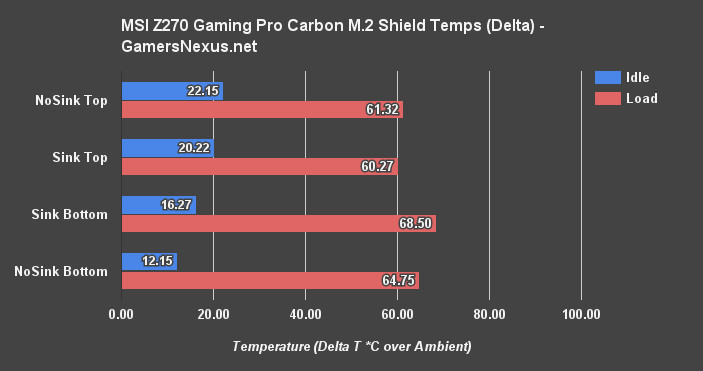
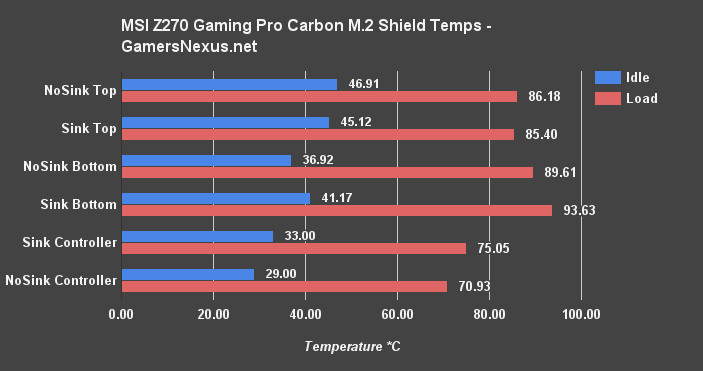
With its 200-series chipset motherboards, MSI introduced its exclusive M.2 Shield accessory on some of its more premium products. This aluminium heatspreader with a thermal pad, according to its makers, is designed to lower temperatures on M.2 SSDs, and reduce thermal throttling of performance. Tests by Gamers Nexus claim that far from reducing throttling, the M.2 Shield creates a "heat trap" that throttles performance further.

The M.2 Shield accessory was tested by Gamers Nexus using a Kingston HyperX Predator PCIe M.2 drive, on an MSI Z270 Gaming Pro Carbon motherboard. Driven by a Marvell 88SS9293 controller, the drive is known to heat up and lose performance to overheating. The data presented by the publication is Delta T (temperatures subtracting ambient temperature). MSI on its part, stands by the efficacy of the M.2 Shield accessory, and is sharing testing methods and data of its own with media sites. Tests by other publications such as Bit-Tech and KitGuru show positive results for the M.2 Shield.

Mushkin Expands Its SSD Lineup with Helix: M.2 PCIe 4x, 3D MLC NAND, Up To 2 TB

Adding to their SSD lineup, Mushkin, which makes some really interesting, good price-performance ratio products has recently announced the upcoming availability of their Helix line of M.2 2280 SSDs. Based on Silicon Motion's SM2260 controller paired with 3D MLC NAND, Mushkin positions the Helix line as a premium, high-performance offering for desktops and laptops alike. Models will vary from a 250 GB entry-level offering thorugh a 2 TB high-end SKU, with the 2 TB version offering sequential read performance at up to 2.5 GB/s and write performance at up to 1.1 GB/s, when Silicon Motion's pseudo-SLC caching technology is used to its best effect.

Seagate is Shutting Down One of Its Largest HDD Assembly Plants

The woes for the trusty old HDD continue, as Seagate, one of the world's biggest players on the HDD manufacturing field, has confirmed they are closing up one of their largest plants. The factory, located in Suzhou, China, is one of the company's largest HDD production epicenters, and its closure will significantly reduce the company's HDD output - a step in the company's purported "optimizations" towards reducing their HDD production capabilities from 55-60 million HDDs per quarter to around 35-40 million. Production and demand's age-old feud are once again taking their toll, as demand for spindle-drive technology subsides on the wake of SSDs increased performance and consecutive price declines, with most laptops now shipping with either SSD-based storage or cheaper, yet less power-hungry, eMMC solutions.

Plextor Details Release Availability of their M8Se NVMe TLC SSDs

At CES 2017, Plextor announced their next SSD product line. Dubbed the M8Se, these will be restricted to NVMe SSDs with 15nm 3-bit-per-cell TLC of Toshiba manufacture, ranging from 128 GB, 256 GB, 512 GB and 1TB capacities leveraged by Marvell's Eldora controller.

The new mid-range NVMe SSD uses a new heatsink design (slight cost-reduction when compared with the one the M8Pe carries), that Plextor says will improve cooling by up to 20% - convenient, since throttling does happen with NVMe based SSDs - and particularly with Marvell's Eldora controller - as it did with Plextor's M8Pe line of SSDs. The card also features blue accent lighting. Plextor will also sell a heatsink-less M8PeGN model in the M.2 form factor.

ECS Updates and Expands LIVA Mini-PC Family - Z, Z Plus and ZE Models Pictured

At CES 2017, ECS showcased a number of ultra-compact form-factor PCs. basically building upon their previous LIVA family releases, the new LIVA feature either Intel's Apollo Lake SoCs (with Celeron Processors N3350 / N3450 / N4200 and 6 W TDP) on the Z and ZE, or Intel's Kaby Lake-U processors (Intel Core i3-7100U / i5-7200U / i7-7500U and 15W TDP) on the Z Plus.

The Z Plus is obviously the most powerful of the lot, supporting DDR4 memory (the Z and ZE support only DDR3), having better integrated graphics (Intel's HD 620 versus the Intel HD 500/500 on the Z and ZE models), and having an expected extra energy consumption (an external 65 W adapter on the Z Plus versus a 40 W external adapter on the other two models).

Toshiba BG Series M.2 NVMe SSDs are Really Small

Toshiba showed off its new BG Series M.2 SSDs, which will grab your attention for being quite small. Measuring 16 mm x 20 mm, these drives are shorter than the shortest (30 mm) M.2 length standard. They still take advantage of the PCI-Express 3.0 x2 interface, and the NVMe protocol. At the heart of this drive is Toshiba's BiCS Flash, a multi-chip module that combines stacked TLC NAND flash memory with an SSD controller into one package. The drives come in capacities of 128 GB, 256 GB, and 512 GB. Toshiba is also separately selling these drives as chip-only, to notebook manufacturers, so they can solder them directly onto the mainboards of their low-cost ultra-portable notebooks.

ADATA Also Unveils the Improved SD700X External SSD

ADATA, at its 2017 International CES booth, also unveiled the SD700X external SSD. An improved version of the original SD700 it launched in November 2016, the drives feature a more compact body that retains the military-grade waterproof and shockproof protection mechanisms. It comes in capacities of 256 GB, 512 GB, and 1 TB. Under the hood, the drive features 3D TLC NAND flash memory, and a SIliconMotion controller that takes advantage of USB 3.0 (5 Gbps), with a single cable handling both power and host connectivity. The drive offers sequential transfer speeds of up to 440 MB/s. ADATA is marketing this as a "gaming-grade" product, targeting notebook gamers.

ADATA SX950 Gaming SSD Pictured

ADATA showed off its SX950 Gaming mid-range SSD. Built in the 7 mm-thick 2.5-inch form-factor, with SATA 6 Gb/s interface, the SX950 comes in capacities of up to 960 GB. It appears to be based on a Phison-made controller, wired to 3D MLC NAND flash memory. It offers sequential transfer speeds of up to 560 MB/s reads, with up to 530 MB/s writes. The drive features SLC caching, in which the controller treats a user-abstract portion of the MLC NAND area as fast SLC, by writing only one bit per cell, and juggling data in and out of this area based on its "heat." The drives are backed by 5-year warranties.

Western Digital Announces the WD Black PCIe SSD

Western Digital has announced the WD Black PCIe SSD, their first PCIe SSD for the consumer market. This particular SSD is aimed at the cheaper half of the M.2 PCIe SSD market rather than competing for the highest performance: it will be available in 256GB and 512GB capacities for $109 and $199.99 respectively, making it cheaper than any currently available M.2 PCIe SSD except the Intel 600p.

MSI Aegis Series Gaming Desktops Receive Intel Kaby Lake Upgrade

MSI, the world's leading manufacturer of true gaming hardware, has fitted its Aegis gaming desktop line with the recently introduced Intel Kaby Lake chipset. Besides the new chipset, MSI has revamped its high-end Aegis Series desktops in terms of design, convenience and performance. The MSI Aegis Ti3, Aegis X3, Aegis 3, Nightblade 3, Nightblade MI3 and Trident 3 will be available worldwide in January 2017.

On the outside, a handy headset handle is added to the sides, and a touch of carbon effect on the front. Applied to MSI's full gaming desktop family, MSI VR Link provides an HDMI port on the front side and 'One-Click to VR' software to optimize your VR experience. The Aegis Ti3 and Aegis X3 also feature the MSI Game Boost button on the front side, automatically overclocking the system when pressed. On the backside, a convenient carry-handle enables gamers to easily carry their Aegis when on their way to a friend or LAN-parties. For those who like to add a little personal touch to their system, MSI Aegis Series feature RGB Mystic Light. By using the Mystic Light App or MSI's Gaming Center software, gamers can change the color and effects of all LEDs individually.

OWC Makes MacBooks 'Pro' Again With Game-Changing Product

OWC, a leading zero emissions Mac and PC technology company, announced the OWC DEC, the first-ever expansion solution designed specifically for the 2016 Apple MacBook Pro. The OWC DEC is the finishing touch to a MacBook Pro, allowing users to take their laptops to the next level, extending the life and the functionality of the already-exceptional 2016 MacBook Pro. The DEC is the latest in OWC's long line of upgrades for nearly every Mac made, and continues the company's legacy of providing the best solutions for Mac owners.

The OWC DEC attaches completely flush to the bottom of the 2016 MacBook Pro, providing additional flash storage and connectivity, ultimately increasing the performance of MacBook Pros. With the OWC DEC, users will get an enhancement path for their 2016 MacBook Pro and MacBook Pro with Touch Bar to keep their system upgradeable for the long term in a clean and integrated fashion. On top of the core functional benefits, the OWC DEC also touts a sleek design. When installed, the OWC DEC and MacBook Pro will be as thin as a 2012 MacBook Pro, allowing this advanced solution to retain the attractive light weight design that users favor.

Sharkoon Launches the Rapid-Case 2.5" USB 3.1 Type-C External Enclosure

In a realm of ever-expanding storage needs, and increasingly constrained time slices, being able to quickly transfer or back-up your files and carry them with you is still an important metric. Even in an increasingly cloud-powered world, sometimes, simply being able to care about a piece of hardware, and not losing a password or having your cloud account hacked, still pulls its weight in some users' considerations. Sharkoon is looking to address those users' needs with the release of the Rapid-Case 2.5" USB 3.1 Type-C, a DIY enclosure which is sure to give your old HDDs (or even SSDs) a new lease of life.
Return to Keyword Browsing
Nov 19th, 2026 00:43 PST change timezone

New Forum Posts

Popular Reviews

TPU on YouTube

Controversial News Posts