 10
1st Player Steampunk PS-850SP 850 W Review
Performance Rating: Stability, Noise, Efficiency & PF »Protection Features Evaluation
| Protection Features | |
|---|---|
| OCP | +12 V: 92.4 A (132%), 11.45 V +5 V: 30.3 A (151.5%), 5.077 V +3.3 V: 29 A (145%), 3.241 V 5 VSB: 4 A (160%), 5.015 V |
| OPP | 1058.18 W (125.97%) |
| OTP | Yes (184 °C @ 12 V Heat Sinke) |
| SCP | +12 V: Yes +5 V: Yes +3.3 V: Yes 5 VSB: Yes -12 V: Yes |
| PWR_OK | Accurate but lower than 16 ms |
| NLO | Yes |
| SIP | Surge: MOV Inrush: NTC & Bypass Relay |
OCP is set high at +12 V, allowing for a considerable voltage drop. The minor rails also have high OCP triggering points. OPP is set lower, but given the high voltage drop at +12 V during the OCP evaluation, I would like to see OPP set closer to 120%.
DC Power Sequencing
According to Intel's most recent Power Supply Design Guide (revision 1.4), the +12 V and +5 V rails must have voltages equal to or greater than the +3.3 V rail's output at all times. For our first measurement, we turn the unit off and switch it back on without a load on any of the rails.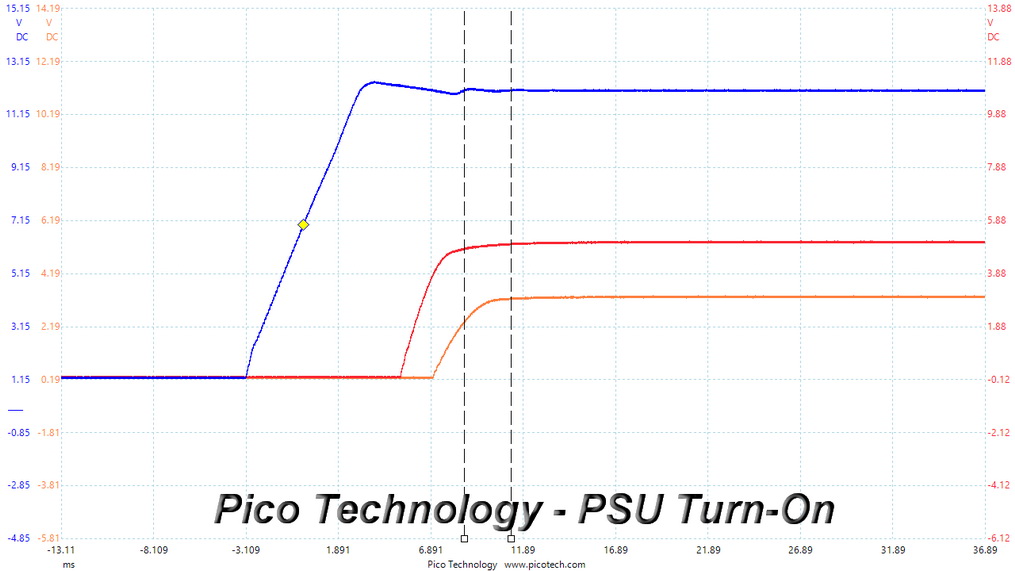

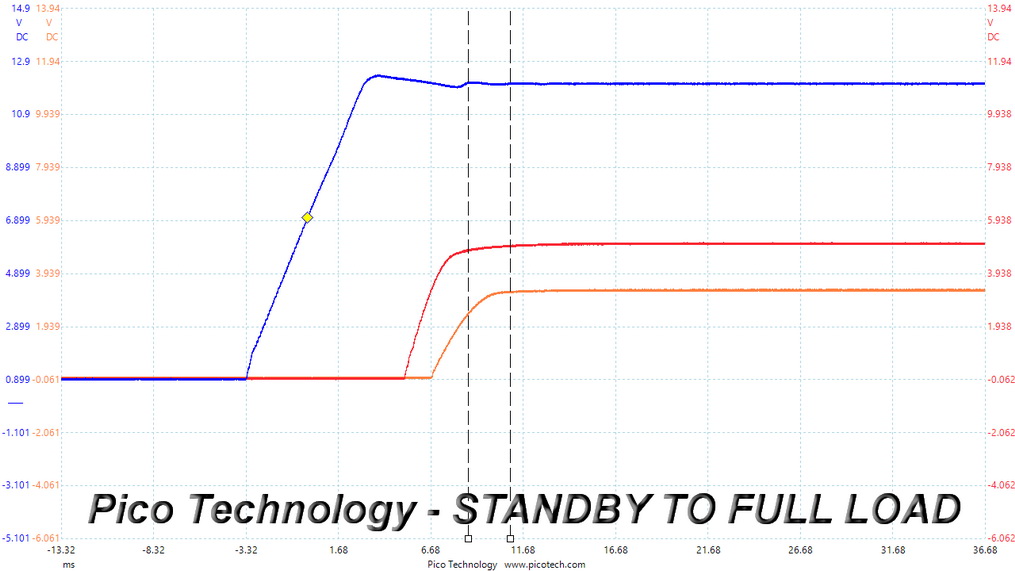
The 3.3 V rail is always lower than the other two rails.
EMC Pre-Compliance Testing - Average and Peak EMI Detector Results
Electromagnetic Compatibility (EMC) is the ability of a device to operate properly in its environment without disrupting the proper operation of other close-by devices.Electromagnetic Interference (EMI) stands for the electromagnetic energy a device emits, and it can cause problems in other close-by devices is too high.
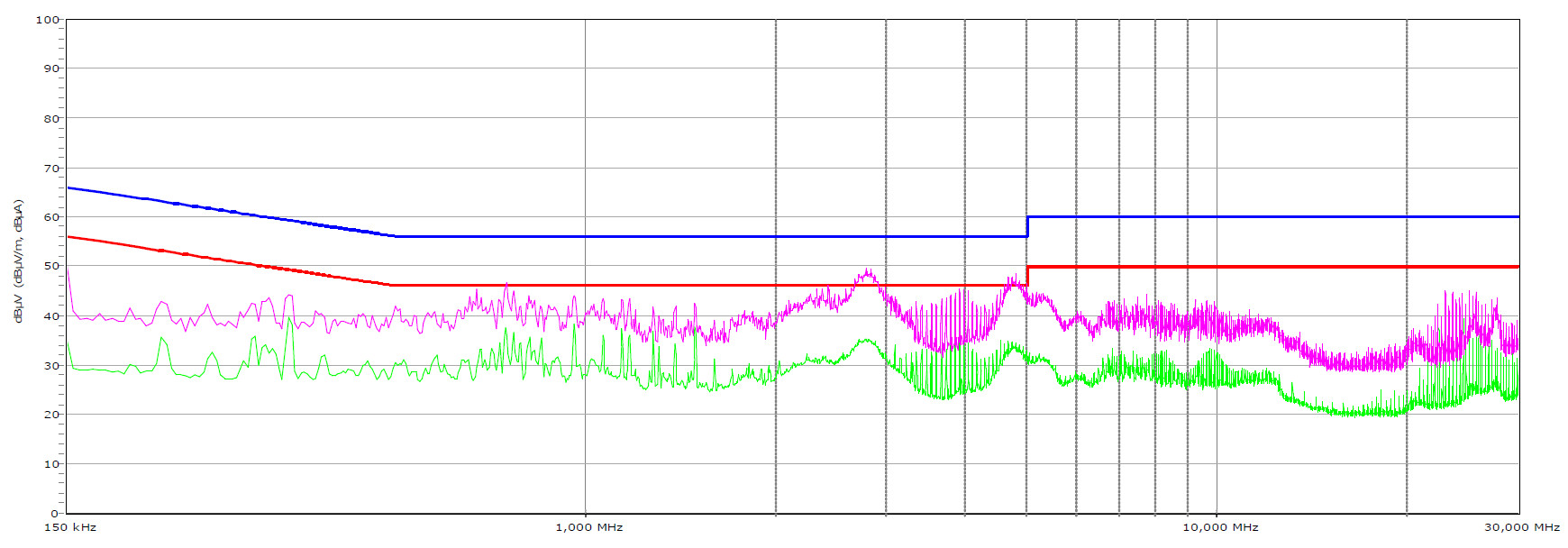
EMI suppression is excellent.
Nov 20th, 2026 14:13 PST
change timezone
Latest GPU Drivers
New Forum Posts
- 1 - 5 person file storage server equivalent accasible from anywhere + general VM server. (0)
- WarpCoreBench scores! (81)
- How to prevent OLED burn damage due to PC freezes or power outtages? (48)
- Honestly, do you care about GTA VI? (208)
- When you could finally run Crysis maxed out? (63)
- GTA VI (20)
- Anthrophics IPO (25)
- GeekMagic Ultra Smart WiFi Weather Station (8)
- Very unusual two gaming-pc scenarios. (35)
- Can i play GTA 6 now? (Joke) (14)
Popular Reviews
- AMD Zen 6 Technical Deep Dive
- Ugreen NASync DXP4800 GT Review
- Microsoft Surface Laptop Ultra Review - The Next-gen Arm Laptop
- Corsair RM1200e (Second Generation) Review
- Acemagic Retro X3 Review
- Upcoming Hardware Launches 2027 (Updated Nov 2026)
- Pulsar Office Tour & First Look at P1 Dual-Sensor Mouse
- Biwin Black Opal NV7400 2 TB Review
- AMD Ryzen 7 9800X3D Memory Performance Scaling
- AMD Ryzen 7 9800X3D Review - The Best Gaming Processor
TPU on YouTube
Controversial News Posts
- NVIDIA Co-Founder and CEO Jensen Huang Officially Resigns (490)
- Report: Jensen Huang Eyes NVIDIA Comeback (255)
- Open Letter Asking NVIDIA to Reinstate Jensen Huang Passes 115,000 Signatures (184)
- OpenAI CEO Argues Home PCs Waste the World's Limited DRAM Supply (152)
- NVIDIA Launches Investigation Into Jensen Huang's Relationship With Suspected Chinese Spy (136)
- Intel "Raptor Lake Next" 16-Core and 20-Core CPUs Surface (130)
- Legendary Game Studio BioWare Shuts Down Following EA Layoffs (104)
- Dell CEO Says the Memory Shortage Will Get Worse in 2027 (95)