Today NVIDIA announced their new GeForce 8800 GTS 512 MB which is based on the G92 GPU that has already been used on the GeForce 8800 GT. To our excitement our testing revealed that this $299 card can almost beat the much more expensive GeForce 8800 GTX while generally being quieter and less power hungry.
Sapphire's new HD 3870 card is based on AMD's RV670 GPU which is made in a 55 nm process with 666 million transitors and support for DirectX 10.1 and PCI-Express 2.0. This card that is sold for around $249 is intended to be AMD's new offering for an upper midrange card - but can it beat the GeForce 8800 GT?
PowerColor's new HD3850 Xtreme is full of customization compared to the reference design. Instead of two DVI ports it has one DVI and one HDMI port which supports HD video playback with HDCP and digital audio straight off the GPU. In addition to that a custom cooler by Zerotherm ensures that the card stays cool no matter what you throw at it. Another bonus is that the memory size has been doubled to 512 MB of 1.0 ns GDDR3 memory.
AMD's new Radeon HD 3850 has been a major upgrade in both performance and efficiency. GeCube has taken the reference design and increased the clock speeds. They also doubled the available memory to 512 MB GDDR3 and use a two slot cooler on the card. But can this yield enough performance to warranty a $30 price premium? We compare it to 17 other video cards.
The Zotac GeForce 8800 GT comes equipped with NVIDIA's latest G92 GPU. Unlike the NVIDIA reference design, Zotac's card is running at a higher clock of 660 MHz which gives this card a nice performance boost. With a price point of only $249 and performance that is close to the 8800 GTX, the NVIDIA GeForce 8800 GT is going to be one of the big sellers this year.
VVIKOO is a new videocard manufacturer based in Paris offering both NVIDIA and ATI cards. One of their first products is the GeForce 8600 GT Turbo, which is an overclocked version of NVIDIA's 8600 GT. The card comes equipped with a quiet Zalman cooler and offers great overclocking potential. In our testing we could increase the clocks by more than 40% over NVIDIA's reference clocks.
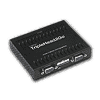
Matrox has made some waves with their recent release of the DualHead2Go Digital GXM module, but the TripleHead2Go Analog has one great feature which the dual display variant lacks: Surround Gaming. We fire up a classic and a brand new game, to show you what you could be gaming on with the TripleHead2Go GXM module.
Biostar is the first manufacturer to put 512 MB of fast GDDR3 memory on a GeForce 8600 GTS card, which usually comes with 256 MB. Since GDDR3 memory is expensive, the card retails for around $50 more than the regular variant. Are 256 MB additional video memory worth the price difference?
Zotac's new GeForce 8600 GT ZONE Edition is running without any form of active cooling. It also has an audio input which allows you to feed external audio into the HDMI stream which is output via DVI plus an adapter, which is included of course. For a price of $129, or about $10 over a regular 8600 GT you will get several added benefits for very little extra cost.
Matrox made some waves with their GXM (Graphics eXpansion Modules) when they where first released, starting with the DualHead2Go. This module enabled dual monitor use with a single output. Their newest addition is the DualHead2Go Digital, which uses DVI as output method to allow higher resolutions. We try the device in Windows XP and Mac OS X using two 19 inch DVI based LCD montors.
ATI's new Radeon HD 2400 XT comes with the RV610 GPU which is built in 65nm. This means the GPU is cheap to make and consumes very little power. AMD has also added several new power savings features which makes this card one of the least power hungry on the market. For a price of only $79 you will be able to play back HD videos on almost any CPU using an HDMI + HDCP + Audio link with the UVD HD video acceleration hardware.
The HD 2600 XT is AMD's new midrange flagship card which is based on the RV630 GPU. This is the first time that a midrange card comes equipped with GDDR4 memory - 256 MB in our case. AMD's new card comes with features such as DirectX 10 support and full HD video acceleration by dedicated hardware called UVD. But is this enough to beat NVIDIA's new products?
Powercolor's Radeon HD 2400 Pro uses AMD's new RV610 GPU with 256 MB of DDR2 memory. With its special video acceleration features and low-profile PCB design the card seems to be a good choice for small form factor media PC systems.
Zotac's new GeForce 8800 GTX OC Edition comes factory overclocked with clocks of 630 MHz core and 1000 MHz memory. This is a nice increase over the standard NVIDIA clocks, especially if you consider the small $20 premium and that you don't lose your warranty. For users who are not willing to spend a lot of money for a GeForce 8800 Ultra this card seems to be a viable alternative.
AMD's new flagship video card is the Radeon HD 2900 XT which is based on the brand-new R600 GPU. It comes at an amazing $399 price point and offers many unique features. While performance may not be as fast as the GeForce 8800 GTX, its price will definitely make this card a good choice for users who are looking for the best price/performance ratio.
Twintech's new GeForce 8600 GTS is based on the NVIDIA reference design using the G84 GPU. It comes with 256 MB of fast GDDR3 memory clocked at 1 GHz, the graphics processor runs at 675 MHz. This is the first DirectX 10 card for the midrange segment with its price tag of around $210.
Zotac is a new player in the NVIDIA video card business and one of their first new cards is the GeForce 8500 GT which is based on NVIDIA's brand-new G86 graphics processor. Unlike the reference design Zotac's card is factory overclocked to a GPU clock of 700 MHz which gives the card a healthy performance boost for a price increase of about $10.
Today NVIDIA announced their latest new graphics processors of the GeForce 8 Series. The new cards are called GeForce 8500 GT, 8600 GT and 8600 GTS. In our preview we examine the differences between the products and how they stack up against the last generation GeForce 7 products.
Sapphire's X1950 Pro Dual is the world's first video card that uses two ATI RV570 GPUs on a single PCB. The board comes with 2x 512 MB of GDDR3 memory for a price of $349. In our testing the card shows that it has to potential to narrow the performance gap to NVIDIA's lineup until R600 is released.
Sapphire's new X1950 GT is based on ATI's RV570 GPU. It comes with 256 MB of GDDR3 memory and is cheaper than the Radeon X1900 GT. Of course you can not expect performance wonders from a $140 card, but it is a great way to survive the wait for ATI's next-gen products while being able to play all the latest games.
While most GeForce 8800 GTX cards are all based on the same product, with the exact same specs, EVGA has taken the 8800 GTX a step ahead. They cherry picked cards that can run high GPU and memory speeds and engineered a card that is running at higher clocks right out of the box. In our testing we see about 10% increased performance, especially at high resolutions with demanding games.
The Biostar V7603GS21 V-Ranger is based on NVIDIA's GeForce 7600 GS but comes at a higher memory clock. In addition to that Biostar added some changes to the PCB to allow software to change the GPU and memory voltages, which allows much better overclocking of the card. In our testing we could increase the core clock by 63% and the memory clock by 20% which made the card play in a completely different performance league.
The Radeon X1950 Pro series is one of the hottest selling video cards at the moment. It is competitively priced and can run all current games without breaking a sweat. Gecube has engineered a special TEC cooled solution for improved overclocking. In our testing we saw amazing clock increases of 20% on both the core and memory for a final clock of 682 MHz / 816 MHz.
Mad Moxx has been providing pre-modded cards to their customers for several years now. Their GeForce 7900 GTO Burstfire is a GeForce 7900 GTO, overclocked to 7900 GTX speeds. In our benchmarks we saw that performance is identical to the 7900 GTX, at a much lower price. What makes the Mad Moxx product special is that you retain your warranty and the GTX overclock is tested and guaranteed.