 1
Acemagic Retro X3 Review
Value & Conclusion »Power and Noise Levels
Power and efficiency can be just as important as raw performance in a compact system, so I measured how much the system draws under CPU stress, during GPU-heavy tests, while gaming, and during a 24-hour idle period. Noise readings add context for how noticeable the cooling system becomes during light use and sustained workloads.24-Hour Idle Power Draw
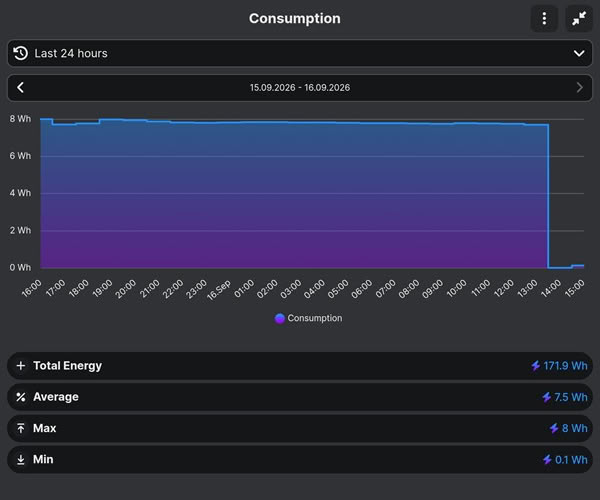
During the 24-hour idle test, the Retro X3 consumed 171.9 Wh, equivalent to an average power draw of approximately 7.16 W. If left running at that average continuously throughout the year, it would use approximately 62.7 kWh of electricity, costing around $9.40 to $12.55 annually at an illustrative rate of $0.15 to $0.20 per kWh. That's quite low for a Windows desktop and makes the X3 relatively inexpensive to leave running between tasks.
The monitoring software's per-hour consumption graph is an energy measurement, so it shouldn't be mistaken for a series of instantaneous wattage readings. Your actual annual cost will depend on how often you play games or run CPU-heavy jobs, but idle consumption is low enough that leaving the X3 powered on between tasks isn't a major expense.
System Power Draw Under CPU and GPU Workloads
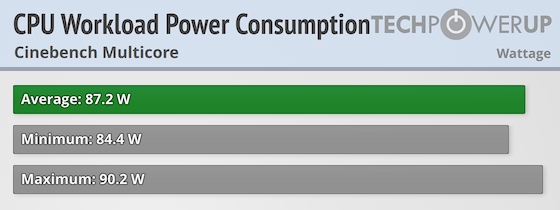
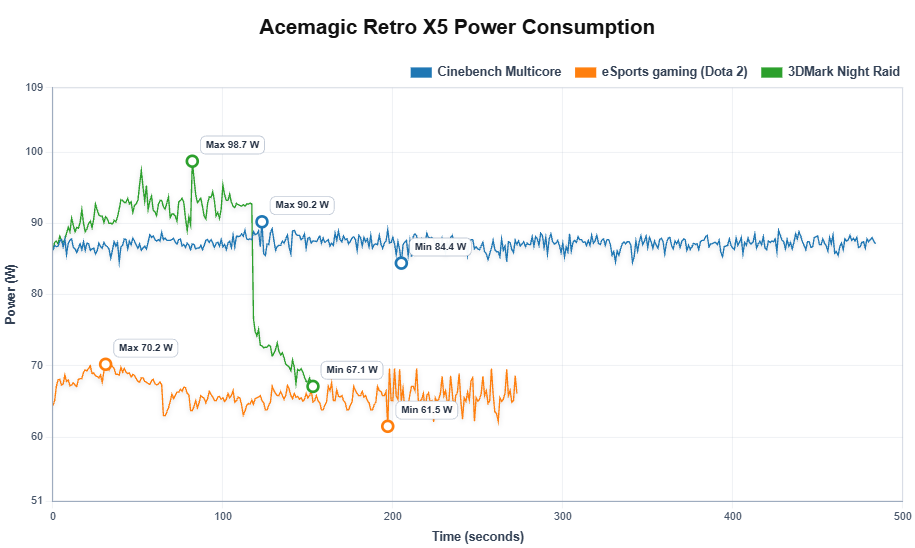
During sustained multicore CPU testing, power consumption at the outlet averaged 87.2 W, ranging from 84.4 to 90.2 W. The relatively small variation indicates that power draw was consistent throughout the recorded test.
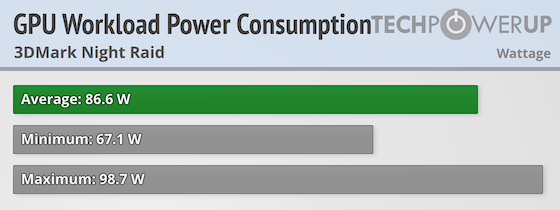
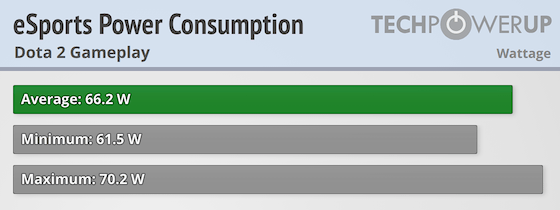
Dota 2 averaged 66.2 W at the outlet, ranging from 61.5 to 70.2 W, while Night Raid was more variable at an average of 86.6 W and a peak of 98.7 W. I wouldn't use the CPU stress figures as a guide to general ownership costs, since gaming and everyday applications place quite different demands on the hardware.
Here's a detailed rundown of the Acemagic Retro X3's system power draw across all three test profiles:
Noise Levels
At the default fan setting, my digital sound meter recorded 30.4 dBA at idle, 34.7 dBA under light load, and 39.5 dBA during the heavier tests, measured from 30 cm away. I was pleasantly surprised by how little the fan bothered me during testing; the sound wasn't high-pitched, and with the normal background noise in my office I barely noticed it beside me. That's a genuine strength for a Mini-PC intended to live on a desk, although fan behavior may change with room temperature and sustained workloads.
Nov 16th, 2026 10:35 CST
change timezone
Latest GPU Drivers
New Forum Posts
- Honestly, do you care about GTA VI? (64)
- Can you guess Which game it is? (329)
- ProArt X870E-CREATOR WIFI - Bifurcation~Complication (12)
- Advice for my PC upgrade (7)
- Meeting point of those who broke their GPUs. Please share what GPUs you've burned, shattered, ionized or melted accidentally. (39)
- Without Jensen, PC gaming will be (6)
- I don’t know been building “by hand” for years and we at the point where “Server Quality” is mentioned, is this the future of it or will it continue? (39)
- Warning for Windows 10 and 11 users running newer AMD GPU drivers (61)
- What storage medium you lost the most data thus far from failure? HDD/SSD Flash, etc (54)
- How much does an RTX 5090 cost in your area? (64)
Popular Reviews
- ASUS ROG Strix B850-I Gaming Wi-Fi7 W Review
- Corsair HX1000i Shift Crystal Review
- AMD Zen 6 Technical Deep Dive
- Upcoming Hardware Launches 2027 (Updated Nov 2026)
- Acemagic Retro X3 Review
- Montech King 95 3D PRO Review
- NZXT C1200 Platinum Review
- Phantom Blade Zero Performance Benchmark Review - 35 GPUs Tested
- AMD Ryzen 7 9800X3D Review - The Best Gaming Processor
- NZXT H7 RGB+ Review
TPU on YouTube
Controversial News Posts
- NVIDIA Co-Founder and CEO Jensen Huang Officially Resigns (431)
- Open Letter Asking NVIDIA to Reinstate Jensen Huang Passes 115,000 Signatures (184)
- OpenAI CEO Argues Home PCs Waste the World's Limited DRAM Supply (152)
- NVIDIA Launches Investigation Into Jensen Huang's Relationship With Suspected Chinese Spy (136)
- Intel "Raptor Lake Next" 16-Core and 20-Core CPUs Surface (130)
- Legendary Game Studio BioWare Shuts Down Following EA Layoffs (104)
- Dell CEO Says the Memory Shortage Will Get Worse in 2027 (95)
- Report: Jensen Huang Eyes NVIDIA Comeback (90)