 2
Acemagic Retro X3 Review
Web & Office Productivity »General Performance
AIDA64 Cache & Memory
The AIDA64 memory benchmark measures how quickly data moves between system memory and the CPU's cache hierarchy. It provides a closer look at memory bandwidth, latency, and cache behavior.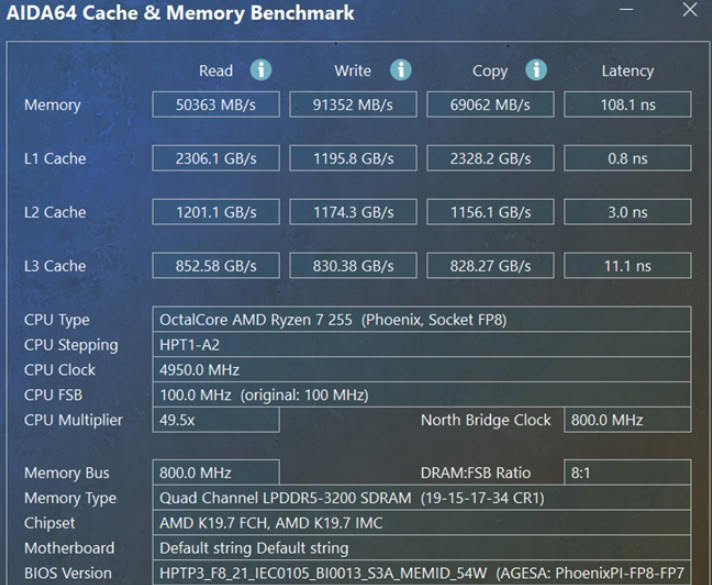
The onboard LPDDR5-6400 returned 50,363 MB/s for reads, 91,352 MB/s for writes, and 69,062 MB/s for copies, with latency at 108.1 ns. It's certainly an unusual spread between the read and write figures. More importantly, though, this memory is permanently installed, so buyers won't be choosing a different kit to change its performance later.
Cinebench
Cinebench uses Maxon's Cinema 4D engine to measure processor rendering performance across both single-threaded and multithreaded workloads. Comparing both scores shows how well the processor handles lightly threaded tasks and heavier rendering jobs.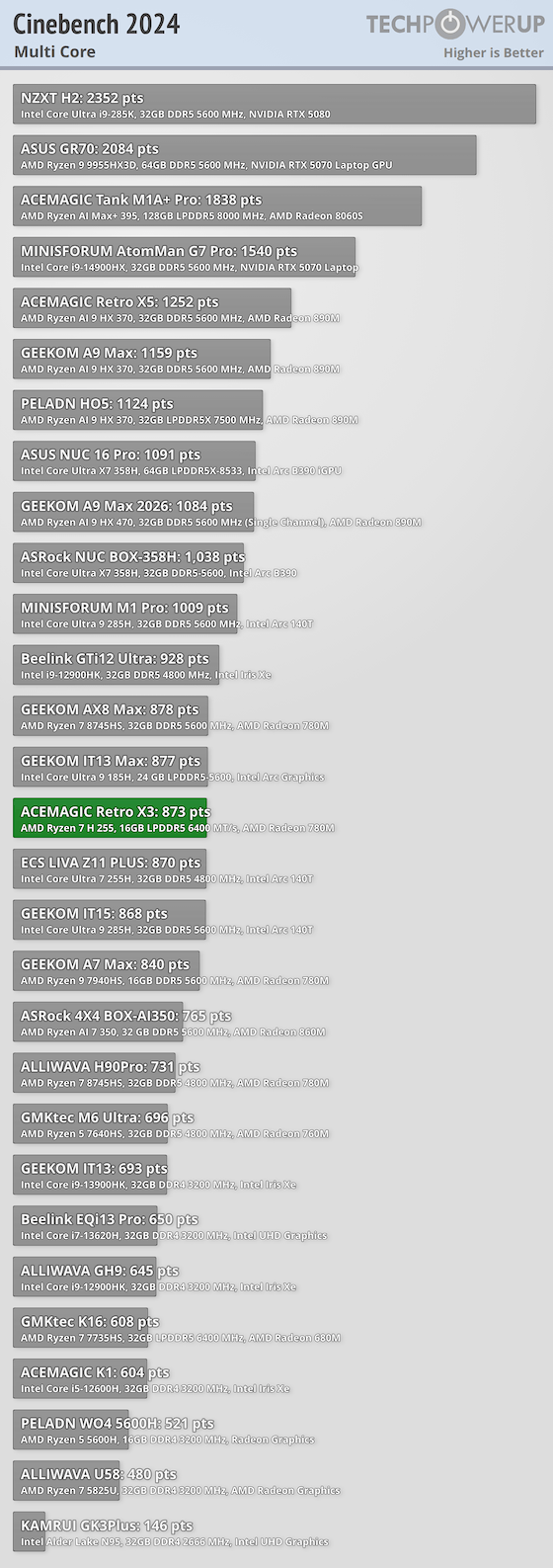
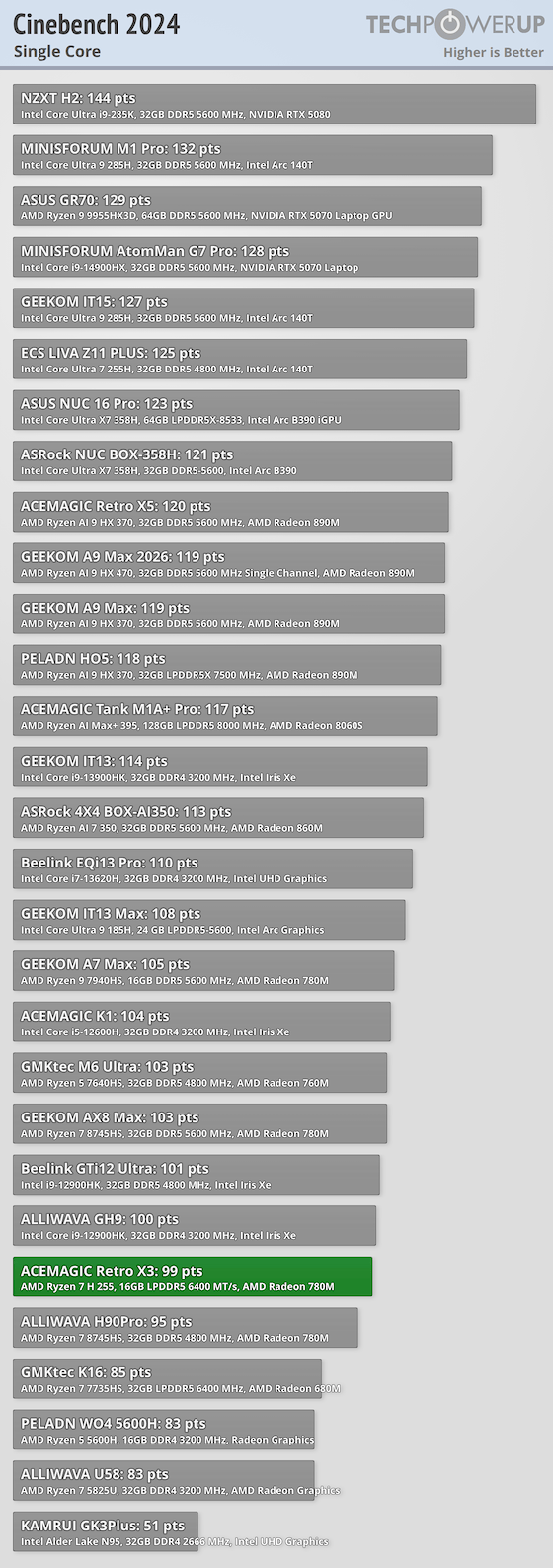
With 873 points in multicore rendering and 99 in single-core, the Ryzen 7 H 255 is close to the GEEKOM AX8 Max's 878 multicore points but well behind the Retro X5's 1,252. I wouldn't buy the X3 specifically for long rendering jobs, though its eight Zen 4 cores have more than enough CPU performance for the mix of office and everyday tasks I would normally assign to this computer.
7-Zip
7-Zip's built-in benchmark measures processor performance during both data compression and decompression across a range of dictionary sizes. It's a useful indicator of how a system handles file-heavy workloads such as packing archives, installing software, or building projects.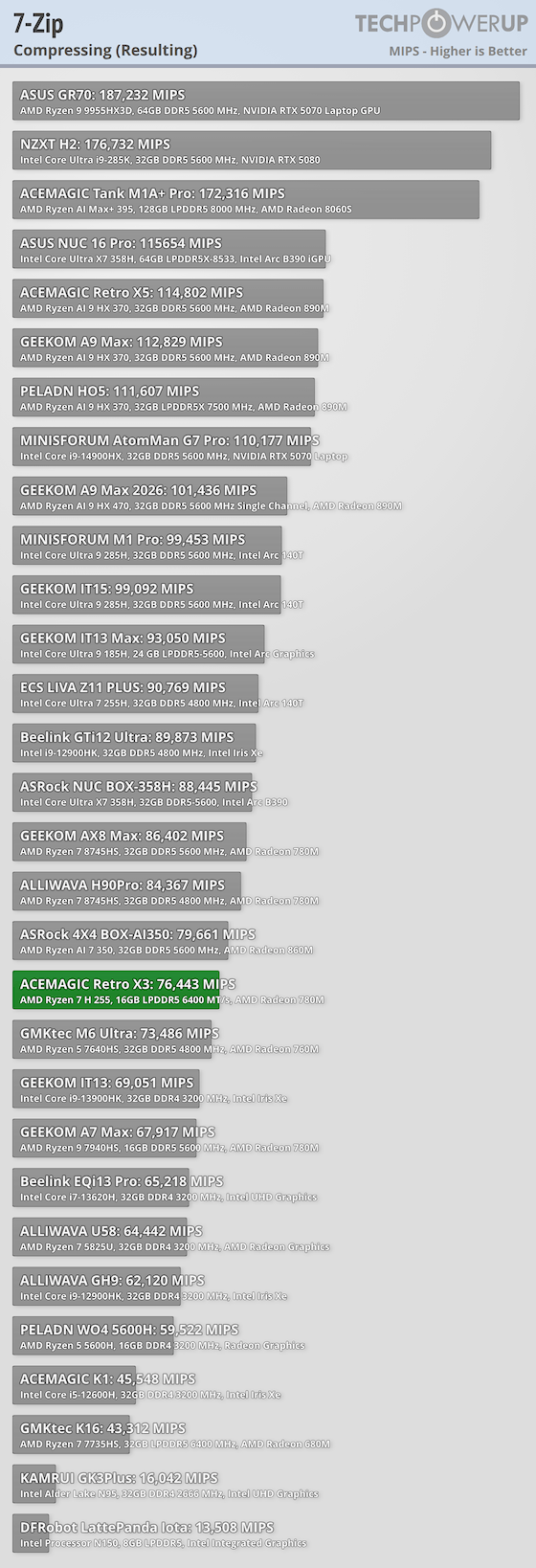
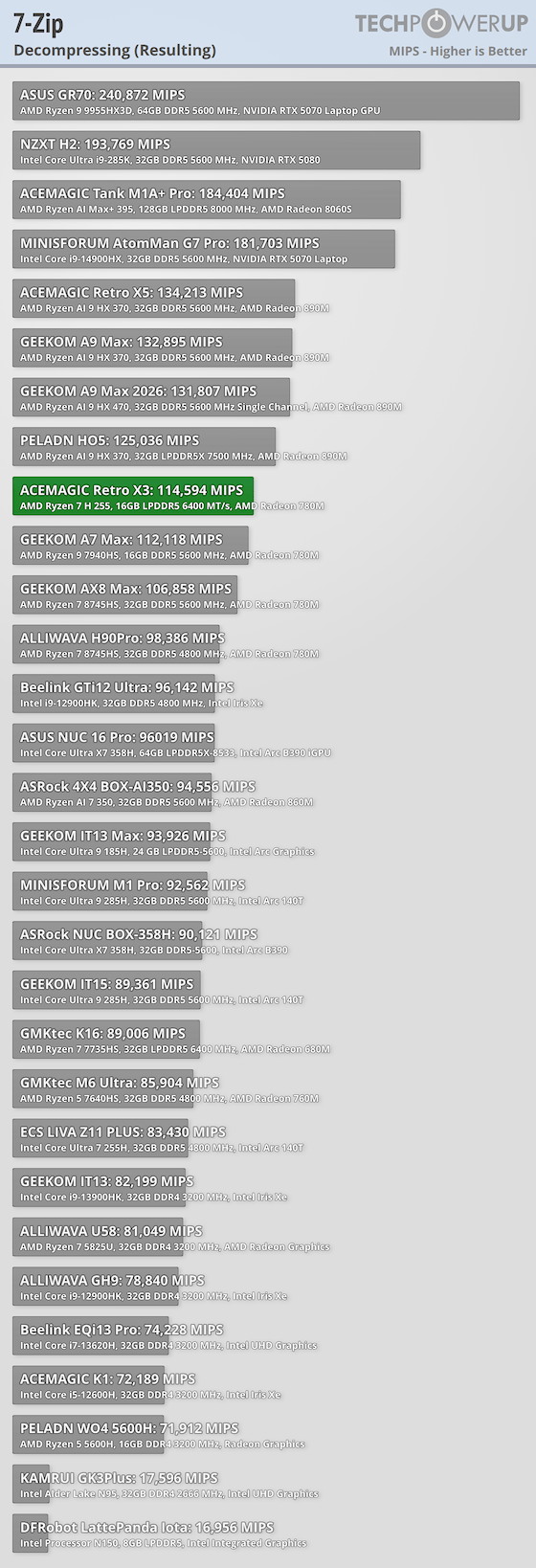
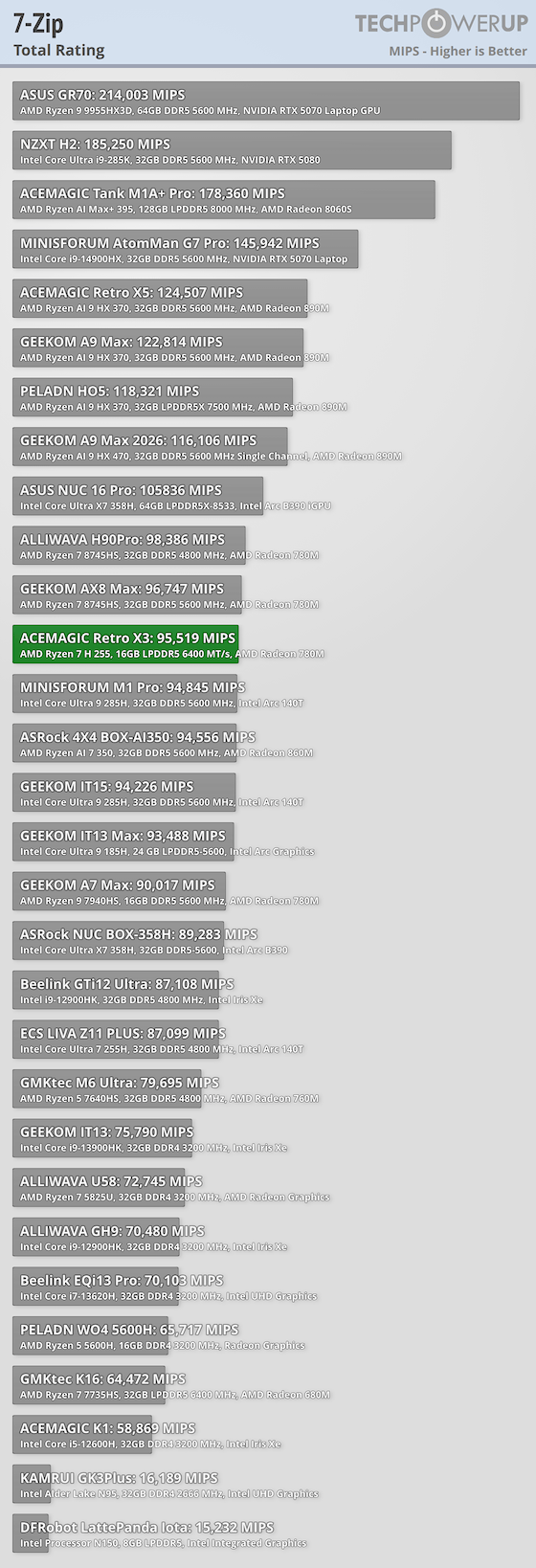
The Retro X3 returned 76,443 MIPS in compression and 114,594 MIPS in decompression, for an overall rating of 95,519 MIPS. The X3 performed well in both compression and decompression, making it a capable system for working with large archives and compressed files.
PCMark
PCMark runs a collection of common desktop activities, including web browsing, video conferencing, office applications, and media workflows. It gives a broad look at day-to-day desktop performance.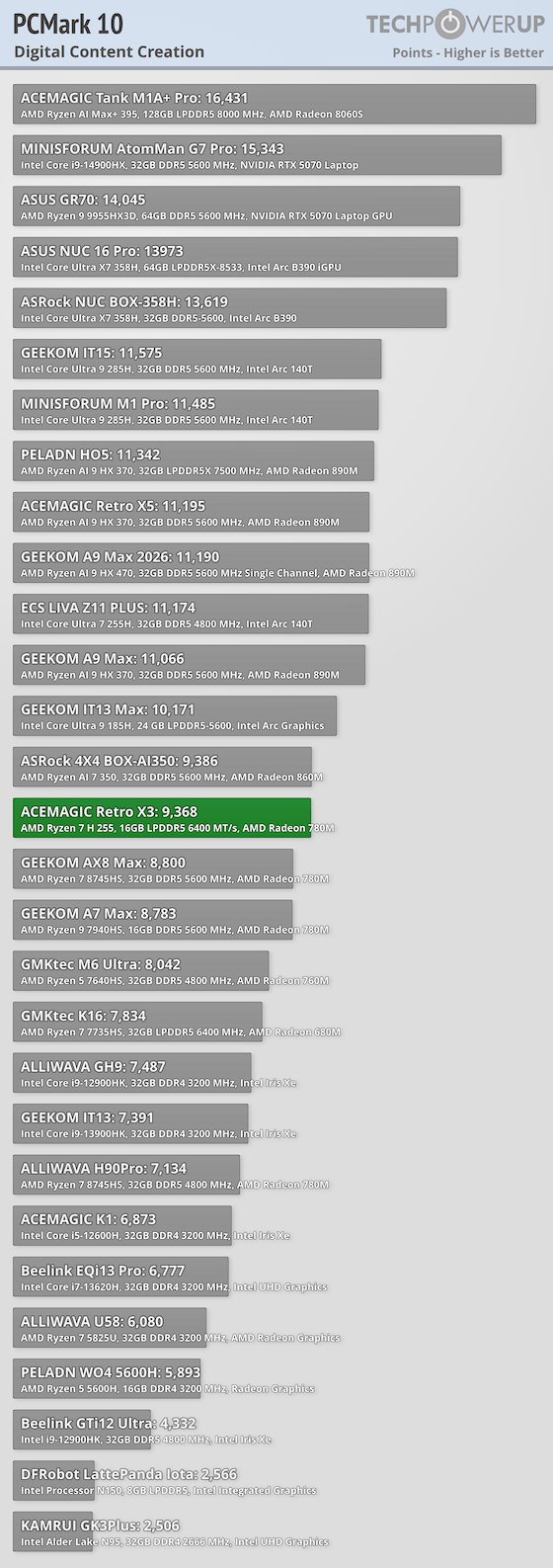
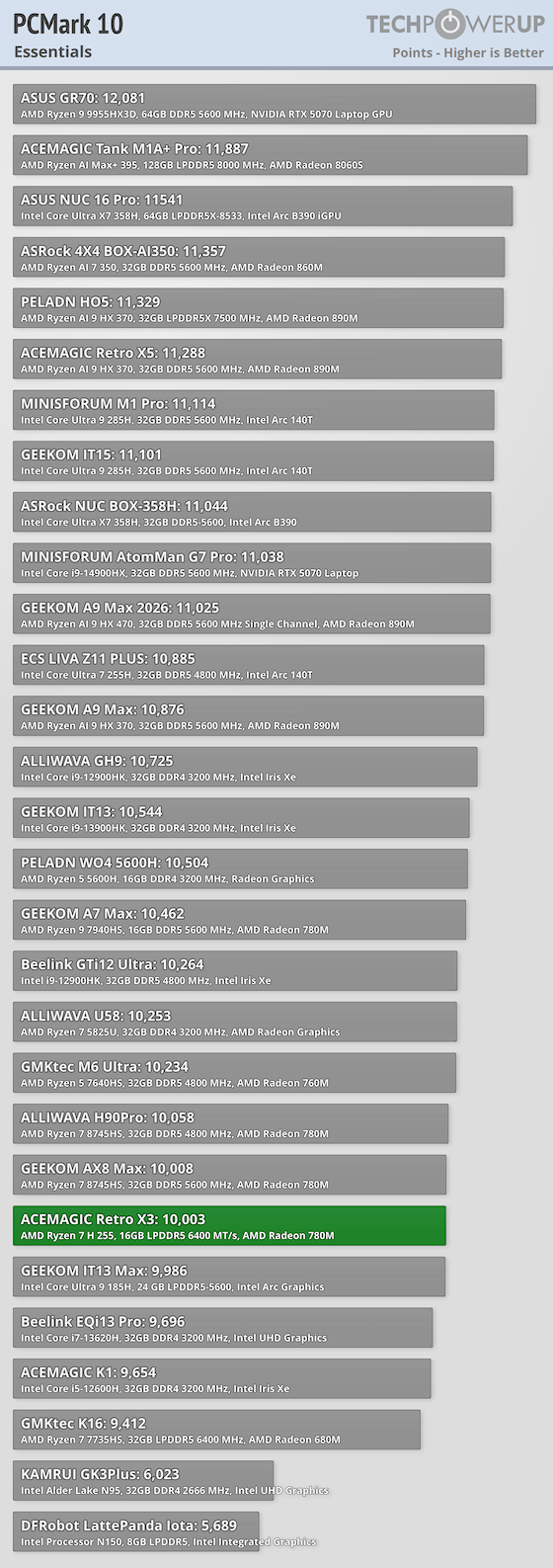
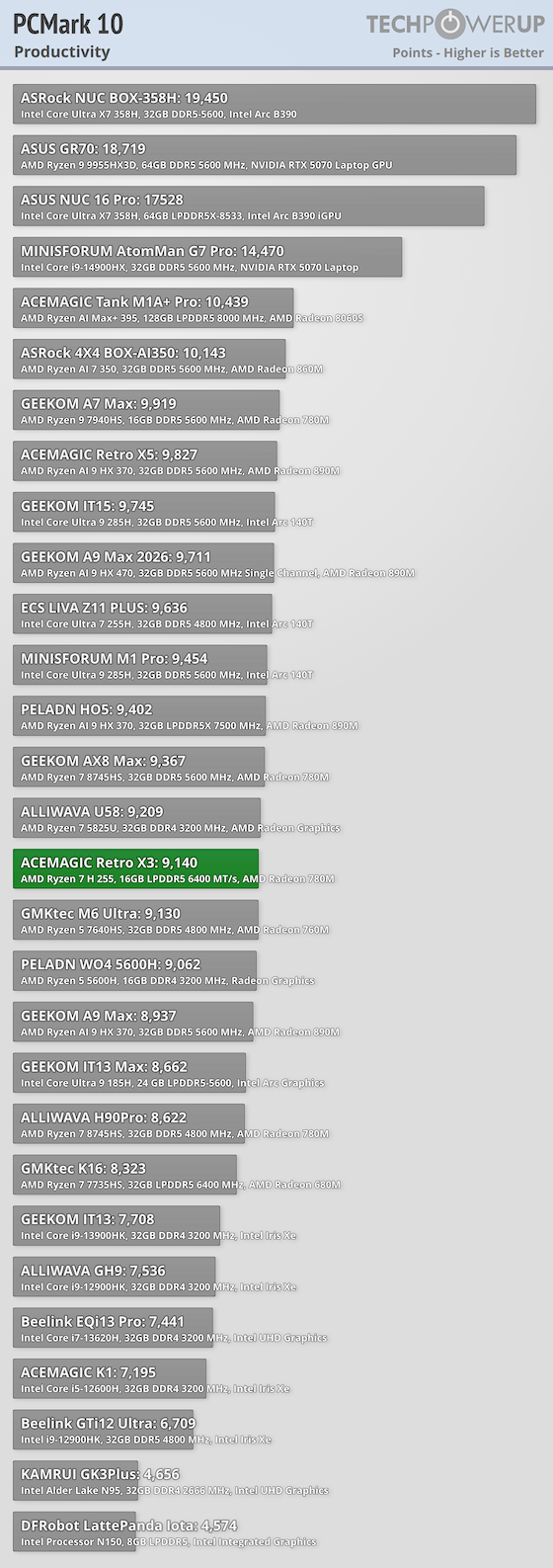
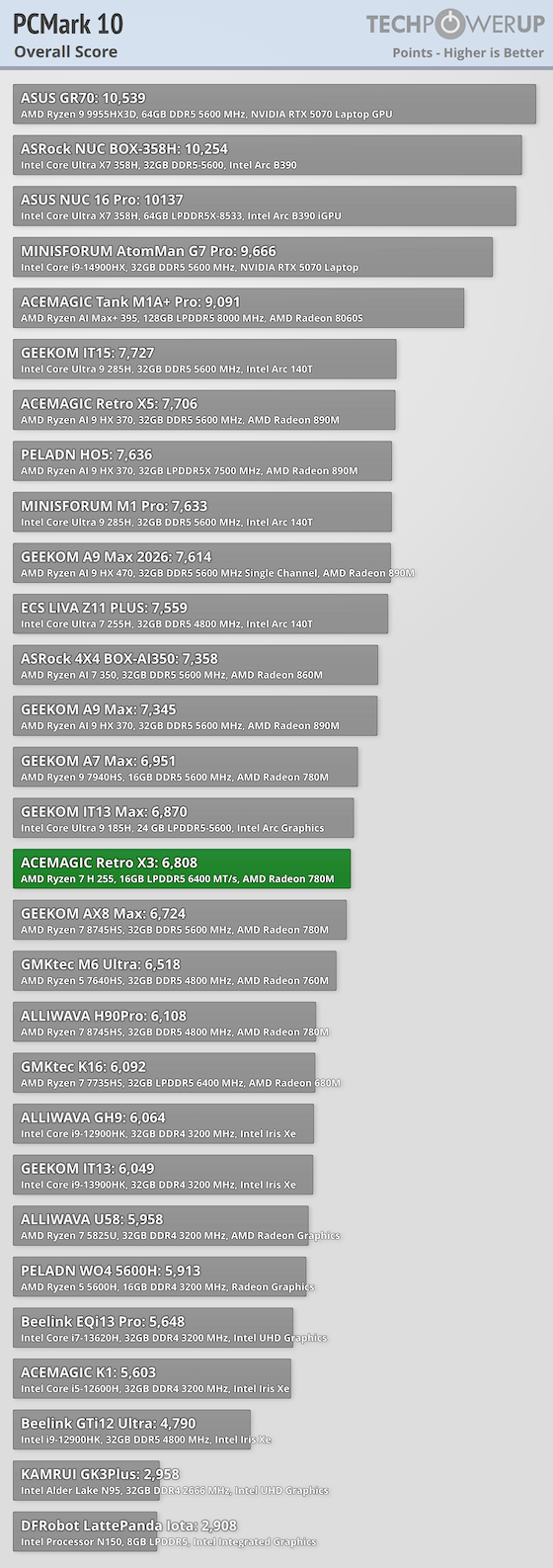
An overall PCMark result of 6,808 comes from 10,003 in Essentials, 9,140 in Productivity, and 9,368 in Digital Content Creation. Those figures suit the role of an everyday Windows PC that can handle a full workday of browser tabs and documents, with occasional heavier tasks mixed in.
Y-Cruncher
Y-Cruncher calculates digits of Pi with extreme precision, pushing both CPU and memory to their limits. It's useful for gauging raw compute ability and stability under heavy math workloads.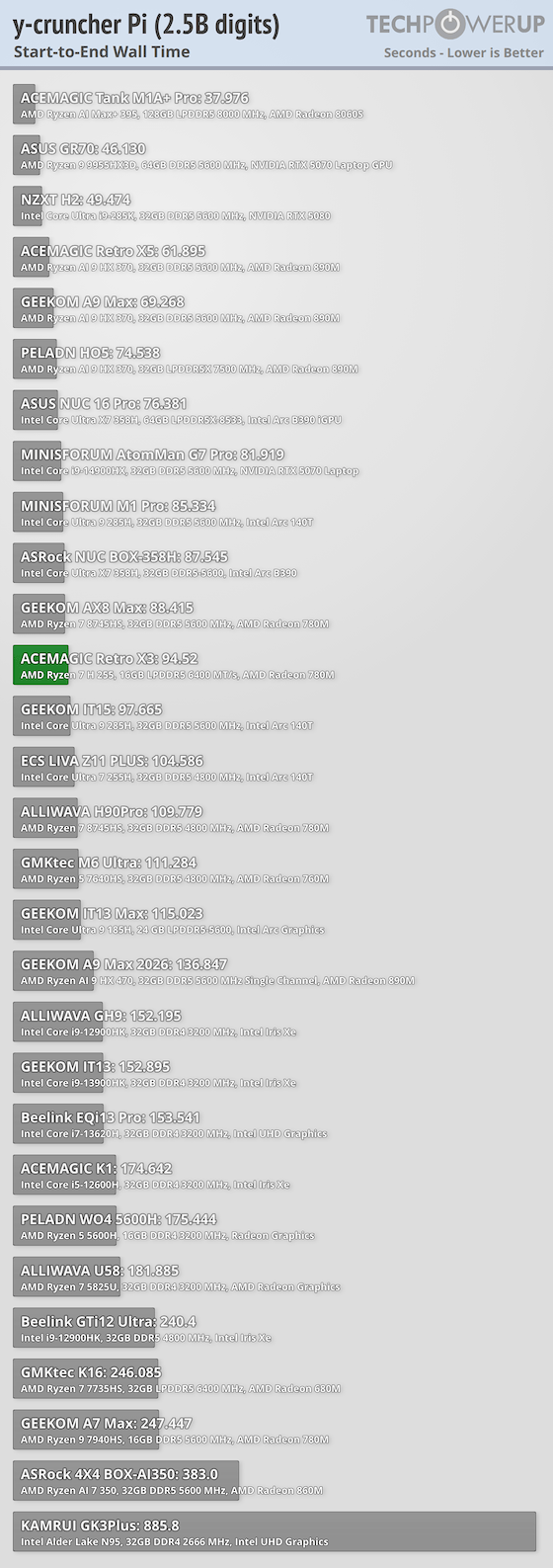
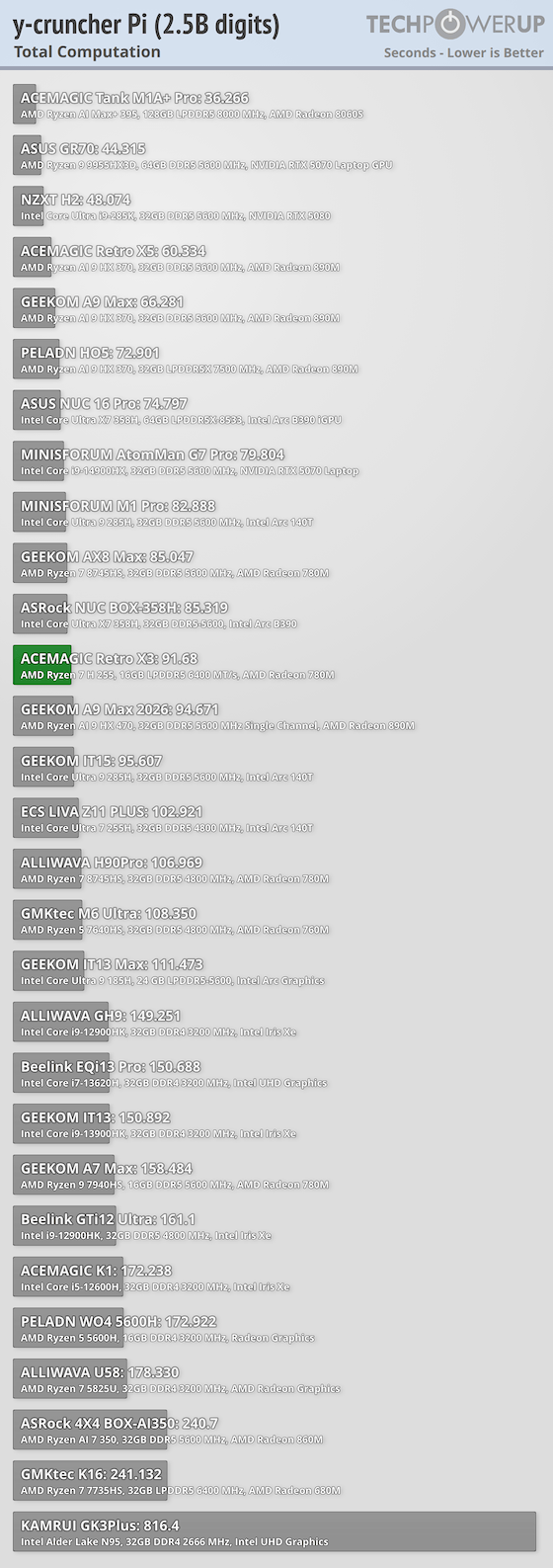
Calculating 2.5 billion digits of Pi took 91.677 seconds of computation and 94.524 seconds from start to finish. This is a demanding CPU and memory workload, and the X3 completes it without difficulty, although there is a considerable performance gap between this eight-core platform and the larger processors in the chart.
Geekbench
Geekbench tests a wide variety of workloads, from encryption and machine learning to office productivity and photo editing. It also includes a GPU compute test, which provides a useful look at graphics performance outside of games.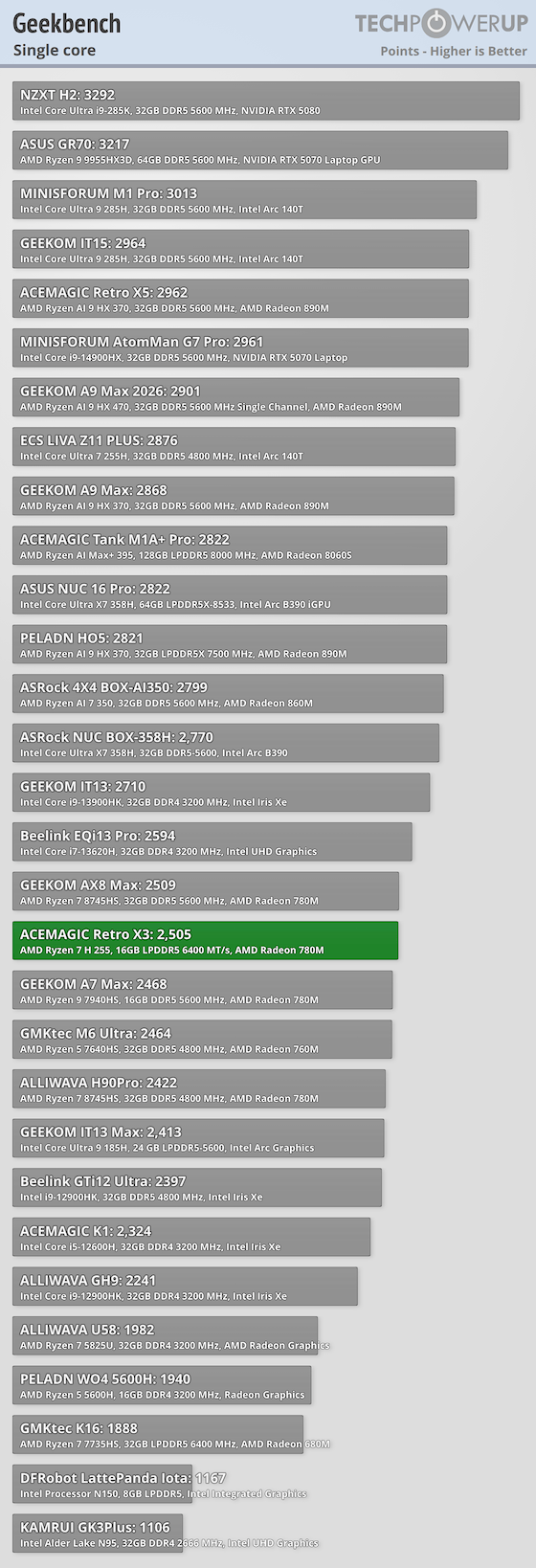
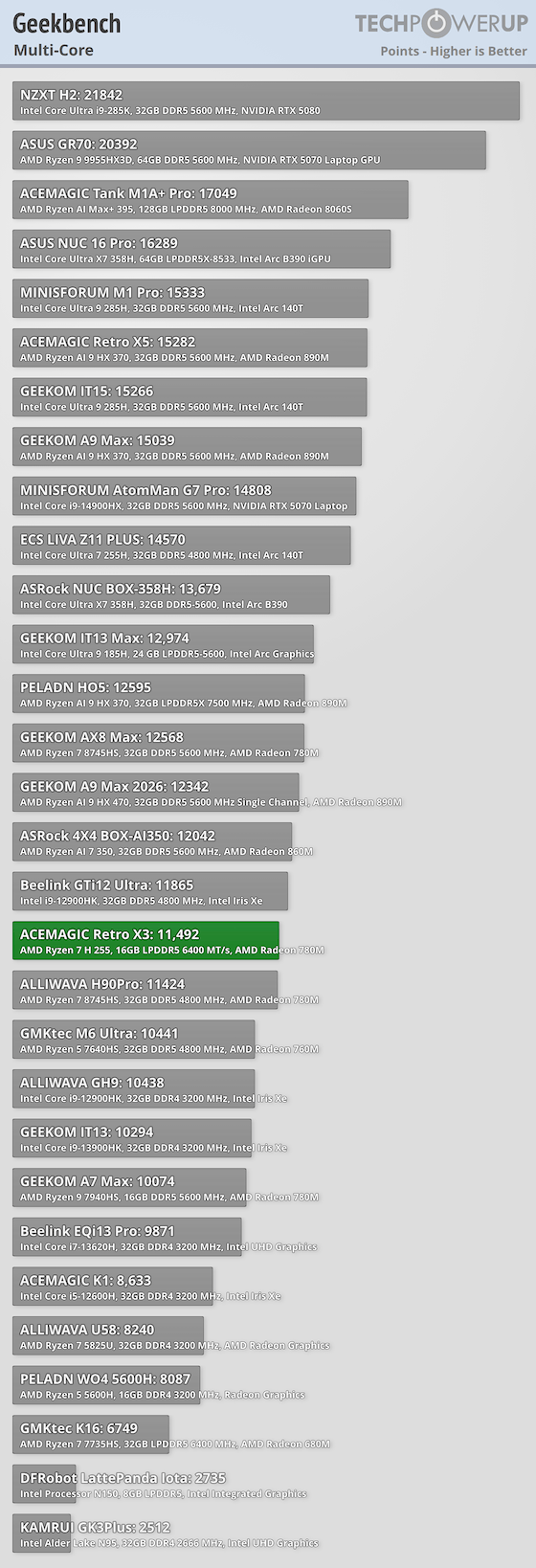
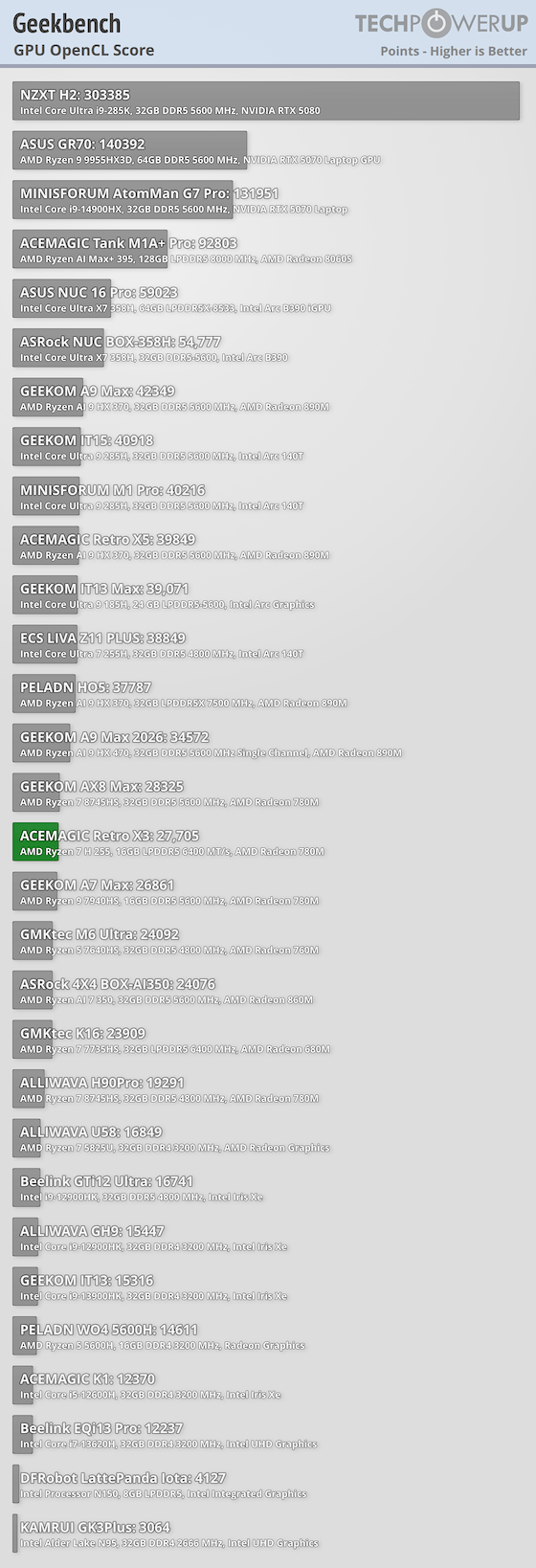
Geekbench returned 2,505 points in single-core testing and 11,492 in multicore, while the Radeon 780M scored 27,705 in OpenCL. CPU performance is reasonable for a Mini-PC in this class, although the Retro X5's Ryzen AI 9 HX 370 and Radeon 890M have a noticeable advantage in both CPU and graphics performance.
Nov 16th, 2026 12:25 CST
change timezone
Latest GPU Drivers
New Forum Posts
- Current Sales, Bundles, Giveaways (10447)
- How much does an RTX 5090 cost in your area? (65)
- I don’t know been building “by hand” for years and we at the point where “Server Quality” is mentioned, is this the future of it or will it continue? (43)
- Honestly, do you care about GTA VI? (70)
- Without Jensen, PC gaming will be (8)
- What are you playing? (26226)
- Meeting point of those who broke their GPUs. Please share what GPUs you've burned, shattered, ionized or melted accidentally. (41)
- HP Office Jet 7740 Pro - Supply system problem with replacement cartridge (6)
- Can you guess Which game it is? (340)
- Disabling MPO (MultiPlane Overlay) in 2025 (54)
Popular Reviews
- ASUS ROG Strix B850-I Gaming Wi-Fi7 W Review
- Corsair HX1000i Shift Crystal Review
- AMD Zen 6 Technical Deep Dive
- Upcoming Hardware Launches 2027 (Updated Nov 2026)
- Acemagic Retro X3 Review
- Montech King 95 3D PRO Review
- NZXT C1200 Platinum Review
- Phantom Blade Zero Performance Benchmark Review - 35 GPUs Tested
- AMD Ryzen 7 9800X3D Review - The Best Gaming Processor
- NZXT H7 RGB+ Review
TPU on YouTube
Controversial News Posts
- NVIDIA Co-Founder and CEO Jensen Huang Officially Resigns (431)
- Open Letter Asking NVIDIA to Reinstate Jensen Huang Passes 115,000 Signatures (184)
- OpenAI CEO Argues Home PCs Waste the World's Limited DRAM Supply (152)
- NVIDIA Launches Investigation Into Jensen Huang's Relationship With Suspected Chinese Spy (136)
- Intel "Raptor Lake Next" 16-Core and 20-Core CPUs Surface (130)
- Legendary Game Studio BioWare Shuts Down Following EA Layoffs (104)
- Report: Jensen Huang Eyes NVIDIA Comeback (95)
- Dell CEO Says the Memory Shortage Will Get Worse in 2027 (95)