 4
ASRock NUC BOX-358H Review
Value & Conclusion »Power and Noise Levels
Power and efficiency can be just as important as raw performance in a compact system, so I measured how much the system draws under CPU stress, during GPU-heavy tests, while gaming, and during a 24-hour idle period. Noise readings add context for how noticeable the cooling system becomes during light use and sustained workloads.24-Hour Idle Power Draw
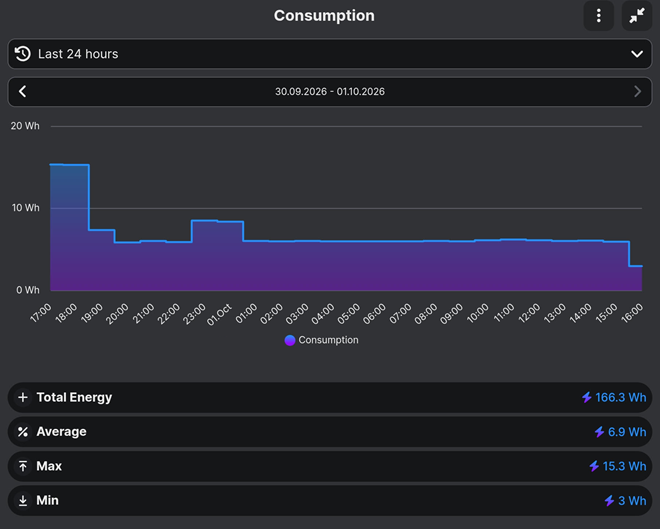
Across the 24-hour idle recording, the system used 166.3 Wh of electricity, equivalent to an average draw of approximately 6.93 W. The displayed hourly energy buckets ranged from 3.0 to 15.3 Wh; these are accumulated energy readings, not instantaneous minimum and maximum wattage. Repeating that daily idle consumption for a year would use about 60.7 kWh, costing roughly $9 to $12 annually at $0.15 to $0.20 per kWh, depending on local electricity rates.
Actual use will increase energy consumption during work and gaming, but the load-test averages should not be applied to every hour of the day. A system used intermittently can spend substantial time near idle or under light load, while sleep and shutdown reduce its operating hours. The low idle average is especially appealing if the PC will stay powered on between tasks.
System Power Draw Under CPU and GPU Workloads
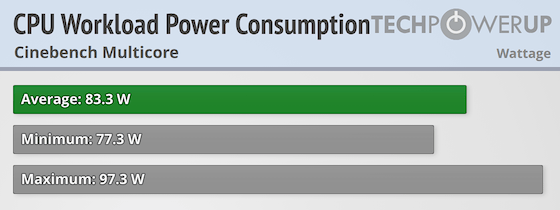
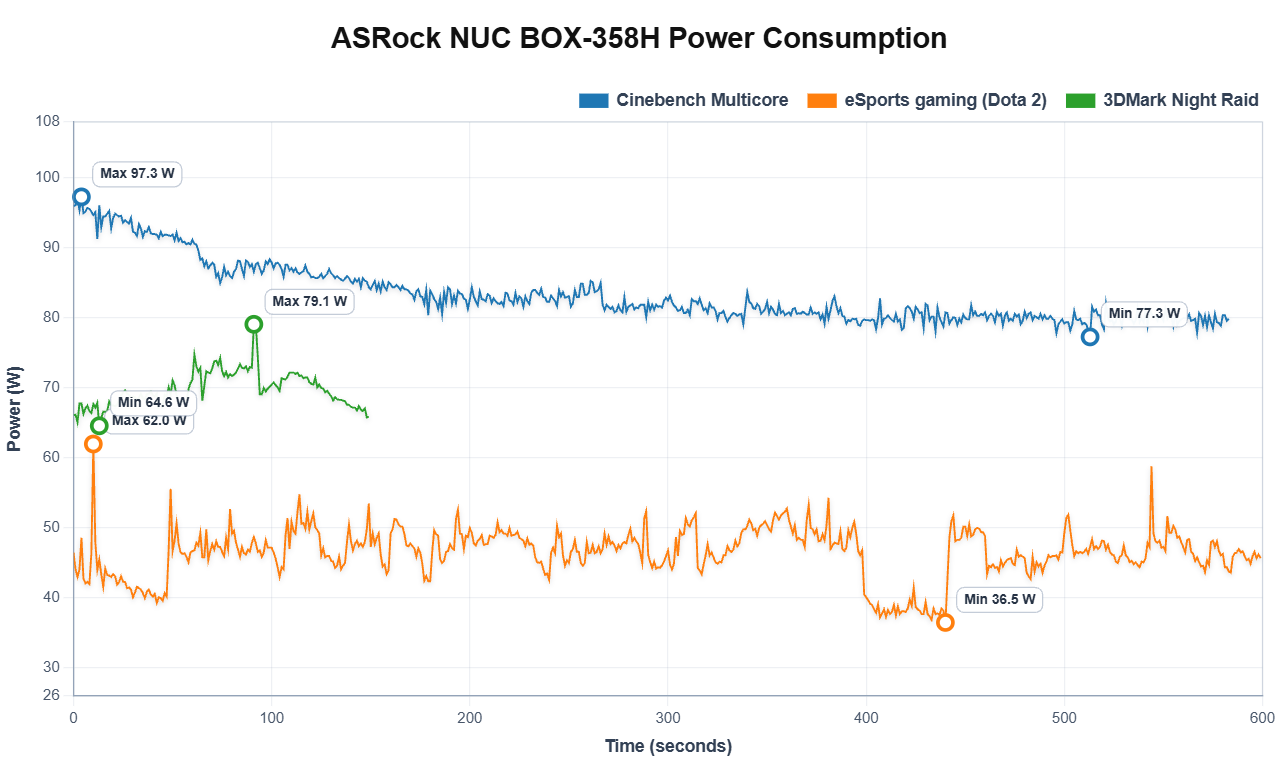
During the Cinebench multicore workload, total system power at the outlet averaged 83.3 W, with readings between 77.3 and 97.3 W. The initial draw near the upper end gradually declined toward approximately 80 W later in the recording.
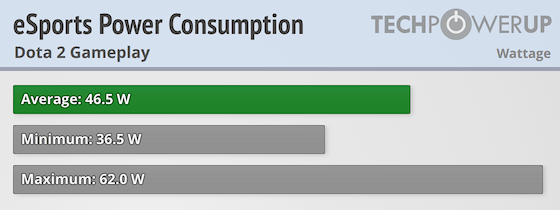
Dota 2 used substantially less wall power than the CPU rendering test, averaging 46.5 W over the gameplay recording. The minimum was 36.5 W and the maximum was 62.0 W, with much of the trace between the mid-40s and low-50s. This is a better guide to the measured gaming workload than assuming that CPU rendering represents all active use.
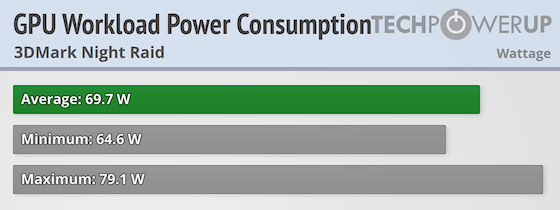
During Night Raid, system power at the outlet averaged 69.7 W, ranging from 64.6 to 79.1 W in the captured interval. It was the higher-power graphics workload compared with the Dota 2 recording, though it still averaged below Cinebench.
Here's a detailed rundown of the ASRock NUC BOX-358H's system power draw across all three test profiles:
Noise Levels
Measured from 30 cm with a digital sound level meter and default/auto fan controls, noise rose from 32.1 dBA at idle to 36.5 dBA under light load. Heavy load reached 52.3 dBA, making the fan much more noticeable during demanding work. The sound was loud without a shrill tone, but I would still consider the load noise a drawback for a quiet desk where CPU-heavy tasks run frequently.
Nov 26th, 2026 18:02 CST
change timezone
Latest GPU Drivers
New Forum Posts
- 26.11.2 Adrenalin Edition is out (1)
- WarpCoreBench scores! (115)
- Post your CrystalDiskMark speeds (662)
- Acer TravelMate P414-51 (i5-1135G7): CPU stuck at x4 / ~200 MHz effective under 100% load, no throttle flags. How to find who's clamping it? (3)
- [Community Benchmark] MrH OpenCL Benchmark 2.0f (Windows Only – CPU & GPU) (5)
- ASUS Prime 5060 ti 16gb x4 instead of x8 PCIe (11)
- weird problem with Asus Maximus Hero z890 motherboard VRM (1)
- Exploring Local LLMs: Models, Hardware and Setup Experiences (5)
- What's your main Black Friday / Cyber Monday purchase? (23)
- Wireless Internet sharing between PC and router both-ways, is it possible? (26)
Popular Reviews
- ASRock X870E Challenger Wi-Fi White Review
- VZMORE AX9 Max Review
- Upcoming Hardware Launches 2027 (Updated Nov 2026)
- Microsoft Surface Laptop Ultra Review - The Next-gen Arm Laptop
- AMD Ryzen 7 9800X3D Review - The Best Gaming Processor
- AMD Zen 6 Technical Deep Dive
- Phantom Blade Zero Performance Benchmark Review - 35 GPUs Tested
- Corsair RM1200e (Second Generation) Review
- Montech CyberFlow ARGB 360 Review
- Pulsar Office Tour & First Look at P1 Dual-Sensor Mouse
TPU on YouTube
Controversial News Posts
- Jensen Huang Reinstated as CEO of NVIDIA (611)
- NVIDIA Co-Founder and CEO Jensen Huang Officially Resigns (492)
- Report: Jensen Huang Eyes NVIDIA Comeback (281)
- Open Letter Asking NVIDIA to Reinstate Jensen Huang Passes 115,000 Signatures (184)
- OpenAI CEO Argues Home PCs Waste the World's Limited DRAM Supply (152)
- NVIDIA Launches Investigation Into Jensen Huang's Relationship With Suspected Chinese Spy (136)
- Intel Razor Lake Gets a 12 P-Core bLLC Chip With No E-Cores, Per Leak (94)
- NVIDIA GeForce RTX 50-Series Scheduled for up to $500 Price Hike This Week (89)