 66
ASRock Radeon RX 6900 XT OC Formula Review - This Card is Fast
(66 Comments) »Introduction

We have with us the ASRock Radeon RX 6900 XT OC Formula, the company's new flagship graphics card positioned a notch above even the RX 6900 XT Phantom Gaming. This sees the company revive its topmost "OC Formula" brand co-developed by Nick Shih, which represents the company's boutique range of motherboards and graphics cards for professional overclockers taking a crack at world records of all shapes and sizes. What triggered the company to come out with an RX 6900 XT-based graphics card in particular is a concerted preemption by AMD to NVIDIA's rumored GeForce RTX 3080 Ti, an SKU slotted between the RTX 3080 and RTX 3090.
The Radeon RX 6900 XT GPU at the heart of the ASRock RX 6900 XT OC Formula isn't the same chip as the one in the RX 6900 XT Phantom Gaming. AMD refers to this silicon as the Navi 21 "XTXH." It is the highest bin of the Navi 21, designed to sustain up to 10% higher clock speeds than the regular RX 6900 XT. With its default "performance" BIOS, the RX 6900 XT OC Formula can now boost up to 2475 MHz and achieve game clocks of up to 2295 MHz. The reference AMD Radeon RX 6900 XT sustains only up to 2250 MHz boost and 2015 MHz game clocks, while ASRock's previous RX 6900 XT-based flagship, the RX 6900 XT Phantom Gaming, does 2340 MHz boost with 2105 MHz game clocks. Compared to the reference design, that's exactly a 10% OC from ASRock.

The AMD Radeon RX 6900 XT is AMD's current-generation flagship graphics card, which, along with the RX 6800 series, propelled the company back to the big leagues of enthusiast-segment graphics cards against NVIDIA. The RX 6900 XT is powered by AMD's RDNA 2 graphics architecture, which is its first to feature full DirectX 12 Ultimate readiness, including real-time raytracing. The RDNA 2 architecture transcends platforms and also powers the latest PlayStation 5 and Xbox Series X/S consoles, which makes it easier for game developers to optimize for the architecture on the PC.
At the heart of the RX 6900 XT is the 7 nm Navi 21 silicon, which it maxes out. This chip features 5,120 stream processors spread across 80 RDNA 2 compute units, 80 Ray Accelerators (components that accelerate raytracing), 288 TMUs, 128 ROPs, and an impressive 16 GB of GDDR6 memory. This memory, however, runs across a 256-bit wide memory interface. AMD attempted to shore up bandwidth by using the fastest JEDEC-standard 16 Gbps memory chips and deploying Infinity Cache, a 128 MB last-level cache on the GPU die, which speeds up transfers between the GPU and memory by acting as a scratchpad. Together with the GDDR6 memory, Infinity Fabric unleashes memory bandwidths of up to 2 TB/s.
The ASRock RX 6900 XT features the company's most opulent custom board design to date with a large triple-slot, triple-fan cooling solution that's packed with innovations, including the company's most over-the-top power delivery solution ever on a graphics card and design optimization for professional overclocking using liquid or extreme cooling methods. The Navi XTXH silicon not only sustains boost frequencies better, but is also designed for better overclocking headroom than the original Navi 21 XTX powering the reference RX 6900 XT. In this review, we take our first look at this exotic new graphics card to tell you if ASRock has tangibly improved performance of the RX 6900 XT over the reference, and whether it gets any closer to the RTX 3090.
| Price | Shader Units | ROPs | Core Clock | Boost Clock | Memory Clock | GPU | Transistors | Memory | |
|---|---|---|---|---|---|---|---|---|---|
| RTX 2080 Ti | $1000 | 4352 | 88 | 1350 MHz | 1545 MHz | 1750 MHz | TU102 | 18600M | 11 GB, GDDR6, 352-bit |
| RTX 3070 | $800 | 5888 | 96 | 1500 MHz | 1725 MHz | 1750 MHz | GA104 | 17400M | 8 GB, GDDR6, 256-bit |
| RX 6800 | $1000 | 3840 | 96 | 1815 MHz | 2105 MHz | 2000 MHz | Navi 21 | 26800M | 16 GB, GDDR6, 256-bit |
| RX 6800 XT | $1300 | 4608 | 128 | 2015 MHz | 2250 MHz | 2000 MHz | Navi 21 | 26800M | 16 GB, GDDR6, 256-bit |
| RTX 3080 | $1300 | 8704 | 96 | 1440 MHz | 1710 MHz | 1188 MHz | GA102 | 28000M | 10 GB, GDDR6X, 320-bit |
| RX 6900 XT | $1500 | 5120 | 128 | 2015 MHz | 2250 MHz | 2000 MHz | Navi 21 | 26800M | 16 GB, GDDR6, 256-bit |
| ASRock RX 6900 XT OC Formula | $2000 | 5120 | 128 | 2125 MHz | 2475 MHz | 2000 MHz | Navi 21 | 26800M | 16 GB, GDDR6, 256-bit |
| RTX 3090 | $2000 | 10496 | 112 | 1395 MHz | 1695 MHz | 1219 MHz | GA102 | 28000M | 24 GB, GDDR6X, 384-bit |
Packaging


The Card


ASRock's card uses a new design theme that combines green with a mostly black color theme. On the back, you'll find a high-quality metal backplate in matching colors, with an "OC Formula" Gold accent.

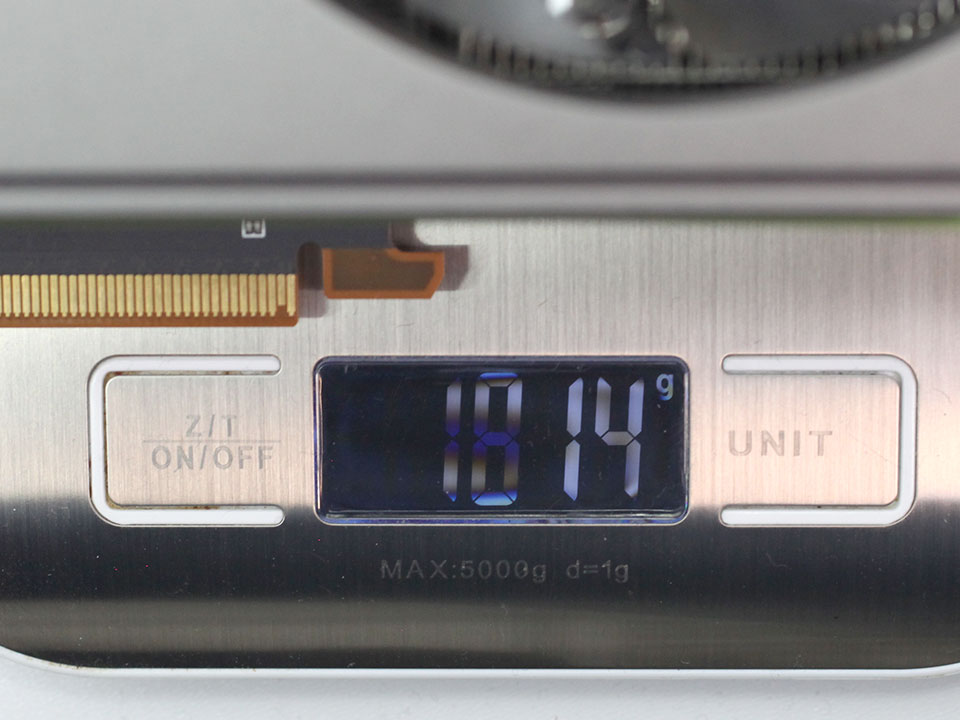
Dimensions of the card are 33 x 13.5 cm, and it weighs 1814 g.


Installation requires three slots in your system.

Display connectivity includes three standard DisplayPort 1.4 and one HDMI 2.1.
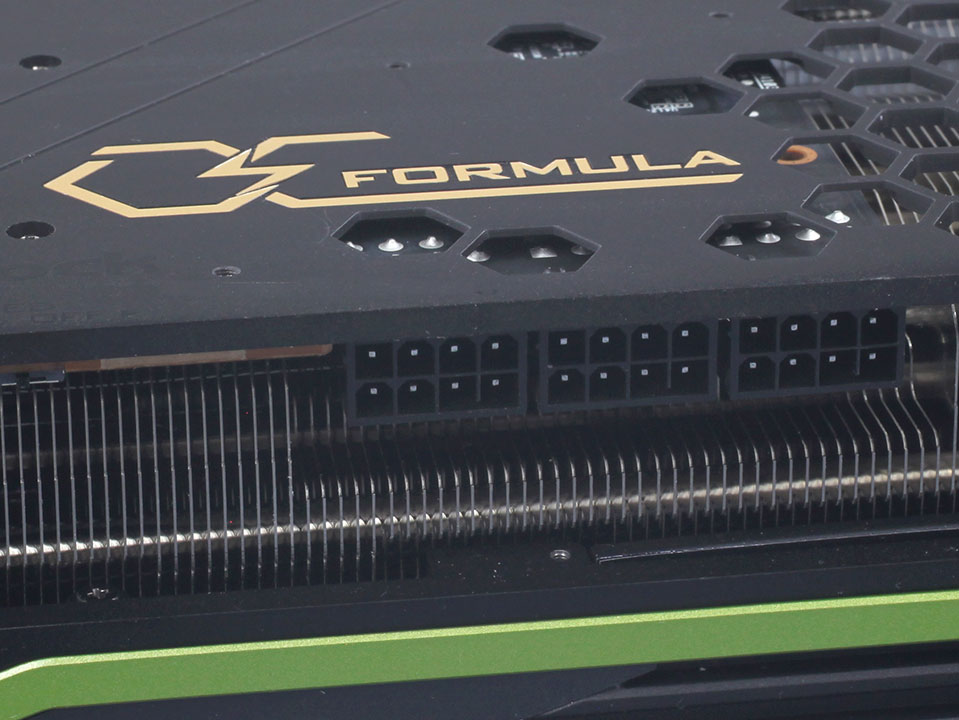
The card has three 8-pin power inputs. This configuration is rated for up to 525 W of power draw.

Want to turn off all RGB lighting quickly? This convenient switch lets you do that without any software. I also like that ASRock barely used any visible ink on the backplate, so it's not distracting at all.

The AMD Radeon RX 6000 series doesn't support multi-GPU.
You'll also find the BIOS switch here, which lets you toggle between the default "OC" BIOS and a "Silent" BIOS that runs a more relaxed fan curve. As our testing later on will show, differences are minimal, though.
Teardown

ASRock's card design makes it easy to remove the cooler shroud from the card.

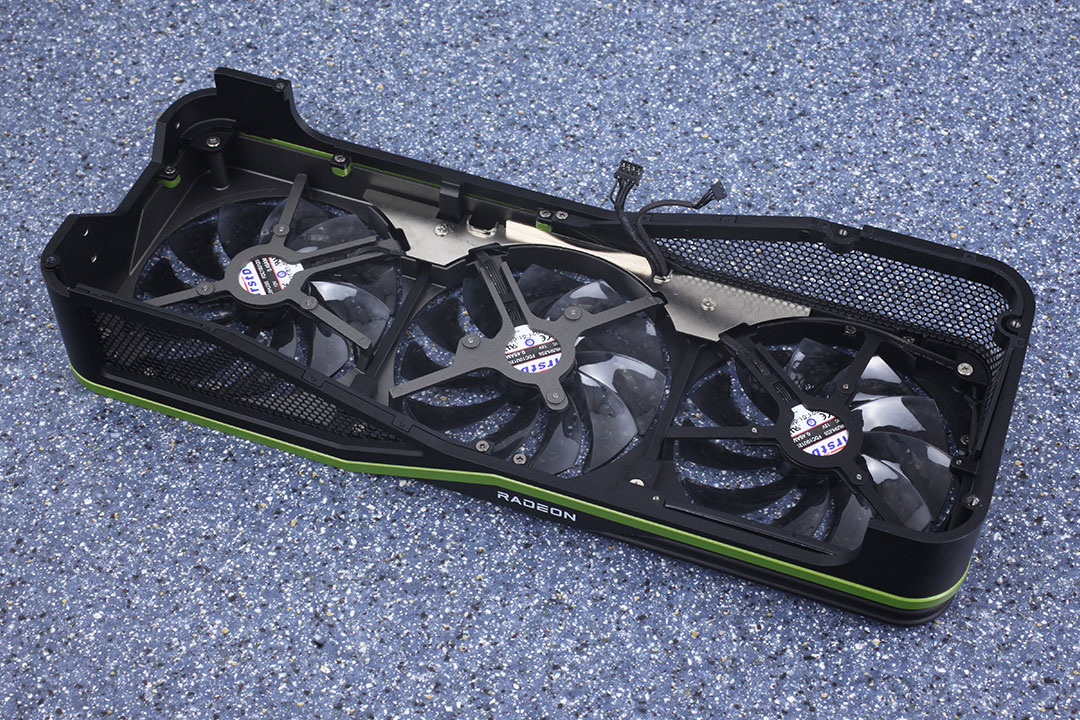
The fan assembly is made from thick metal that feels extremely solid. It's probably the most massive shroud I ever reviewed.


Under the fan assembly, you find a large heatsink with eight heatpipes; it cools not only the GPU, but also the memory chips and VRM circuitry.
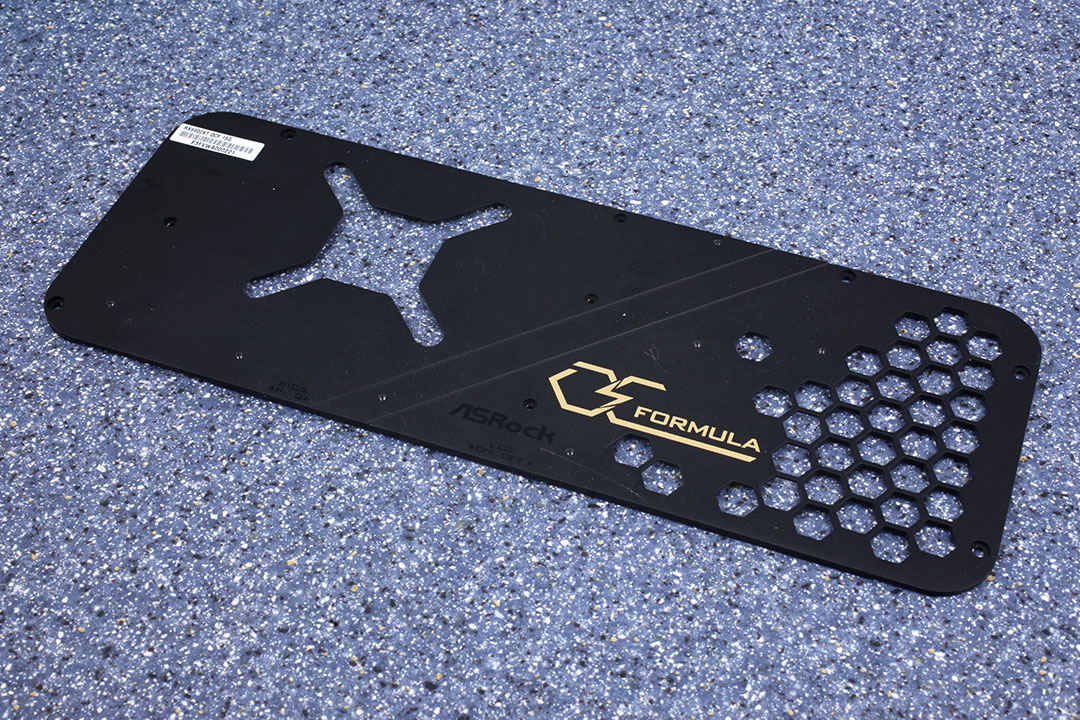

The backplate is made out of metal and protects the card against damage during installation and handling. Note the thermal pads, which help soak up a little bit of extra heat from the GPU area on the other side of the PCB.
High-resolution PCB Pictures
These pictures are for the convenience of volt modders and people who would like to see all the finer details on the PCB. Feel free to link back to us and use these in your articles, videos or forum posts.

High-res versions are also available (front, back).
Our Patreon Silver Supporters can read articles in single-page format.
Nov 14th, 2026 01:42 CST
change timezone
Latest GPU Drivers
New Forum Posts
- Tell me about your favourite graphics card (36)
- Requesting original VBIOS for Gigabyte RX 5700 XT GAMING OC 8G Rev 2.0 (Micron) (1)
- What are you playing? (26216)
- no "PhysX" workable (9)
- AI generated images... (224)
- Crimson Desert (31)
- RenoDX HDR - how to view the differnce Before&After in game? (0)
- Displayport DP80 3M (10ft) cable that can achieve 80gbps stable? (5)
- I'll flash a ASUS ROG Strix RX480 O8G in Cause of Code 43, as a Newbie (1)
- Opinion on Monitor Replacement (6)
Popular Reviews
- AMD Zen 6 Technical Deep Dive
- Corsair HX1000i Shift Crystal Review
- NZXT C1200 Platinum Review
- ASUS ROG Strix B850-I Gaming Wi-Fi7 W Review
- Upcoming Hardware Launches 2027 (Updated Nov 2026)
- Montech King 95 3D PRO Review
- NZXT H7 RGB+ Review
- NZXT H5 Review
- Phantom Blade Zero Performance Benchmark Review - 35 GPUs Tested
- XPG NIMBUS PLUS Review - Mid-range Chair With Strong Competitors
TPU on YouTube
Controversial News Posts
- NVIDIA Co-Founder and CEO Jensen Huang Officially Resigns (381)
- OpenAI CEO Argues Home PCs Waste the World's Limited DRAM Supply (152)
- NVIDIA Launches Investigation Into Jensen Huang's Relationship With Suspected Chinese Spy (136)
- Intel "Raptor Lake Next" 16-Core and 20-Core CPUs Surface (130)
- Legendary Game Studio BioWare Shuts Down Following EA Layoffs (104)
- Dell CEO Says the Memory Shortage Will Get Worse in 2027 (95)
- NVIDIA GeForce RTX 50-Series Scheduled for up to $500 Price Hike This Week (89)
- Modder Fits RTX 5090 With Four 8-Pin Connectors, Halving Current per Wire (80)