 76
ASUS GeForce RTX 5080 Noctua OC Review - Amazing Cooling
Circuit Board Analysis »Packaging


The Card
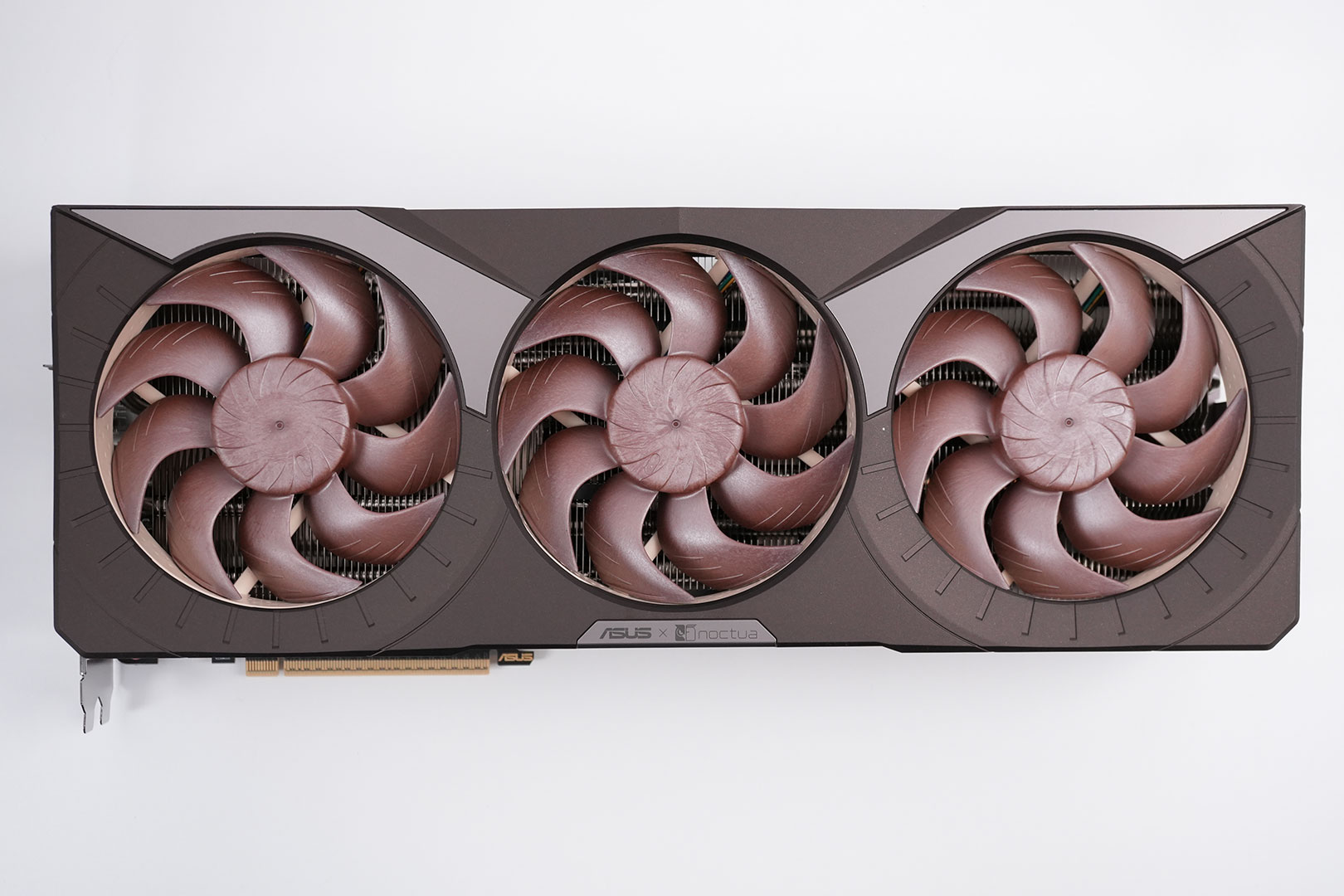
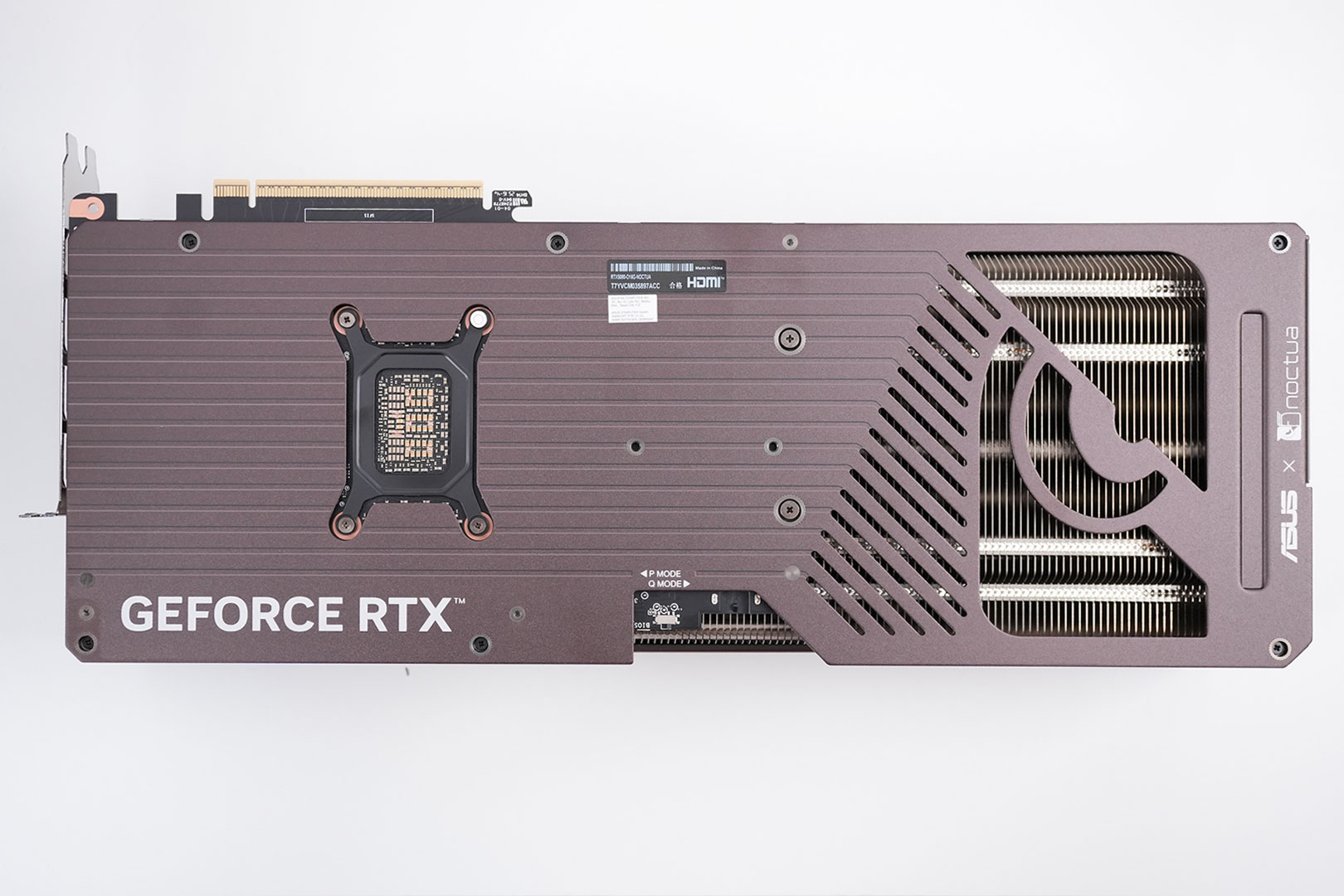

ASUS has definitely refined the design theme of the RTX 5080 Noctua when compared to previous generations. You now also get a third fan and everything seems much more integrated. As expected, the color theme yells "Noctua," which of course is fine, given the branding and target audience. On the back, you'll find a metal backplate with a cutout to let airflow through.


Dimensions of the card are 39.0 x 15.5 cm, and it weighs 2667 g.

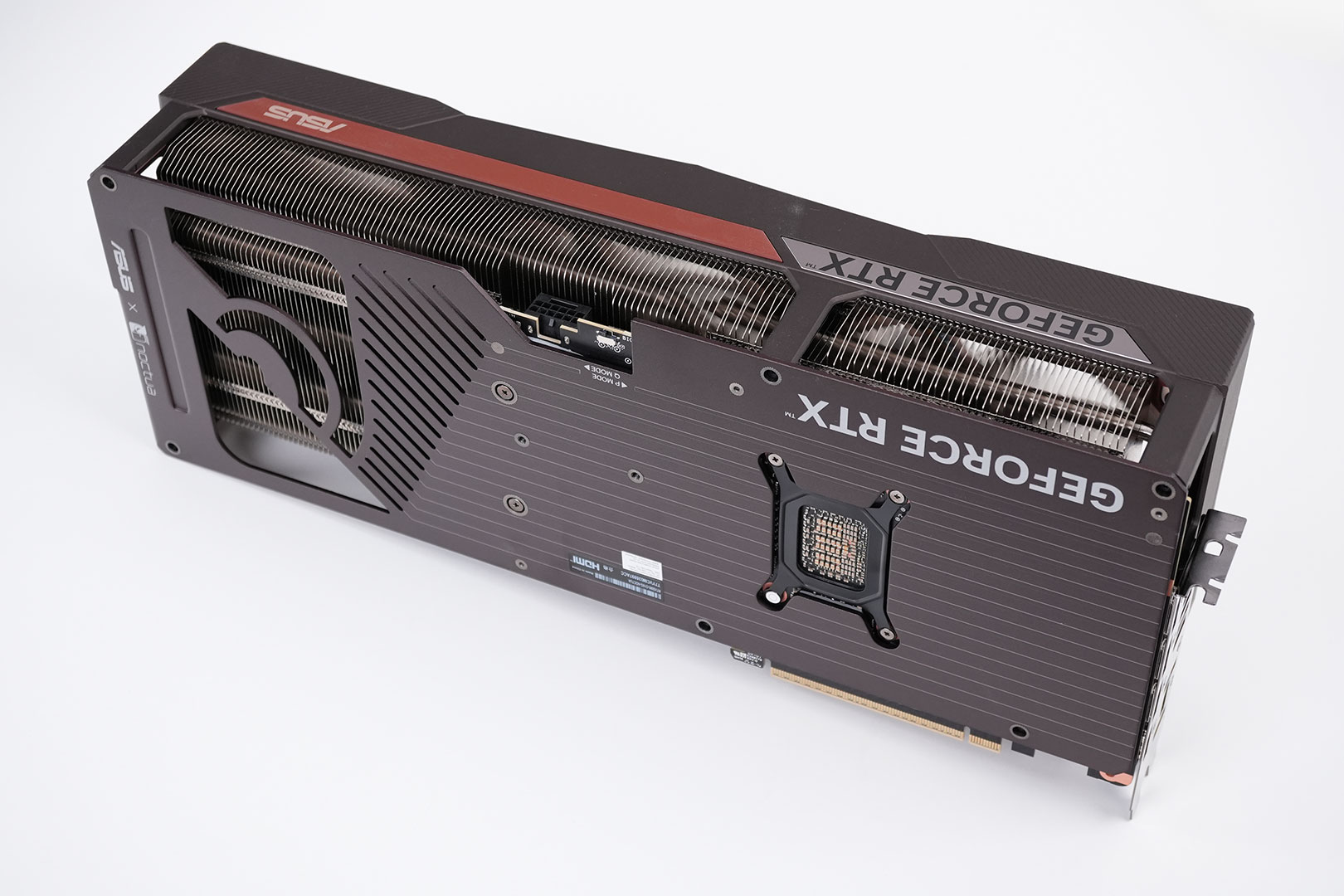
Installation requires four slots in your system. We measured the card's width to be 82 mm.
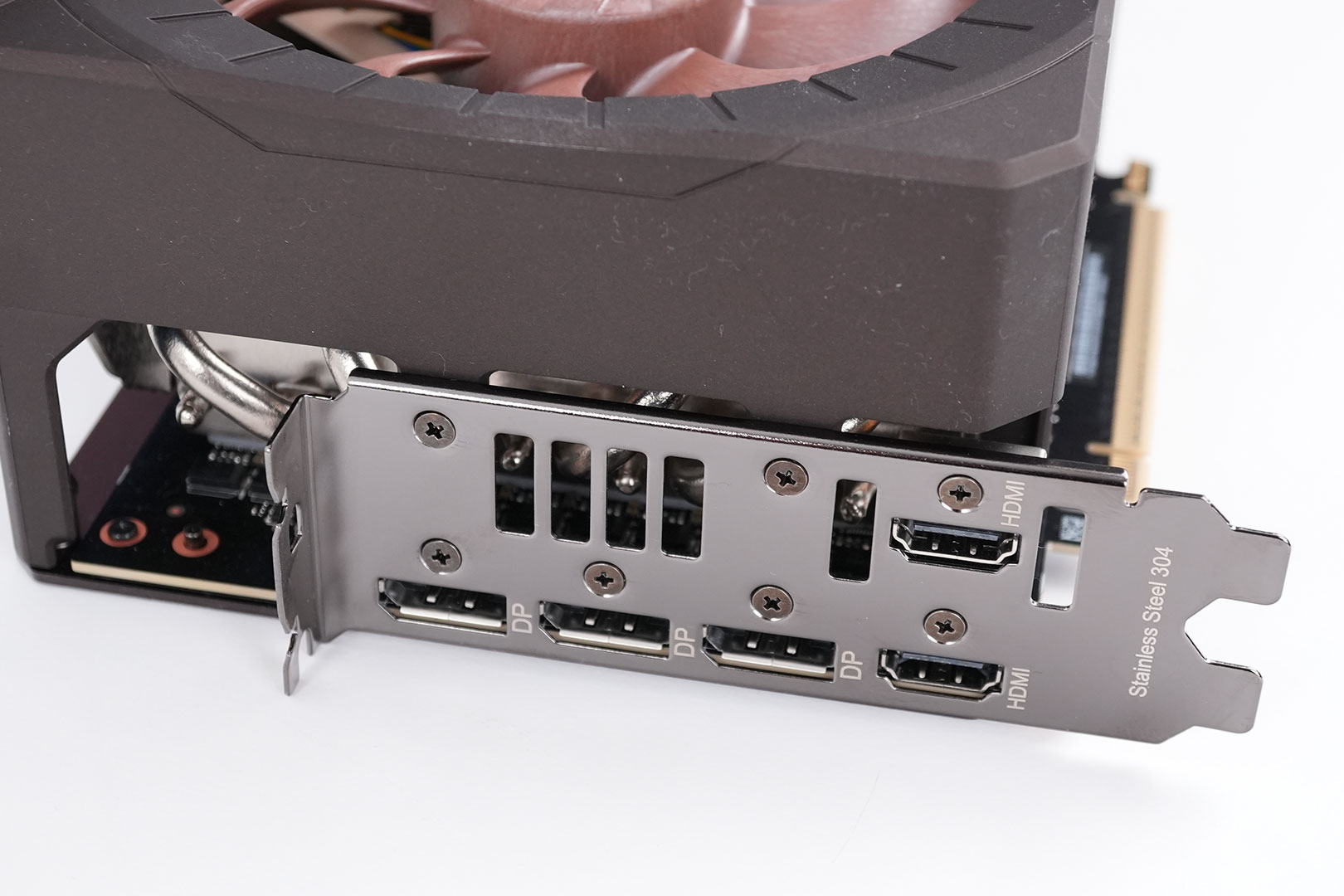
Display connectivity includes three standard DisplayPort 2.1b and two HDMI 2.1b.
All GeForce RTX 50-series Blackwell cards feature a new display engine supporting DisplayPort 2.1b with UHBR20, as well as HDMI 2.1a. Both interfaces support DSC (display stream compression). With DSC enabled, a single DisplayPort on this card can drive 4K 12-bit HDR at 480 Hz; or 8K 12-bit HDR at up to 165 Hz. The RTX 5080 features an updated media acceleration engine with support for 4:2:2 video formats, AV1 UHQ, and MV-HEVC. There are two independent NVENC and NVDEC units.

The card uses a single 16-pin connector, which allows a maximum power draw of 600 W, but the board power limit is set much lower of course, at 360 W, with a manual adjustment range allowing up to 450 W.

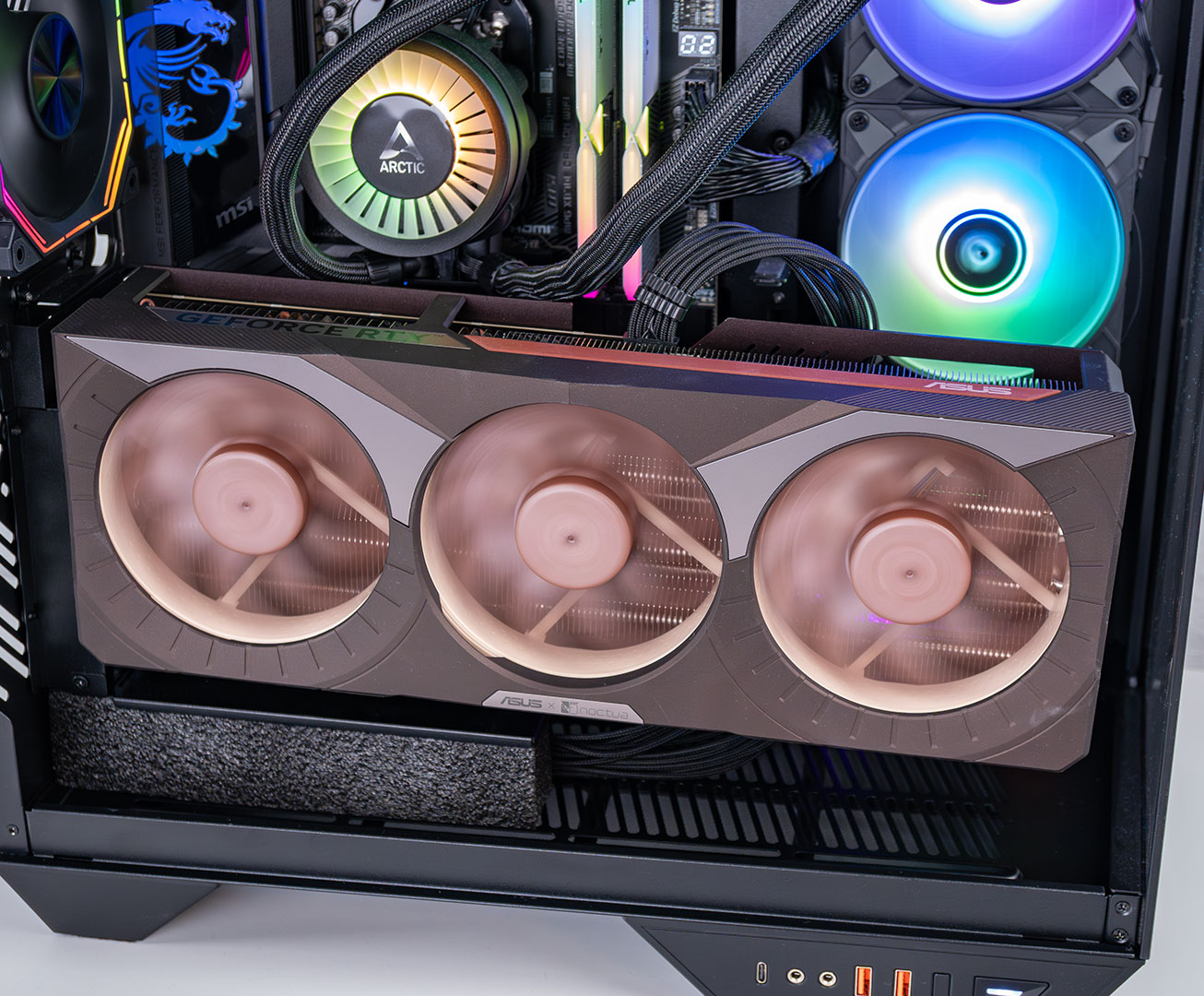
There is no lighting on the ASUS RTX 5080 Noctua.
Teardown
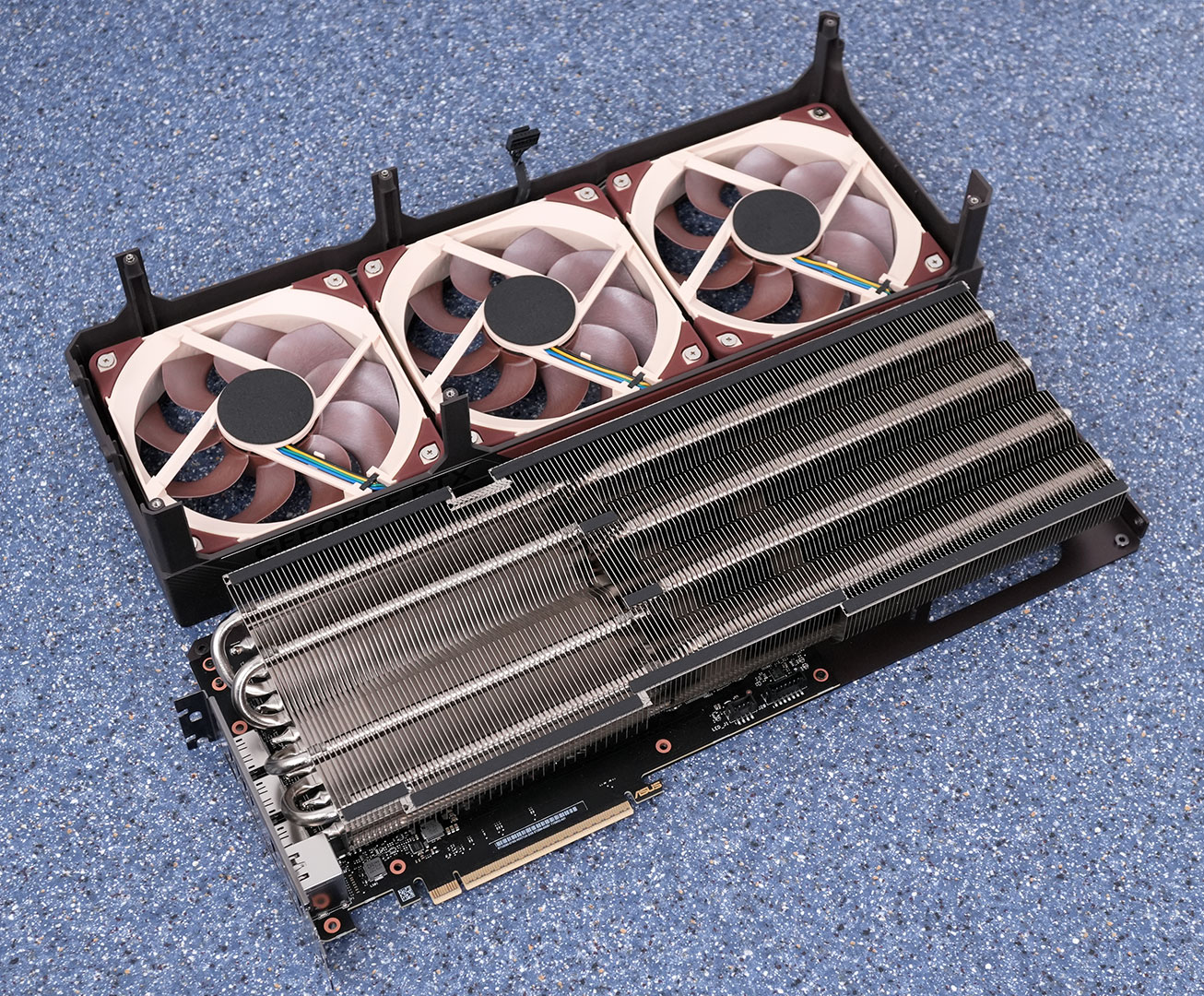
The main cooler shroud with the three Noctua fans can be removed as one piece. This makes cleaning or replacing the fans very easy, without disturbing the thermal paste.
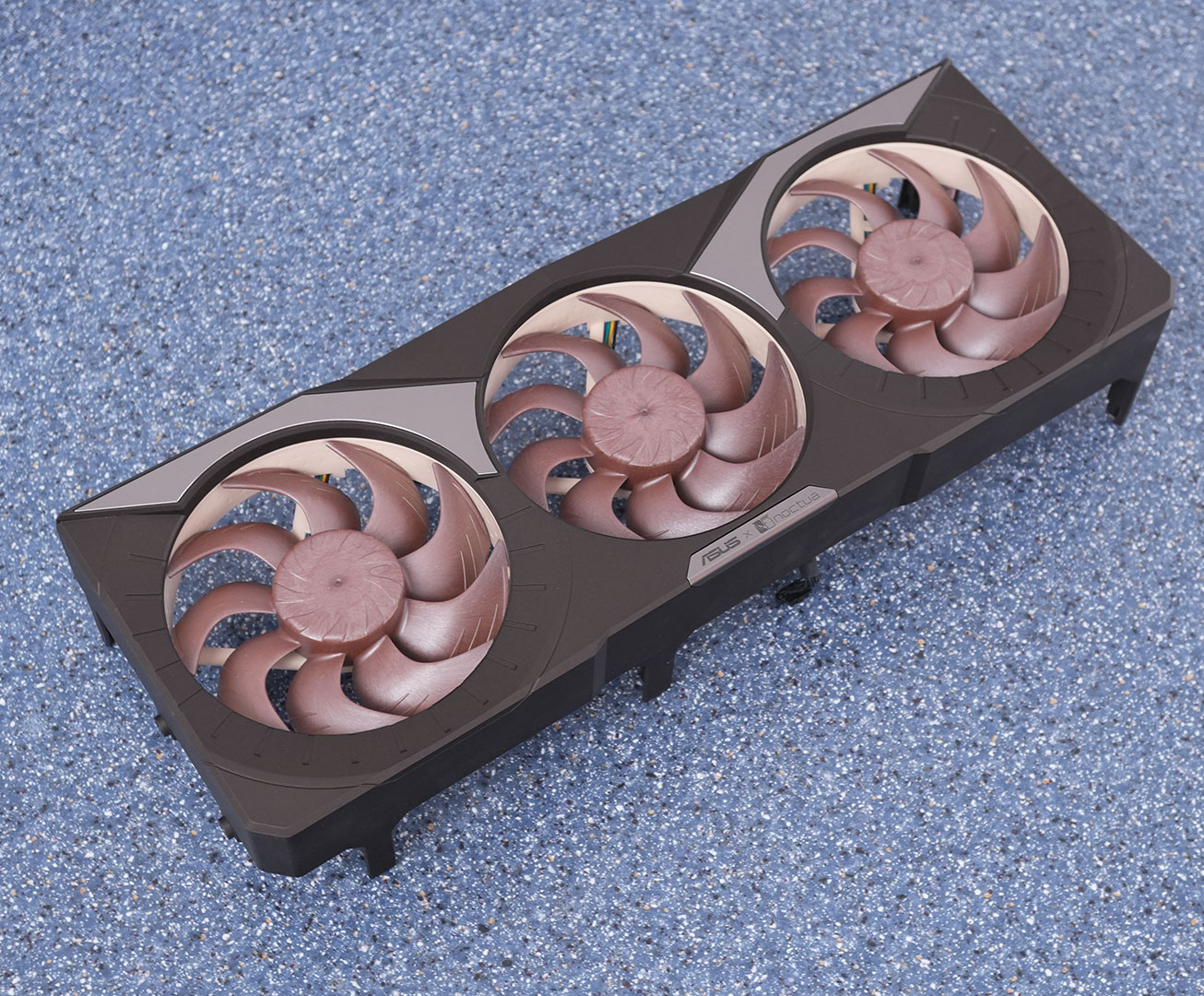
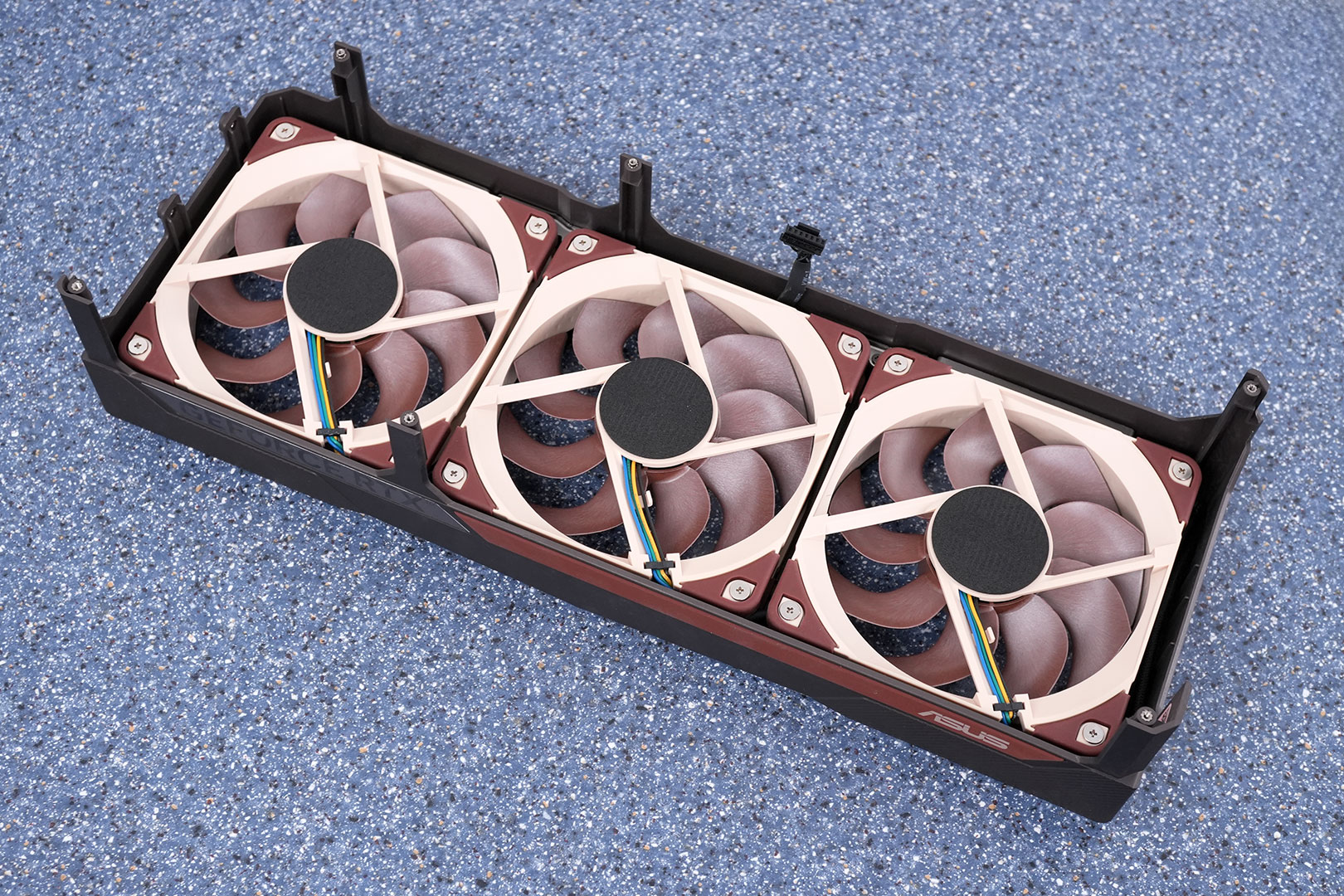
Three big 120 mm fans provide plenty of airflow for the heatsink below.
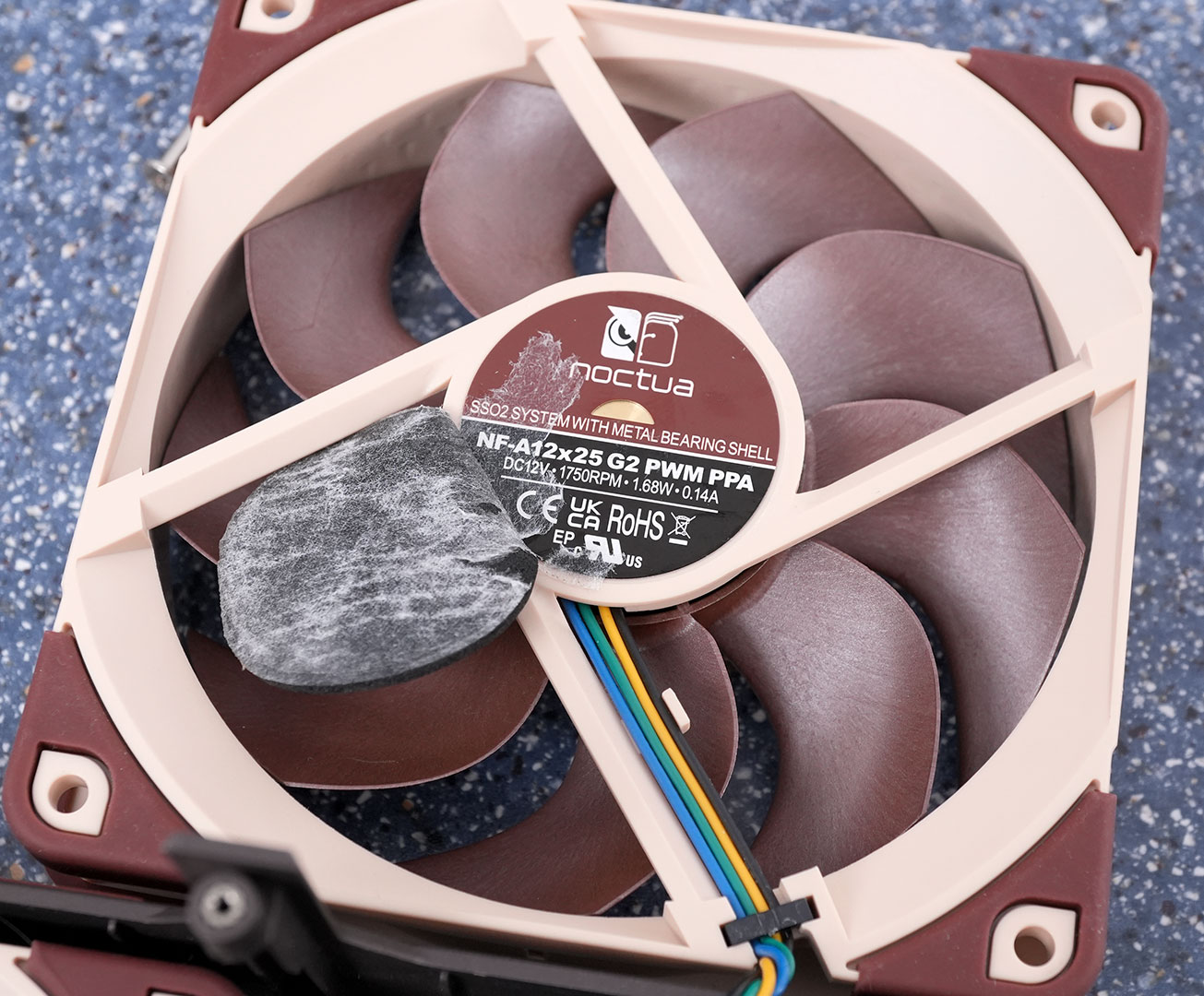
The fans are Noctua's NF-A12x25 G2 PWM PPA fans.
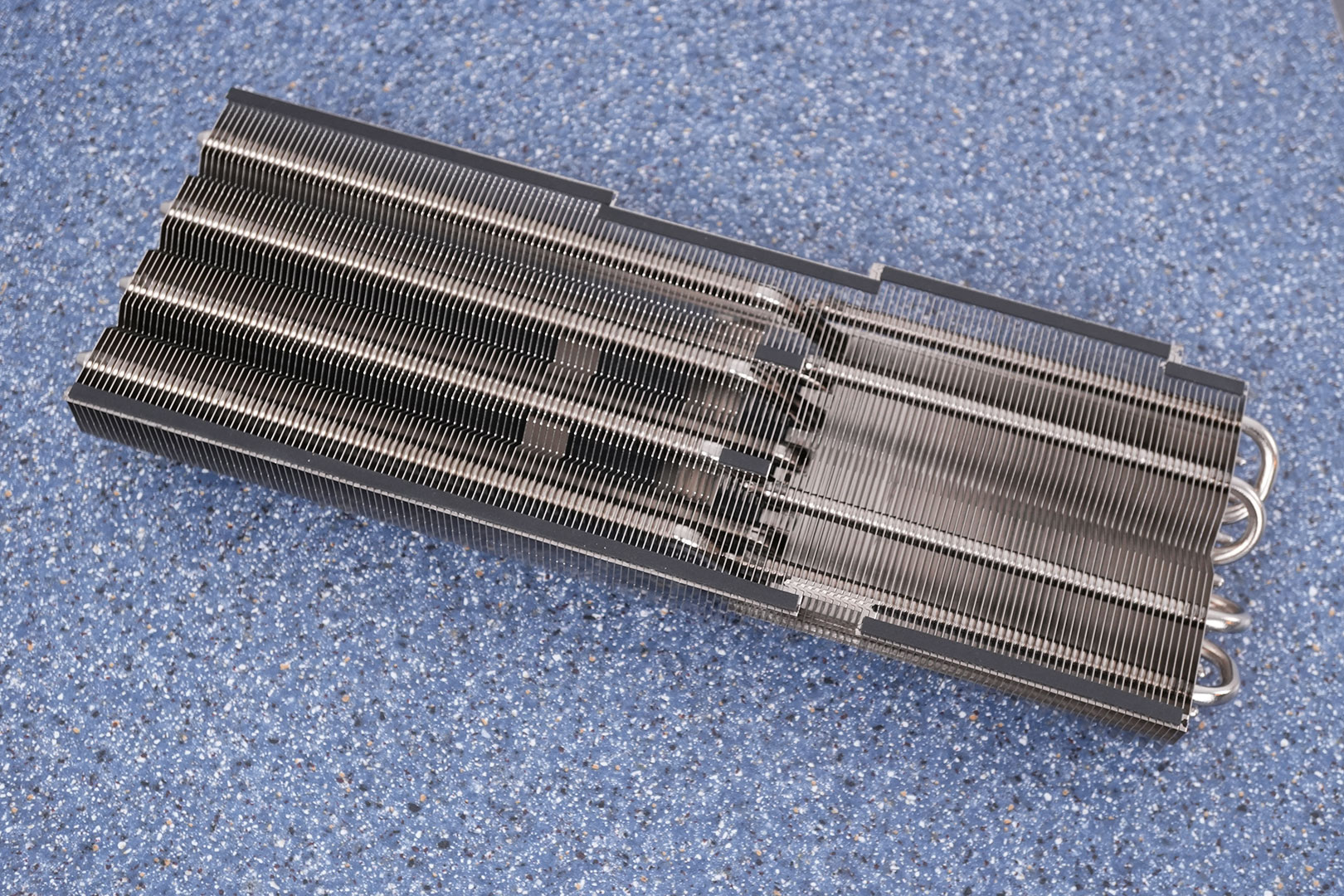
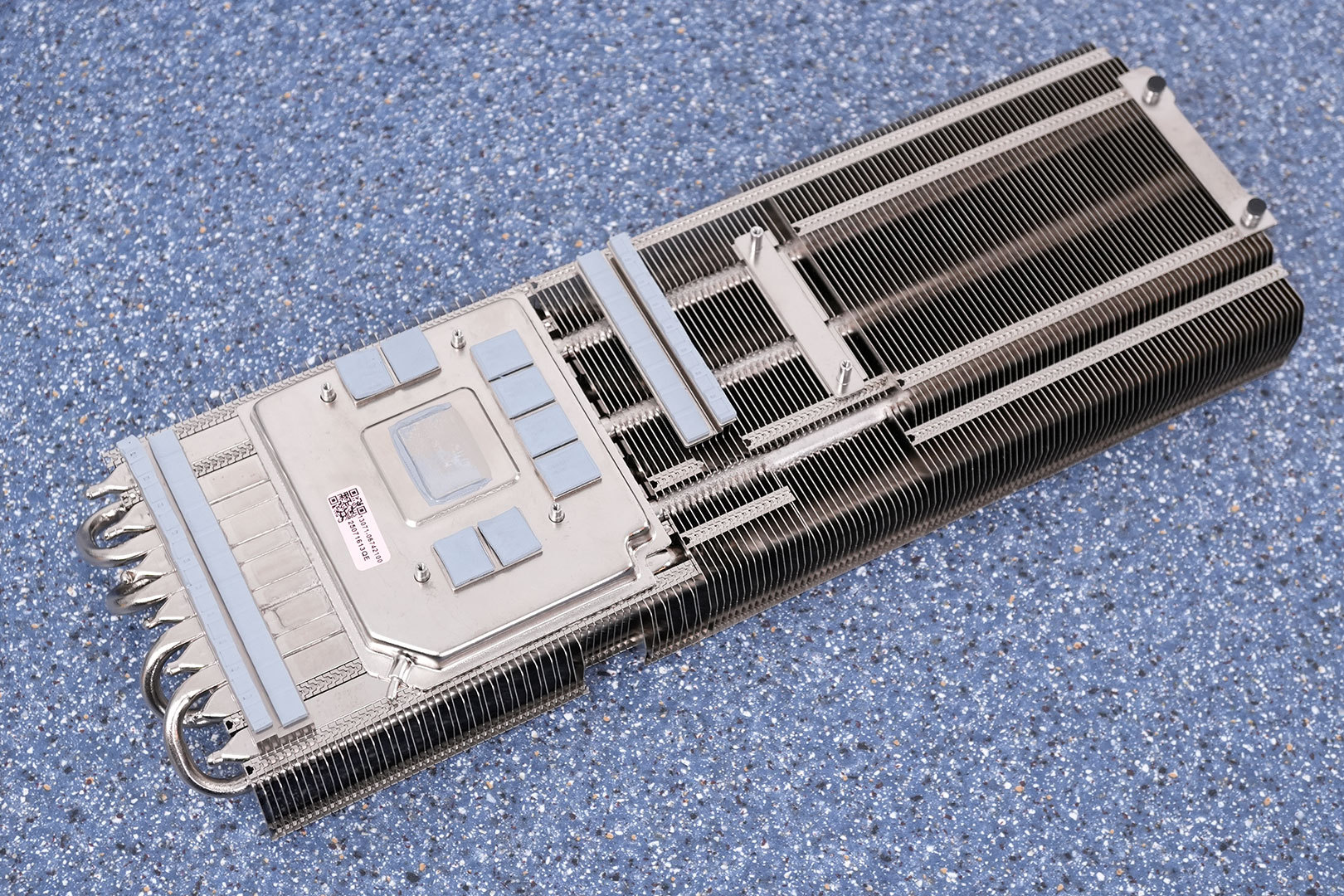
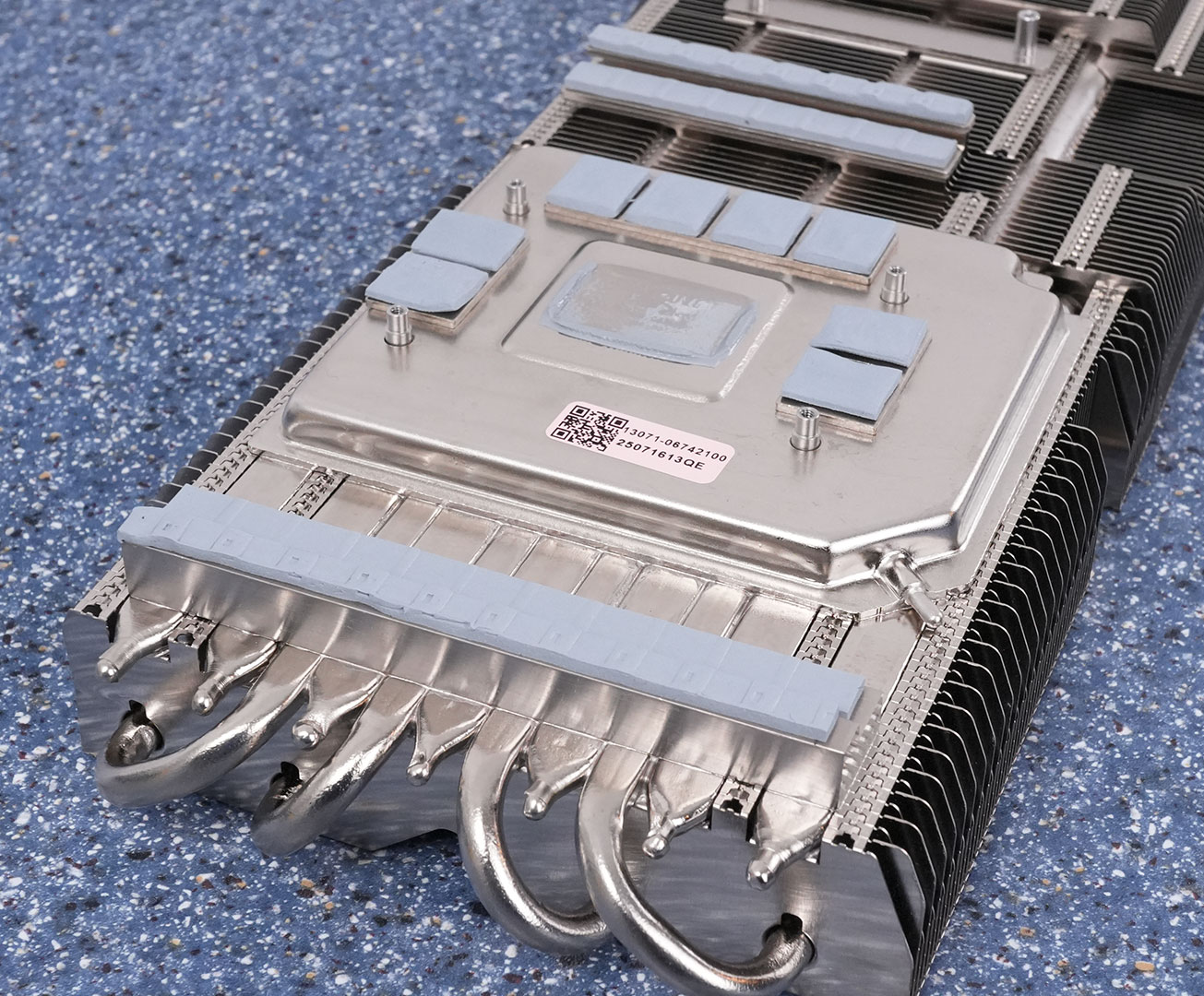
ASUS's thermal solution uses eleven heatpipes and a vapor-chamber. It provides cooling not only for the GPU, but also for the memory chips and VRM circuitry.
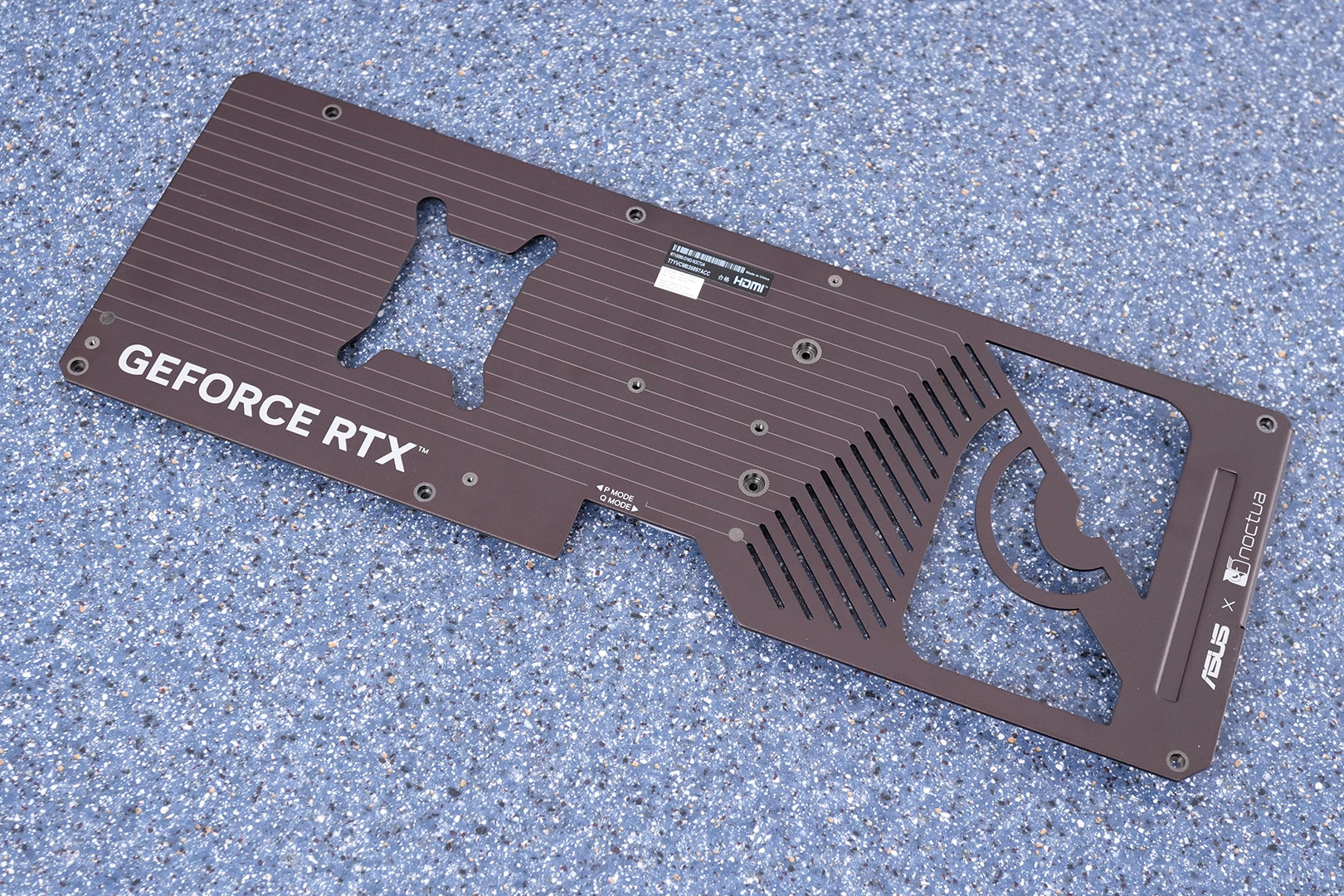
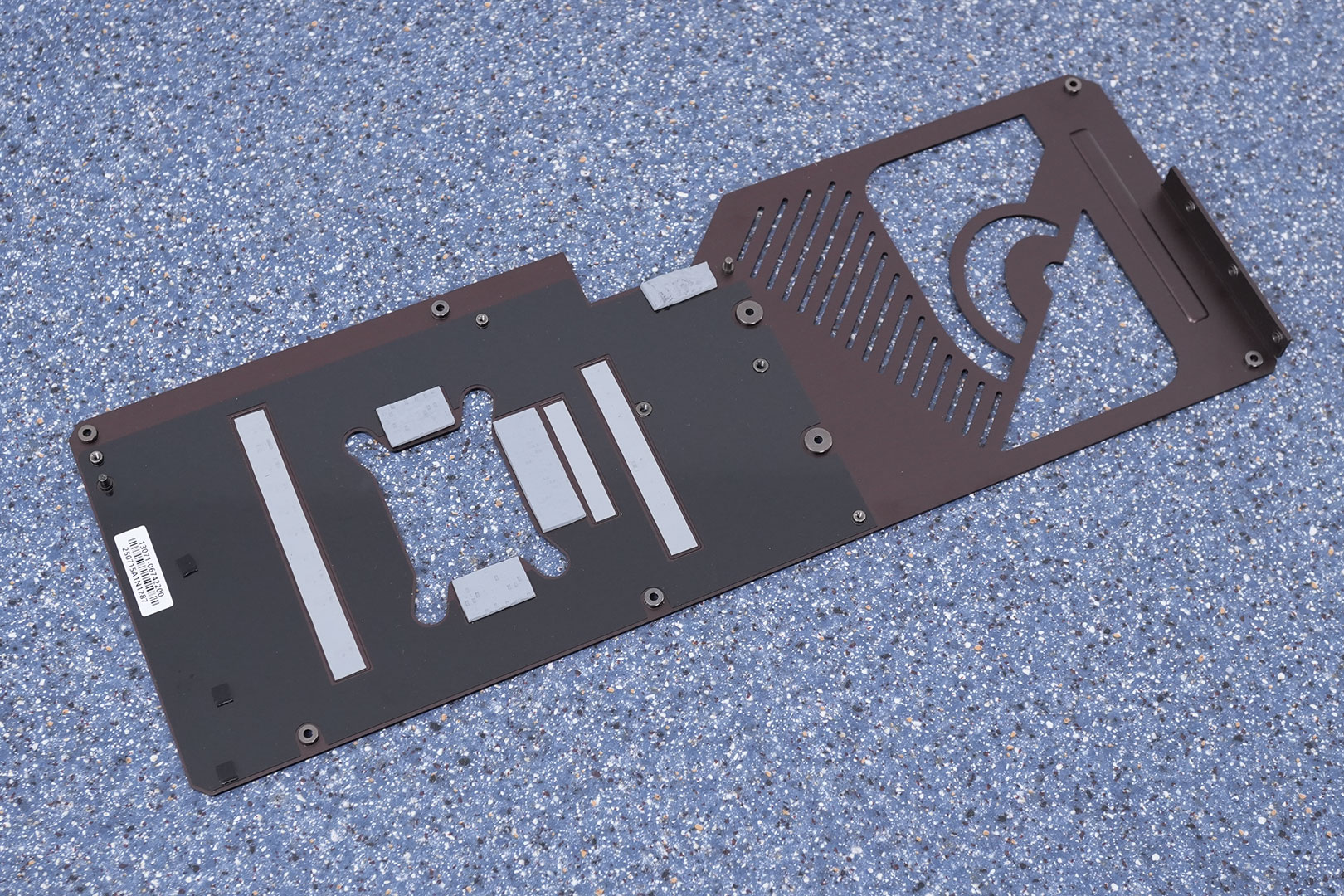
The metal backplate protects the card against damage during installation and handling.
Nov 15th, 2026 16:10 CST
change timezone
Latest GPU Drivers
New Forum Posts
- WarpCoreBench scores! (51)
- Asus Rog Maximus Z890 Extreme. (Various questions). (25)
- TPU's Nostalgic Hardware Club (22165)
- HP Office Jet 7740 Pro - Supply system problem with replacement cartridge (3)
- Recommendations Wanted - Affordable Enterprise SSD for Boot (9)
- Folding Pie and Milestones!! (10204)
- What can the FX 8320 do today? Here is the answer. (59)
- Power supply noise stops when I move the mouse (8)
- What are you playing? (26221)
- How do you get games for PC? (59)
Popular Reviews
- AMD Zen 6 Technical Deep Dive
- ASUS ROG Strix B850-I Gaming Wi-Fi7 W Review
- Corsair HX1000i Shift Crystal Review
- Upcoming Hardware Launches 2027 (Updated Nov 2026)
- Montech King 95 3D PRO Review
- NZXT C1200 Platinum Review
- NZXT H7 RGB+ Review
- NZXT H5 Review
- Phantom Blade Zero Performance Benchmark Review - 35 GPUs Tested
- AMD Ryzen 7 9800X3D Review - The Best Gaming Processor
TPU on YouTube
Controversial News Posts
- NVIDIA Co-Founder and CEO Jensen Huang Officially Resigns (420)
- Open Letter Asking NVIDIA to Reinstate Jensen Huang Passes 115,000 Signatures (184)
- OpenAI CEO Argues Home PCs Waste the World's Limited DRAM Supply (152)
- NVIDIA Launches Investigation Into Jensen Huang's Relationship With Suspected Chinese Spy (136)
- Intel "Raptor Lake Next" 16-Core and 20-Core CPUs Surface (130)
- Legendary Game Studio BioWare Shuts Down Following EA Layoffs (104)
- Dell CEO Says the Memory Shortage Will Get Worse in 2027 (95)
- NVIDIA GeForce RTX 50-Series Scheduled for up to $500 Price Hike This Week (89)