 28
ASUS Maximus IV Gene-Z LGA1155 Review
(28 Comments) »Introduction

Looking for a smaller motherboard, but still want the performance of a full-size board? Lately we've seen several requests in the forums for such a product, and none other than ASUS has stepped up to the plate with a solution based on the Intel Z68 Platform, with the Maximus IV Gene-Z. Like it's much larger brethren, the Maximus IV Gene-Z is straight from the ROG line of products from ASUS, a product line that seeks not only to meet every gamer's needs, but also the needs of those looking to push their system to the max. We take the Maximus IV Gene-Z ROG racer for a spin around the track; will it make the fastest lap?
Specifications
| Specifications: ASUS Maximus IV Gene-Z | |
|---|---|
| CPU SUPPORT: | Intel Socket 1155 2nd Gen Core Family/Unlock Processor |
| POWER DESIGN: | CPU Power: 8+4 phase Memory Power: 2 Phase |
| CHIPSET: | Intel Z68 Express |
| INTEGRATED GRAPHICS: | Intel Integrated (via installed CPU) |
| MEMORY: | 4 x DIMM, Max. 32 GB, DDR3 1066 to DDR3 2200 |
| BIOS: | UEFI AMI BIOS with 64 Mb Flash ROM |
| SLOTS: | 2 x PCIe 2.0 x16 slots (x16/0 or x8/x8) 1 x PCIe 2.0 x4 slot |
| HDD CONNECTIVITY: | 4 x SATA 3.0 Gb/s (Intel Z68) 2 x SATA 6.0 Gb/s (Intel Z68) 2 x eSATA 3.0 Gb/s (JMicron JMB362) |
| NETWORKING: | Intel 82579 PCIe Gigabit Ethernet |
| PORTS: | 12 x USB 2.0 ports (8 at back panel, 4 at front panel) 4 x USB 3.0 ports (2 at back panel, 2 at front panel) 1 x PS/2 Keyboard/Mouse Combo connector 1 x HDMI port 2 x eSATA port 1 x RJ45 LAN port 7 x Audio port with 6 analogue audio jacks + 1 Digital |
| AUDIO: | SupremeFX X-Fi 2 8-Channel HDAudio CODEC |
| FORM FACTOR: | uATX Form Factor( 244 mm x 244 mm ) |
| ASUS FEATURES: |
|
Intel Z68 Chipset

In the middle of May Intel launched its new "mainstream-enthusiast" product line, based on the Z68 Express chipset. With the P67 and H67 chipsets launched just a few months before, the Z68 takes the best features of both, and combines them together to offer extreme flexibility and several key features. The first, and most obvious of these features is the ability to use not only discrete graphics cards, but also allows use of the Sandy Bridge integrated GPU, at the same time. The majority of other chipsets that offered integrated graphics only allow use of one or the other, but the Z68 chipset has none of these limitations. In fact, through the use of third-party software, you can even use just one monitor, and both the Intel HD2000 integrated GPU and a discrete graphics card can work together, combining the features of both solutions into one big all-in-one solution.

The second feature not seen in P67 or H67 is Intel's "Smart Response Technology", which allows the combination of both a mechanical disc drive and an ultra-fast SSD into one, offering the superfast speed of the SSD, and the storage space of a mechanical drive in one solution. Combining technologies seems what Z68 is all about, and this is no different. Once set up, it requires no user intervention, and will automatically keep commonly used files on the SSD, for quick and easy access.
The Intel Z68 Express chipset also allows overclocking of both the CPU, and the GPU, which neither previous SKT1155 offered. Intel has offered a lot with the Z68 package, such that it's questionable why the P67 and H67 chipsets are even around, and some OEMs agree, such as ASUS, who has dropped all P67-based products in favor for Z68 chipsets. And with that in mind, it's also important to mention that OEMs are not required to enable all features available on the Z68 platform, and certain things, like PCIe lane configurations and if the display outputs are enabled, are all up to the OEM to implement.
ASUS launched their ROG line a bit over five years ago, and over the years, the line has matured not only in hardware features and performance, but also in software and looks, too. Today the entire line features a unified set of overclocking and gaming specialized features, combined with a racy red and black color scheme that now wraps Intel's Z68 in a tiny but quick mATX dragster, the Maximus IV Gene-Z:

Packaging
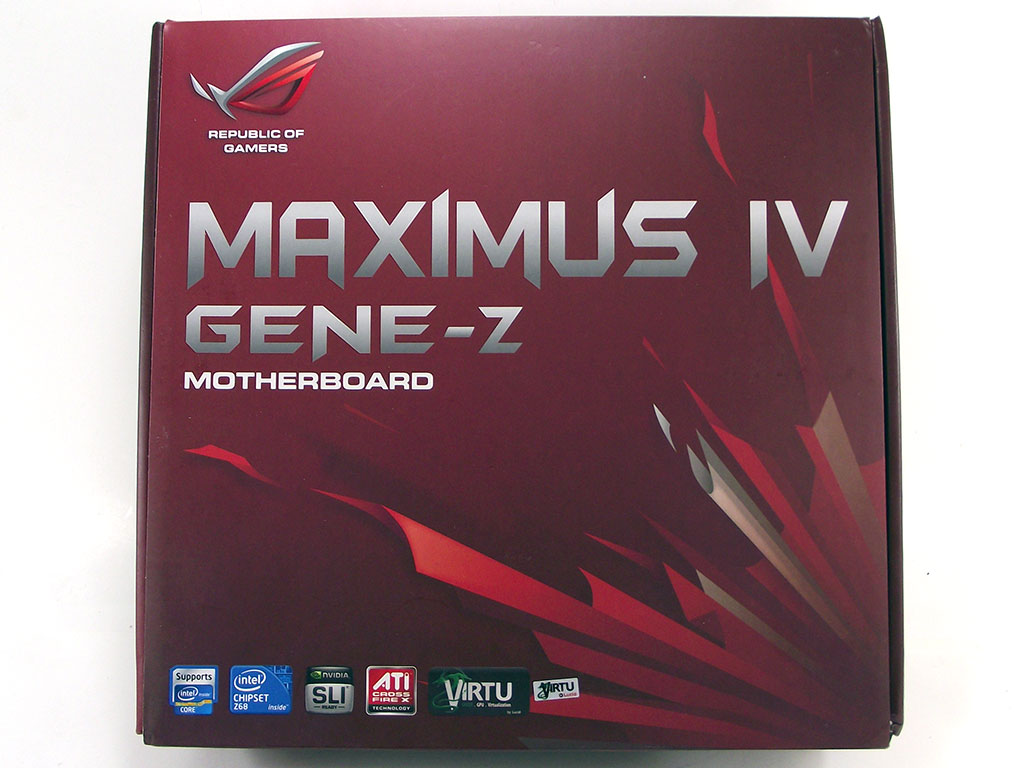


Clad in the blood red that has become traditional for the ROG line of products, the ASUS Maximus IV Gene-Z showed up on our doorstep just a short time ago, ready for action. First and foremost on the front of the box is the board's name, with several small technology logos on the bottom edge. The simple design helps that box stand out on the store shelf, with very few distractions in the design that may detract from the overall impression given. The top has a flip-up top, under which we find several detailed descriptions on the Maximus IV Gene-Z's included features, while on the back, we find a listing of the Maximus IV Gene-Z's specifications, a copy of what we find on the ASUS website.

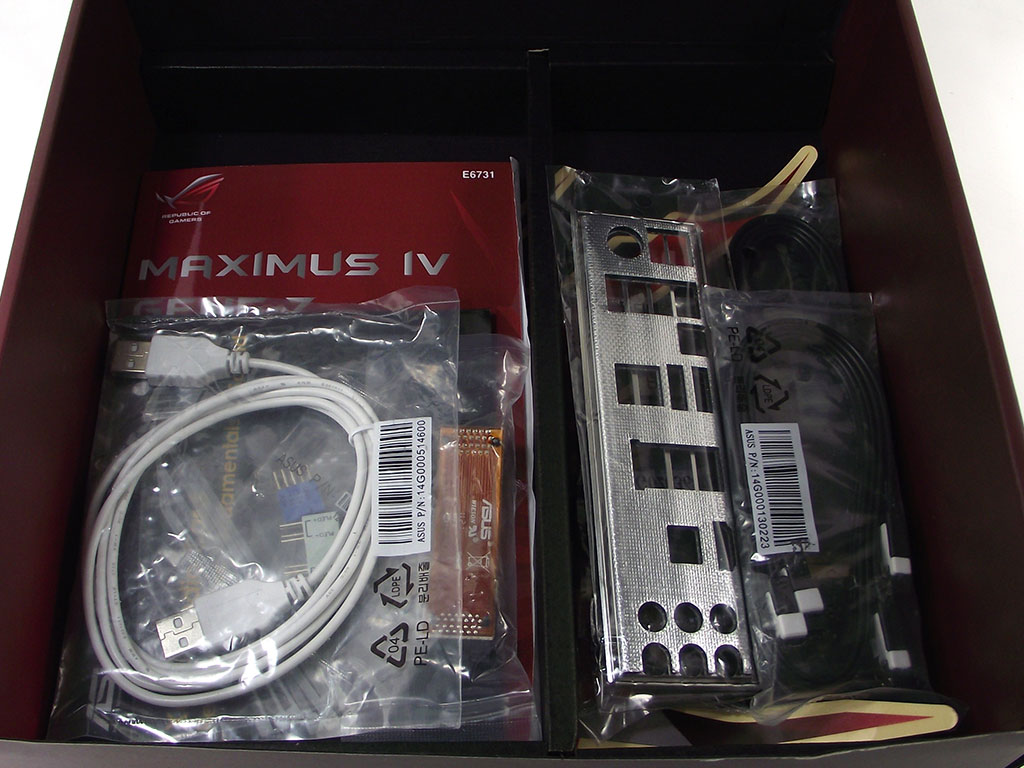
Once we opened the box, we found the board right on top, with a clear plastic cover on top that allows full view of the board itself, great for consumers that like to see what they are buying when they visit their local retailer. The board is contained within its own box, and when we removed it, we found the included accessories below, set in the bottom of the main packaging, with a small divider to both prevent the accessories from tossing around the box during shipping, as well as providing support for the board's inner packaging.
Our Patreon Silver Supporters can read articles in single-page format.
Nov 13th, 2026 08:54 PST
change timezone
Latest GPU Drivers
New Forum Posts
- TPU's Nostalgic Hardware Club (22152)
- Dual B70 or Dual R9700 Pro on Linux (3)
- inside Case Mod gallery, non modded cases are posted? (0)
- To AiO CPU Cooler users? (7)
- Slow SSD read speeds - help! (3)
- I won't download games that are larger than 30–40 GB. (108)
- TechPowerUp Screenshot Thread (MASSIVE 56K WARNING) (4386)
- Microsoft Exchange/365 outages? (45)
- [Community Benchmark] MrH OpenCL Benchmark 2.0e (Windows Only – CPU & GPU) (1)
- Any other old-timers here planning to play WoW Forever? (150)
Popular Reviews
- AMD Zen 6 Technical Deep Dive
- Corsair HX1000i Shift Crystal Review
- NZXT C1200 Platinum Review
- Upcoming Hardware Launches 2027 (Updated Nov 2026)
- Montech King 95 3D PRO Review
- NZXT H7 RGB+ Review
- NZXT H5 Review
- Phantom Blade Zero Performance Benchmark Review - 35 GPUs Tested
- XPG NIMBUS PLUS Review - Mid-range Chair With Strong Competitors
- Gigabyte Z890I Aorus Ultra Review
TPU on YouTube
Controversial News Posts
- NVIDIA Co-Founder and CEO Jensen Huang Officially Resigns (357)
- OpenAI CEO Argues Home PCs Waste the World's Limited DRAM Supply (152)
- NVIDIA Launches Investigation Into Jensen Huang's Relationship With Suspected Chinese Spy (136)
- Intel "Raptor Lake Next" 16-Core and 20-Core CPUs Surface (130)
- Legendary Game Studio BioWare Shuts Down Following EA Layoffs (104)
- Dell CEO Says the Memory Shortage Will Get Worse in 2027 (95)
- NVIDIA GeForce RTX 50-Series Scheduled for up to $500 Price Hike This Week (89)
- Modder Fits RTX 5090 With Four 8-Pin Connectors, Halving Current per Wire (80)