 49
ASUS ROG Crosshair X870E Extreme Review
BIOS Overview »VRM Overview

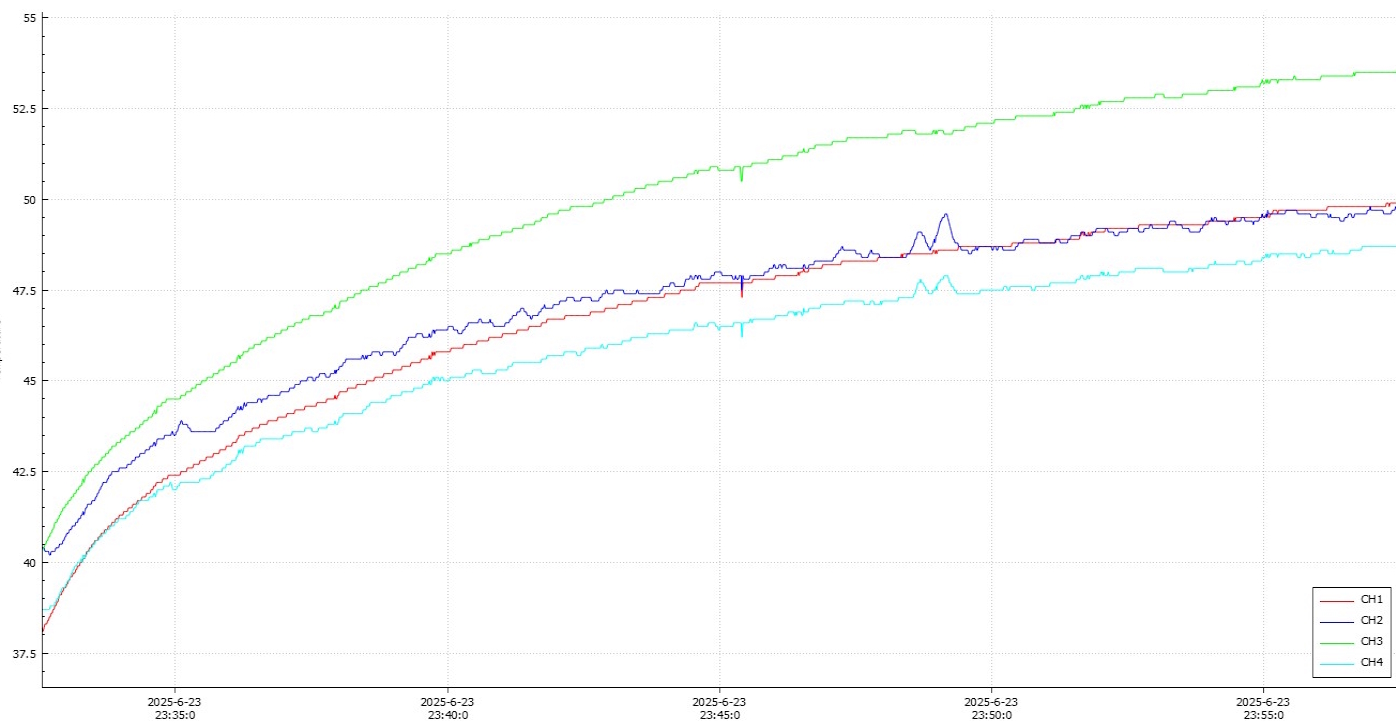
The 20+2+2 phase power delivery is cooled by two massive heatsinks and there's also an optional 40 mm VRM fan that attaches to the lower end of the I/O shroud heatsink, powered by a micro connector just above the top M.2 heatsink. The fan by default is linked to the VRM temperature—unlike some we've seen recently—and in its standard mode saw the VRMs peak at just over 53°C. This is a tad disappointing given the lavish and actively-cooled heatsinks, but is likely in part due to the massive screen on top hindering cooling. Still, it leaves plenty of headroom.


The fan is meant to blow air into the VRM chamber beneath the heatsink as standard, but you can also reverse it if you wish. However, it can only be placed in one location as it's designed to fit into a small recess above the M.2 heatsink, which does impede airflow to it a little.

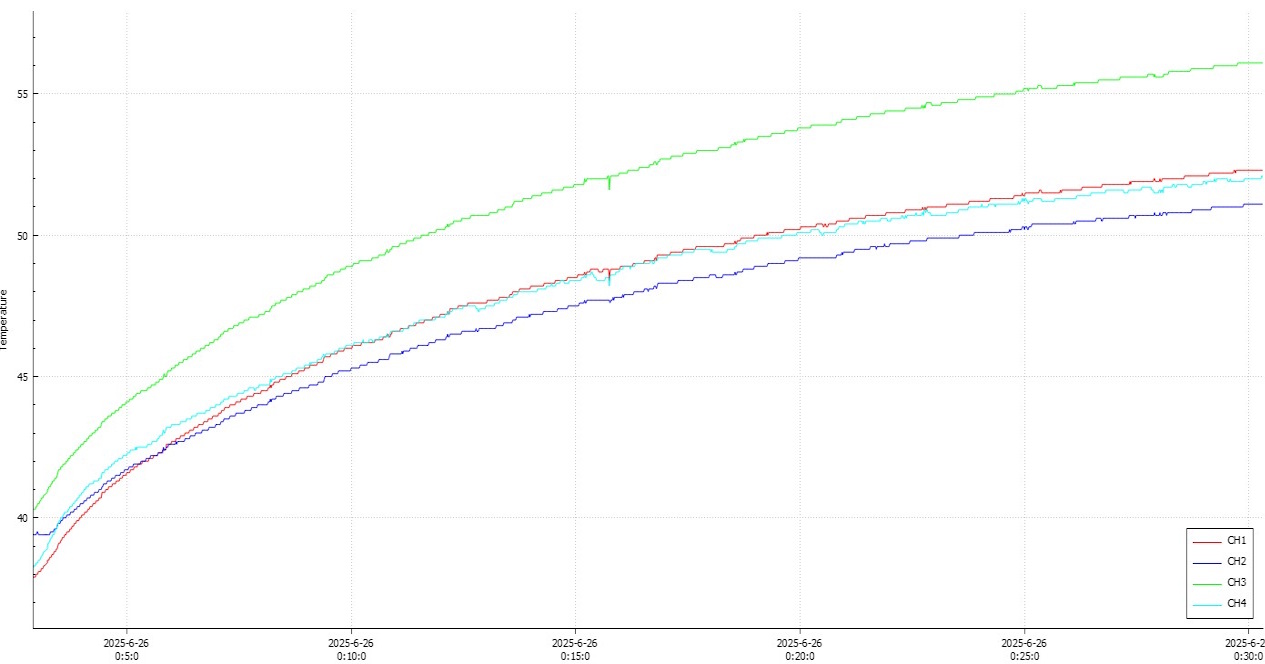
If you're worried about noise from this fan then we can offer some advice, which is that keeping it below 3,000rpm means that even in a quiet system, you shouldn't hear it. Standard mode keeps the speed around 3,100 rpm until the VRMs hit 50°C, which they likely will under extended CPU loads. It's likely ASUS, like us, has already gauged this speed as being acceptable, which is why it's the default idle speed.


Silent mode rather than standard mode for this fan merely extends the temperature upwards to 60°C before the fan ramps up, but this likely solves the potential noise issue for most. Thankfully, you do have full control over the fan speed so you could lock it at any speed and even with the fan totally disabled, the VRMs only hit 56°C after half an hour of full load, when the temperatures levelled off.
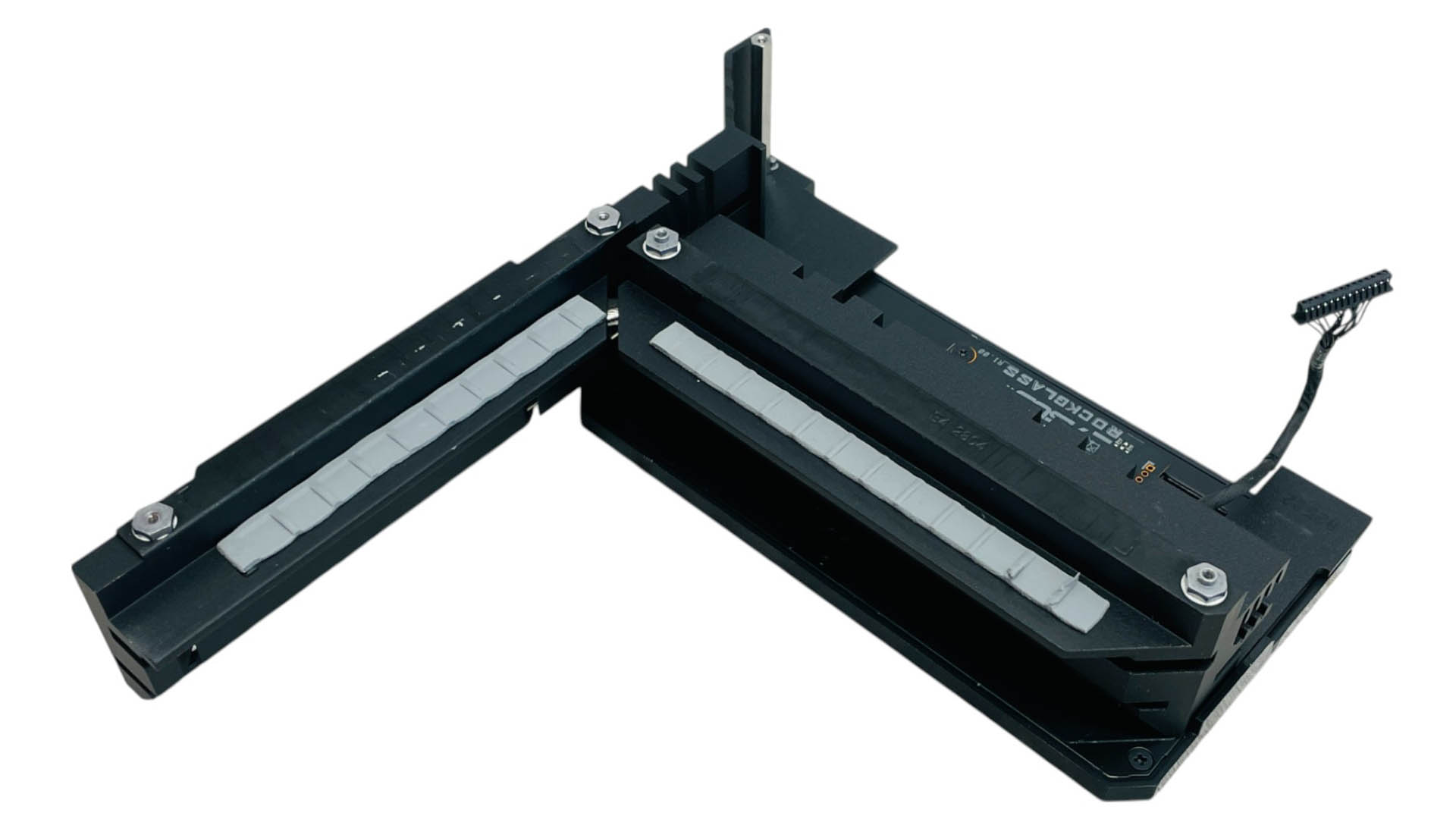

The VRM heatsinks are a single piece and linked using not one, but two heatpipes to spread the load. This makes removing them a little challenging, especially as you have to also remove the backplate. There's also the screen circuit board to contend with. We can see why the VRM fan had little impact here too, that's a very large empty chamber and it's a very small fan. It would likely have been better to place the fan inside the heatsink somewhere and have it exhausting out the I/O shield.

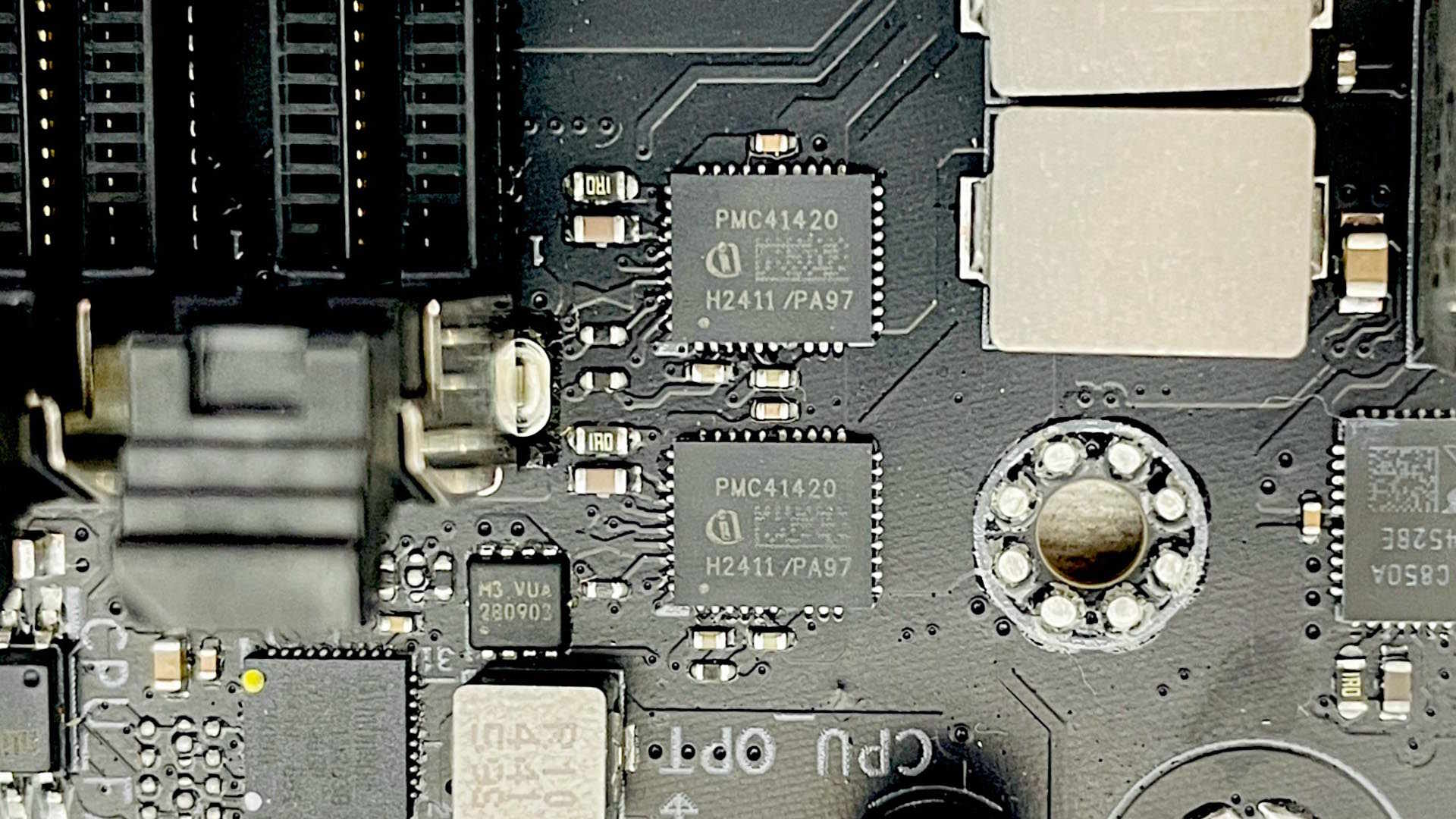
The 20 vCore stages, and a pair each for SOC and MISC, comprise Vishay 110 A SiC850A stages as well as a pair of Infineon PMC41420 80 A stages, with the latter dealing with MISC. We've seen the Vishay 110 A SiC850A stages a few times before such as on the ASUS ROG Crosshair X870E Hero and ASUS ROG Crosshair X670E Hero.
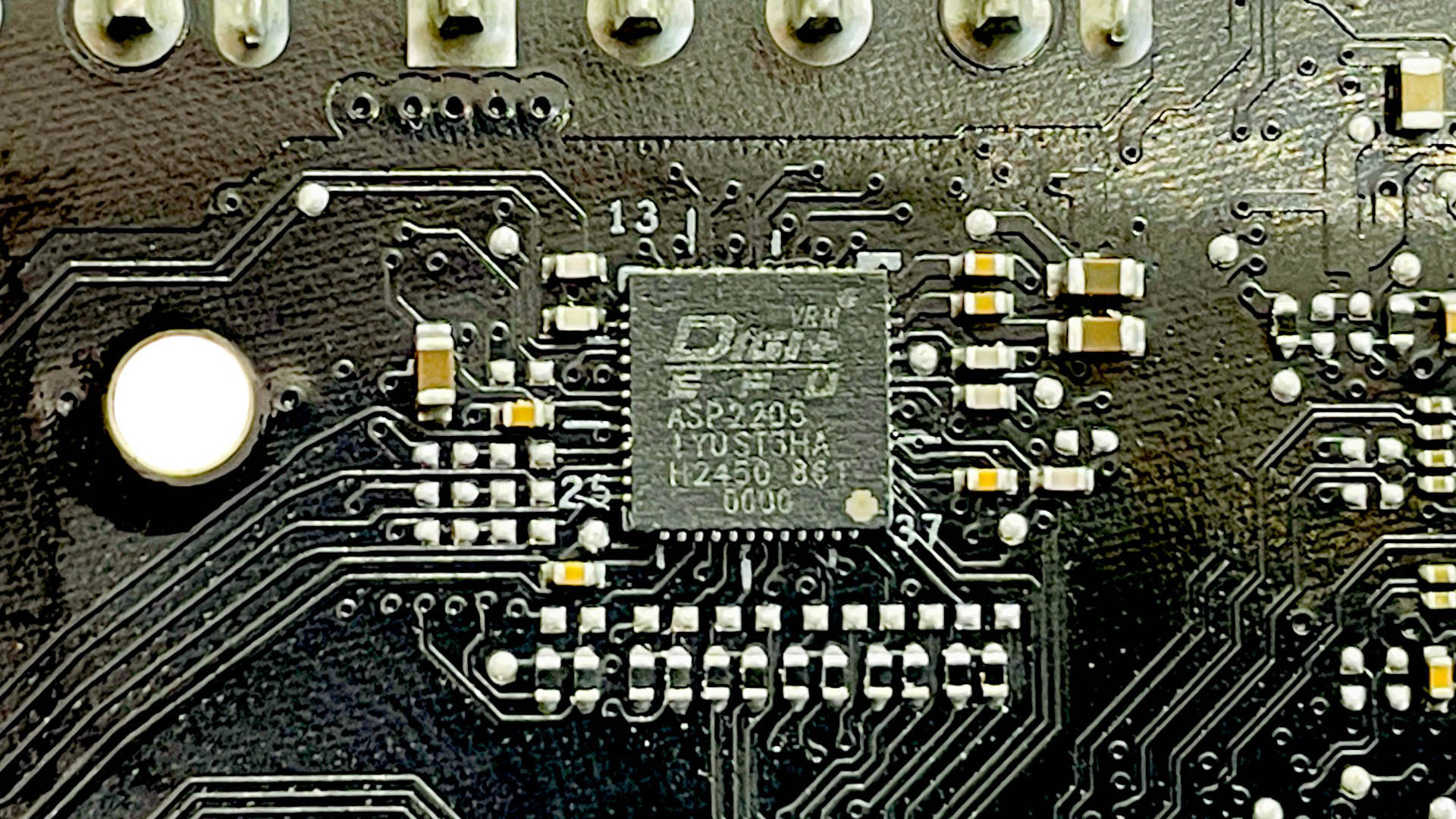
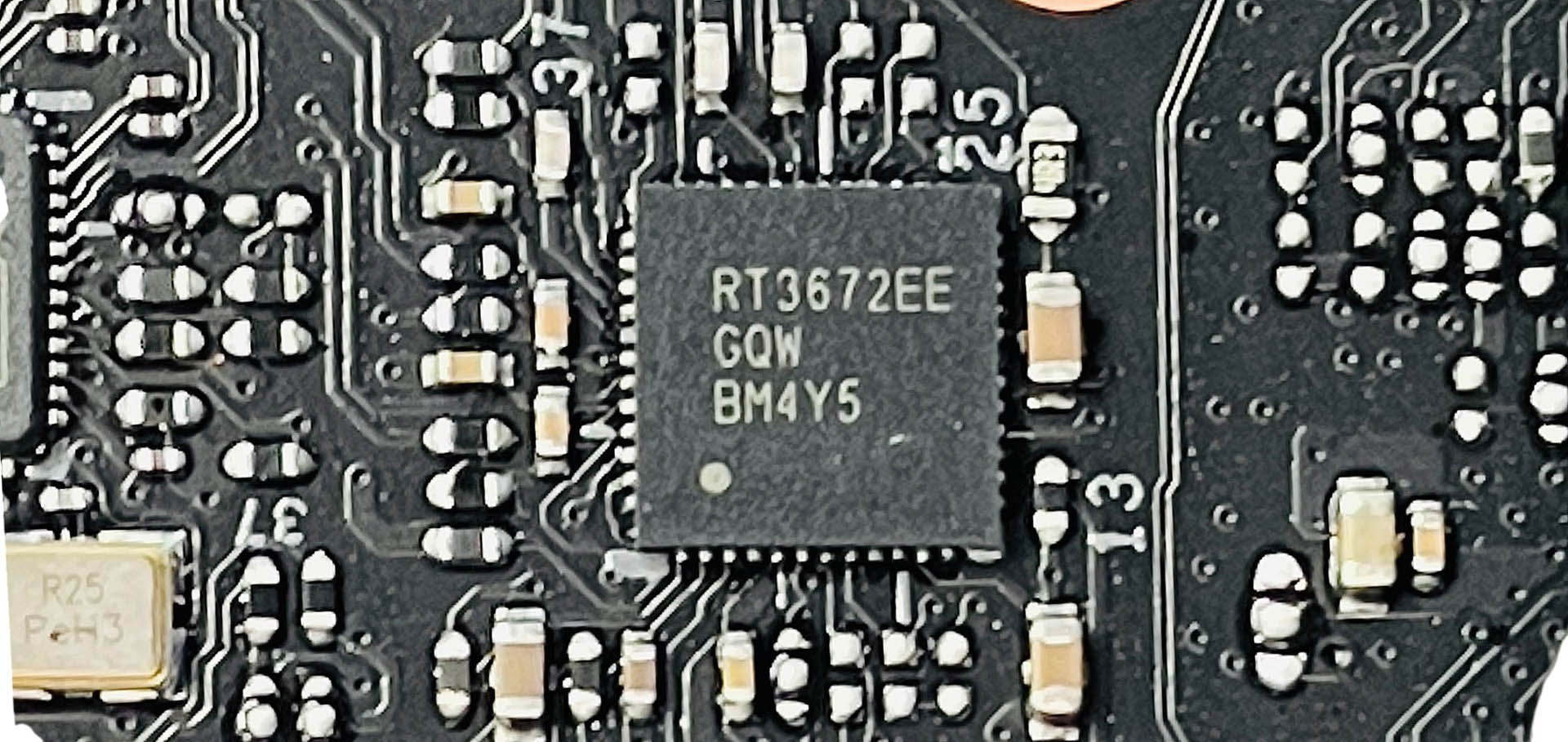
We also have a DIGI+ branded P2205 PWM controller that we've again seen on X870 and X670 Hero boards, as well as a Richtek RT3672EE, which was on the likes of the ASUS ProArt X870E-Creator Wi-Fi, too.
Nov 22nd, 2026 04:03 PST
change timezone
Latest GPU Drivers
New Forum Posts
- Your PC ATM (36449)
- UPS what one to get? (29)
- TPU's Nostalgic Hardware Club (22194)
- The TPU UK Clubhouse (27288)
- Zen 3 IF/IMC degradation (244)
- Local LLM General Discussion (696)
- How to prevent OLED burn damage due to PC freezes or power outtages? (54)
- Honestly, do you care about GTA VI? (242)
- Ryzen or Intel system (17)
- RX 580 2048SP 8GB - SK Hynix - Ardiyes - BIOS Needed (3)
Popular Reviews
- Microsoft Surface Laptop Ultra Review - The Next-gen Arm Laptop
- Corsair RM1200e (Second Generation) Review
- Pulsar Office Tour & First Look at P1 Dual-Sensor Mouse
- Upcoming Hardware Launches 2027 (Updated Nov 2026)
- Ugreen NASync DXP4800 GT Review
- AMD Ryzen 7 9800X3D Review - The Best Gaming Processor
- Biwin Black Opal NV7400 2 TB Review
- AMD Zen 6 Technical Deep Dive
- Phantom Blade Zero Performance Benchmark Review - 35 GPUs Tested
- AMD Ryzen 7 5800X3D 10th Anniversary Review
TPU on YouTube
Controversial News Posts
- NVIDIA Co-Founder and CEO Jensen Huang Officially Resigns (492)
- Report: Jensen Huang Eyes NVIDIA Comeback (262)
- Open Letter Asking NVIDIA to Reinstate Jensen Huang Passes 115,000 Signatures (184)
- OpenAI CEO Argues Home PCs Waste the World's Limited DRAM Supply (152)
- NVIDIA Launches Investigation Into Jensen Huang's Relationship With Suspected Chinese Spy (136)
- Intel "Raptor Lake Next" 16-Core and 20-Core CPUs Surface (130)
- NVIDIA GeForce RTX 50-Series Scheduled for up to $500 Price Hike This Week (89)
- Intel Razor Lake Gets a 12 P-Core bLLC Chip With No E-Cores, Per Leak (86)