 23
Asustor Nimbustor 4 Gen2 AS5404T Review
Performance: Sequential File Copying »CrystalDiskMark
RAID 5
RAID 1
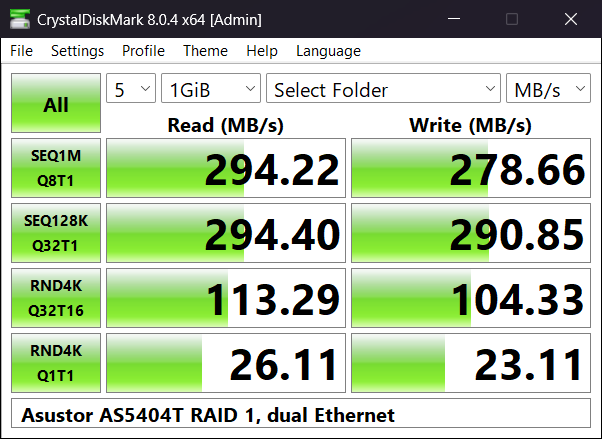
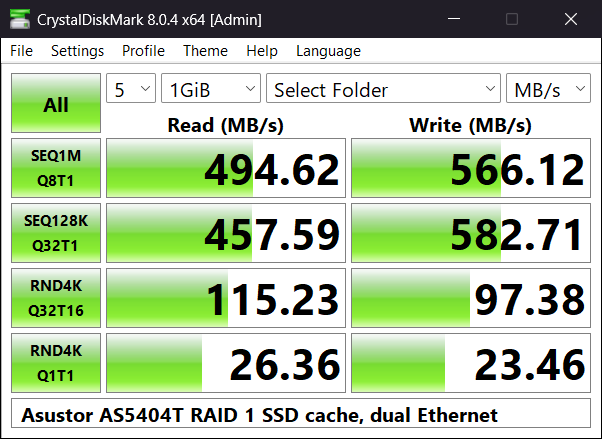
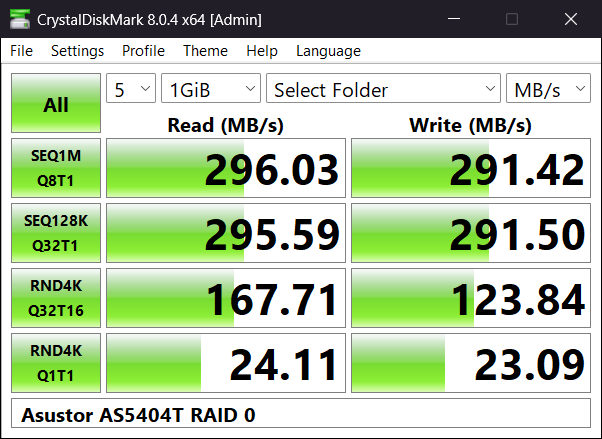
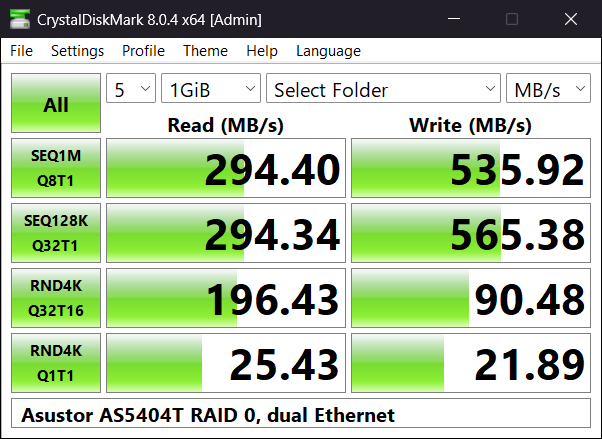
RAID 0
Single SSD
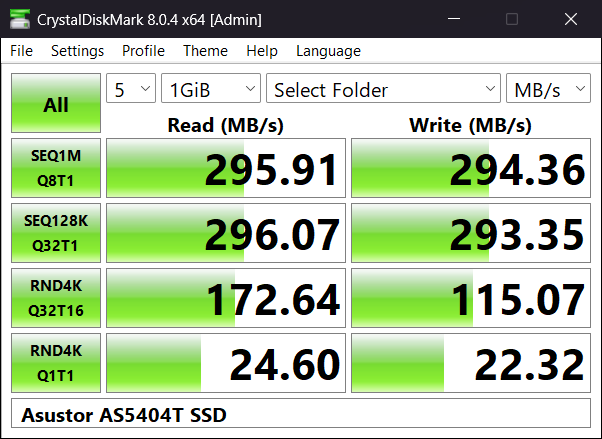
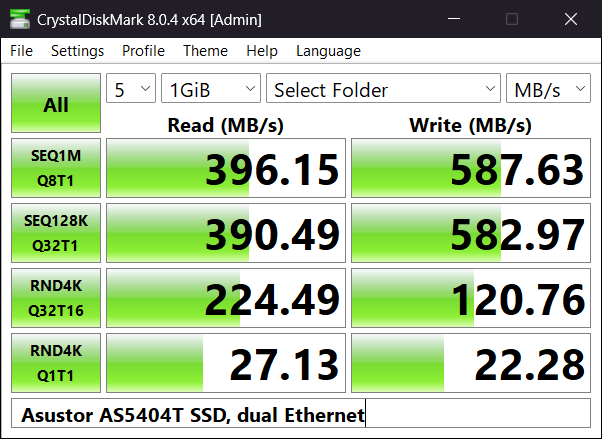
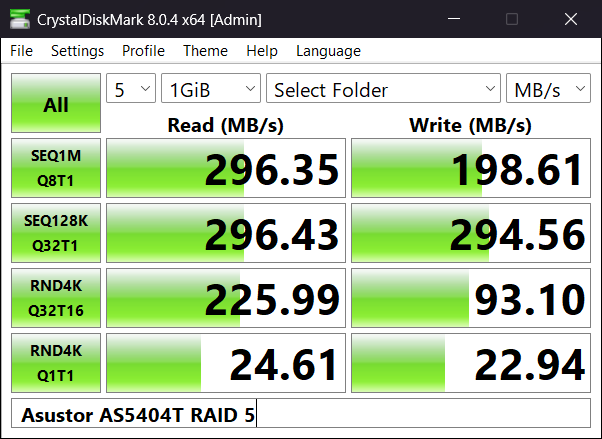
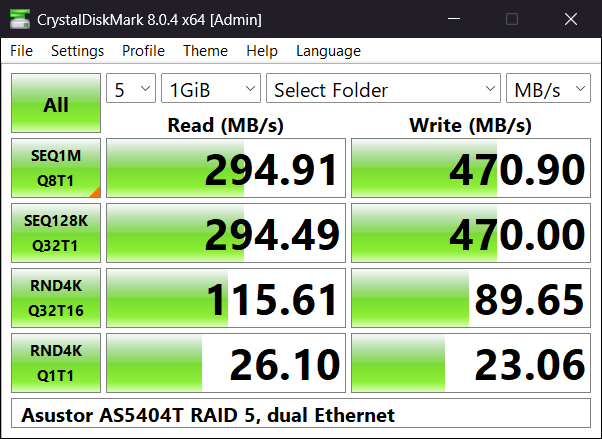
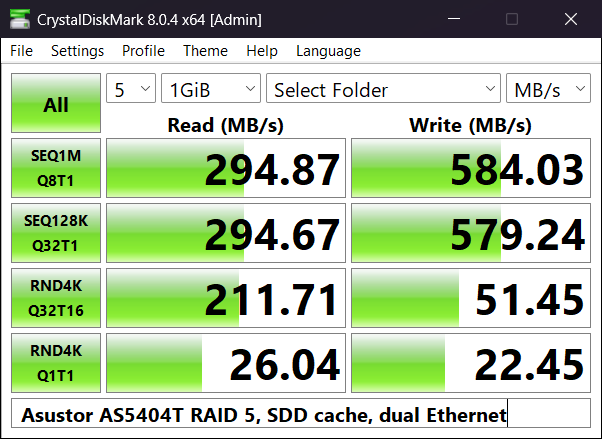
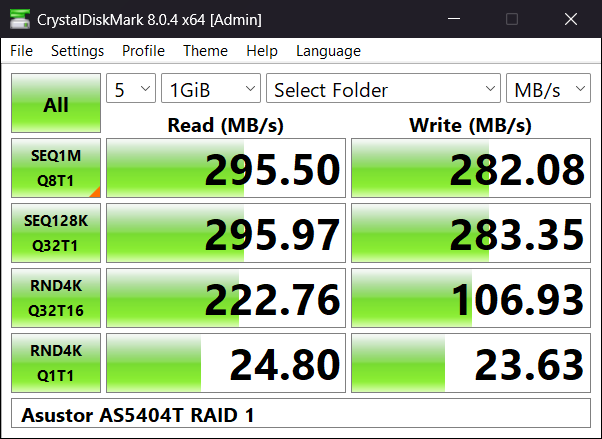
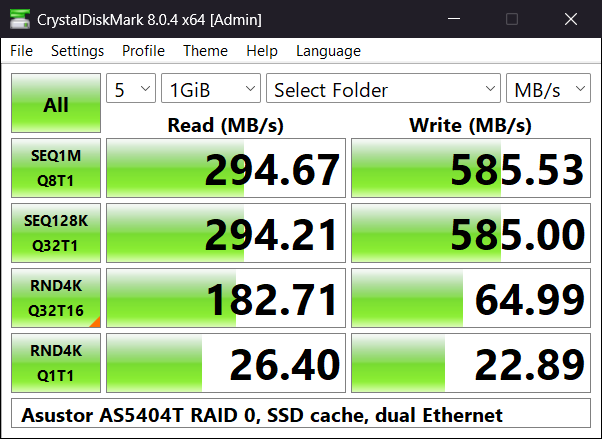
As always, we kick off with CrystalDiskMark, as it's a quick and easy test to run and gives us a baseline for the drive performance. We ran the benchmark using all available RAID modes, then—as this is the first NAS we've tested with working SMB multichannel—we tested with dual Ethernet and finally with SSD caching added in to the mix to see if the extra network bandwidth would offer additional performance. SMB multichannel brings with it some real world performance benefits, even when using mechanical drives, as long as it's not RAID 1. CrystalDiskMark mainly takes advantage of the extra bandwidth when writing data to the drives. It's a tad inconsistent and we oddly enough saw the biggest performance with SSD caching enabled in RAID 1, as both the sequential write and read performance got a massive boost here. The only other test scenario that saw any read performance benefit from SMB multichannel was with an SSD installed, but even here the read speeds weren't as high as in the RAID 1 configuration, which is odd, but we re-ran the test without getting any better performance using an SSD.
iPerf3

To make sure that the networking interface is working as intended, we run a quick test with iPerf3. As iPerf3 doesn't support SMB multichannel, there was no extra performance benefits to be gained here, but the AS5404T delivered the expected 2.5 Gbps throughput.
NAS Performance Tester
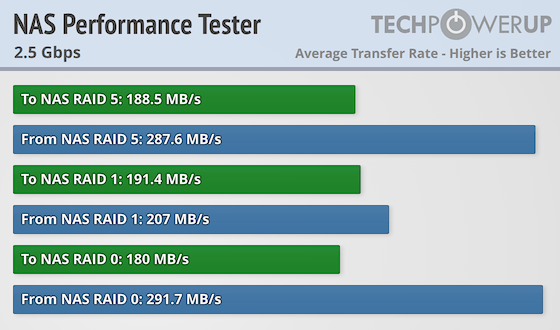
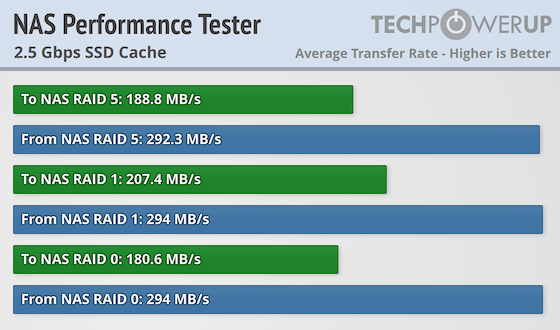
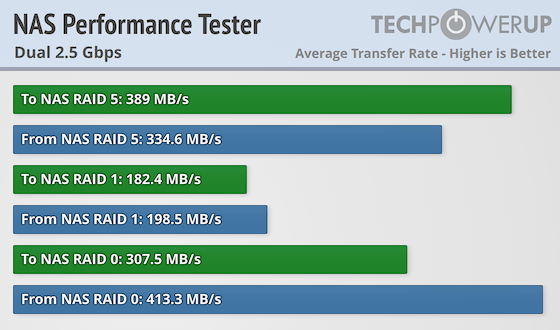
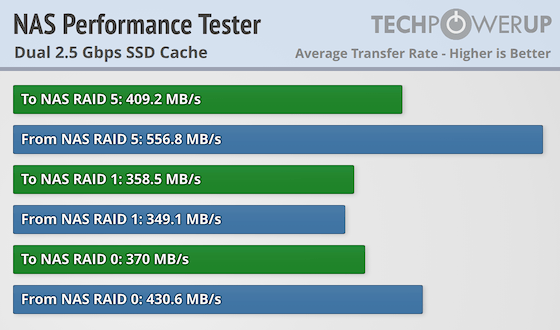
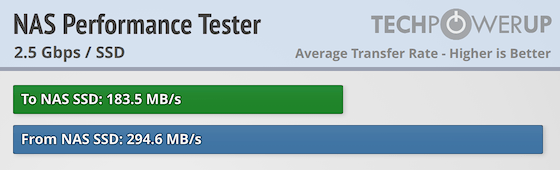
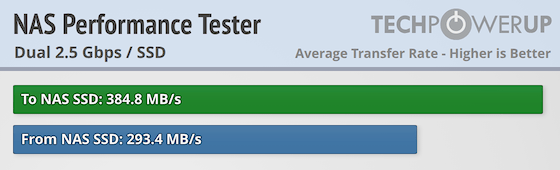
Next up we have the NAS performance tester, and this test provides some actual drive benchmarks, since it bypasses any kind of system caching, as it's set to use an 8 GB dataset which is deleted and re-created during each iteration of the test. The test runs five iterations for each of the read and write operations. Here the AS5404T outperforms the TerraMaster F4-424 in every single test, showing that older hardware might not be a limiting factor when it comes to NAS performance. With the added benefit of SMB multichannel, it's possible to get some extra performance in all RAID modes except RAID 1, which still needs the help of SSD caching. There's little to no benefit of using SSD caching when connected over 2.5 Gbps—except for in the case of RAID 1—which was expected from the earlier tests. However, we see big increases in throughput across the board using SMB multichannel with the dual 2.5 Gbps Ethernet interfaces sharing the load, even if the performance isn't doubled, it gets very close in some of the tests here.
Helios LanTest
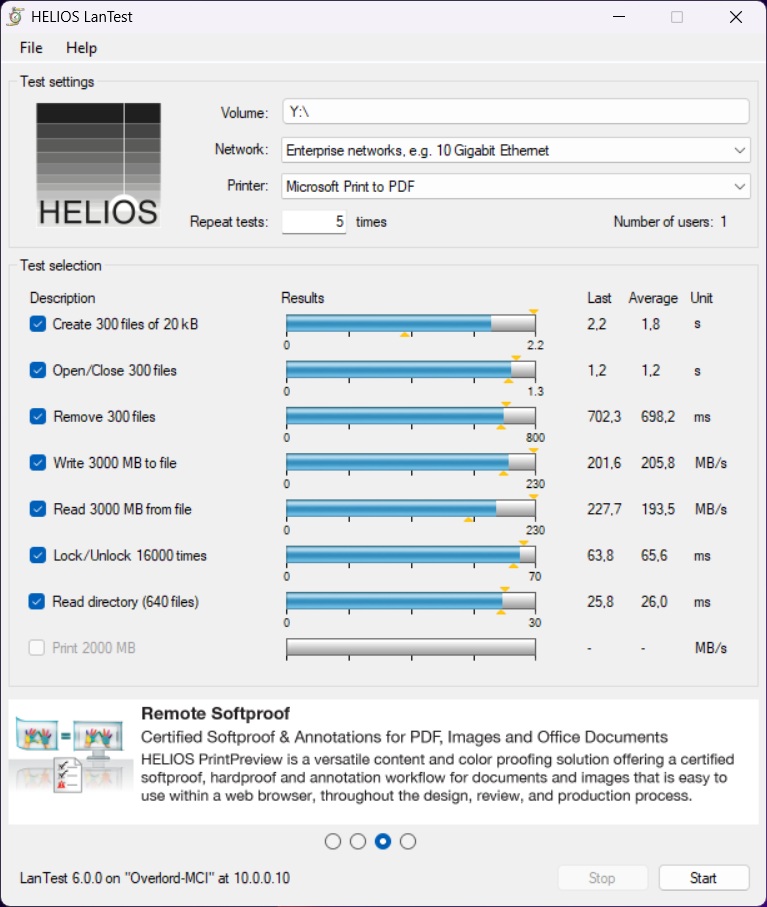
Helios RAID 5 2.5 Gbps
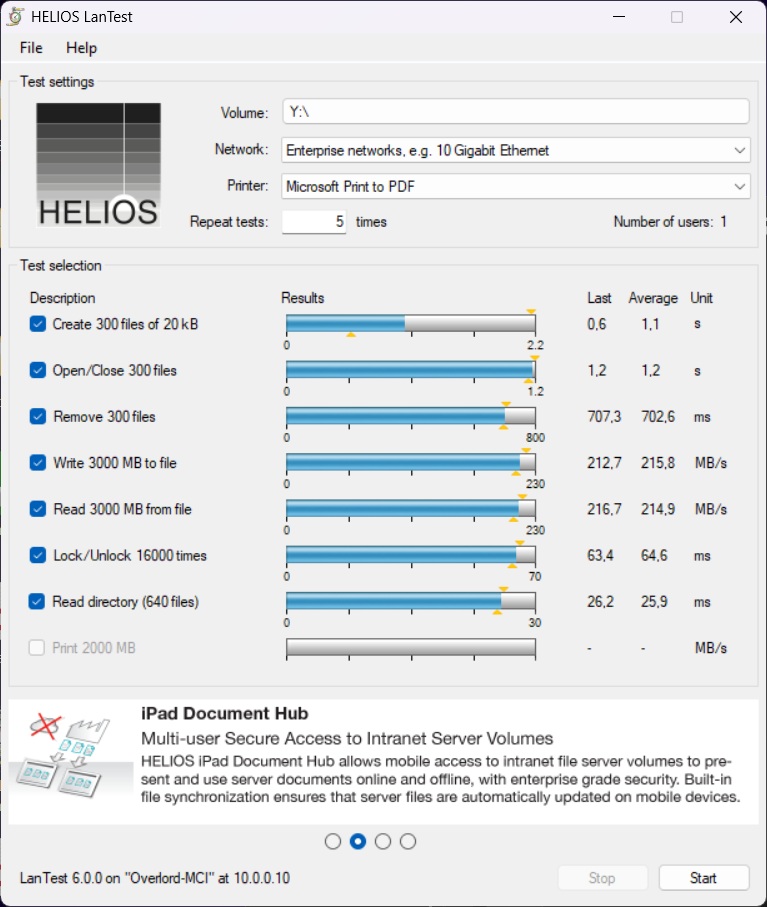
Helios RAID 5 2.5 Gbps SMB multichannel
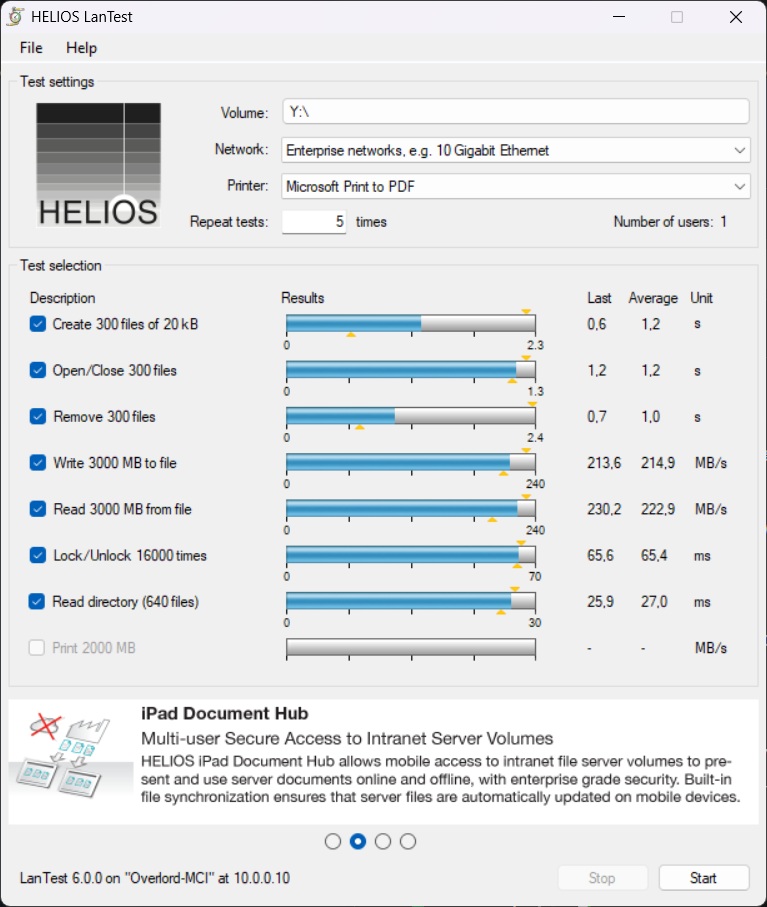
Helios RAID 5 2.5 Gbps SMB multichannel SSD Cache
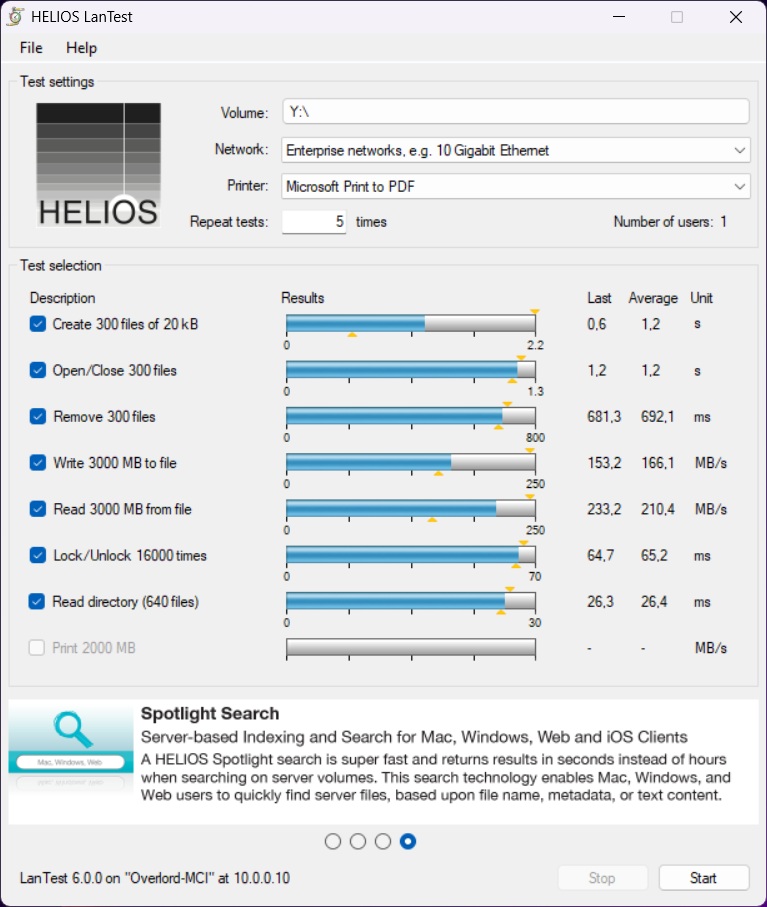
Helios RAID 1 2.5 Gbps
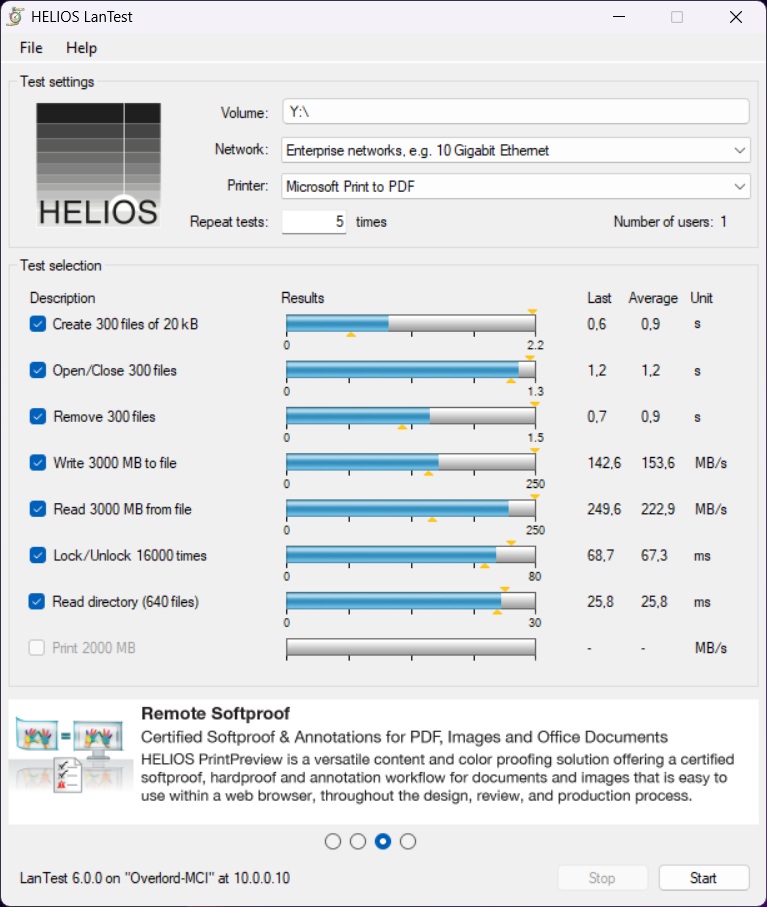
Helios RAID 1 2.5 Gbps SMB multichannel
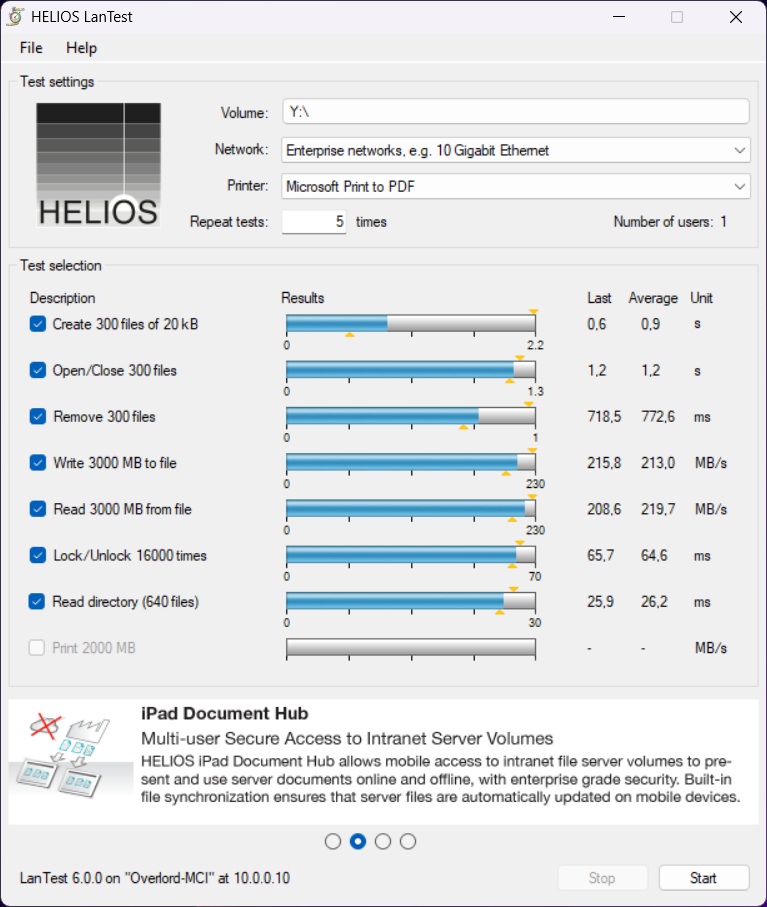
Helios RAID 1 2.5 Gbps SMB multichannel SSD Cache
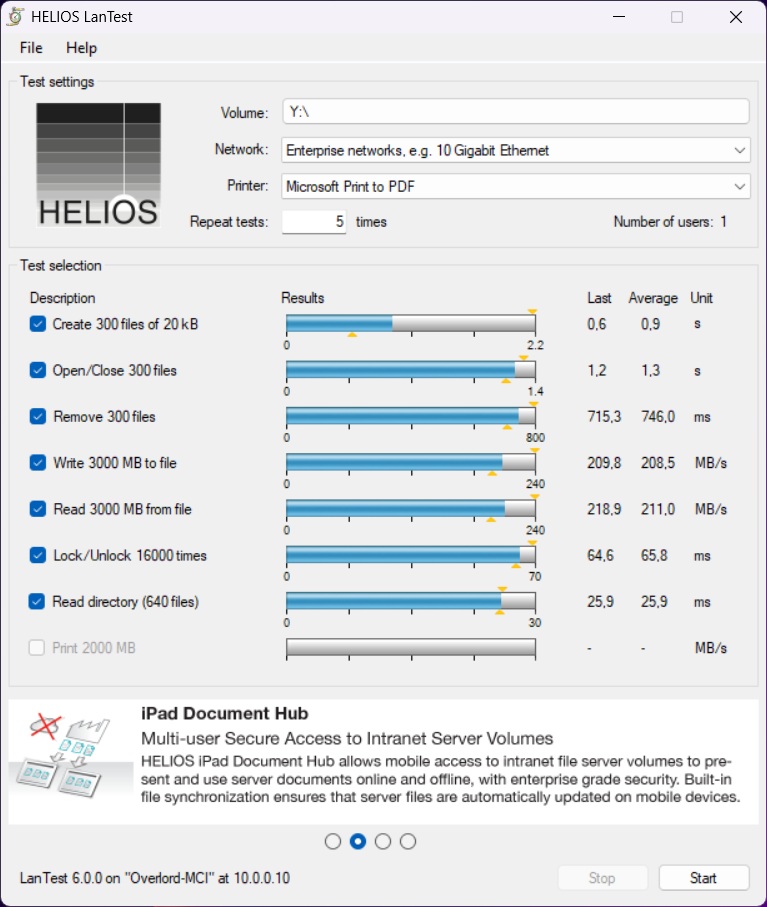
Helios RAID 0 2.5 Gbps
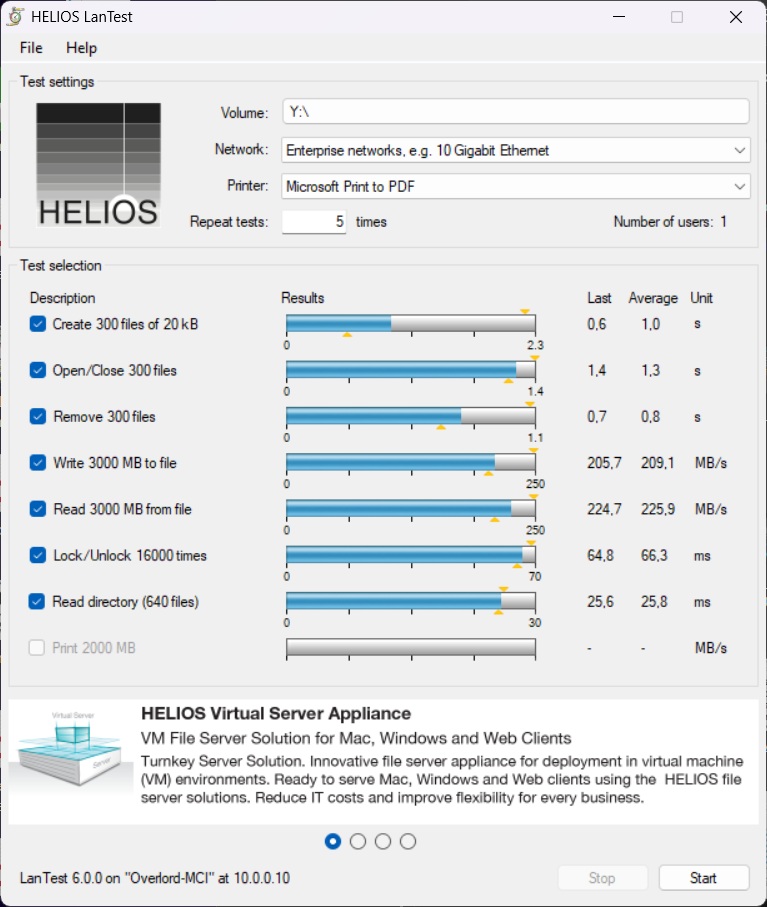
Helios RAID 0 2.5 Gbps SMB multichannel
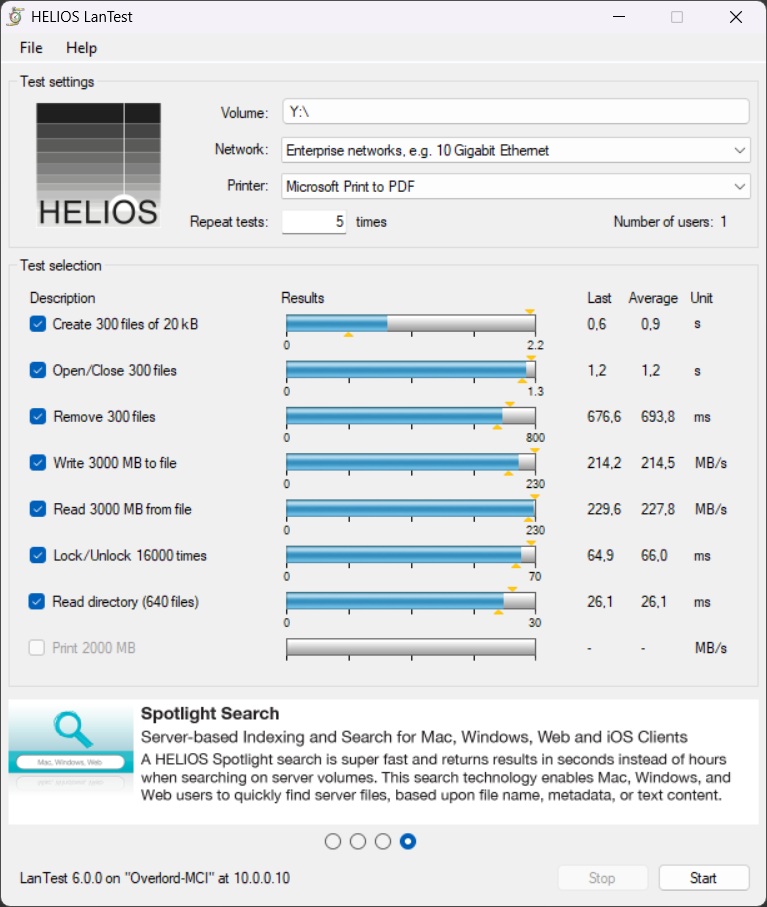
Helios RAID 0 2.5 Gbps SMB multichannel SSD Cache

Helios single SSD 2.5 Gbps
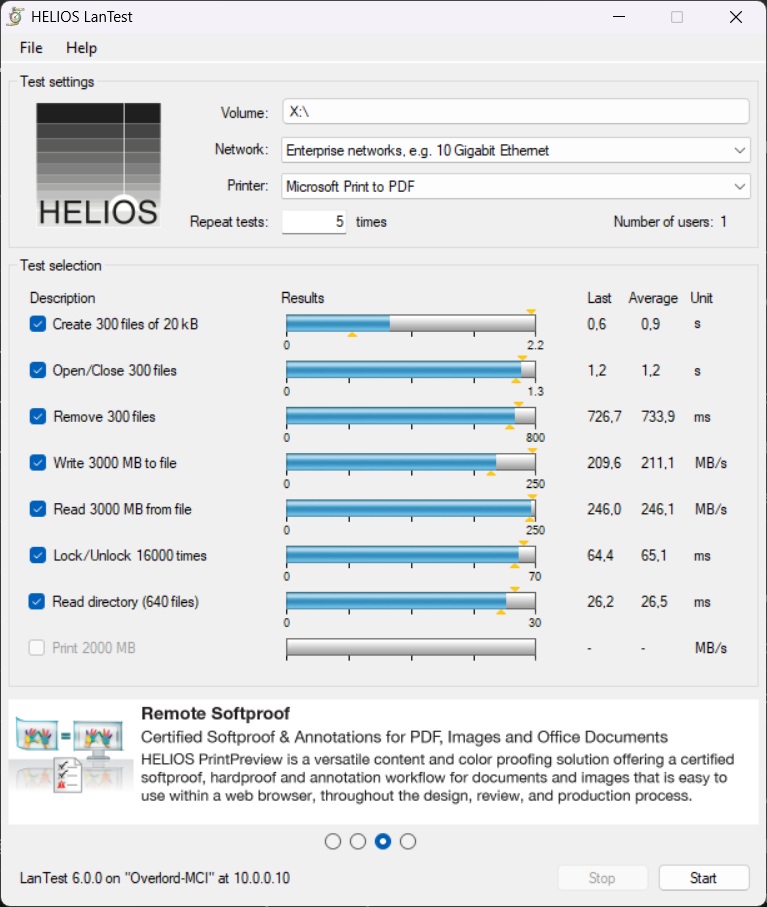
Helios single SSD 2.5 Gbps SMB multichannel
The fourth and final synthetic benchmark is Helios LanTest which runs seven different tests to measure both response time and raw throughput of a NAS. We ran the test fives times which produces an average of those five runs to eliminate potential outliers. Unfortunately we didn't see any benefit of SMB multichannel here at all and the overall performance lagged somewhat behind the TerraMaster F4-424, but not enough to make one or the other stand out as the obvious choice.
Nov 14th, 2026 22:15 CST
change timezone
Latest GPU Drivers
New Forum Posts
- Honestly, do you care about GTA VI? (21)
- WarpCoreBench scores! (40)
- What can the FX 8320 do today? Here is the answer. (47)
- Tell me about your favourite graphics card (82)
- Recommendations Wanted - Affordable Enterprise SSD for Boot (3)
- Planning for Prolonged High Prices and Maintaining What You Already Have (71)
- [INTEL]-How To Update Your Microcode for Intel HX 13/14th Gen. CPUs Laptops/Mobile Easily. (260)
- [Intel AX1xx/AX2xx/AX4xx/AX16xx/BE2xx/BE17xx] Intel Modded Wi-Fi Driver with Intel® Killer™ Features (632)
- Optical Disc Drive owners club (208)
- Game Soundtracks You Love (1287)
Popular Reviews
- AMD Zen 6 Technical Deep Dive
- ASUS ROG Strix B850-I Gaming Wi-Fi7 W Review
- Corsair HX1000i Shift Crystal Review
- Upcoming Hardware Launches 2027 (Updated Nov 2026)
- Montech King 95 3D PRO Review
- NZXT C1200 Platinum Review
- NZXT H7 RGB+ Review
- NZXT H5 Review
- Phantom Blade Zero Performance Benchmark Review - 35 GPUs Tested
- AMD Ryzen 7 9800X3D Review - The Best Gaming Processor
TPU on YouTube
Controversial News Posts
- NVIDIA Co-Founder and CEO Jensen Huang Officially Resigns (408)
- OpenAI CEO Argues Home PCs Waste the World's Limited DRAM Supply (152)
- NVIDIA Launches Investigation Into Jensen Huang's Relationship With Suspected Chinese Spy (136)
- Intel "Raptor Lake Next" 16-Core and 20-Core CPUs Surface (130)
- Legendary Game Studio BioWare Shuts Down Following EA Layoffs (104)
- Dell CEO Says the Memory Shortage Will Get Worse in 2027 (95)
- NVIDIA GeForce RTX 50-Series Scheduled for up to $500 Price Hike This Week (89)
- Modder Fits RTX 5090 With Four 8-Pin Connectors, Halving Current per Wire (80)