 2
Boulies OP180 Review
User Experience »Backrest
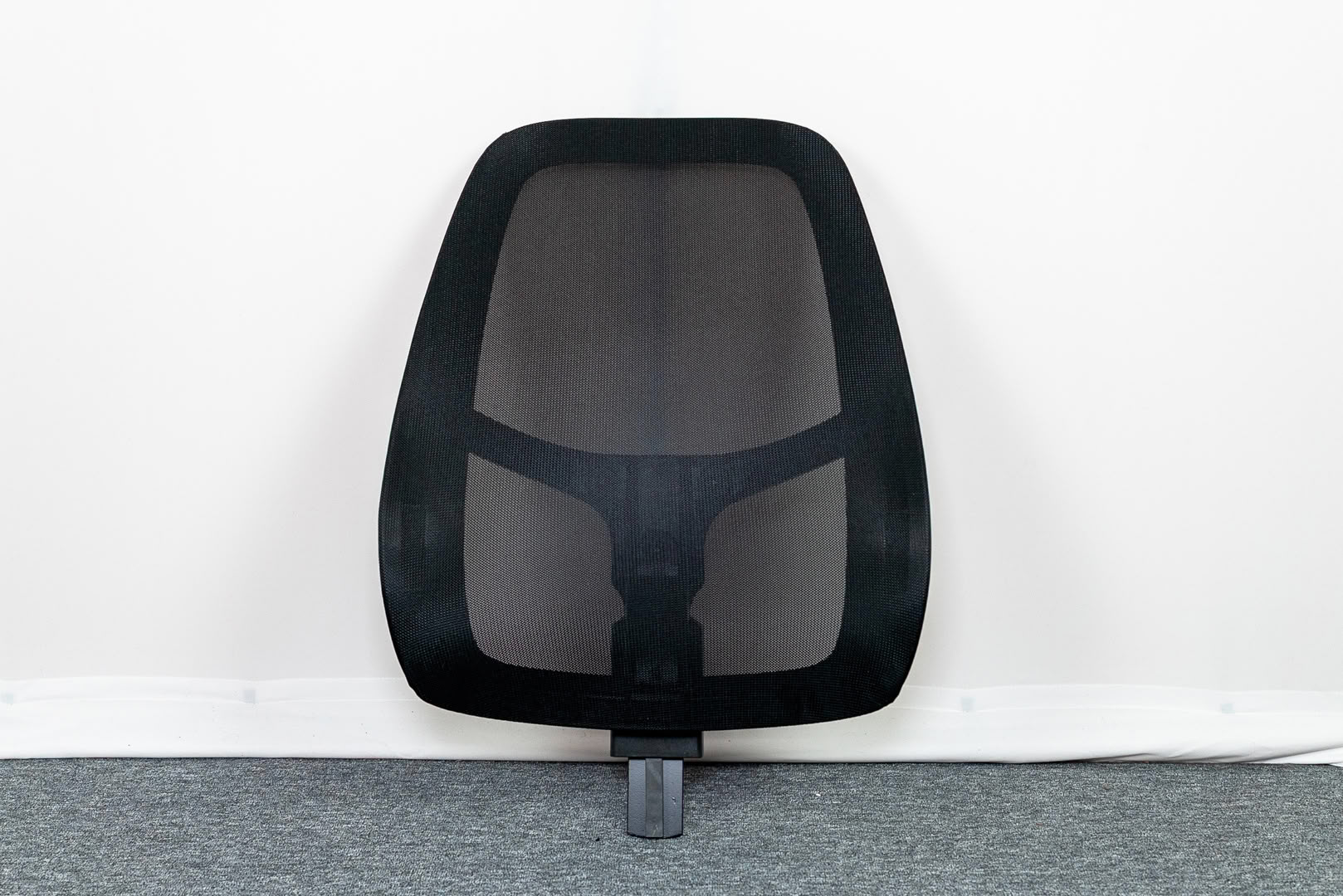
Now that we've gone through the assembly process and our first impressions, it's time to take a closer look at the individual components. Since this chair has a relatively simple design compared to many of the models I've tested, this section will be a little shorter than usual. Let's begin, as always, with the backrest.
The backrest consists of a plastic frame covered with mesh, making for a fairly straightforward construction. One interesting detail is that it attaches to the chair without the need for any tools, which simplifies the assembly process even further. From a design perspective, it incorporates a modest amount of built-in lumbar contouring, although that's really the only ergonomic feature you'll find here.
The backrest itself isn't particularly large, but for users with an average build it should provide adequate support. People with broader shoulders, however, may find it somewhat restrictive, as the upper section is relatively narrow. The mesh deserves praise for striking a good balance between softness and firmness. It has enough flexibility to remain comfortable during longer sessions without feeling overly loose or sagging.
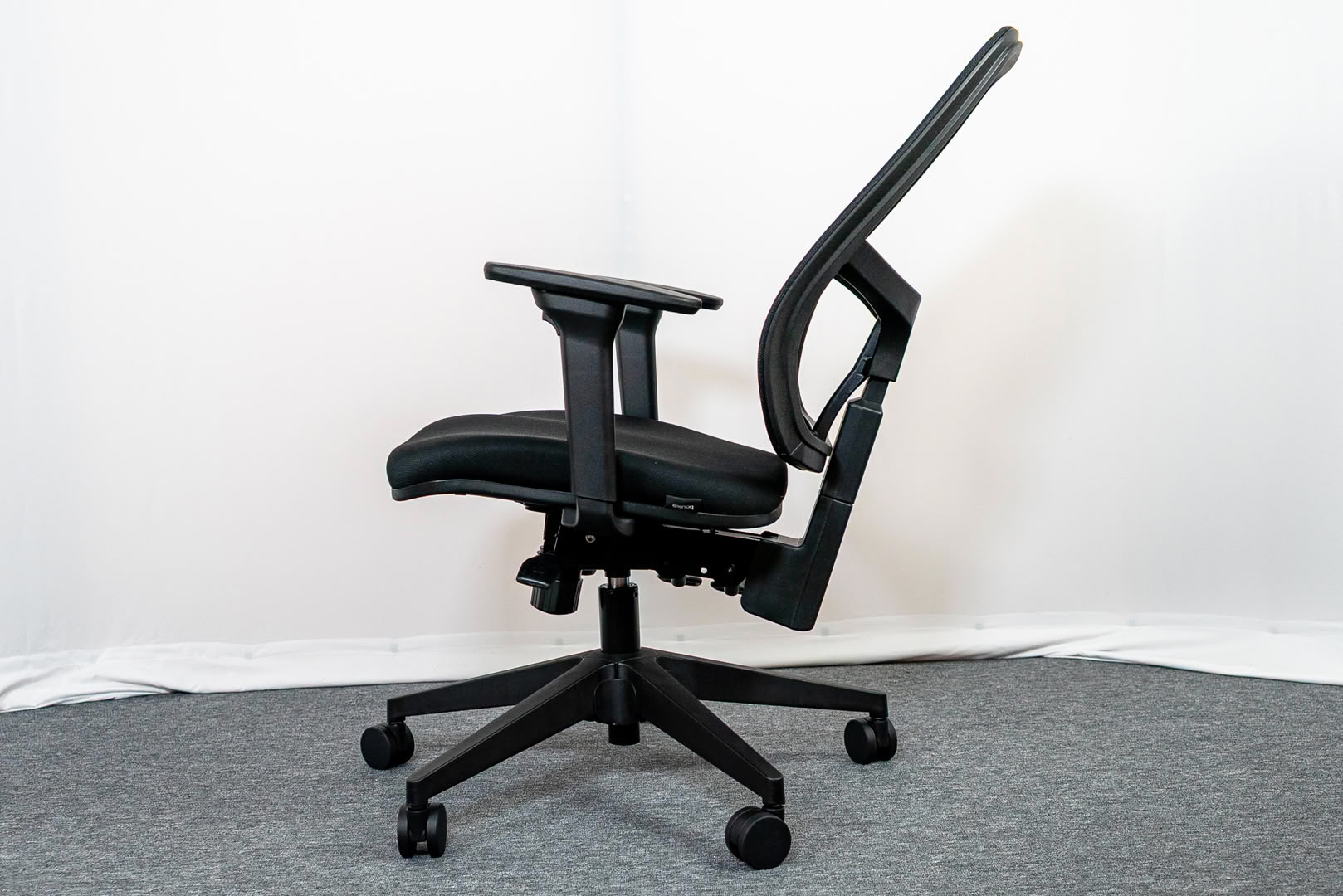
When it comes to adjustment, the chair offers a respectable range of options. Besides the standard reclining function and tilt mechanism, the backrest can also be adjusted vertically over a fairly generous range. This makes it much easier to tailor the chair to users of different heights, whether you're relatively short or closer to the manufacturer's maximum recommended height.
That said, I do wish the lumbar support had been more substantial. While the built-in contouring is present, it doesn't provide the level of lower back support you might expect from a modern ergonomic office chair. One final point worth mentioning is the overall fit and rigidity of the backrest. Although it functions properly, the connection to the rest of the chair isn't particularly tight, resulting in noticeable side-to-side wobble during use. It's not something that prevents the chair from doing its job, but it does leave the impression that the construction could have been a little more solid.
Seat
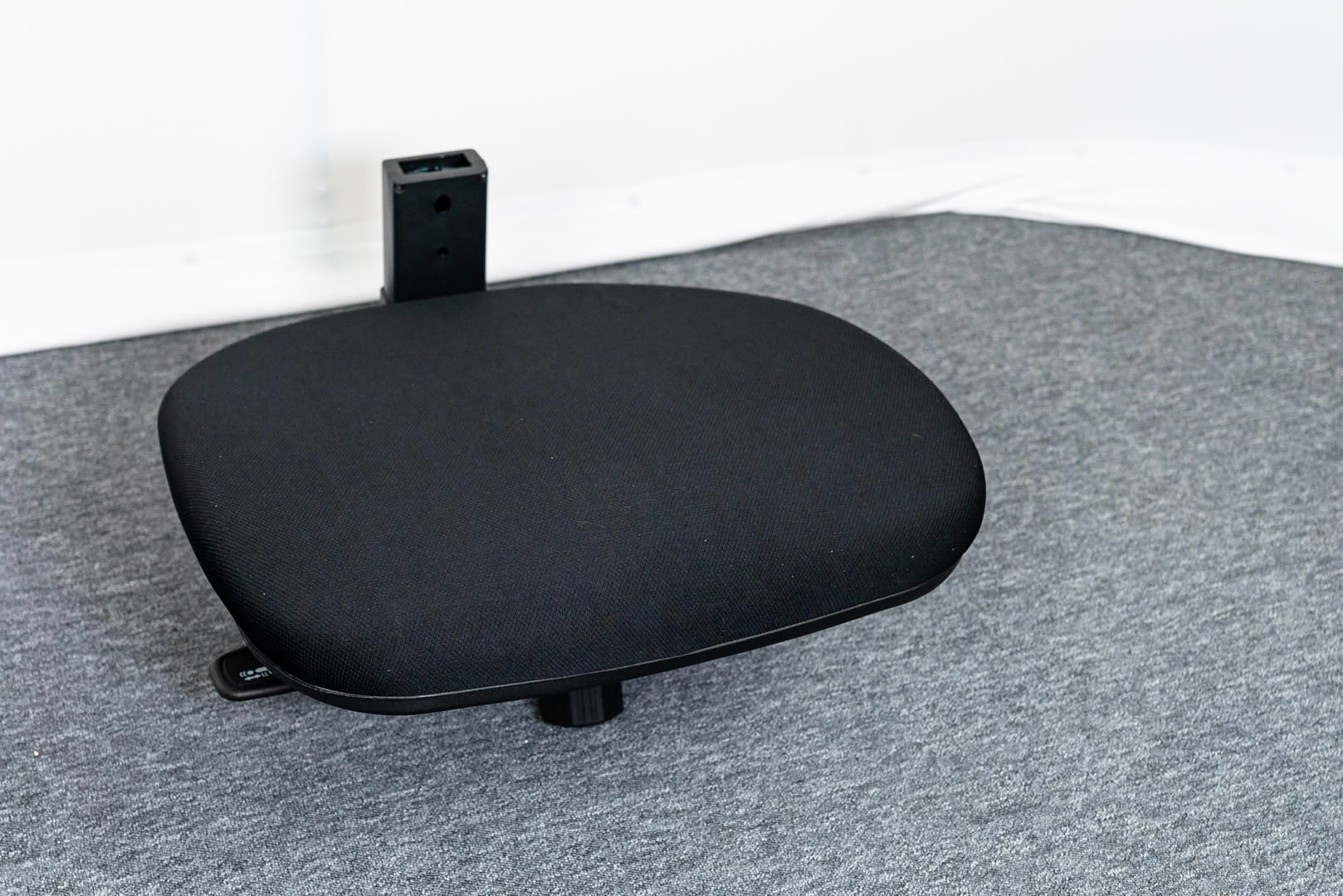
Moving on, we come to the seat, which, unlike the backrest, is upholstered with fabric rather than mesh. Structurally, the metal components are concentrated on the mounting points where the seat connects to the tilt mechanism, providing reinforcement where it's needed most. As for the padding, it's on the firmer side, although it comes reasonably close to striking a good balance between support and comfort.
One thing worth highlighting is its size. The seat is fairly spacious, offering plenty of room for most users without feeling cramped. It also provides a respectable range of adjustments. In addition to the standard height adjustment and tilt mechanism, you can slide the seat forward and backward to adjust its depth. The adjustment range spans from 455 to 500 mm (17.9–19.7 inches), making it easier to find a comfortable seating position regardless of your leg length.
Looking at the overall build quality, there isn't much to criticize. The upholstery is neatly finished, there are no sharp or poorly finished edges, and the materials feel pleasant enough for a chair in this price range. The fit and finish are also solid, with everything coming together as it should.
Armrests
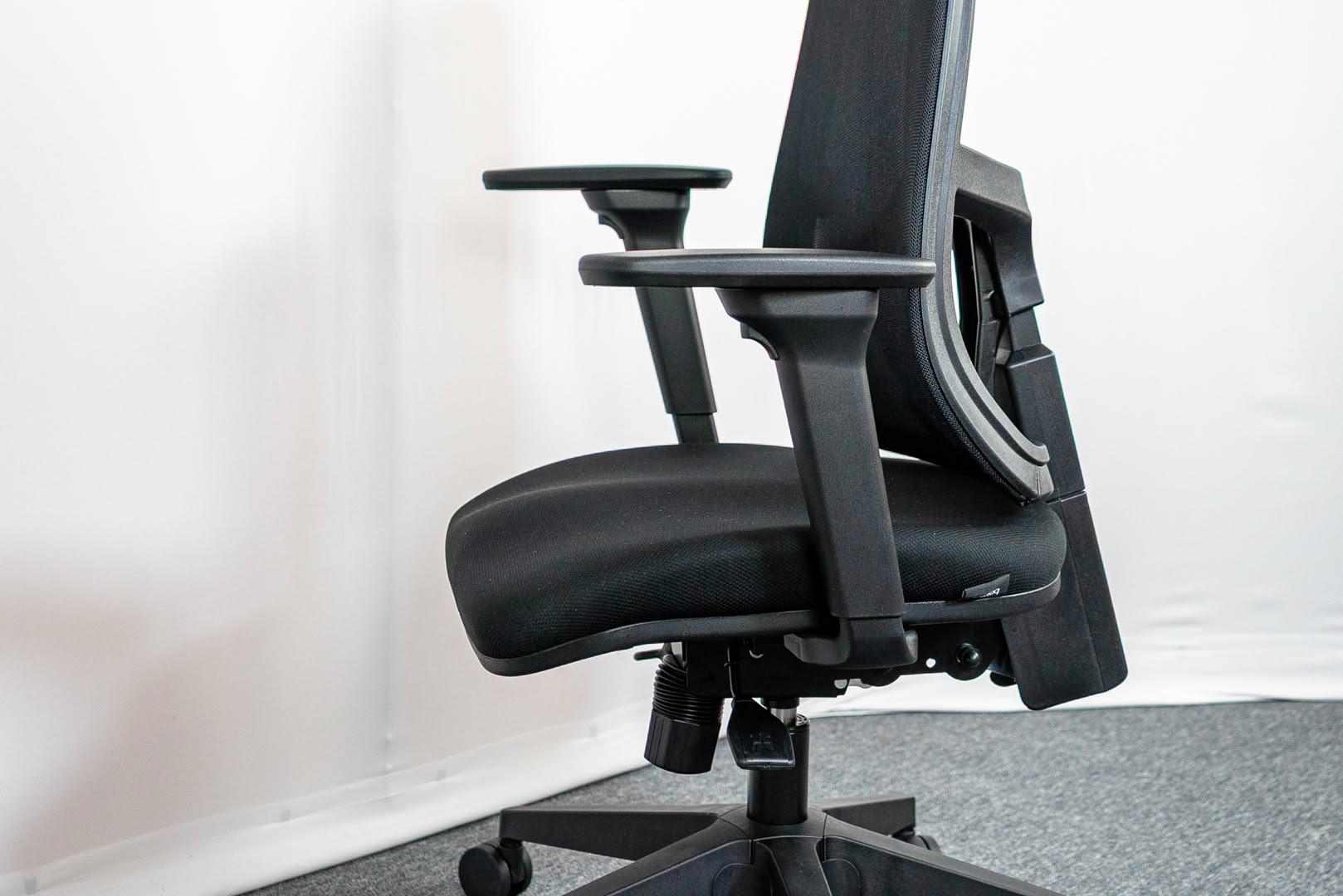
Next, let's talk about the armrests. Their construction combines plastic with faux leather upholstery and foam padding. If you're expecting particularly soft armrests, however, you may be disappointed. They're noticeably on the firm side, offering more support than cushioning during extended use. Build quality is generally good, although—as is often the case even with considerably more expensive chairs—there is a small amount of play in the adjustment mechanisms. Aside from that, the materials are perfectly acceptable, and the overall fit is satisfactory.
As for adjustability, the chair offers standard 3D armrests. You can move them up and down, slide them forward and backward, and rotate them inward or outward to better match your preferred sitting position. It's a practical range of adjustments that covers the essentials, even if it doesn't go beyond what you'd normally expect in this class of chair.
Base and Wheels
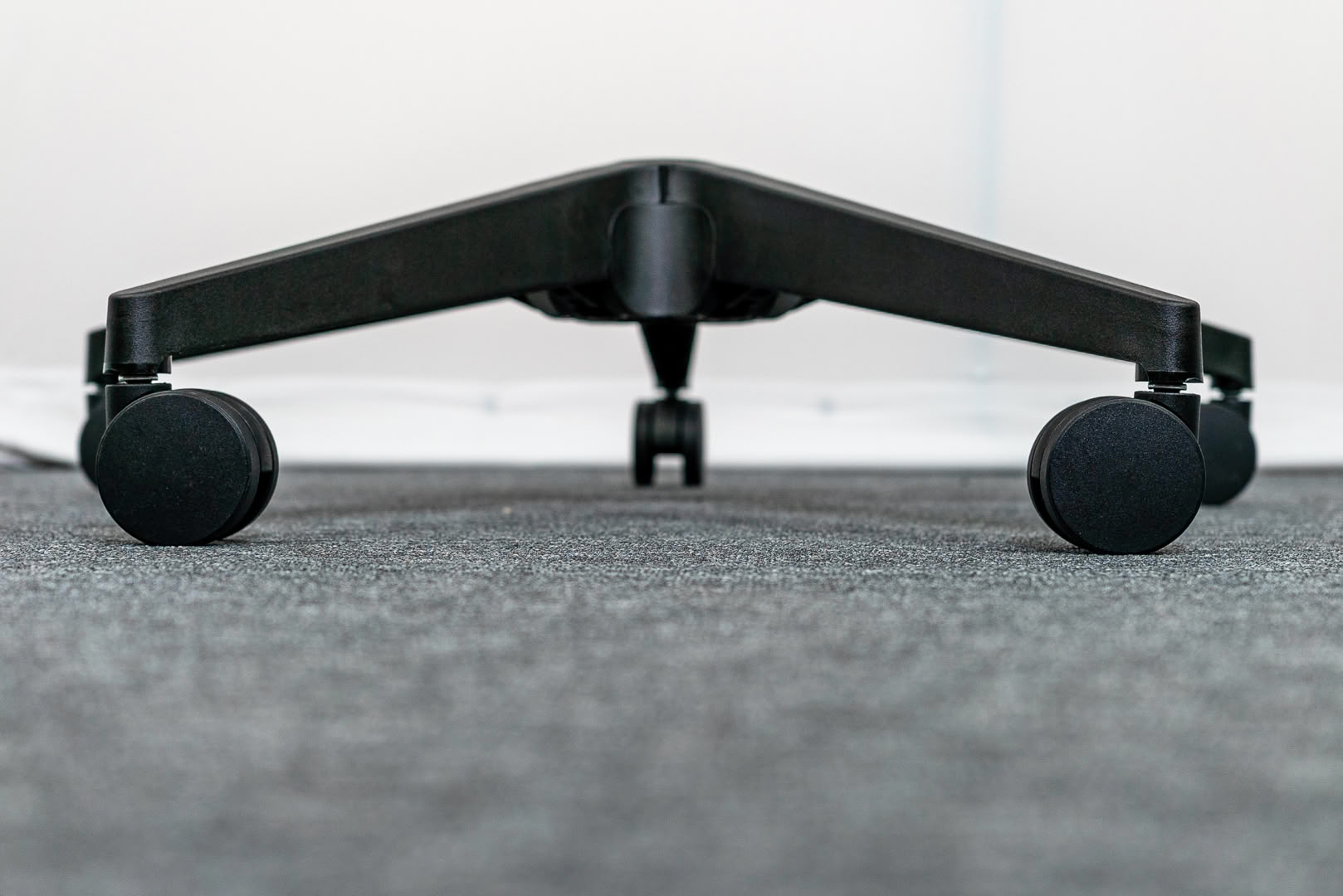
Since this model doesn't include a headrest, that leaves us with just the base and the casters to cover. Once again, plastic is the dominant material here. While that may not sound particularly impressive on paper, in practice it doesn't seem to compromise the chair's overall stability. The base feels sturdy enough for everyday use, everything fits together properly, and I didn't notice any obvious weak points during testing.
As for the casters, they actually left a fairly positive impression. The chair rolls smoothly across the floor without requiring much effort, making it easy to move around your workspace. They're not completely silent, however. When rolling, they produce a noticeable sound, although it's lower-pitched and more subdued than the sharper, higher-frequency noise some chair casters generate. As a result, it's much less distracting during everyday use. Another positive is that the chair remains well-balanced. The casters offer just enough rolling resistance to prevent it from moving unintentionally when you're sitting down or shifting your weight, while still allowing smooth movement whenever you actually want to reposition the chair. Overall, they perform exactly as you'd expect, with no major shortcomings worth pointing out.
Nov 14th, 2026 02:52 CST
change timezone
Latest GPU Drivers
New Forum Posts
- Ryzen 7 8700G OC (7)
- What are you playing? (26217)
- Post your Cinebench R23 Score (3172)
- Tell me about your favourite graphics card (38)
- AI generated images... (225)
- 3D Printer Club (850)
- Browser Bechmark scores (132)
- MSI RTX 4090 SUPRIM X: FBPA5 training failure; seeking signed 20 GB VBIOS with 0x20 mask (0)
- Requesting original VBIOS for Gigabyte RX 5700 XT GAMING OC 8G Rev 2.0 (Micron) (1)
- no "PhysX" workable (9)
Popular Reviews
- AMD Zen 6 Technical Deep Dive
- Corsair HX1000i Shift Crystal Review
- NZXT C1200 Platinum Review
- ASUS ROG Strix B850-I Gaming Wi-Fi7 W Review
- Upcoming Hardware Launches 2027 (Updated Nov 2026)
- Montech King 95 3D PRO Review
- NZXT H7 RGB+ Review
- NZXT H5 Review
- Phantom Blade Zero Performance Benchmark Review - 35 GPUs Tested
- XPG NIMBUS PLUS Review - Mid-range Chair With Strong Competitors
TPU on YouTube
Controversial News Posts
- NVIDIA Co-Founder and CEO Jensen Huang Officially Resigns (382)
- OpenAI CEO Argues Home PCs Waste the World's Limited DRAM Supply (152)
- NVIDIA Launches Investigation Into Jensen Huang's Relationship With Suspected Chinese Spy (136)
- Intel "Raptor Lake Next" 16-Core and 20-Core CPUs Surface (130)
- Legendary Game Studio BioWare Shuts Down Following EA Layoffs (104)
- Dell CEO Says the Memory Shortage Will Get Worse in 2027 (95)
- NVIDIA GeForce RTX 50-Series Scheduled for up to $500 Price Hike This Week (89)
- Modder Fits RTX 5090 With Four 8-Pin Connectors, Halving Current per Wire (80)