 26
Corsair MP700 Pro XT 2 TB Review
Power Consumption & Efficiency »pSLC Cache / Write Intensive Usage
When copying games from your Steam Library, or other very large files (>10 GB), you may notice that write speeds on your SSD start at full speed, before dropping considerably. The underlying reason is that modern drives have small, fast caches, that soak up write bursts to improve performance. In the fairly uncommon scenario of writing data that's too big to fit into these caches, the drive will have to write data directly to flash, and it will probably juggle some out of its write cache at the same time, which can result in a significant loss of write speed. Newer TLC / QLC drives use part of their capacity in SLC mode for increased performance. This test can reveal the size of that pseudo-SLC cache.The testing methodology used on this page simulates such a scenario. We write a sequential stream of 1 MB blocks to the drive in a single thread, like a typical file-copy operation would do, and measure write speeds twice a second. Please note that some other publications test this at higher queue depth, which will yield bigger numbers, that are less relevant to real-world scenarios. The drive is fully erased before testing, to ensure any caches are emptied. This test generates a heavy write load with lots of data, something that most people don't do regularly—typical consumer workloads involve shorter bursts of write activity.
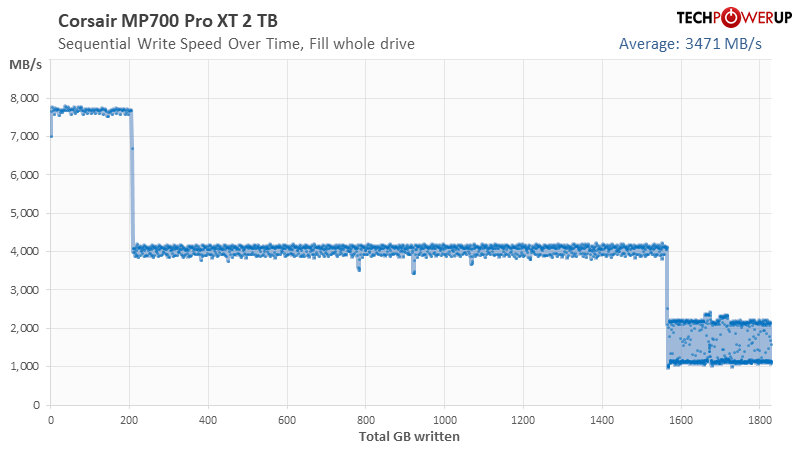
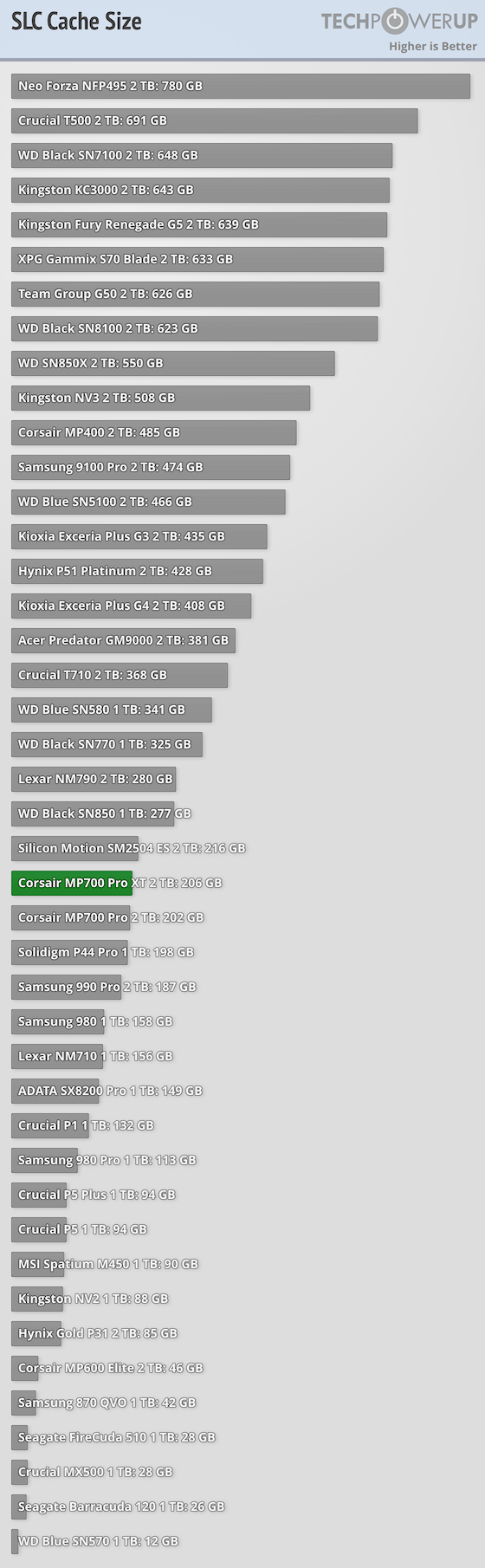
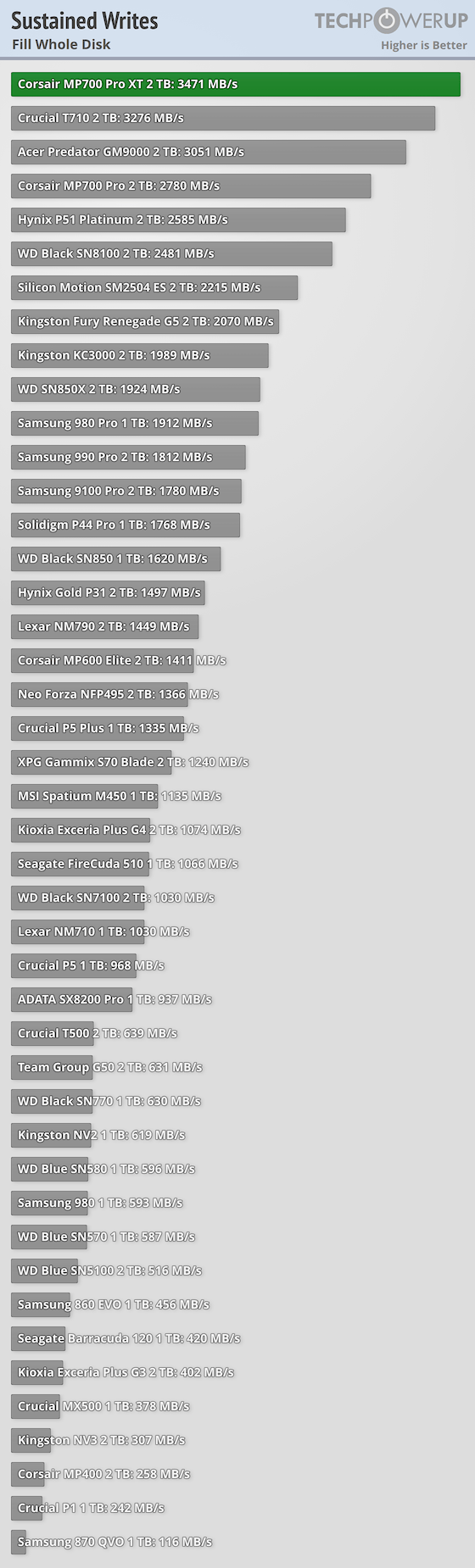
Write speed starts out at almost 8 GB/s, which is very impressive for single-threaded write speeds. This rate is sustained until 206 GB have been written, which means the drive will fill 31% of its capacity in SLC mode first, where each bit consumes three actual bits of storage. Once the SLC cache is full, write speeds still reach 4 GB/s—wow! This is faster than virtually all drives on the market. Once more than 1.6 TB have been written, write rates drop further, to around 1-2 GB/s—still plenty fast. Filling the whole capacity completes at 3.5 GB/s on average, which is one of the best results we've ever seen in this test!
As soon as the incoming stream of data stops, even for a few seconds, write speeds will be restored to full, because the SLC caching process has had some time to free up capacity in the background.
Nov 16th, 2026 07:16 CST
change timezone
Latest GPU Drivers
New Forum Posts
- The Official Linux/Unix Desktop Screenshots Megathread (915)
- GPU Temperatures Rise Very Quickly in FurMark – Is This Normal? (17)
- Can you guess Which game it is? (327)
- no OpenGL showing support when... (11)
- Without Jensen, PC gaming will be (2)
- The Official Thermal Interface Material thread (2302)
- no "PhysX" workable (15)
- Asus Maximus hero z890 latest Bios 3410 (0)
- What can the FX 8320 do today? Here is the answer. (63)
- Advice for my PC upgrade (6)
Popular Reviews
- ASUS ROG Strix B850-I Gaming Wi-Fi7 W Review
- Corsair HX1000i Shift Crystal Review
- AMD Zen 6 Technical Deep Dive
- Upcoming Hardware Launches 2027 (Updated Nov 2026)
- Montech King 95 3D PRO Review
- NZXT C1200 Platinum Review
- Phantom Blade Zero Performance Benchmark Review - 35 GPUs Tested
- AMD Ryzen 7 9800X3D Review - The Best Gaming Processor
- NZXT H7 RGB+ Review
- NZXT H5 Review
TPU on YouTube
Controversial News Posts
- NVIDIA Co-Founder and CEO Jensen Huang Officially Resigns (431)
- Open Letter Asking NVIDIA to Reinstate Jensen Huang Passes 115,000 Signatures (184)
- OpenAI CEO Argues Home PCs Waste the World's Limited DRAM Supply (152)
- NVIDIA Launches Investigation Into Jensen Huang's Relationship With Suspected Chinese Spy (136)
- Intel "Raptor Lake Next" 16-Core and 20-Core CPUs Surface (130)
- Legendary Game Studio BioWare Shuts Down Following EA Layoffs (104)
- Dell CEO Says the Memory Shortage Will Get Worse in 2027 (95)
- NVIDIA GeForce RTX 50-Series Scheduled for up to $500 Price Hike This Week (89)