 11
Cougar Polar 1200 W Review - Great Performance!
Performance Rating: Stability, Noise, Efficiency & PF »Protection Features Evaluation
| Protection Features | |
|---|---|
| OCP | +12 V: 145.6 A (145.6%), 12.032 V +5 V: 28.1 A (140.5%), 5.077 V +3.3 V: 28.1 A (140.5%), 3.252 V 5VSB: 7.2 A (240%), 4.971 V |
| OPP | 1752.02 W (146%) |
| OTP | Yes (170°C @ +12 V heat sink) |
| SCP | +12 V: Yes +5 V: Yes +3.3 V: Yes 5VSB: Yes -12 V: Yes |
| PWR_OK | Operating properly |
| NLO | Yes |
| SIP | Surge: MOV Inrush: NTC & bypass relay |
OCP at +12 V and OPP are set relatively high, but I didn't notice load regulation or ripple problems. The minor rails have triggering points close to 140%. It would be better if the 3.3 V rail triggering point would be 130% since it is only lightly used. Finally, the 5VSB rail is very strong, exceeding 7.2 A. I would feel better with a lower set OCP there.
DC Power Sequencing
According to Intel's most recent Power Supply Design Guide (revision 1.4), the +12 V and +5 V rails must have voltages equal to or greater than the +3.3 V rail's output at all times. We turn the unit off for our first measurement and switch it back on without a load on any of the rails.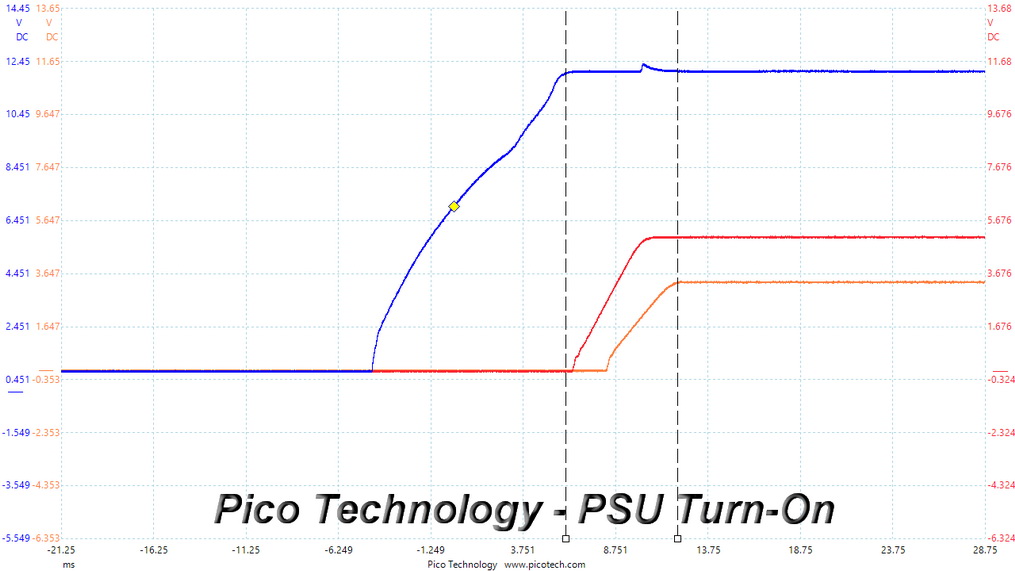
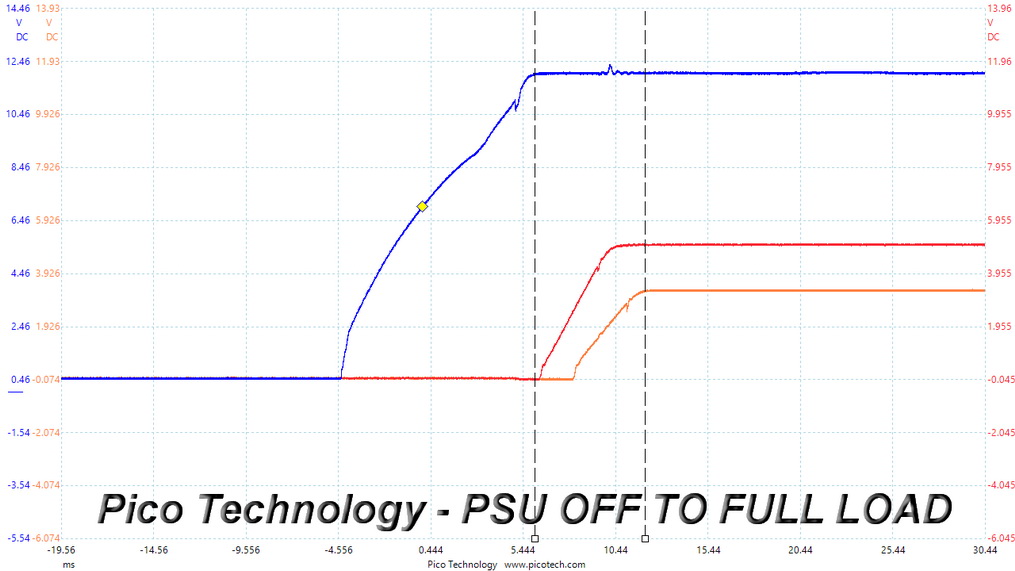
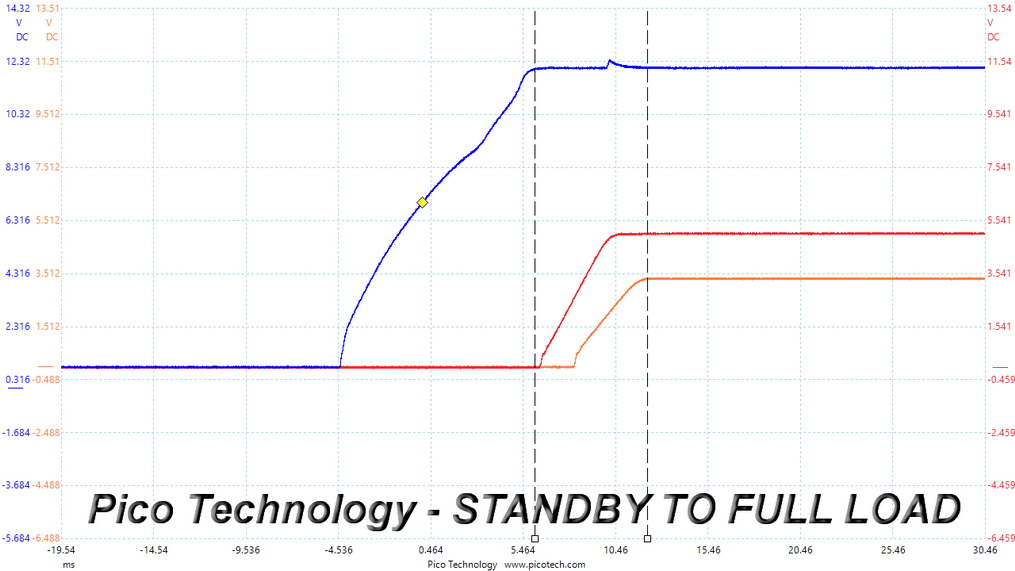
The 3.3 V rail is always lower than the other two rails.
EMC Pre-Compliance Testing - Average and Peak EMI Detector Results
Electromagnetic Compatibility (EMC) is the ability of a device to operate properly in its environment without disrupting the proper operation of other close-by devices.Electromagnetic Interference (EMI) stands for the electromagnetic energy a device emits, and it can cause problems in other close-by devices if too high.
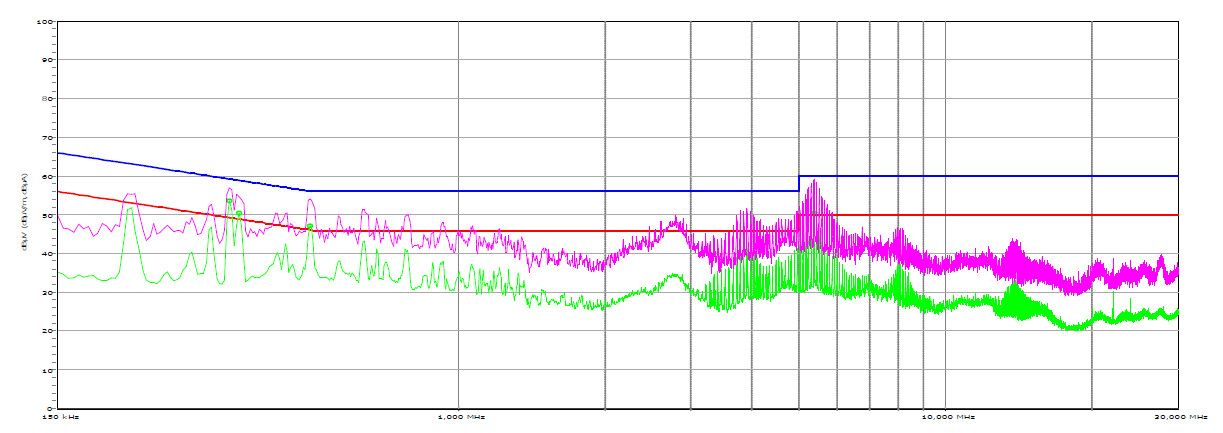
Three spurs go over the limits with the average EMI detector, but everything is fine with the peak EMI detector.
Nov 13th, 2026 23:30 CST
change timezone
Latest GPU Drivers
New Forum Posts
- no "PhysX" workable (9)
- What are you playing? (26215)
- Tell me about your favourite graphics card (32)
- AI generated images... (224)
- Crimson Desert (31)
- RenoDX HDR - how to view the differnce Before&After in game? (0)
- Displayport DP80 3M (10ft) cable that can achieve 80gbps stable? (5)
- I'll flash a ASUS ROG Strix RX480 O8G in Cause of Code 43, as a Newbie (1)
- Opinion on Monitor Replacement (6)
- TMOG - post your benchmark results here (16)
Popular Reviews
- AMD Zen 6 Technical Deep Dive
- Corsair HX1000i Shift Crystal Review
- NZXT C1200 Platinum Review
- Upcoming Hardware Launches 2027 (Updated Nov 2026)
- ASUS ROG Strix B850-I Gaming Wi-Fi7 W Review
- Montech King 95 3D PRO Review
- NZXT H7 RGB+ Review
- NZXT H5 Review
- Phantom Blade Zero Performance Benchmark Review - 35 GPUs Tested
- XPG NIMBUS PLUS Review - Mid-range Chair With Strong Competitors
TPU on YouTube
Controversial News Posts
- NVIDIA Co-Founder and CEO Jensen Huang Officially Resigns (380)
- OpenAI CEO Argues Home PCs Waste the World's Limited DRAM Supply (152)
- NVIDIA Launches Investigation Into Jensen Huang's Relationship With Suspected Chinese Spy (136)
- Intel "Raptor Lake Next" 16-Core and 20-Core CPUs Surface (130)
- Legendary Game Studio BioWare Shuts Down Following EA Layoffs (104)
- Dell CEO Says the Memory Shortage Will Get Worse in 2027 (95)
- NVIDIA GeForce RTX 50-Series Scheduled for up to $500 Price Hike This Week (89)
- Modder Fits RTX 5090 With Four 8-Pin Connectors, Halving Current per Wire (80)