 7
Formula V Line Crystal Z8 Floe Review
A Closer Look - Inside »A Closer Look - Outside
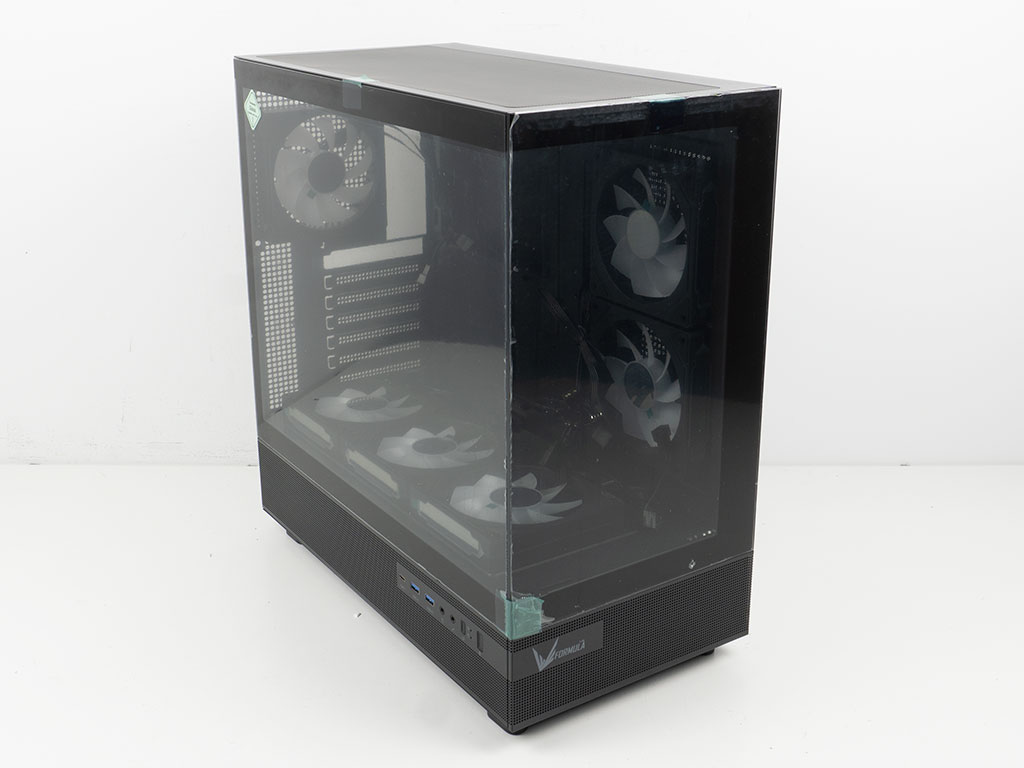
On the exterior the case sports clean, straight lines with the glass not extending all the way to the bottom edge of the chassis. Instead, there is a vented metal band to complete the looks which also acts as the interior shroud. We have seen a similar case before, so it is apparent that the Formula V Line Crystal Z8 Floe likely has the same factory origins as other cases out there.
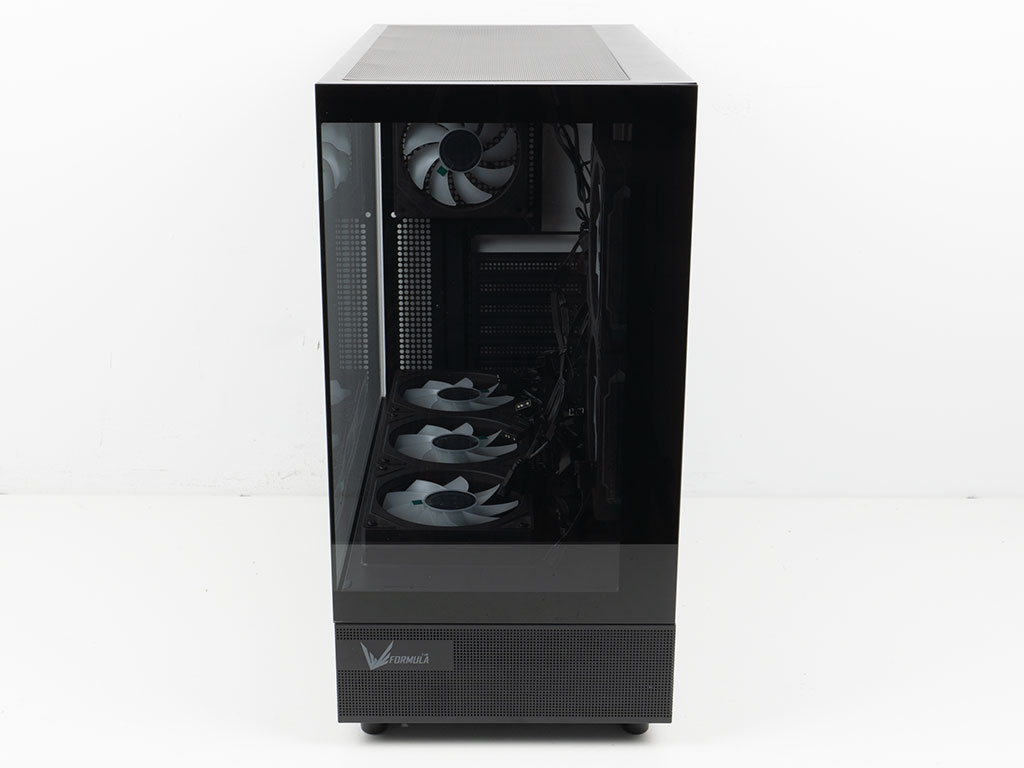
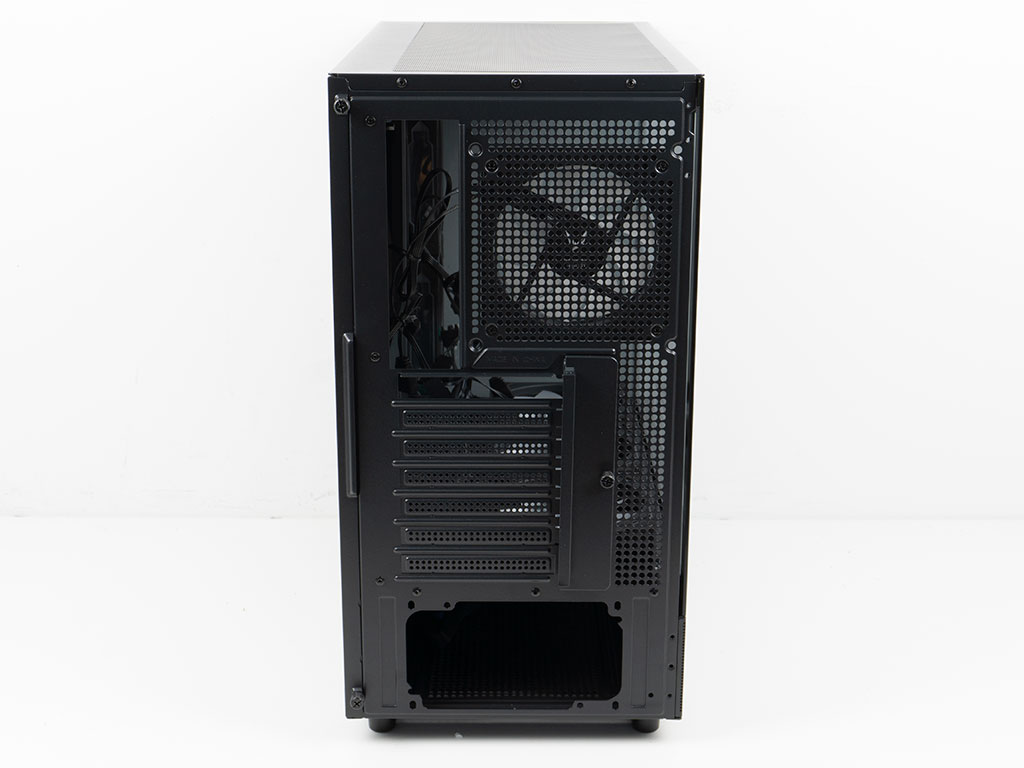
The front glass is framed in black on three sides with the corner transitioning nicely into the side glass to make it all look like one big window. You may pull this panel off with a light tug as it is held in place by push pins. If you look closely you will notice that these panels have a bit of a tint to them as well. Looking at the back, the Crystal Z8 Floe provides the modern layout we have come to expect from mid-towers these days.
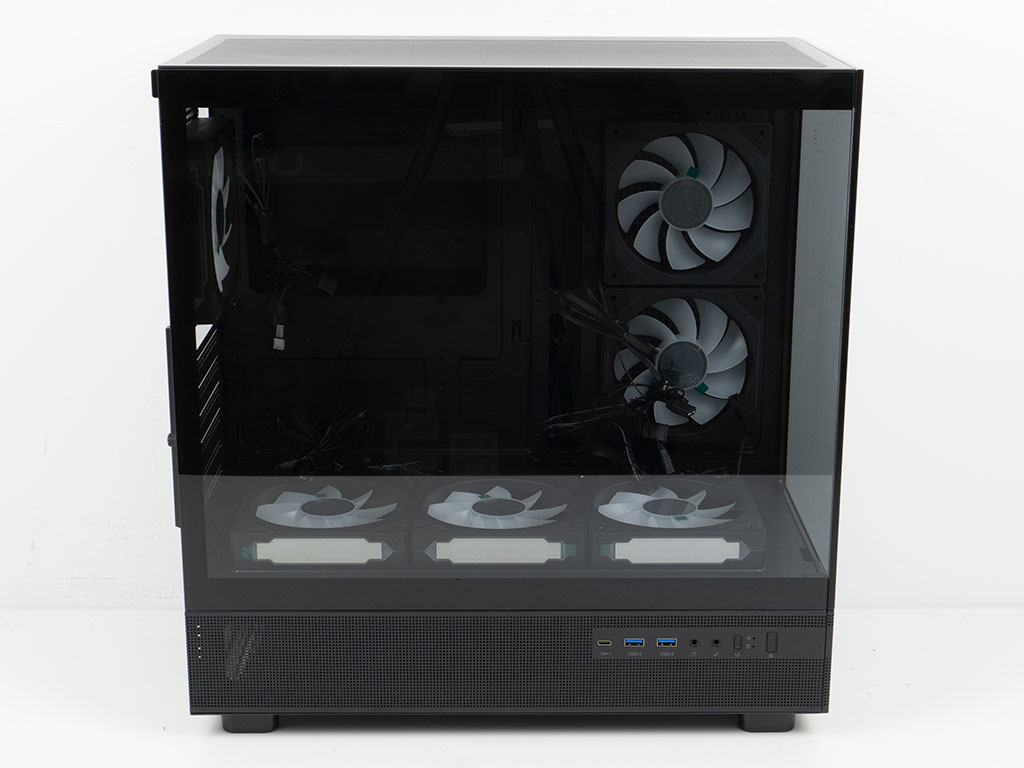
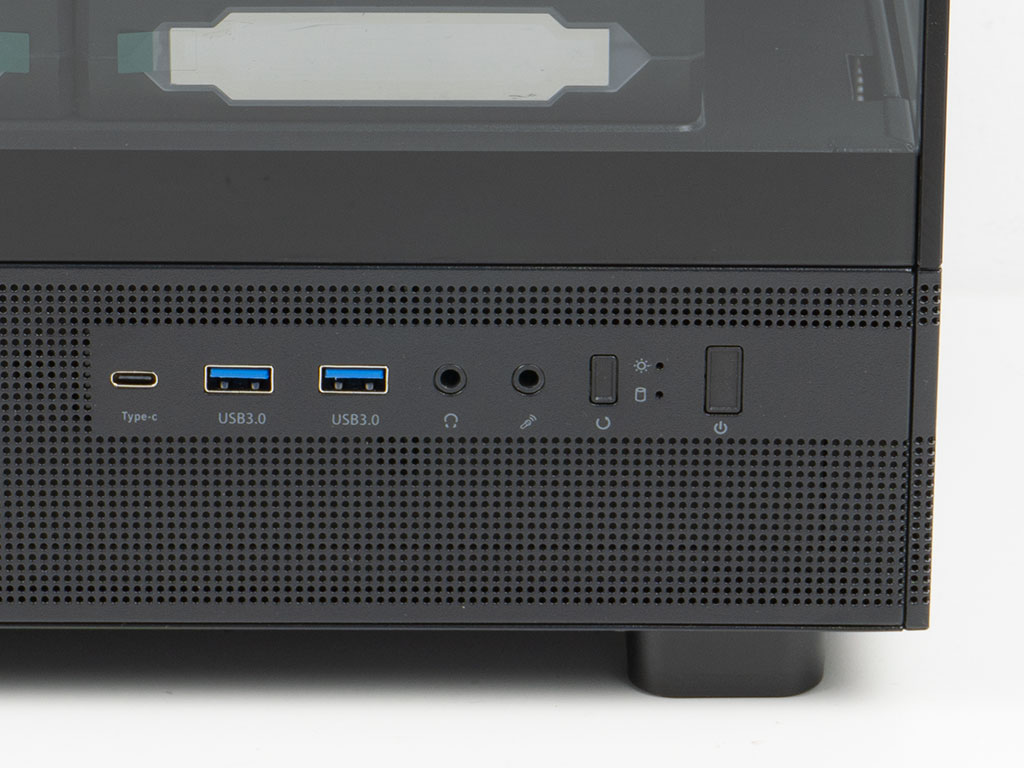
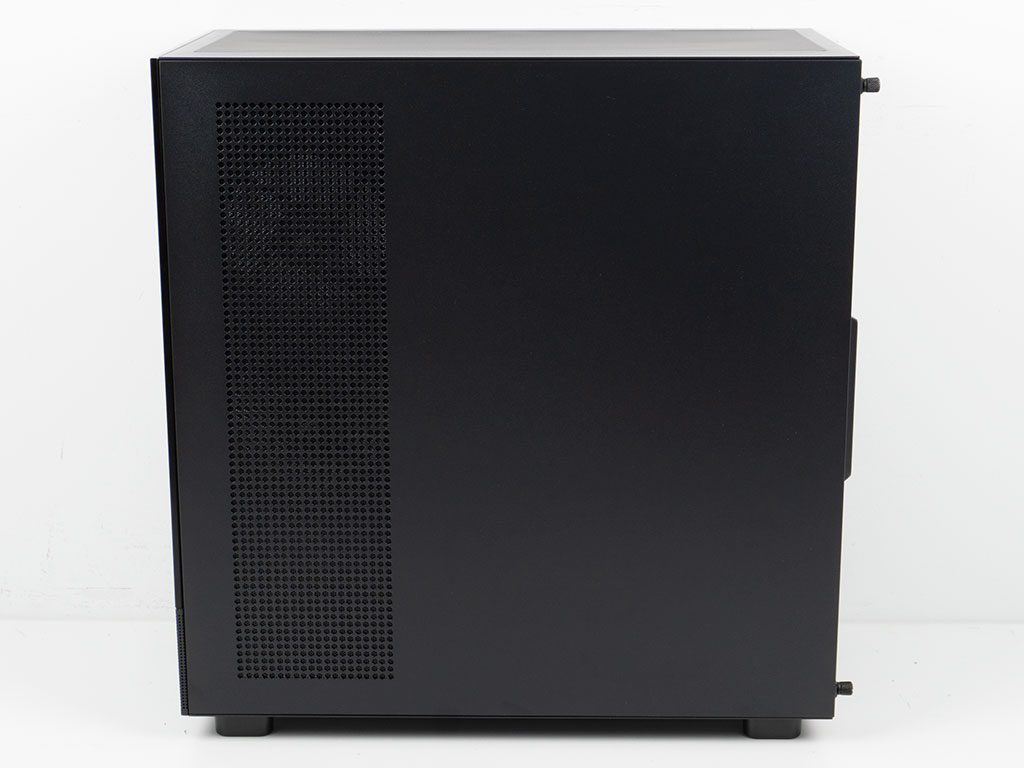
Looking at the main side, there is that second glass panel which is also held in place by push pins. Underneath of it is a metal mesh segment which is meant to provide access to some fresh air, in case you install fans on top of the shroud. Here, you will also find a fully equipped I/O panel, with one USB-C and a pair of USB-A ports. These are blue, which is a bit unfortunate as black would have simply looked nicer. On the other side, the metal panel sports a vent which comes equipped with a magnetic dust filter on the inside. Interestingly enough, that vent extends all the way to the floor of the case, even though there is no way to install a fan here. That said, any 3.5" drive in this part of the case may benefit slightly from this in a passive fashion. Unlike the glass side, this panel is held in place by two thumb screws.
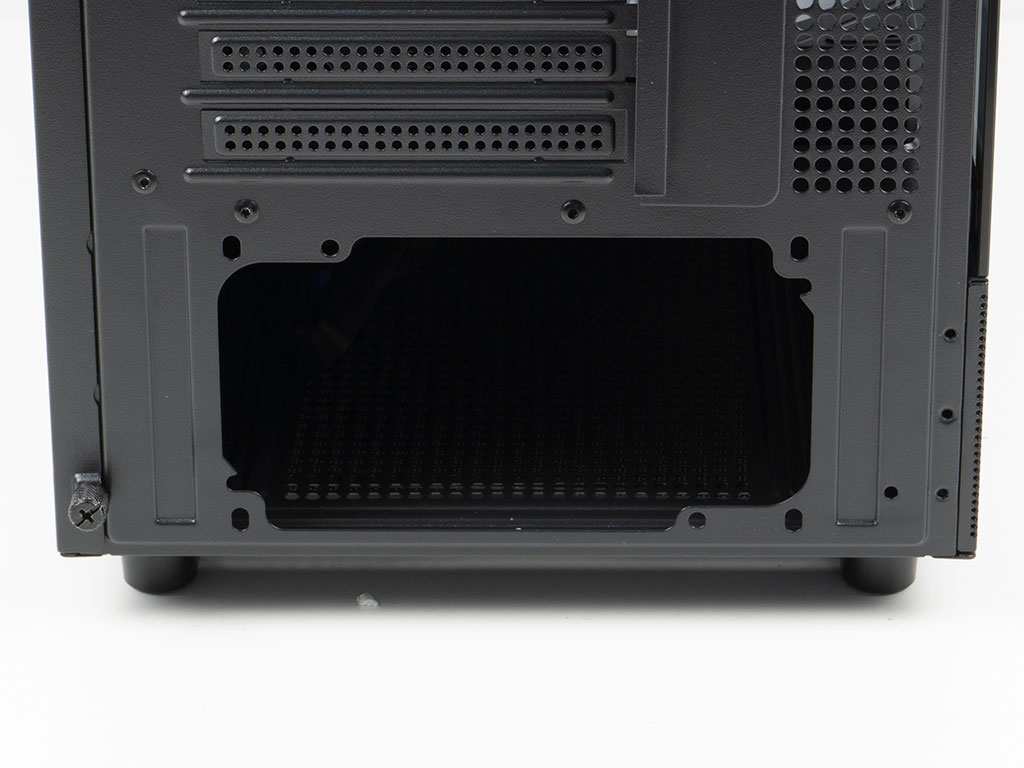
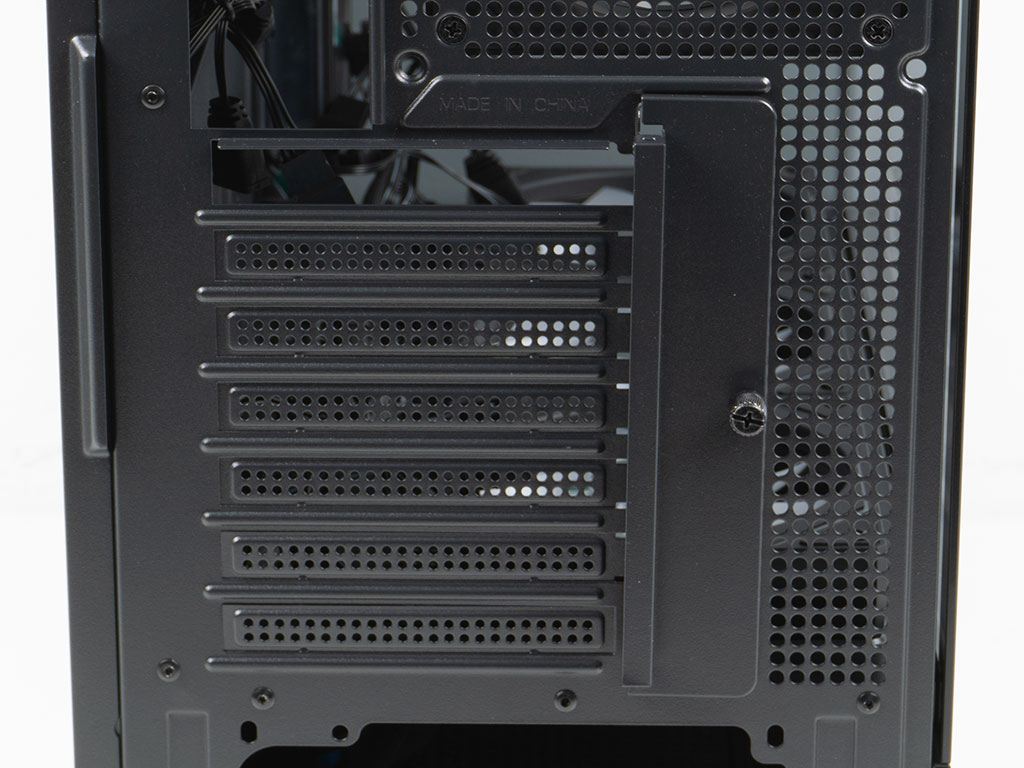
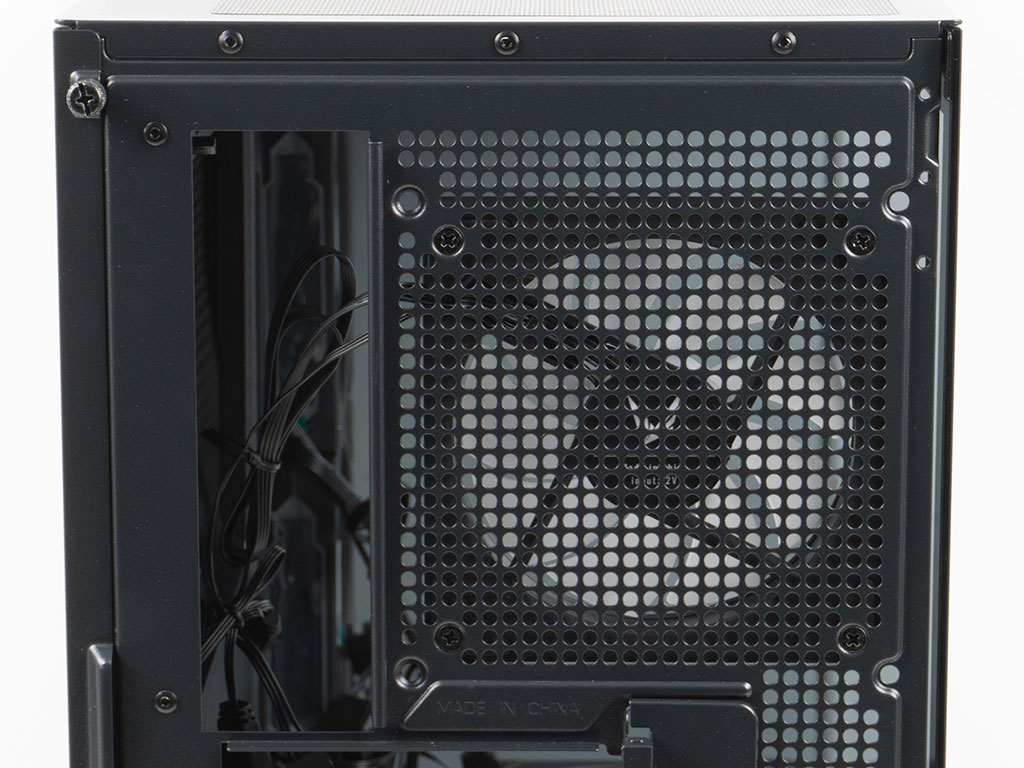
In the rear, the PSU bay comes with two sets of mounting holes, so you can have your PSU installed in either direction. Above that are the seven expansion slots, with a basic cover to close the hole that is created during tooling. Unfortunately the Crystal Z8 Floe goes for the absolute bare minimum in terms of expansion slots, with the bottom six bays closed by break-out covers. The very top is even left completely open, which dates back to the time when ATX boards had their main AGP or PCIe slot in the very first position. Thus, some case brands opted to save a few cents and just leave that uncovered, expecting a GPU to be installed. Nowadays, the majority of boards have their PCIe slot at the second from the top, so you will have to live with a that hole unless you invest in sourcing your own covers.
In the very top, there is a 120 mm ARGB equipped fan, set to push air out the back of the chassis. You may also install a 140 mm unit here instead. Formula V Line does not list this placement opportunity for radiators, but you clearly have room to opt for a 120 mm unit here. There is little room above the fan, so you will likely have to plan the assembly order properly so that you don't block access to the motherboard headers if going for liquid cooling in the ceiling.
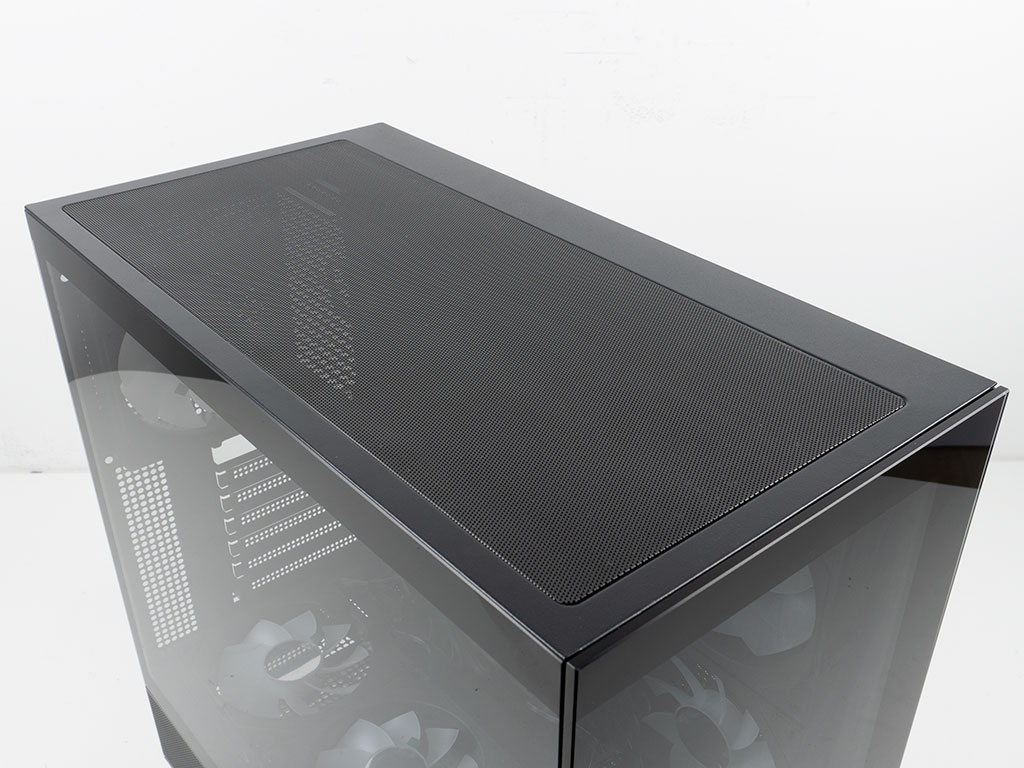
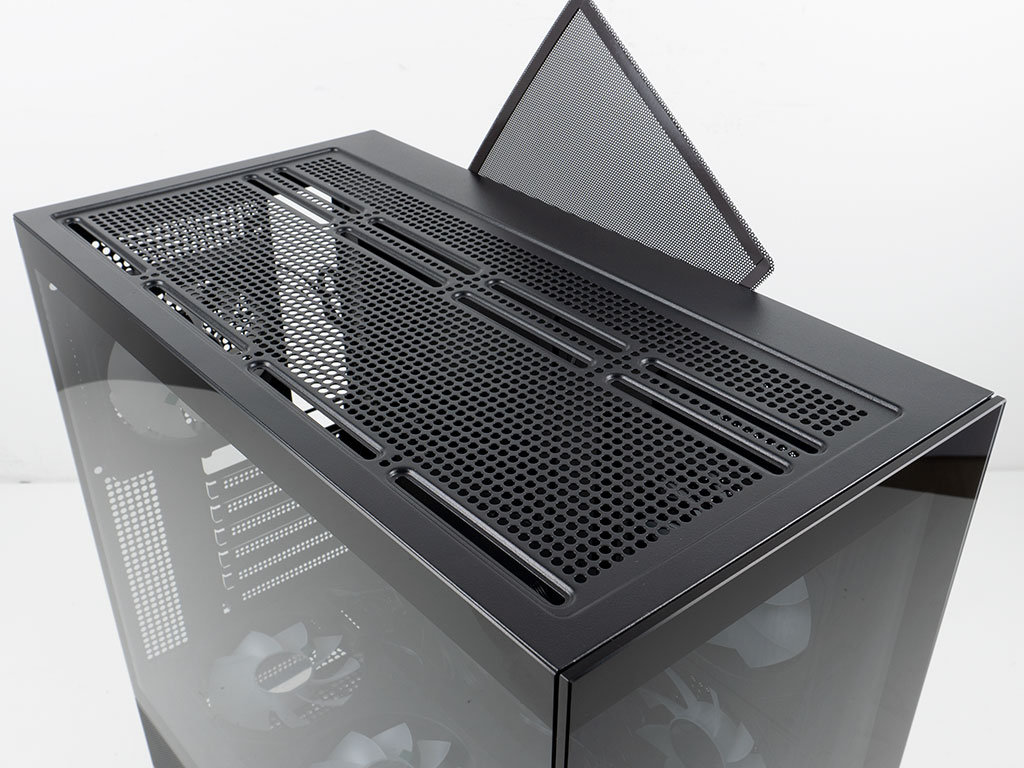
As the I/O is located in the side, Formula V Line is able to keep this case slimmer as well as provide a larger vented area on the top cover. A magnetic dust filter covers the cutouts which can hold either two 140 mm fans or three 120 mm units. For those wanting to use liquid cooling, the space will fit a 120, 240 or 360 mm AIO. Due to the compact dimensions of the case, you will not be able to fit a 280 mm variant here.
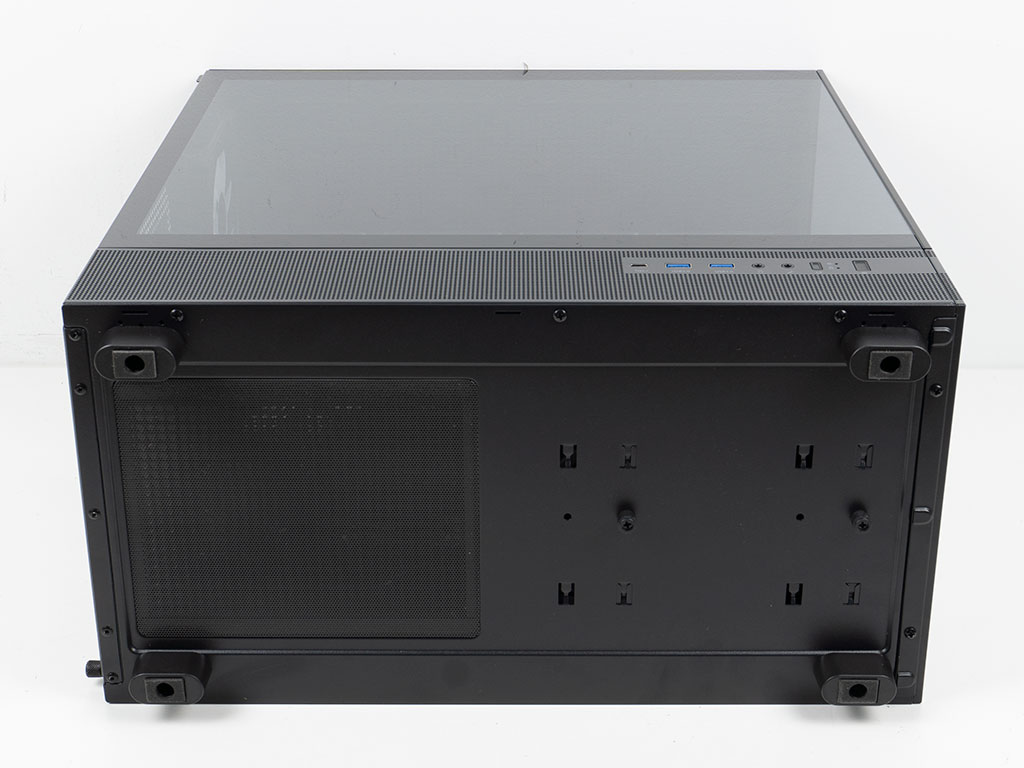
On the bottom, you will find another magnetic mesh dust filter for the PSU bay. While this is functional, in reality that filter will fall off more often than not. A simple pull-out variant would have been the better option here.
Nov 13th, 2026 07:44 PST
change timezone
Latest GPU Drivers
New Forum Posts
- Dual B70 or Dual R9700 Pro on Linux (0)
- To AiO CPU Cooler users? (6)
- Microsoft Exchange/365 outages? (40)
- I won't download games that are larger than 30–40 GB. (107)
- Slow SSD read speeds - help! (2)
- Any other old-timers here planning to play WoW Forever? (150)
- Requesting original VBIOS for Gigabyte RX 5700 XT GAMING OC 8G Rev 2.0 (Micron) (0)
- Home page search by category (6)
- Windows 11 General Discussion (7727)
- Warning for Windows 10 and 11 users running newer AMD GPU drivers (58)
Popular Reviews
- AMD Zen 6 Technical Deep Dive
- Corsair HX1000i Shift Crystal Review
- NZXT C1200 Platinum Review
- Upcoming Hardware Launches 2027 (Updated Nov 2026)
- Montech King 95 3D PRO Review
- NZXT H7 RGB+ Review
- NZXT H5 Review
- Phantom Blade Zero Performance Benchmark Review - 35 GPUs Tested
- XPG NIMBUS PLUS Review - Mid-range Chair With Strong Competitors
- Gigabyte Z890I Aorus Ultra Review
TPU on YouTube
Controversial News Posts
- NVIDIA Co-Founder and CEO Jensen Huang Officially Resigns (353)
- OpenAI CEO Argues Home PCs Waste the World's Limited DRAM Supply (152)
- NVIDIA Launches Investigation Into Jensen Huang's Relationship With Suspected Chinese Spy (136)
- Intel "Raptor Lake Next" 16-Core and 20-Core CPUs Surface (130)
- Legendary Game Studio BioWare Shuts Down Following EA Layoffs (104)
- Dell CEO Says the Memory Shortage Will Get Worse in 2027 (95)
- NVIDIA GeForce RTX 50-Series Scheduled for up to $500 Price Hike This Week (89)
- Modder Fits RTX 5090 With Four 8-Pin Connectors, Halving Current per Wire (80)