 7
GEEKOM AX8 Max Review
Value & Conclusion »Power and Noise Levels
Power and efficiency are just as important as raw performance in a compact system, so I measured how much the GEEKOM AX8 Max draws at idle, under CPU stress, during GPU-heavy tests, and while gaming. These measurements were captured using a Shelly smart power relay, taking advantage of its API-based logging to track real-time wattage and build accurate per-second consumption profiles. I also monitored the system's noise levels while idle and when under sustained load.Idle Power Draw
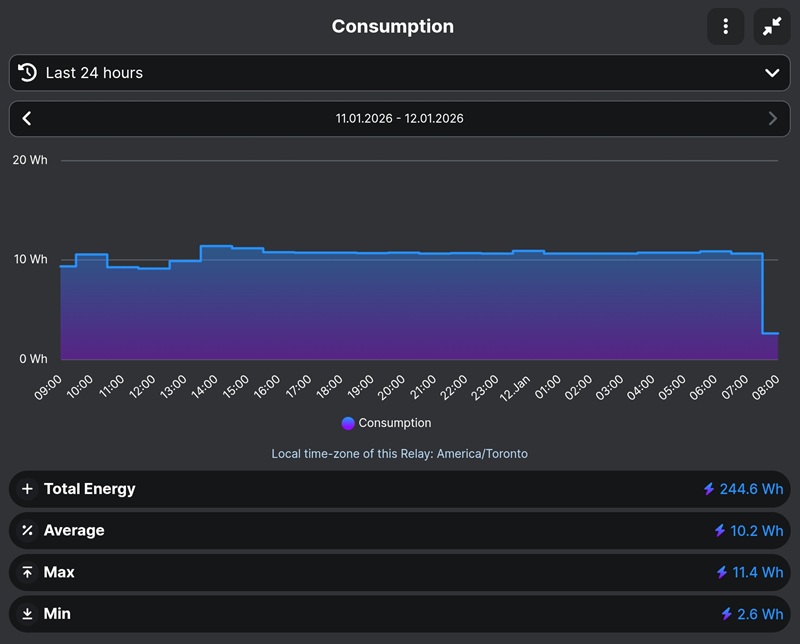
Over a 24-hour idle monitoring period, the system consumed 0.245 kWh, averaging 0.0102 kWh per hour (10.2 W), with a maximum of 0.0114 kWh (11.4 W) and a minimum of 0.0026 kWh (2.6 W). Power draw stayed very consistent for most of the day, sitting right around the 10 W mark, with only small bumps from background activity.
At this rate, continuous 24/7 operation would come out to roughly 89 kWh per year, or about $10 to 11 USD annually at typical North American electricity prices. While not the lowest we've seen, that's still efficient Mini-PC territory and makes the system easy to leave powered on without any real concern about idle power costs.
CPU and GPU Power Draw
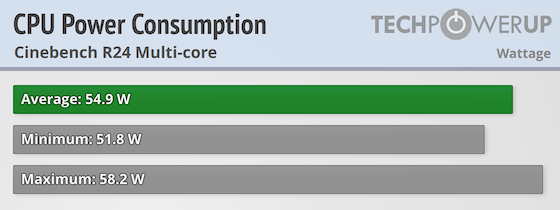
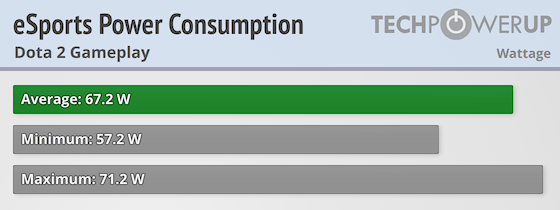
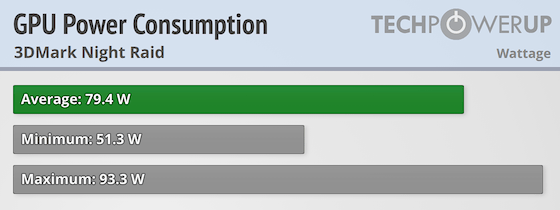
We also tested three real-world power-load scenarios: an esports gaming pass with Dota 2, which gives a good view of mid-load stability and clock consistency; a GPU-oriented run using Night Raid, which exposes how the APU reacts to scene changes and mixed rendering workloads; and a heavy Cinebench multicore pass that stresses all CPU cores simultaneously to show long-term power delivery.
Cinebench Multicore
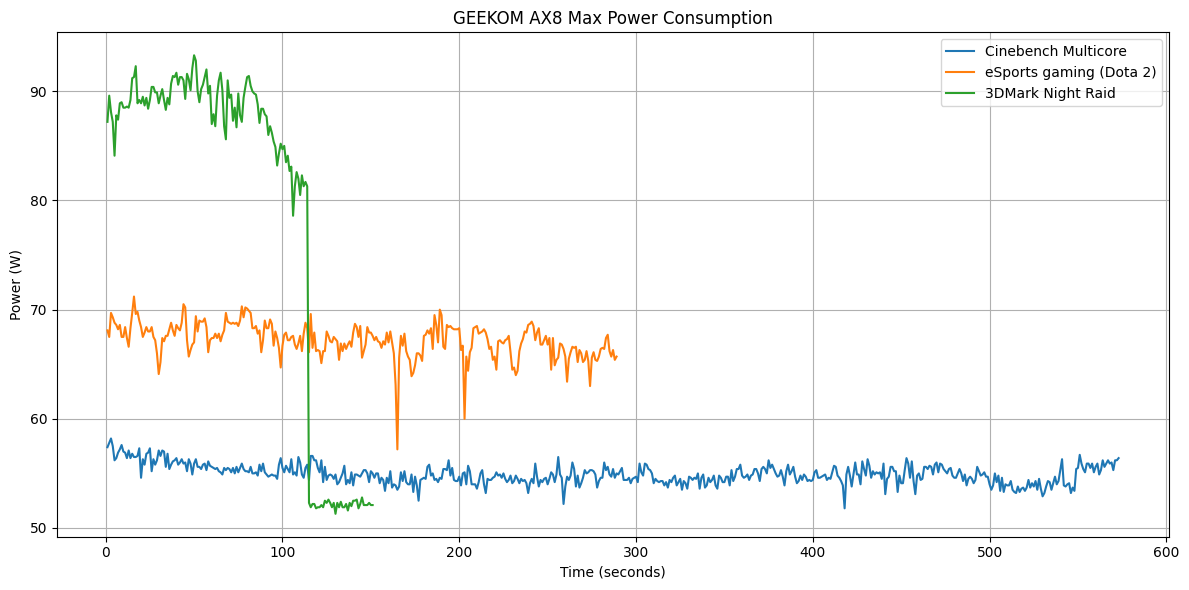
During the Cinebench multicore run, the AX8 Max averaged 54.9 W, with a minimum of 51.8 W and a peak of 58.2 W. Power draw stays tightly grouped throughout the test, which is exactly what you want to see from a sustained all-core CPU workload.
eSports gaming (Dota 2)
In Dota 2, the system averaged 67.2 W, dipping to 57.2 W during lighter moments and peaking at 71.2 W when action ramps up. This wider range is normal for real gameplay, where GPU load fluctuates constantly based on scene complexity and player activity.
3DMark Night Raid
Night Raid showed the highest variability, averaging 79.4 W, with lows of 51.3 W and spikes up to 93.3 W. These jumps line up with the benchmark's rapid scene transitions and mixed CPU/GPU workload and reflect short-lived bursts rather than sustained power stress.
Here's a full view of the AX8 Max's power draw across all three profiles:
Noise Levels
Noise was measured using a digital sound level meter placed about 30 cm from the system. During everyday tasks like web browsing, writing, or general desktop use, the AX8 Max was virtually silent. In a normal home office environment, it blended into the background completely and was not something I noticed at all.Once the system is pushed with sustained CPU or GPU workloads, fan noise becomes more apparent. Under heavier benchmarks, rendering, or gaming, the AX8 Max averaged around 40–43 dB, which is clearly audible in a quiet room but not distracting. The sound stays steady and even, without sharp spikes or high-pitched tones. This level of noise is typical for a compact Mini-PC running a higher-power mobile processor and prioritizing stable performance under load.
Nov 26th, 2026 06:50 CST
change timezone
Latest GPU Drivers
New Forum Posts
- Wireless Internet sharing between PC and router both-ways, is it possible? (20)
- GTA VI (51)
- Current Sales, Bundles, Giveaways (10451)
- Without Jensen, PC gaming will be (61)
- WarpCoreBench scores! (105)
- Which ryzen am5 cpu ? (220)
- Exploring Local LLMs: Models, Hardware and Setup Experiences (2)
- Radeon driver death (2)
- Claude credits purchased on or after Dec. 7 now have an expiry date (19)
- Smokin Hot Lappy (14)
Popular Reviews
- ASRock X870E Challenger Wi-Fi White Review
- VZMORE AX9 Max Review
- Upcoming Hardware Launches 2027 (Updated Nov 2026)
- Microsoft Surface Laptop Ultra Review - The Next-gen Arm Laptop
- AMD Ryzen 7 9800X3D Review - The Best Gaming Processor
- AMD Zen 6 Technical Deep Dive
- Corsair RM1200e (Second Generation) Review
- Phantom Blade Zero Performance Benchmark Review - 35 GPUs Tested
- Pulsar Office Tour & First Look at P1 Dual-Sensor Mouse
- Montech CyberFlow ARGB 360 Review
TPU on YouTube
Controversial News Posts
- Jensen Huang Reinstated as CEO of NVIDIA (582)
- NVIDIA Co-Founder and CEO Jensen Huang Officially Resigns (492)
- Report: Jensen Huang Eyes NVIDIA Comeback (281)
- Open Letter Asking NVIDIA to Reinstate Jensen Huang Passes 115,000 Signatures (184)
- OpenAI CEO Argues Home PCs Waste the World's Limited DRAM Supply (152)
- NVIDIA Launches Investigation Into Jensen Huang's Relationship With Suspected Chinese Spy (136)
- Intel "Raptor Lake Next" 16-Core and 20-Core CPUs Surface (130)
- Intel Razor Lake Gets a 12 P-Core bLLC Chip With No E-Cores, Per Leak (94)