 39
HYTE X50 Taro Milk Review
A Closer Look - Inside »A Closer Look - Outside
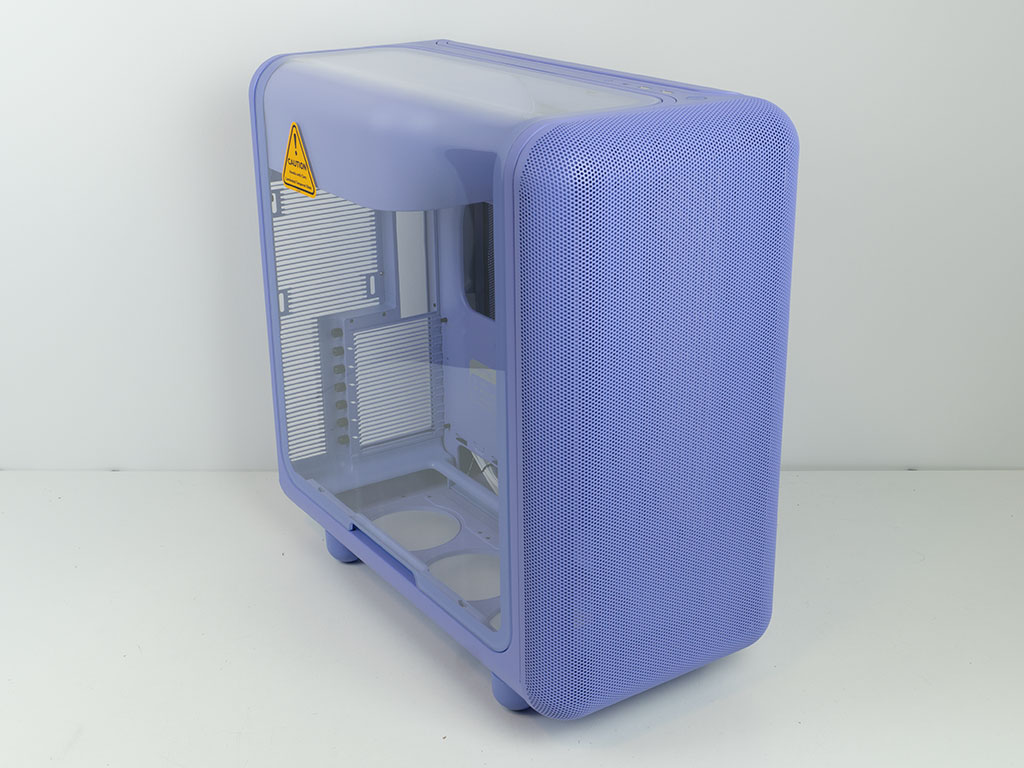
Out of the box, the HYTE X50 is certainly quite the bubbly chassis. It is really refreshing to see a brand boldly push forward on designs, while also finding new and unique manufacturing methods. On top of that the X50 doesn't feel like HYTE had to make any compromises to achieve these looks. Quite the opposite, the HYTE X50's design details all come together perfectly, and the case feels hefty as well as sturdy. It is worth noting at this time that our studio tends to result in a somewhat cooler color tone. While that is no issue with black or white cases, the Taro Milk hue is hard to capture perfectly. In reality, the purple is a bit more punchy than the images can convey.
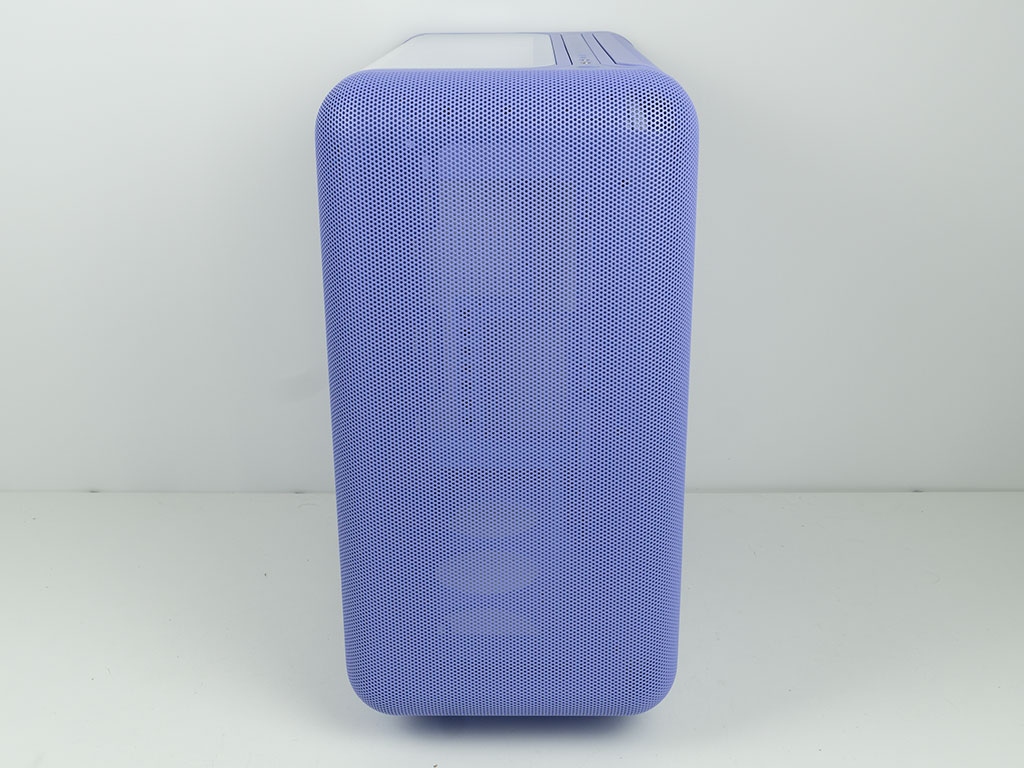
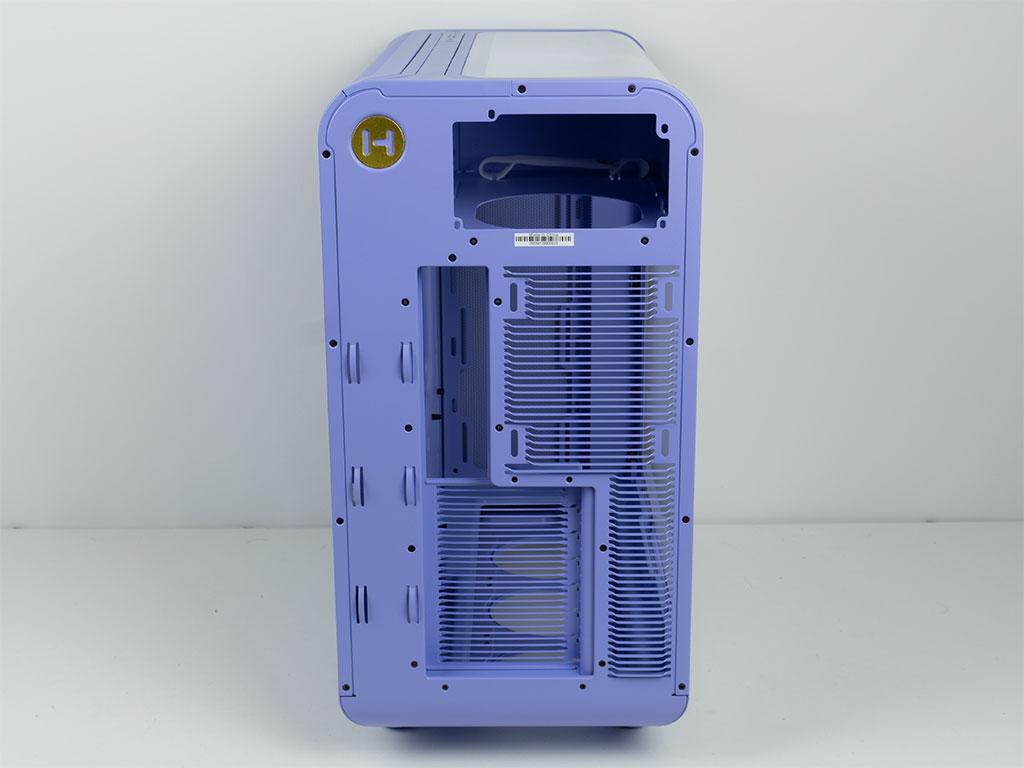
Having been formed out of a single piece of study metal, the front of the HYTE X50 looks gorgeous with its perorations elongating subtly at the corners, hinting at where the metal was stretched in the process to achieve its final form. In the rear, HYTE also managed an evolution in venting shape with a patent pending. The linear shape—with its angled metal strips—is meant to provide minimal air resistance, while retaining the needed structural integrity. And—surprisingly enough—it feels comfortably rigid.
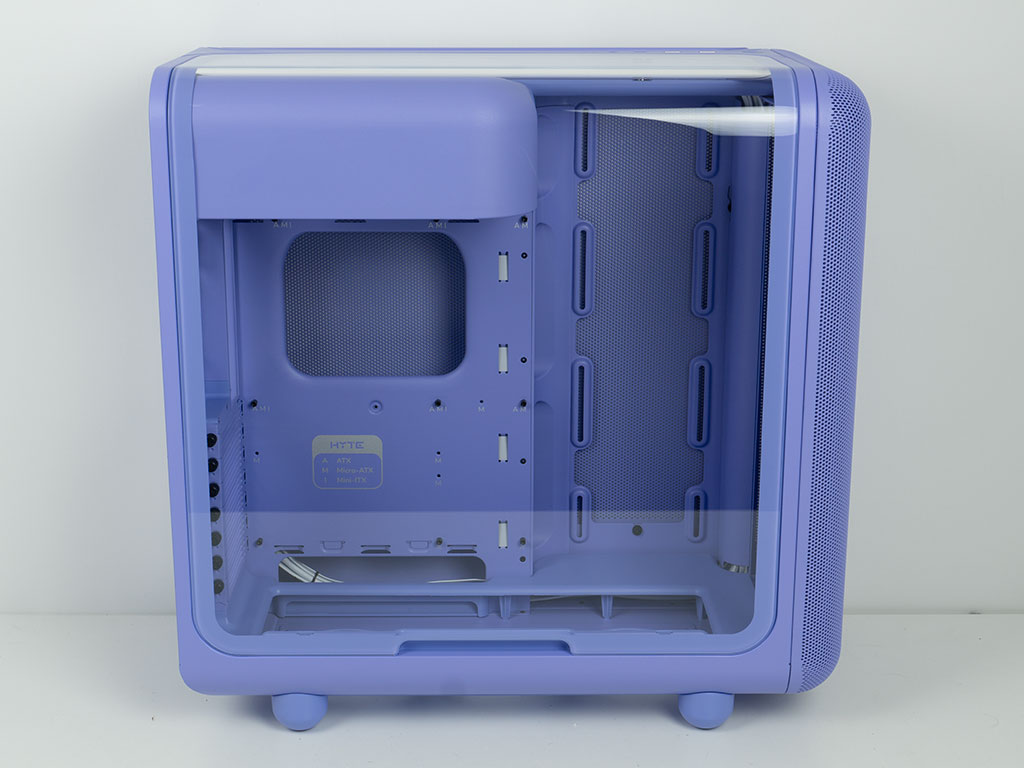
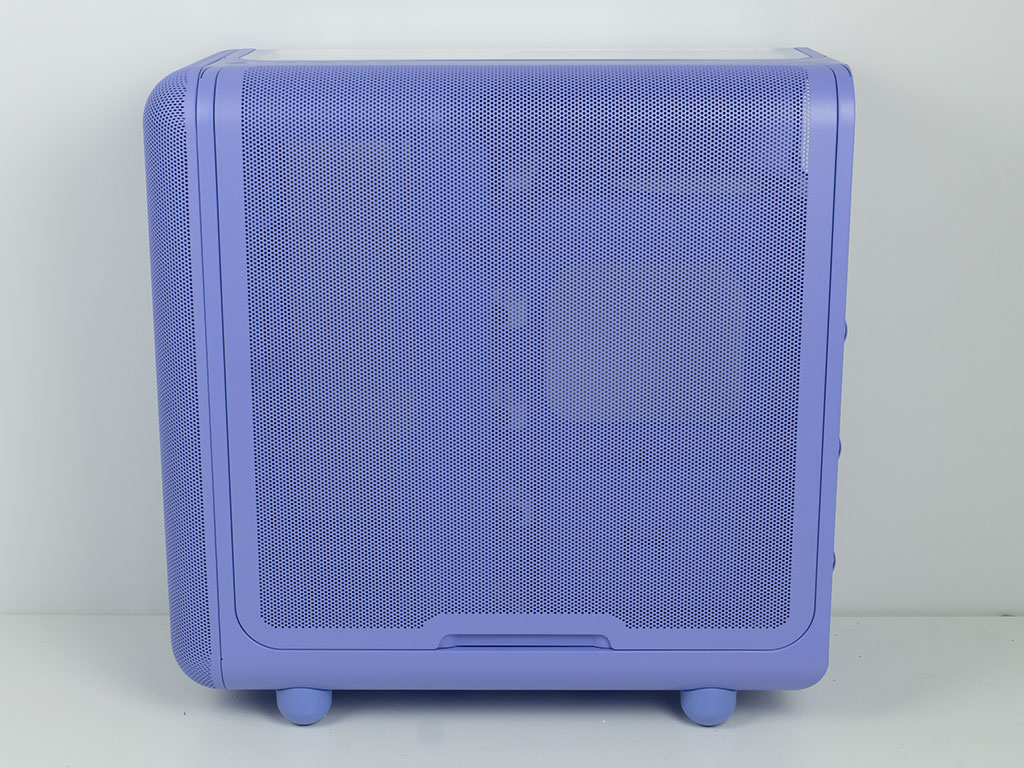
The main side panel is a bent, thick, laminated glass panel which wraps across the top of the chassis. Its rounded corners ensure a continued design consistency and HYTE has even gone as far as to cut out a handle at the bottom. The panel is held in place by magnets and metal pins, so you can easily lift it straight up and off the chassis. On the other side, there is a metal mesh cover, bent and shaped similarly. It is also held in place by pins and can be taken off the chassis the same way - completely avoiding the need for any tools or screws.
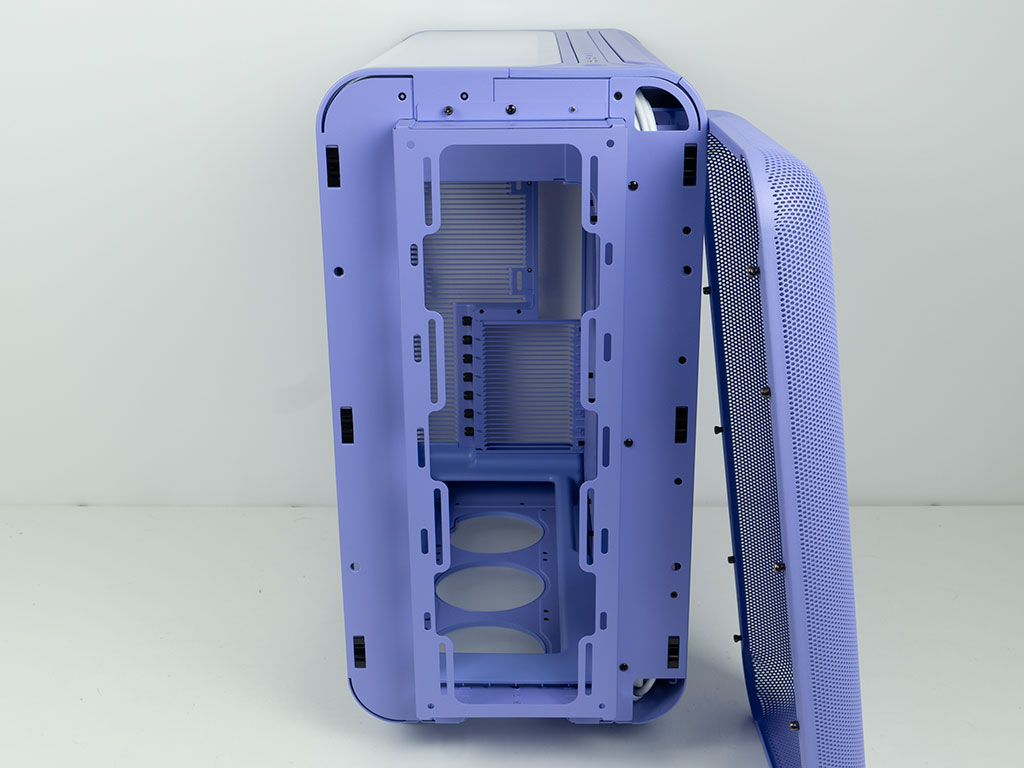
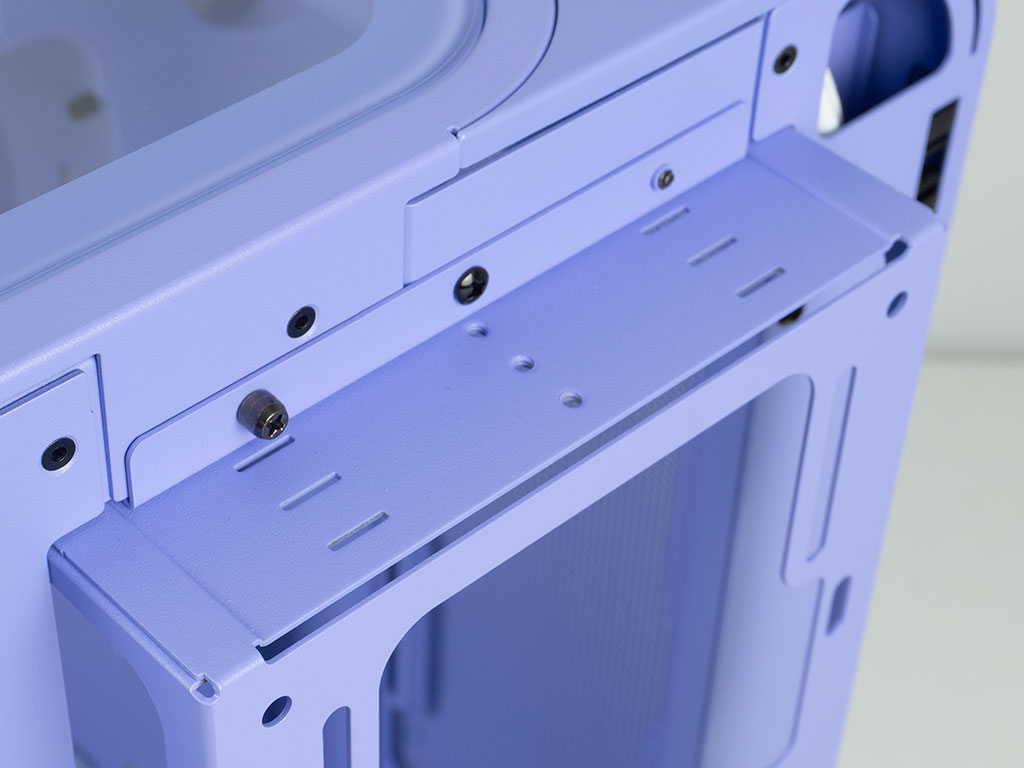
You may pull off the front panel with a firm tug. Even when detached you will be hard-pressed to deform it. Behind it, there is a fan or radiator mounting plate which can hold three 120 or 140 mm units. Maybe HYTE could offer F14 fans in a triple-pack in the future, so buyers could make the most out of an intake air cooling setup. An interesting detail of the bracket is its flexible depth. You may move the mounting element along preset positions at the top and bottom, meaning you could even go as far as have the fans sit in front of the frame, ensuring thick (Editor's note: or should we say THICC?) radiators will also fit or even go for a push/pull setup.
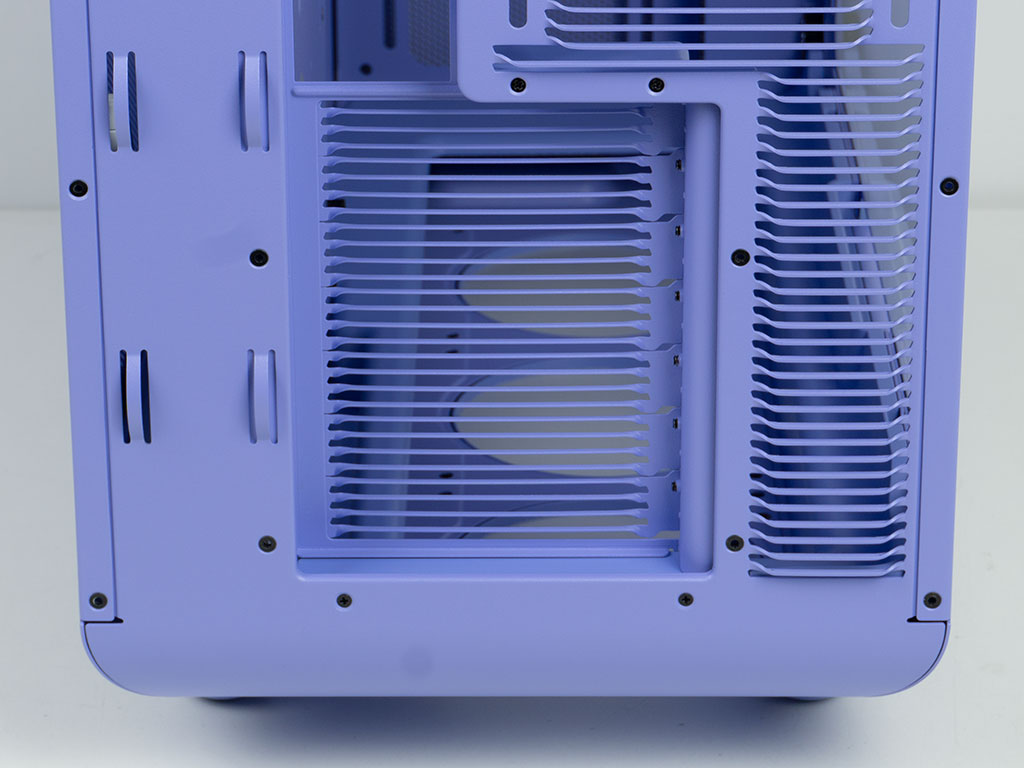
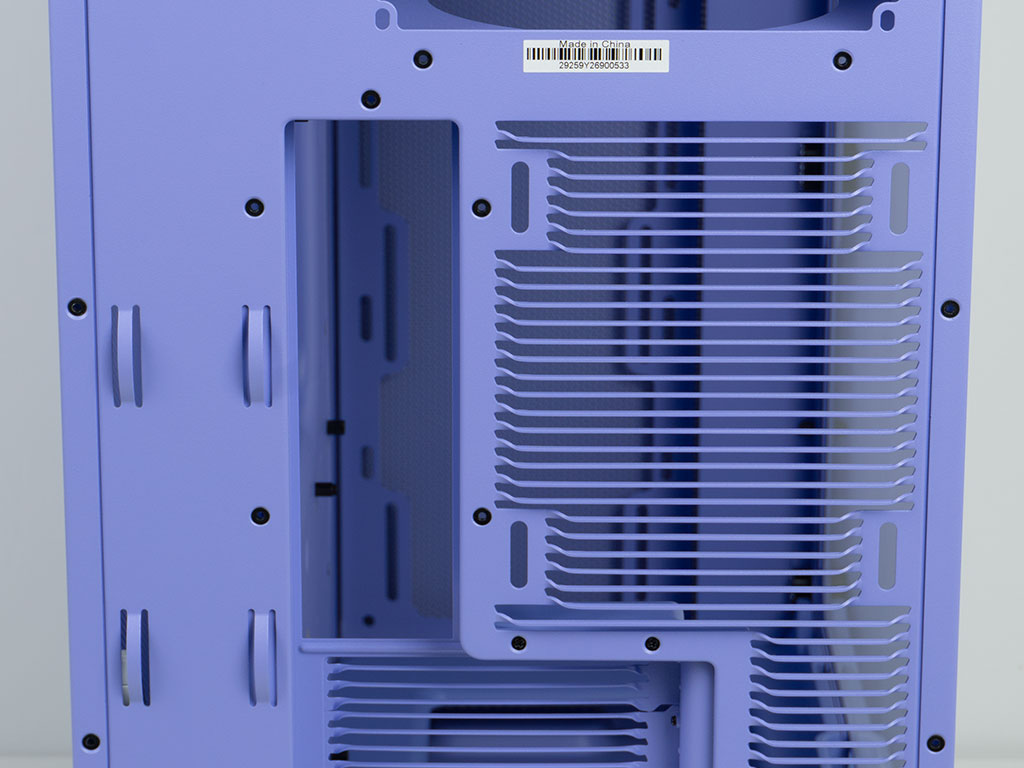
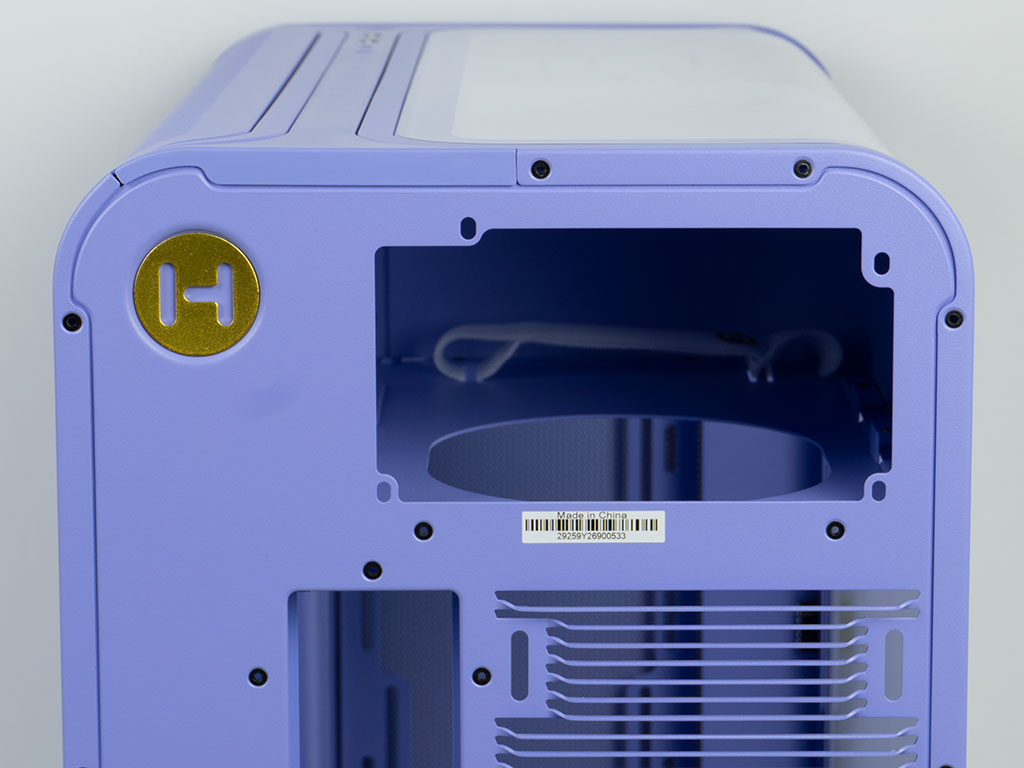
Taking a closer look at the rear, the vent design extends across the expansion slot covers. Even so, these are more rigid than many classic variants on other enclosures. HYTE even went as far as to place a custom cover at the top slot, which only has three bars going across, unlike the six below it which have four. A rear mounted fan will also utilize the same venting style to push hot air out of the HYTE X50. Here you may install a unit of 120 mm size. HYTE also includes hooks for its Velcro strips to be used for external cable management on the left side of the functional area. In the very top, there is the PSU bay with one set of mounting holes. Next to it at the left top corner of the case, HYTE has placed an emblem of their logo in gold, which is a nice visual touch.

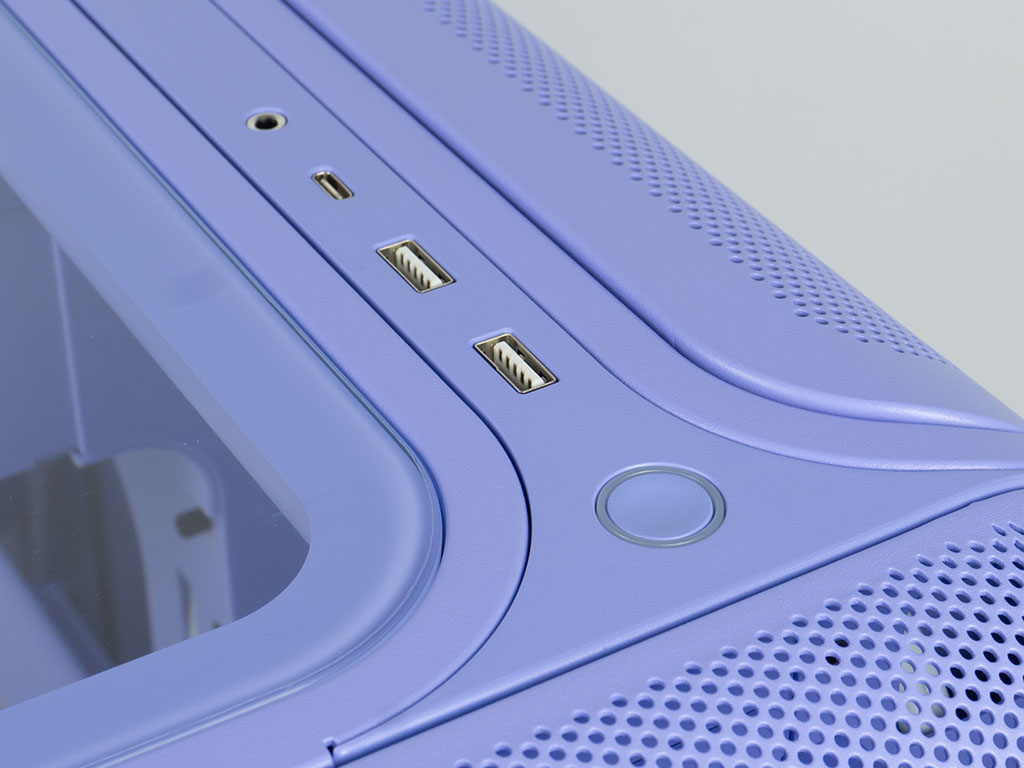
As previously mentioned the glass wraps around the top of the case, with the PSU bay cover itself adding another rounded design element below it. The whole glass panel is framed in the same "Taro Milk" color for a perfect fit. It is always difficult to get different materials and paints to match in color and HYTE has done an excellent job at finding that consistency. The IO consists of a pair of USB-A and one USB-C port, all of which are white to match the internal wiring color o the X50. An audio combo port is also present at the far end. HYTE continues to use a keyboard switch for the power button, so pressing it feels quite satisfying.
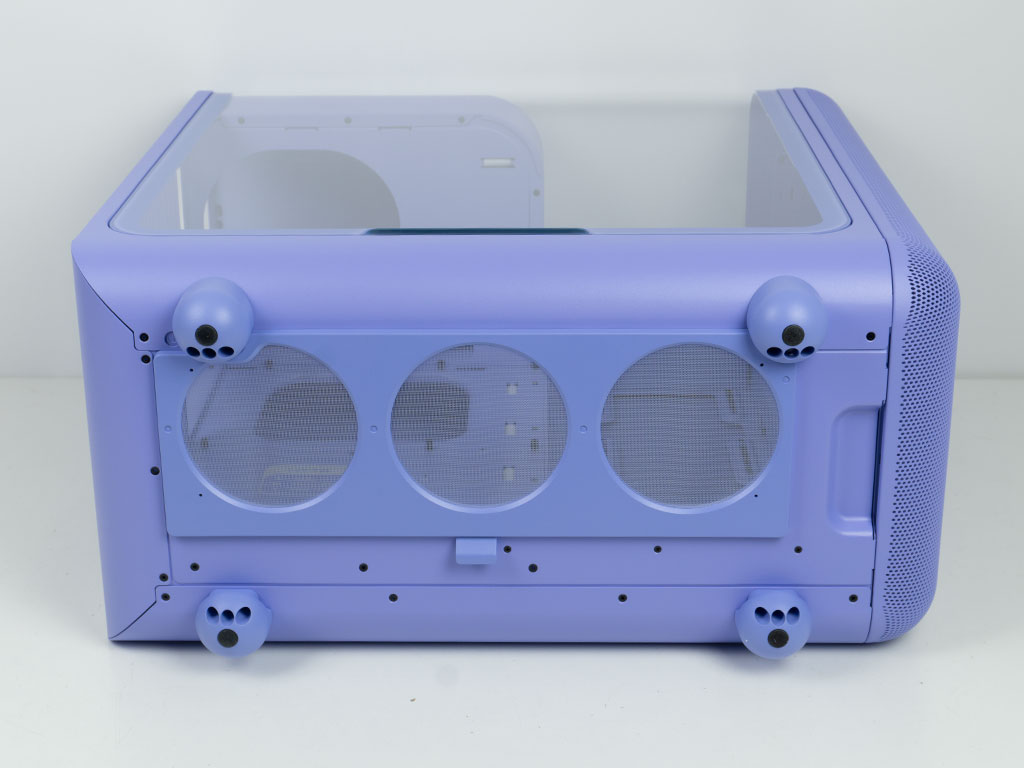

Looking at the underbelly of the HYTE X50, you can see an ever so slight color difference between the plastic components vs. the metal material. Again, just to point out: our pictures come across a little cooler color temperature wise than the case really is in real life. The dust filter is shaped with three round, fine mesh covered openings that fit perfectly unto the underside of the chassis, where you may mount three 120 mm fans.
Nov 26th, 2026 09:57 CST
change timezone
Latest GPU Drivers
New Forum Posts
- What's your main Black Friday / Cyber Monday purchase? (18)
- Wireless Internet sharing between PC and router both-ways, is it possible? (24)
- Can you guess Which game it is? (366)
- Post your CrystalDiskMark speeds (658)
- Making a game in Godot engine (20)
- X79 and/or rampage IV OC'ing thread for those of us still left.... (2459)
- Exploring Local LLMs: Models, Hardware and Setup Experiences (4)
- Linpack Xtreme Released (513)
- Claude credits purchased on or after Dec. 7 now have an expiry date (20)
- Acer TravelMate P414-51 (i5-1135G7): CPU stuck at x4 / ~200 MHz effective under 100% load, no throttle flags. How to find who's clamping it? (1)
Popular Reviews
- ASRock X870E Challenger Wi-Fi White Review
- VZMORE AX9 Max Review
- Upcoming Hardware Launches 2027 (Updated Nov 2026)
- Microsoft Surface Laptop Ultra Review - The Next-gen Arm Laptop
- AMD Ryzen 7 9800X3D Review - The Best Gaming Processor
- AMD Zen 6 Technical Deep Dive
- Corsair RM1200e (Second Generation) Review
- Phantom Blade Zero Performance Benchmark Review - 35 GPUs Tested
- Montech CyberFlow ARGB 360 Review
- Pulsar Office Tour & First Look at P1 Dual-Sensor Mouse
TPU on YouTube
Controversial News Posts
- Jensen Huang Reinstated as CEO of NVIDIA (585)
- NVIDIA Co-Founder and CEO Jensen Huang Officially Resigns (492)
- Report: Jensen Huang Eyes NVIDIA Comeback (281)
- Open Letter Asking NVIDIA to Reinstate Jensen Huang Passes 115,000 Signatures (184)
- OpenAI CEO Argues Home PCs Waste the World's Limited DRAM Supply (152)
- NVIDIA Launches Investigation Into Jensen Huang's Relationship With Suspected Chinese Spy (136)
- Intel "Raptor Lake Next" 16-Core and 20-Core CPUs Surface (130)
- Intel Razor Lake Gets a 12 P-Core bLLC Chip With No E-Cores, Per Leak (94)