 11
InWin P125 1250 W Power Supply Review
Performance Rating: Stability, Noise, Efficiency & PF »Protection Features Evaluation
| Protection Features | |
|---|---|
| OCP | +12 V: 121.8 A (117%), 12.034 V +5 V: 27.5 A (125%), 5.02 V +3.3 V: 26.6 A (120.91%), 3.274 V 5VSB: 4.9 A (163.33%), 4.952 V |
| OPP | 1465.71 W (117.26%) |
| OTP | No (>200 °C @ +12 V heat sink) |
| SCP | +12 V: Yes +5 V: Yes +3.3 V: Yes 5VSB: Yes -12 V: Yes |
| PWR_OK | Proper Operation |
| NLO | Yes |
| SIP | Surge: MOV Inrush: NTC & Bypass Relay |
OCP is properly set on all rails, and the same goes for OPP, which doesn't overstress the PSU. After all, there is no point for a highly set OPP triggering point in a powerful PSU. What troubled me was that I couldn't make the PSU shut down even when applying a substantial thermal load to its secondary side. Either it doesn't have OTP or it is set too high. Either way, the result is the same—this PSU does not shut down even when overheating, which is a great shame.
DC Power Sequencing
According to Intel's most recent Power Supply Design Guide (revision 1.4), the +12 V and +5 V rails must have voltages equal to or greater than the +3.3 V rail's output at all times. For our first measurement, we turn the unit off and switch it back on without a load on any of the rails.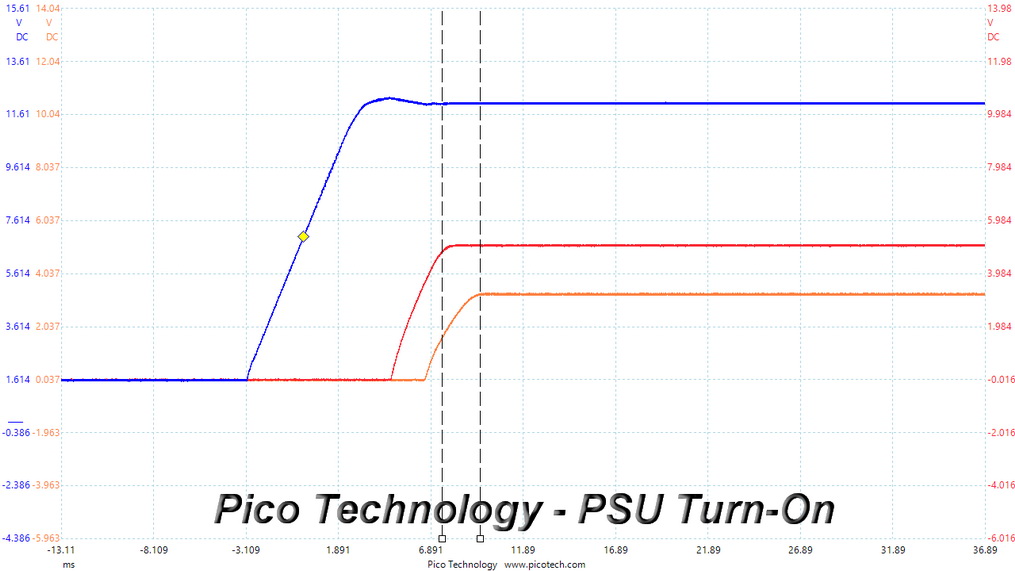
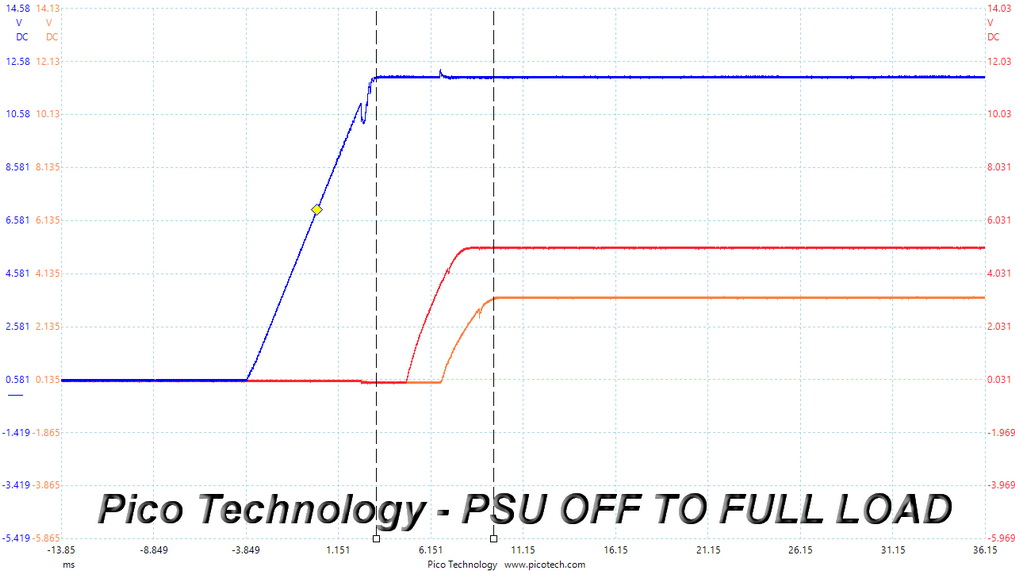
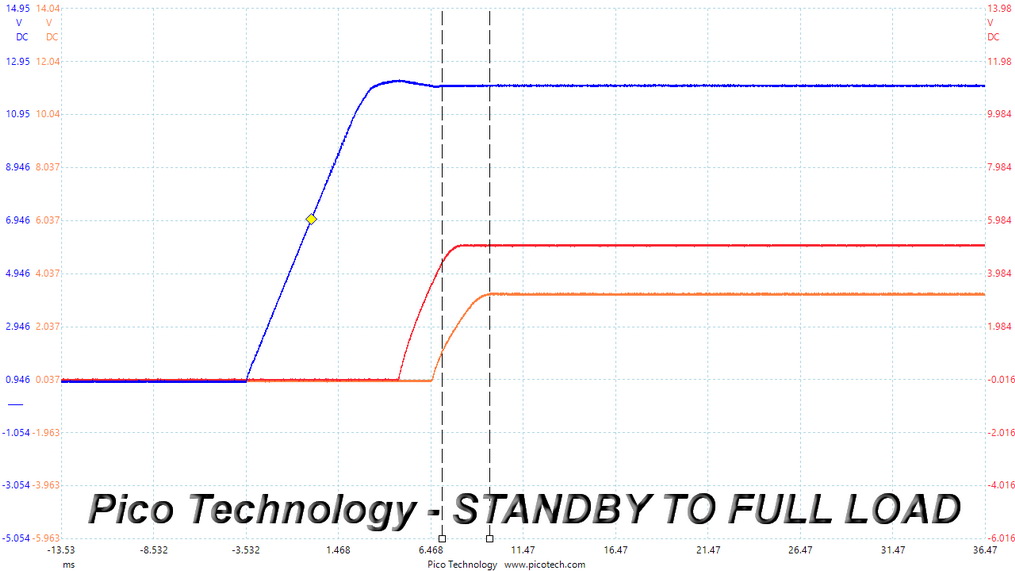
The 3.3 V rail is always lower than the other two rails.
EMC Pre-Compliance Testing - Average and Peak EMI Detector Results
Electromagnetic Compatibility (EMC) is the ability of a device to operate properly in its environment without disrupting the proper operation of other close-by devices.Electromagnetic Interference (EMI) stands for the electromagnetic energy a device emits, and it can cause problems in other close-by devices if too high.
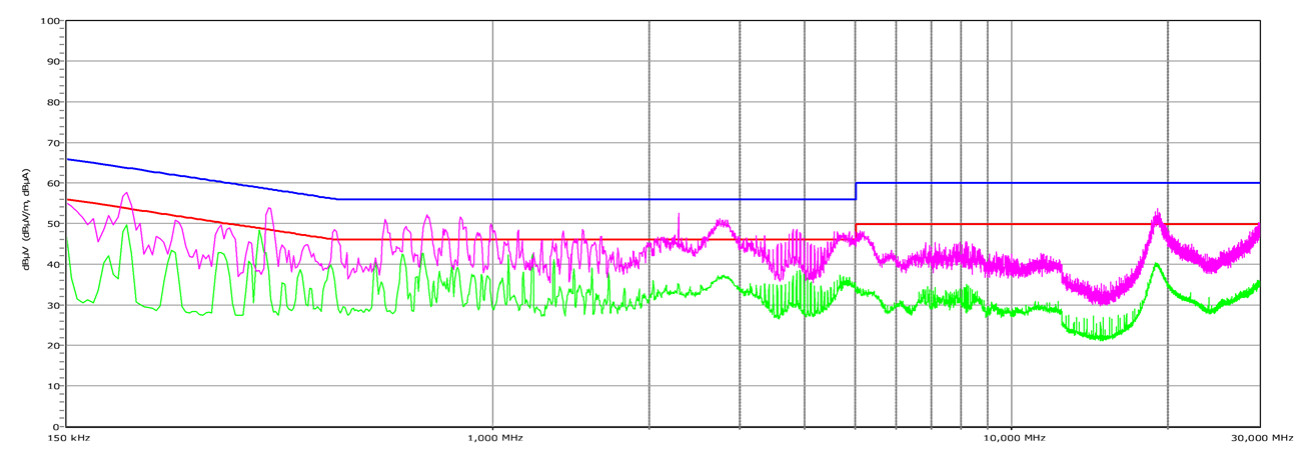
EMI suppression is excellent.
Nov 21st, 2026 13:42 PST
change timezone
Latest GPU Drivers
New Forum Posts
- UPS what one to get? (23)
- Ryzen or Intel system (0)
- Local LLM General Discussion (694)
- Can you guess Which game it is? (345)
- GeekMagic Ultra Smart WiFi Weather Station (10)
- RX 580 2048SP 8GB - SK Hynix - Ardiyes - BIOS Needed (1)
- Zen 3 IF/IMC degradation (243)
- State of the HPC-AI Market 2026: Processing Elements (0)
- 1 - 5 person file storage server equivalent accasible from anywhere + general VM server. (3)
- Honestly, do you care about GTA VI? (225)
Popular Reviews
- Microsoft Surface Laptop Ultra Review - The Next-gen Arm Laptop
- Ugreen NASync DXP4800 GT Review
- Corsair RM1200e (Second Generation) Review
- Pulsar Office Tour & First Look at P1 Dual-Sensor Mouse
- Upcoming Hardware Launches 2027 (Updated Nov 2026)
- Acemagic Retro X3 Review
- Biwin Black Opal NV7400 2 TB Review
- AMD Ryzen 7 9800X3D Review - The Best Gaming Processor
- AMD Zen 6 Technical Deep Dive
- Chieftec Iceberg PRO 360 DARK Review
TPU on YouTube
Controversial News Posts
- NVIDIA Co-Founder and CEO Jensen Huang Officially Resigns (492)
- Report: Jensen Huang Eyes NVIDIA Comeback (260)
- Open Letter Asking NVIDIA to Reinstate Jensen Huang Passes 115,000 Signatures (184)
- OpenAI CEO Argues Home PCs Waste the World's Limited DRAM Supply (152)
- NVIDIA Launches Investigation Into Jensen Huang's Relationship With Suspected Chinese Spy (136)
- Intel "Raptor Lake Next" 16-Core and 20-Core CPUs Surface (130)
- NVIDIA GeForce RTX 50-Series Scheduled for up to $500 Price Hike This Week (89)
- Intel Razor Lake Gets a 12 P-Core bLLC Chip With No E-Cores, Per Leak (86)