 30
Kingston Fury Renegade CUDIMM DDR5-8400 48 GB CL40 Review
Intel Memory Overclocking »Intel 200S Boost
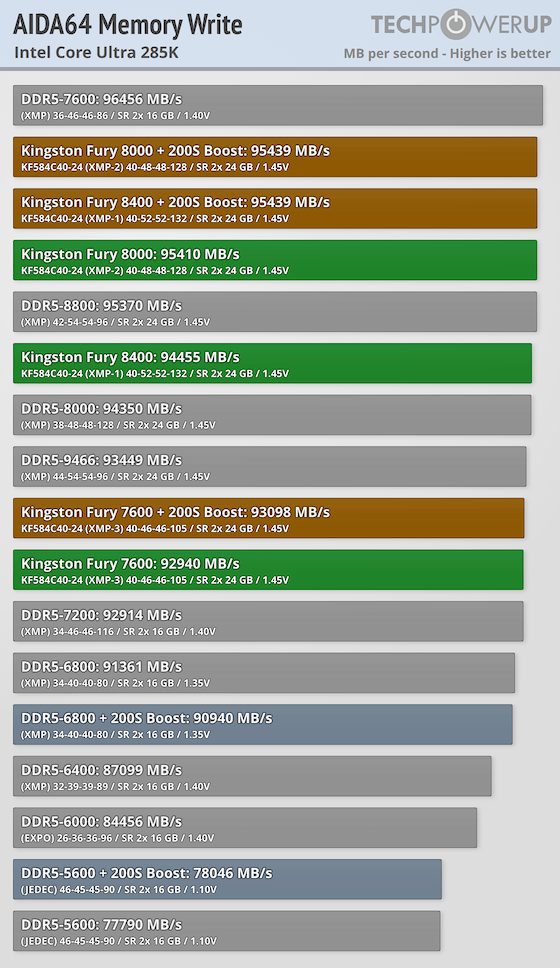
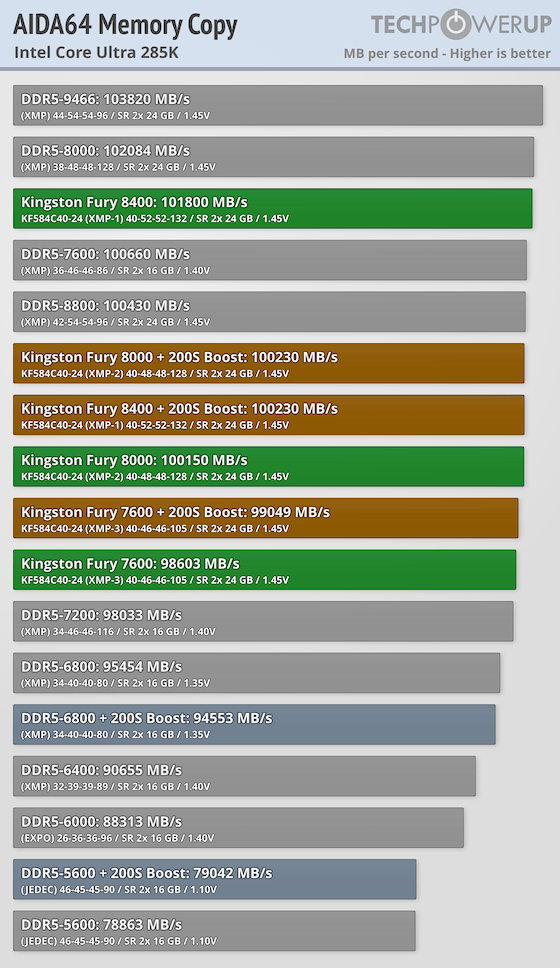
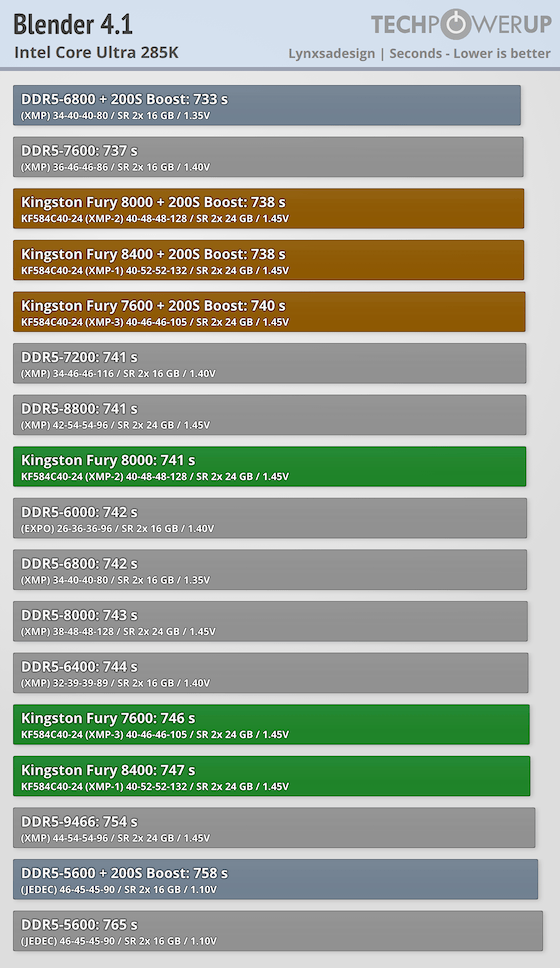
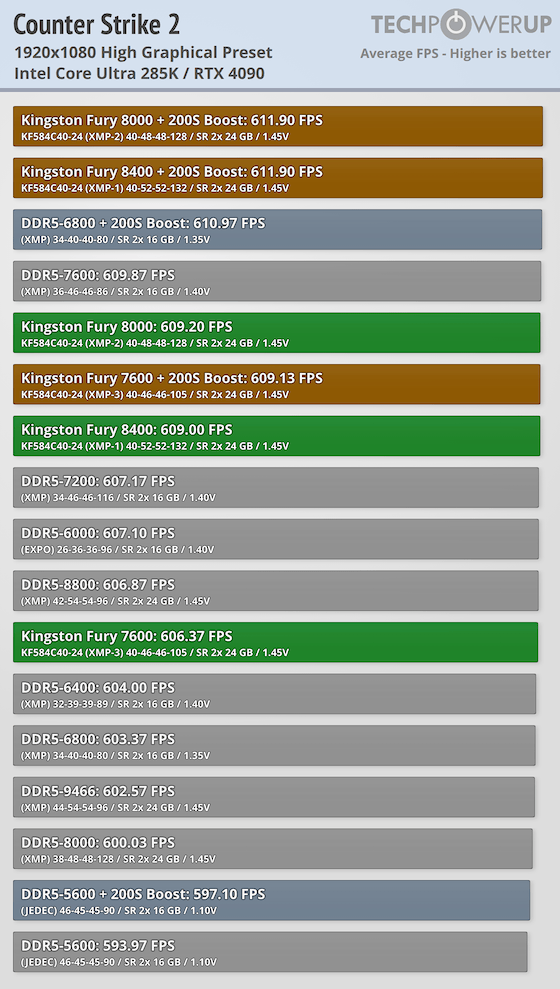
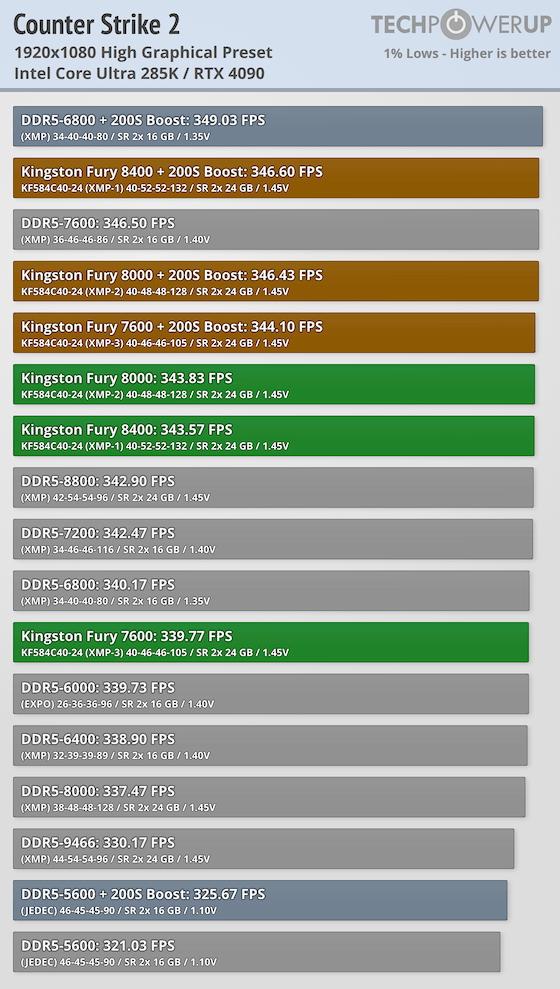
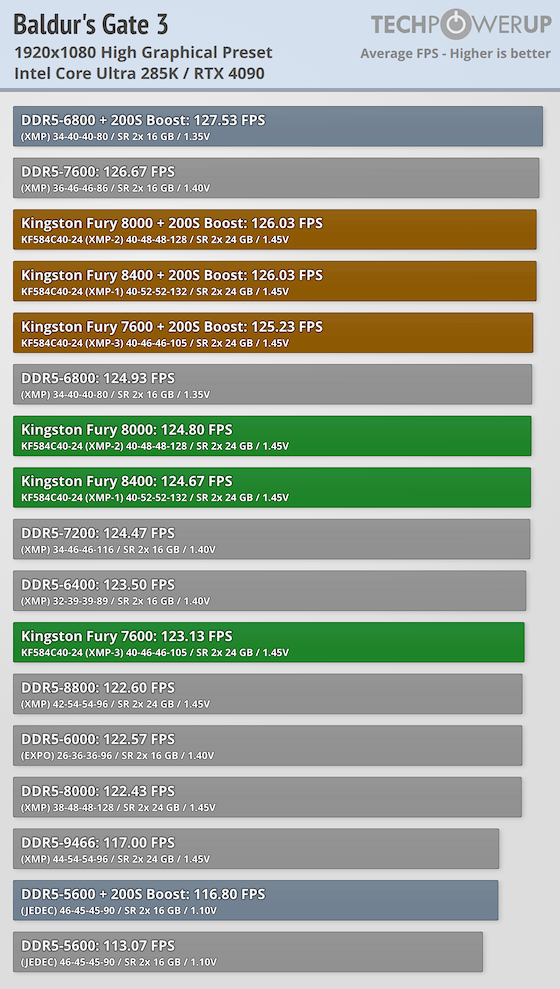
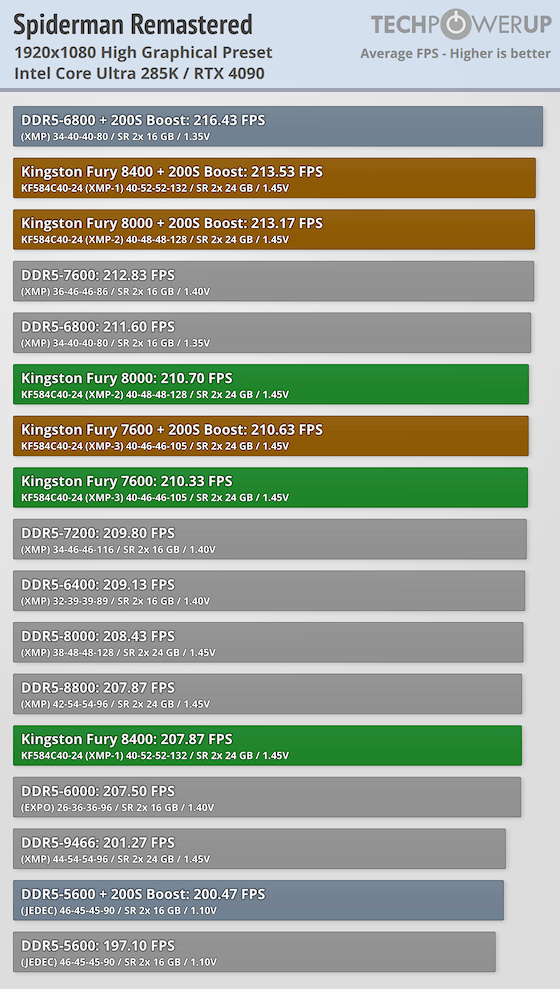
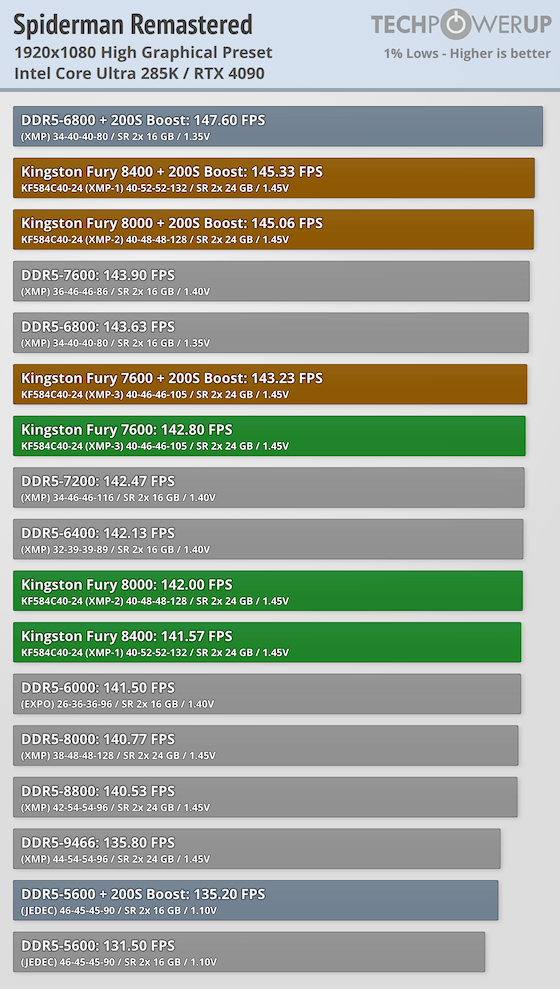
Intel added a feature called 200S Boost that addresses consumer complaints regarding gaming performance. When 200S Boost is enabled from within the BIOS, the board increases the NGU (Next-Generation Uncore) and D2D (Die-to-Die) frequencies both to 32x, resulting in lower latency for the system overall, increasing system performance in games.However, there are limitations to this feature. Intel's support for the 200S Boost BIOS feature ends at 8000 MT/s and 1.40 V for the Ultra 200 Series CPUs, which restricts the range of compatible memory. For non compatible memory, the settings will be adjusted accordingly. For example, If a memory module's XMP profile exceeds 8000 MT/s, enabling 200S Boost will result in the first XMP profile timings being applied, but the frequency will be lowered to 8000 MT/s. Additionally, if the DRAM voltage is above 1.45 V, it will be reduced to 1.40 V as well automatically. This may cause system stability issues as the XMP profile voltage is set to the memory kit's primary timings requirements.
Because all three XMP profiles for this Kingston Fury Renegade CUDIMM DDR5-8400 memory kit use 1.45 V, we had to manually override the voltage reduction and set the frequency back to the XMP profile selected to mimic the 1-click Boost function. It's worth noting that not all motherboards permit overriding the 1.40 V limit or changing the memory frequency, as this option might be inaccessible once the 200S Boost feature is enabled.
Intel 285K 200S Boost: AIDA64


Intel 285K 200S Boost: Blender 4.1
Intel Core Ultra 285K 200S Boost: 1080p Gaming

Nov 19th, 2026 00:47 PST
change timezone
Latest GPU Drivers
New Forum Posts
- 3DMARK "LEGENDARY" (475)
- [Poll] 12V-2x6 Connector Protection: What Are You Using? (WireView / Ampinel / Equalizer / Other / Nothing) (43)
- Windows HDR on = Tinted colors (5)
- Time to upgrade CPU and MOBO (42)
- Without Jensen, PC gaming will be (47)
- WarpCoreBench scores! (68)
- Honestly, do you care about GTA VI? (155)
- Very unusual two gaming-pc scenarios. (13)
- TPU's Nostalgic Hardware Club (22168)
- Dual B70 or Dual R9700 Pro on Linux (7)
Popular Reviews
- Acemagic Retro X3 Review
- Ugreen NASync DXP4800 GT Review
- Upcoming Hardware Launches 2027 (Updated Nov 2026)
- AMD Zen 6 Technical Deep Dive
- Pulsar Office Tour & First Look at P1 Dual-Sensor Mouse
- Biwin Black Opal NV7400 2 TB Review
- Sapphire Radeon RX 7700 XT Pure Review
- Sapphire Radeon RX 7700 XT Pulse Review
- Chieftec Iceberg PRO 360 DARK Review
- ASUS ROG Strix B850-I Gaming Wi-Fi7 W Review
TPU on YouTube
Controversial News Posts
- NVIDIA Co-Founder and CEO Jensen Huang Officially Resigns (483)
- Report: Jensen Huang Eyes NVIDIA Comeback (196)
- Open Letter Asking NVIDIA to Reinstate Jensen Huang Passes 115,000 Signatures (184)
- OpenAI CEO Argues Home PCs Waste the World's Limited DRAM Supply (152)
- NVIDIA Launches Investigation Into Jensen Huang's Relationship With Suspected Chinese Spy (136)
- Intel "Raptor Lake Next" 16-Core and 20-Core CPUs Surface (130)
- Legendary Game Studio BioWare Shuts Down Following EA Layoffs (104)
- Dell CEO Says the Memory Shortage Will Get Worse in 2027 (95)