 32
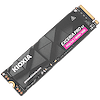
Kioxia Exceria Pro G2 4 TB Review
(32 Comments) »Value and Conclusion
- The Kioxia Exceria Pro G2 4 TB currently sells for €630 in Germany, which converts to around US$610 without tax. The 2 TB model goes for around $340.
- Excellent real-life performance
- Fastest game load times in our test group
- Impressive sustained writes
- Huge 720 GB SLC cache
- Extremely energy-efficient
- Runs without a heatsink in normal use
- Single-sided, even at 4 TB
- 4 GB DRAM cache
- Outstanding fSync write performance
- PCI-Express 5.0
- Five-year warranty
- Not sold in the United States
- Idle power a bit high in mobile mode
- Throttles under sustained heavy load unless you use a big heatsink
- No heatsink included (but not strictly required)
Technology & Positioning
The Exceria Pro G2 is Kioxia's PCI-Express Gen 5 flagship. It is built using the Silicon Motion SM2508 controller—a modern eight-channel design fabricated using TSMC 6 nanometer technology. The same controller is used on famous drives like the WD SN8100, Kingston Fury Renegade G5, Lexar NM1090 Pro and Crucial T710. The NAND flash is Kioxia's own BiCS8 218-layer TLC NAND and you get 4 GB of fast DRAM cache for the mapping tables of the SSD.
Synthetic Performance
Synthetic results are excellent, reaching almost 15 GB/s. In our weighted synthetic tests, the drive lands in the top five for both sequential and random IO, and 4K random performance at the low queue depth is excellent. The standout number is fSync write performance, which matters for databases, Ceph, Kubernetes' etcd and anything else that needs durability guarantees: at over 7200 IOPS the Exceria Pro G2 is the fastest drive in our entire test group, many times faster than other big-name drives—definitely worth considering if fSync is what you need.
Real-Life Performance
In our application-based testing, the Exceria Pro G2 shows strong numbers too, reaching a top spot. It matches the Samsung 9100 Pro, beats the Corsair MP700 Pro by a tiny margin, but the fastest drives—WD Black SN8100, Hynix P51 Platinum and Corsair MP700 Pro XT—are still 2% ahead, which isn't much, but is also not zero. Where the Kioxia does come out on top is game loading: averaged over ten titles it posts the quickest load times in the group, although here too, the whole Gen 5 field sits within a few tenths of a second of each other.
SLC Cache/Sustained Performance
The Kioxia Exceria Pro G2 comes with an SLC cache size of 720 GB (or 53% in SLC mode), which is enough to soak up virtually all bursts of write activity. Once the SLC cache is exhausted, transfer rates still reach an excellent 3 GB/s. Filling the whole 4 TB capacity completed at an outstanding 3.1 GB/s, second only to the Corsair MP700 Pro XT. If you regularly move tons of data, few consumer drives handle it better.
Power Consumption/Heat
The 6 nm controller pays off here. In our efficiency test, the Exceria Pro G2 is the third most energy-efficient drive we've tested, at both read and write—only the MP700 Pro XT and the SN8100 do better. Peak draw is 7.2 W, which is high in absolute terms but well below what the Samsung 9100 Pro, Hynix P51 Platinum or the E26-based Corsair MP700 Pro need. Idle power is the one weak spot: while 1.5 W on the desktop really doesn't matter much, 0.7 W in a laptop scenario is definitely above average, and it will affect your battery life a little bit. Thermally, the drive works very well, thanks to the energy-efficient controller. For normal usage a heatsink is not required, but if you expect to regularly hit it hard, consider adding a small heatsink.
Pricing & Alternatives
In Germany the 4 TB Exceria Pro G2 sells for €630, including VAT, which converts to about $610 without tax, or $155 per terabyte. That price point is a bit higher than what the flagships of some smaller brands like Lexar or Acer go for, and slightly cheaper than the WD SN8100, Kingston Fury Renegade and Samsung 9100 Pro. There's just one catch: Kioxia doesn't sell its retail SSDs in the United States. In Europe and Japan, though, this is one of the easiest high-end Gen 5 SSDs to recommend, as long as you can find it at competitive pricing.

The Exceria Pro G2 is Kioxia's PCI-Express Gen 5 flagship. It is built using the Silicon Motion SM2508 controller—a modern eight-channel design fabricated using TSMC 6 nanometer technology. The same controller is used on famous drives like the WD SN8100, Kingston Fury Renegade G5, Lexar NM1090 Pro and Crucial T710. The NAND flash is Kioxia's own BiCS8 218-layer TLC NAND and you get 4 GB of fast DRAM cache for the mapping tables of the SSD.
Synthetic Performance
Synthetic results are excellent, reaching almost 15 GB/s. In our weighted synthetic tests, the drive lands in the top five for both sequential and random IO, and 4K random performance at the low queue depth is excellent. The standout number is fSync write performance, which matters for databases, Ceph, Kubernetes' etcd and anything else that needs durability guarantees: at over 7200 IOPS the Exceria Pro G2 is the fastest drive in our entire test group, many times faster than other big-name drives—definitely worth considering if fSync is what you need.
Real-Life Performance
In our application-based testing, the Exceria Pro G2 shows strong numbers too, reaching a top spot. It matches the Samsung 9100 Pro, beats the Corsair MP700 Pro by a tiny margin, but the fastest drives—WD Black SN8100, Hynix P51 Platinum and Corsair MP700 Pro XT—are still 2% ahead, which isn't much, but is also not zero. Where the Kioxia does come out on top is game loading: averaged over ten titles it posts the quickest load times in the group, although here too, the whole Gen 5 field sits within a few tenths of a second of each other.
SLC Cache/Sustained Performance
The Kioxia Exceria Pro G2 comes with an SLC cache size of 720 GB (or 53% in SLC mode), which is enough to soak up virtually all bursts of write activity. Once the SLC cache is exhausted, transfer rates still reach an excellent 3 GB/s. Filling the whole 4 TB capacity completed at an outstanding 3.1 GB/s, second only to the Corsair MP700 Pro XT. If you regularly move tons of data, few consumer drives handle it better.
Power Consumption/Heat
The 6 nm controller pays off here. In our efficiency test, the Exceria Pro G2 is the third most energy-efficient drive we've tested, at both read and write—only the MP700 Pro XT and the SN8100 do better. Peak draw is 7.2 W, which is high in absolute terms but well below what the Samsung 9100 Pro, Hynix P51 Platinum or the E26-based Corsair MP700 Pro need. Idle power is the one weak spot: while 1.5 W on the desktop really doesn't matter much, 0.7 W in a laptop scenario is definitely above average, and it will affect your battery life a little bit. Thermally, the drive works very well, thanks to the energy-efficient controller. For normal usage a heatsink is not required, but if you expect to regularly hit it hard, consider adding a small heatsink.
Pricing & Alternatives
In Germany the 4 TB Exceria Pro G2 sells for €630, including VAT, which converts to about $610 without tax, or $155 per terabyte. That price point is a bit higher than what the flagships of some smaller brands like Lexar or Acer go for, and slightly cheaper than the WD SN8100, Kingston Fury Renegade and Samsung 9100 Pro. There's just one catch: Kioxia doesn't sell its retail SSDs in the United States. In Europe and Japan, though, this is one of the easiest high-end Gen 5 SSDs to recommend, as long as you can find it at competitive pricing.
Nov 14th, 2026 20:43 CST
change timezone
Latest GPU Drivers
New Forum Posts
- Recommendations Wanted - Affordable Enterprise SSD for Boot (1)
- WarpCoreBench scores! (36)
- [INTEL]-How To Update Your Microcode for Intel HX 13/14th Gen. CPUs Laptops/Mobile Easily. (260)
- [Intel AX1xx/AX2xx/AX4xx/AX16xx/BE2xx/BE17xx] Intel Modded Wi-Fi Driver with Intel® Killer™ Features (632)
- Optical Disc Drive owners club (208)
- Planning for Prolonged High Prices and Maintaining What You Already Have (67)
- Game Soundtracks You Love (1287)
- Tell me about your favourite graphics card (80)
- 9070 GRE 3.9ghz validation reached. (11)
- Honestly, do you care about GTA VI? (20)
Popular Reviews
- AMD Zen 6 Technical Deep Dive
- ASUS ROG Strix B850-I Gaming Wi-Fi7 W Review
- Corsair HX1000i Shift Crystal Review
- Upcoming Hardware Launches 2027 (Updated Nov 2026)
- Montech King 95 3D PRO Review
- NZXT C1200 Platinum Review
- NZXT H7 RGB+ Review
- NZXT H5 Review
- Phantom Blade Zero Performance Benchmark Review - 35 GPUs Tested
- AMD Ryzen 7 9800X3D Review - The Best Gaming Processor
TPU on YouTube
Controversial News Posts
- NVIDIA Co-Founder and CEO Jensen Huang Officially Resigns (407)
- OpenAI CEO Argues Home PCs Waste the World's Limited DRAM Supply (152)
- NVIDIA Launches Investigation Into Jensen Huang's Relationship With Suspected Chinese Spy (136)
- Intel "Raptor Lake Next" 16-Core and 20-Core CPUs Surface (130)
- Legendary Game Studio BioWare Shuts Down Following EA Layoffs (104)
- Dell CEO Says the Memory Shortage Will Get Worse in 2027 (95)
- NVIDIA GeForce RTX 50-Series Scheduled for up to $500 Price Hike This Week (89)
- Modder Fits RTX 5090 With Four 8-Pin Connectors, Halving Current per Wire (80)