 5
LattePanda Mu Ultra Review
Packaging & Contents »Introduction

The LattePanda Mu Ultra takes Intel's Core Ultra 5 226V and puts it on a tiny 69.6 × 60 mm x86 compute module aimed at custom systems, embedded projects, robotics, and local AI work. My setup pairs the 16 GB Core Ultra 5 226V module with LattePanda's Mini Carrier Board and matching active cooler, giving me the storage, power, networking, and external I/O needed to use the platform as a complete test system.
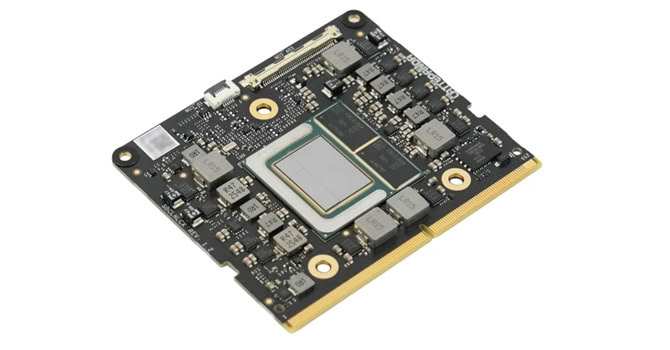
A module like this is useful when the finished device needs full PC-class hardware, but you still want control over the rest of the design. It could sit inside a compact vision system that processes camera feeds locally, run the software stack for a robotics controller, or handle AI inference at the edge without relying on a constant cloud connection. It is also handy for prototyping, since you can develop everything on the Mini Carrier first and then move the Mu Ultra onto a custom carrier board once the hardware design is finalized.
The review setup is made up of three LattePanda parts: the DFR1294 Mu Ultra module, DFR1293 Mini Carrier Board, and FIT1049 active cooler. I added a 1 TB Solidigm P41 Plus NVMe SSD because the Mu Ultra has no onboard drive. Its 16 GB of LPDDR5X-8533 memory is integrated into the Core Ultra 5 226V package and cannot be replaced or expanded later, although that is still a healthy amount for a compute module this small.
The Core Ultra 5 226V uses four performance cores and four low-power efficiency cores alongside Arc 130V graphics and a dedicated 40 TOPS NPU. The CPU, GPU, and NPU combine for up to 97 TOPS of peak INT8 AI performance. The Mini Carrier adds two 20 Gbps full-featured USB-C ports, 2.5 GbE, HDMI, OCuLink, GPIO, an M.2 NVMe slot, and an M.2 E-Key slot for optional wireless networking.
At the time of publication, LattePanda sells the module, Mini Carrier Board, and active cooler together for US$643, while buying the same three parts separately totals $683. The kit still needs an NVMe SSD and at least a 50 W power supply, so storage capacity and power requirements can be chosen to suit the project.
| Specifications | |
|---|---|
| CPU | Intel Core Ultra 5 226V 8 cores/8 threads 4 performance cores + 4 low-power efficiency cores Up to 4.5 GHz 17 W/37 W base power/maximum turbo power Intel AI Boost NPU, up to 40 TOPS |
| GPU | Intel Arc 130V 7 Xe cores Up to 1.85 GHz |
| Memory | 16 GB LPDDR5X-8533 Integrated with processor package, not upgradeable |
| Storage | Review setup: 1 TB Solidigm P41 Plus PCIe 4.0 NVMe SSD Mini Carrier M.2 M-Key: PCIe 4.0 x2, 2230/2280 No SSD included with the development kit |
| Display Outputs | 1× HDMI, up to 4K at 60 Hz 2× DisplayPort output through full-featured USB-C Up to three independent displays |
| Connectivity | Carrier I/O: 2x USB-C 20 Gbps, 2× USB-A 10 Gbps, 2.5GbE, HDMI, 3.5 mm microphone/headphone combo |
| Networking | 2.5 GbE (Intel I226-V) M.2 E-Key 2230 slot for optional WLAN |
| Cooling | LattePanda Mu Ultra Active Cooler aluminium housing with integrated fan, up to 5,300 RPM |
| Operating System | Windows 11 Pro on review setup Windows 11 and Ubuntu 24.04 or later supported |
| Power Supply | Power supply not included Mini Carrier supports 12-20 V DC or 20 V USB-C PD Minimum 50 W with Mu Ultra |
| Dimensions | Compute module: 69.6 × 60 mm Mini Carrier Board: 110 × 94 mm Active Cooler: 69.6 × 51.5 × 19 mm |
| Weight | Active Cooler: 68 g Module and Mini Carrier Board weight not specified |
| Color | Black PCB with silver active cooler |
| Accessories | Mini Carrier Board Active Cooler Mounting hardware and external power button |
| Pricing | $643 USD for the 226V/16 GB AI Development Kit Includes compute module, Mini Carrier Board, and Active Cooler SSD and power supply sold separately *Pricing is reflected at the time of publication |
Nov 28th, 2026 08:14 CST
change timezone
Latest GPU Drivers
New Forum Posts
- Exit Adobe - PDF reader, and PDF editor recommendations (15)
- The End Maybe Near for Adobe? Here is Artcraft (33)
- What are you playing? (26254)
- Mouse Pad advice - Shidenkai out of production? (24)
- really interesting wafer manufacture video, deffo worth a watch (0)
- Forza Horizon 6 discussion thread (64)
- UPS what one to get? (76)
- -18C on GPU by moving it to the front of the case. (30)
- RX 6700 XT ~2 s screen + cursor freezes with FreeSync: FPO VRAM clock hang, fixed with a longer vblank (MPO stays on) (2)
- What's your main Black Friday / Cyber Monday purchase? (46)
Popular Reviews
- Upcoming Hardware Launches 2027 (Updated Nov 2026)
- Moaiplay Ora Pro G1 850 Review
- AMD Ryzen 7 9800X3D Review - The Best Gaming Processor
- VZMORE AX9 Max Review
- Montech CyberFlow ARGB 360 Review
- ASRock X870E Challenger Wi-Fi White Review
- AMD Zen 6 Technical Deep Dive
- ORICO Obook15 AI Review
- Microsoft Surface Laptop Ultra Review - The Next-gen Arm Laptop
- Phantom Blade Zero Performance Benchmark Review - 35 GPUs Tested
TPU on YouTube
Controversial News Posts
- Jensen Huang Reinstated as CEO of NVIDIA (627)
- NVIDIA Co-Founder and CEO Jensen Huang Officially Resigns (492)
- Report: Jensen Huang Eyes NVIDIA Comeback (281)
- Open Letter Asking NVIDIA to Reinstate Jensen Huang Passes 115,000 Signatures (184)
- OpenAI CEO Argues Home PCs Waste the World's Limited DRAM Supply (152)
- NVIDIA Launches Investigation Into Jensen Huang's Relationship With Suspected Chinese Spy (136)
- Intel Razor Lake Gets a 12 P-Core bLLC Chip With No E-Cores, Per Leak (94)
- NVIDIA GeForce RTX 50-Series Scheduled for up to $500 Price Hike This Week (89)