 5
LattePanda Mu Ultra Review
Value & Conclusion »Power and Noise Levels
Power and efficiency are especially relevant for a small compute module that may spend long periods running inside an embedded project or compact enclosure. I measured total system draw at the wall during idle, CPU-heavy work, gaming, and a graphics test, then measured cooling noise from 30 cm away.24-Hour Idle Power Draw
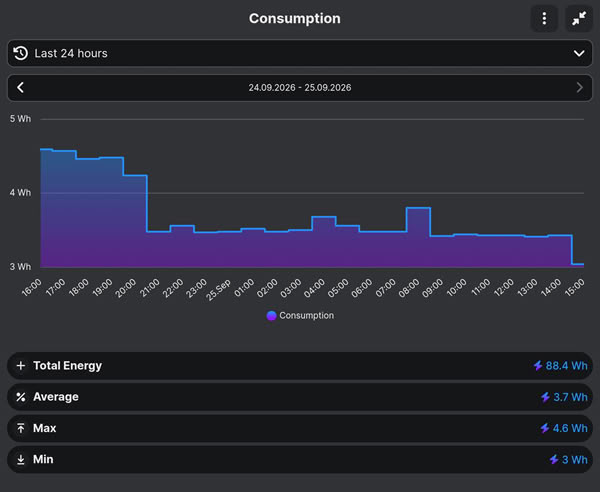
Over 24 hours at idle, the Mu Ultra used 88.4 Wh and averaged just 3.7 W at the wall, with readings ranging from 3.0 W to 4.6 W. Left at that average for an entire year, it would use about 32.4 kWh, costing roughly $4.86 to $6.48 annually at electricity rates of $0.15 to $0.20 per kWh. Normal use will raise that figure whenever the CPU or Arc graphics become active, but the very low idle draw should keep always-on and lightly used projects inexpensive to run.
System Power Draw Under CPU and GPU Workloads
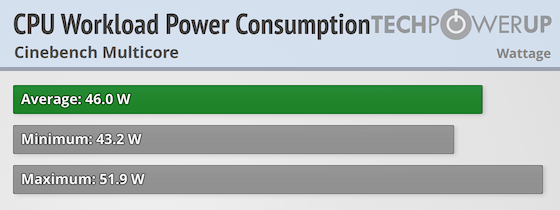
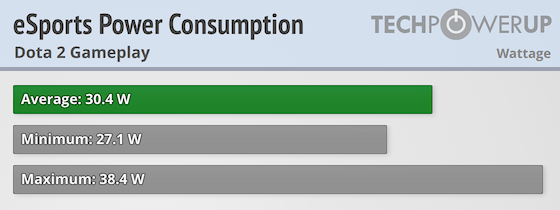
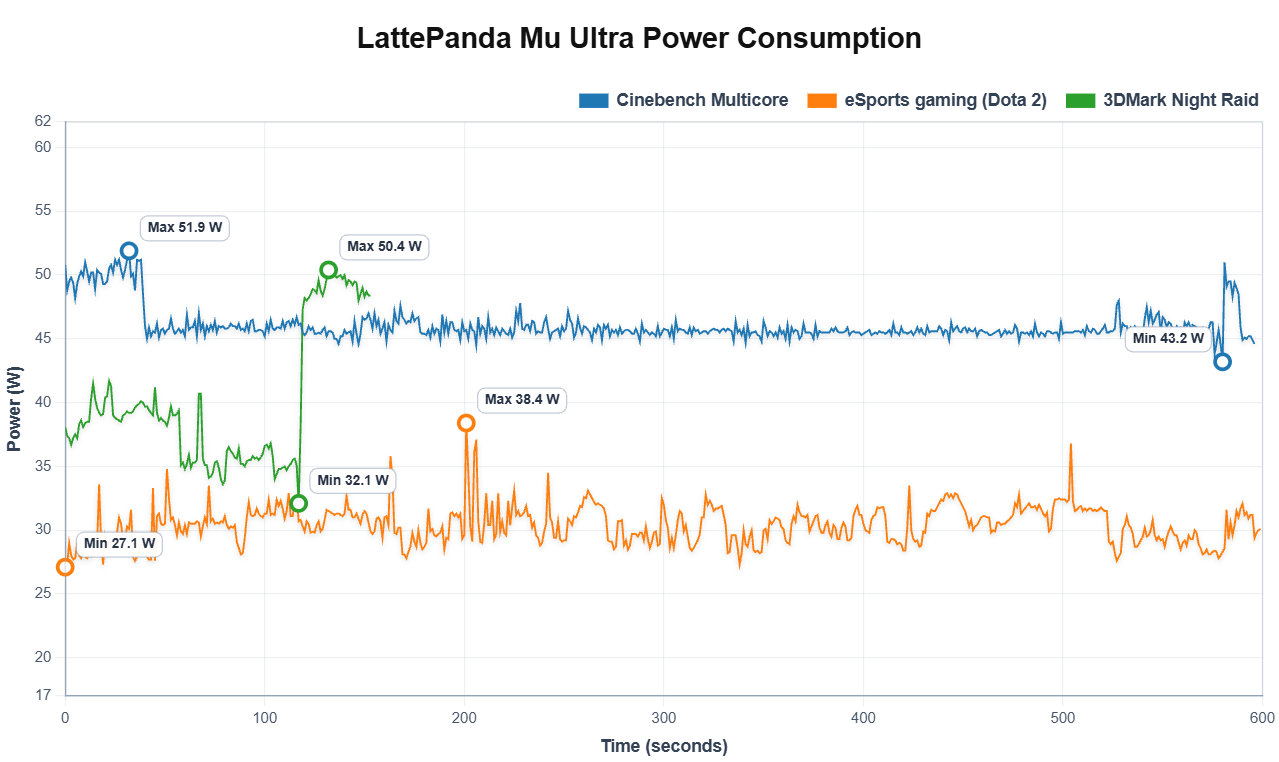
During Cinebench multicore, total system draw averaged 46.0 W at the outlet, with a minimum of 43.2 W and a maximum of 51.9 W. That is whole-system power, not CPU package power, and the relatively narrow range shows the board staying near the same draw throughout the sustained render. Dota 2 brought average system draw down to 30.4 W, with a 27.1 W minimum and 38.4 W maximum during gameplay.
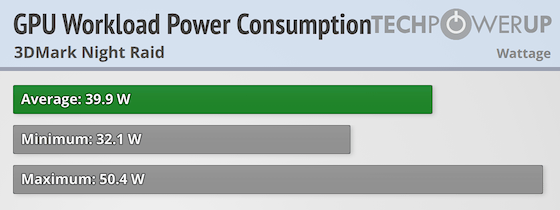
Night Raid averaged 39.9 W at the wall and ranged from 32.1 W to 50.4 W, placing the graphics-heavy test between Dota 2 and Cinebench for average draw. Even with the Arc 130V active, the complete open-board setup stayed under 51 W at its highest recorded point in this profile.
The chart below puts the three measured load profiles together so their average, minimum, and maximum system draw can be compared directly:
Noise Levels
During normal desktop use the cooler was usually very quiet, measuring 31.1 dBA at idle and 43.2 dBA during lighter work from 30 cm away. Sustained heavy load was very different, reaching 50.1 dBA with a noticeable whiny tone as the small fan ramped up, so the cooler is much easier to ignore during day-to-day use than during long CPU or GPU workloads.
Nov 28th, 2026 14:31 CST
change timezone
Latest GPU Drivers
New Forum Posts
- ASRock Z590 OC Formula (Various questions). (11)
- Can you guess Which game it is? (378)
- Which new games will you be buying? (363)
- TPU's Nostalgic Hardware Club (22211)
- WarpCoreBench scores! (118)
- RivaTuner / MSI Afterburner OSD with GPU-Z (6)
- What are you playing? (26257)
- Share your CPUZ Benchmarks! (2687)
- What's your main Black Friday / Cyber Monday purchase? (48)
- Your PC ATM (36504)
Popular Reviews
- Upcoming Hardware Launches 2027 (Updated Nov 2026)
- Moaiplay Ora Pro G1 850 Review
- AMD Ryzen 7 9800X3D Review - The Best Gaming Processor
- VZMORE AX9 Max Review
- Montech CyberFlow ARGB 360 Review
- ASRock X870E Challenger Wi-Fi White Review
- AMD Zen 6 Technical Deep Dive
- ORICO Obook15 AI Review
- Phantom Blade Zero Performance Benchmark Review - 35 GPUs Tested
- Microsoft Surface Laptop Ultra Review - The Next-gen Arm Laptop
TPU on YouTube
Controversial News Posts
- Jensen Huang Reinstated as CEO of NVIDIA (628)
- NVIDIA Co-Founder and CEO Jensen Huang Officially Resigns (492)
- Report: Jensen Huang Eyes NVIDIA Comeback (281)
- Open Letter Asking NVIDIA to Reinstate Jensen Huang Passes 115,000 Signatures (184)
- OpenAI CEO Argues Home PCs Waste the World's Limited DRAM Supply (153)
- NVIDIA Launches Investigation Into Jensen Huang's Relationship With Suspected Chinese Spy (136)
- Intel Razor Lake Gets a 12 P-Core bLLC Chip With No E-Cores, Per Leak (94)
- NVIDIA GeForce RTX 50-Series Scheduled for up to $500 Price Hike This Week (89)