 16
Lian Li B4-mATX Review
A Closer Look - Inside »A Closer Look - Outside
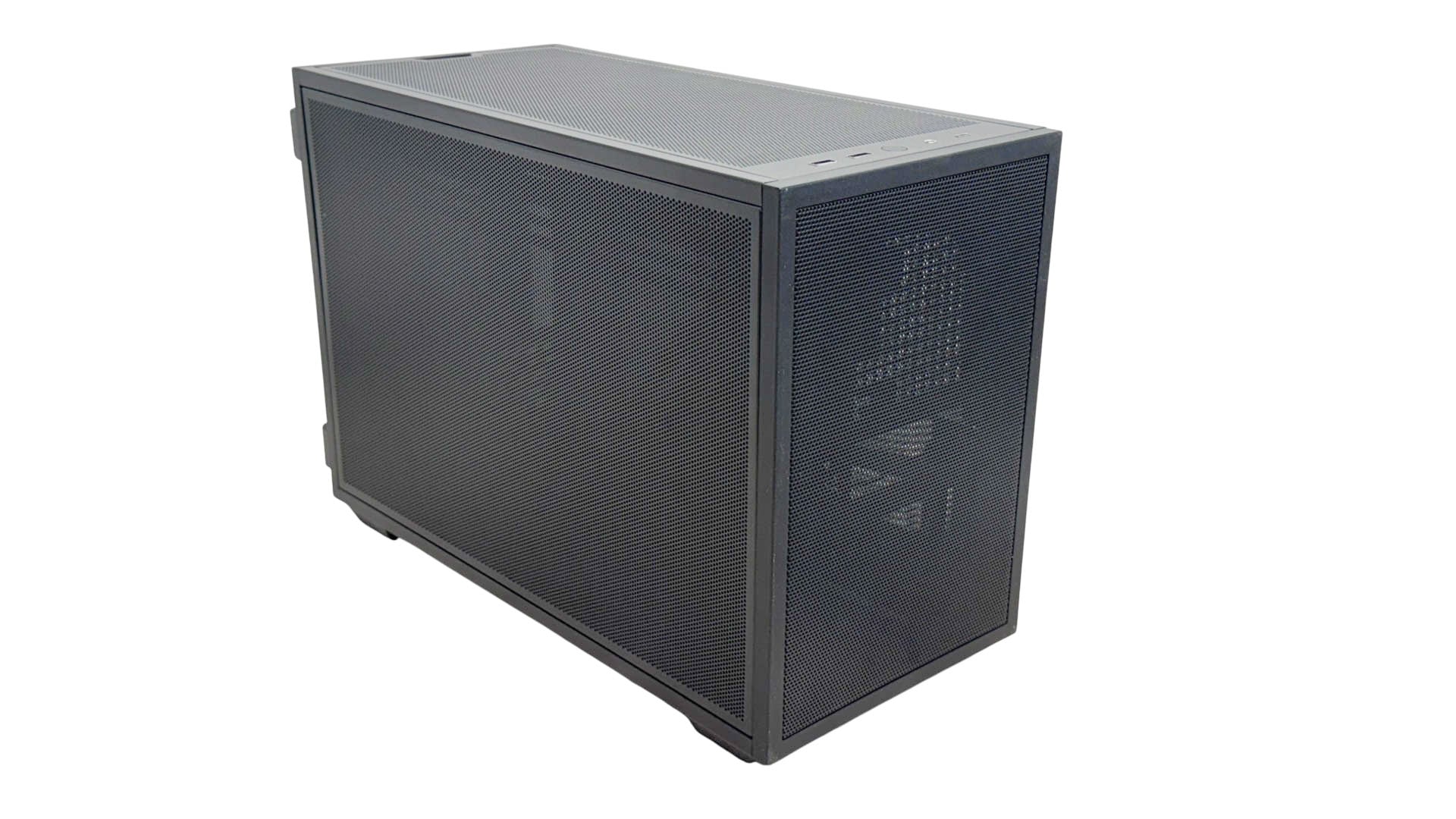
The case is available in black or white and with or without wood accents on the front, which turns into the roof once in vertical mode. The 21.3 liter volume actually makes it significantly smaller than the A3-mATX, with the space-saving coming largely from a reduction in height and smaller amount from the depth. This does come with sacrifices as we'll discuss later.
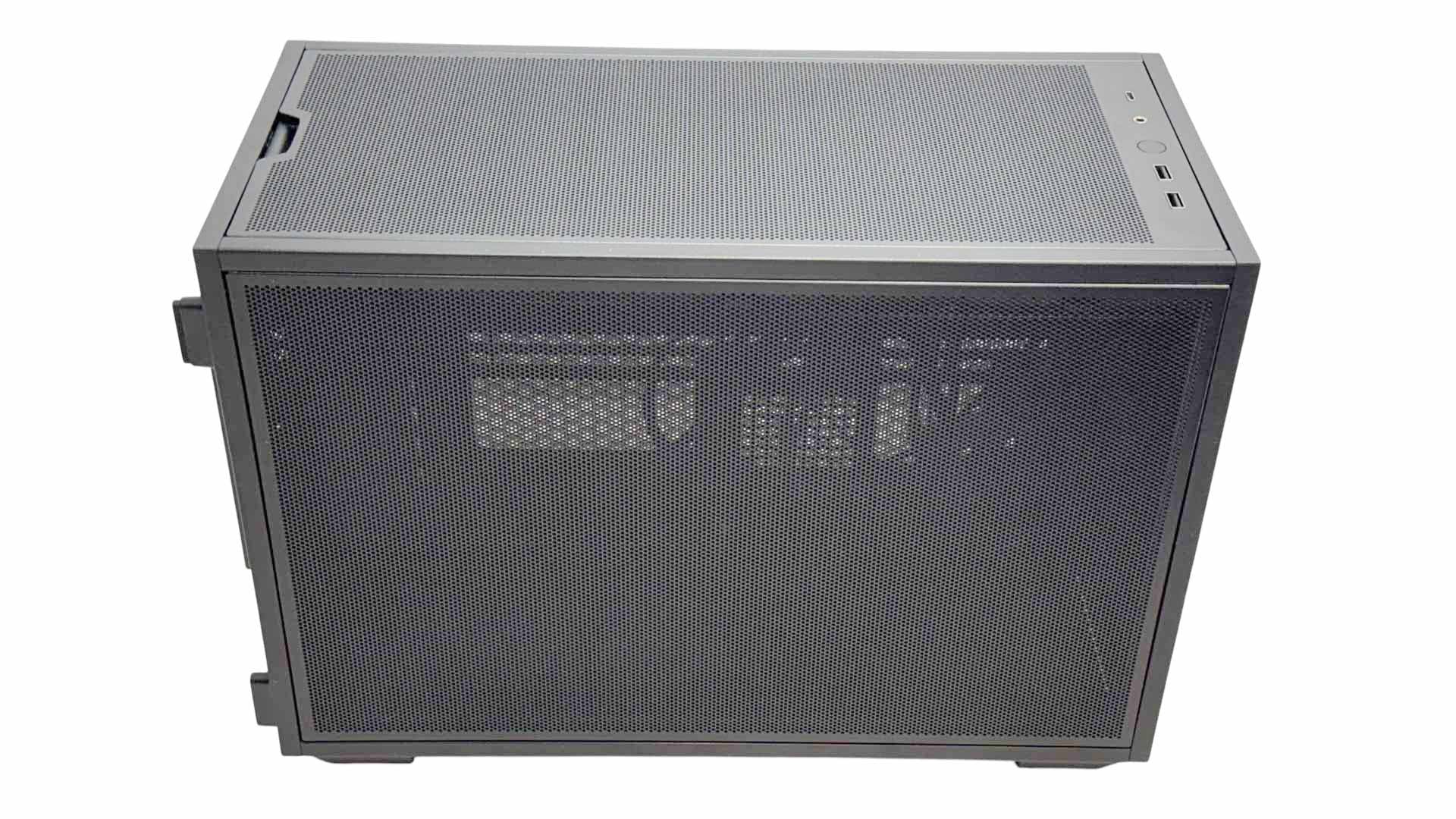
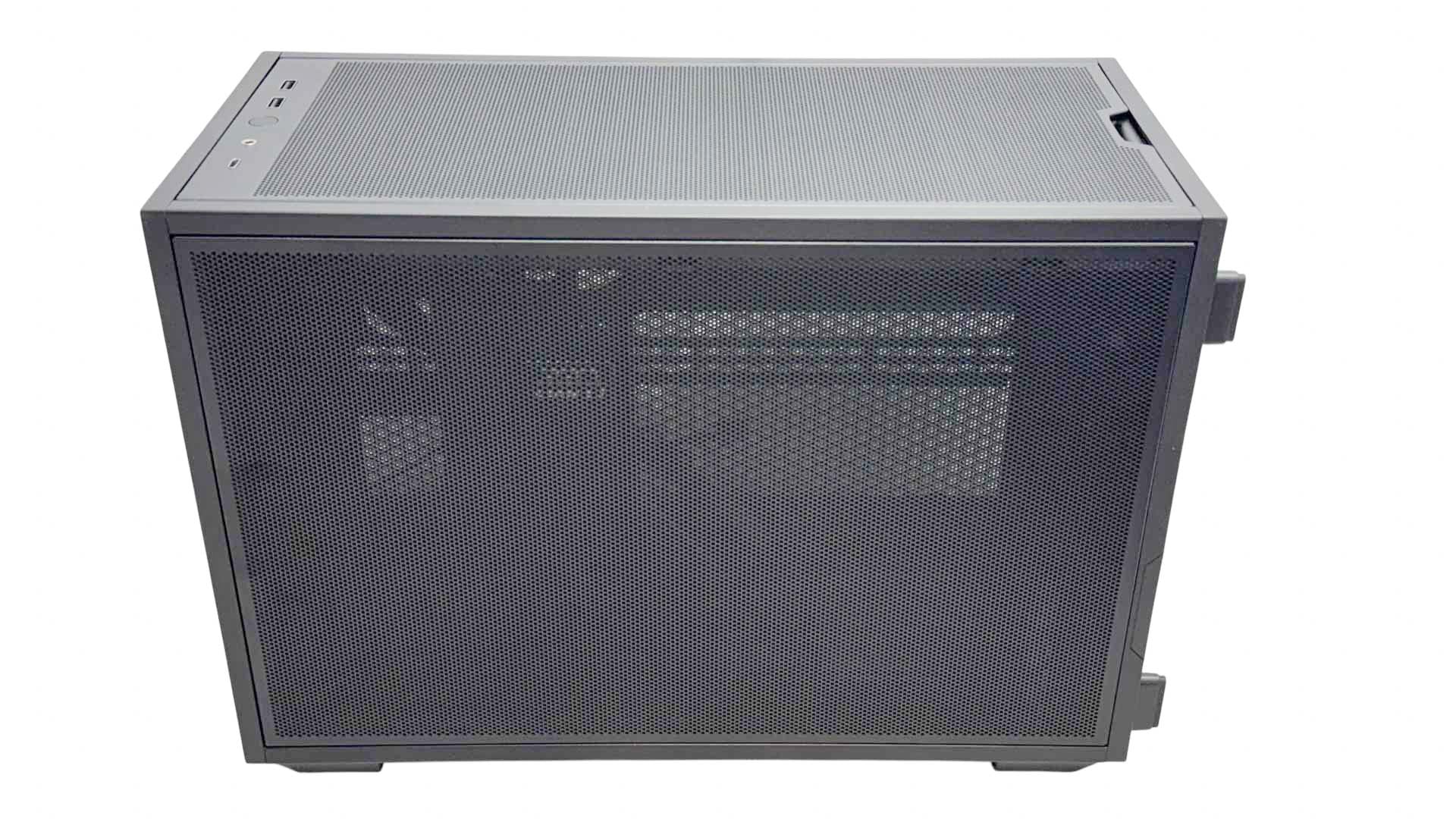
Every panel offers significant ventilation and is tool-free, and the sides, roof and front panels are all removable. The I/O panel is located on top of the case in its horizontal mode, with this sitting at the front once rotated into vertical mode, although as we'll see later, you can move the front panel back to the top of the case using the optional Vertical AeroDeck kit. The case is primarily 1 mm steel construction, but has plenty of bends to increase rigidity.
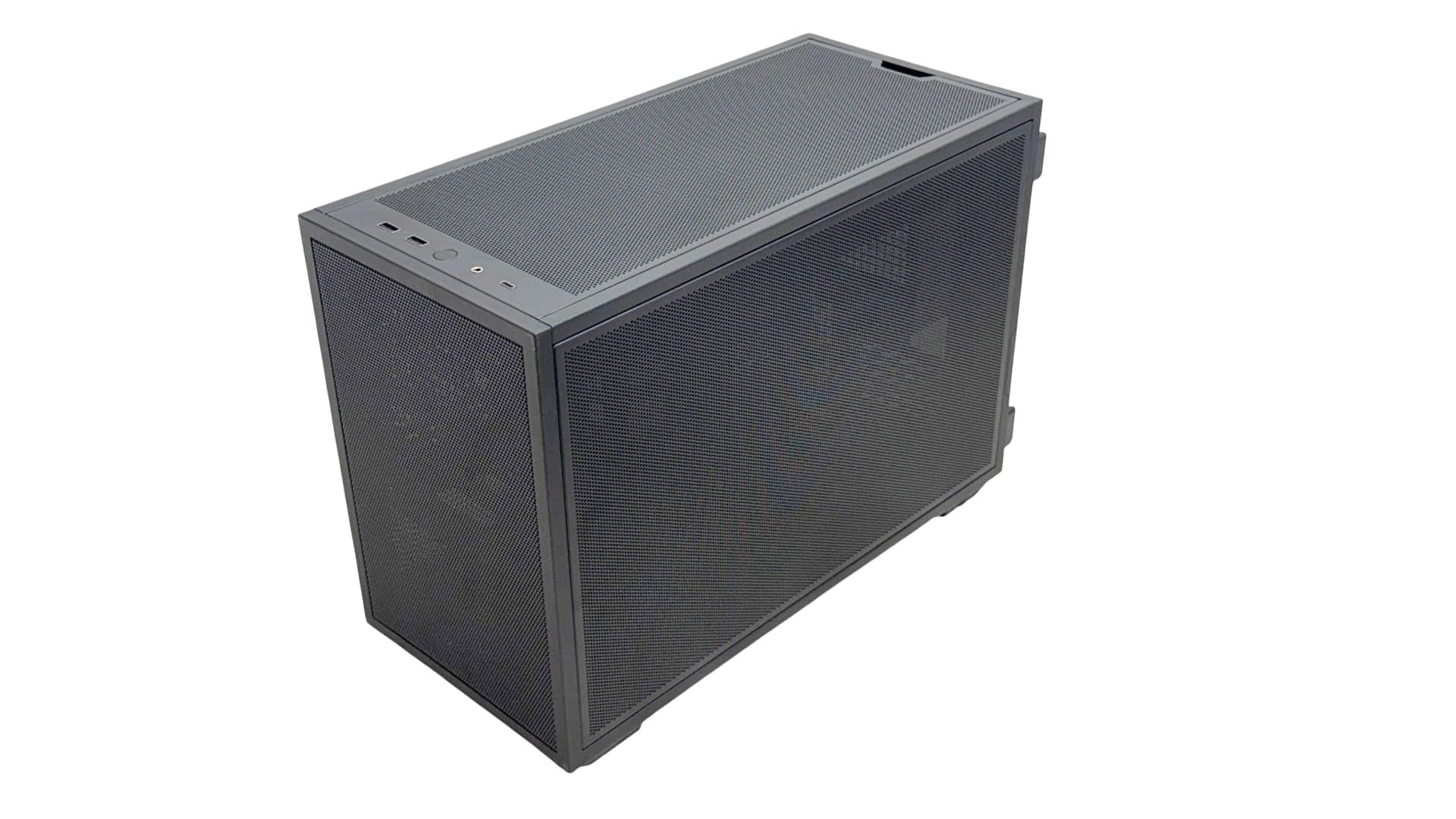
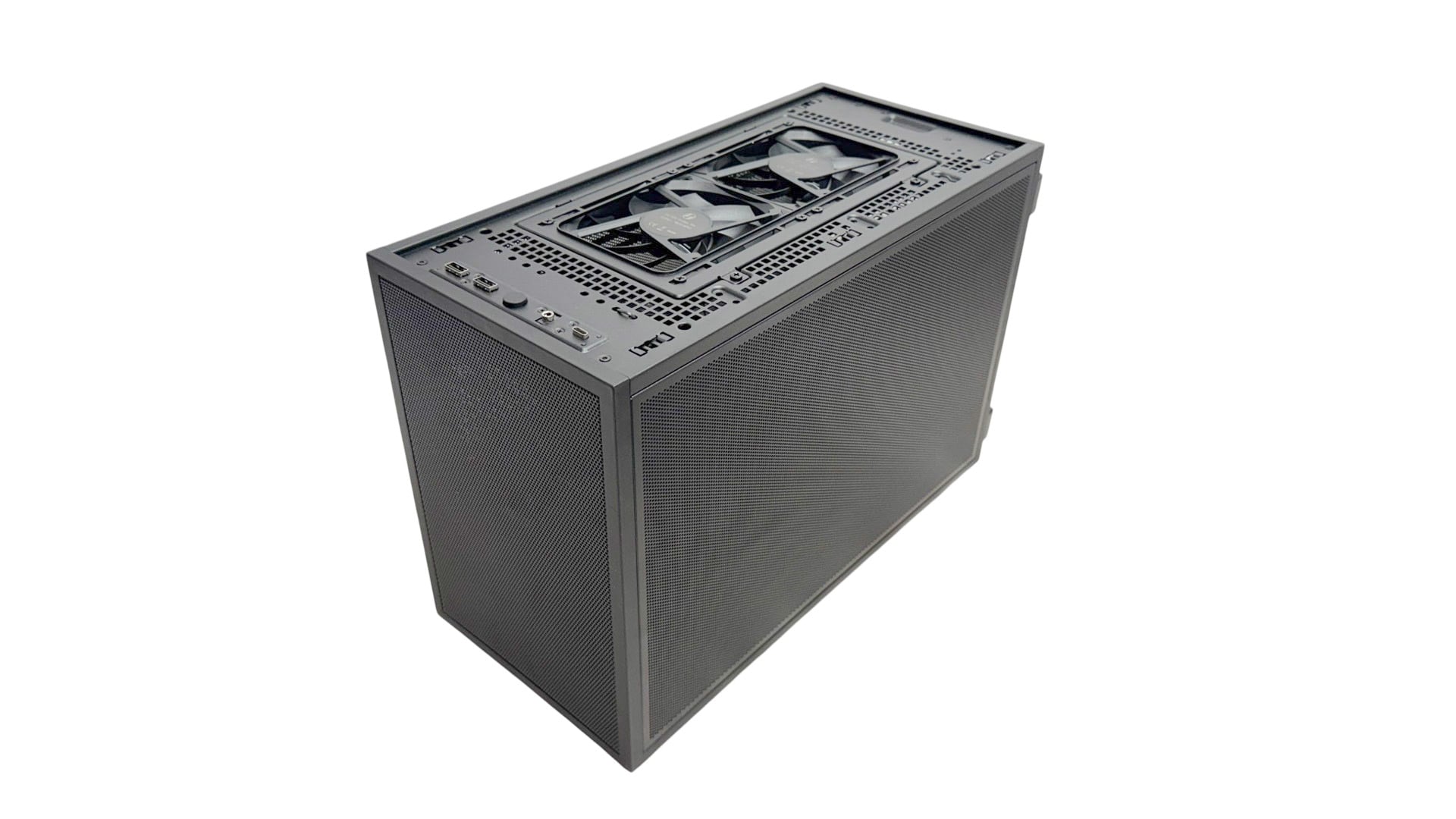
The roof panel uses push pins to secure, so simply lifts off and is the only panel to do so, with the rest using sliding mechanisms instead. This reveals two Lian Li slim 120 mm exhaust fans, which are the only fans included. A peak of 1,800 rpm and 64 CFM airflow means they're reasonably powerful too, but will still lack the raw static pressure of a full-height fan.
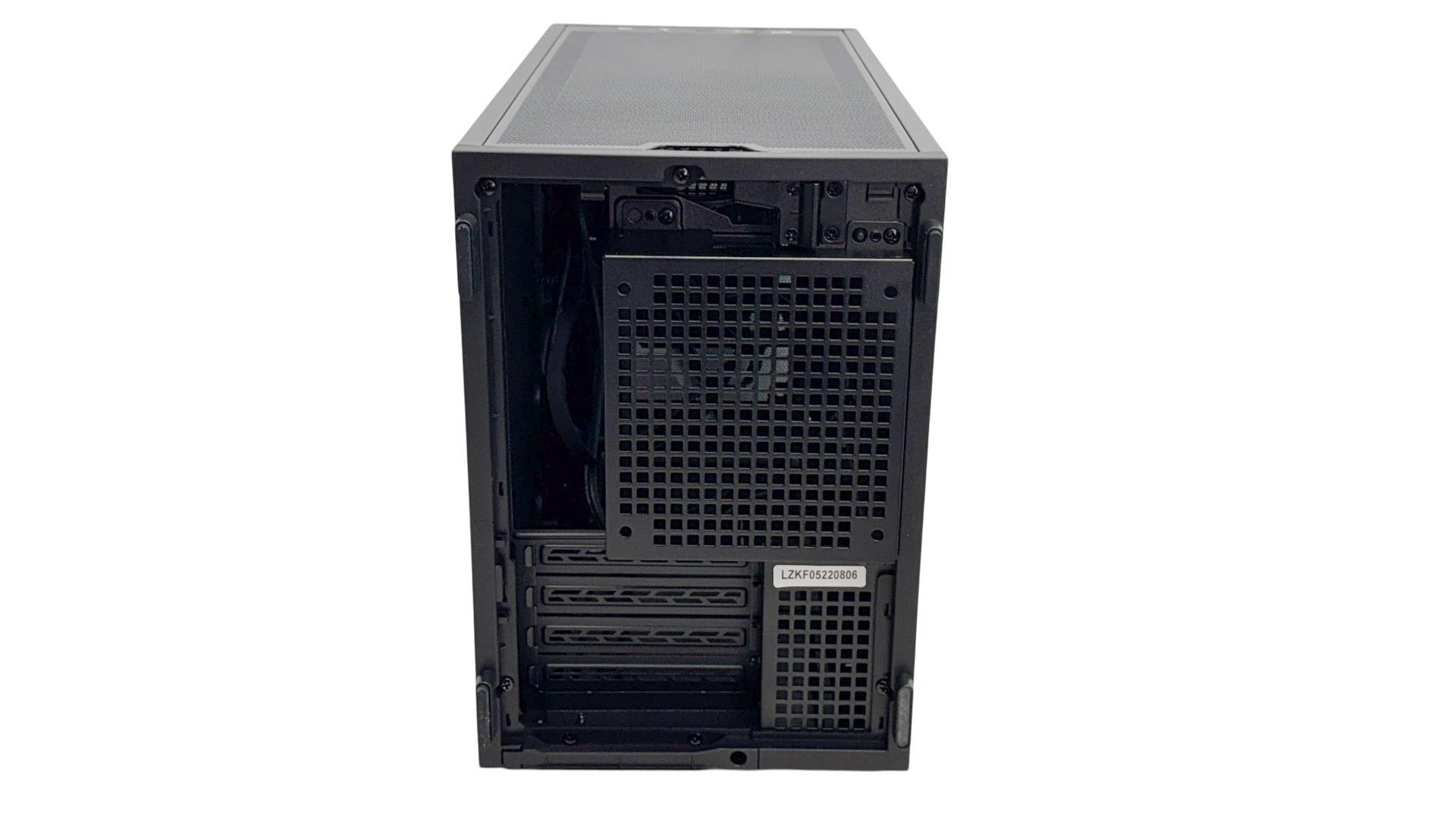
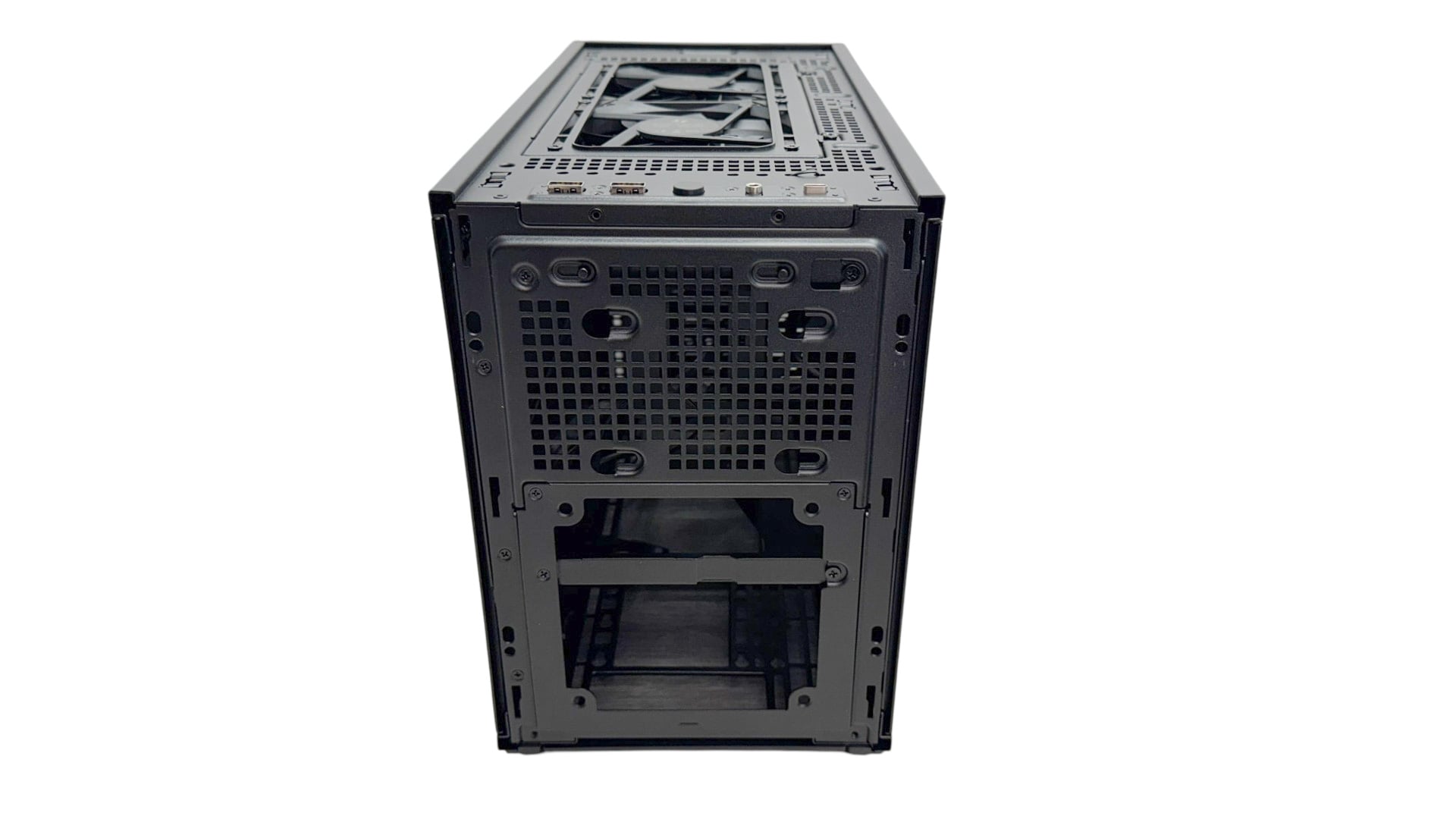
The rear of the case has several interesting details. Firstly, there's a 120 mm fan cage that, out of the box, protrudes outwards, allowing for radiators to sit in the recess that would otherwise foul the case. If you're using a CPU tower cooler, then swapping this around places the fan closer to the cooler and will aid airflow. The front case panel needs to be removed in order to slide the side panels out. All three slide and lock into place using flanges and are equipped with rubber anti-vibration pads. At the front of the case, the PSU area is at the top and located in the front upper mesh is a single 2.5 in mount, while below there's space for a slim 120 mm fan if SFX PSUs are used.
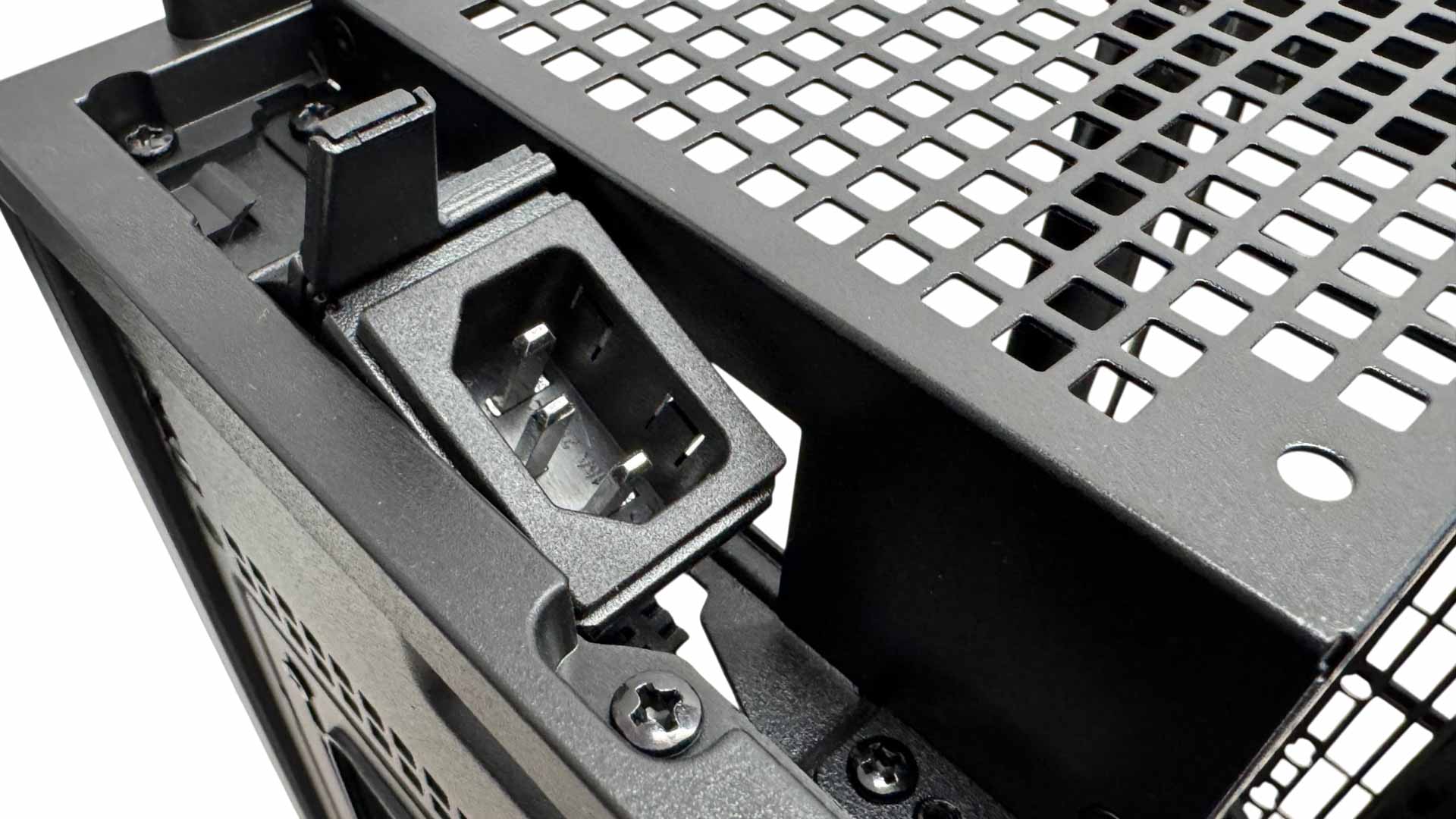
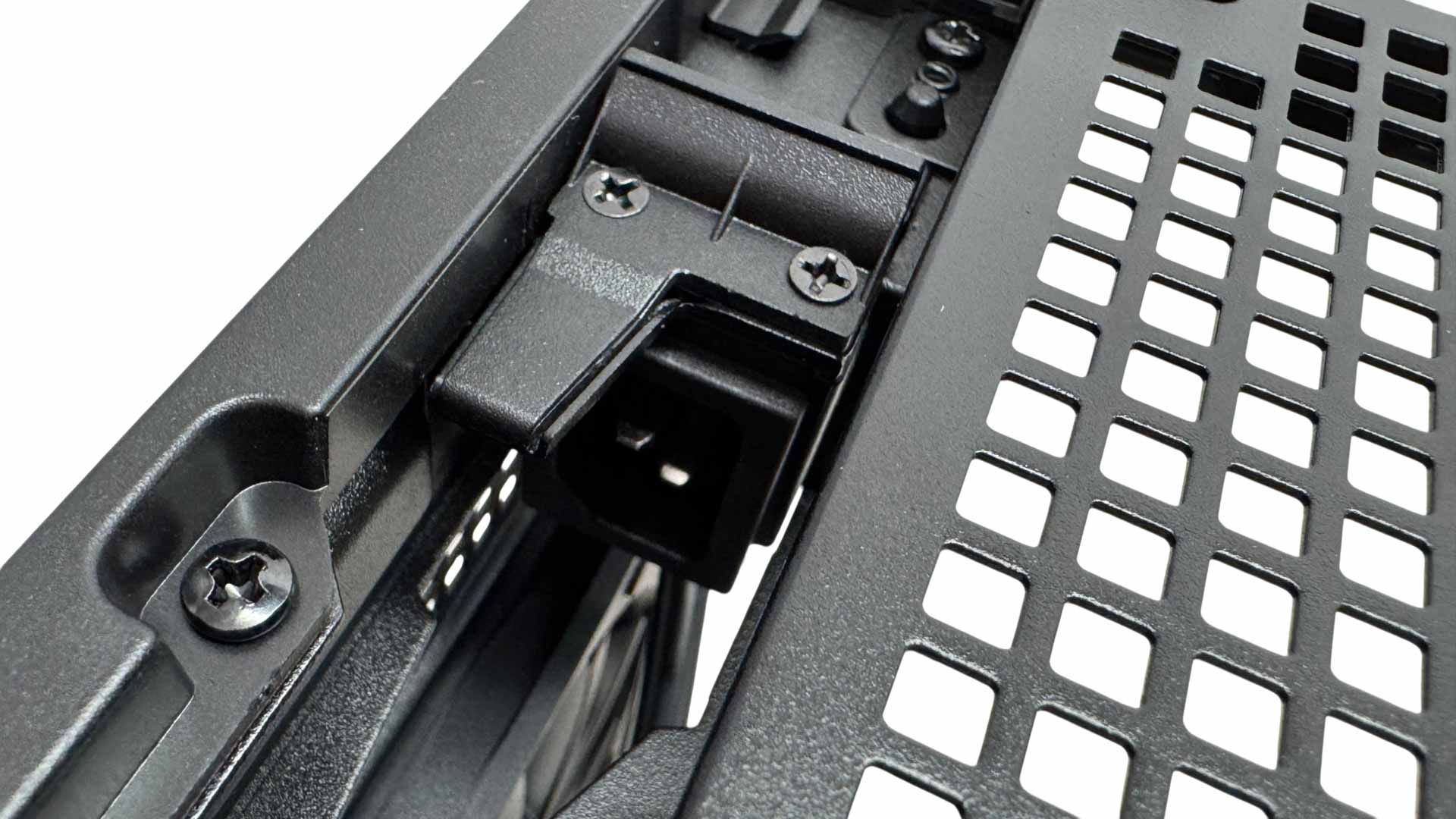
The PSU sits at the front of the case and uses an extension cable, with the external port able to rotate inwards to allow the case to sit flat in vertical mode, preventing the power cable from protruding outwards. The case comes ready-fitted with rubber feet for vertical mode too.
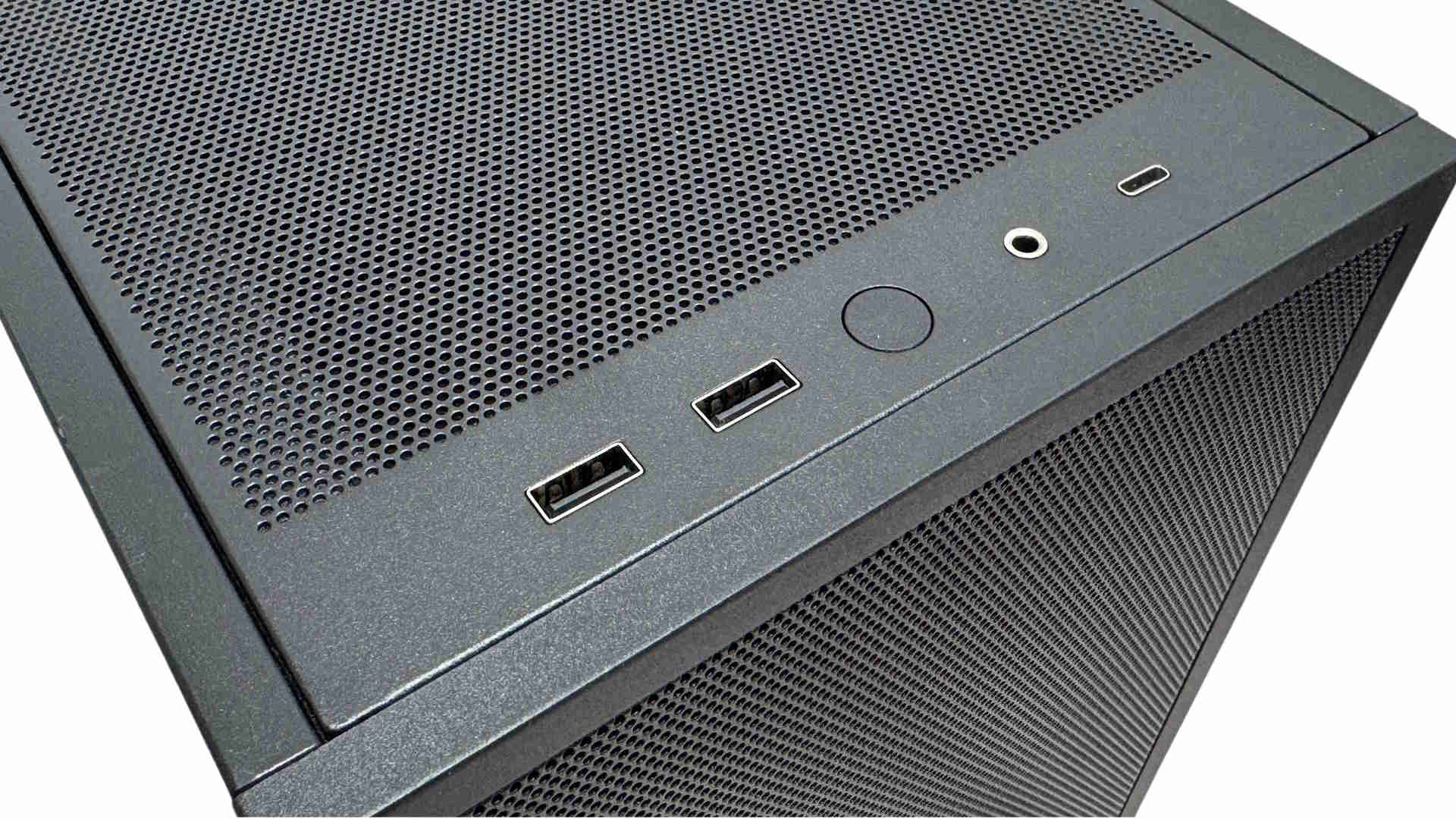
The I/O panel features a 20 Gbps-capable Type-C port, two USB 3.0 Type-A ports, a single audio combo plug, and a power button.
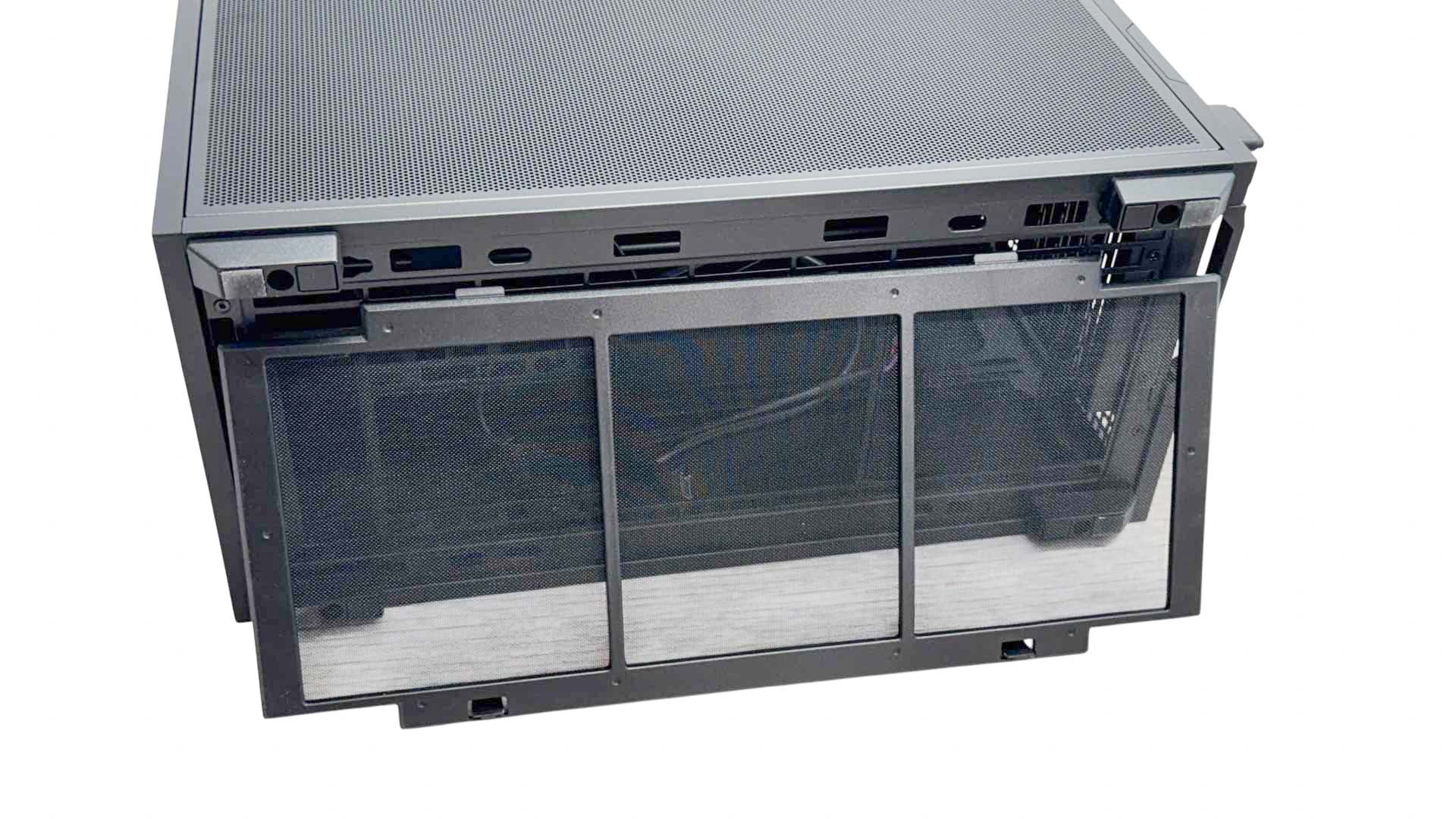
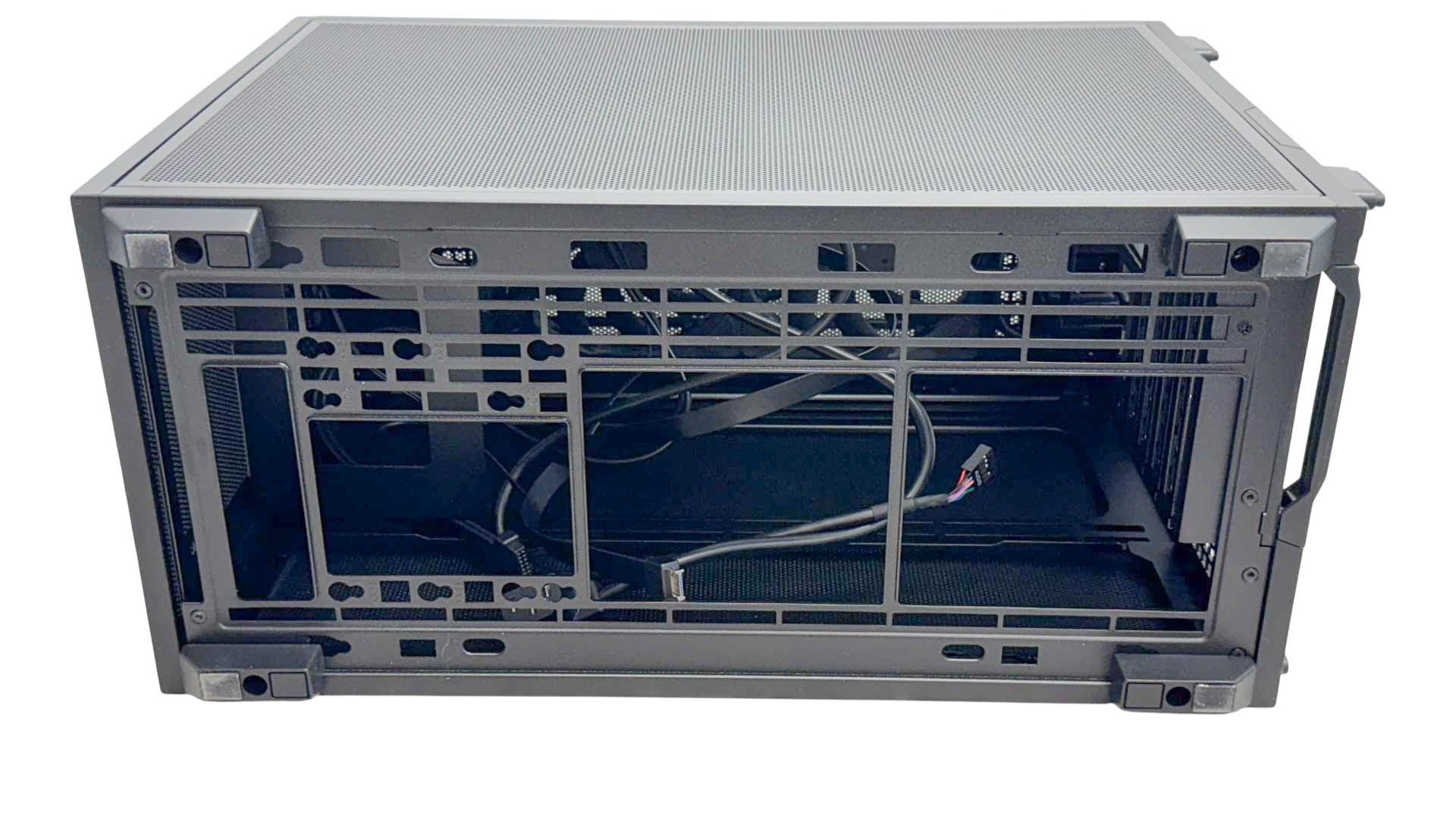
A large clip-on full-length dust filter sits underneath the case and removing this reveals three possible 120 mm fan mounts or a pair of 140 mm fans, with a single 2.5/3.5 in storage mount too. Lian Li doesn't specify radiator support here, but you can easily fit a 30 mm-thick 240 mm radiator and slim fans with room to spare if you use a dual-slot graphics card.
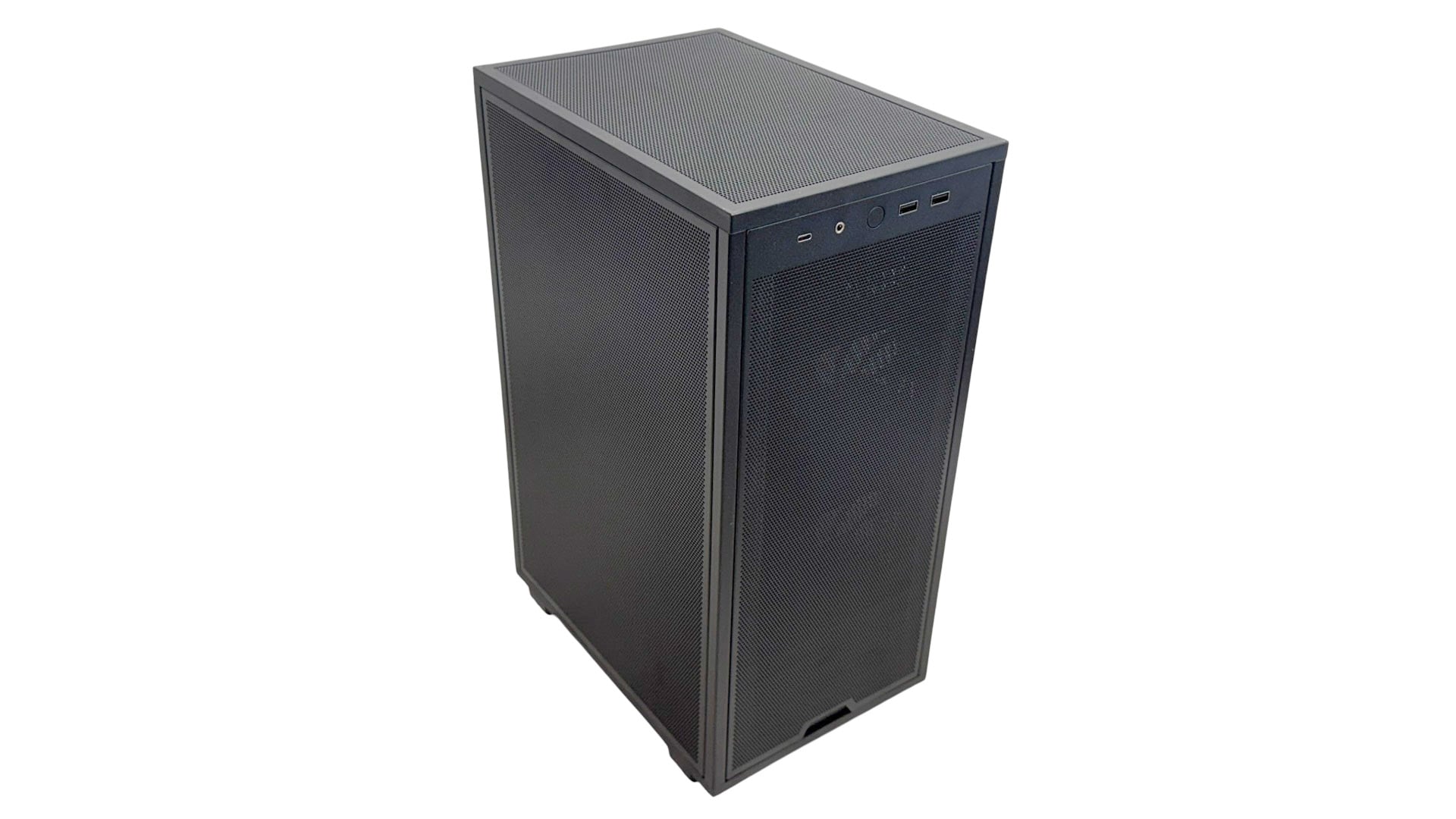

In vertical mode, nothing needs to be adjusted on the case except for the external power plug being rotated inwards. The roof of the case becomes the front, while the GPU now draws air effectively in through the rear of the case. As it has plenty of clearance in horizontal mode, it's unlikely to result in much benefit to airflow, while the optional Vertical AeroDeck kit does allow for full height fans to be used for additional GPU cooling. In vertical mode, its height of 407 mm means that while it supports microATX motherboards, it's actually shorter than many similar Mini-ITX cases such as the HYTE Revolt 3 and NZXT H2 Flow, while only standing 40 mm taller than the Ssupd Meshlicious.
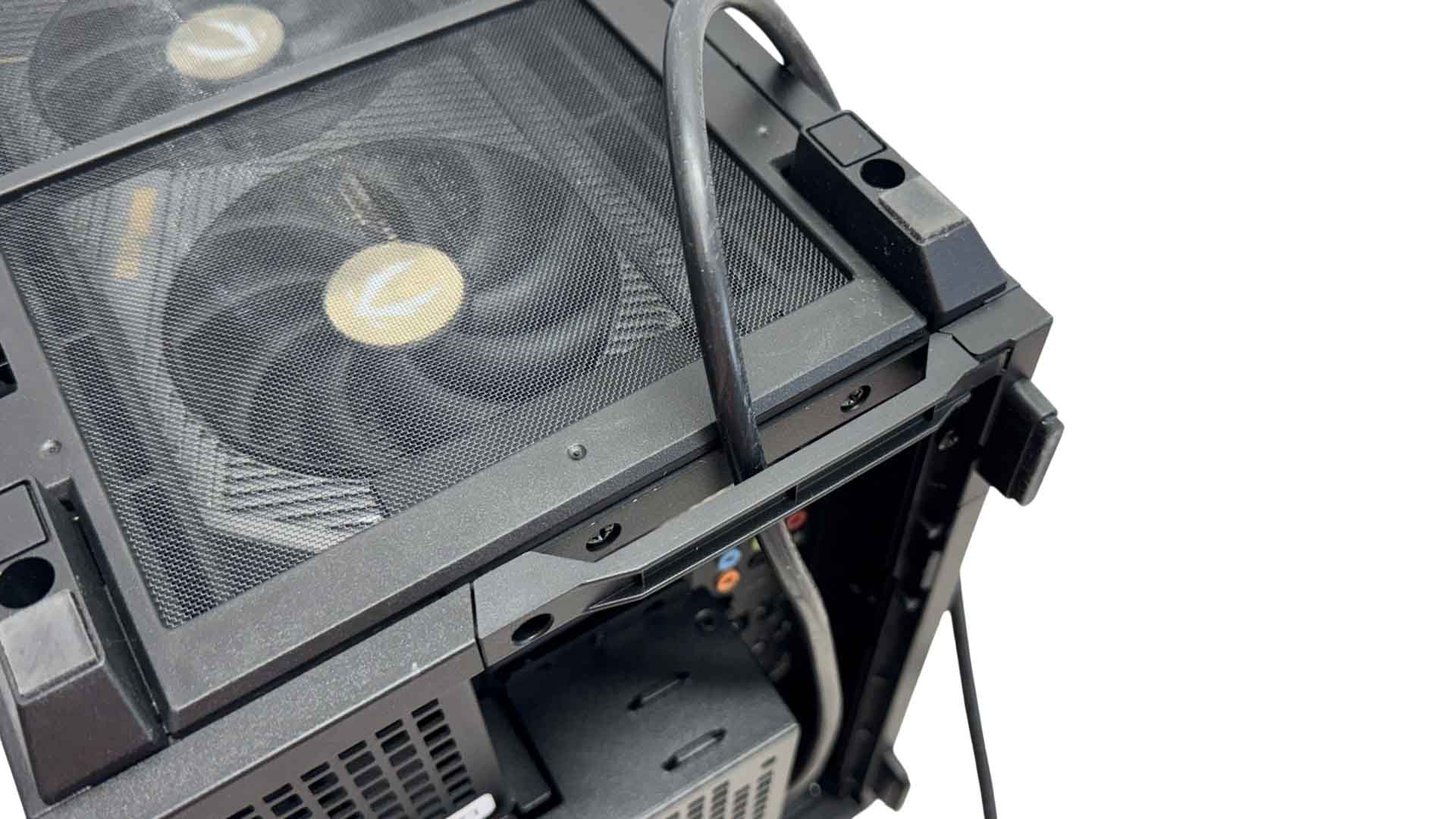
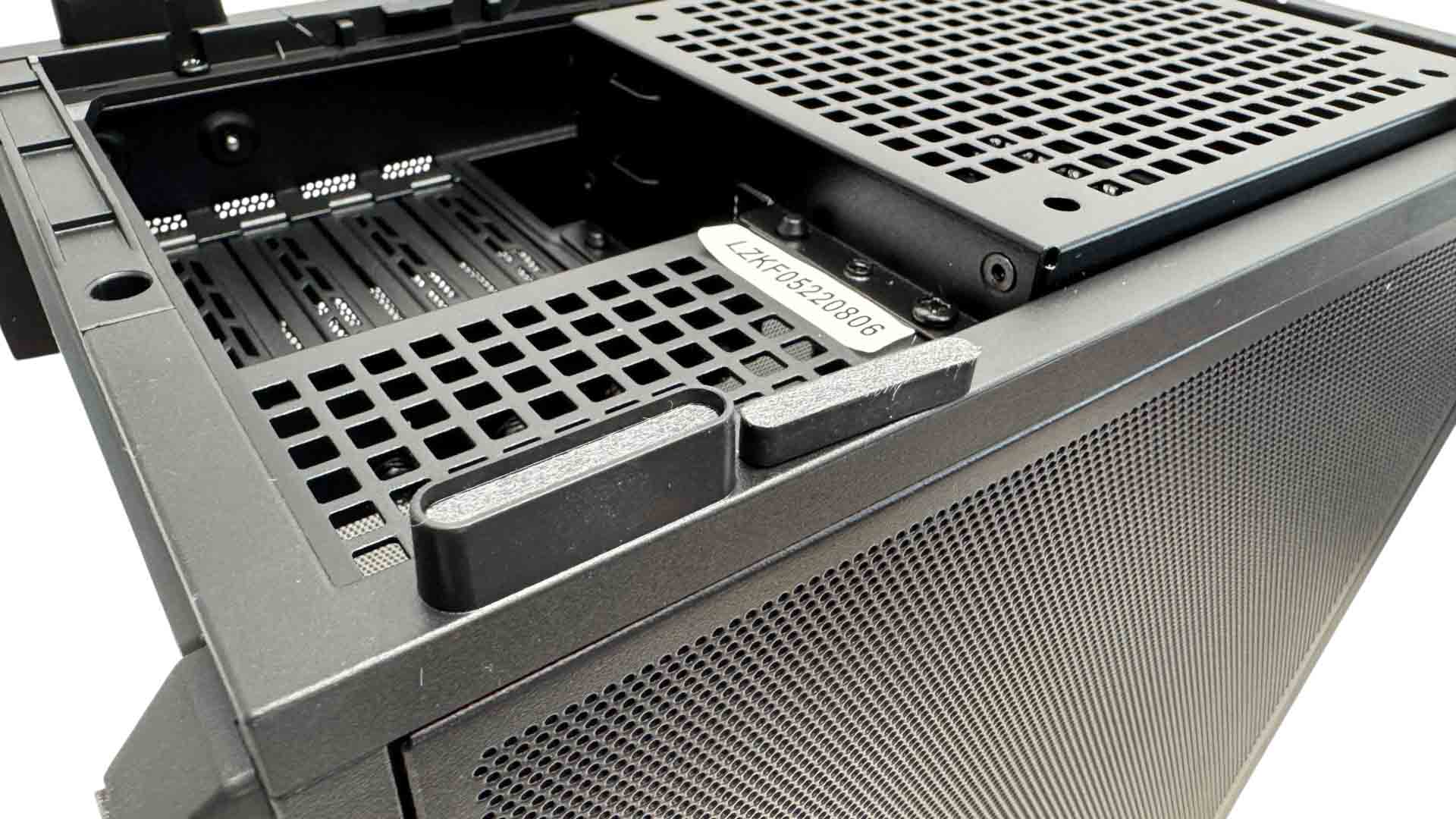
In vertical mode, as well as the rotating power port, there's a clip to secure I/O panel cables and route them out the back of the PC. The motherboard is recessed enough to allow this without using angled cables. The clip screws into position too, so there's no chance of it coming loose if you need to cram a bunch of cables in there, which is a great idea. There was one casualty, though, which was a vertical mode case foot coming loose. This was already loose when opening the box, but it's easy to see why, given the feet are extremely narrow and quite small so are under significant lateral force. Nothing some superglue won't fix, but clearly, the recess for the rubber feet is not deep enough.
Nov 20th, 2026 11:53 PST
change timezone
Latest GPU Drivers
New Forum Posts
- Honestly, do you care about GTA VI? (191)
- GeekMagic Ultra Smart WiFi Weather Station (6)
- Very unusual two gaming-pc scenarios. (33)
- Anthrophics IPO (16)
- Can i play GTA 6 now? (Joke) (10)
- Last game you purchased? (1410)
- TechPowerUp Screenshot Thread (MASSIVE 56K WARNING) (4387)
- How to prevent OLED burn damage due to PC freezes or power outtages? (44)
- SATA drive 1.4 GBps with Intel X25-E on Windows 98! (35)
- RX 9000 series GPU Owners Club (2245)
Popular Reviews
- AMD Zen 6 Technical Deep Dive
- Ugreen NASync DXP4800 GT Review
- Corsair RM1200e (Second Generation) Review
- Acemagic Retro X3 Review
- Microsoft Surface Laptop Ultra Review - The Next-gen Arm Laptop
- Upcoming Hardware Launches 2027 (Updated Nov 2026)
- Pulsar Office Tour & First Look at P1 Dual-Sensor Mouse
- Biwin Black Opal NV7400 2 TB Review
- AMD Ryzen 7 9800X3D Memory Performance Scaling
- AMD Ryzen 7 9800X3D Review - The Best Gaming Processor
TPU on YouTube
Controversial News Posts
- NVIDIA Co-Founder and CEO Jensen Huang Officially Resigns (490)
- Report: Jensen Huang Eyes NVIDIA Comeback (250)
- Open Letter Asking NVIDIA to Reinstate Jensen Huang Passes 115,000 Signatures (184)
- OpenAI CEO Argues Home PCs Waste the World's Limited DRAM Supply (152)
- NVIDIA Launches Investigation Into Jensen Huang's Relationship With Suspected Chinese Spy (136)
- Intel "Raptor Lake Next" 16-Core and 20-Core CPUs Surface (130)
- Legendary Game Studio BioWare Shuts Down Following EA Layoffs (104)
- Dell CEO Says the Memory Shortage Will Get Worse in 2027 (95)