 7
Lian Li HydroShift II LCD-C 360TL Review
Finished Looks »Installation
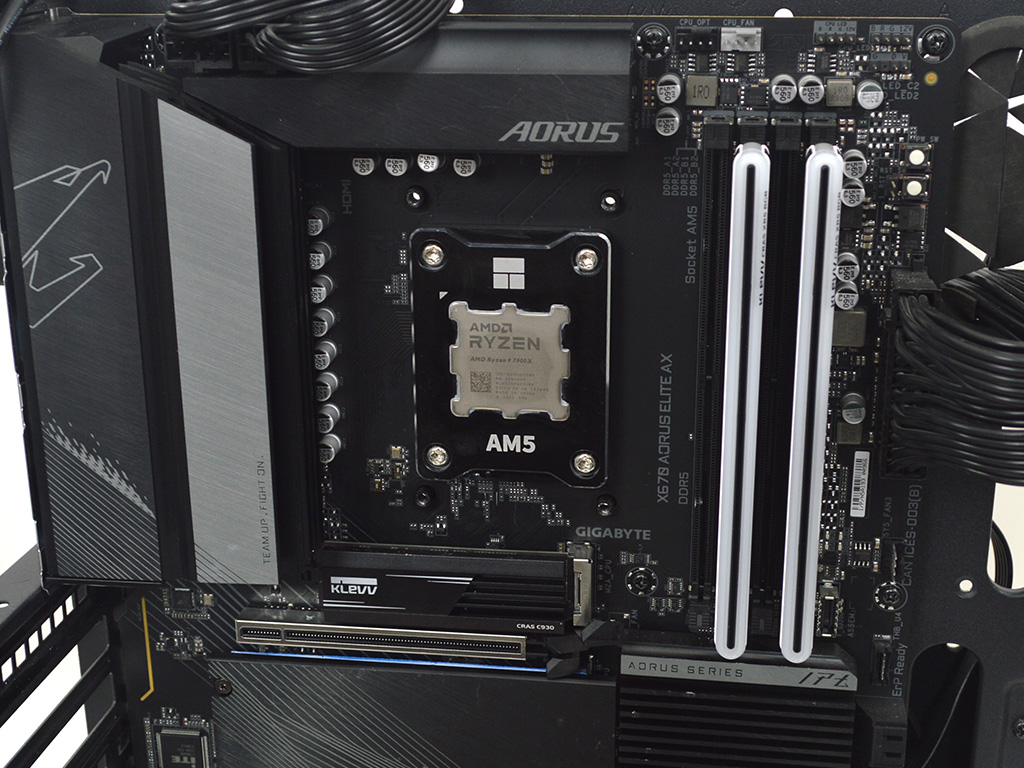
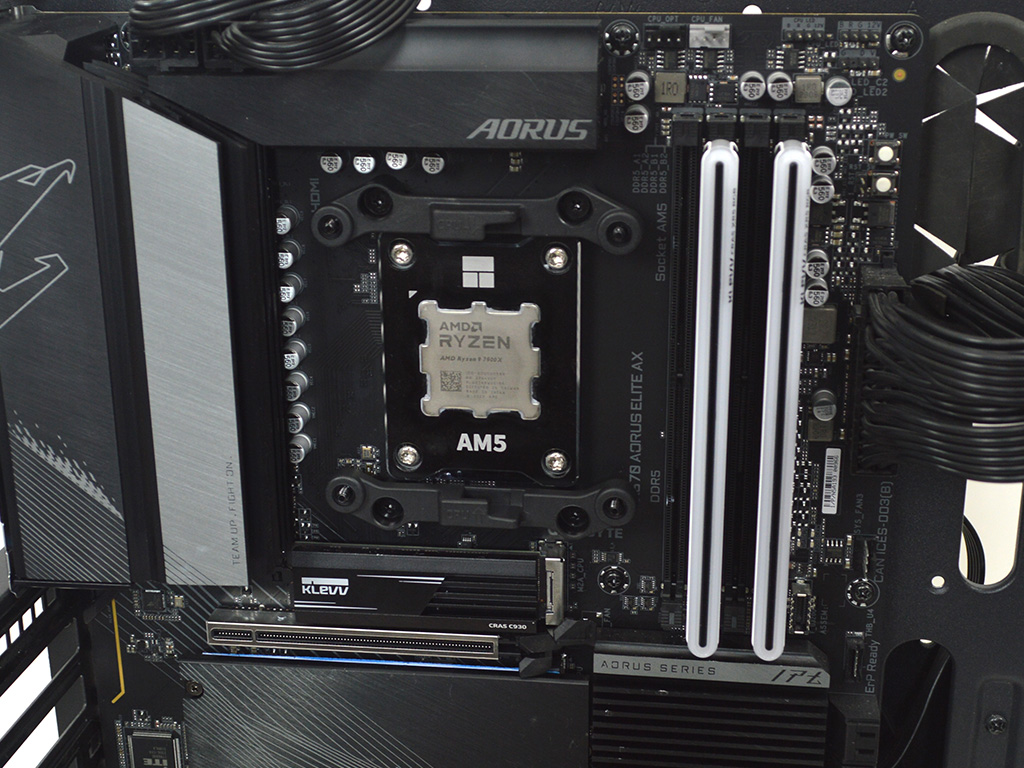
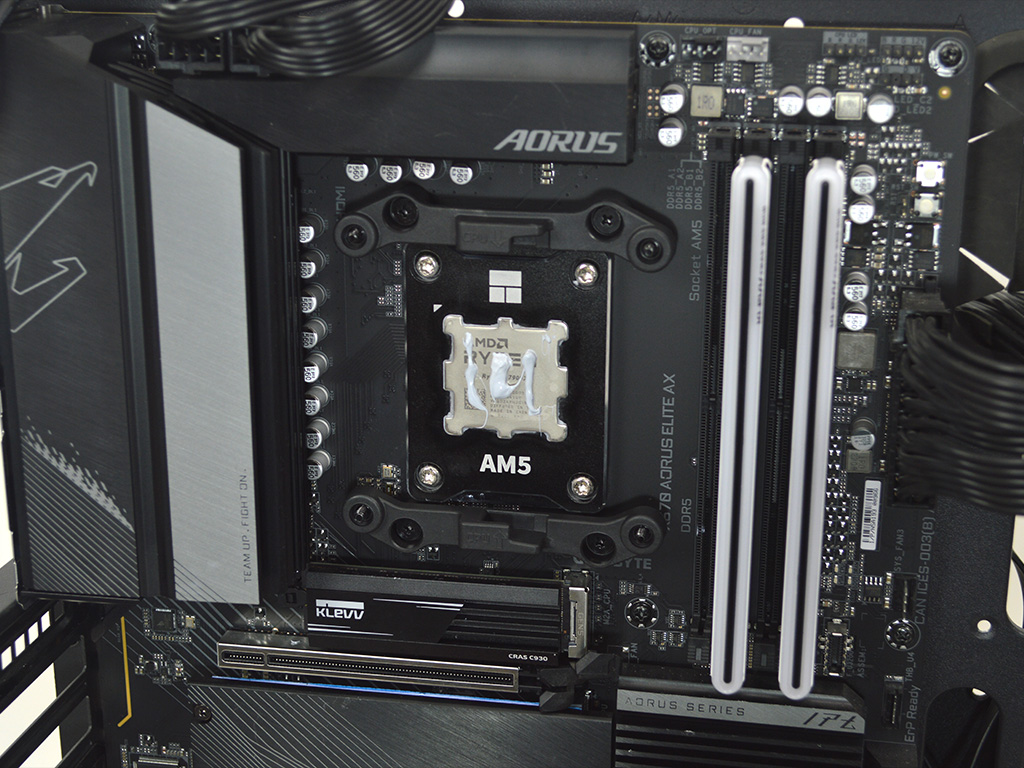
To install the cooler on AMD's AM5 Socket the first step is to remove the motherboard's default brackets. Then secure the provided brackets with the provided screws. Once that is complete you can apply thermal paste. I use Arctic MX6 for testing, but regardless of your choice I highly recommend spreading the paste with the spreader before going any further.


The reason for spreading the paste ahead of time is due to the way the pump sits in the mounting brackets. You line up the correct tabs on the pump with the cutouts in the bracket. Then slide the pump to the left before securing it with the proper nuts. If you do not pre-spread the paste, its likely you won't get an even spread with the mounting hardware Lian Li uses. Once you have the pump installed you can then apply the decorative cap on top.

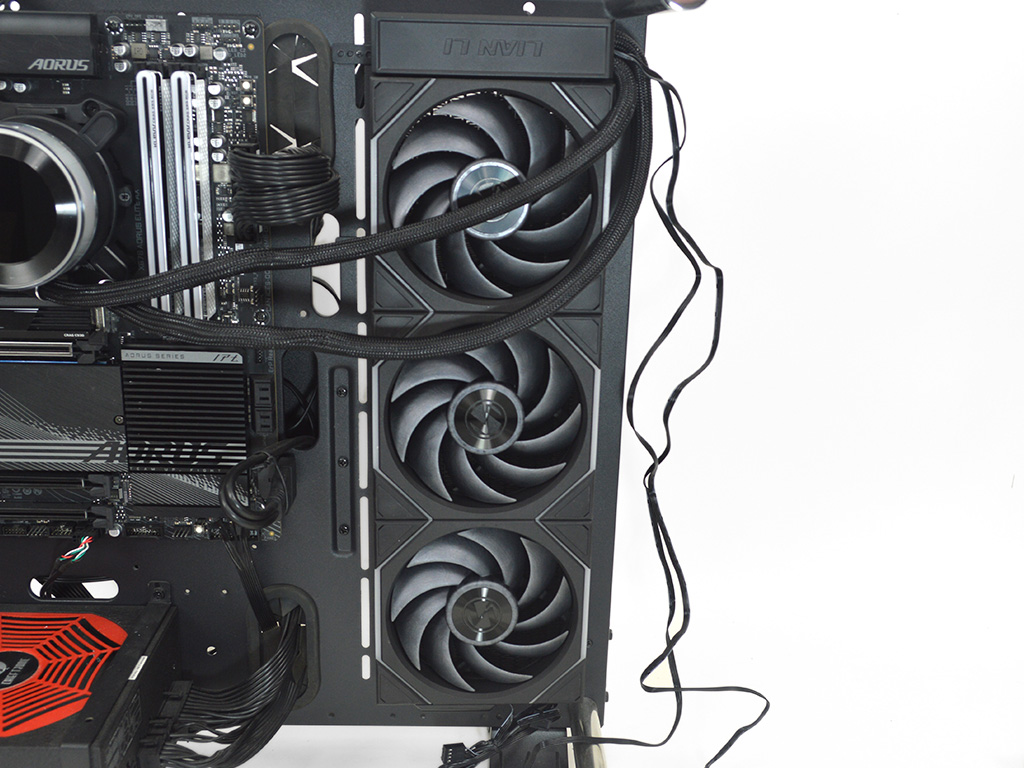

Now it is time to mount the radiator, since the fans come pre-installed this is a fairly easy step. Once installed, connect the wiring based on your setup be it offline, wired, or wired with receiver. For full control you will want to use the receiver.
Overall, the installation is pretty straightforward on AMD and Intel, but I am not a fan of the mounting hardware or the overall design. First the mounting hardware, while solid, makes it harder to guarantee a good spread when it comes to the thermal paste, because if you're not paying attention or push down too hard when sliding the pump over it can pull the TIM to one side.
While the tubing setup is fantastic for a system with the radiator at the top of the chassis, trying any other location such as in the front or on the side is just plain ugly, with the tubing not being switchable from one side or the other like the previous generation. Essentially, it's meant to be installed in the top position and if your case isn't suitable for that you're going to have a rough time. Furthermore, the various setup options for ARGB and Display control are overly convoluted and complicated for no good reason. Sure having offline mode, USB mode, wireless mode all together sound good on paper, but it adds cost. You still have to plug everything in and its overly complicated compared to just using daisy-chained fans and ARGB wiring. While the features initially excited me, in practice they don't really live up to the hype.
Nov 25th, 2026 17:40 CST
change timezone
Latest GPU Drivers
New Forum Posts
- Sexy Hardware Close-Up Pic Clubhouse. (10345)
- AAF Optimus Modded Driver For Windows 10 & 11 - Only for HDAUDIO Chips [WINDOWS 11 RECOMMENDED] (1155)
- Which ryzen am5 cpu ? (219)
- {NA} 2026 Black November prices / deal (7)
- TPU's Nostalgic Hardware Club (22208)
- UPS what one to get? (74)
- More Nova Lake specs (5)
- Share your CPUZ Benchmarks! (2680)
- X79 and/or rampage IV OC'ing thread for those of us still left.... (2457)
- Asus Rog Maximus Z890 Extreme. (Various questions). (38)
Popular Reviews
- ASRock X870E Challenger Wi-Fi White Review
- Microsoft Surface Laptop Ultra Review - The Next-gen Arm Laptop
- VZMORE AX9 Max Review
- Upcoming Hardware Launches 2027 (Updated Nov 2026)
- AMD Ryzen 7 9800X3D Review - The Best Gaming Processor
- AMD Zen 6 Technical Deep Dive
- Corsair RM1200e (Second Generation) Review
- Phantom Blade Zero Performance Benchmark Review - 35 GPUs Tested
- Pulsar Office Tour & First Look at P1 Dual-Sensor Mouse
- Ocypus lota P1000 Review
TPU on YouTube
Controversial News Posts
- Jensen Huang Reinstated as CEO of NVIDIA (571)
- NVIDIA Co-Founder and CEO Jensen Huang Officially Resigns (492)
- Report: Jensen Huang Eyes NVIDIA Comeback (281)
- Open Letter Asking NVIDIA to Reinstate Jensen Huang Passes 115,000 Signatures (184)
- OpenAI CEO Argues Home PCs Waste the World's Limited DRAM Supply (152)
- NVIDIA Launches Investigation Into Jensen Huang's Relationship With Suspected Chinese Spy (136)
- Intel "Raptor Lake Next" 16-Core and 20-Core CPUs Surface (130)
- Intel Razor Lake Gets a 12 P-Core bLLC Chip With No E-Cores, Per Leak (94)