 32
MSI Claw 8 EX AI+ CG3EM Review - Panther Lake FTW
Power Scaling »Gaming Performance
3DMark
Cyberpunk 2077
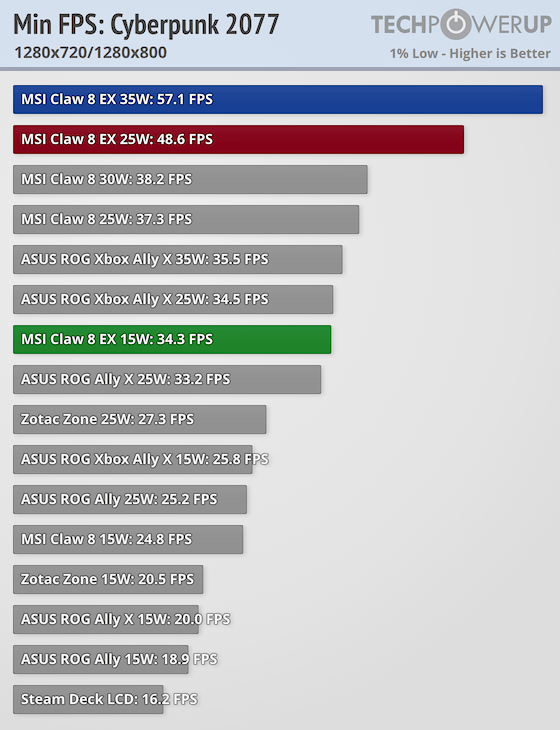
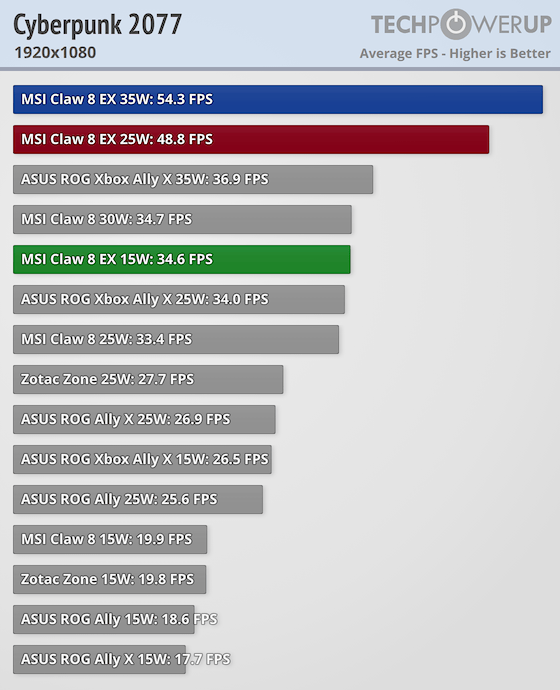
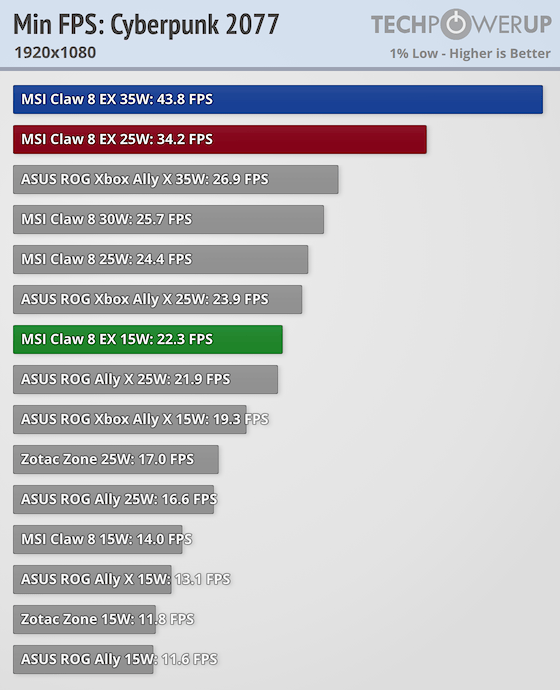
Steam Deck preset, no upscaling.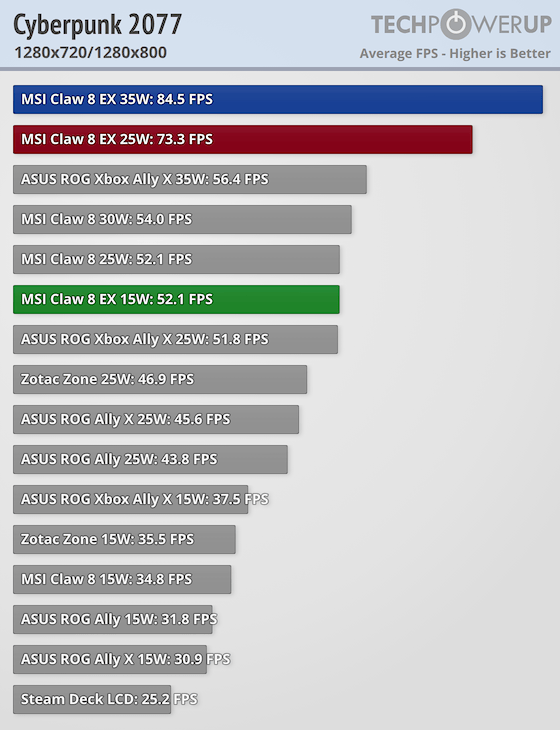
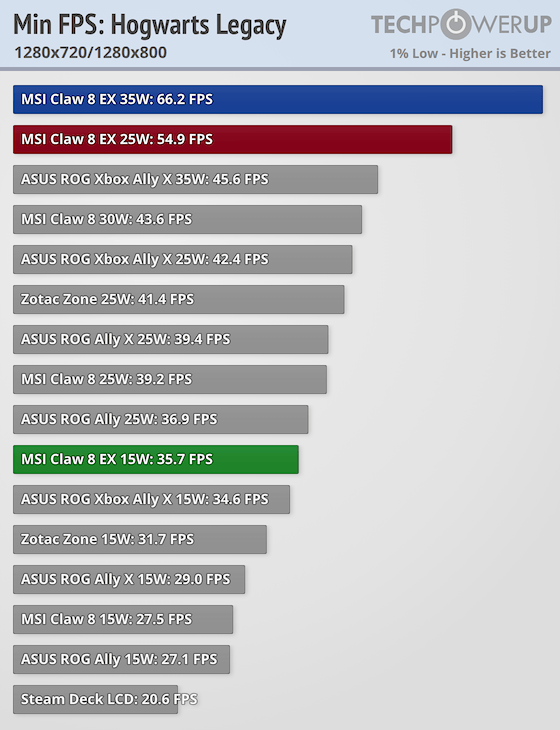
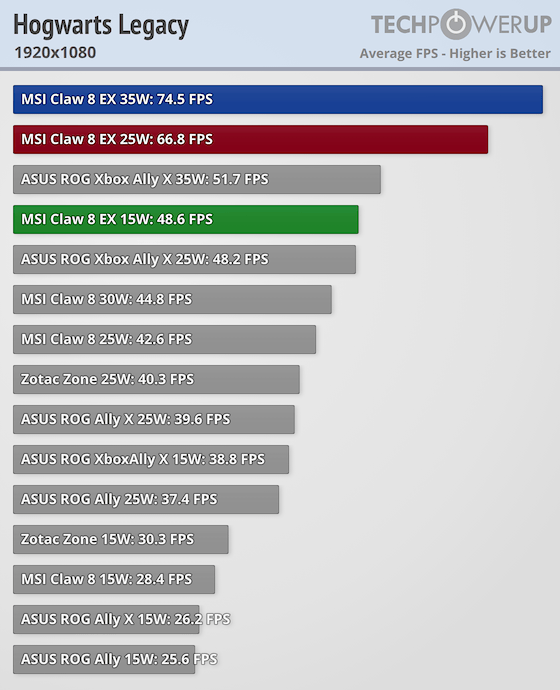
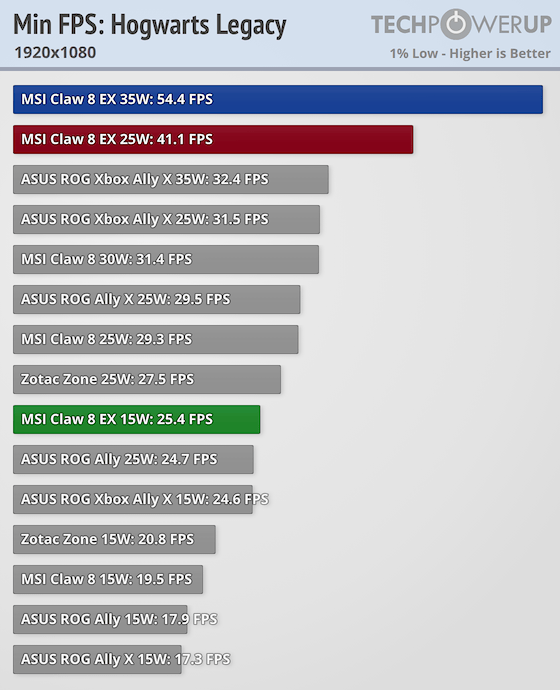
Hogwarts Legacy
Low preset, TAA.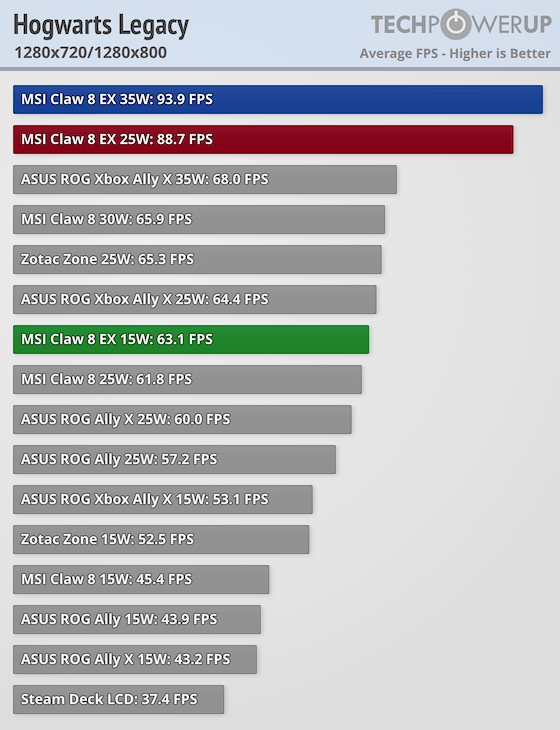
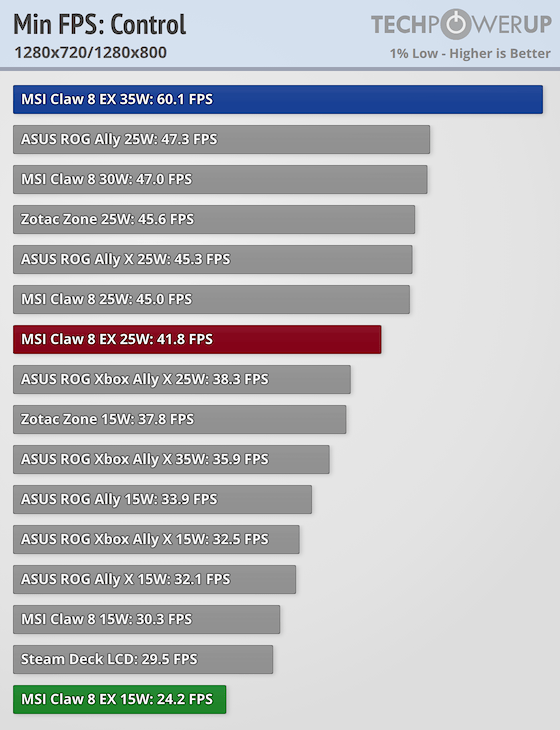
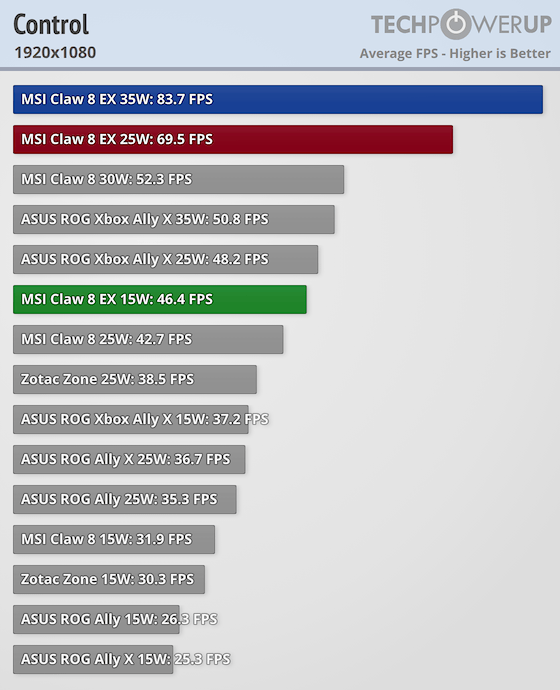
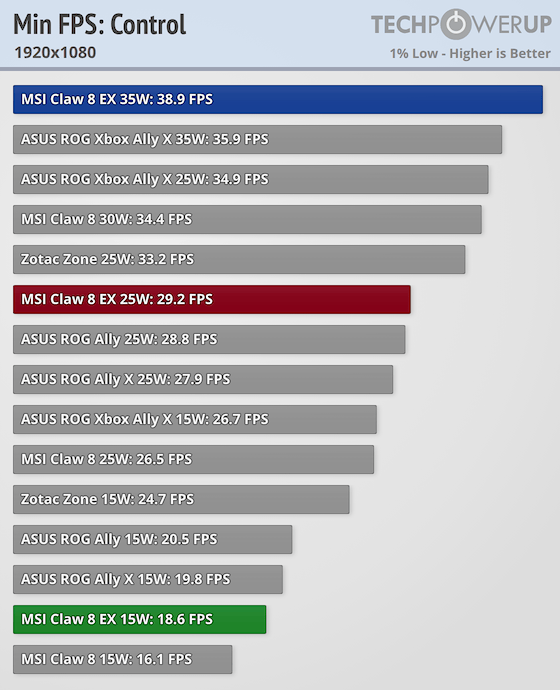
Control
Medium preset, no AA, DX11.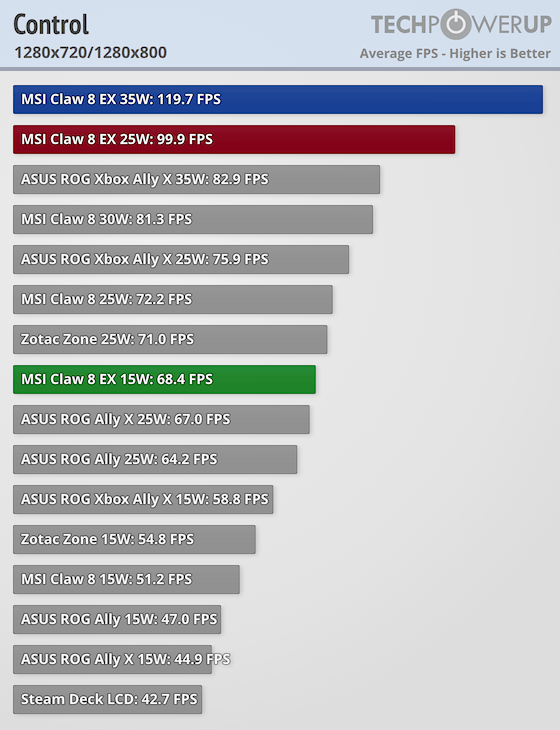
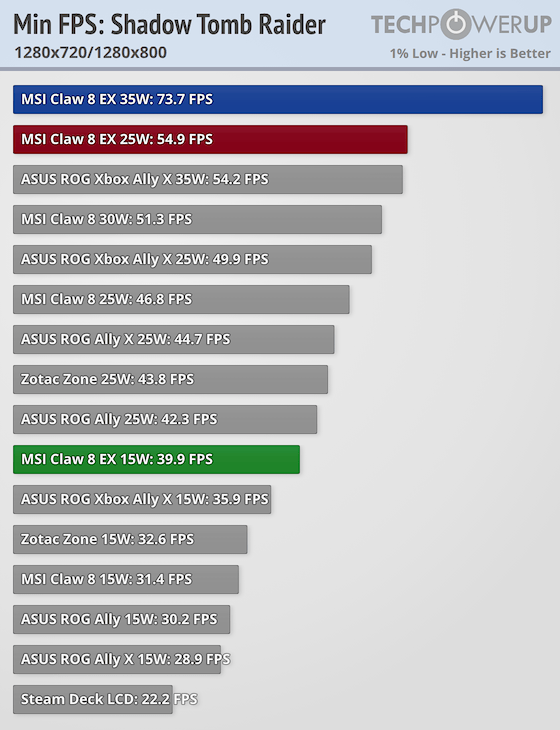
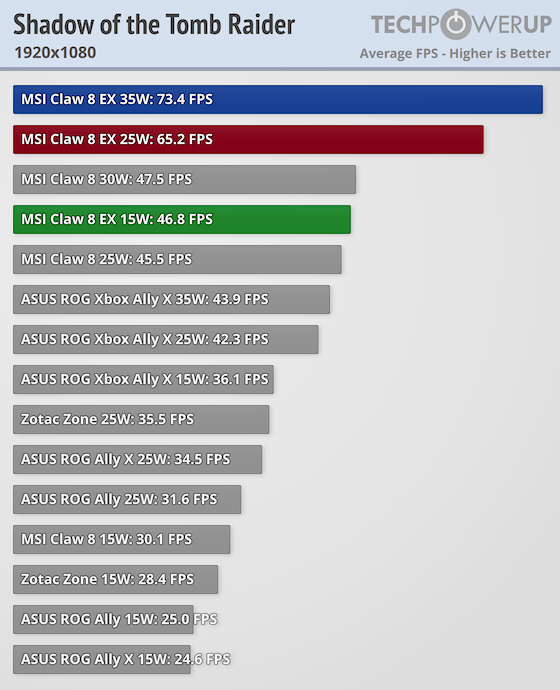
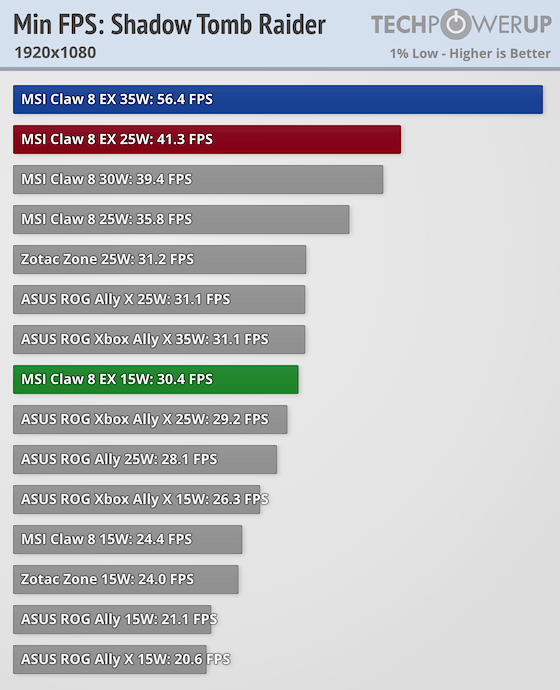
Shadow of the Tomb Raider
High preset, TAA, DX12.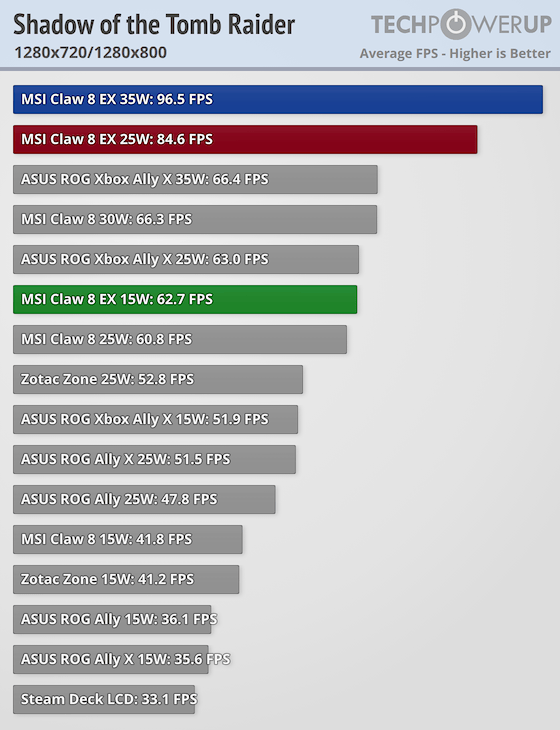
Space Marine 2
Low preset, TAA.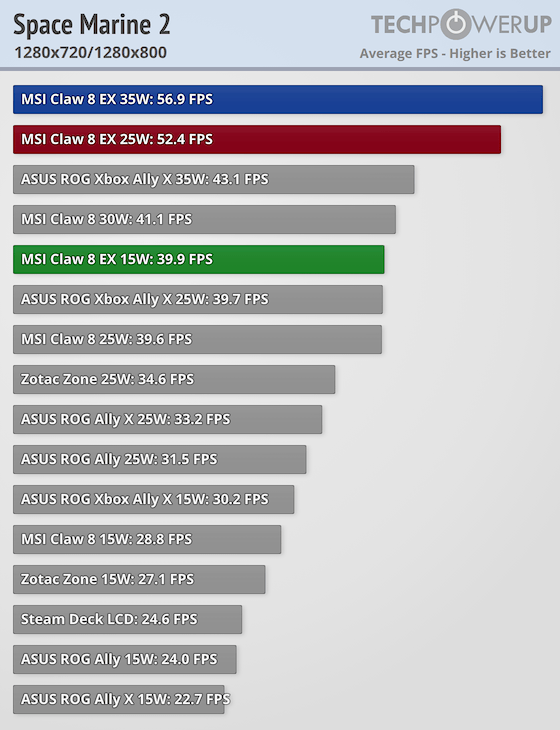
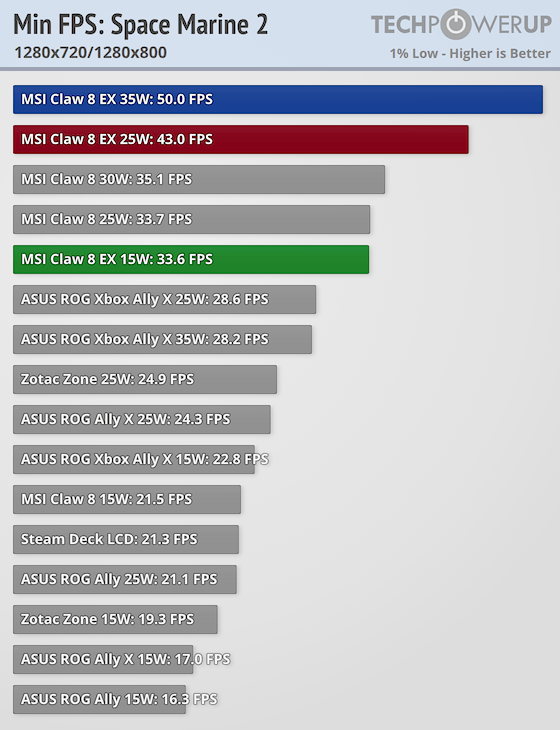
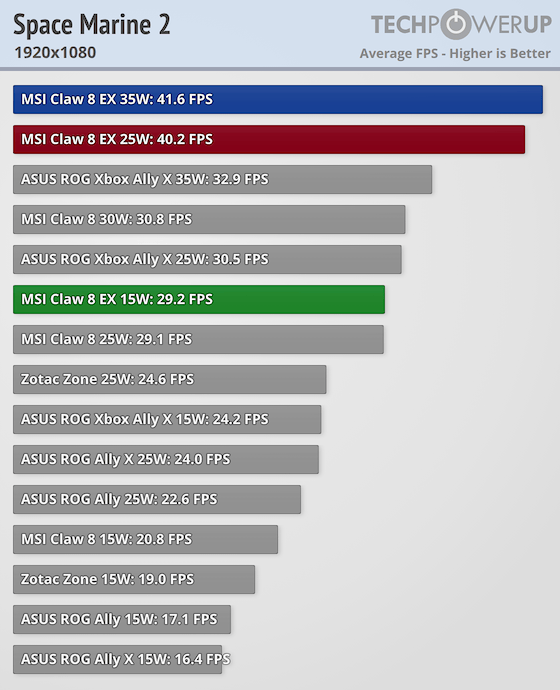
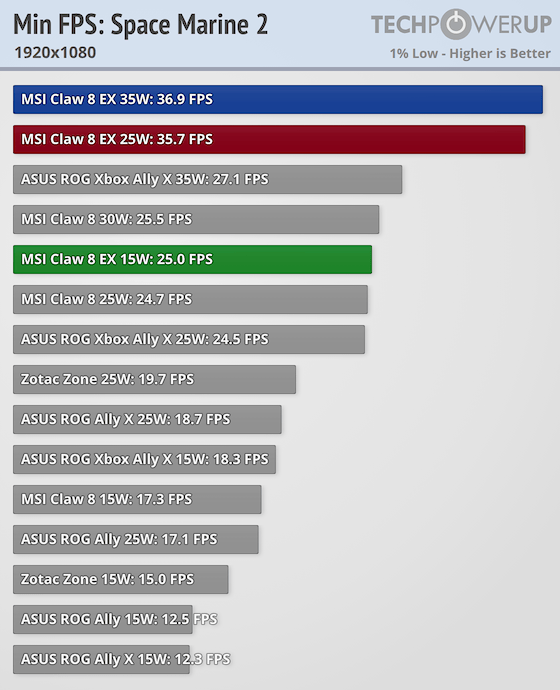
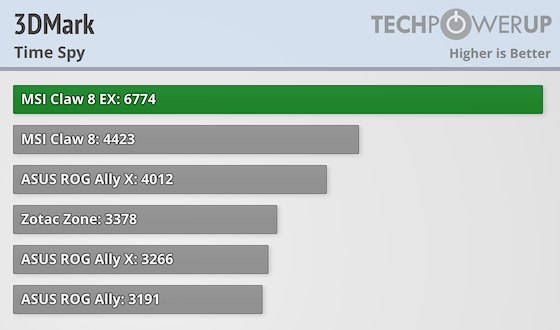
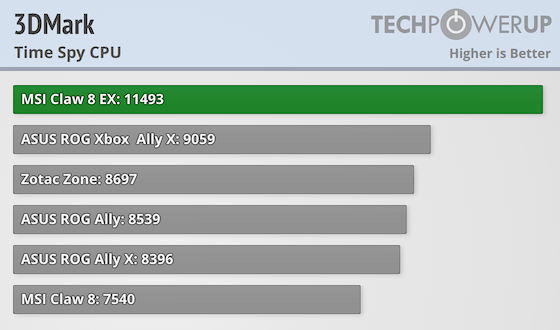
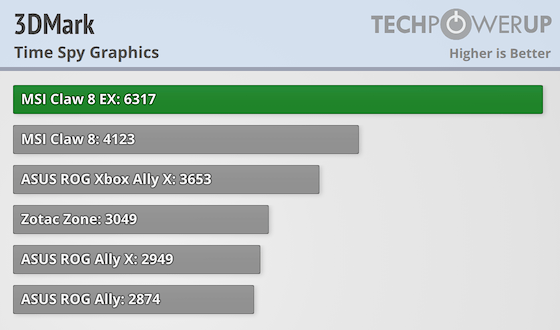
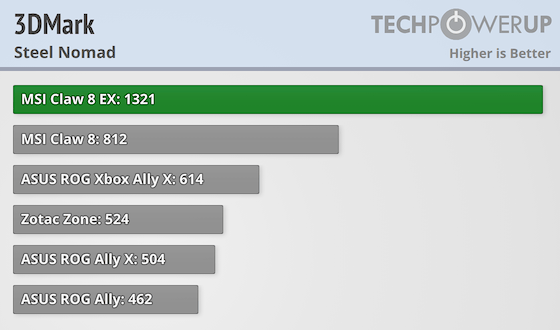
The cut-down CPU compared to the high-power Panther Lake SKU the G3 Extreme is based on (Core Ultra Series 3 X7 358H) doesn't matter in the slightest when it comes to gaming performance. We think that cutting the P-core count to just two is the right move for a handheld SoC because the GPU is too modest in absolute terms to need the fully enabled CPU configuration. Better still, as we've already mentioned, the G3 Extreme features a mechanism called Intelligent Bias Control (IBC) that parks the two P-cores at 14 W and below, which gives the B390 more power to work with and results in higher performance. This is a great move by Intel because who needs power-hungry CPU cores at low TDP values, when you want to give as much power to the GPU as possible?
Anyway, as you can see from the charts, the G3 Extreme and the B390 are beasts and are way ahead of the competition at 25 W and 35 W. In fact, the G3 Extreme easily beats the competition in the form of the Z2 Extreme-powered Xbox Ally X and the original Claw 8 featuring the Core Ultra 7 258V at every power level. The chip is so beefy that it's almost as fast at 15 W as the Z2E and Core Ultra 7 258V are at 25 W, which more or less confirms Intel's claims that the G3 Extreme is as fast at 17 W as the Z2E is at 35 W, considering just how poorly the Z2E scales above 20 W, and especially above 25 W. At 25 W and 35 W, the latest handheld chip from Intel's kitchen is anywhere from about 26% faster in Space Marine 2 to about 67% faster in SoTR than the Z2E, with a similar lead when pitted against the Core Ultra 7 258V. Minimum frame rates are also quite strong across our test battery, with the only exception being Control, a game where the Core Ultra 7 258V also stumbled. On average, the Claw 8 EX was 41.9% faster than the Xbox Ally X at 720p and 35 W and about 50% faster at 1080p and 35 W in our tests, with an average lead of 45.9% across both resolutions, which is quite close to Intel's claims.
The G3 Extreme is so impressive that we went over 100 FPS for the first time since we started testing handhelds here at TPU. The Claw 8 EX achieved practically 120 FPS in Control at 720p and almost reached triple digits in SoTR at the same resolution. Just looking at the graphs, the results resemble desktop GPU charts where the RTX 4090 and RTX 5090 are always way ahead of the pack no matter which game is benchmarked. Overall, the G3 Extreme is mighty impressive. We had a similar experience in the games we played during our review. For instance, the Claw 8 EX can run Forza Horizon 6 with the Ultra preset (we only disabled Night Shadows) at 1080p and 35 W, with XeSS set to Quality—which looks very good on the 8-inch screen—at anywhere from 40 FPS to 60 FPS, which is more than playable by our standards. Playing FH6 with Ultra settings on a handheld without frame generation is a fantastic experience that shows just how good this chip is.
In 007 First Light, we managed to achieve 50+ FPS with the Medium preset and Ultra textures at 1050p (1680×1050), 35 W, and FSR Quality in scenes where the ROG Xbox Ally X drops below 40 FPS at 900p with lower settings applied (that said, Global Illumination is still disabled on every handheld except the Xbox Ally X).
Death Stranding 2 runs at 1200p native and the Medium preset (Very High textures) at about 35 FPS. Enable XeSS Quality and you can achieve between 45 FPS and 55 FPS, which is another impressive result.
SoTR runs at native 1080p with the Highest preset applied at more than 60 FPS, and that's in one of the most demanding locations in the game we use as our benchmark scene (the town of Kuwaq Yaku). When you push all settings to the max (the Highest preset keeps some settings below their maximum values), you can get almost 60 FPS at native 1080p.
Lastly, we got about 100 FPS at 8 W in Hades 2 on both the Xbox Ally X and the MSI Claw 8, while we got more than 150 FPS at the same TDP on the Claw 8 EX. It looks like the Claw 8 EX is capable of delivering playable performance in demanding AAA games at 1200p and Medium settings. You'll need to increase TDP to about 20 W or higher and use XeSS upscaling, of course, but this is still something no other handheld, aside from those featuring Strix Halo, is capable of.
The best thing about the G3 Extreme is that it's impressive at every TDP value. No matter whether you're playing an indie game at 8 W or a recent AAA title at 30 W, you'll get superb performance, at least in the context of a handheld PC. Combine that with excellent XeSS implementation (AI-based XeSS looks miles better than FSR 3.1; AMD should really bring FSR 4 INT8 to its Z Extreme chips sooner rather than later) and multi-frame generation, and you can achieve excellent performance in most games with some tinkering.
The Claw 8 EX is equipped with blazing-fast 8533 MT/s LPDDR5x memory that keeps the GPU fed with data, which also contributes to its gaming prowess. Sure, 32 GB of such memory probably cost MSI an arm and a leg, which is reflected in the final price, but hey, you can't deny the performance.
Then there's Intel's Endurance Gaming mode, which allows you to lock the frame rate to either 30, 45, or 60 FPS and get more playtime out of the battery while still enjoying decent performance. We especially like the inclusion of the 45 FPS mode, because it's a much better option than locking games to 30 FPS, which results in a poor gaming experience in most titles. 45 FPS, on the other hand, feels responsive and fluid enough even in fast-paced shooters and racing games. You also have the 60 FPS mode, which is perfect when you want to save some juice but still don't want to compromise fluidity.
The cherry on top is the fact that Intel is providing regular GPU driver updates and, from our experience with the Claw 8, they're arriving quite frequently and often improve performance in new games. The only thing we don't like is that the Claw 8 often needs day-one drivers to fulfill its potential in new games, with the Xbox Ally X often beating it in titles where we've tested both handhelds.
The only caveat here is the eye-wateringly high price, which leaves the Claw 8 EX out of reach for many handheld PC gaming fans, but that's the harsh reality of the current PC hardware market. It's a shame because this would be a beast of a handheld if it were priced more reasonably (say, $1,200 or so), but we guess AI data centers genuinely need all the storage, memory, and electricity in the world (just search the web for the power transformer shortage) to usher in the new golden era where everyone will prosper (press X to doubt).
Nov 11th, 2026 16:22 CST
change timezone
New Forum Posts
- Bought MAX-P495 - Which model? (29)
- WarpCoreBench scores! (11)
- GeekMagic Ultra Smart WiFi Weather Station (3)
- DTS DCH Driver for Realtek HDA [DTS:X APO4 + DTS Interactive] (2809)
- Rare GPUs / Unreleased GPUs (2271)
- Samsung 870 EVO - Beware, certain batches prone to failure! (1486)
- Windows new update 26H2 - Throttlestop (10)
- When you could finally run Crysis maxed out? (42)
- TPU's F@H Team (20569)
- Graphical corruption on lower part of monitor (3)
Popular Reviews
- AMD Zen 6 Technical Deep Dive
- Upcoming Hardware Launches 2027 (Updated Nov 2026)
- Gigabyte Z890I Aorus Ultra Review
- XPG NIMBUS PLUS Review - Mid-range Chair With Strong Competitors
- INNOCN 45C1R Review - Two QHD Screens, Zero Bezels
- NZXT H7 RGB+ Review
- Phantom Blade Zero Performance Benchmark Review - 35 GPUs Tested
- Gears of War: E-Day Performance Benchmark Review - 35 GPUs Tested
- NZXT H5 Review
- be quiet! Light Mount TKL Keyboard Review
TPU on YouTube
Controversial News Posts
- OpenAI CEO Argues Home PCs Waste the World's Limited DRAM Supply (152)
- NVIDIA Launches Investigation Into Jensen Huang's Relationship With Suspected Chinese Spy (136)
- Intel "Raptor Lake Next" 16-Core and 20-Core CPUs Surface (130)
- Legendary Game Studio BioWare Shuts Down Following EA Layoffs (104)
- Dell CEO Says the Memory Shortage Will Get Worse in 2027 (95)
- NVIDIA GeForce RTX 50-Series Scheduled for up to $500 Price Hike This Week (89)
- Modder Fits RTX 5090 With Four 8-Pin Connectors, Halving Current per Wire (80)
- AMD Radeon Owners Can Now Run Nearly Every DLSS Feature Through Fan-Made Mod (80)