 24
MSI GTX 1070 Gaming Z 8 GB Review
(24 Comments) »Introduction

NVIDIA released their GeForce GTX 1070 and GTX 1080 not long ago, featuring the company's new Pascal architecture, a brand-new 16 nanometer production process, and GDDR5X memory. In our launch-day review, we were truly impressed by how well NVIDIA claimed the performance throne with the 1080, but also the GTX 1070 managed to impress with its high-end performance at an attractive sub-$400 price-point. The reference-design card, however, is sold at a $70 premium over the GTX 1070 Founders Edition sitting at $449.
The GeForce GTX 1070 uses the same Pascal GP104 graphics processor as the GTX 1080, with just 1920 enabled shaders instead of 2560, which also affects the number of texture units that are down to 120 from 160. With 64, the number of ROPs is the same, and so is the memory capacity of 8 GB. However, today's review subject, like all GTX 1070 variants, uses GDDR5 memory, unlike the GTX 1080 that comes with GDDR5X. GDDR5X offers twice the bandwidth at the same operating frequency, so NVIDIA is running the GeForce GTX 1070's memory at a frequency of 2 GHz in order to make up for that.

Today, we are testing the MSI GTX 1070 Gaming Z. An upgraded version of the MSI GTX 1070 Gaming X, it features higher clock speeds and an illuminated MSI logo with RGB color support on the back.
Out of the box, the card comes overclocked to a base clock of 1633 MHz, which is a significant increase from the NVIDIA reference clock of 1506 MHz. Memory has also been overclocked to 2027 MHz. Currently, the MSI GTX 1070 Gaming Z retails at $460, which is about 15% more than the cheapest GTX 1070 you can currently find.
| GeForce GTX 980 | GeForce GTX 1060 | Radeon R9 Fury | GeForce GTX 980 Ti | Radeon R9 Fury X | GeForce GTX 1070 | MSI GTX 1070 Gaming Z | GeForce GTX 1080 | |
|---|---|---|---|---|---|---|---|---|
| Shader Units | 2048 | 1280 | 3584 | 2816 | 4096 | 1920 | 1920 | 2560 |
| ROPs | 64 | 48 | 64 | 96 | 64 | 64 | 64 | 64 |
| Graphics Processor | GM204 | GP106 | Fiji | GM200 | Fiji | GP104 | GP104 | GP104 |
| Transistors | 5200M | 4400M | 8900M | 8000M | 8900M | 7200M | 7200M | 7200M |
| Memory Size | 4 GB | 6 GB | 4 GB | 6 GB | 4 GB | 8 GB | 8 GB | 8 GB |
| Memory Type | GDDR5 | GDDR5 | HBM | GDDR5 | HBM | GDDR5 | GDDR5 | GDDR5X |
| Memory Bus Width | 256 bit | 192 bit | 4096 bit | 384 bit | 4096 bit | 256 bit | 256 bit | 256 bit |
| Core Clock | 1126 MHz+ | 1506 MHz+ | 1000 MHz | 1000 MHz+ | 1050 MHz | 1506 MHz+ | 1633 MHz+ | 1607 MHz+ |
| Memory Clock | 1750 MHz | 2002 MHz | 500 MHz | 1750 MHz | 500 MHz | 2002 MHz | 2027 MHz | 1251 MHz |
| Price | $360 | $250 | $310 | $390 | $380 | $400 | $460 | $640 |
Packaging


You will receive:
- Graphics card
- Driver CD + documentation
The Card


The front of the card looks identical to the MSI GTX 1070 Gaming X. On the back you will find a metal backplate with an RGB illuminated MSI logo. Dimensions of the card are 28.0 cm x 14.5 cm.

Installation requires two slots in your system.

Display connectivity options include a DVI port, an HDMI port, and three DisplayPorts. Unlike previous NVIDIA cards, the DVI port no longer includes an analog signal, so you'll have to use an active adapter. NVIDIA also updated DisplayPort to be 1.2 certified and 1.3/1.4 ready, which enables support for 4K @ 120 Hz and 5K @ 60 Hz or 8K @ 60 Hz with two cables.
The GPU also comes with an HDMI sound device. It is HDMI 2.0b compatible, which supports HD audio and Blu-ray 3D movies. The GPU video encoding unit has been updated to support HEVC at 10-bit and 12-bit.

NVIDIA made some changes to SLI. Two-way SLI is now the only officially supported configuration for gaming. Three-way or Quad SLI can no longer be enabled in games; however, it does work in a few benchmarks. Also, for 4K at 60 Hz and above, NVIDIA recommends a new high-bandwidth SLI bridge called "SLI HB," which occupies both SLI fingers. The old bridges will work fine at lower resolutions.


Pictured above are the front and back, showing the disassembled board. High-res versions are also available (front, back).
A Closer Look


MSI's thermal solution uses five heatpipes to keep the GPU cool. This is the same cooler as on the MSI GTX 1070 Gaming X.

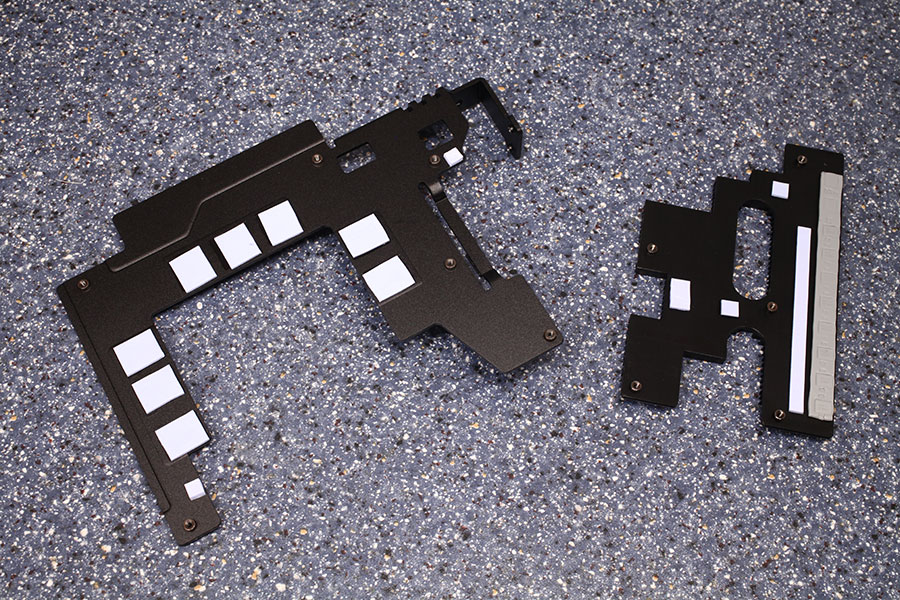
Once the main heatsink is removed, you will see two black heatsinks that cover the memory chips and voltage regulation circuitry.

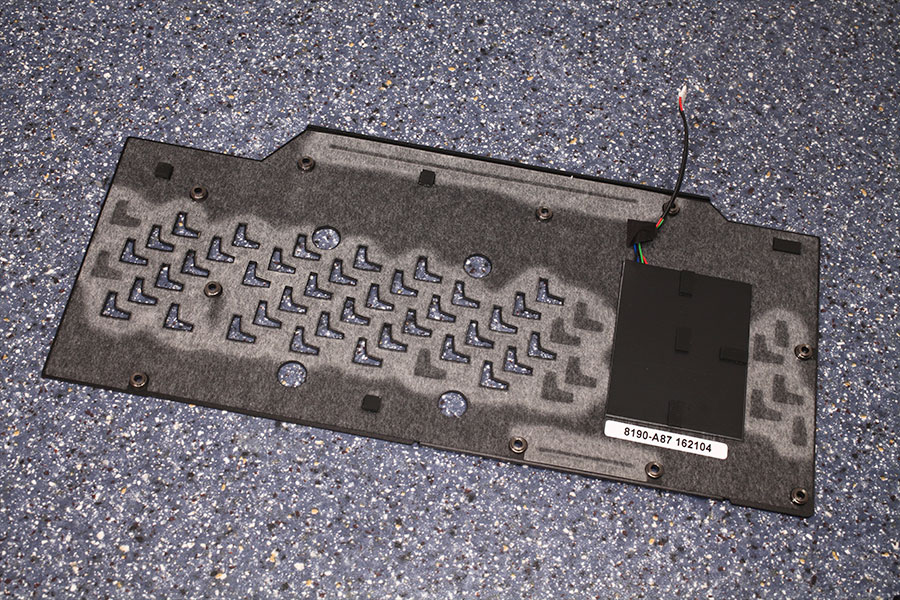
The backplate is made out of metal and has the RGB-illuminated MSI logo.

MSI upgraded the power input of their GTX 1070 to an 8-pin and a 6-pin. This input configuration is specified for up to 300 watts of power draw.
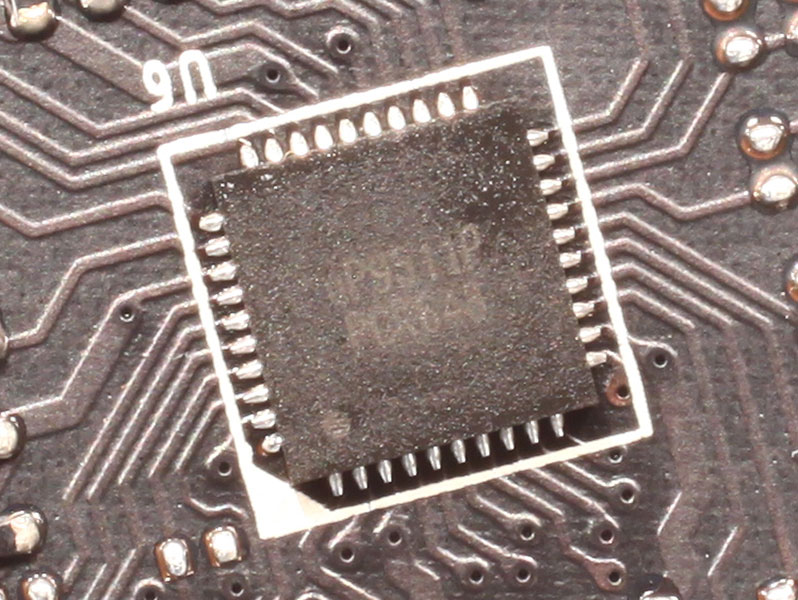
The uP 9511 voltage controller is a new model for recent NVIDIA cards. It does not support voltage control via I2C.

The GDDR5 memory chips are made by Samsung and carry the model number K4G80325FB-HC25. They are specified to run at 2000 MHz (8000 MHz GDDR5 effective).
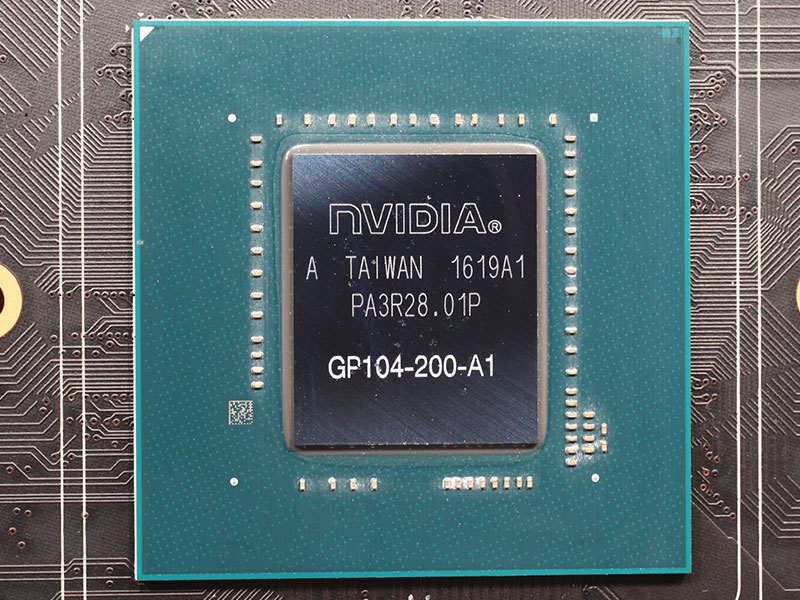
NVIDIA's GP104 graphics processor is the first consumer chip to use the Pascal architecture. It is produced on a 16 nm process at TSMC, Taiwan, with a transistor count of 7.1 billion and a die size of 314 mm².
Our Patreon Silver Supporters can read articles in single-page format.
Nov 13th, 2026 21:51 CST
change timezone
Latest GPU Drivers
New Forum Posts
- Tell me about your favourite graphics card (27)
- Crimson Desert (31)
- RenoDX HDR - how to view the differnce Before&After in game? (0)
- Displayport DP80 3M (10ft) cable that can achieve 80gbps stable? (5)
- I'll flash a ASUS ROG Strix RX480 O8G in Cause of Code 43, as a Newbie (1)
- Opinion on Monitor Replacement (6)
- TMOG - post your benchmark results here (16)
- no "PhysX" workable (7)
- Microsoft Exchange/365 outages? (61)
- Unallocated space in ssd , is it normal? (18)
Popular Reviews
- AMD Zen 6 Technical Deep Dive
- Corsair HX1000i Shift Crystal Review
- NZXT C1200 Platinum Review
- Upcoming Hardware Launches 2027 (Updated Nov 2026)
- ASUS ROG Strix B850-I Gaming Wi-Fi7 W Review
- Montech King 95 3D PRO Review
- NZXT H7 RGB+ Review
- NZXT H5 Review
- Phantom Blade Zero Performance Benchmark Review - 35 GPUs Tested
- XPG NIMBUS PLUS Review - Mid-range Chair With Strong Competitors
TPU on YouTube
Controversial News Posts
- NVIDIA Co-Founder and CEO Jensen Huang Officially Resigns (379)
- OpenAI CEO Argues Home PCs Waste the World's Limited DRAM Supply (152)
- NVIDIA Launches Investigation Into Jensen Huang's Relationship With Suspected Chinese Spy (136)
- Intel "Raptor Lake Next" 16-Core and 20-Core CPUs Surface (130)
- Legendary Game Studio BioWare Shuts Down Following EA Layoffs (104)
- Dell CEO Says the Memory Shortage Will Get Worse in 2027 (95)
- NVIDIA GeForce RTX 50-Series Scheduled for up to $500 Price Hike This Week (89)
- Modder Fits RTX 5090 With Four 8-Pin Connectors, Halving Current per Wire (80)