 18
MSI GTX 780 Gaming 6 GB Review
(18 Comments) »Introduction

NVIDIA's GeForce GTX 780 has been on the market for a little over a year now, offering excellent gaming performance since. In more recent times, NVIDIA released the GTX 780 Ti. Its performance is higher due to its increased shader count, but it also comes at a higher price.
NVIDIA carved the GeForce GTX 780 out of the GK110 by enabling 12 out of 15 streaming multi-processors on the die, which works out to 2,304 CUDA cores. This sets the texture memory unit count to 192, a 50 percent increase over its predecessor's 128. At 384-bit width, the memory bus is the same, and the GPU still packs five graphics processing clusters and comes with 48 ROPs, which is yet another 50 percent increase. The reference design card we're putting under the knife in this review features 6 GB of GDDR5 memory.

MSI decided to create a GTX 780 with 6 GB VRAM instead of the 3 GB usually found on the GTX 780. The company also has increased the MSI GTX 780 Gaming 6 GB's clock speeds to beyond those of a Titan, which should definitely result in interesting numbers.
With a price of $589, the card retails for around $100 more than a 3 GB GTX 780 and for around $80 less than a GTX 780 Ti.
| GeForce GTX 770 | HD 7970 GHz Ed. | Radeon R9 280X | GeForce GTX 680 | GeForce GTX 780 | MSI GTX 780 Gaming 6G | Radeon R9 290 | Radeon R9 290X | GeForce GTX Titan | GeForce GTX 780 Ti | |
|---|---|---|---|---|---|---|---|---|---|---|
| Shader Units | 1536 | 2048 | 2048 | 1536 | 2304 | 2304 | 2560 | 2816 | 2688 | 2880 |
| ROPs | 32 | 32 | 32 | 32 | 48 | 48 | 64 | 64 | 48 | 48 |
| Graphics Processor | GK104 | Tahiti | Tahiti | GK104 | GK110 | GK110 | Hawaii | Hawaii | GK110 | GK110 |
| Transistors | 3500M | 4310M | 4310M | 3500M | 7100M | 7100M | 6200M | 6200M | 7100M | 7100M |
| Memory Size | 2048 MB | 3072 MB | 3072 MB | 2048 MB | 3072 MB | 6144 MB | 4096 MB | 4096 MB | 6144 MB | 3072 MB |
| Memory Bus Width | 256 bit | 384 bit | 384 bit | 256 bit | 384 bit | 384 bit | 512 bit | 512 bit | 384 bit | 384 bit |
| Core Clock | 1046 MHz+ | 1050 MHz | 1000 MHz | 1006 MHz+ | 863 MHz+ | 902 MHz+ | 947 MHz | 1000 MHz | 837 MHz+ | 876 MHz+ |
| Memory Clock | 1753 MHz | 1500 MHz | 1500 MHz | 1502 MHz | 1502 MHz | 1502 MHz | 1250 MHz | 1250 MHz | 1502 MHz | 1750 MHz |
| Price | $320 | $470 | $270 | $400 | $480 | $590 | $400 | $530 | $1000 | $660 |
Packaging


Contents

You will receive:
- Graphics card
- Driver CD + documentation
- PCIe 6-pin to 8-pin adapter
- PCIe Molex to 6-pin adapter
- DVI adapter
The Card

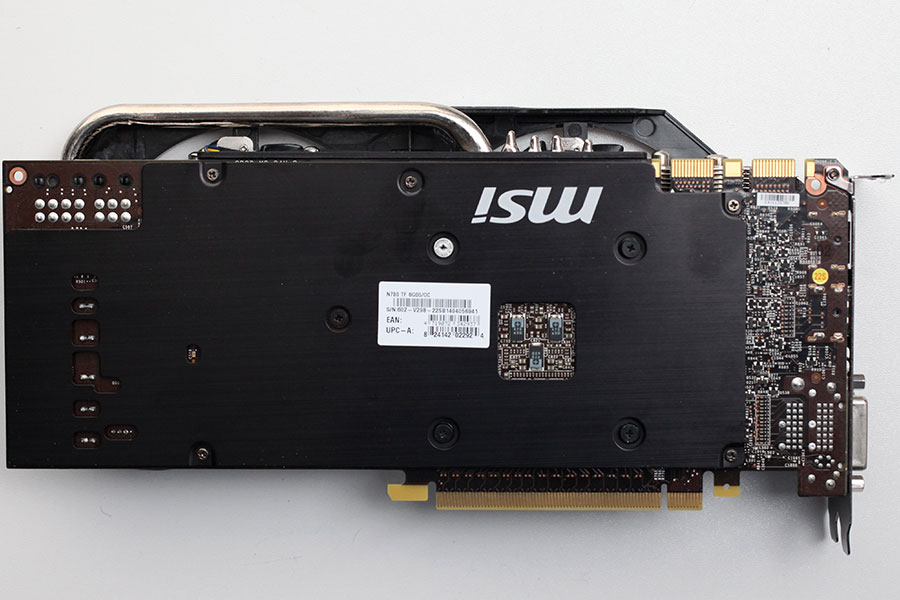
At first glance, the card looks very similar to the MSI GTX 780 Gaming 3 GB, only the metal bar at the top left of the card has changed. The PCB design remains the same. MSI increased the memory by using higher capacity memory chips. Dimensions of the card are 30 cm x 13 cm.
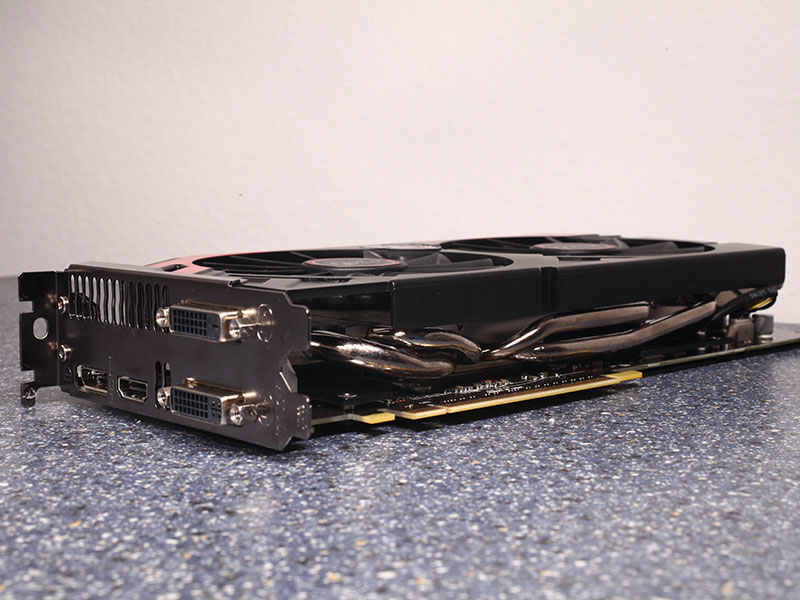
Installation requires two slots in your system.
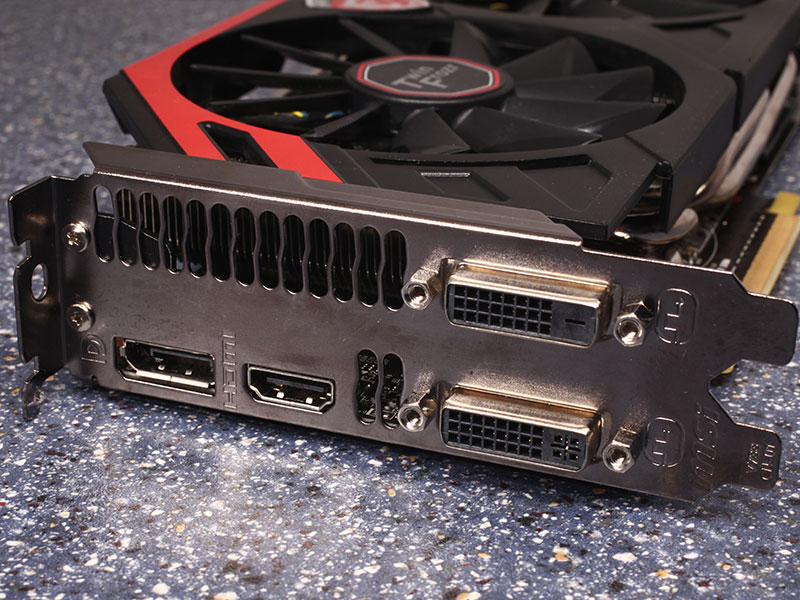
Display connectivity options include two DVI ports, one HDMI port, and one DisplayPort. You may use all outputs at the same time, so triple-monitor-surround gaming is possible with one card.
The GPU also includes an HDMI sound device. It is HDMI 1.4a compatible, which includes HD audio and Blu-ray 3D movies support.

Two SLI connectors are available, which allows you to combine up to three GTX 780 cards in a Triple-SLI, multi-GPU configuration. NVIDIA decided to disable Quad-SLI on the GTX 780, so that feature is reserved for the GTX Titan only.

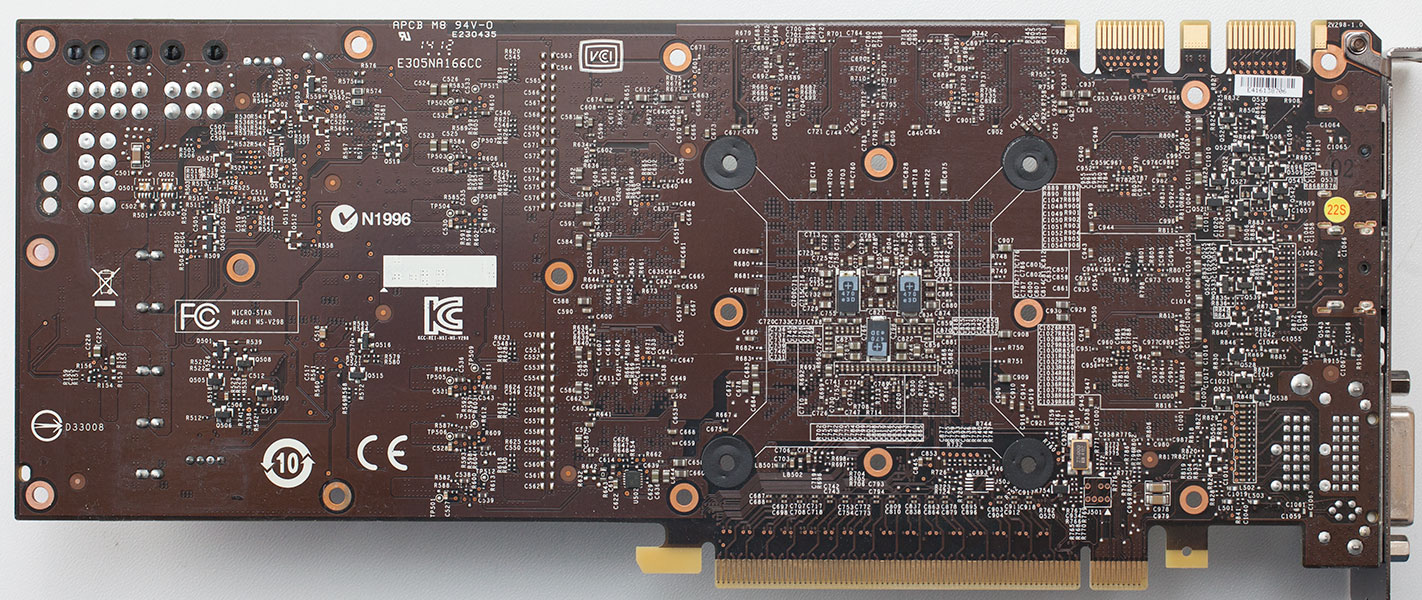
Pictured above are the front and back, showing the disassembled board. High-res versions are also available (front, back).
Our Patreon Silver Supporters can read articles in single-page format.
Nov 15th, 2026 17:20 CST
change timezone
Latest GPU Drivers
New Forum Posts
- Local LLM General Discussion (691)
- WarpCoreBench scores! (54)
- What are you playing? (26223)
- Folding Pie and Milestones!! (10205)
- Asus Rog Maximus Z890 Extreme. (Various questions). (25)
- Power supply noise stops when I move the mouse (9)
- TPU's Nostalgic Hardware Club (22165)
- HP Office Jet 7740 Pro - Supply system problem with replacement cartridge (3)
- Recommendations Wanted - Affordable Enterprise SSD for Boot (9)
- What can the FX 8320 do today? Here is the answer. (59)
Popular Reviews
- AMD Zen 6 Technical Deep Dive
- ASUS ROG Strix B850-I Gaming Wi-Fi7 W Review
- Corsair HX1000i Shift Crystal Review
- Upcoming Hardware Launches 2027 (Updated Nov 2026)
- Montech King 95 3D PRO Review
- NZXT C1200 Platinum Review
- NZXT H7 RGB+ Review
- NZXT H5 Review
- Phantom Blade Zero Performance Benchmark Review - 35 GPUs Tested
- AMD Ryzen 7 9800X3D Review - The Best Gaming Processor
TPU on YouTube
Controversial News Posts
- NVIDIA Co-Founder and CEO Jensen Huang Officially Resigns (422)
- Open Letter Asking NVIDIA to Reinstate Jensen Huang Passes 115,000 Signatures (184)
- OpenAI CEO Argues Home PCs Waste the World's Limited DRAM Supply (152)
- NVIDIA Launches Investigation Into Jensen Huang's Relationship With Suspected Chinese Spy (136)
- Intel "Raptor Lake Next" 16-Core and 20-Core CPUs Surface (130)
- Legendary Game Studio BioWare Shuts Down Following EA Layoffs (104)
- Dell CEO Says the Memory Shortage Will Get Worse in 2027 (95)
- NVIDIA GeForce RTX 50-Series Scheduled for up to $500 Price Hike This Week (89)