 19
MSI MEG CORELIQUID E15 360 Review
Installation »A Closer Look
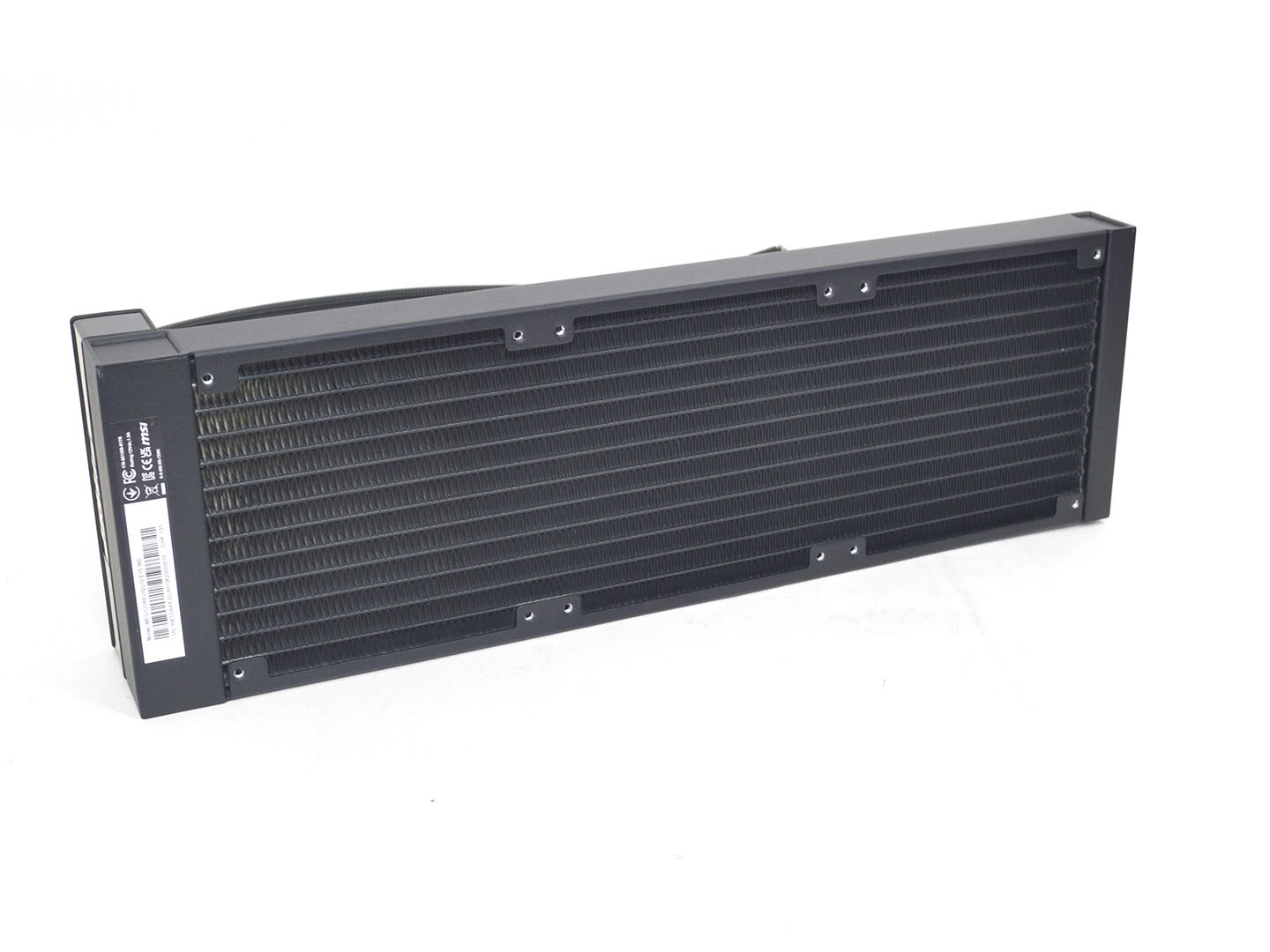
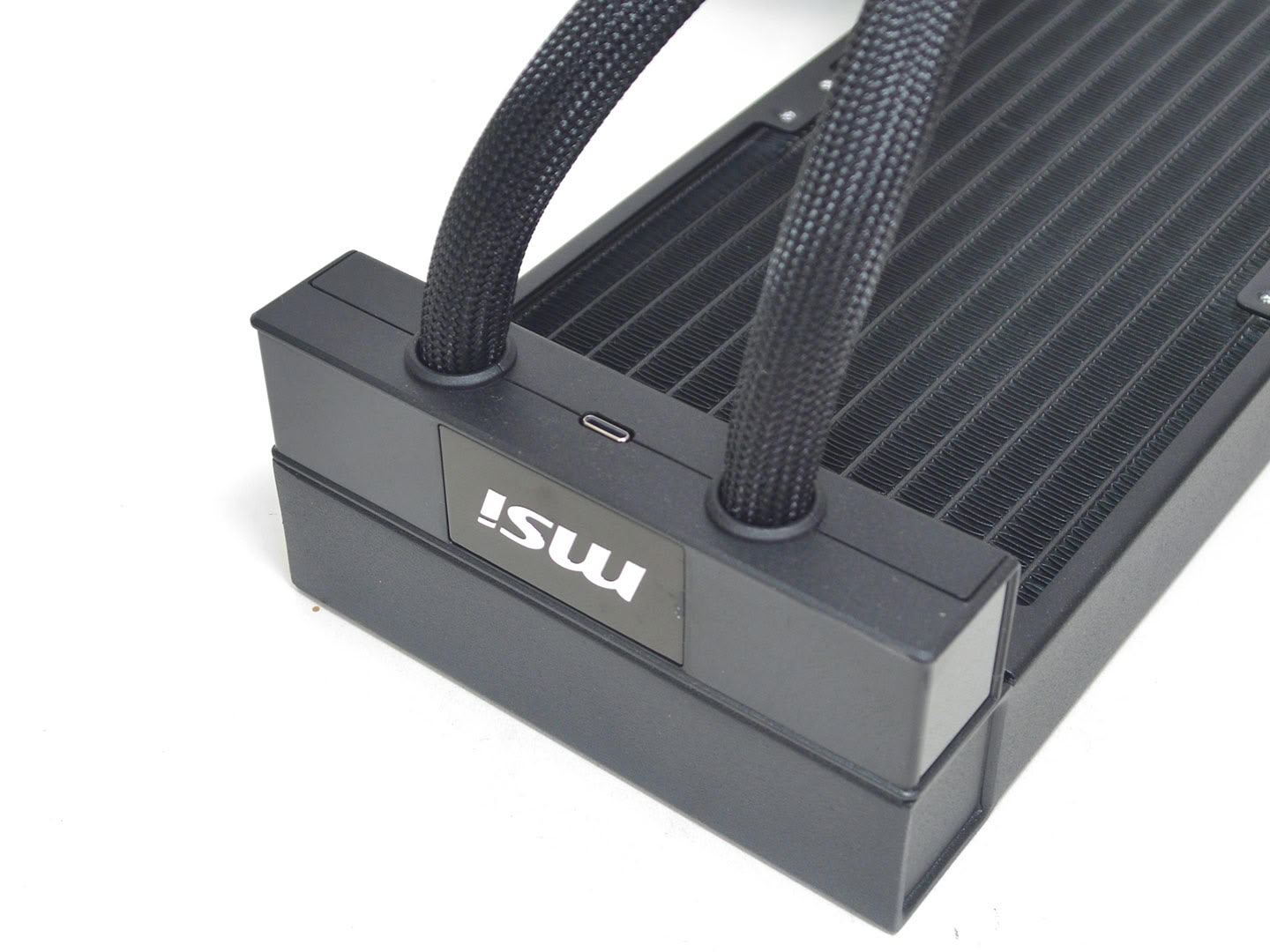
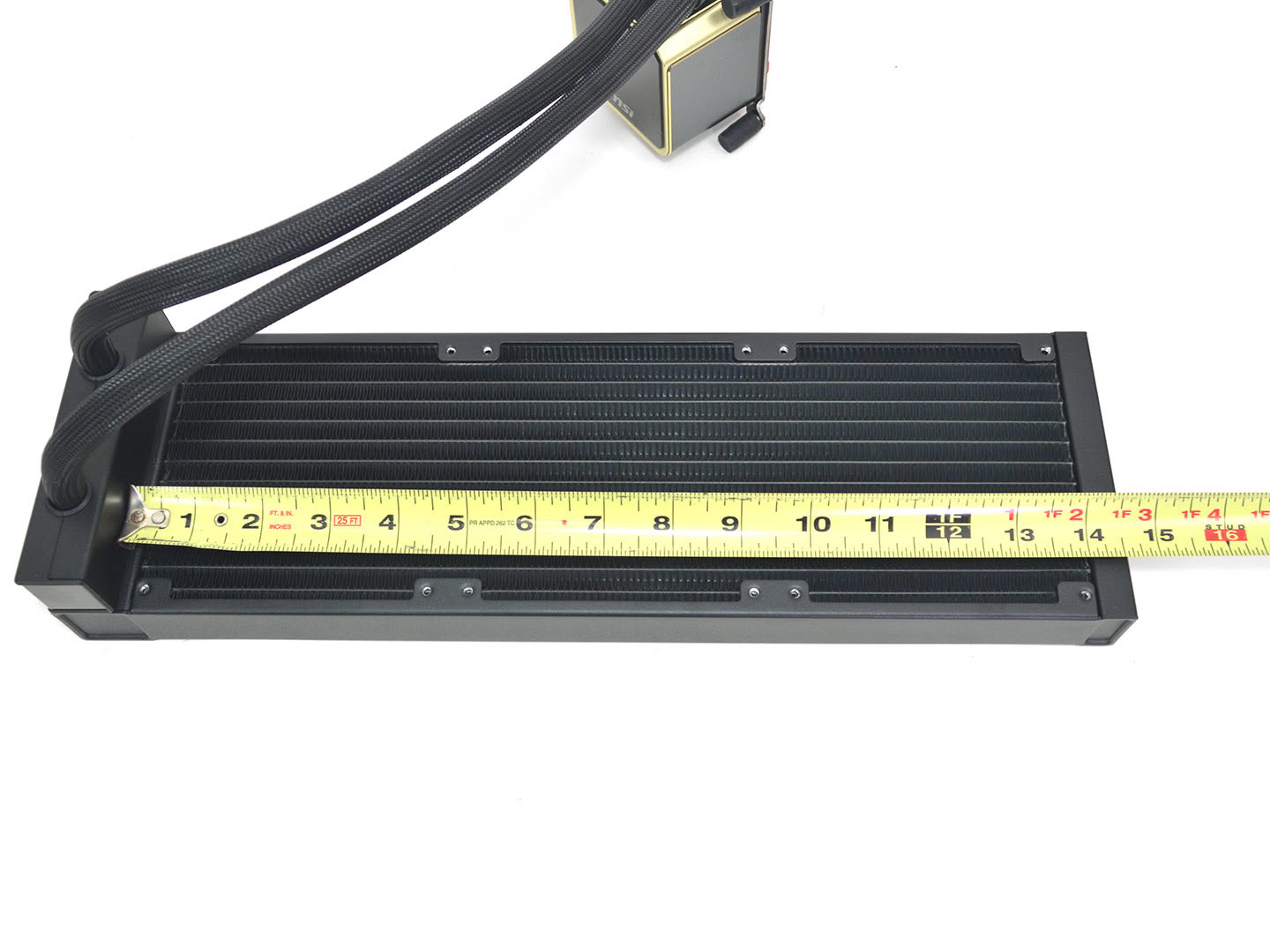
Looking at the radiator it keeps to the traditional aluminium box you're all familiar with. What is different is how the tubing and wiring are handled. To start, a block is mounted to the radiator and the tubing passes through with a USB-C connector for the wiring harness which also passes inside to a pin array that powers the triple 120 mm fan. As for the FPI (fins-per-inch) of the radiator I measured 21 which is fairly typical. Meanwhile, tubing length is also fairly typical at 390 mm.
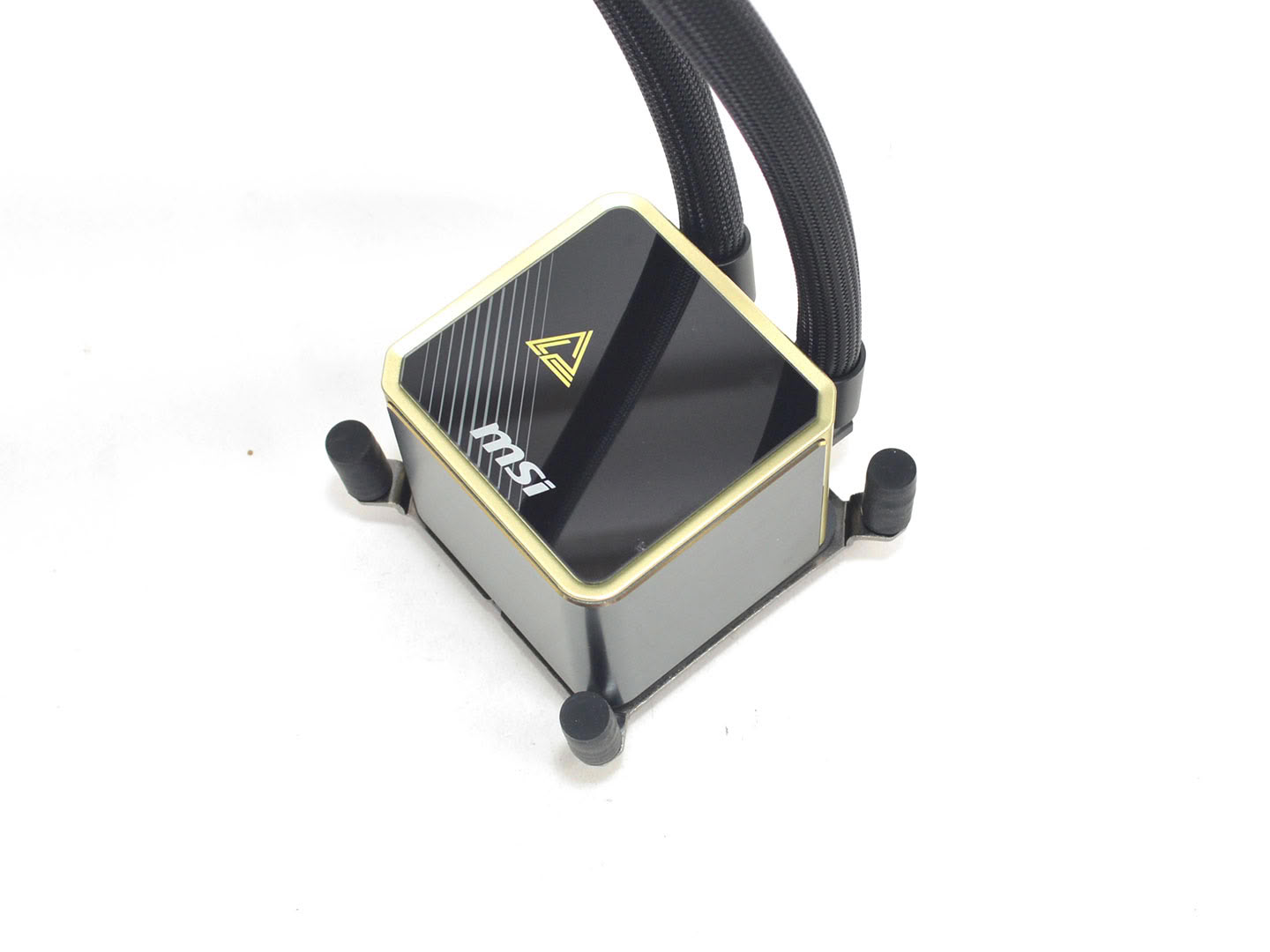
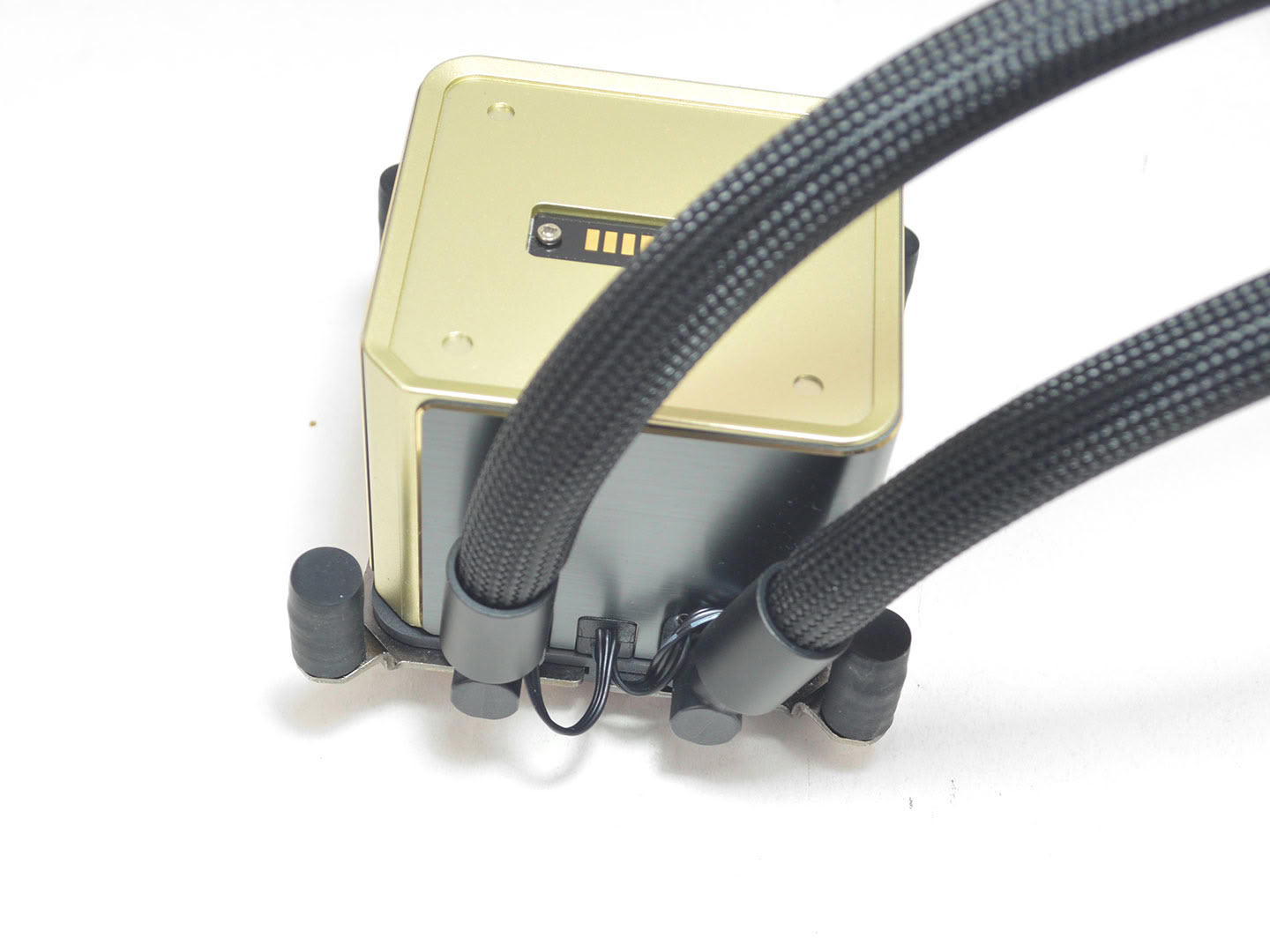
The pump has a magnetic top plate that is removed in order to mount the display. With it removed you can see the pads the display will make contact with for data delivery. As for the fittings on the block they are of the swivel variety with a wide range of motion. The wiring from the pump runs up the tubing to the radiator keeping things nice and clean.
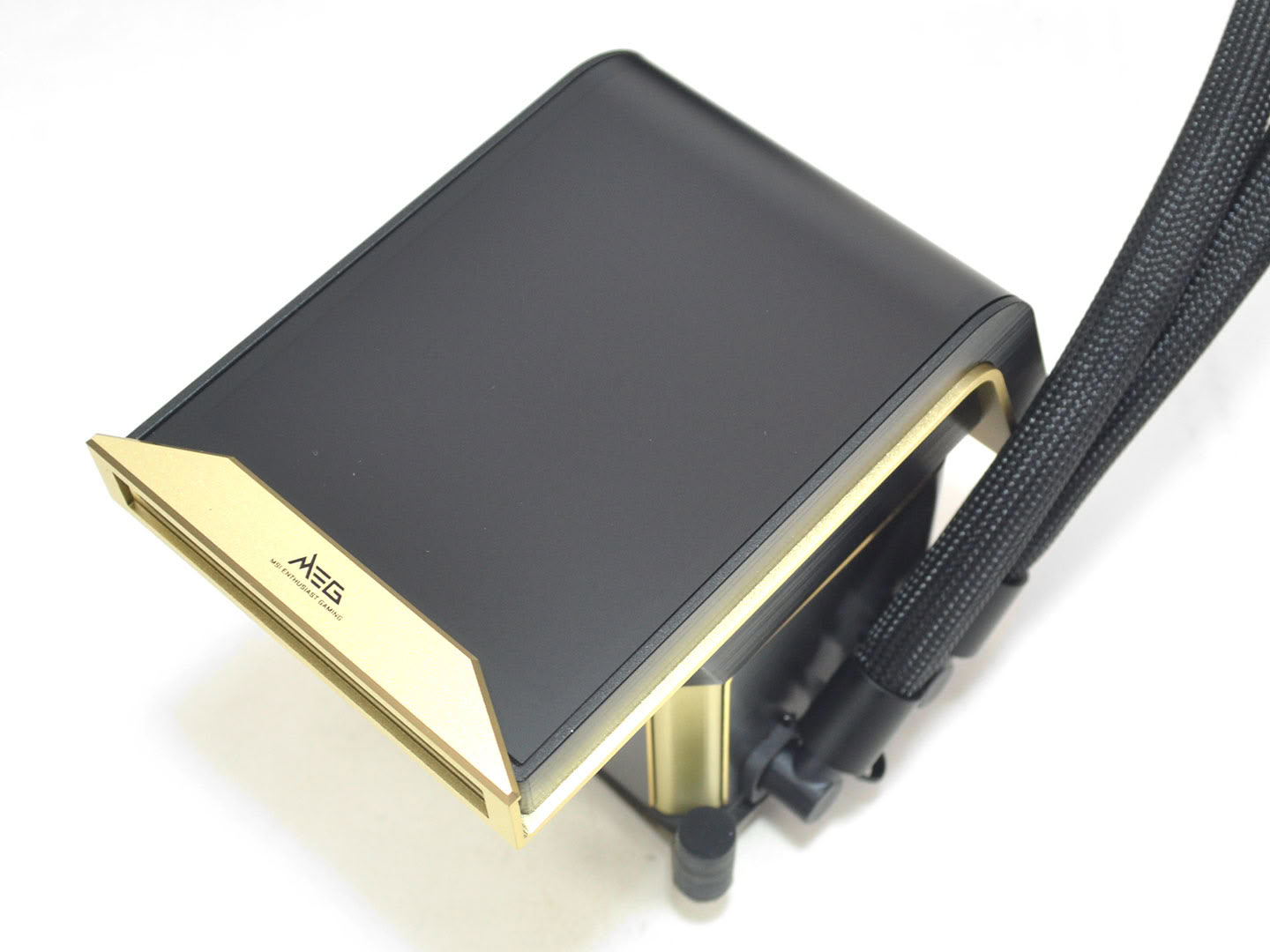
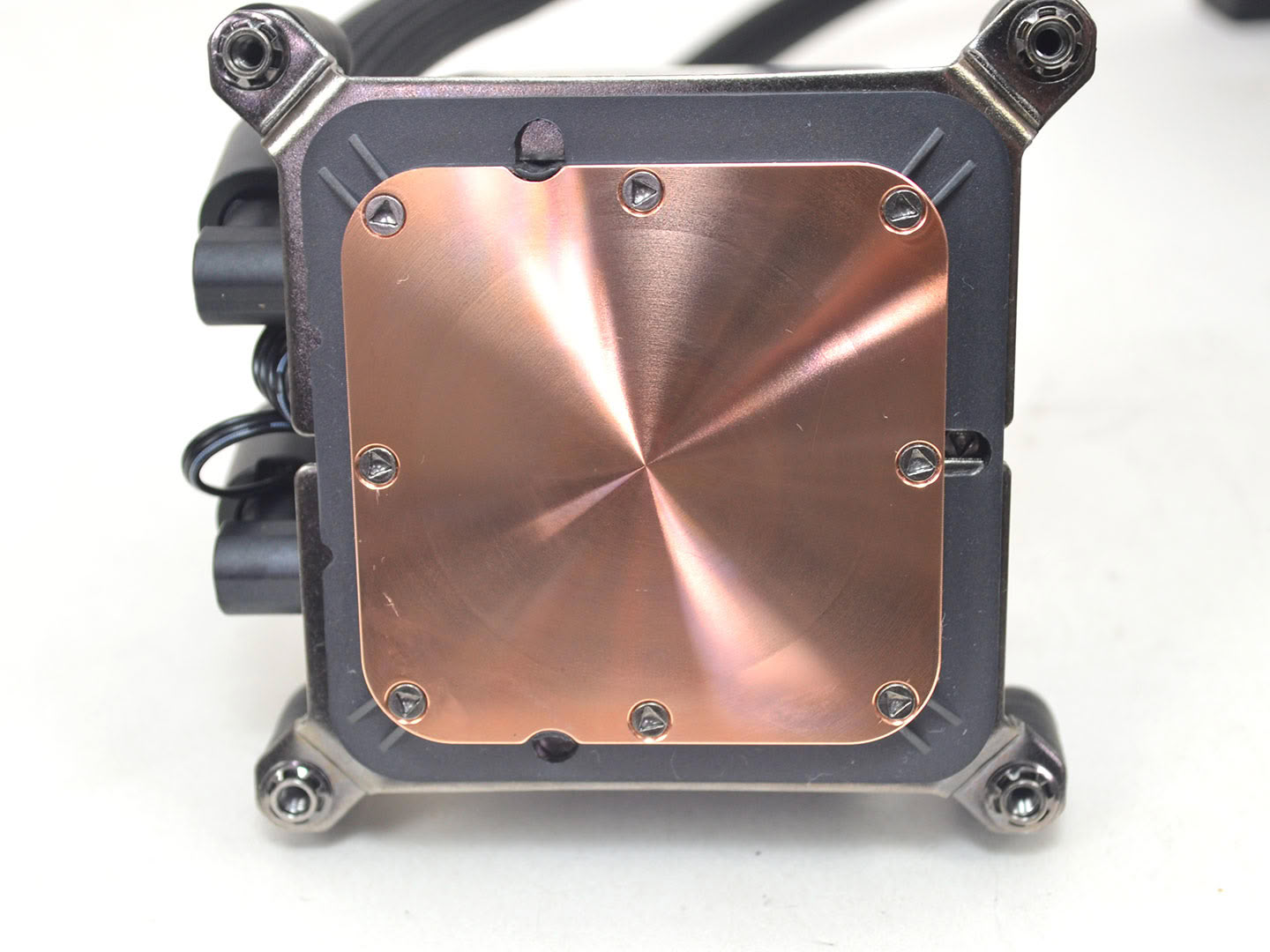
As for the display, it's held on via magnets and the hold is solid, I have no complaints here. While it lacks the novelty of the Lian Li with its motorized functions, it feels much more solid and that remains the case when comparing it to the ASUS ROG RYUO IV as well. In terms of fit and finish, I would say it is a clear step-up compared to both. As for the copper cold plate, machining marks are visible but can't be felt with the base itself being slightly convex.
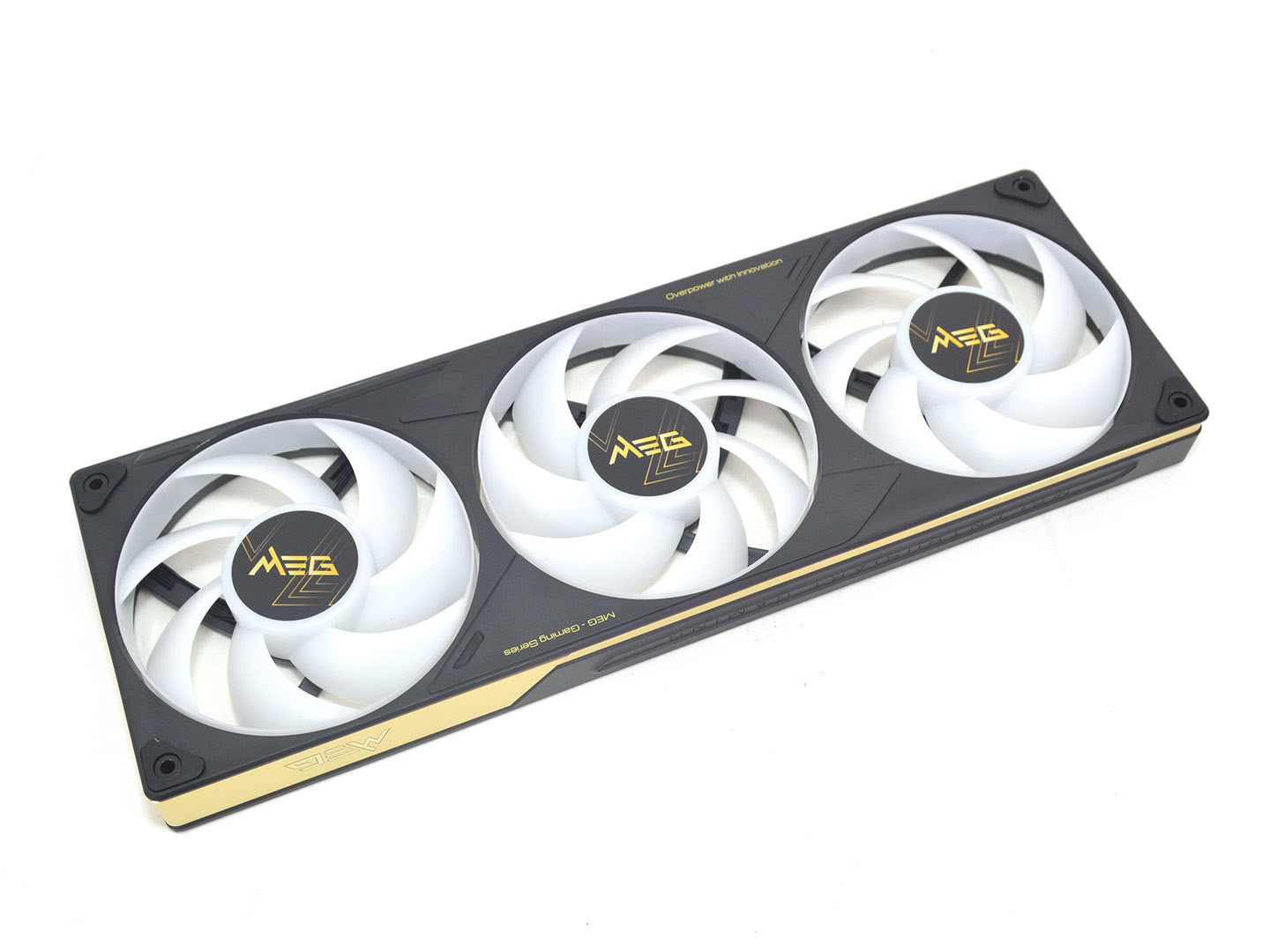
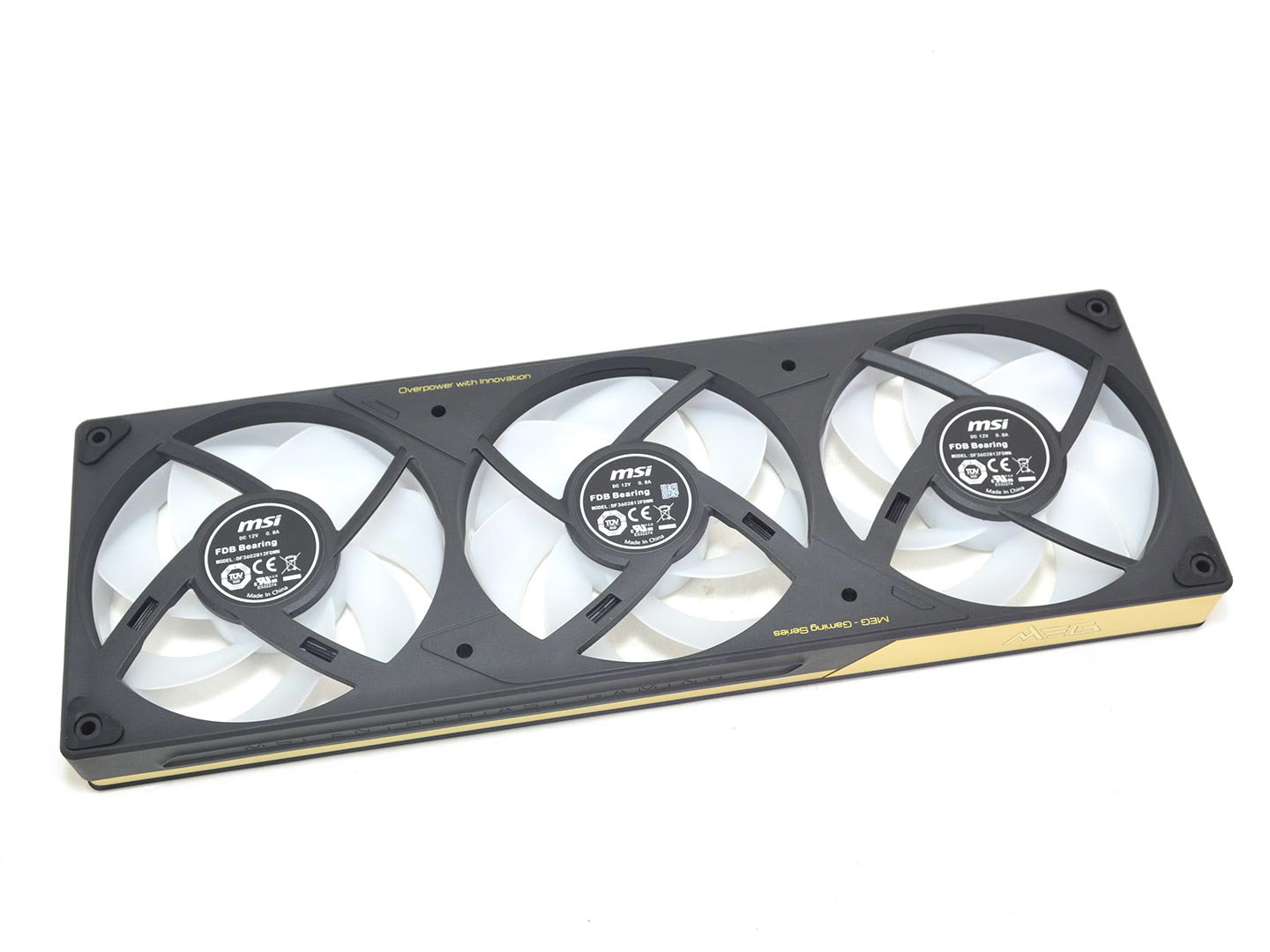
It seems going with unified fan designs is becoming more common as the MSI MEG CORELIQUID E15 uses a single frame triple fan design that offers three 120 mm fans. They are 28.4 mm thick with the center fan spinning in the opposite direction compared to the other two. MSI has dubbed it Laminar Focus Technology. To be fair in theory, it is sound, and should help reduce noise and turbulence, but performance wise I remain a bit skeptical. Regardless, the real question here is does it make a noticeable difference? As for performance specifications, the fan combo is rated as a whole to provide 217.91 CFM and 3.84 mm-H2O of pressure with an RPM range of 800 to 2300. MSI has opted to use FDB bearings with a 40,000 MTBF at 40°C.
Nov 19th, 2026 15:48 CST
change timezone
Latest GPU Drivers
New Forum Posts
- Honestly, do you care about GTA VI? (163)
- Windows 11 General Discussion (7736)
- Current Sales, Bundles, Giveaways (10448)
- Last game you purchased? (1409)
- WarpCoreBench scores! (76)
- Got the EOL 32GB TridentZ 6000 CL26 1.4V (12)
- Dell Workstation Owners Club (3516)
- Making a game in Godot engine (4)
- DTS DCH Driver for Realtek HDA [DTS:X APO4 + DTS Interactive] (2815)
- Security Apps (2)
Popular Reviews
- Acemagic Retro X3 Review
- Ugreen NASync DXP4800 GT Review
- Upcoming Hardware Launches 2027 (Updated Nov 2026)
- Pulsar Office Tour & First Look at P1 Dual-Sensor Mouse
- AMD Zen 6 Technical Deep Dive
- Biwin Black Opal NV7400 2 TB Review
- Sapphire Radeon RX 7700 XT Pure Review
- Sapphire Radeon RX 7700 XT Pulse Review
- AMD Ryzen 7 9800X3D Review - The Best Gaming Processor
- Chieftec Iceberg PRO 360 DARK Review
TPU on YouTube
Controversial News Posts
- NVIDIA Co-Founder and CEO Jensen Huang Officially Resigns (488)
- Report: Jensen Huang Eyes NVIDIA Comeback (223)
- Open Letter Asking NVIDIA to Reinstate Jensen Huang Passes 115,000 Signatures (184)
- OpenAI CEO Argues Home PCs Waste the World's Limited DRAM Supply (152)
- NVIDIA Launches Investigation Into Jensen Huang's Relationship With Suspected Chinese Spy (136)
- Intel "Raptor Lake Next" 16-Core and 20-Core CPUs Surface (130)
- Legendary Game Studio BioWare Shuts Down Following EA Layoffs (104)
- Dell CEO Says the Memory Shortage Will Get Worse in 2027 (95)