 75
Noctua NF-A12x25 G2 PWM Fan Review
(75 Comments) »Introduction

If you are here on TechPowerUp and unfamiliar with the brand Noctua, then it is likely you landed in the wrong place. The Austrian PC cooling outfit has been around for two decades now, and has become a standard when it comes to fans and air cooling. In fact, one of my most read reviews here has been of the Noctua NF-A12x25 120 mm fan, and I would not be surprised if this second generation model evokes the same effect. It has been seven long years since the NF-A12x25 released—with several competent products debuting in the time since—and today we take a closer look at its successor which aims to once again shake up the PC fan market.

I went back to read the review of the NF-A12x25 and laughed at the very first paragraph talking about how the product launch took longer than expected. Some things never change apparently, as the new NF-A12x25 G2 (generation 2) underwent similar circumstances in its product development lifecycle. The 140 mm version, the NF-A14x25 G2, released before this and brought with it a slew of new developments that we will also see implemented here. For example, there's a special 2-fan SKU available which deliberately offsets the RPM of one of the two fans to make for a more pleasant sound signature when used together. We will talk about all this, and more, in our review. I will also mention there is a chromax version in the works, but it won't be coming out anytime soon—Noctua tan and brown only for the time being. Let's thank Noctua for providing review samples to TechPowerUp and begin with a look at the product specifications in the table below.
Specifications
| Noctua NF-A12x25 G2 PWM 120 mm Fan | |
|---|---|
| Dimensions: | 120 x 120 x 25 mm |
| Rated Speed: | 1800 RPM +/-10%, 1500 RPM with low-noise adapter |
| Maximum Airflow: | 63.2 CFM (107.3 m³/h) |
| Noise: | 22.5 dBA |
| Static Pressure: | 3.14 mm H₂O |
| Fan Control: | 4-pin PWM control |
| Power Draw: | 1.8 W peak |
| Warranty: | Six years |
Packaging and Accessories


Noctua sent over a few different SKUs of the NF-A12x25 G2, although I suspect what most people will go for is the one pictured above—a single fan with PWM control. It ships in a relatively large product box adorned with traditional Noctua colors, with the product name and a render of the fan on the front to go with salient features listed. A blurb about the various tech that has gone into the making of the fan is seen on the back, along with a P-Q curve that helps compare this to the predecessor at a few different typical airflow impedance sources. Noctua doesn't include a manual—not that you really need one—albeit a QR code on the inside leads you to an online one going over the accessories and installation. Here we also see the fan right away, with the accessories neatly packed in a separate cardboard box to the side.
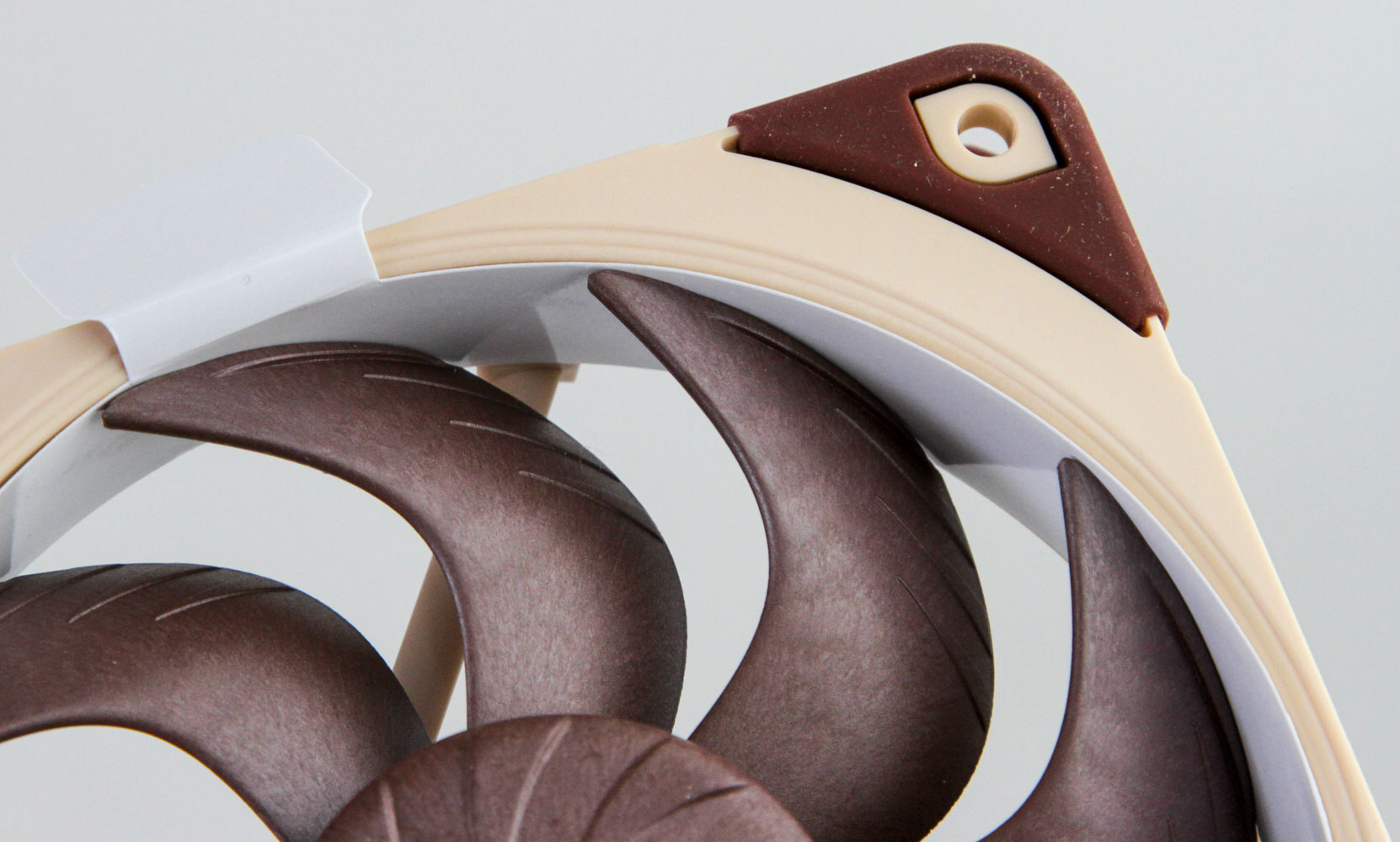
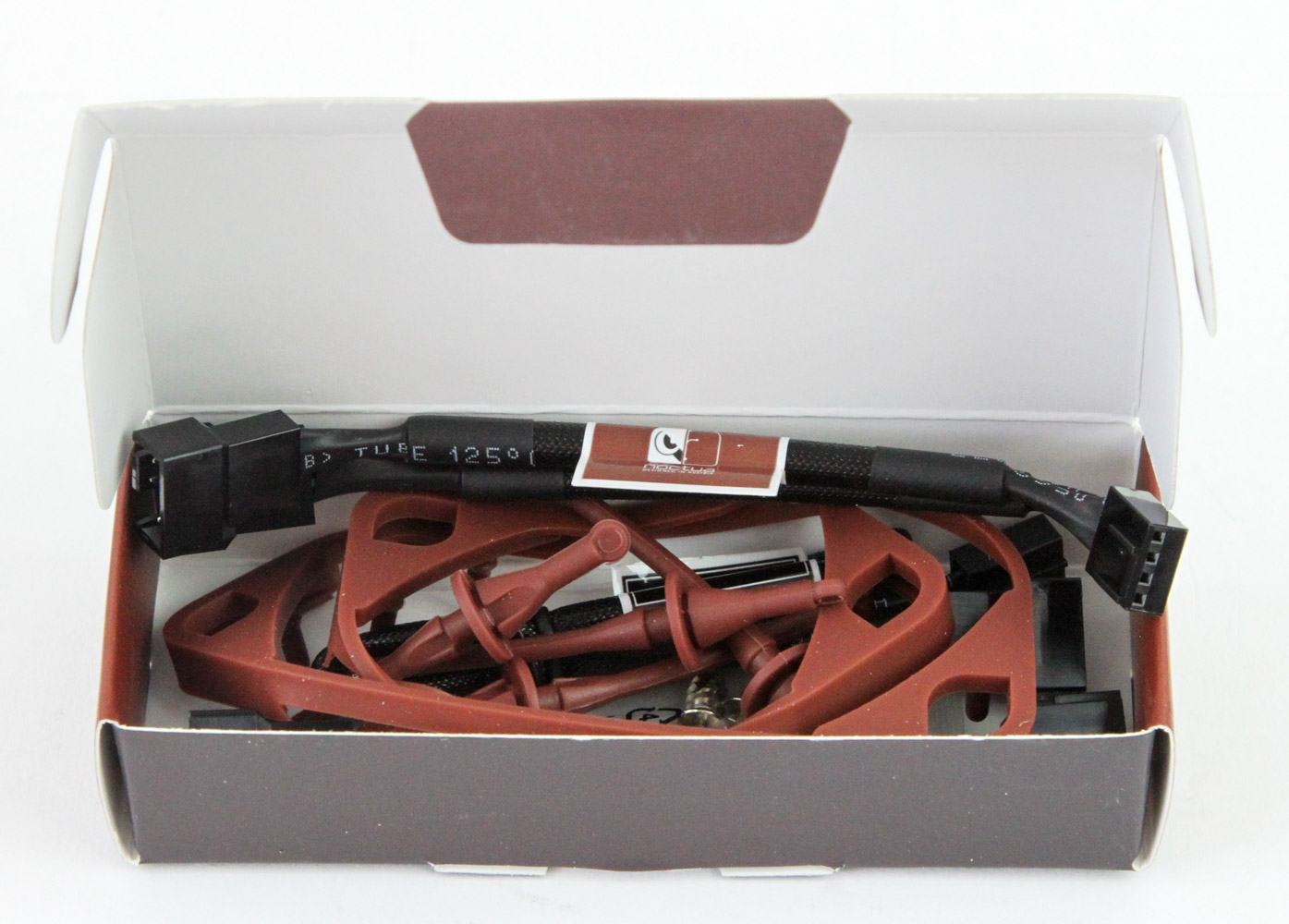
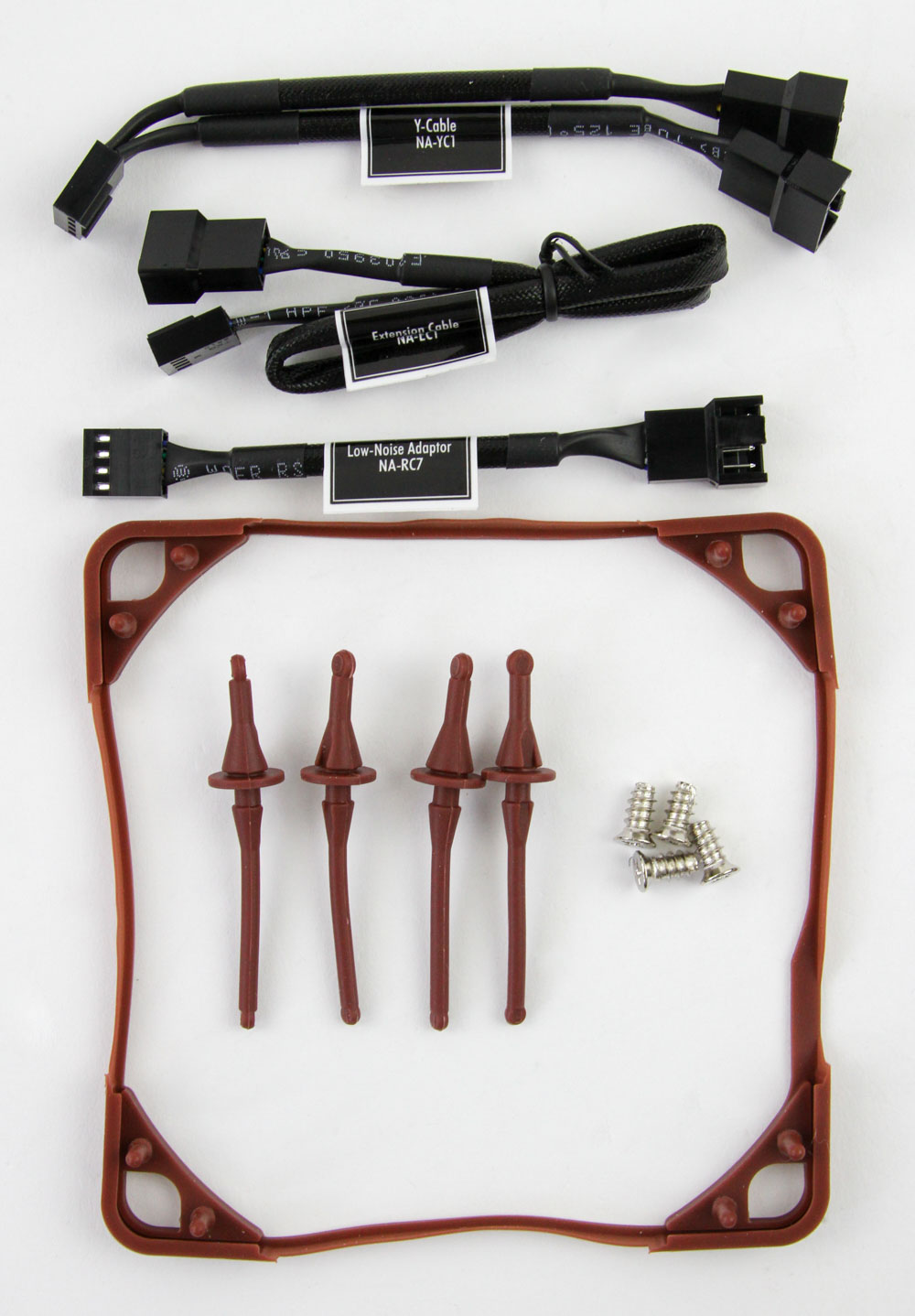
This might be the first time I have received a fan which comes with a protective strip of cardboard placed in the thin gap between the rotor and the inner frame. While I know this is to help prevent any mishaps during shipping, it also does an excellent job of showcasing just how small that gap is, given this circular piece is quite thin. The accessory box comes overloaded with quite a few things, including an anti-vibration rubber gasket that helps seal the fan when up against a radiator, for example. It has nibs that are inserted into each of the four corners on the fan, which help with keeping it in place even before the fan is screwed in, so I appreciate this small and user-friendly touch. We also get four rubber mounts when using this as a case fan, and these more than suffice in keeping the fan in place when used correctly. There are four self-tapping metal screws too if you prefer the old-fashioned route. Helping justify the price point are also three cables—a 30 cm long extension cable, 4-pin Y-splitter cable, and a low-noise adapter (LNA) which reduces the rated speed of the fan from 1800 RPM to 1500 RPM, presumably via an in-line resistor. This is handy for those wanting a slightly quieter fan that you simply connect the power to and not bother with fan control thereafter, although these days motherboard manufacturers make fan control so simple and mostly automated anyway. All included cables come sleeved in a heatshrink application with all-black sleeving and terminals and a label I would rather Noctua not add, since it takes things more to where it is an ad rather than a means of brand recognition inside of one's PC.


If 1500 RPM is still too much for you, Noctua also makes a low speed version aptly named the NF-A12x25 G2 LS-PWM. The fan and unboxing experience is the exact same as the regular version, except the motor is now re-worked to run at a maximum rated speed of 1100 RPM which then goes down to 850 RPM with the low-noise adapter. More interesting to me, however, is the NF-A12x25 G2 PWM Sx2-PP. It's a mouthful to type and say out loud, and yet this is not just a two-fan SKU. The fans inside are deliberately set to have one be offset by ~50 RPM from the other at 100% PWM duty cycle, meaning one fan will spin at 1800 RPM max and the other at 1750 RPM. This can be beneficial to reduce the negative effects of standing acoustic waves and vibrations, especially if you plan to use these fans in push-pull or even next to each other on a radiator. When I first saw this at Computex, I was skeptical given fans tend to have an operating speed that can be beyond 50 RPM from the rated value at most PWM duty cycles. However, Noctua claims the NF-A12x25 G2—as with the NF-A14x12 G2 before—has extremely accurate and precise RPM control for every single fan to help make this feature not only realistic, but also desirable for those who prioritize optimizing not just absolute sound levels, but also the sound signature itself.
Our Patreon Silver Supporters can read articles in single-page format.
Nov 14th, 2026 05:57 CST
change timezone
Latest GPU Drivers
New Forum Posts
- Unallocated space in ssd , is it normal? (19)
- What can the FX 8320 do today? Here is the answer. (2)
- Planning for Prolonged High Prices and Maintaining What You Already Have (63)
- Tell me about your favourite graphics card (43)
- What are you playing? (26218)
- I'll flash a ASUS ROG Strix RX480 O8G in Cause of Code 43, as a Newbie (4)
- [INTEL]-How To Update Your Microcode for Intel HX 13/14th Gen. CPUs Laptops/Mobile Easily. (259)
- Ryzen 7 8700G OC (7)
- Post your Cinebench R23 Score (3172)
- AI generated images... (225)
Popular Reviews
- AMD Zen 6 Technical Deep Dive
- Corsair HX1000i Shift Crystal Review
- NZXT C1200 Platinum Review
- ASUS ROG Strix B850-I Gaming Wi-Fi7 W Review
- Upcoming Hardware Launches 2027 (Updated Nov 2026)
- Montech King 95 3D PRO Review
- NZXT H7 RGB+ Review
- NZXT H5 Review
- Phantom Blade Zero Performance Benchmark Review - 35 GPUs Tested
- XPG NIMBUS PLUS Review - Mid-range Chair With Strong Competitors
TPU on YouTube
Controversial News Posts
- NVIDIA Co-Founder and CEO Jensen Huang Officially Resigns (384)
- OpenAI CEO Argues Home PCs Waste the World's Limited DRAM Supply (152)
- NVIDIA Launches Investigation Into Jensen Huang's Relationship With Suspected Chinese Spy (136)
- Intel "Raptor Lake Next" 16-Core and 20-Core CPUs Surface (130)
- Legendary Game Studio BioWare Shuts Down Following EA Layoffs (104)
- Dell CEO Says the Memory Shortage Will Get Worse in 2027 (95)
- NVIDIA GeForce RTX 50-Series Scheduled for up to $500 Price Hike This Week (89)
- Modder Fits RTX 5090 With Four 8-Pin Connectors, Halving Current per Wire (80)