 10
OWC Envoy Ultra 2TB Thunderbolt 5 SSD Review - Blistering Speed for Creators
Value & Conclusion »Performance
CrystalDiskMark
The most popular storage benchmark, CDM highlights maximum performance levels on offer.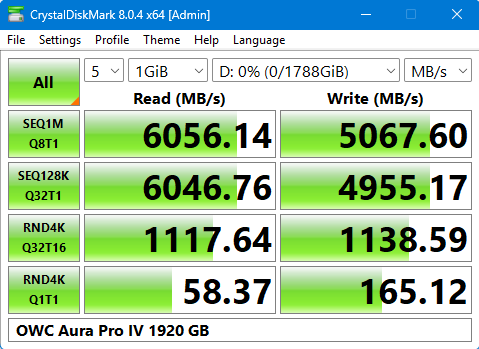
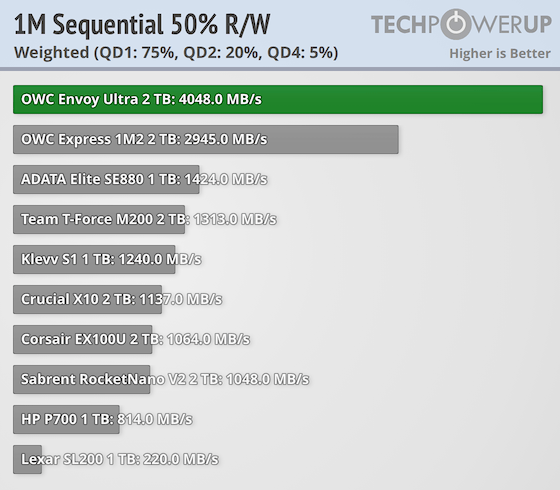
Sequential Throughput
For portable storage devices, most file transfers are typically sequential in nature. This section provides insight into how the drive performs under various sequential read, sequential write, and sequential mixed (read/write) workloads. We test the drive at multiple queue depths, ranging from 1 to 128. In addition to sequential read and write tests, we also evaluate a mixed workload that randomly issues read or write requests with equal probability.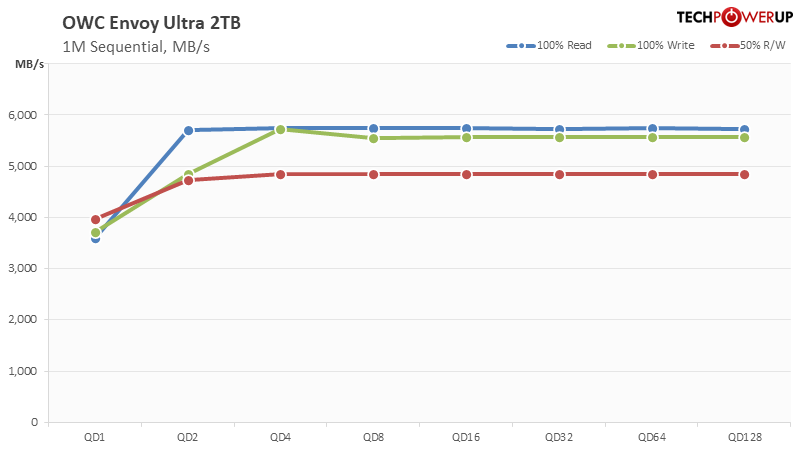
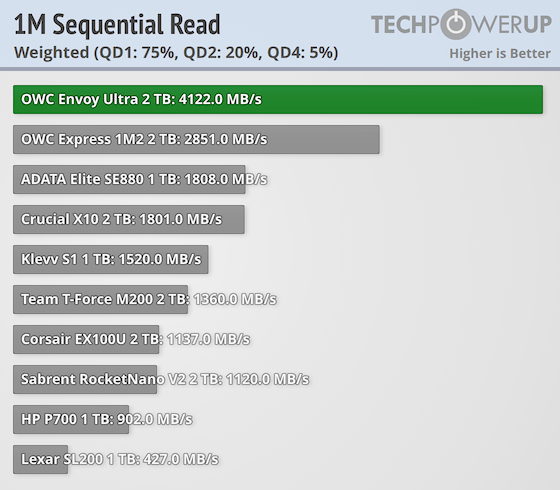
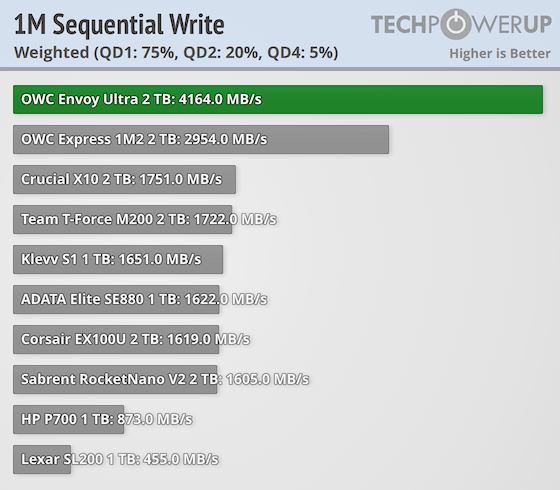
These bar graphs show how the drive compares to various competing offers. We report a combined and weighted score that's designed to represent real-life consumer workloads effectively. The weighting factors were chosen to reflect typical low queue depth loads, rather than the drive's absolute maximum performance numbers, which have little impact on real-world usage.
Random Access Performance
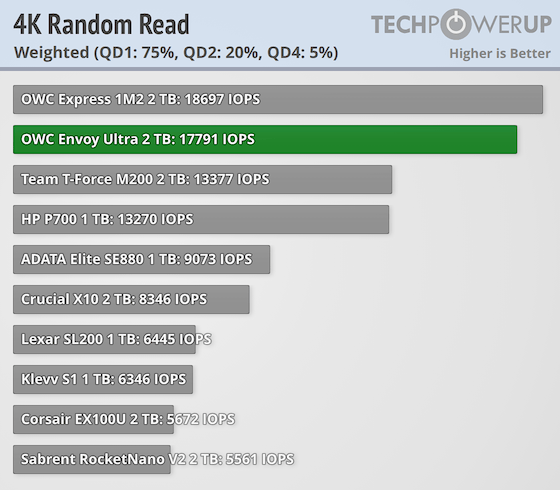
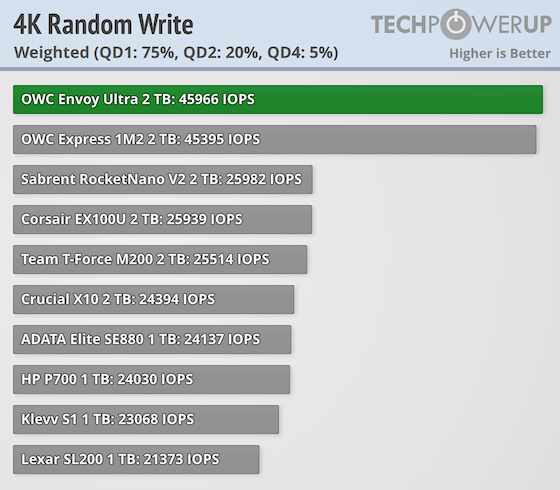
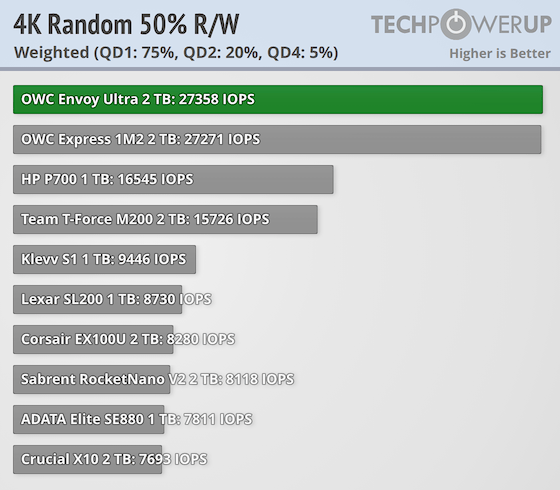
While random access performance is less critical for portable SSDs than for internal ones, it becomes important in scenarios where applications or operating systems are run directly from the drive, or during large backup and restore operations. In this section, we test 4K random I/O, which transfers small chunks of data spread across an 8 GB workspace. As before, a third data point is included for a mixed workload that randomly issues read or write requests with equal probability. Please note that the vertical axis uses non-linear scaling to improve visibility of the low queue depth values—which are more relevant for daily workloads.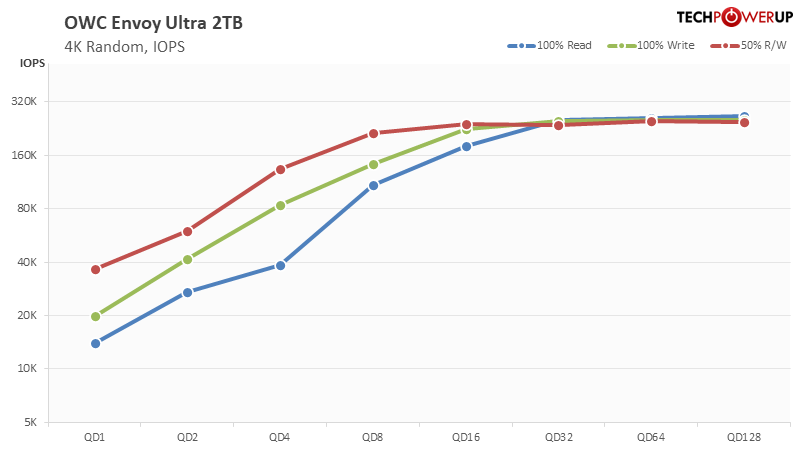
Here's how the drive compares to rivals.
Sustained Write Performance
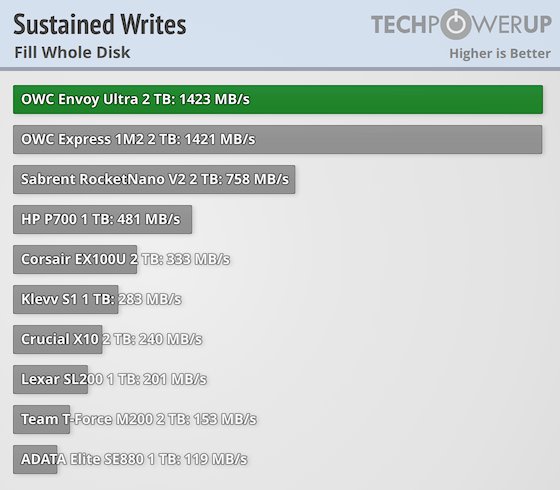
Portable SSDs are a segment above USB flash drives, because they are expected to provide performance closer to internal SSDs. Sustained write performance is probably the most important test series, as it highlights how the drive performs with large write operations spanning the entire disk. Real-world use-cases include whole system backups and imaging of internal SSDs. Your internal SSD is able to sustain reads at thousands of MB/s throughout its user space, but can your portable SSD keep up?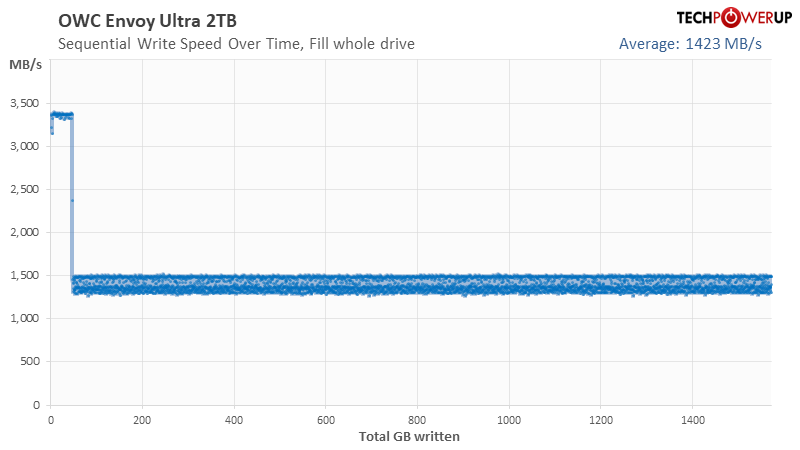
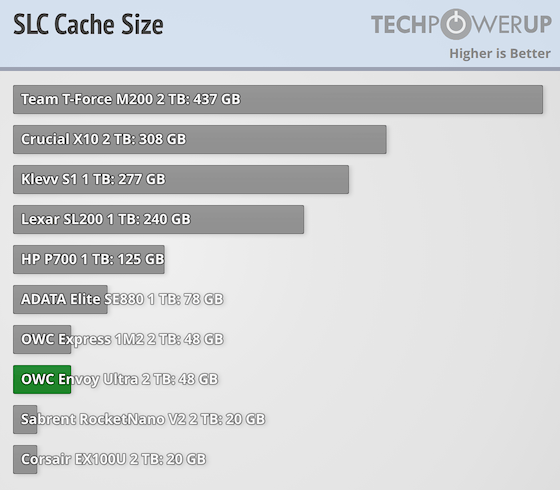
Based on the above sustained write graphs, we are able to pinpoint the SLC cache size. Although today's portable SSDs ship with QLC or TLC NAND flash, they are able to treat a portion of their NAND flash area as SLC for the highest possible write performance, and only upon exhausting this area, begin to treat the drive as its native flash type. The graph below compares SLC cache sizes.
Relative Performance
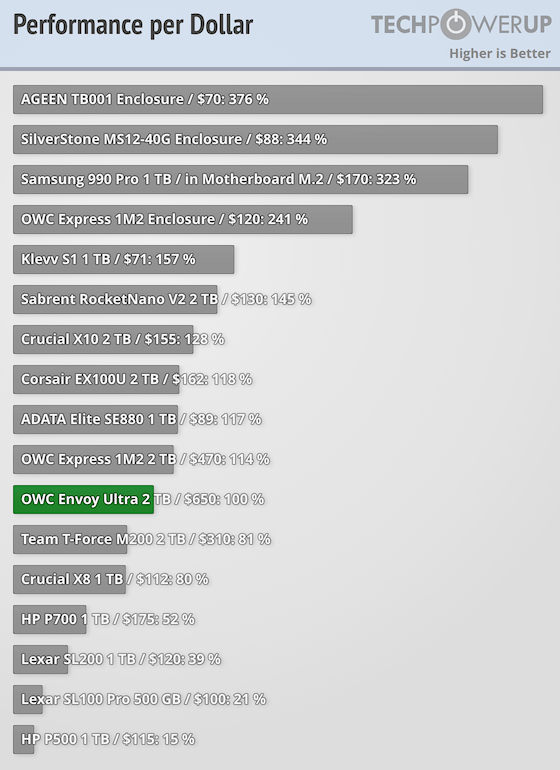
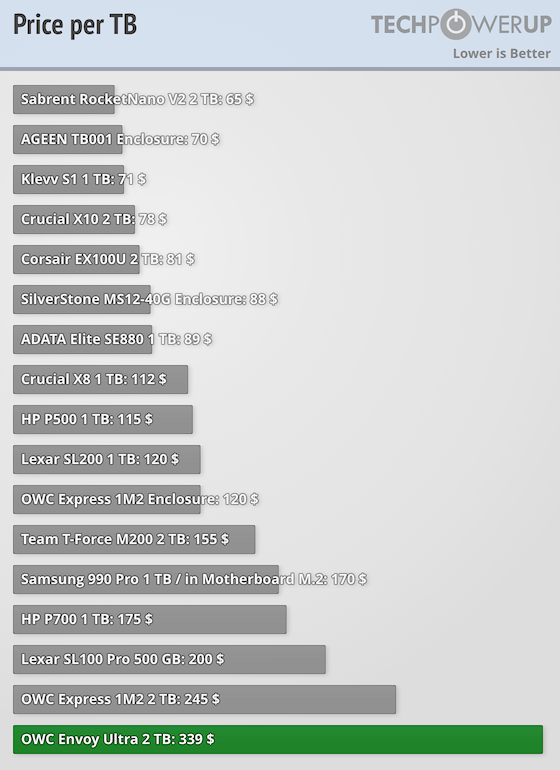
The graphs below show how the drive compares to others, spanning 20 Gbps and 10 Gbps USB 3.2 SSDs we have in our collection, and what kind of performance per Dollar we're looking at. Admittedly, some of these drives are old, dating back a few years, we used their last available online prices.
But Will it Blend?

Since the OWC Envoy Ultra is essentially an 80 Gbps Thunderbolt 5 enclosure powering a Gen 4 NVMe internal SSD, we were curious to see how it performs with our Samsung 990 Pro 1 TB, one of the fastest SSDs from the Gen 4 era. So we replaced the OWC Aura IV Pro with this drive, and took it for a spin.
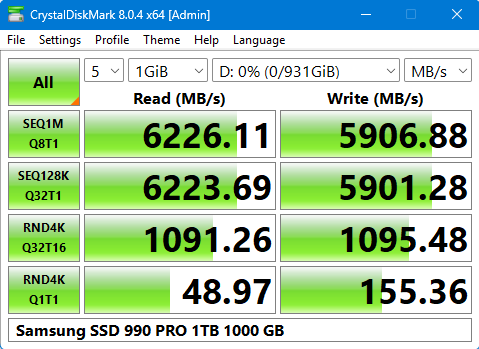
We are happy to report that yes, the enclosure works just fine with a different brand of internal SSD, and the Samsung 990 Pro with its DRAM cache and 8-channel controller is able to post higher performance. We'll do an in-depth review if there's enough demand in the comments.
Nov 14th, 2026 12:24 CST
change timezone
Latest GPU Drivers
New Forum Posts
- What can the FX 8320 do today? Here is the answer. (32)
- What card do I get for VR? (30)
- Tell me about your favourite graphics card (57)
- no "PhysX" workable (10)
- TPU's Nostalgic Hardware Club (22162)
- Slow SSD read speeds - help! (7)
- Ddr4 instead of ddr5 for 9060xt 8 gb over 5060 8 gb (7)
- Your PC ATM (36414)
- Microsoft Exchange/365 outages? (62)
- Opinion on Monitor Replacement (7)
Popular Reviews
- AMD Zen 6 Technical Deep Dive
- ASUS ROG Strix B850-I Gaming Wi-Fi7 W Review
- Corsair HX1000i Shift Crystal Review
- NZXT C1200 Platinum Review
- Upcoming Hardware Launches 2027 (Updated Nov 2026)
- Montech King 95 3D PRO Review
- NZXT H7 RGB+ Review
- NZXT H5 Review
- Phantom Blade Zero Performance Benchmark Review - 35 GPUs Tested
- XPG NIMBUS PLUS Review - Mid-range Chair With Strong Competitors
TPU on YouTube
Controversial News Posts
- NVIDIA Co-Founder and CEO Jensen Huang Officially Resigns (399)
- OpenAI CEO Argues Home PCs Waste the World's Limited DRAM Supply (152)
- NVIDIA Launches Investigation Into Jensen Huang's Relationship With Suspected Chinese Spy (136)
- Intel "Raptor Lake Next" 16-Core and 20-Core CPUs Surface (130)
- Legendary Game Studio BioWare Shuts Down Following EA Layoffs (104)
- Dell CEO Says the Memory Shortage Will Get Worse in 2027 (95)
- NVIDIA GeForce RTX 50-Series Scheduled for up to $500 Price Hike This Week (89)
- Modder Fits RTX 5090 With Four 8-Pin Connectors, Halving Current per Wire (80)