 14
Patriot Viper Elite 5 Ultra RGB DDR5-8000 48 GB CL36 Review
Performance Check 24 Gbit vs 16 Gbit »Average Gaming Framerate
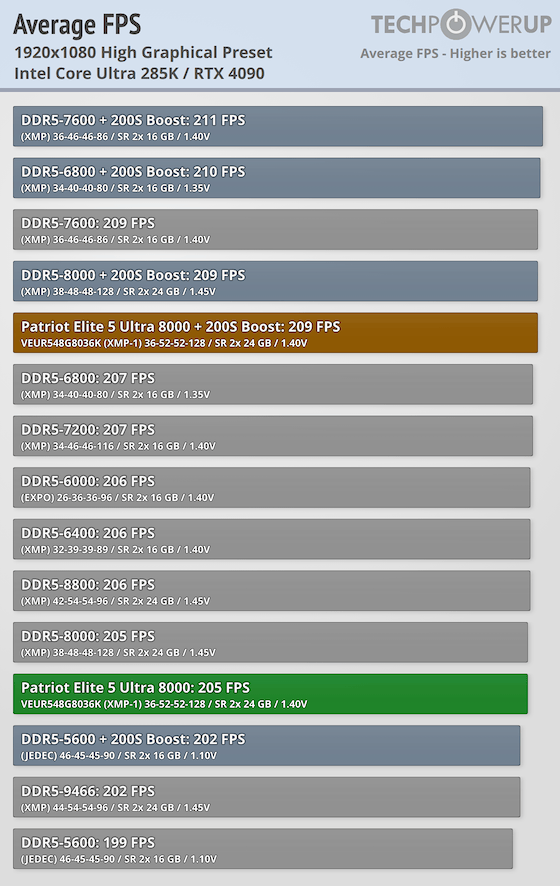
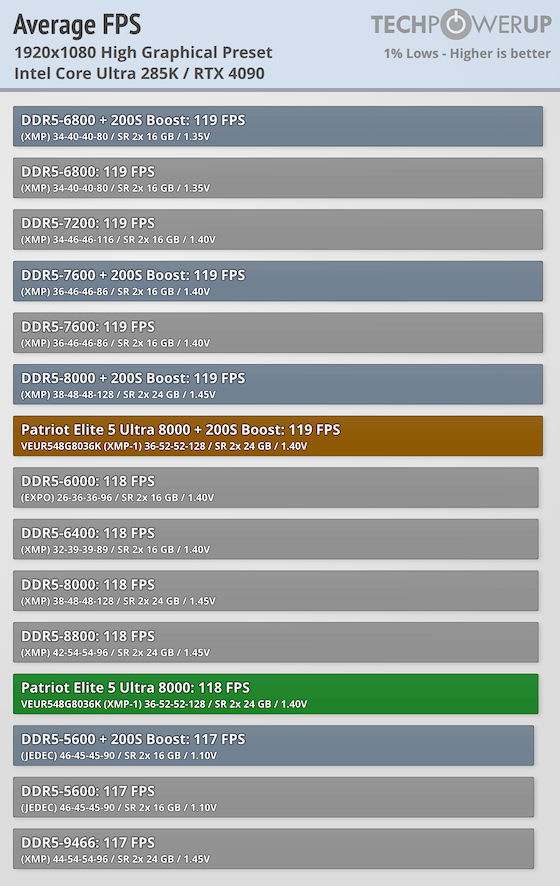
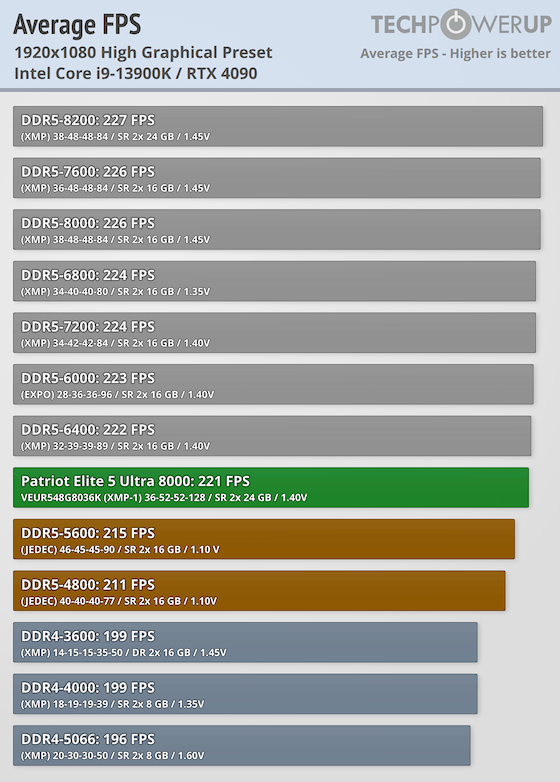
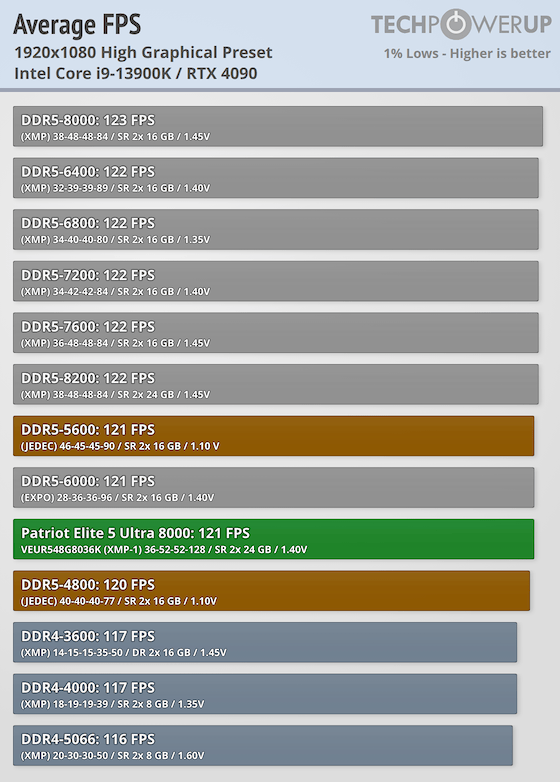
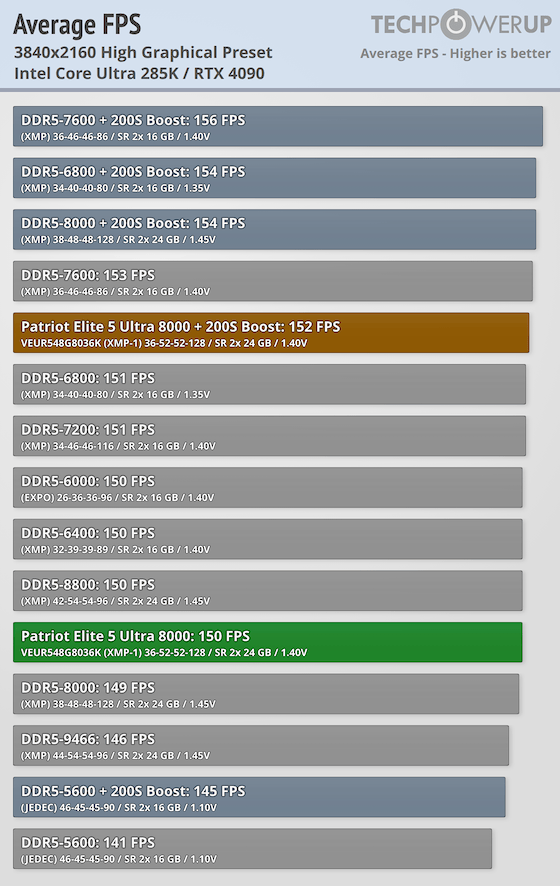
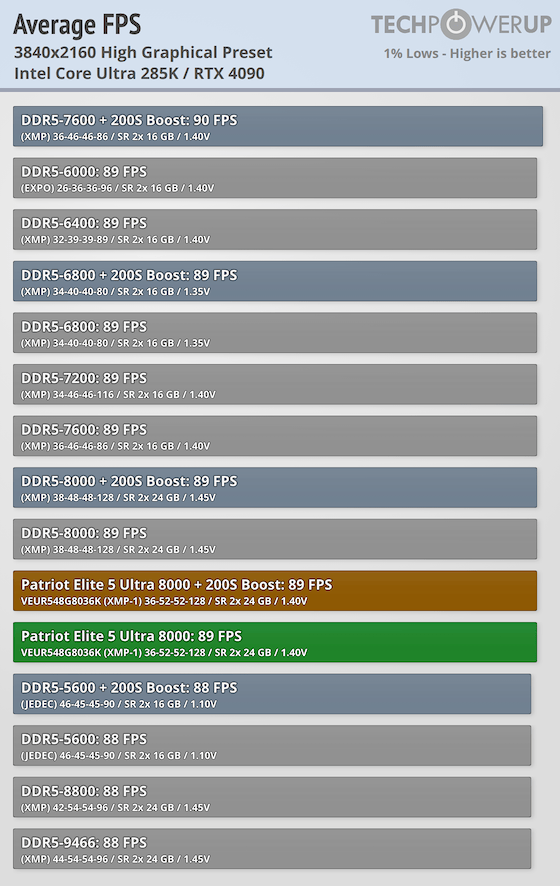
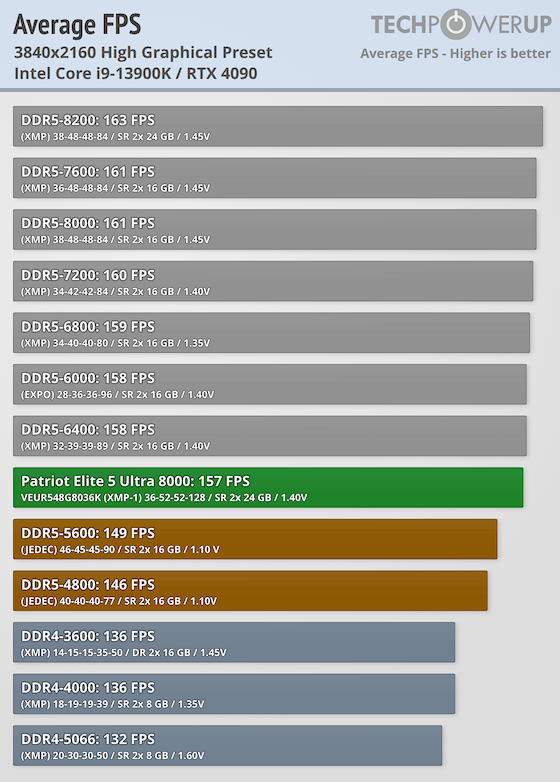
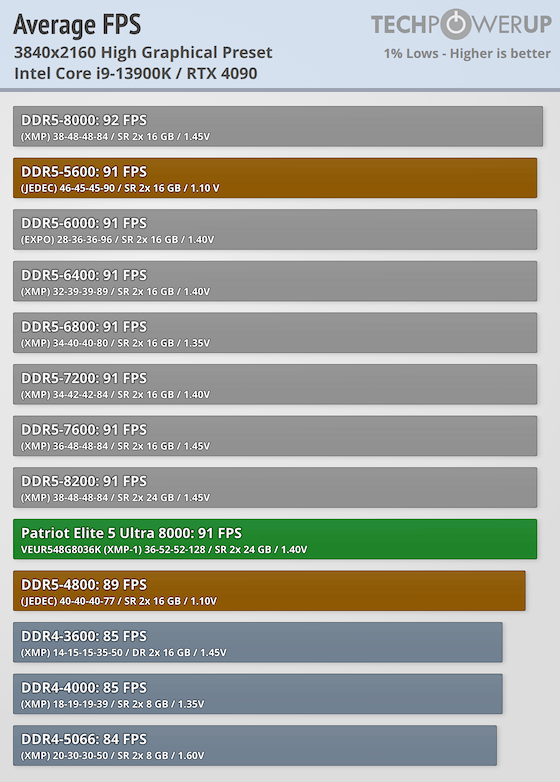
The Patriot Elite 5 Ultra 8000 offers a robust performance across all three platforms, as evidenced by the average FPS figures. On the Intel Core Ultra 285K, it ties with the DDR5-8000 at 205 FPS, slightly outperforming the DDR5-8800 at 206 FPS. The JEDEC configurations linger at the bottom, with the 200S Boost profile making minimal impact. However, enabling the 200S Boost for the Patriot kit elevates its performance to match that of the DDR5-7600 and DDR5-8000, showcasing the potential unlocked by the BIOS Boost feature.On the Intel Core i9-13900K, the kit averages 221 FPS, just shy of the DDR5-6400 (222 FPS) and DDR5-6000 (223 FPS) kits, yet it remains comfortably ahead of the JEDEC DDR5-5600 (215 FPS) and all DDR4 configurations. The slight gap to the leading 16 GB DDR5-8000 and DDR5-8200 kits (226–227 FPS) can be attributed to the tRFC penalty of its 3 GB ICs.
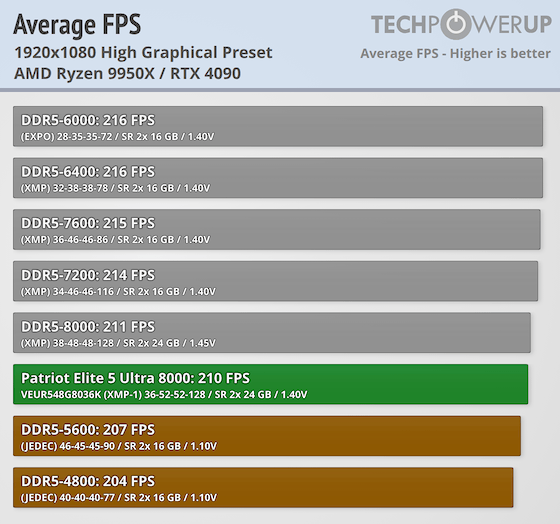
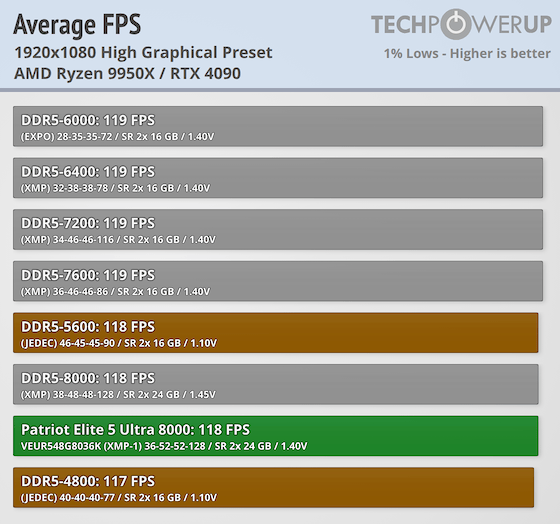
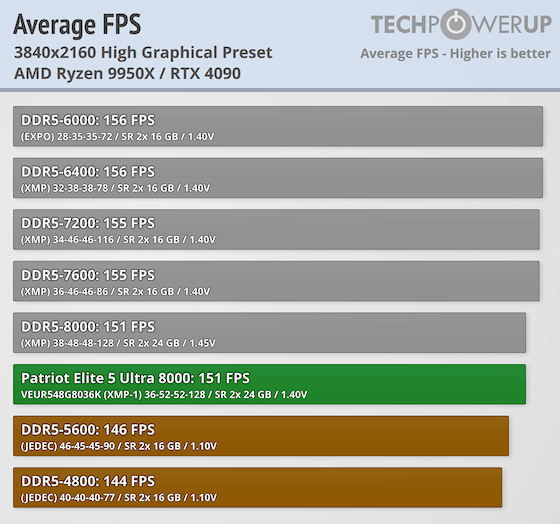
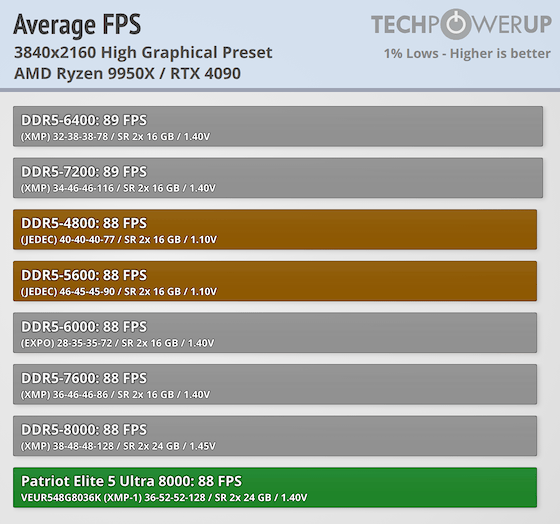
For the AMD Ryzen 9950X, the Patriot kit's performance at 210 FPS is just below the generic DDR5-8000 at 211 FPS, with both trailing behind the 6000–6400 MT/s sweet spot kits at 216 FPS. While the average of nine games provides a useful headline figure, it can obscure the extremes. For instance, in titles like Baldur's Gate 3, there was a significant spread between the best and worst memory on some platforms, whereas 4K results compressed the differences to within 1–2%. Overall, the Patriot Elite 5 Ultra 8000 proves to be a competitive high-capacity kit across all major platforms. However, the per-game data reveals the real story of platform architecture, timing sensitivity, and the transformative impact of the 200S Boost profile, especially if you're using an Arrow Lake CPU.
1920×1080 Memory Average FPS
3840×2160 Memory Average FPS
Nov 22nd, 2026 21:47 CST
change timezone
Latest GPU Drivers
New Forum Posts
- What are you playing? (26241)
- Last game you purchased? (1415)
- Increasing Power Limit? (9)
- DTS DCH Driver for Realtek HDA [DTS:X APO4 + DTS Interactive] (2818)
- Honestly, do you care about GTA VI? (266)
- UPS what one to get? (48)
- Your PC ATM (36458)
- Gacha Games - Discussions, Pulls, Updates, etc. (1157)
- Making a game in Godot engine (19)
- Intel D270 (5)
Popular Reviews
- Microsoft Surface Laptop Ultra Review - The Next-gen Arm Laptop
- Corsair RM1200e (Second Generation) Review
- Upcoming Hardware Launches 2027 (Updated Nov 2026)
- Pulsar Office Tour & First Look at P1 Dual-Sensor Mouse
- Ugreen NASync DXP4800 GT Review
- AMD Ryzen 7 9800X3D Review - The Best Gaming Processor
- AMD Zen 6 Technical Deep Dive
- AMD Ryzen 7 5800X3D 10th Anniversary Review
- Phantom Blade Zero Performance Benchmark Review - 35 GPUs Tested
- Biwin Black Opal NV7400 2 TB Review
TPU on YouTube
Controversial News Posts
- NVIDIA Co-Founder and CEO Jensen Huang Officially Resigns (492)
- Report: Jensen Huang Eyes NVIDIA Comeback (266)
- Open Letter Asking NVIDIA to Reinstate Jensen Huang Passes 115,000 Signatures (184)
- OpenAI CEO Argues Home PCs Waste the World's Limited DRAM Supply (152)
- NVIDIA Launches Investigation Into Jensen Huang's Relationship With Suspected Chinese Spy (136)
- Intel "Raptor Lake Next" 16-Core and 20-Core CPUs Surface (130)
- NVIDIA GeForce RTX 50-Series Scheduled for up to $500 Price Hike This Week (89)
- Intel Razor Lake Gets a 12 P-Core bLLC Chip With No E-Cores, Per Leak (86)