 5
PELADN H05 HX 370 Review
Value & Conclusion »Power and Noise Levels
Power and efficiency are just as important as raw performance in a compact system, so I measured how much it draws at idle, under CPU stress, during GPU-heavy tests, and while gaming. These measurements were captured using a Shelly smart power relay, taking advantage of its API-based logging to track real-time wattage and build accurate per-second consumption profiles. I also monitored the system's noise levels while idle and when under sustained load.Idle Power Draw
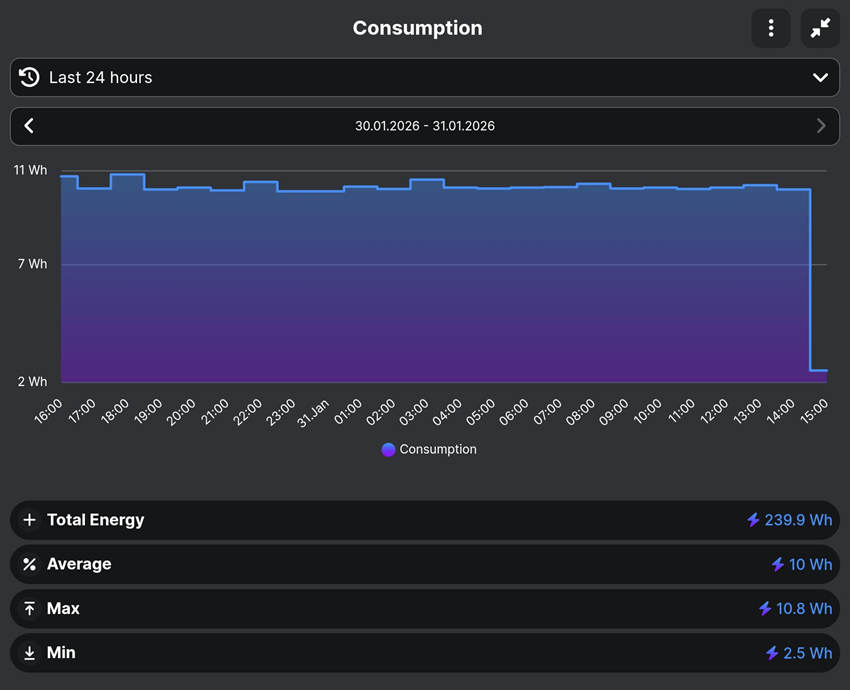
Over a full 24-hour idle monitoring period with the display turned off, the system consumed 0.2399 kWh, averaging 10 W, with a maximum of 10.8 W and a minimum of 2.5 W. For most of the day, power draw stayed tightly grouped just under the 11 W mark, indicating very steady idle behavior with no real background spikes or unexplained activity. Just as a note, the sharp drop at the end of the chart can be ignored, as it reflects how the monitoring software closes out the logging window rather than a real change in system behavior.
At this sustained idle rate, continuous 24/7 operation would amount to roughly 88 kWh per year, translating to about $10–12 USD annually in typical North American electricity costs. While not the most power efficient mini we've seen, this places the system in line with what we expect from a modern Mini-PC.
CPU and GPU Power Draw
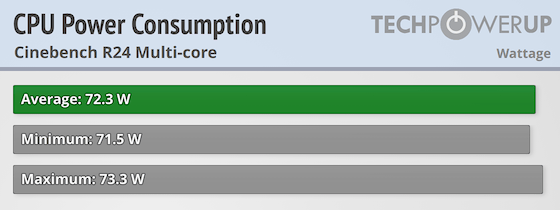
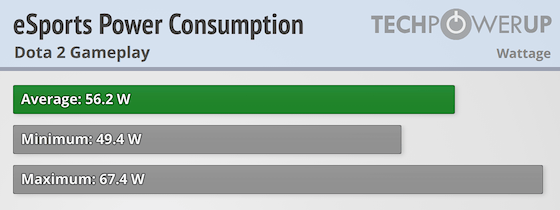
We also tested three real-world power-load scenarios: an esports gaming pass with Dota 2, which gives a good view of mid-load stability and clock consistency; a GPU-oriented run using Night Raid, which exposes how the APU reacts to scene changes and mixed rendering workloads; and a heavy Cinebench multicore pass that stresses all CPU cores simultaneously to show long-term power delivery.
Cinebench Multicore
During the Cinebench multicore run, the H05 HX370 averaged 72.3 W, with a minimum of 71.5 W and a maximum of 73.3 W. Power stays extremely flat throughout the test, which shows the CPU is locked into a sustained power target and holds it consistently without fluctuation or throttling.
eSports Gaming (Dota 2)
In Dota 2, power consumption averaged 56.2 W, dipping to 49.4 W in lighter moments and peaking at 67.4 W during heavier action.
3DMark Night Raid
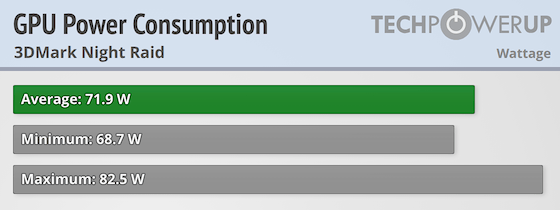
Night Raid averaged 71.9 W, with a low of 68.7 W and a peak of 82.5 W during the more demanding scenes. The wider range is expected for a mixed CPU and GPU benchmark and shows the system ramping power up quickly when needed, then easing back during lighter transitions.
Here's a full view of the PELADN H05's power draw across all three profiles:
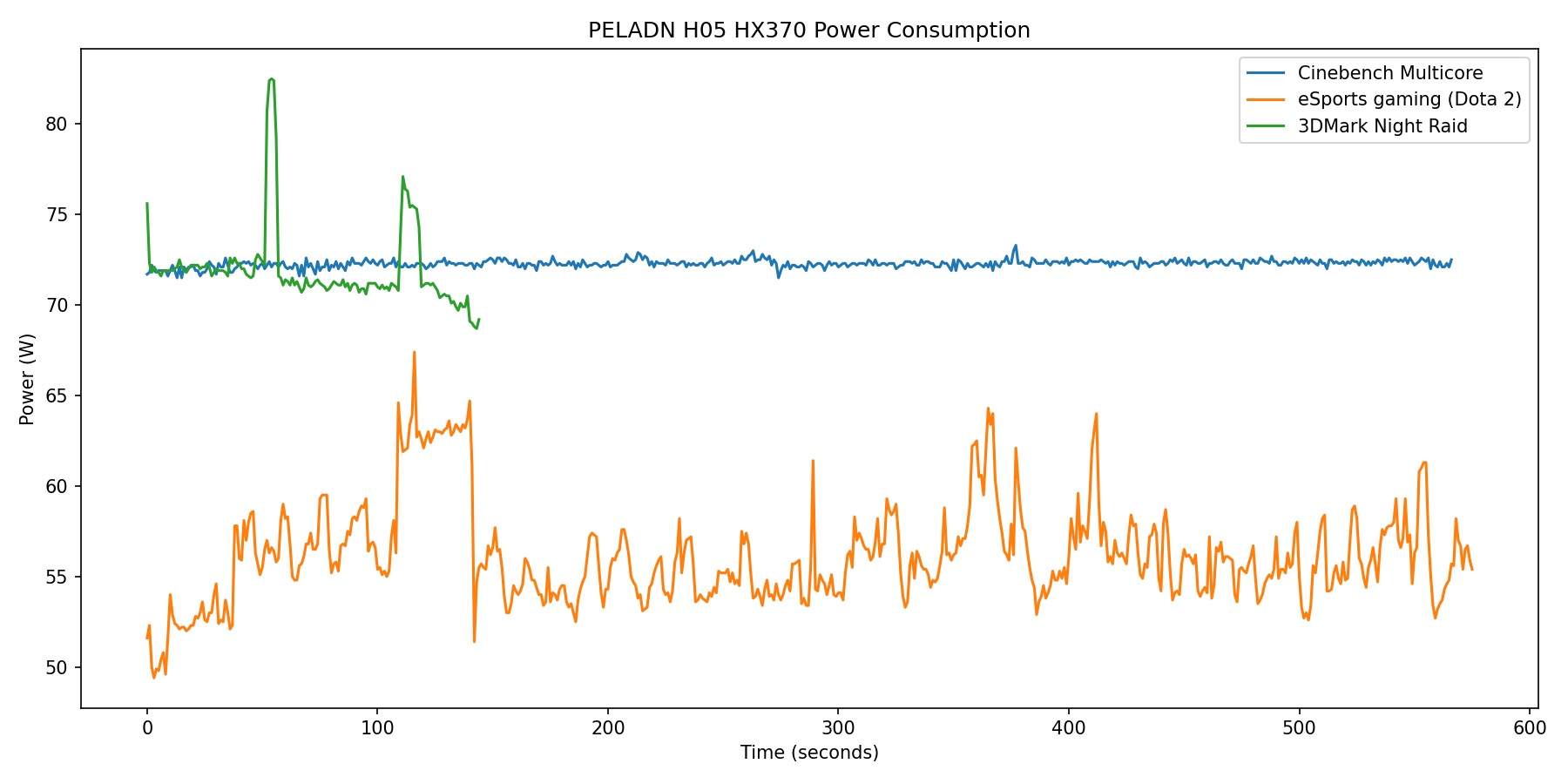
Overall, the PELADN H05 HX370 behaves in a very steady and predictable way when it comes to power use. It tends to draw more power during heavy CPU or mixed workloads, which points to a focus on keeping performance consistent, while gaming stays more restrained and better balanced for everyday use.
Noise Levels
Noise was measured using a digital sound level meter placed about 30 cm from the system. During idle and light everyday tasks like browsing, writing, or general productivity work, the H05 is effectively silent and disappears into the background of a normal room.Once the system is pushed harder, such as during sustained stress tests, Cinebench multicore runs, or longer game installations through Steam, fan noise becomes clearly audible. Levels peak around 41 dB, and while that is on the slightly louder side for a Mini-PC, the sound itself is fairly steady and tends to blend into the background. There is a mild high-pitched tone at times during this intensive loads, which is most noticeable in very quiet rooms, but with any ambient noise present it becomes much less distracting.
Nov 20th, 2026 16:37 PST
change timezone
Latest GPU Drivers
New Forum Posts
- Without Jensen, PC gaming will be (51)
- WarpCoreBench scores! (86)
- Honestly, do you care about GTA VI? (213)
- What's your latest tech Freebie? (80)
- Nvidia GPU undervolting via MVolt+? (0)
- How to prevent OLED burn damage due to PC freezes or power outtages? (49)
- RX 9000 series GPU Owners Club (2249)
- Logitech Headsets Modded Driver — Unlock Dolby in G HUB (23)
- 1 - 5 person file storage server equivalent accasible from anywhere + general VM server. (1)
- When you could finally run Crysis maxed out? (63)
Popular Reviews
- Microsoft Surface Laptop Ultra Review - The Next-gen Arm Laptop
- Ugreen NASync DXP4800 GT Review
- Corsair RM1200e (Second Generation) Review
- Pulsar Office Tour & First Look at P1 Dual-Sensor Mouse
- Upcoming Hardware Launches 2027 (Updated Nov 2026)
- Acemagic Retro X3 Review
- Biwin Black Opal NV7400 2 TB Review
- AMD Ryzen 7 9800X3D Review - The Best Gaming Processor
- AMD Zen 6 Technical Deep Dive
- Chieftec Iceberg PRO 360 DARK Review
TPU on YouTube
Controversial News Posts
- NVIDIA Co-Founder and CEO Jensen Huang Officially Resigns (491)
- Report: Jensen Huang Eyes NVIDIA Comeback (256)
- Open Letter Asking NVIDIA to Reinstate Jensen Huang Passes 115,000 Signatures (184)
- OpenAI CEO Argues Home PCs Waste the World's Limited DRAM Supply (152)
- NVIDIA Launches Investigation Into Jensen Huang's Relationship With Suspected Chinese Spy (136)
- Intel "Raptor Lake Next" 16-Core and 20-Core CPUs Surface (130)
- Legendary Game Studio BioWare Shuts Down Following EA Layoffs (104)
- NVIDIA GeForce RTX 50-Series Scheduled for up to $500 Price Hike This Week (89)