 49
PNY RTX 5080 Slim OC Review
(49 Comments) »Introduction

PNY GeForce RTX 5080 Slim OC is one of the most compelling custom-design RTX 5080 graphics cards on the market, as it is the only dual-slot, dual-fan RTX 50-series card from an add-in card partner. While the NVIDIA Founders Edition also uses a dual-slot, dual-fan design, PNY's Slim OC is the sole AIC alternative for users who need a compact dual-slot form factor. Built on NVIDIA's reference PCB design using NVIDIA-approved components, the card features PNY's own custom thermal solution that promises competitive cooling in a significantly smaller package than the typical triple-fan, 2.5 to 3-slot RTX 5080 cards on the market. Its dual-slot design also makes it compatible with NVIDIA's SFF-Ready enthusiast GeForce guidelines, and ideal for compact builds, multi-GPU AI workstation setups, or systems where PCIe slot spacing is at a premium.
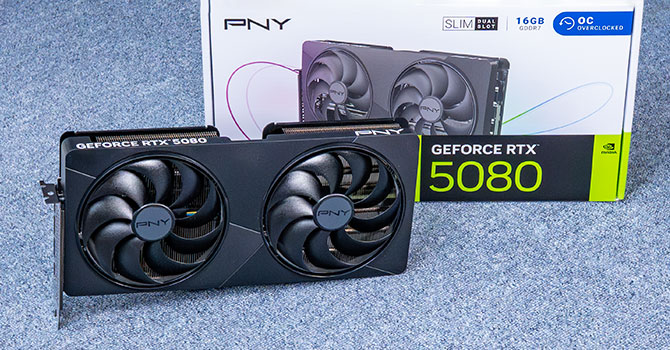
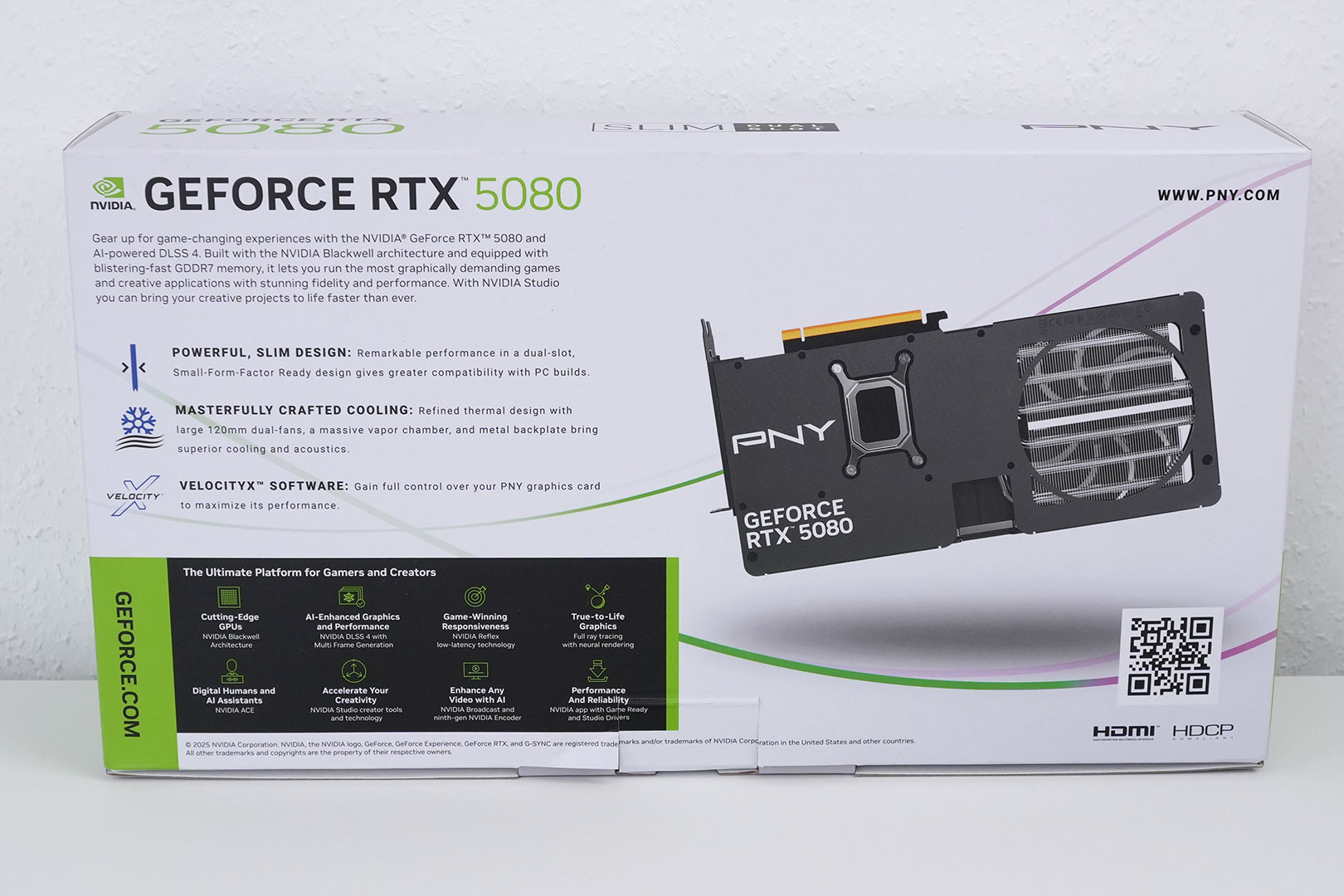
PNY's cooling solution on the Slim OC is an impressive feat of engineering, packing competitive thermal performance into a 40 mm thick, dual-slot form factor. The cooler uses a vapor chamber baseplate, with six heatpipes to spread heat across the aluminium fin stack. Despite having 30% less module volume and 35% less fin surface area compared to PNY's own triple-fan RTX 5080, the Slim OC compensates with dual 120 mm fans that generate 10% more airflow at the same RPM, and a heavily ventilated backplate with 150% more opening area that lets hot air escape efficiently. PNY also gave the card curved edges on the shroud, which the company claims reduces airflow turbulence compared to the sharp 90-degree edges found on most competing cards, and an enlarged power connector clearance zone to make cable installation easier and reduce connector stress.
The GeForce RTX 5080 is a powerful enthusiast-segment GPU that's second only to the flagship RTX 5090. It is designed for maxed out gameplay at 4K Ultra HD resolution, including with ray tracing, and the new DLSS 4 with Multi Frame Generation enabling newer experiences, such as 4K high refresh-rate. The RTX 5080 is powered by the Blackwell graphics architecture, which introduces Neural Rendering, a potentially revolutionary concept in consumer 3D graphics, which leverages generative AI models to create photorealistic objects that are combined with raster 3D graphics the same way ray traced objects are. DLSS 4 sees NVIDIA replace the convoluted neural network (CNN) based AI models driving the upscaling, ray-reconstruction, and frame-generation features with newer transformer based models that are more accurate and improve image quality at every performance tier. Multi Frame Generation lets up to 5 frames following every conventionally rendered frame to be drawn by AI, effectively multiplying frame-rates and reducing CPU requirements of high refresh rate gaming. NVIDIA's new Dynamic MFG allows a sort of "gearbox," where the needed multiplier between 2x and 6x FG is automatically set to maintain a target FPS, while minimizing latency.
The GeForce RTX 5080 is based on the GB203 silicon, which it maxes out, enabling all 84 streaming multiprocessors (SM) physically present on the chip. It also comes with 16 GB of 30 Gbps GDDR7 memory across the chip's full 256-bit wide memory bus, for 960 GB/s of memory bandwidth. With 84 SM, the RTX 5080 gets 10,752 CUDA cores, 336 Tensor cores, 84 RT cores, 336 TMU, and the chip's full complement of 112 ROPs. NVIDIA also took the opportunity to modernize the display controllers of the GPU to support the latest DisplayPort 2.1 with UHBR20 and HDMI 2.1 standards; and updated the video encode and decode acceleration engines.
PNY has given the RTX 5080 Slim OC factory overclocked speeds of 2730 MHz boost compared to the 2617 MHz reference, which is one of the higher boost clocks among RTX 5080 cards. The card is priced at US$1399, which is a notable premium over the $999 MSRP, but of course it's impossible right now to find a RTX 5080 at that price—more realistic is $1200, but what's on offer is a unique dual-slot form factor with competitive cooling that no other AIC card can match.
| Price | Cores | ROPs | Core Clock | Boost Clock | Memory Clock | GPU | Transistors | Memory | |
|---|---|---|---|---|---|---|---|---|---|
| RTX 4070 Super | $600 | 7168 | 80 | 1980 MHz | 2475 MHz | 1313 MHz | AD104 | 35800M | 12 GB, GDDR6X, 192-bit |
| RX 7900 GRE | $550 | 5120 | 160 | 1880 MHz | 2245 MHz | 2250 MHz | Navi 31 | 57700M | 16 GB, GDDR6, 256-bit |
| RTX 4070 Ti | $700 | 7680 | 80 | 2310 MHz | 2610 MHz | 1313 MHz | AD104 | 35800M | 12 GB, GDDR6X, 192-bit |
| RTX 5070 | $630 | 6144 | 80 | 2325 MHz | 2512 MHz | 1750 MHz | GB205 | 31100M | 12 GB, GDDR7, 192-bit |
| RTX 4070 Ti Super | $900 | 8448 | 96 | 2340 MHz | 2610 MHz | 1313 MHz | AD103 | 45900M | 16 GB, GDDR6X, 256-bit |
| RX 7900 XT | $670 | 5376 | 192 | 2000 MHz | 2400 MHz | 2500 MHz | Navi 31 | 57700M | 20 GB, GDDR6, 320-bit |
| RX 9070 | $550 | 3584 | 128 | 2070 MHz | 2520 MHz | 2518 MHz | Navi 48 | 53900M | 16 GB, GDDR6, 256-bit |
| RX 9070 XT | $620 | 4096 | 128 | 2400 MHz | 2970 MHz | 2518 MHz | Navi 48 | 53900M | 16 GB, GDDR6, 256-bit |
| RTX 5070 Ti | $900 | 8960 | 96 | 2295 MHz | 2452 MHz | 1750 MHz | GB203 | 45600M | 16 GB, GDDR7, 256-bit |
| RX 7900 XTX | $860 | 6144 | 192 | 2300 MHz | 2500 MHz | 2500 MHz | Navi 31 | 57700M | 24 GB, GDDR6, 384-bit |
| RTX 4080 | $1200 | 9728 | 112 | 2205 MHz | 2505 MHz | 1400 MHz | AD103 | 45900M | 16 GB, GDDR6X, 256-bit |
| RTX 4080 Super | $1300 | 10240 | 112 | 2295 MHz | 2550 MHz | 1438 MHz | AD103 | 45900M | 16 GB, GDDR6X, 256-bit |
| RTX 5080 | $1200 | 10752 | 112 | 2295 MHz | 2617 MHz | 1875 MHz | GB203 | 45600M | 16 GB, GDDR7, 256-bit |
| PNY RTX 5080 Slim OC | $1400 | 10752 | 112 | 2295 MHz | 2730 MHz | 1875 MHz | GB203 | 45600M | 16 GB, GDDR7, 256-bit |
| RTX 4090 | $2000 | 16384 | 176 | 2235 MHz | 2520 MHz | 1313 MHz | AD102 | 76300M | 24 GB, GDDR6X, 384-bit |
| RTX 5090 | $3300 | 21760 | 176 | 2017 MHz | 2407 MHz | 1750 MHz | GB202 | 92200M | 32 GB, GDDR7, 512-bit |
Packaging

The Card

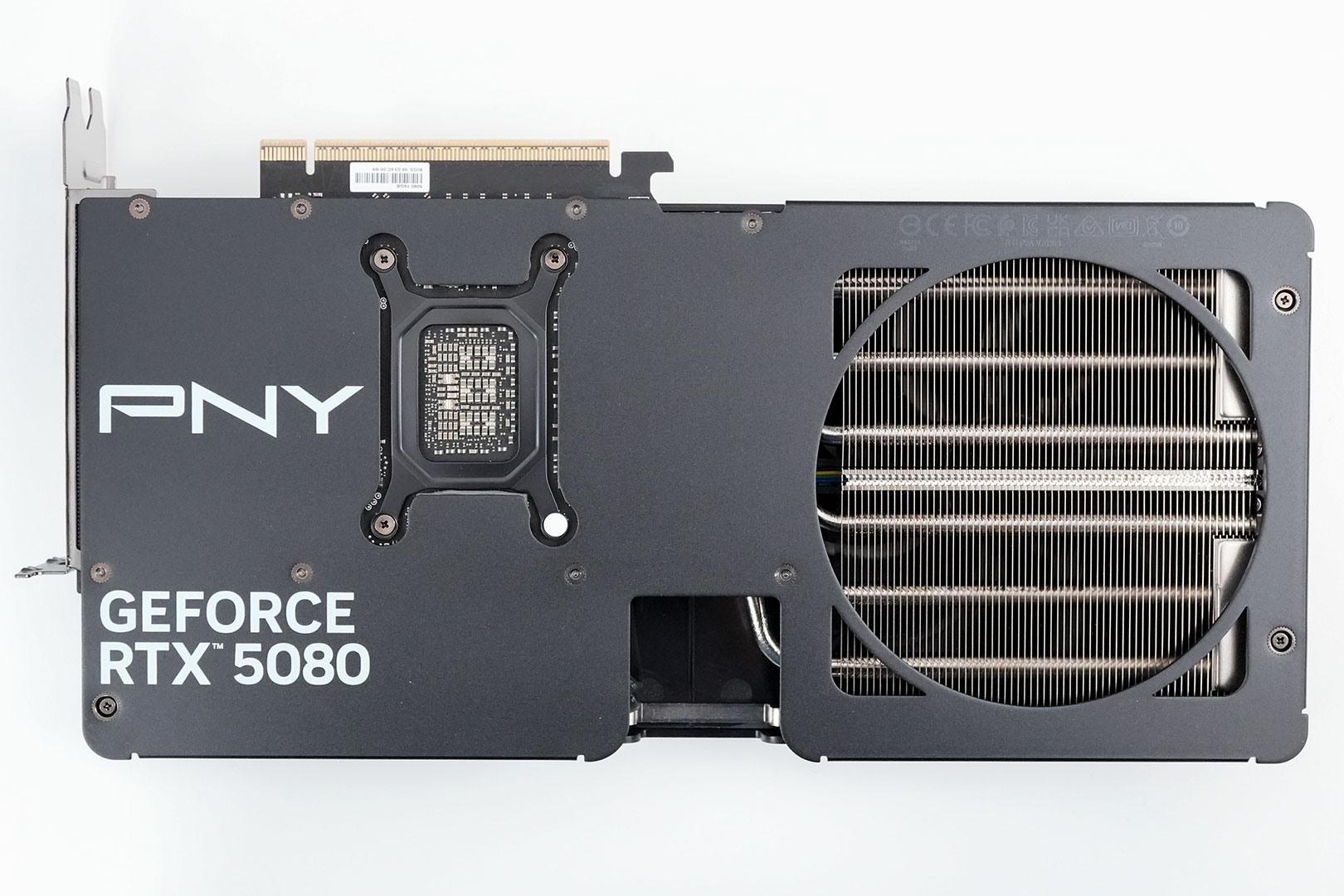

PNY's Slim OC features a clean, all-black dual-fan design with a dark matte finish. The shroud has distinctive curved edges that PNY says reduce airflow turbulence compared to sharp 90-degree corners found on most competing cards. Two large 120 mm fans sit beneath the shroud. On the back, you'll find a metal backplate with PNY and GeForce RTX 5080 branding, along with a large circular ventilation cutout that lets hot air pass through the fin stack.


Dimensions of the card are 30.0 × 15.5 cm, and it weighs 1100 g.


Installation requires two slots in your system. We measured the card's width to be 40 mm.

Display connectivity includes three standard DisplayPort 2.1b and one HDMI 2.1b.
All GeForce RTX 50-series Blackwell cards feature a new display engine supporting DisplayPort 2.1b with UHBR20, as well as HDMI 2.1a. Both interfaces support DSC (display stream compression). With DSC enabled, a single DisplayPort on this card can drive 4K 12-bit HDR at 480 Hz; or 8K 12-bit HDR at up to 165 Hz. The RTX 5080 features an updated media acceleration engine with support for 4:2:2 video formats, AV1 UHQ, and MV-HEVC. There are two independent NVENC and NVDEC units.
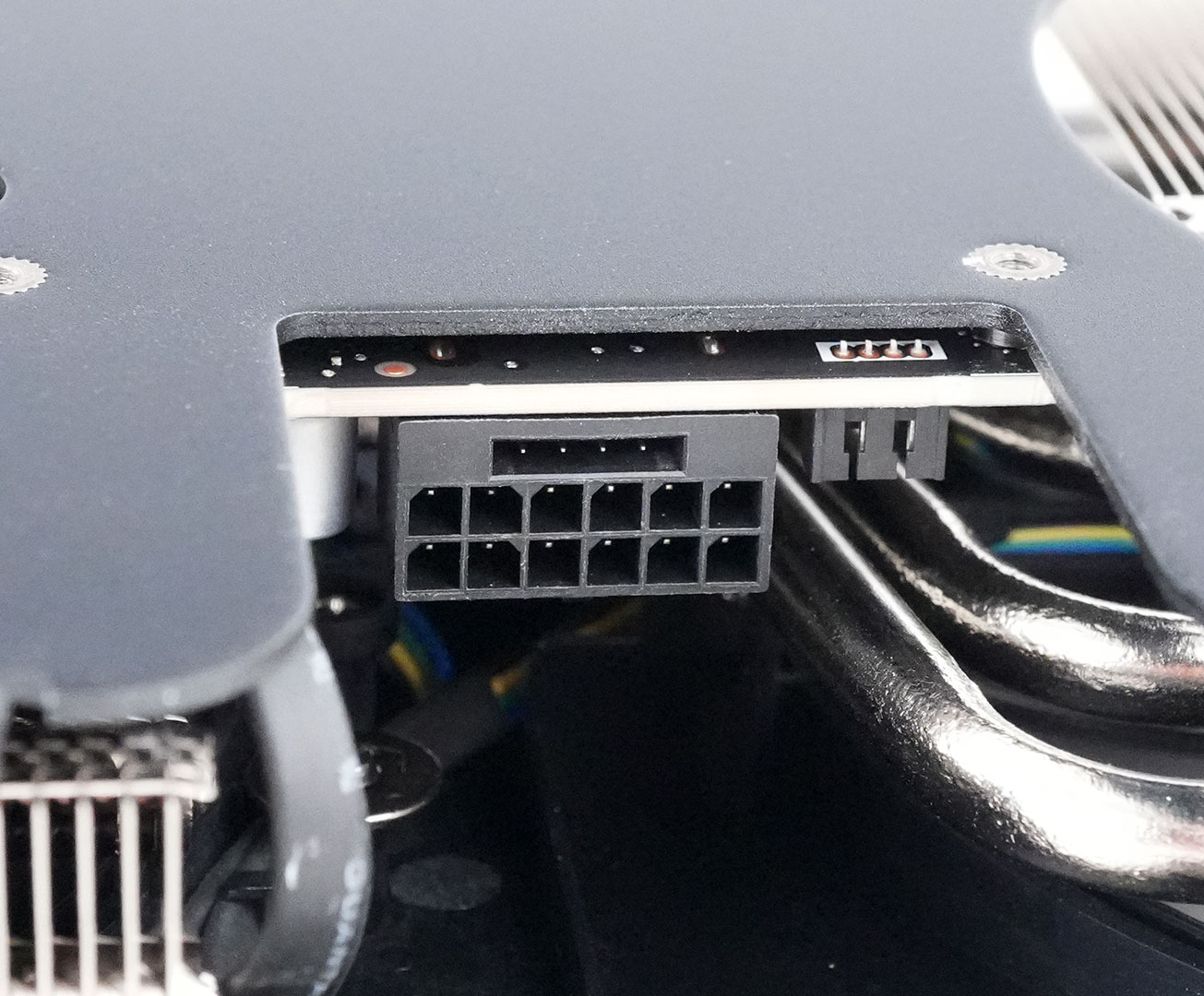
The card uses a single 16-pin connector, which allows a maximum power draw of 600 W, but the board power limit is set much lower of course, at 360 W, with a manual adjustment range allowing up to 396 W.
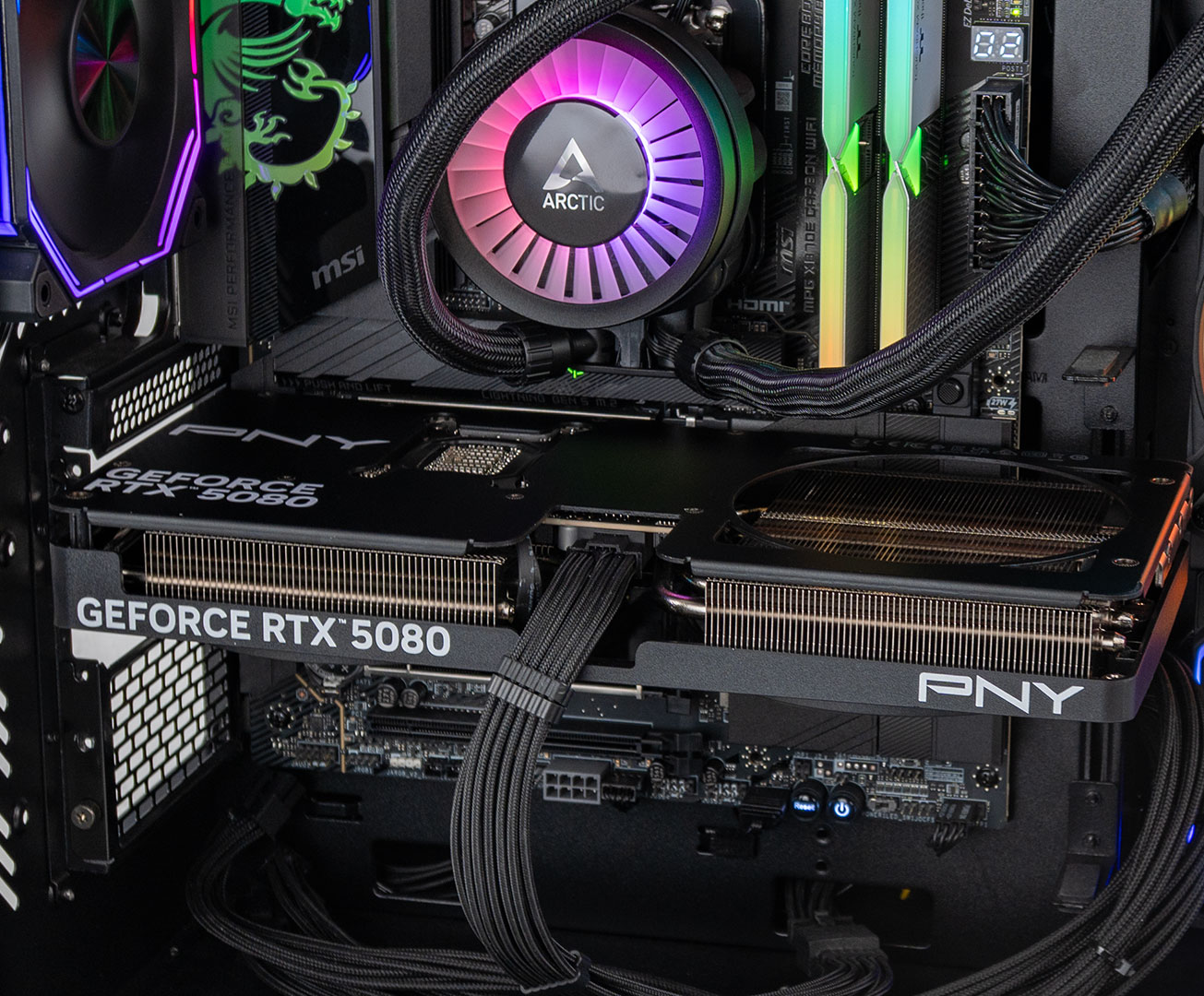
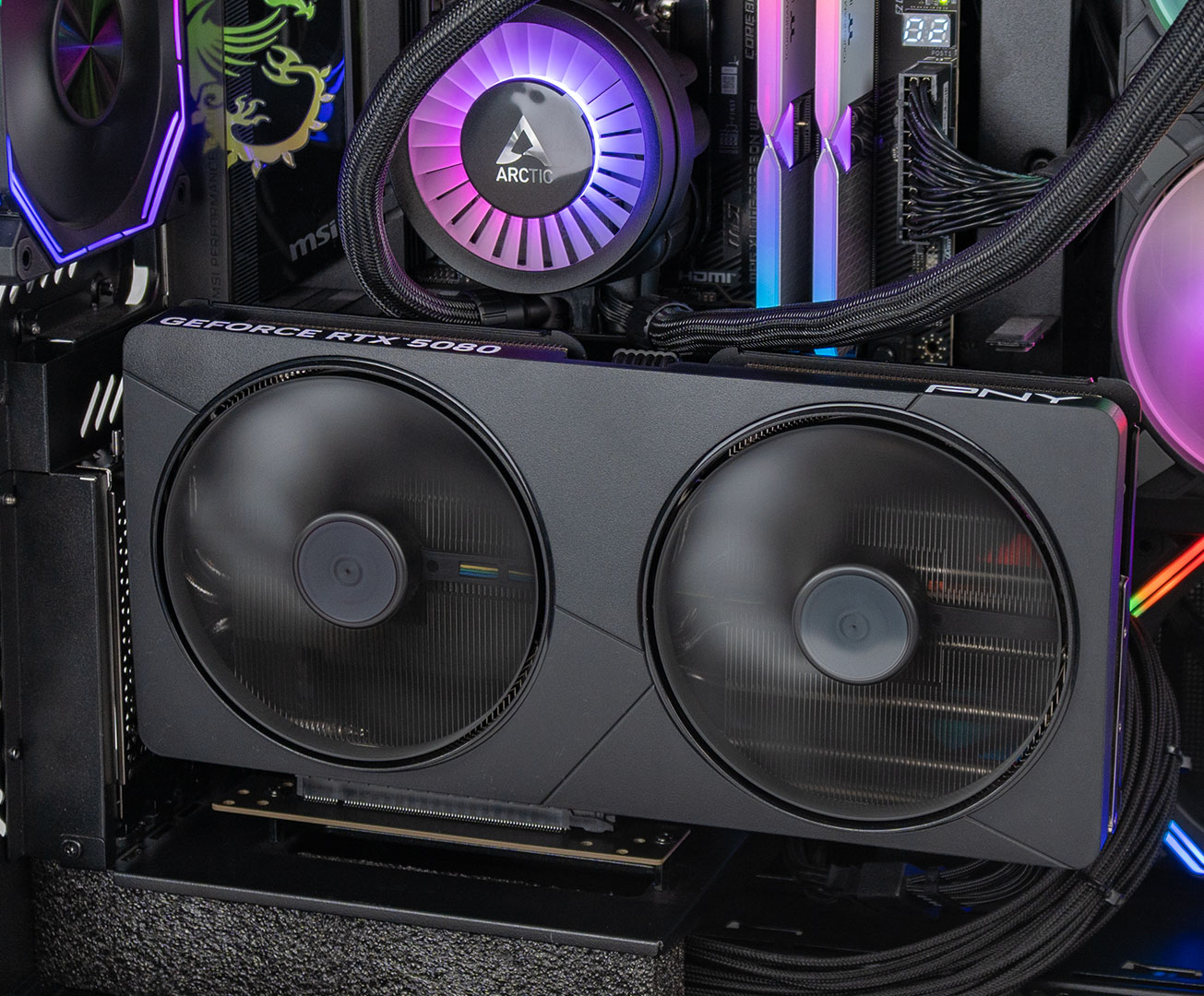
There is no lighting on the PNY RTX 5080 Slim OC.
Teardown
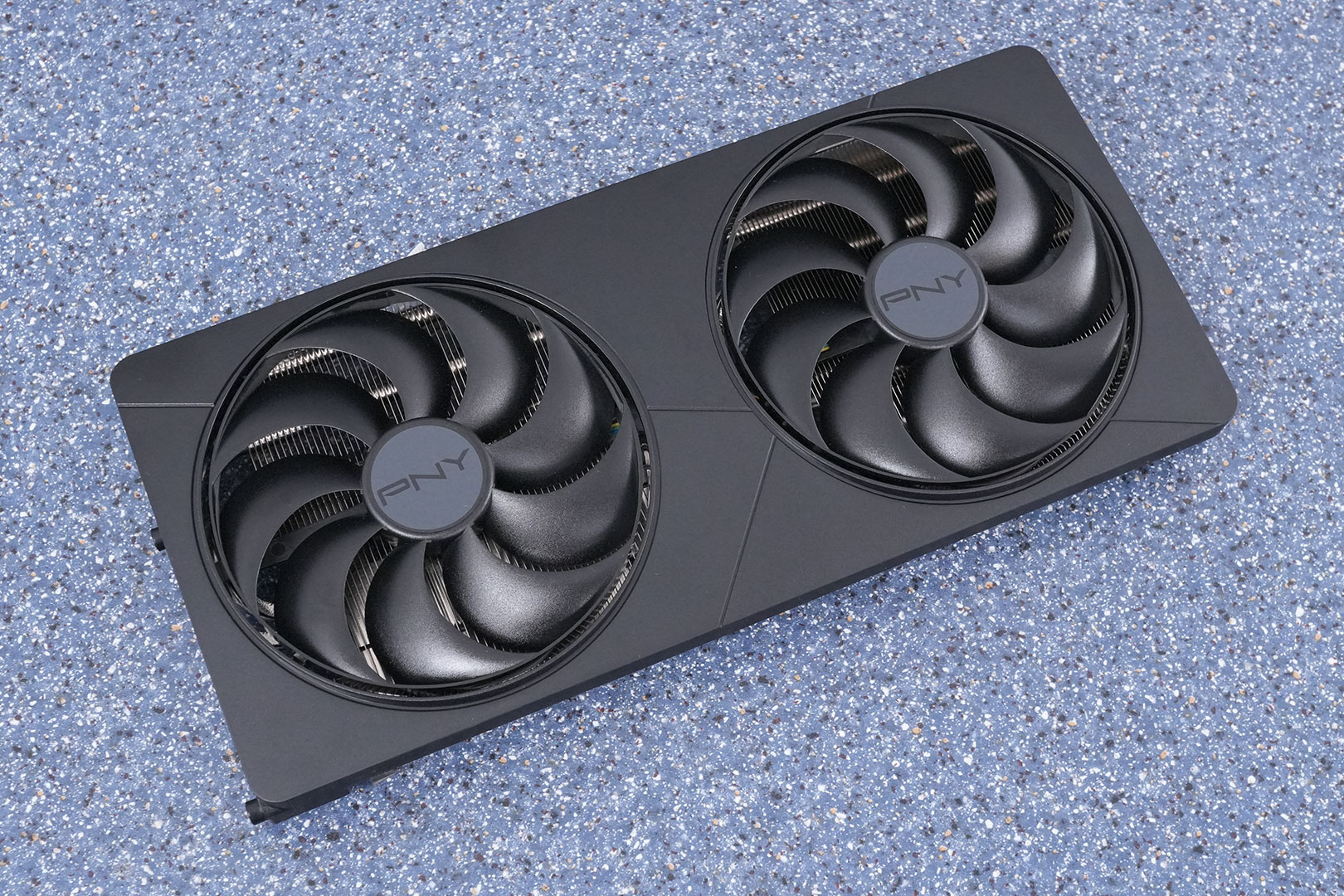

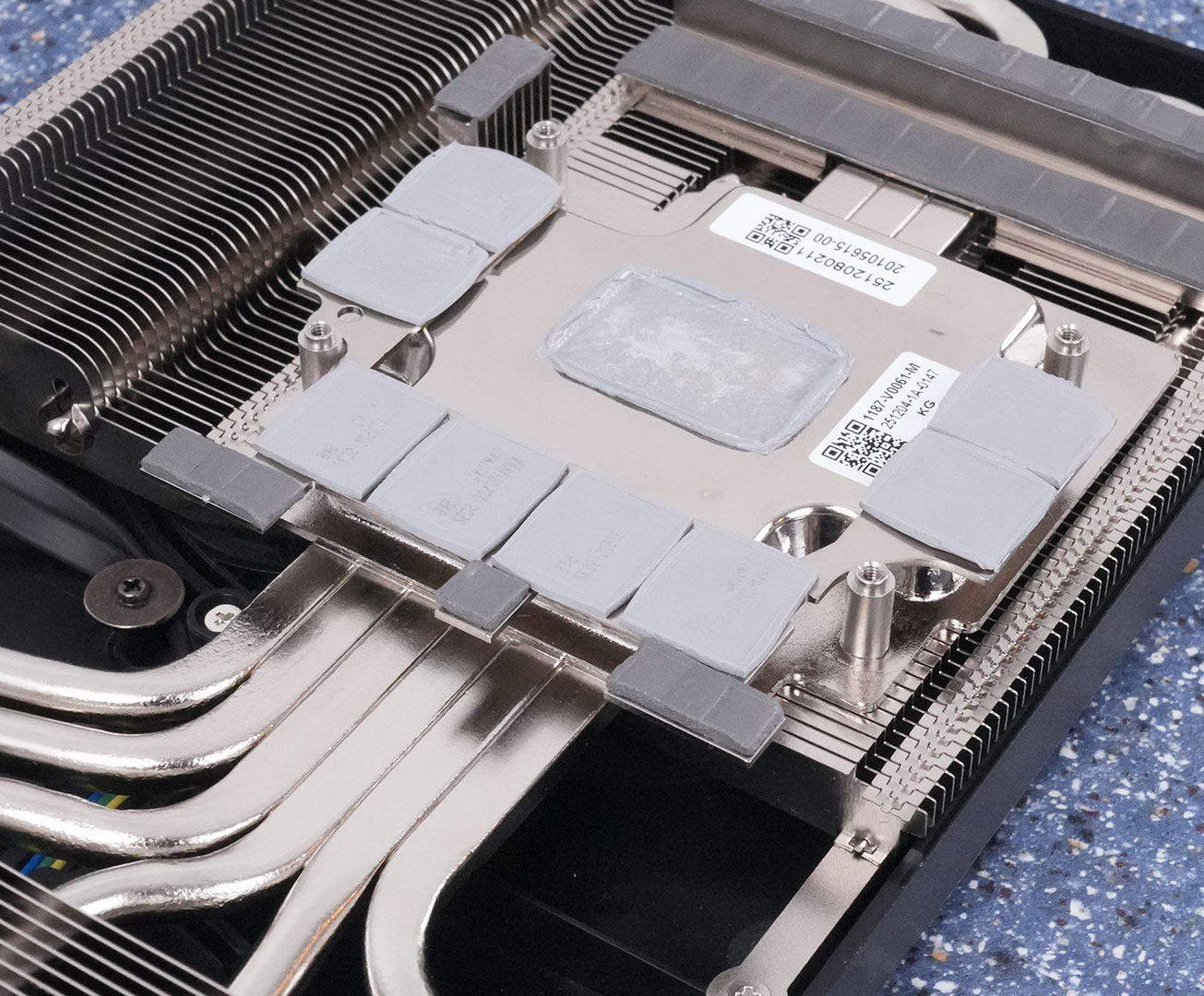
PNY's thermal solution uses six heatpipes and a vapor-chamber baseplate. It provides cooling not only for the GPU, but also for the memory chips and VRM circuitry.
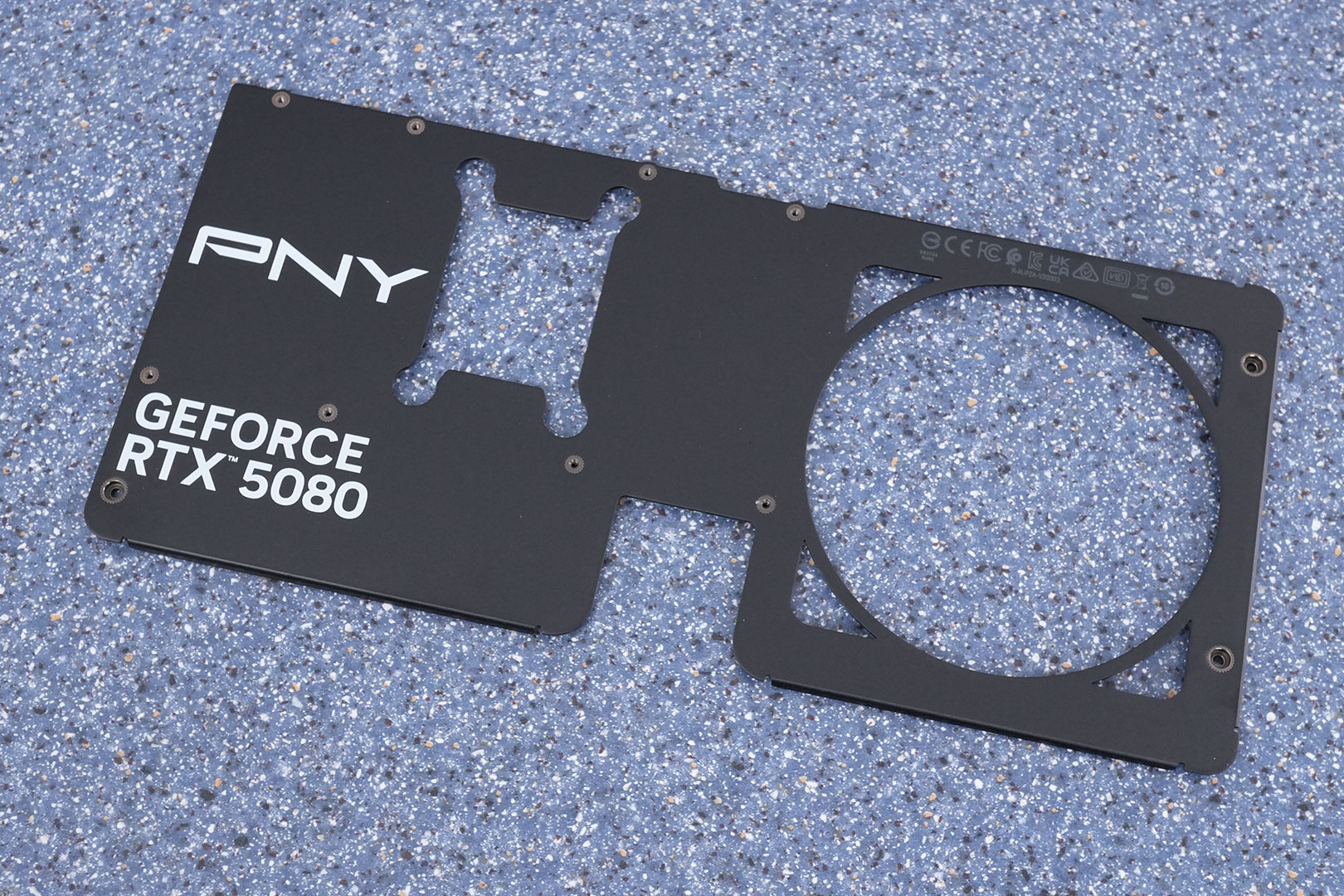
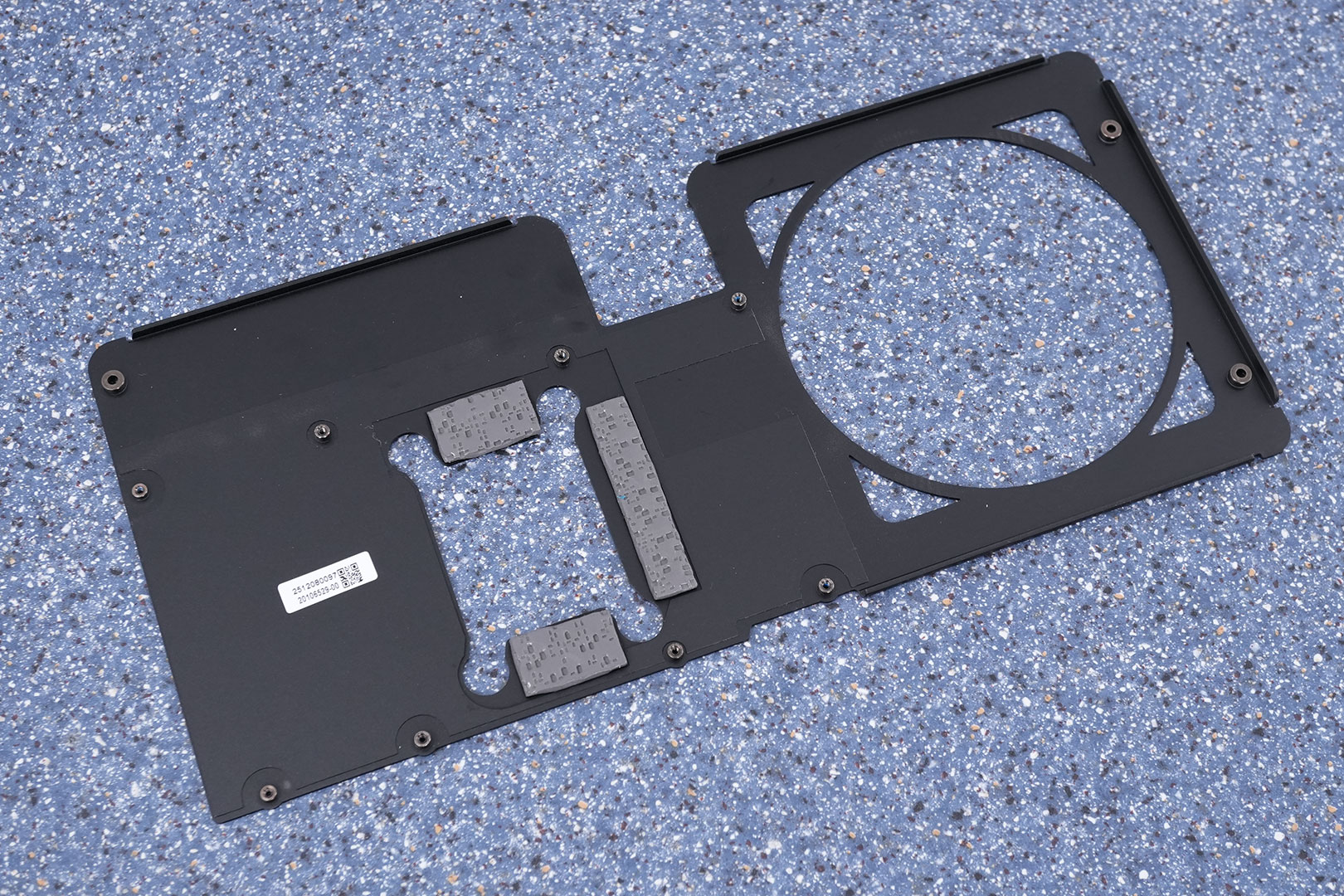
The backplate protects the card against damage during installation and handling. It features a large circular ventilation cutout that lets hot air escape through the fin stack.
High-resolution PCB Pictures
These pictures are for the convenience of volt modders and people who would like to see all the finer details on the PCB. Feel free to link back to us and use these in your articles, videos or forum posts.

High-resolution versions are also available (front, back).
Circuit Board (PCB) Analysis

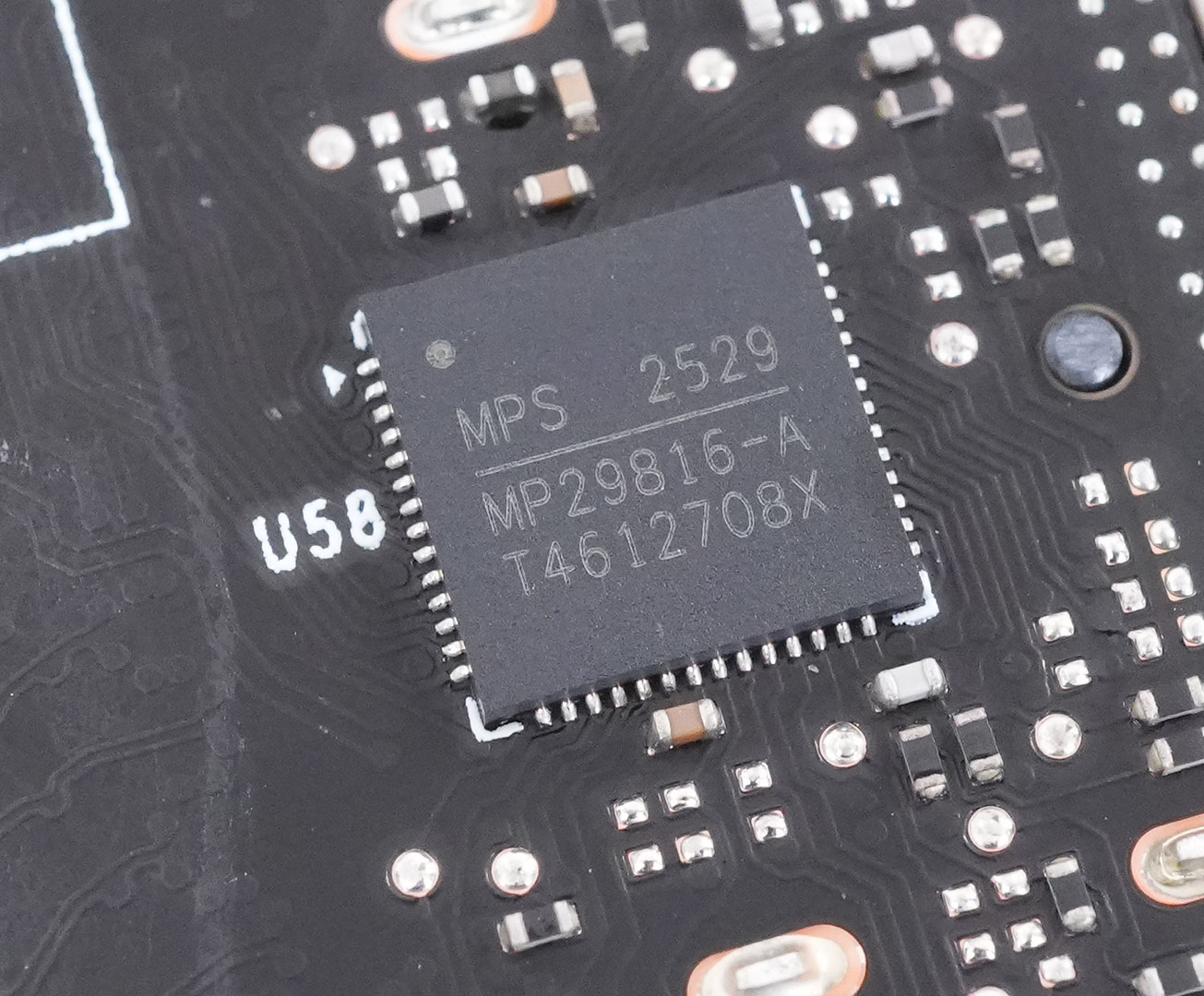
A 14-phase VRM powers the GPU, highlighted in the red rectangles above. These are controlled by a Monolithic Power Systems MP29816 controller.
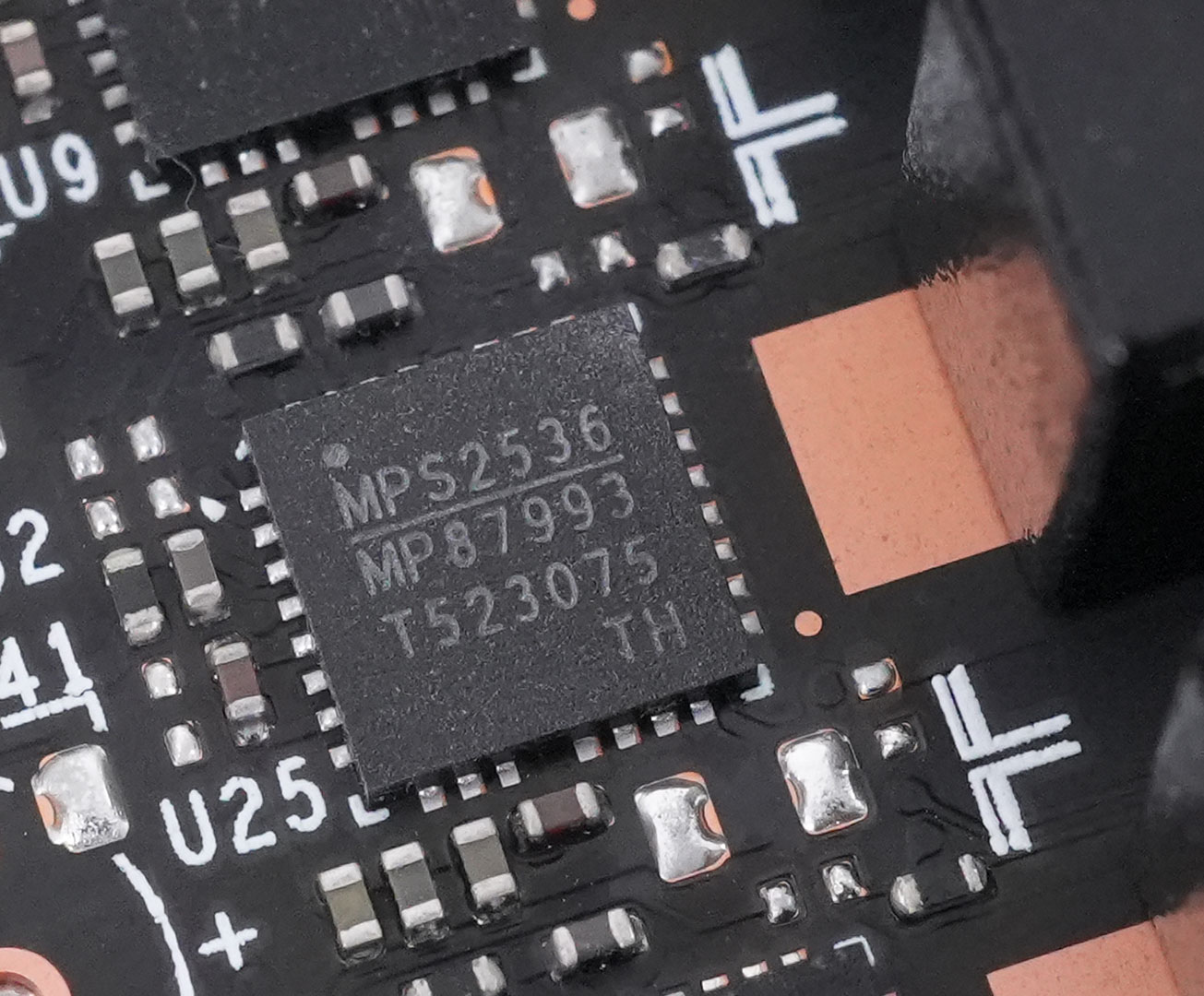
All GPU power phases use Monolithic MPS MP87993 DrMOS with a rating of 50 A.
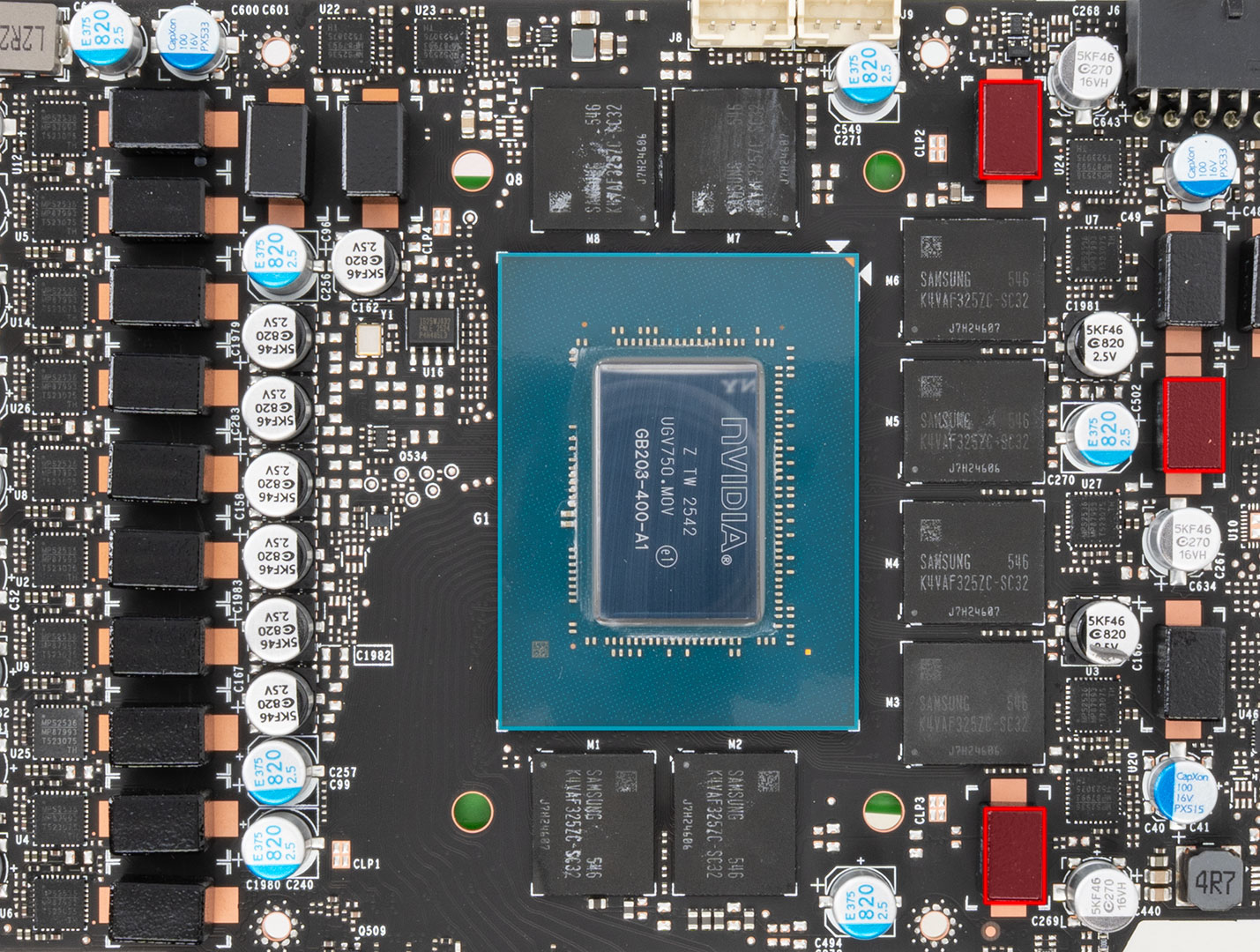
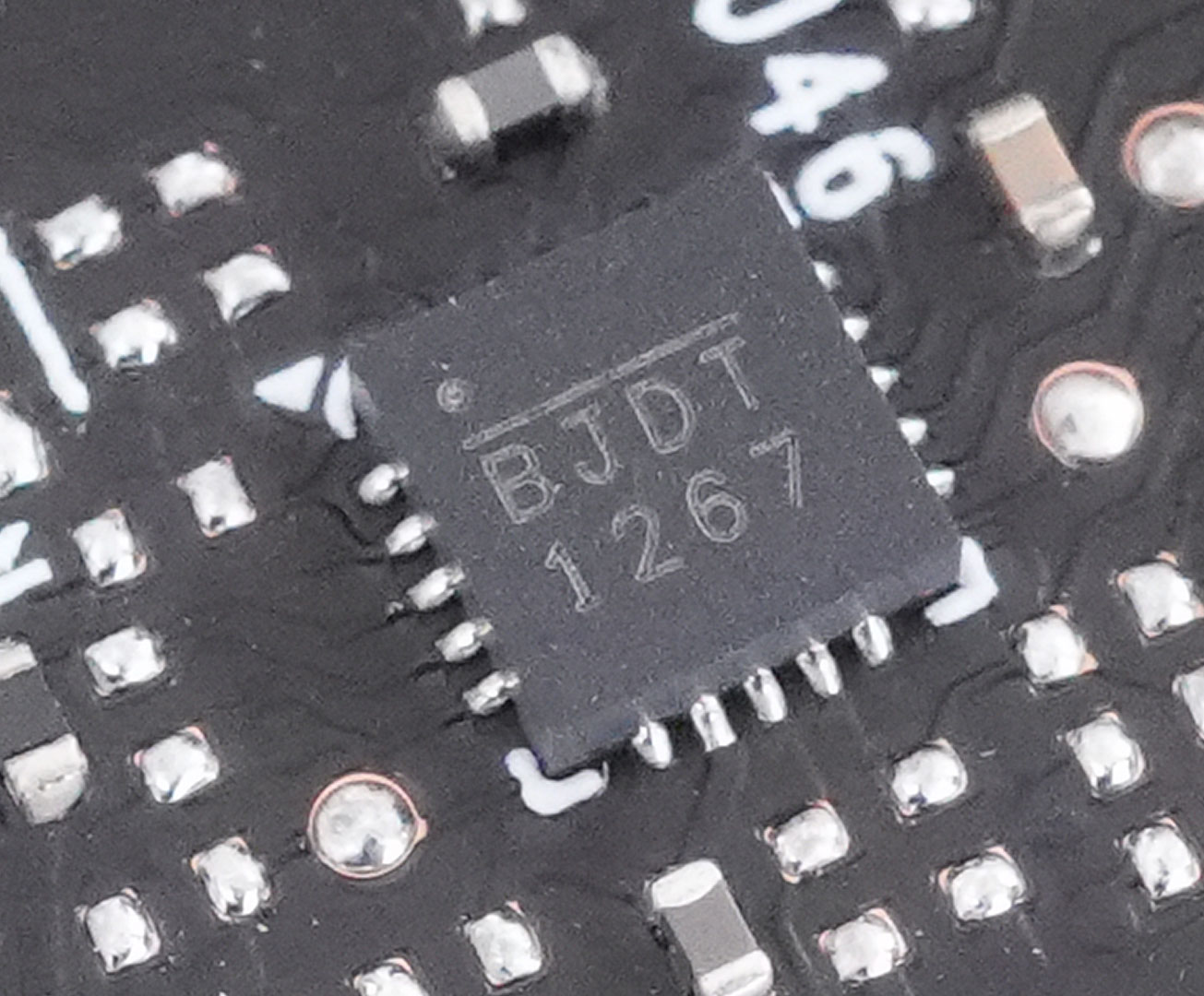
Powering the eight GDDR7 memory chips is a 3-phase VRM driven by a Monolithic MP2988 controller (this variant uses a smaller package).
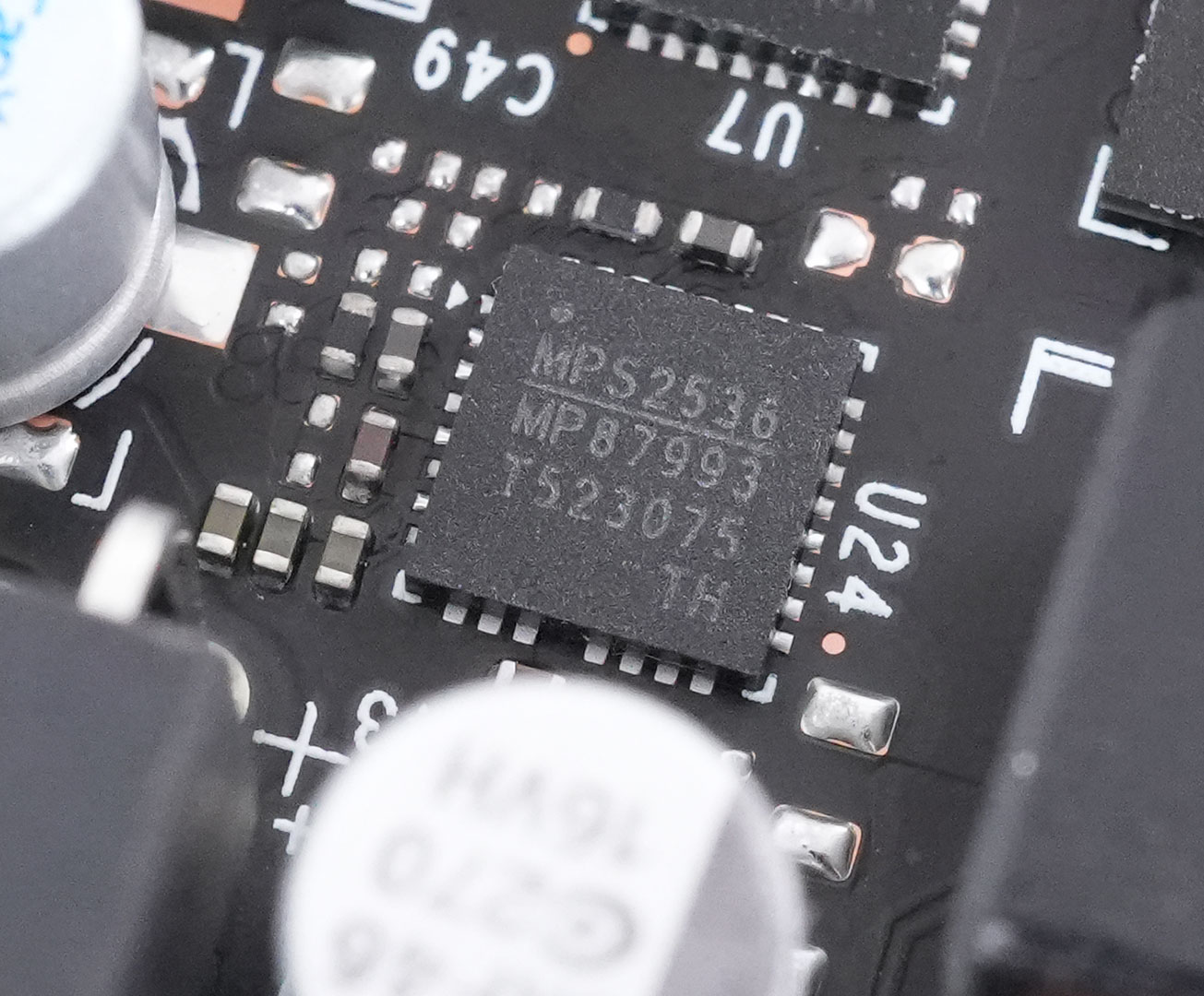
Just like GPU, the memory is handled by Monolithic MP87993 DrMOS chips.
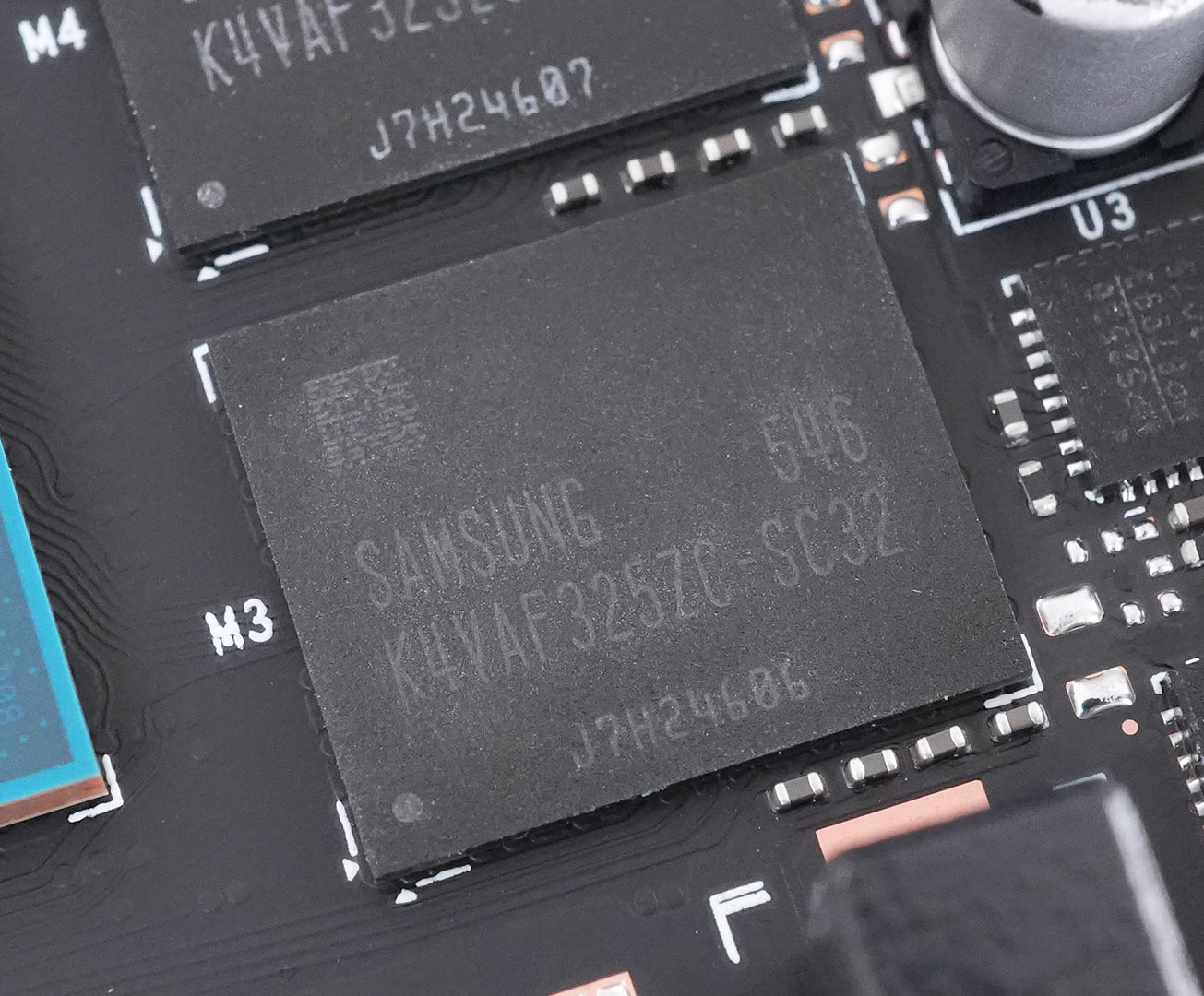
The GDDR7 memory chips are made by Samsung, and bear the model number K4VAF325ZC-SC32, they are rated for 32 Gbps.
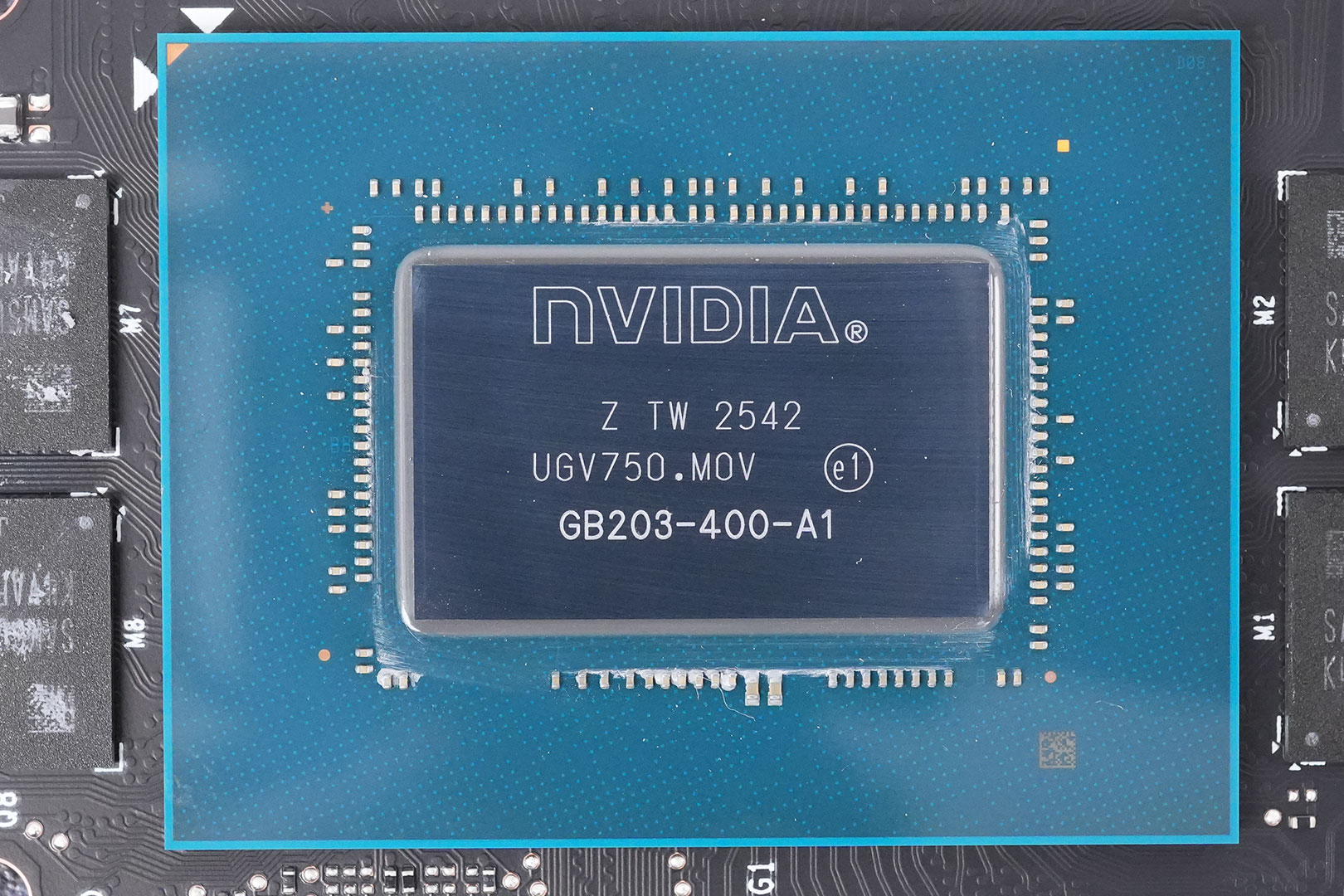
The NVIDIA GB203 GPU at the heart of the GeForce RTX 5080 is much smaller than the chip used on the RTX 5090. It is fabricated using a 5 nanometer "NVIDIA 4N" process at TSMC Taiwan (same process as Ada). The die measures 378 mm², and comes with a transistor count of 45.6 billion.
Test System
| Test System - GPU 2025.2 | |
|---|---|
| Processor: | AMD Ryzen 7 9800X3D Zen 5, 5.2 GHz, 8 cores/16 threads |
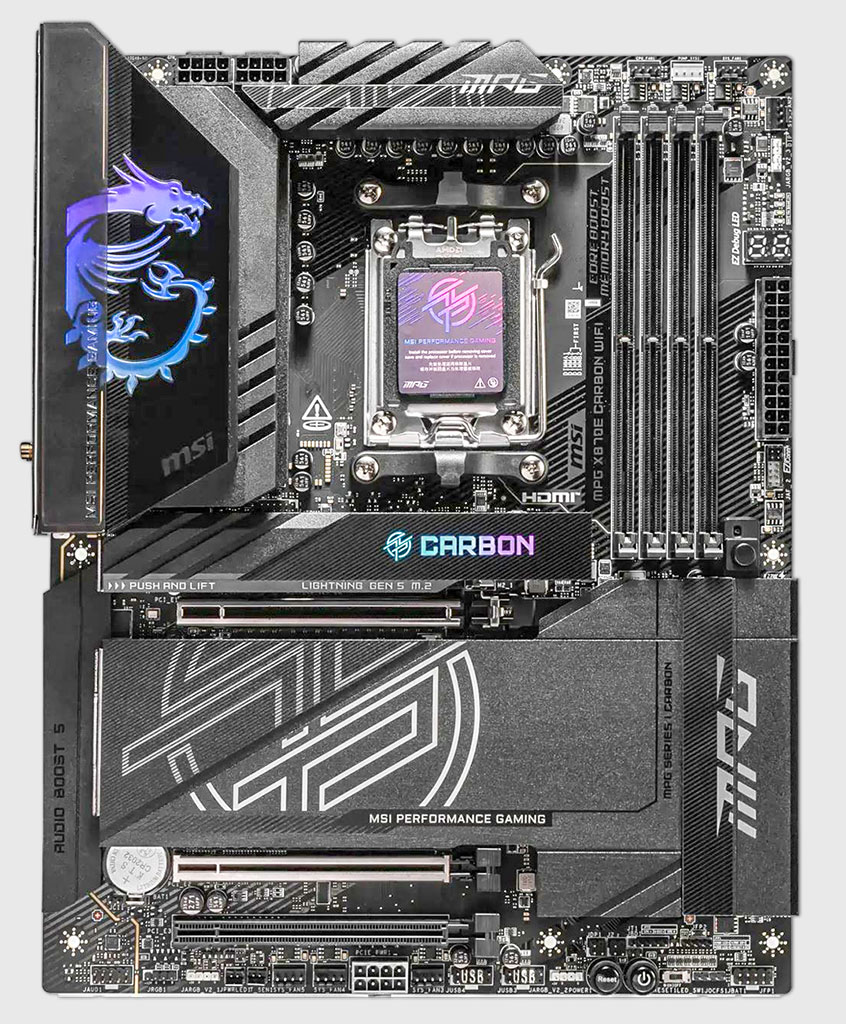
| Motherboard: | MSI X870E Carbon Wi-Fi BIOS 7E49v1A3 |
| Resizable BAR: | Enabled on all supported cards (NVIDIA, AMD & Intel) |
| Memory: | Thermaltake TOUGHRAM XG 2× 16 GB DDR5-6200 28-36-36-76 UCLK 1:1 |
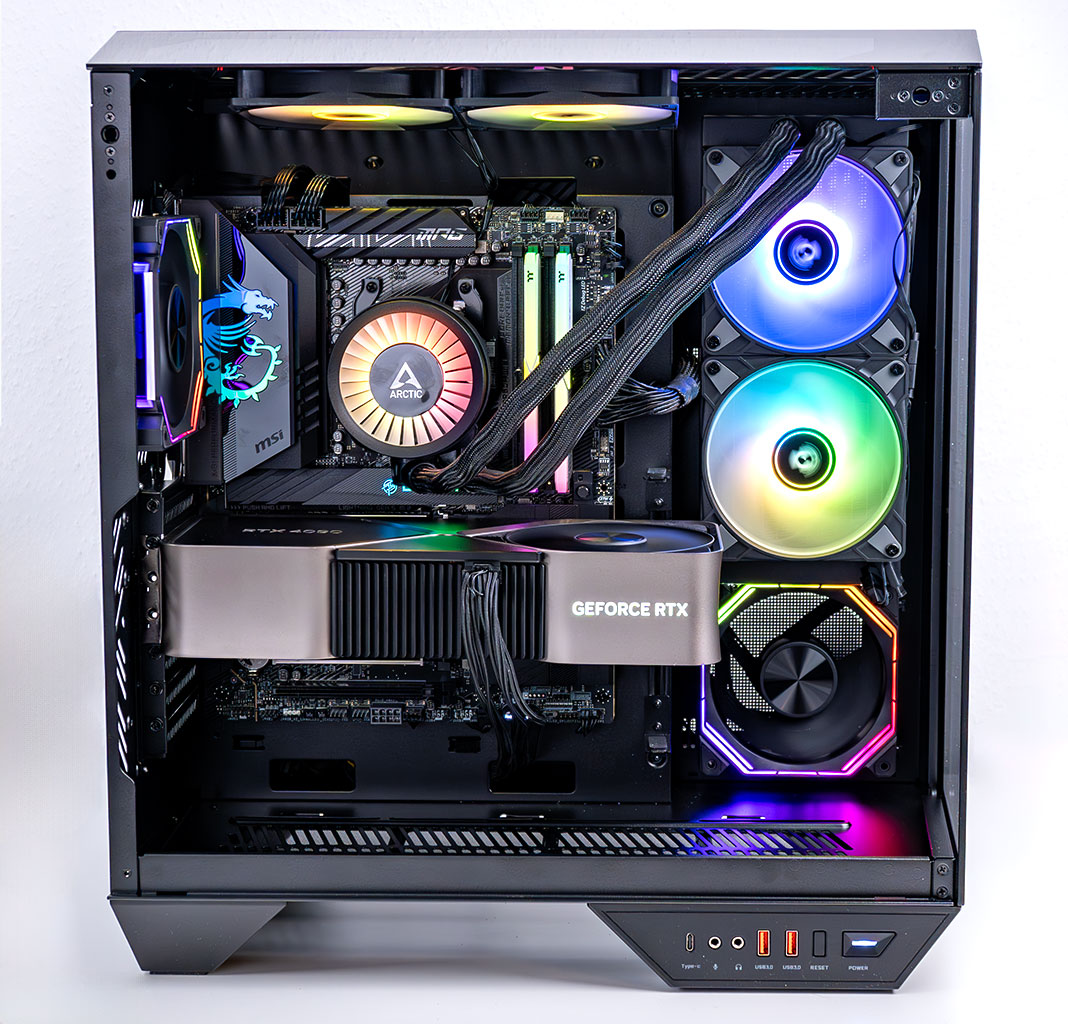
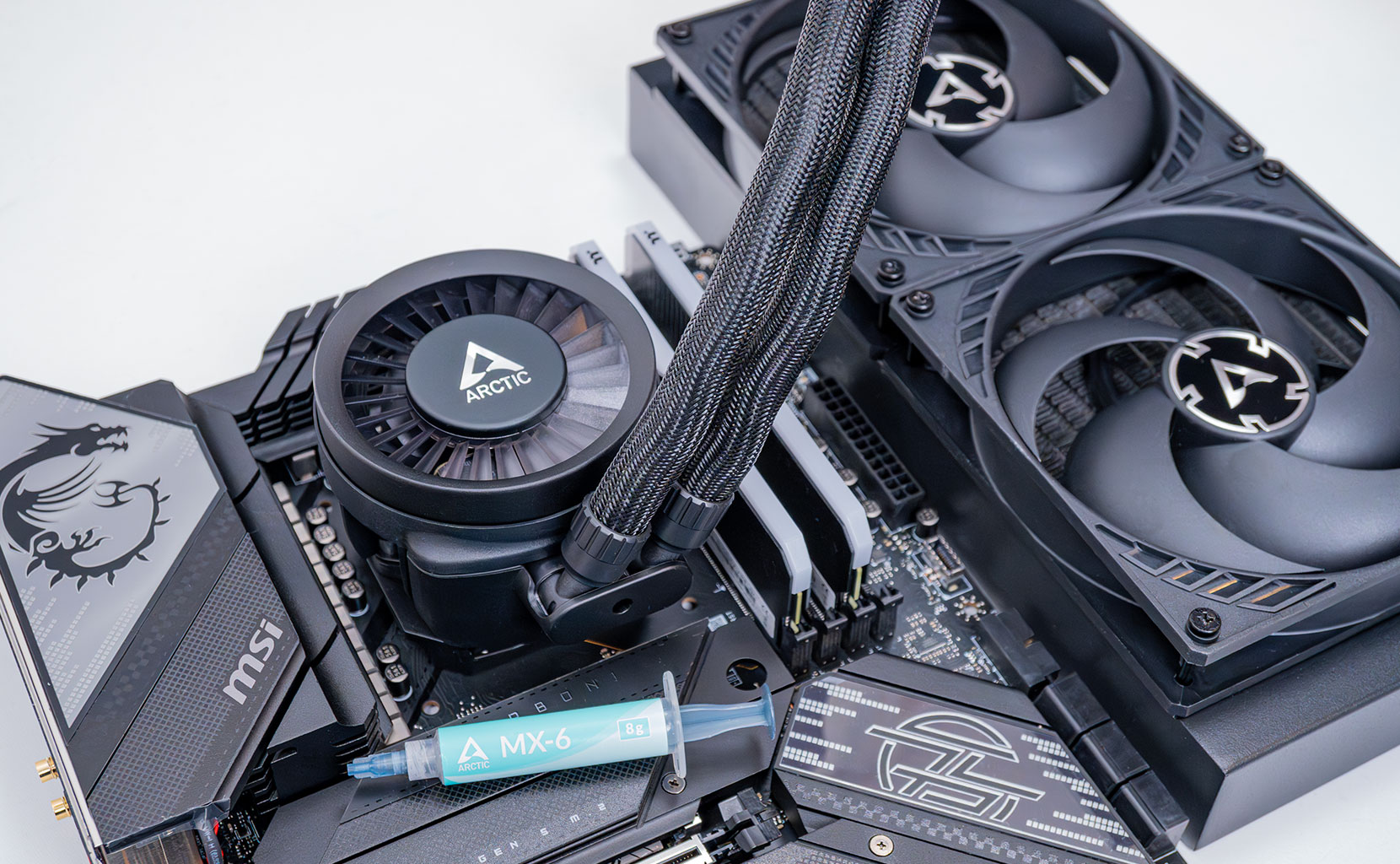
| Cooling: | Arctic Liquid Freezer III 280 mm AIO |
| Thermal Paste: | Arctic MX-6 |
| Storage: | 4 TB M.2 NVMe SSD |
| Power Supply: | Seasonic Focus GX 1000 W ATX 3.0 / 16-pin 12VHPWR |
| Case: | darkFlash DY470 |
| Operating System: | Windows 11 Professional 64-bit 24H2 VBS enabled (Windows 11 default) |
| Drivers: | RX 9060 XT, RX 9070 & RX 9070 XT: 25.11.1 WHQL Other AMD cards: 25.3.2 Beta NVIDIA RTX 50 cards: 581.15 WHQL RTX 5050: 576.88 WHQL Other NVIDIA cards: 572.83 WHQL Intel: 101.6732 Beta Date of Retest |



- All games and cards are tested with the drivers listed above—no performance results were recycled between test systems. Only this exact system with exactly the same configuration is used for all results in this review.
- All graphics cards are tested using the same game version.
- All games are set to their highest quality setting unless indicated otherwise.
- All games are running at their native resolution without upscaling (no DLSS or FSR), except for the results on the "DLSS 4" page where we specifically look into that feature's performance.
- All games have ray tracing disabled, except for testing on the "Ray Tracing" and "Path Tracing" pages.
- AA and AF are applied via in-game settings, not via the driver's control panel.
- Before starting measurements, we heat up the card for each test to ensure a steady state is tested. This ensures that the card won't boost to unrealistically high clocks for only a few seconds until it heats up, as that doesn't represent prolonged gameplay.
- For better real-life applicability, all game tests use custom in-game test scenes, not the integrated benchmarks.
- All cards used for comparison are reference designs. When a reference design does not exist, we go the extra mile and buy the closest possible match, which has reference clocks and default power limit.
- 1920×1080: Most popular monitor resolution.
- 2560×1440: Intermediary resolution between Full HD and 4K, with reasonable performance requirements.
- 3840×2160: 4K Ultra HD resolution, available on high-end monitors.
Our Patreon Silver Supporters can read articles in single-page format.
Nov 12th, 2026 19:26 PST
change timezone
Latest GPU Drivers
New Forum Posts
- Lenovo Legion R27fc-30 vs AOC c27g4h2 which one wins ? (0)
- I won't download games that are larger than 30–40 GB. (98)
- Microsoft Exchange/365 outages? (14)
- AI generated images... (223)
- Classic Blizzard games (WarCraft 1-2, Diablo 1-2, StarCraft 1) (7)
- WarpCoreBench scores! (26)
- Ryzen 7 8700G OC (5)
- Your PC ATM (36412)
- When you could finally run Crysis maxed out? (61)
- Warning for Windows 10 and 11 users running newer AMD GPU drivers (52)
Popular Reviews
- AMD Zen 6 Technical Deep Dive
- NZXT C1200 Platinum Review
- Upcoming Hardware Launches 2027 (Updated Nov 2026)
- Corsair HX1000i Shift Crystal Review
- NZXT H7 RGB+ Review
- Montech King 95 3D PRO Review
- NZXT H5 Review
- Phantom Blade Zero Performance Benchmark Review - 35 GPUs Tested
- XPG NIMBUS PLUS Review - Mid-range Chair With Strong Competitors
- Gigabyte Z890I Aorus Ultra Review
TPU on YouTube
Controversial News Posts
- NVIDIA Co-Founder and CEO Jensen Huang Officially Resigns (282)
- OpenAI CEO Argues Home PCs Waste the World's Limited DRAM Supply (152)
- NVIDIA Launches Investigation Into Jensen Huang's Relationship With Suspected Chinese Spy (136)
- Intel "Raptor Lake Next" 16-Core and 20-Core CPUs Surface (130)
- Legendary Game Studio BioWare Shuts Down Following EA Layoffs (104)
- Dell CEO Says the Memory Shortage Will Get Worse in 2027 (95)
- NVIDIA GeForce RTX 50-Series Scheduled for up to $500 Price Hike This Week (89)
- Modder Fits RTX 5090 With Four 8-Pin Connectors, Halving Current per Wire (80)