 43
PowerColor Radeon RX 9070 XT Reva Review
(43 Comments) »Introduction

The PowerColor Radeon RX 9070 XT Hellhound Reva is the company's updated mid-premium custom design built around AMD's 2025 performance-segment GPU leading the RX 9000 series. The Reva refines PowerColor's Hellhound cooler with a reinforced shroud, higher-efficiency fans, and an expanded heatsink layout. Signature Hellhound elements remain, including the LED lighting and the clean, understated aesthetic. The card uses two 8-pin PCIe power connectors, unlike some competing RX 9070 XT models that have adopted the newer 12V-2x6 standard.

The RX 9070 XT introduces AMD's revised naming structure. Although it logically follows the RX 7800 XT, the new name is intended to align the product more directly with NVIDIA's GeForce RTX 5070 lineup. As a result, the RX 9070 XT competes head-to-head with the RTX 5070 and often challenges the RTX 5070 Ti at a lower price point.
Powered by the new RDNA 4 architecture, the 9070 XT focuses on maximizing performance per mm². Its Navi 48 GPU is a monolithic processor built on TSMC's 4 nm N4P node. Unlike the previous generation's mixed-node chiplet approach for compute and memory, all major GPU logic—including memory controllers and cache—is consolidated on a single advanced-node die. This shift results in a notable increase in transistor density and reduces latency between the GPU's subsystems.
RDNA 4 brings major improvements to ray tracing, with AMD claiming nearly double the RT throughput of RDNA 3, substantially reducing the performance overhead when ray tracing is enabled. AI acceleration also sees significant gains, enabling features such as the forthcoming FSR 4 upscaling suite. Shader efficiency has been increased as well, allowing AMD to achieve high-tier performance with 64 compute units. The memory size is 16 GB, across a 256-bit wide memory interface, and in a surprising move, AMD decided to stick with the older generation GDDR6 memory standard, instead focusing on significant updates to its memory management system.
The RX 9070 XT's Navi 48 die is fully enabled: 64 CUs, 4,096 stream processors, 128 AI accelerators, 64 RT accelerators, 256 TMUs, and 128 ROPs. Typical boost behavior enables clock speeds around or above 3.0 GHz in overclocked operation. Memory runs at 20 Gbps, providing 640 GB/s of bandwidth. AMD's media engine has been updated with improved H.264/H.265 encoding quality and AV1 support with B-frames.
The PowerColor Hellhound Reva cooler uses a large fin stack, a precision-machined baseplate, and a triple-fan layout optimized for low noise, in line with the Hellhound series' quiet-performance identity. PowerColor provides a mild factory overclock on the Reva model, raising the Game Clock above AMD's reference 2400 MHz specification. With $675, pricing is higher than AMD's $600 baseline, but still below PowerColor's premium Red Devil options.
| Price | Cores | ROPs | Core Clock | Boost Clock | Memory Clock | GPU | Transistors | Memory | |
|---|---|---|---|---|---|---|---|---|---|
| RTX 4070 | $500 | 5888 | 64 | 1920 MHz | 2475 MHz | 1313 MHz | AD104 | 35800M | 12 GB, GDDR6X, 192-bit |
| RX 7800 XT | $470 | 3840 | 96 | 2124 MHz | 2430 MHz | 2425 MHz | Navi 32 | 28100M | 16 GB, GDDR6, 256-bit |
| RTX 4070 Super | $600 | 7168 | 80 | 1980 MHz | 2475 MHz | 1313 MHz | AD104 | 35800M | 12 GB, GDDR6X, 192-bit |
| RX 7900 GRE | $550 | 5120 | 160 | 1880 MHz | 2245 MHz | 2250 MHz | Navi 31 | 57700M | 16 GB, GDDR6, 256-bit |
| RTX 4070 Ti | $700 | 7680 | 80 | 2310 MHz | 2610 MHz | 1313 MHz | AD104 | 35800M | 12 GB, GDDR6X, 192-bit |
| RTX 5070 | $540 | 6144 | 80 | 2325 MHz | 2512 MHz | 1750 MHz | GB205 | 31100M | 12 GB, GDDR7, 192-bit |
| RTX 4070 Ti Super | $750 | 8448 | 96 | 2340 MHz | 2610 MHz | 1313 MHz | AD103 | 45900M | 16 GB, GDDR6X, 256-bit |
| RX 7900 XT | $620 | 5376 | 192 | 2000 MHz | 2400 MHz | 2500 MHz | Navi 31 | 57700M | 20 GB, GDDR6, 320-bit |
| RX 9070 | $530 | 3584 | 128 | 2070 MHz | 2520 MHz | 2518 MHz | Navi 48 | 53900M | 16 GB, GDDR6, 256-bit |
| RX 9070 XT | $600 | 4096 | 128 | 2400 MHz | 2970 MHz | 2518 MHz | Navi 48 | 53900M | 16 GB, GDDR6, 256-bit |
| PowerColor RX 9070 XT Reva | $675 | 4096 | 128 | 2460 MHz | 3010 MHz | 2518 MHz | Navi 48 | 53900M | 16 GB, GDDR6, 256-bit |
| RTX 5070 Ti | $750 | 8960 | 96 | 2295 MHz | 2452 MHz | 1750 MHz | GB203 | 45600M | 16 GB, GDDR7, 256-bit |
| RX 7900 XTX | $750 | 6144 | 192 | 2300 MHz | 2500 MHz | 2500 MHz | Navi 31 | 57700M | 24 GB, GDDR6, 384-bit |
| RTX 4080 | $850 | 9728 | 112 | 2205 MHz | 2505 MHz | 1400 MHz | AD103 | 45900M | 16 GB, GDDR6X, 256-bit |
| RTX 4080 Super | $1000 | 10240 | 112 | 2295 MHz | 2550 MHz | 1438 MHz | AD103 | 45900M | 16 GB, GDDR6X, 256-bit |
| RTX 5080 | $1000 | 10752 | 112 | 2295 MHz | 2617 MHz | 1875 MHz | GB203 | 45600M | 16 GB, GDDR7, 256-bit |
| RTX 4090 | $1800 | 16384 | 176 | 2235 MHz | 2520 MHz | 1313 MHz | AD102 | 76300M | 24 GB, GDDR6X, 384-bit |
| RTX 5090 | $2600 | 21760 | 176 | 2017 MHz | 2407 MHz | 1750 MHz | GB202 | 92200M | 32 GB, GDDR7, 512-bit |
Packaging


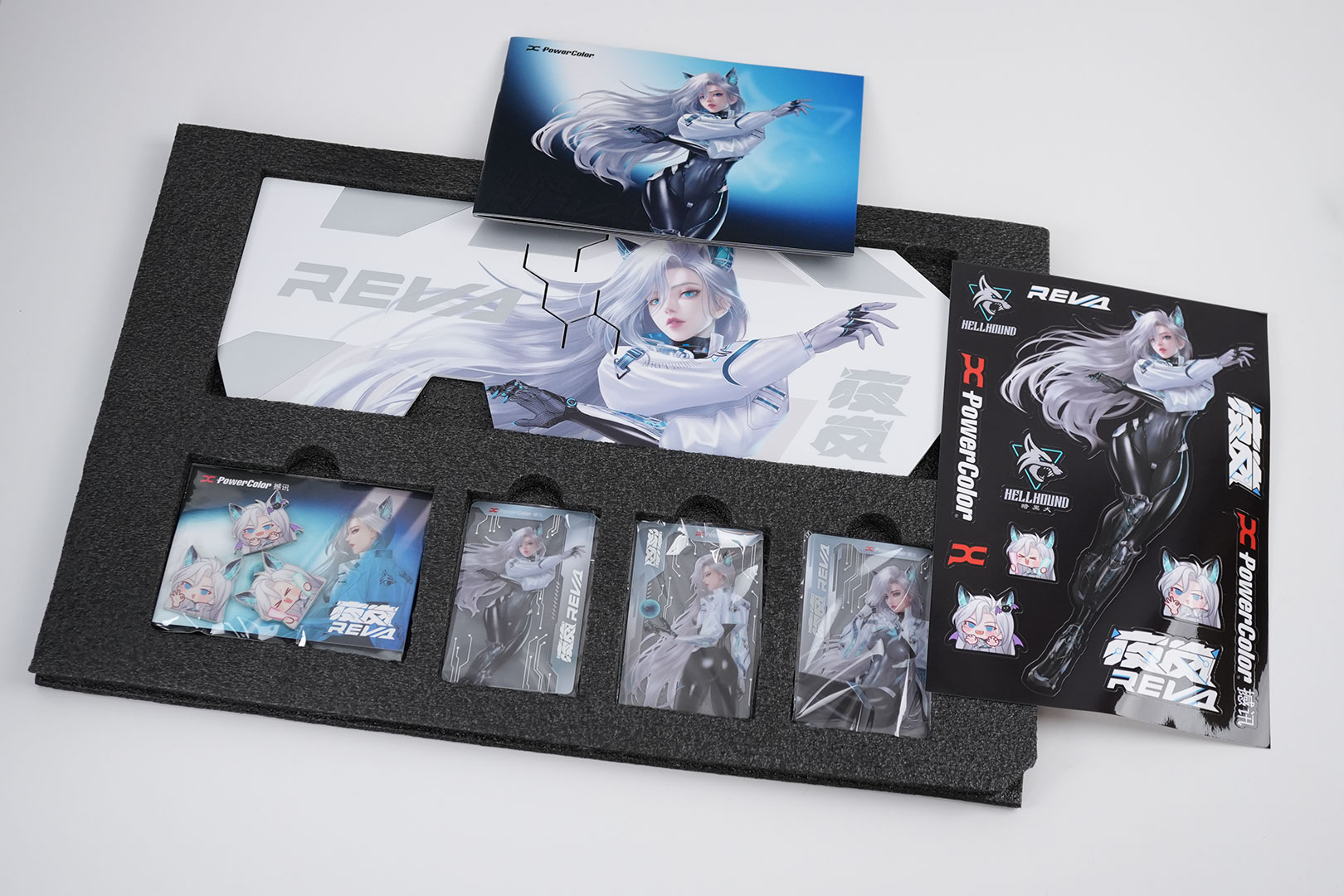
Inside the box you also get some goodies related to Reva.
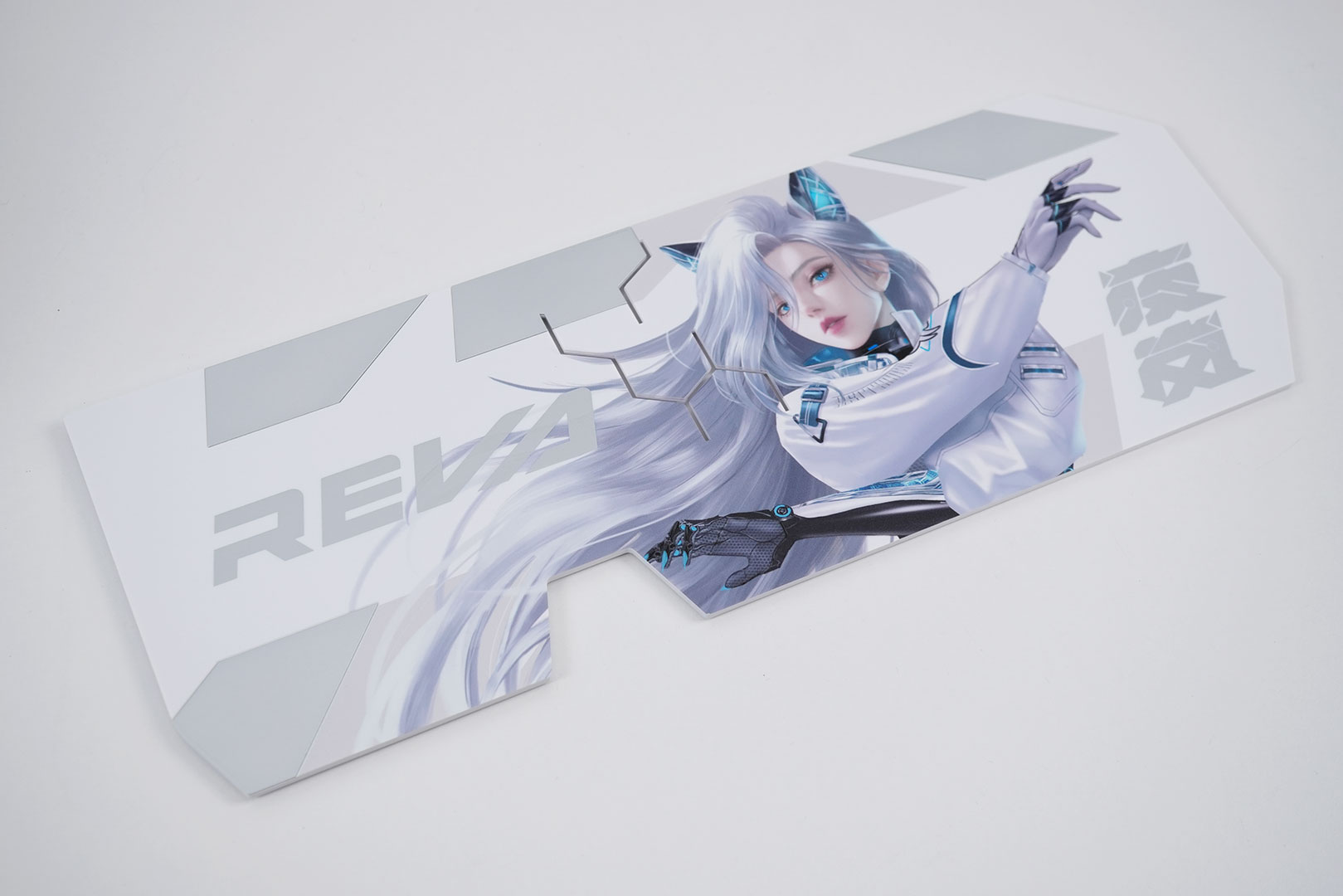
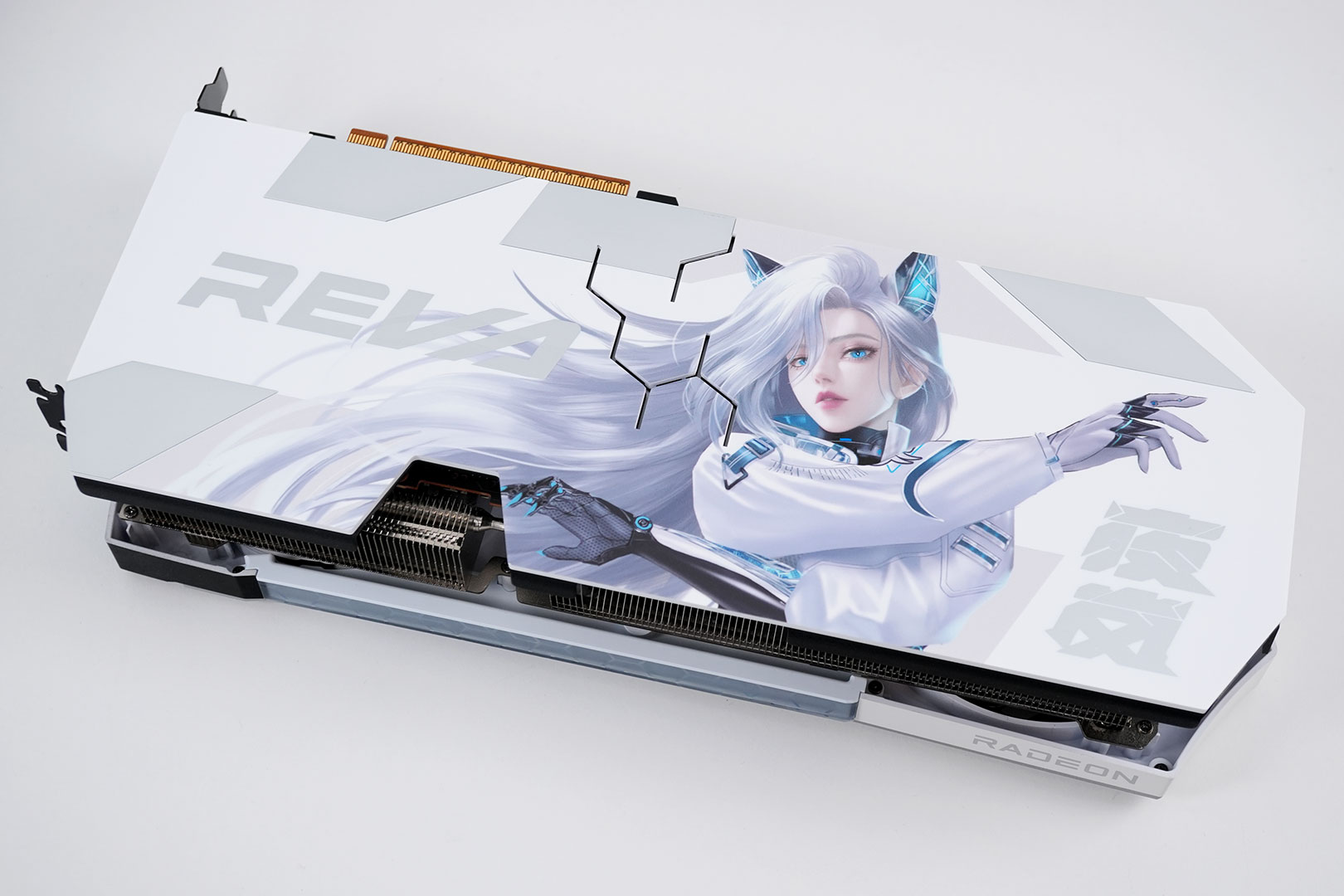
The included second backplate is magnetically attachable and looks mighty good.
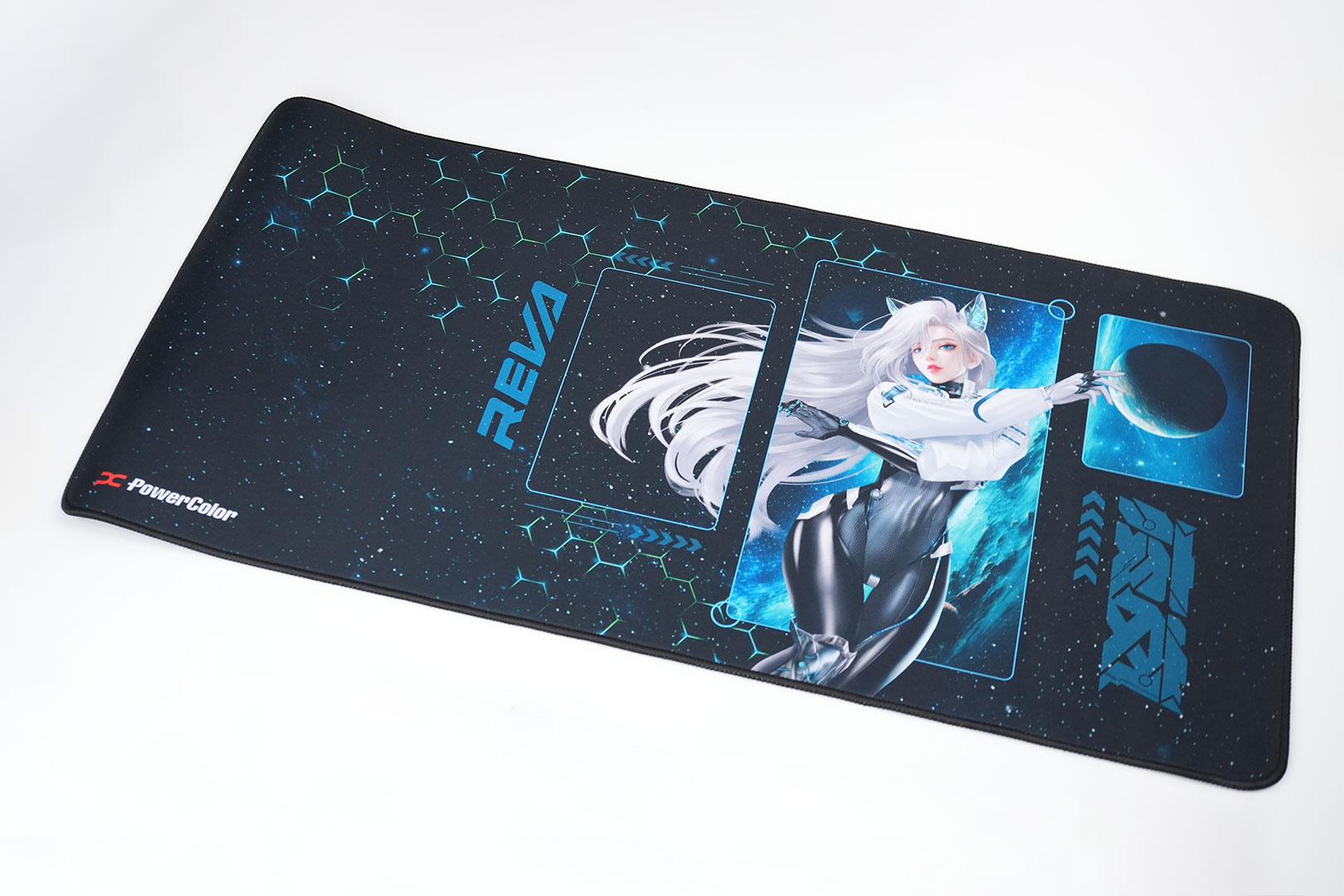
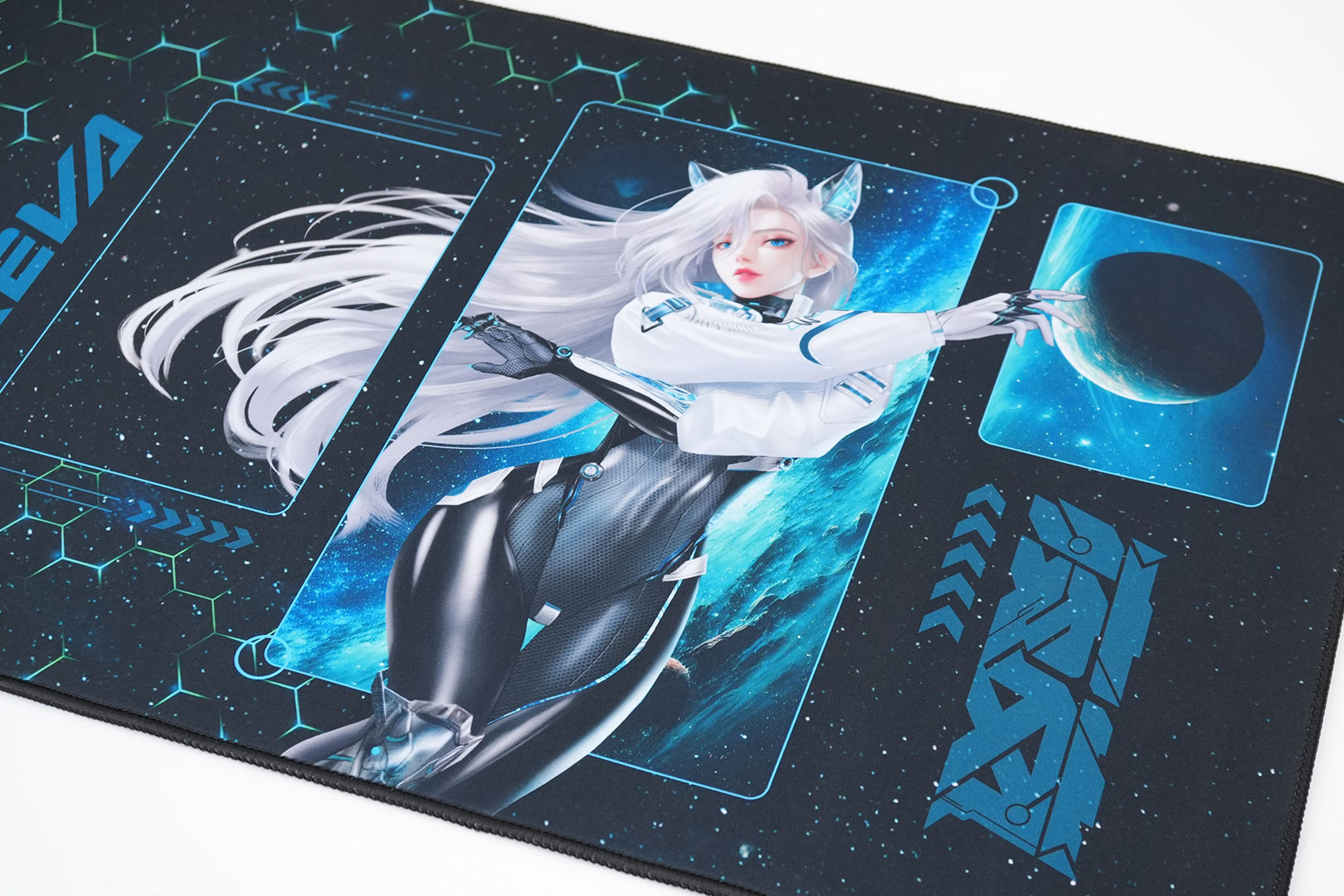
The same can be said for the included mousepad, which is huge.
The Card


PowerColor's new Reva card looks mighty good, thanks to a nice mix of white with various shades of gray. The surfaces have a slight grainy texture, giving them a high-quality feel. The back of the card includes a metal backplate adorned with the Reva character and a small cutout to allow for airflow.

Here's a closeup of the Reva mascot—good-looking, high-quality print.
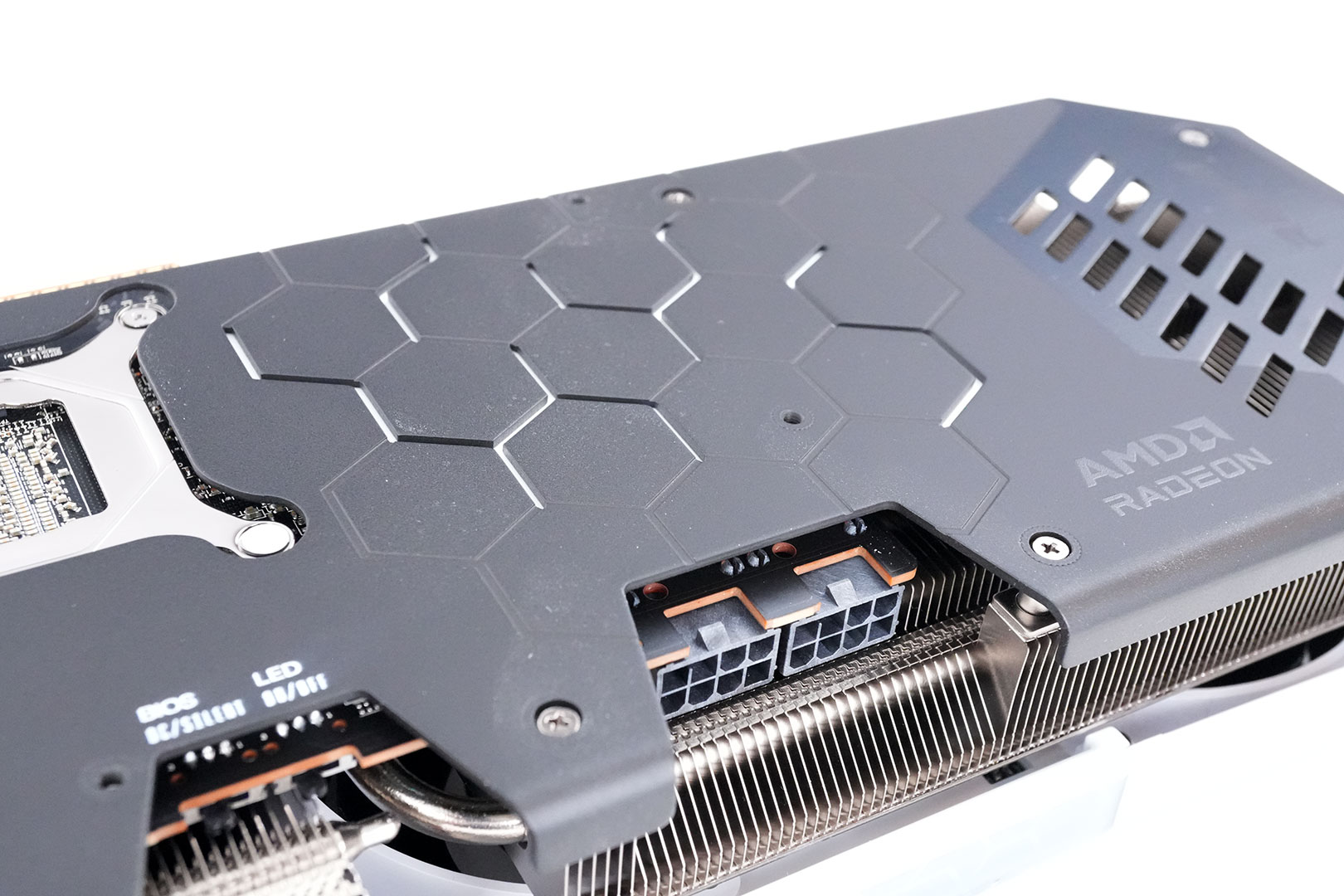
A bit further to the right is an area with a cutout for the RGB to shine through, it also feels extremely nice to the touch.

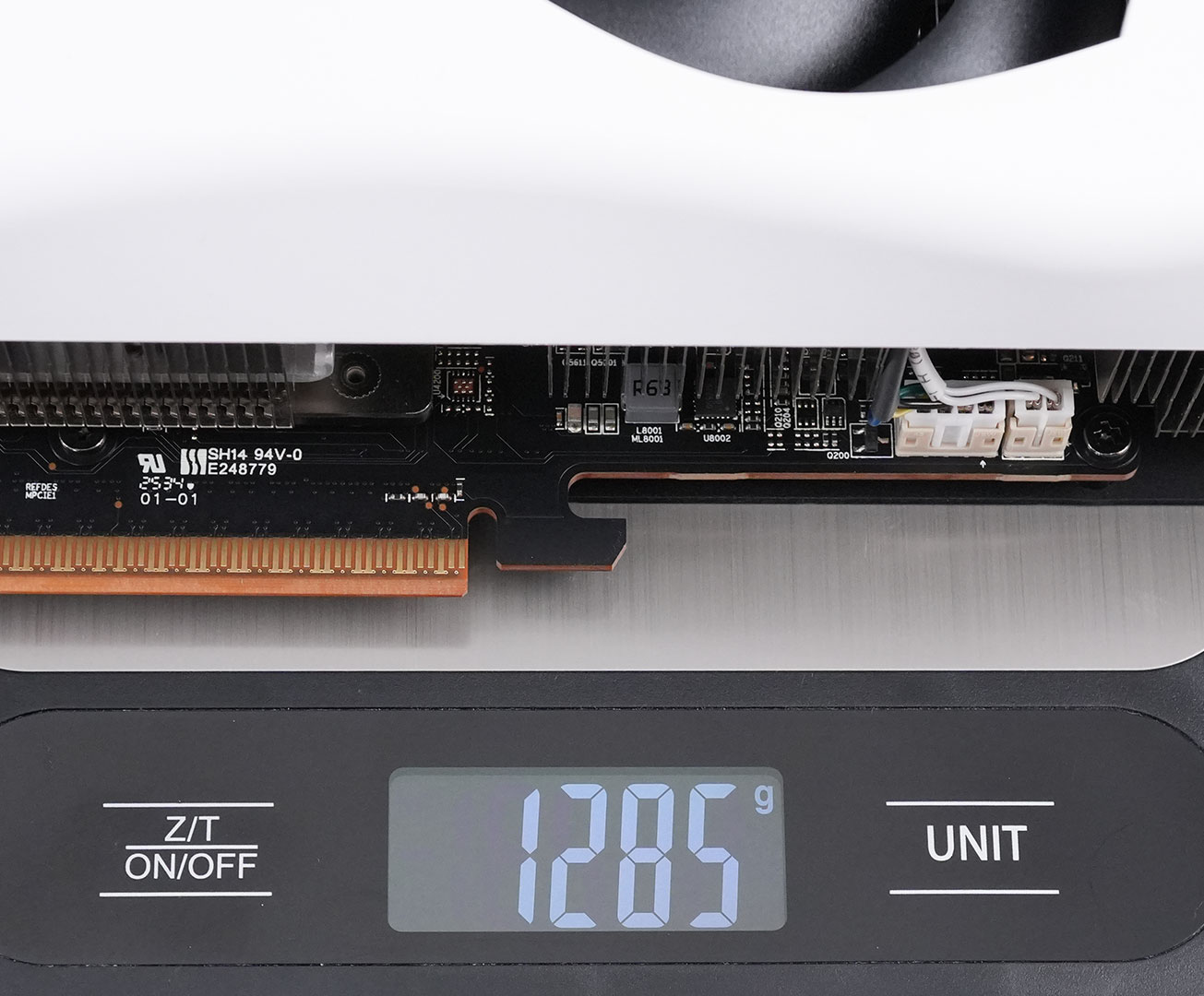
Dimensions of the card are 34.0 x 13.5 cm, and it weighs 1285 g.
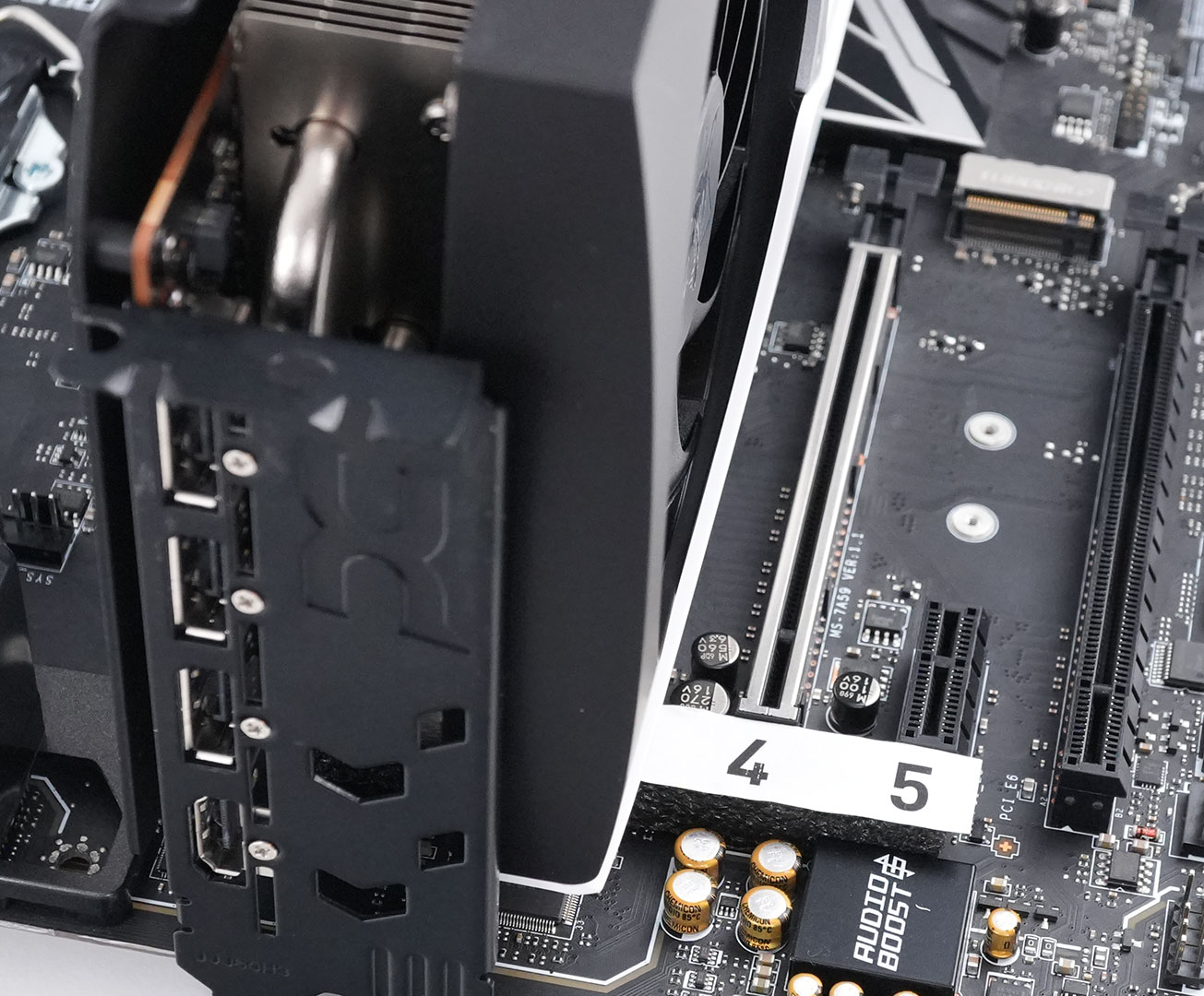

Installation requires three slots in your system. We measured the card's width to be 57 mm.
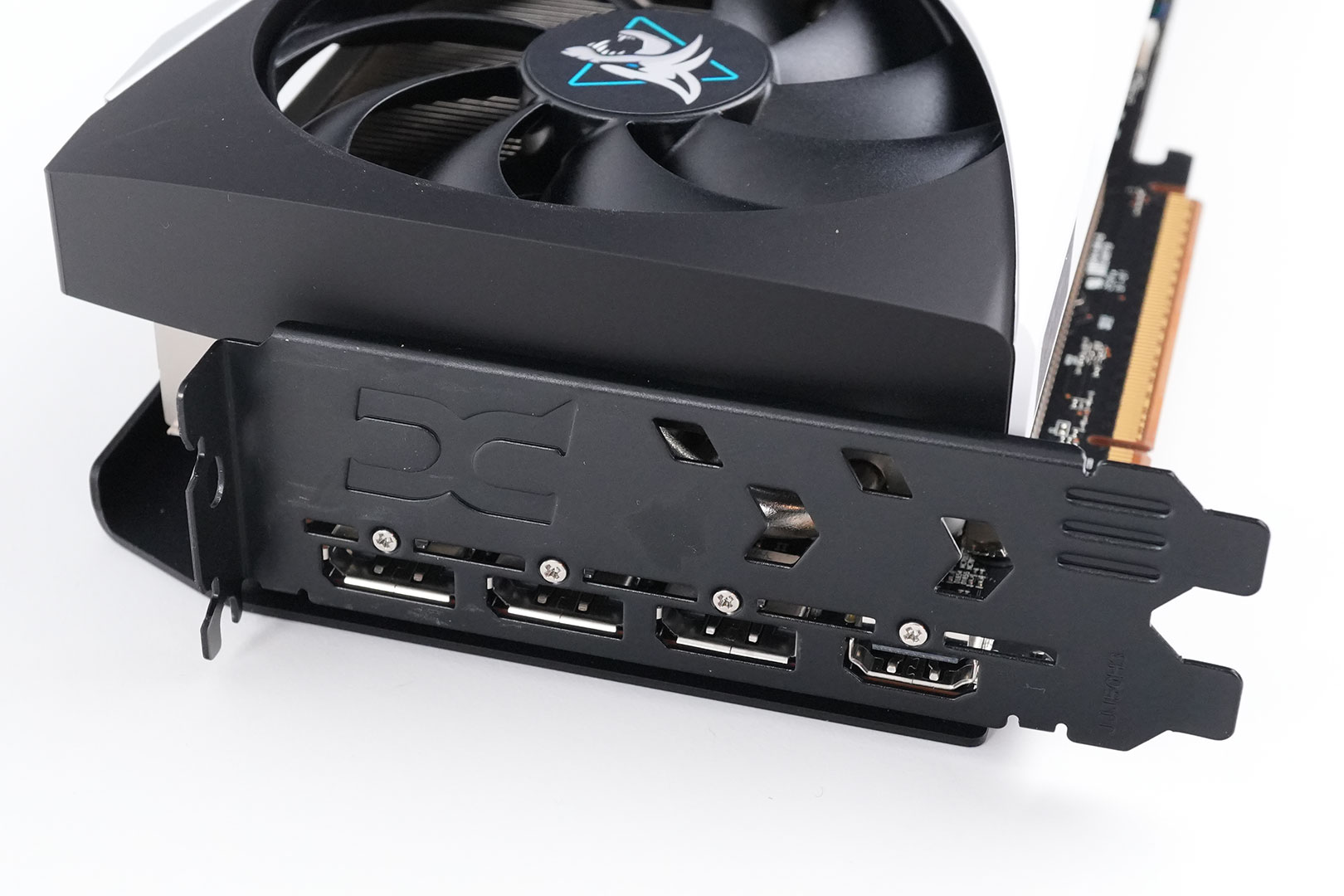
Display connectivity includes three standard DisplayPort 2.1a and one HDMI 2.1b port.
With RDNA 4, AMD put effort to improve its standing with game streamers and creative professionals. It's done this by giving Navi 48 a dual VCN solution, so the GPU has two concurrent hardware accelerators for encoding and decoding. Perhaps the biggest changes at the silicon level is that AMD improved the encoding quality of its hardware H.264 and HEVC codecs. This was a niche complaint streamers had with AMD GPUs, and would avoid the brand altogether. The company also updated its AV1 hardware acceleration with support for B-frames, which are frames that lack image information, but math data that let the decoder reconstruct image data by comparing with the image data from adjacent I-frames containing it. This technique vastly improves streaming bitrates since half the frames lack image data.
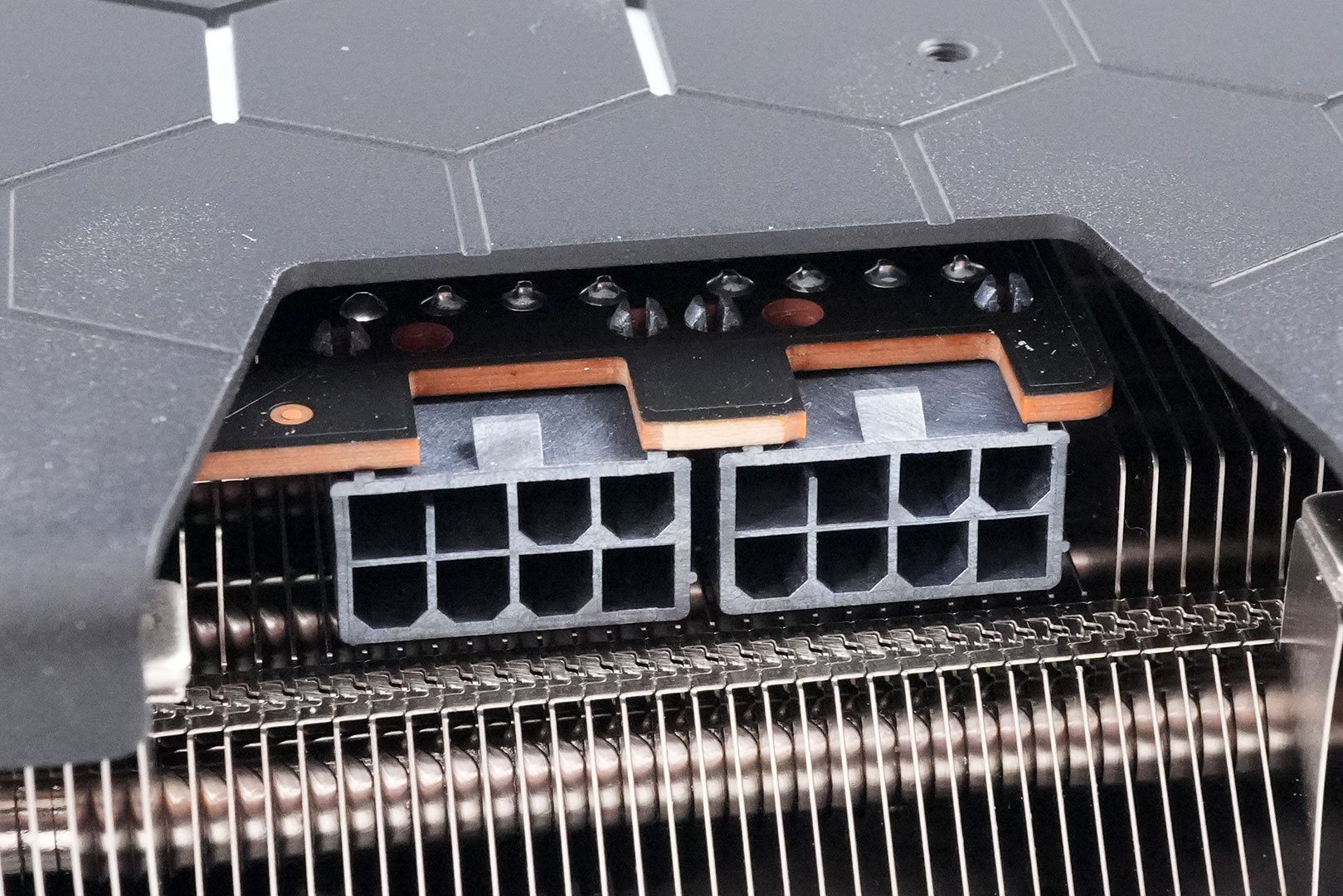
The card uses two 8-pin power connectors, which allow a maximum of 300 W power draw, plus 75 W from the slot. The board power limit is set to 315 W, with a manual adjustment range allowing up to 347 W.

The dual BIOS switch lets you toggle between the default "OC" BIOS and a "Silent" BIOS. Right next to that is a switch that turns off all LED lighting—simple and effective—no software required.


PowerColor has added an RGB illumination zone along the long edge, and on the backplate.
Teardown
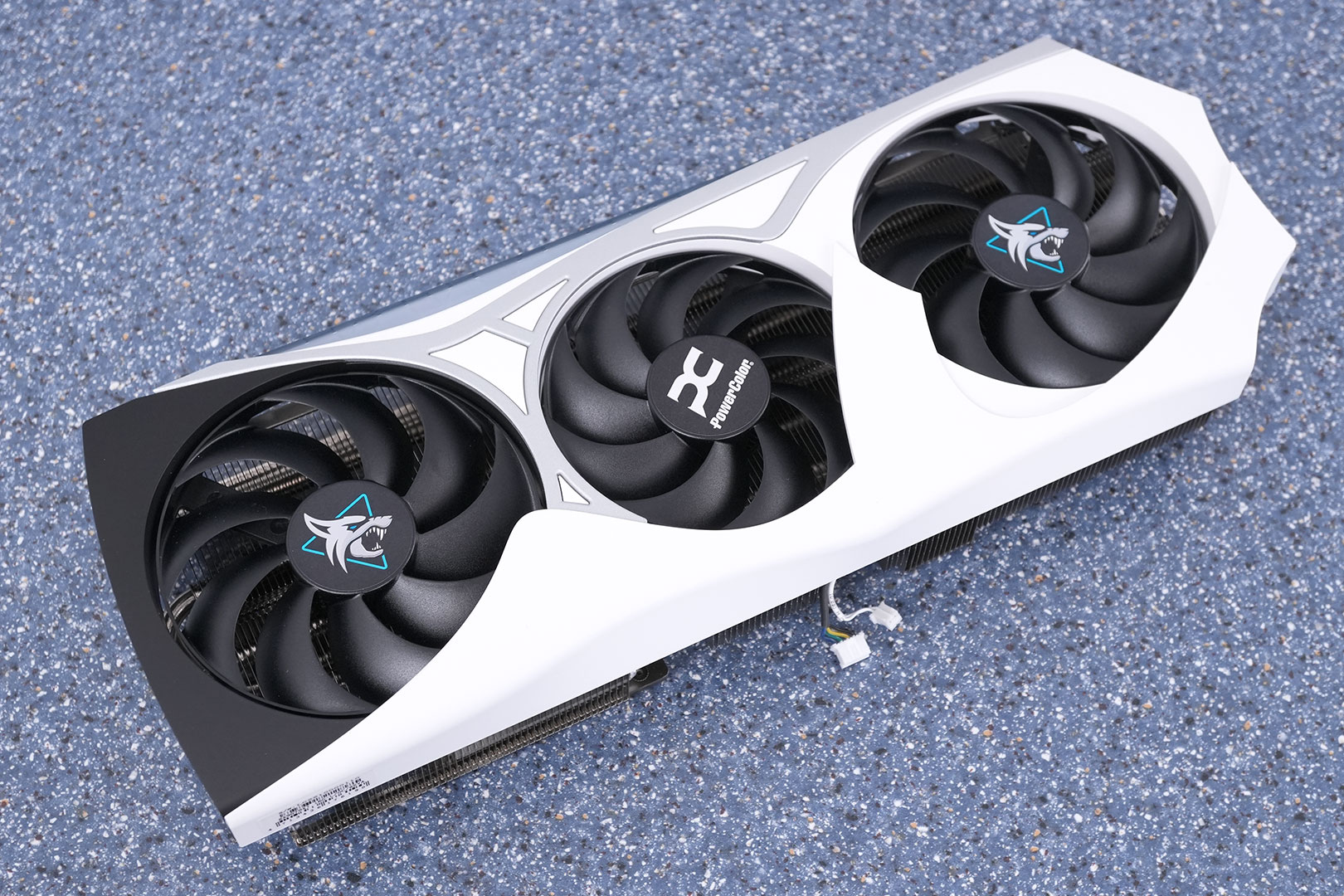
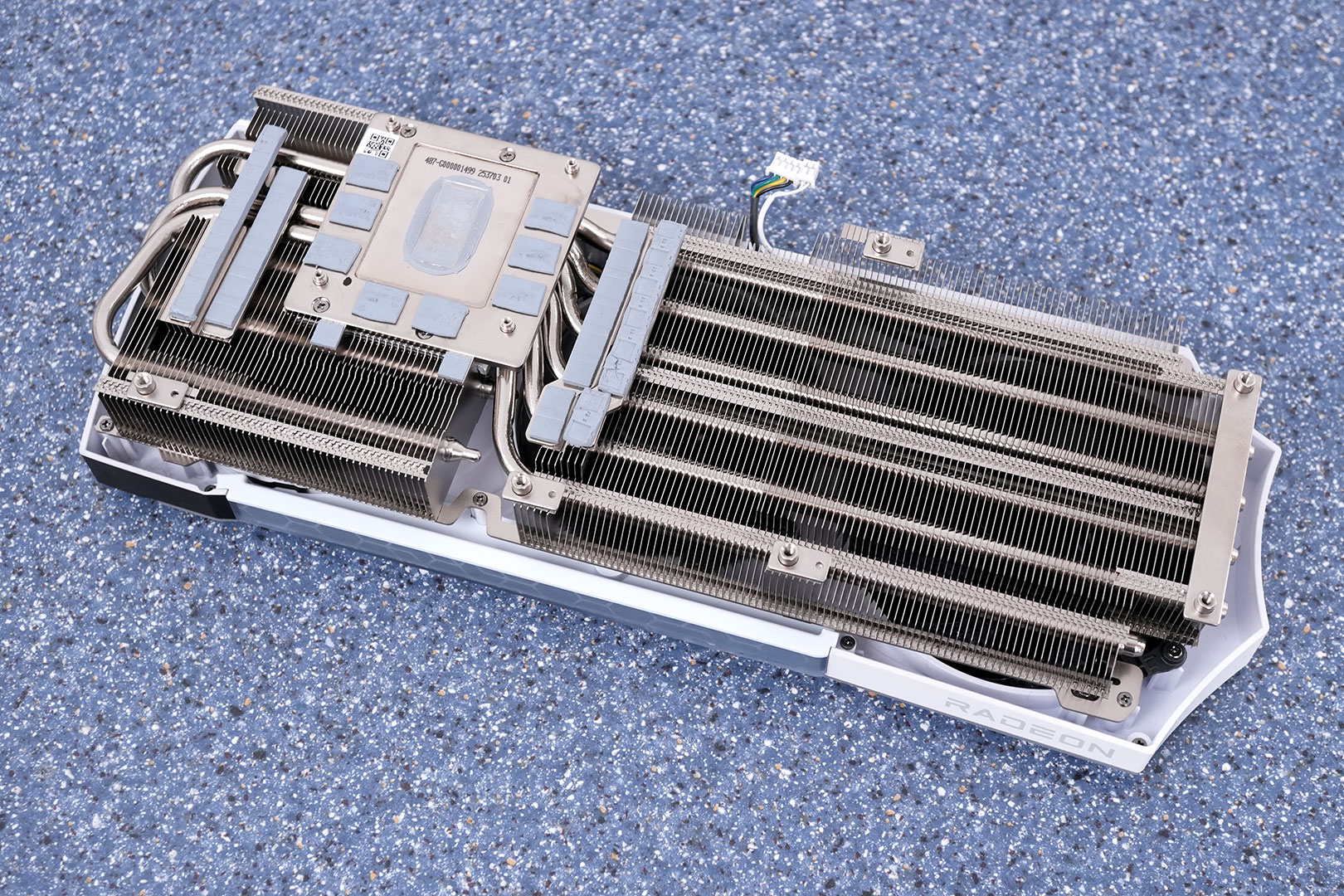
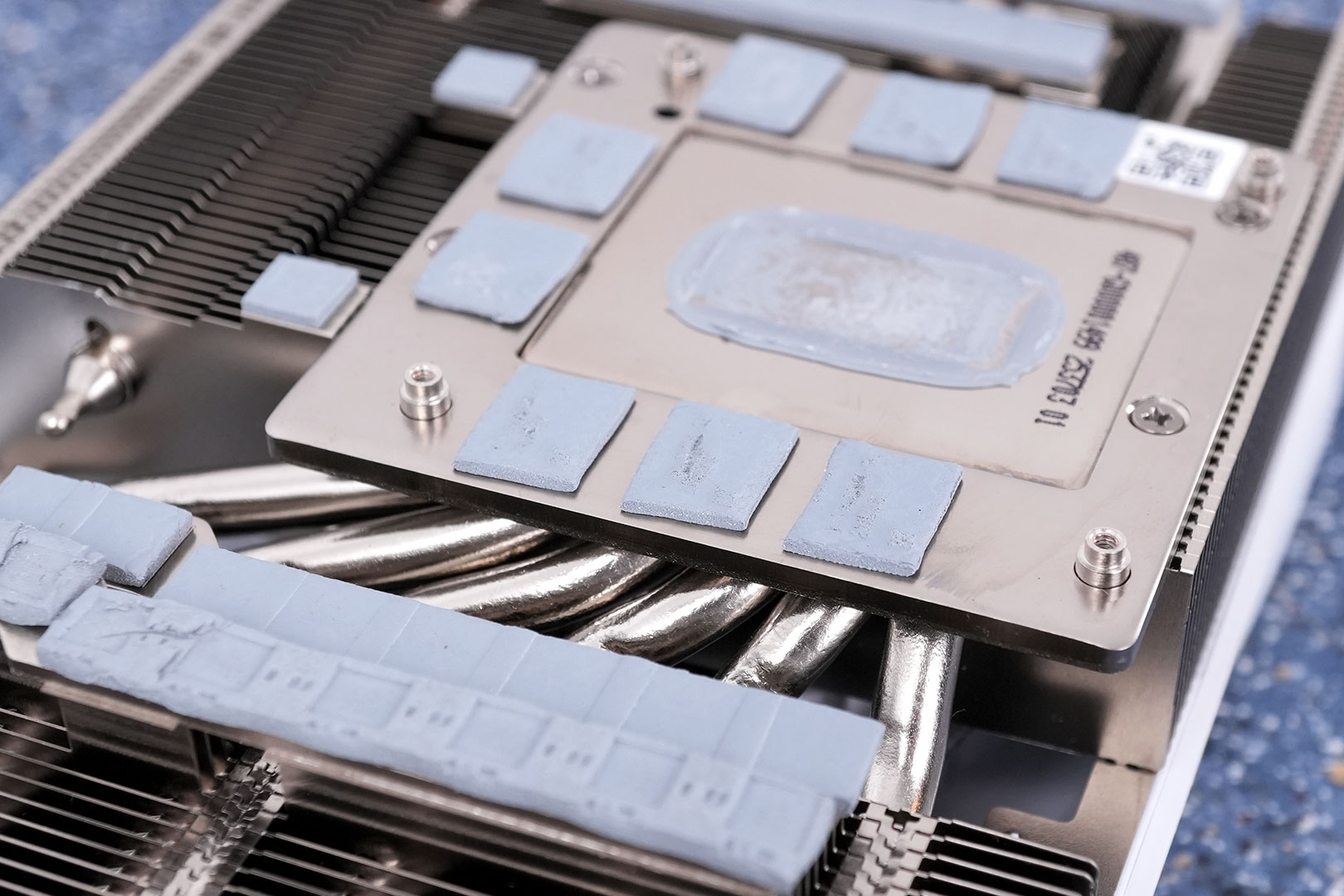
The PowerColor cooling solution uses six heatpipes. The heatsink provides cooling not only for the GPU, but also for the memory chips and VRM circuitry.
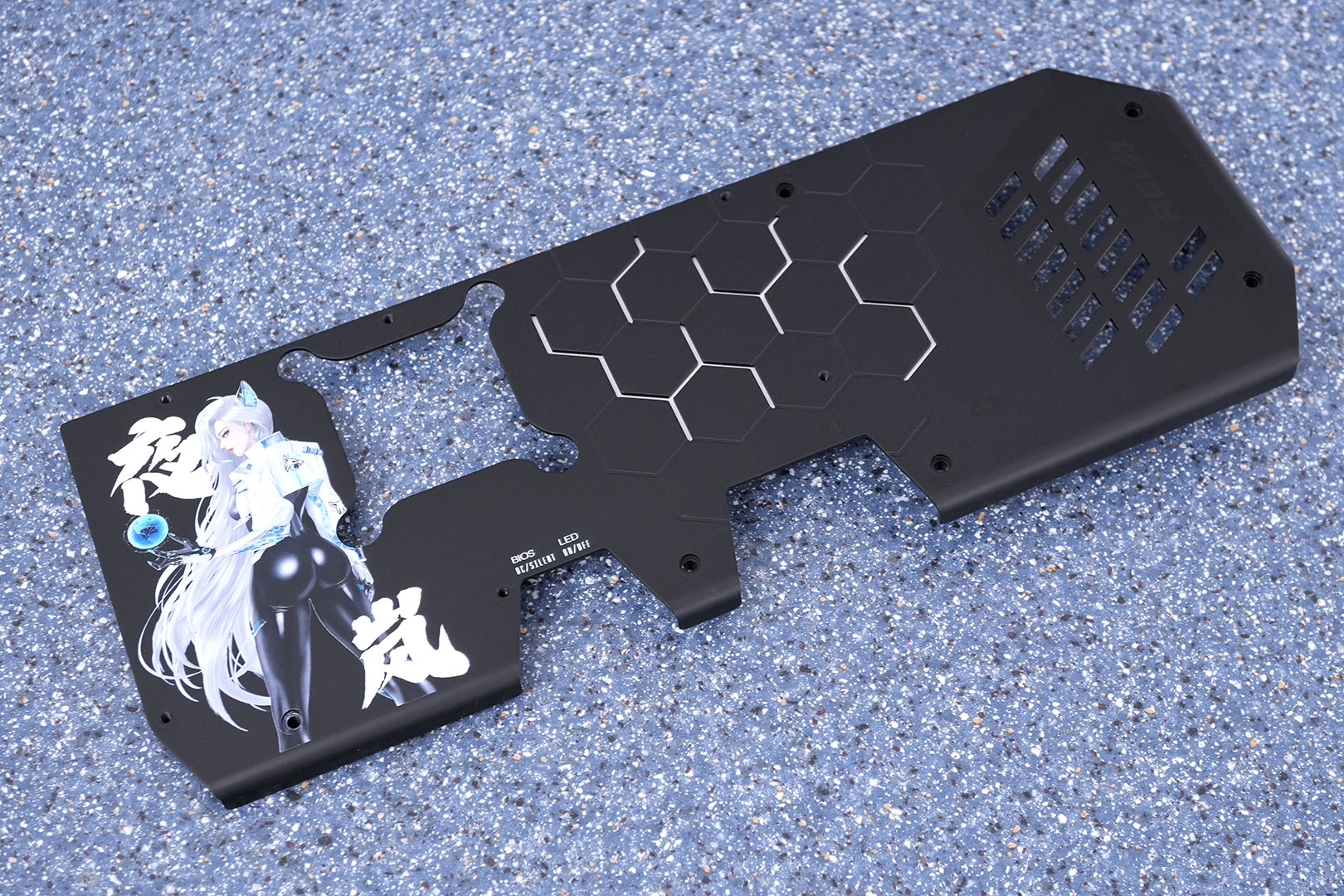
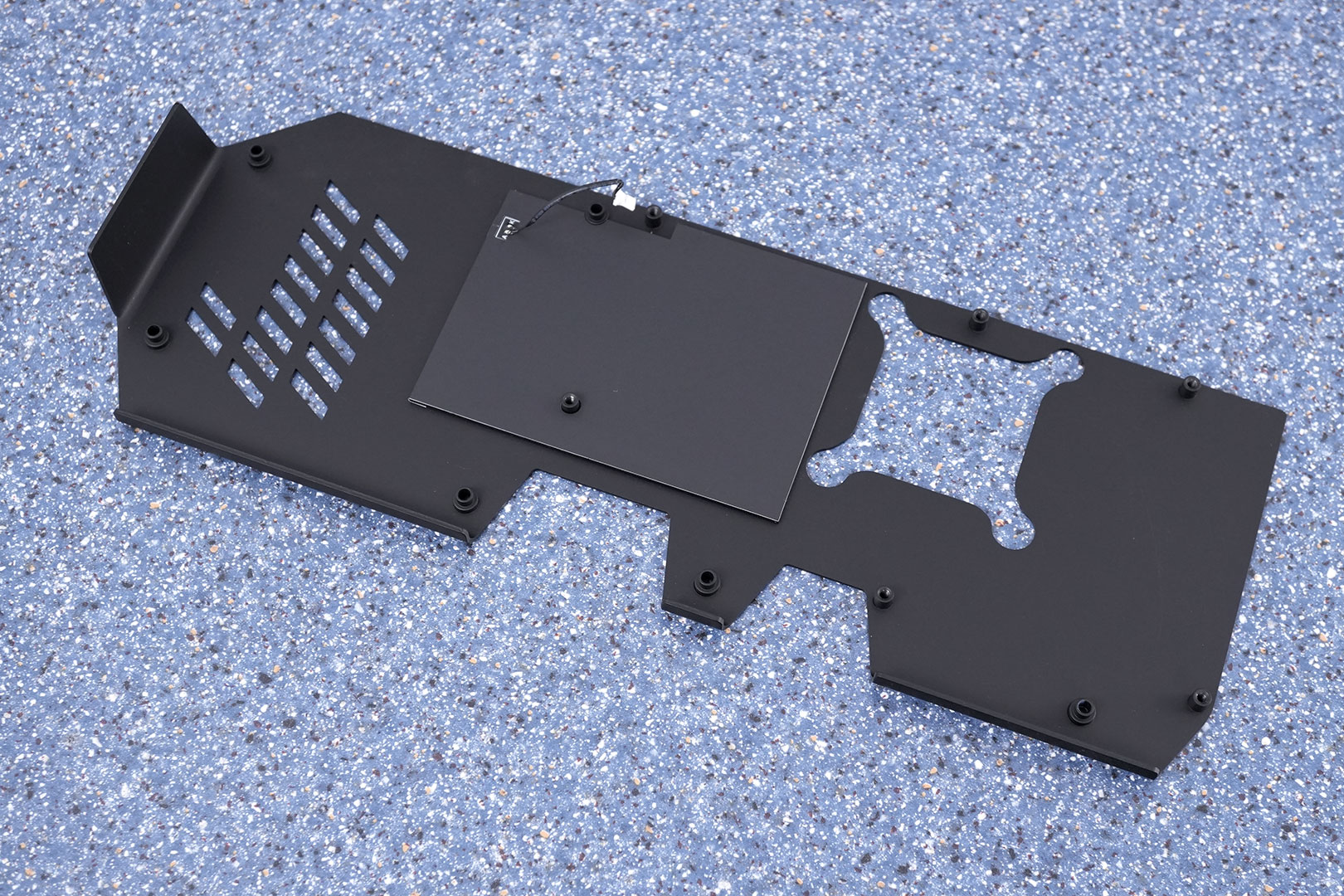
The backplate protects the PCB against damage during handling and installation.
High-resolution PCB Pictures
These pictures are for the convenience of volt modders and people who would like to see all the finer details on the PCB. Feel free to link back to us and use these in your articles, videos or forum posts.

High-resolution versions are also available (front, back).
Circuit Board (PCB) Analysis


An 10+3 phase VRM powers the GPU. It is managed by a Monolithic Power Systems MP2868A controller.

All GPU power phases use Monolithic MPS MP87993 DrMOS with a rating of 50 A.


Powering the GDDR6 memory chips is a 2+1 phase VRM driven by a second Monolithic Power Systems MP2868A controller.
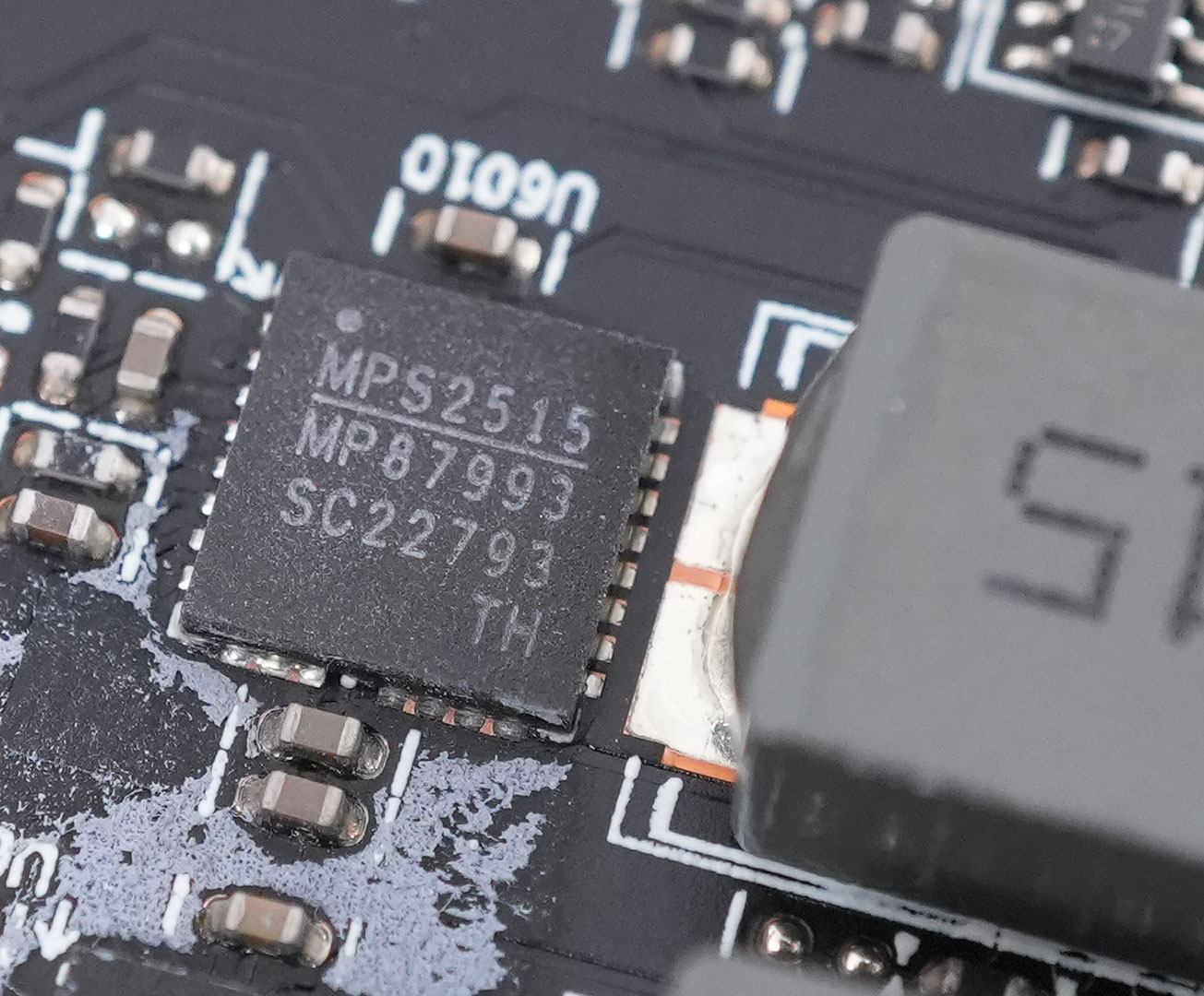
Just like GPU, the memory is handled by Monolithic MP87993 DrMOS chips.

The GDDR6 memory chips are made by Samsung, and bear the model number K4ZAF325BC-SC20, they are rated for 20 Gbps. Please note: this is the first RX 9070 XT that we're reviewing that has Samsung memory and not Hynix.
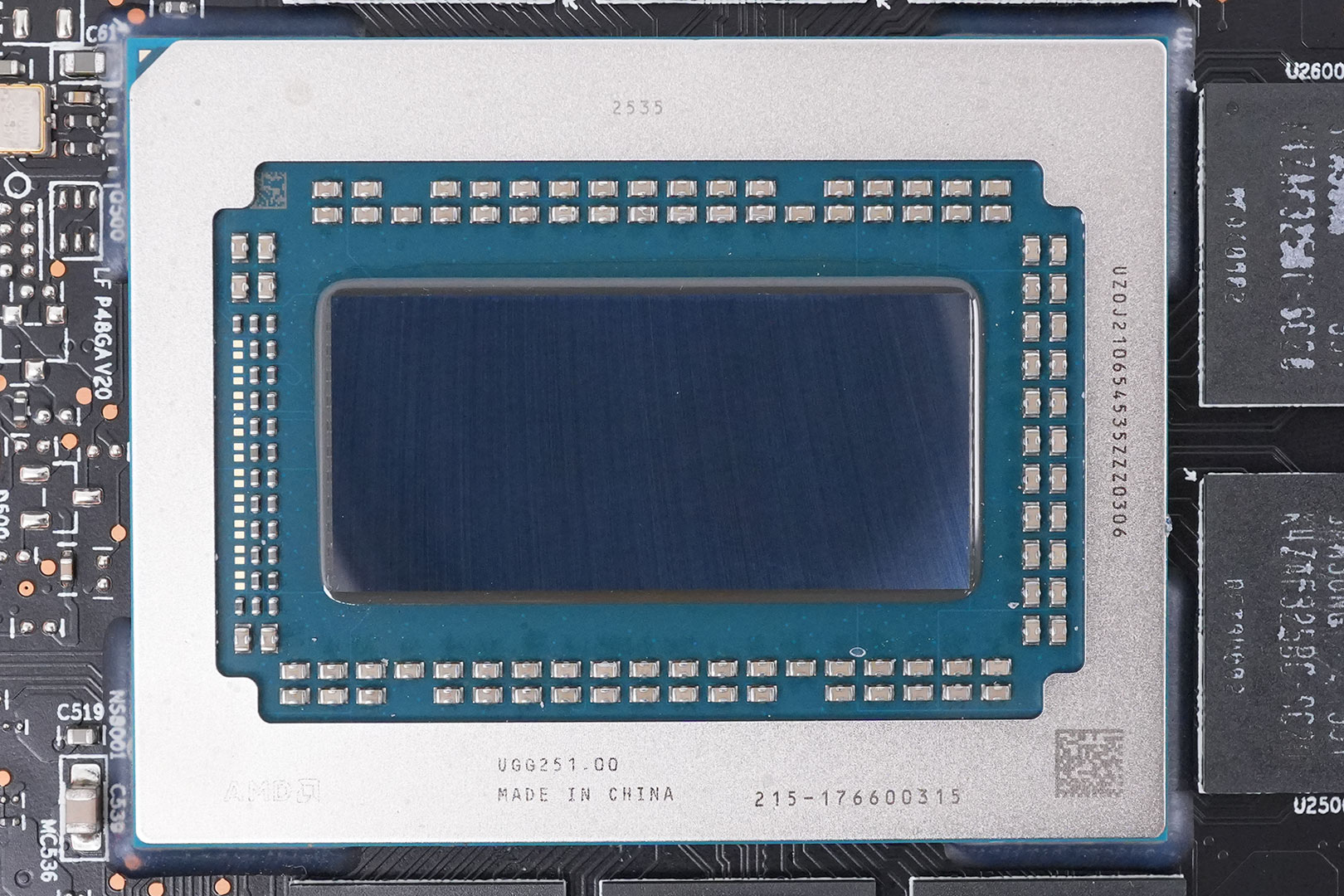
The AMD Navi 48 GPU at the heart of the Radeon RX 9070 is a monolithic die. It is fabricated using a 4 nanometer N4P process at TSMC Taiwan. The die measures 357 mm², and comes with a transistor count of 53.9 billion.
Our Patreon Silver Supporters can read articles in single-page format.
Nov 12th, 2026 13:36 PST
change timezone
New Forum Posts
- Your PC ATM (36408)
- When you could finally run Crysis maxed out? (60)
- [Community Benchmark] MrH OpenCL Benchmark 2.0e (Windows Only – CPU & GPU) (0)
- DTS DCH Driver for Realtek HDA [DTS:X APO4 + DTS Interactive] (2810)
- Windows 11 General Discussion (7725)
- What are you playing? (26210)
- I won't download games that are larger than 30–40 GB. (96)
- WarpCoreBench scores! (16)
- Classic Blizzard games (WarCraft 1-2, Diablo 1-2, StarCraft 1) (6)
- Current Sales, Bundles, Giveaways (10446)
Popular Reviews
- AMD Zen 6 Technical Deep Dive
- Upcoming Hardware Launches 2027 (Updated Nov 2026)
- NZXT C1200 Platinum Review
- XPG NIMBUS PLUS Review - Mid-range Chair With Strong Competitors
- NZXT H7 RGB+ Review
- Corsair HX1000i Shift Crystal Review
- Montech King 95 3D PRO Review
- NZXT H5 Review
- Phantom Blade Zero Performance Benchmark Review - 35 GPUs Tested
- Gigabyte Z890I Aorus Ultra Review
TPU on YouTube
Controversial News Posts
- NVIDIA Co-Founder and CEO Jensen Huang Officially Resigns (220)
- OpenAI CEO Argues Home PCs Waste the World's Limited DRAM Supply (152)
- NVIDIA Launches Investigation Into Jensen Huang's Relationship With Suspected Chinese Spy (136)
- Intel "Raptor Lake Next" 16-Core and 20-Core CPUs Surface (130)
- Legendary Game Studio BioWare Shuts Down Following EA Layoffs (104)
- Dell CEO Says the Memory Shortage Will Get Worse in 2027 (95)
- NVIDIA GeForce RTX 50-Series Scheduled for up to $500 Price Hike This Week (89)
- Modder Fits RTX 5090 With Four 8-Pin Connectors, Halving Current per Wire (80)