 8
Quick Look: 7Hz x Crinacle: Salnotes Dioko Planar Magnetic IEMs
(8 Comments) »Introduction

Anyone remotely into the in-ear monitors world this year has seen the rise of planar magnetic IEMs, which can be attributed to the massively successful 7Hz Timeless from last year. Indeed, at the time of said review and even that of the less impressive follow up 7Hz Eternal, the audio brand had no real presence outside of China. I am happy to see there is now not only social media pages, but also active representatives on some platforms to provide more information and support on the 7Hz—also referred to as 7Hertz. This is how I first got wind of the then-upcoming 7Hz Dioko.

7Hz is barely a presence in the personal audio space and yet we now see it introduce a sub-brand called Salnotes that is intended to be a more budget-friendly solution similar to what FiiO does with Jade Audio. This is mighty confident from the Chinese brand, I think it will lead to confusion and poor branding presence across both brands now, but either way, the relevant part of the final product happens to be the Crinacle name attached to it. The Dioko, as was the case 3-4 months ago, had various semi-open and closed back versions being played around with in addition to different colors and finishes to make it a more fun looking set compared to the black coin-shaped Timeless. A week or so before it was due for launch, 7Hz contacted Crinacle to help make the Dioko a commercial success given the guy is now basically a money printer too with his IEM collaborations, and sent over physical filters/dampers and working units for him to try and get a final tuning agreed upon by both parties. It's not your typical partnership that happened over weeks, if not months, so I was curious how the 7Hz x Crinacle: Salnotes Dioko would play out. Thanks to Linsoul for providing a review sample to TechPowerUp!
| 7Hz x Crinacle: Salnotes Dioko In-Ear Monitors | |
|---|---|
| Shell: | CNC-machined aluminium shells with sapphire-coated tempered glass face cover |
| Cable: | 4-core, 216-strand Litz cable with mix of OCC copper and silver-plated OCC copper wires |
| Driver Units: | Custom 14.6 mm planar magnetic driver with N55 magnets |
| Frequency Response: | 5 Hz–40 kHz |
| Sensitivity: | 106 dB/Vrms @1 kHz |
| Impedance: | 16 Ω |
| Cable Connectors: | 3.5 mm TRS plug to source + two 0.78 mm 2-pin plugs to IEMs |
| Cable Length: | 4 ft/1.2 m |
| Warranty: | One year |
Packaging and Accessories


Packaging for the 7Hz x Crinacle: Salnotes Dioko is relatively small and goes with a white base color. There's the Salnotes logo on the front too, so you can decide whether or not to call this product by all four words in the official name or simply 7Hz Dioko, as seemingly everyone has done since launch. A render of the shells is also seen on the front and back with confirmation of the collaboration on the side. Open the box to take out a large carry/storage case which contains everything else inside. I quite like the case, although it's clearly on the larger side here, with the neat incorporation of 7Hz along with the Salnotes branding on the red/yellow/black colors chosen. It's a large rectangular cuboid with a sturdy zipper mechanism that opens to reveals a soft padded compartment with the IEMs and cable snugly placed inside, and the accessories in a separate compartment above.


7Hz provides paperwork in the form of a multi-language quick start guide going over how to use IEMs and also discussing the nature of the detachable cable should this be your first time with in-ear monitors. More relevant are the provided ear tips that are additional to the ones pre-installed on the shells, of all which are seen above. The colorful silicone tips come in a variety of sizes and matching colors but seem otherwise fairly generic in fit and finish. The pre-installed size M tips, however, remind me of the AZLA SednaEarfit XELASTEC tips that came with the SeeAudio Bravery in being somewhat tacky to the touch, and lightly malleable based on a narrow temperature range, allowing them to better fit your warm ear canals.
Closer Look


The IEMs come with the cable pre-attached too, making the Dioko good to go out of the box. For a closer examination of the cables and the shells I wanted to separate them, as seen above. Simply pull out the 0.78 mm 2-pin plugs from the shells carefully without applying sideways pressure and you are good to go. Reverse the steps for use, or go with a replacement cable if you have prefer another!
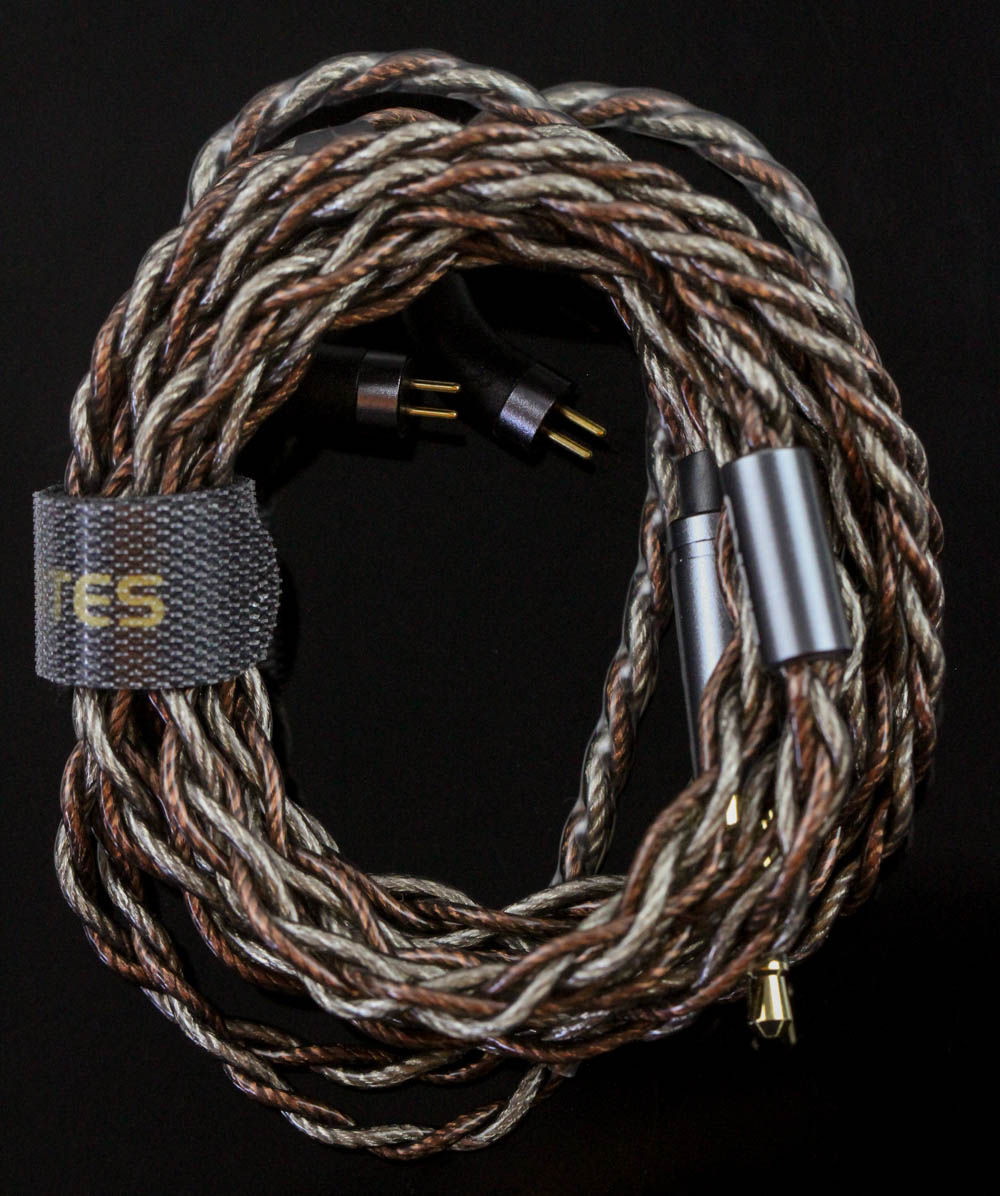

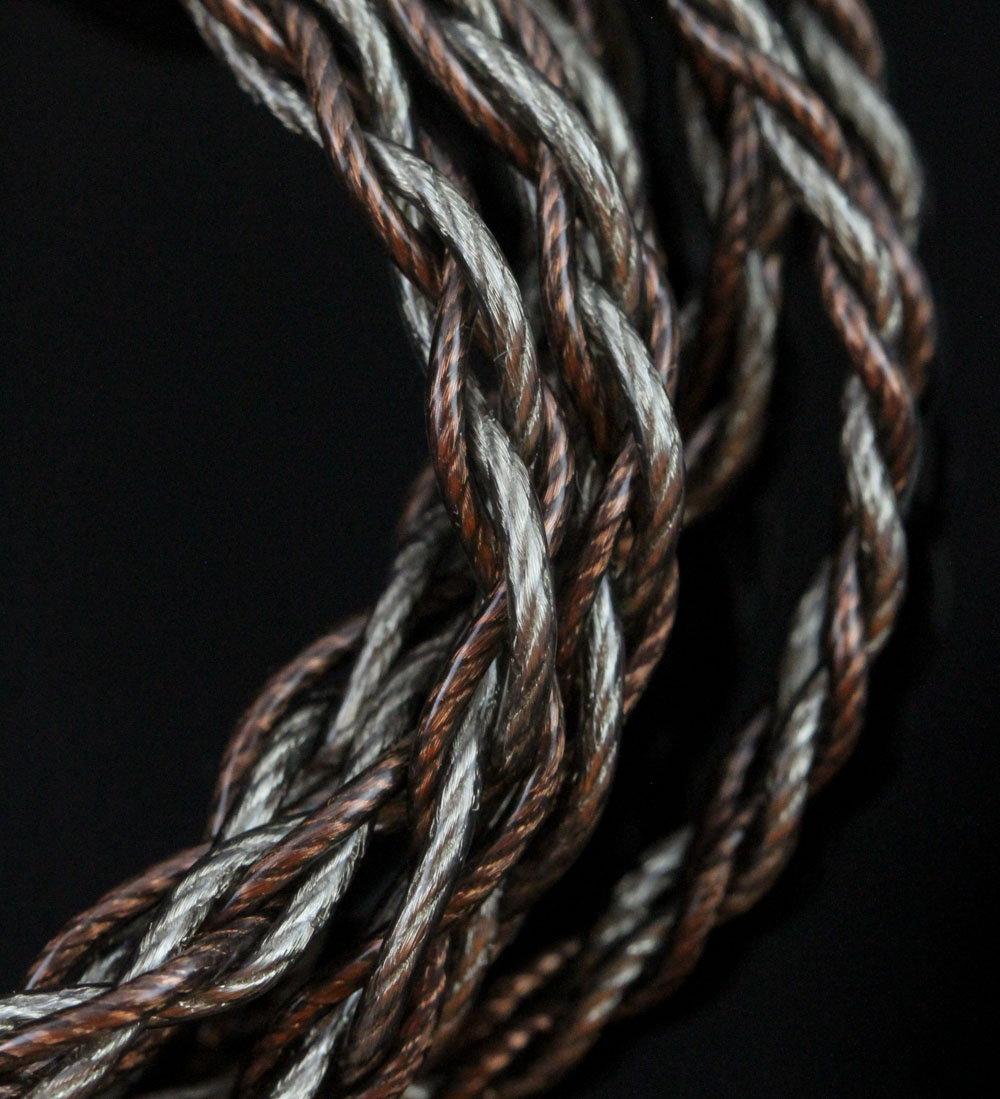


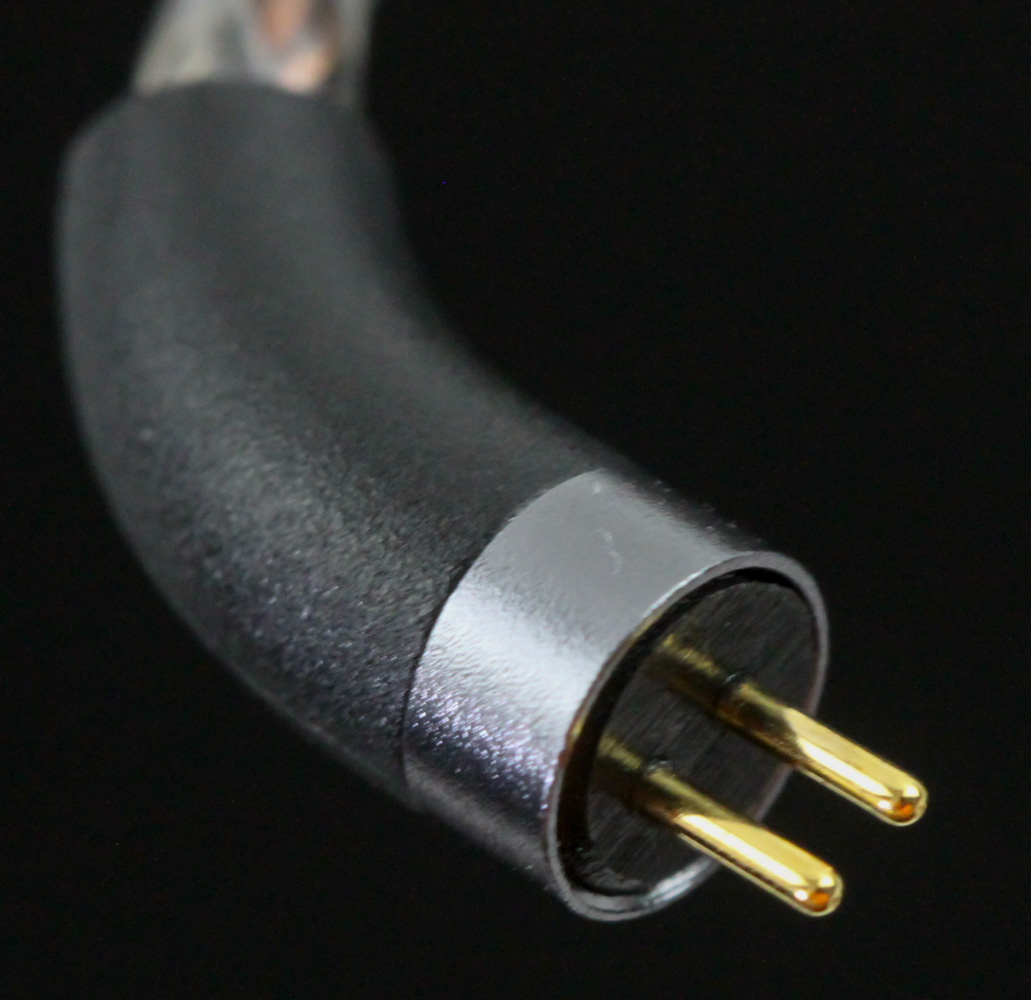
I can see Dioko owners potentially thinking of getting a replacement cable that matches the face plate/shells closer in color or even simply a modular cable in case they wish to use a balanced output source. But generally, and knowing the price regime this product belongs to, I dare say the vast majority of end users will be simply using the stock cable. It's a good thing then that we get a relatively high-quality cable that does not have any issues outside of light microphonics if it rustles against the desk surface. The cable goes from a 3.5 mm single-ended connector headed to your source and is a mix of high-purity OCC (Ohno Continuous Cast) copper and silver-plated OCC copper as seen in the Litz-structure wiring employed. There are a total of 216 individual wires split into four strands that then split into two per channel at the aptly-named Dioko splitter employing metal housing as is the case throughout the cable. The other end consists of pre-formed, relatively stiff ear hooks with plastic sheathing over the cables. Each of the two strands has a 0.78 mm 2-pin connector, with L/R markings on the angled black plastic inserts here to identify the left and right channels respectively. The metal plugs all come gold-plated for oxidation resistance.


I recommend reading my 7Hz Eternal review to know more about the design of the Dioko shells which seemingly just started from where the Eternal stopped. We still get a CNC-machined aluminium alloy shell capped by a sapphire-coated tempered glass cover but now it's more egg-shaped, and without a decorative insert underneath. This means the Dioko face plates can end up looking like cheap plastic baubles in photos, but they do feel better in person I promise. Still, between the purple/blue finish and the Salnotes Dioko branding, it's way down in my list of attractive IEMs. The shells are also quite large—even more so compared to the already imposing 7Hz Timeless—and this time it's not just an extension of the face plates either. Fitting these won't be trivial, thus as we see the use of multiple vents along with an interesting angular placement of the flush cable connectors on the side. There are L/R markings here too, and removing the pre-installed ear tips shows a highly angular and stubby nozzle, which may affect fit further. There is a notch to keep the ear tips in place once installed, along with a metal grill with a finer mesh screen underneath to prevent contaminants from entering the acoustic chamber. 7Hz does not provide replacement filters with the Dioko.
Our Patreon Silver Supporters can read articles in single-page format.
Nov 15th, 2026 10:43 CST
change timezone
Latest GPU Drivers
New Forum Posts
- WireView Pro II GPU Alignment: Wired | Variant: Black (2)
- Power supply noise stops when I move the mouse (6)
- Honestly, do you care about GTA VI? (60)
- HP Office Jet 7740 Pro - Supply system problem with replacement cartridge (1)
- Recommendations Wanted - Affordable Enterprise SSD for Boot (5)
- budget home NAS – X79, X99 or another platform? (149)
- Planning for Prolonged High Prices and Maintaining What You Already Have (74)
- Technical Issues - TPU Main Site & Forum (2026) (409)
- What generation of Wi-Fi do you use at home (98)
- I'll flash a ASUS ROG Strix RX480 O8G in Cause of Code 43, as a Newbie (5)
Popular Reviews
- AMD Zen 6 Technical Deep Dive
- ASUS ROG Strix B850-I Gaming Wi-Fi7 W Review
- Corsair HX1000i Shift Crystal Review
- Upcoming Hardware Launches 2027 (Updated Nov 2026)
- Montech King 95 3D PRO Review
- NZXT C1200 Platinum Review
- NZXT H7 RGB+ Review
- NZXT H5 Review
- Phantom Blade Zero Performance Benchmark Review - 35 GPUs Tested
- AMD Ryzen 7 9800X3D Review - The Best Gaming Processor
TPU on YouTube
Controversial News Posts
- NVIDIA Co-Founder and CEO Jensen Huang Officially Resigns (414)
- OpenAI CEO Argues Home PCs Waste the World's Limited DRAM Supply (152)
- Open Letter Asking NVIDIA to Reinstate Jensen Huang Passes 115,000 Signatures (137)
- NVIDIA Launches Investigation Into Jensen Huang's Relationship With Suspected Chinese Spy (136)
- Intel "Raptor Lake Next" 16-Core and 20-Core CPUs Surface (130)
- Legendary Game Studio BioWare Shuts Down Following EA Layoffs (104)
- Dell CEO Says the Memory Shortage Will Get Worse in 2027 (95)
- NVIDIA GeForce RTX 50-Series Scheduled for up to $500 Price Hike This Week (89)