 3
RAWM Leviathan V4 Review
Sensor & Performance »Build Quality
Overall build quality is very solid. There is no rattle when shaking the mouse. When applying lateral pressure, no creaking or flexing of the shell can be observed. Activating the side buttons by squeezing the sides is impossible. Lastly, accidental clicks when slamming down the mouse do not occur.Buttons

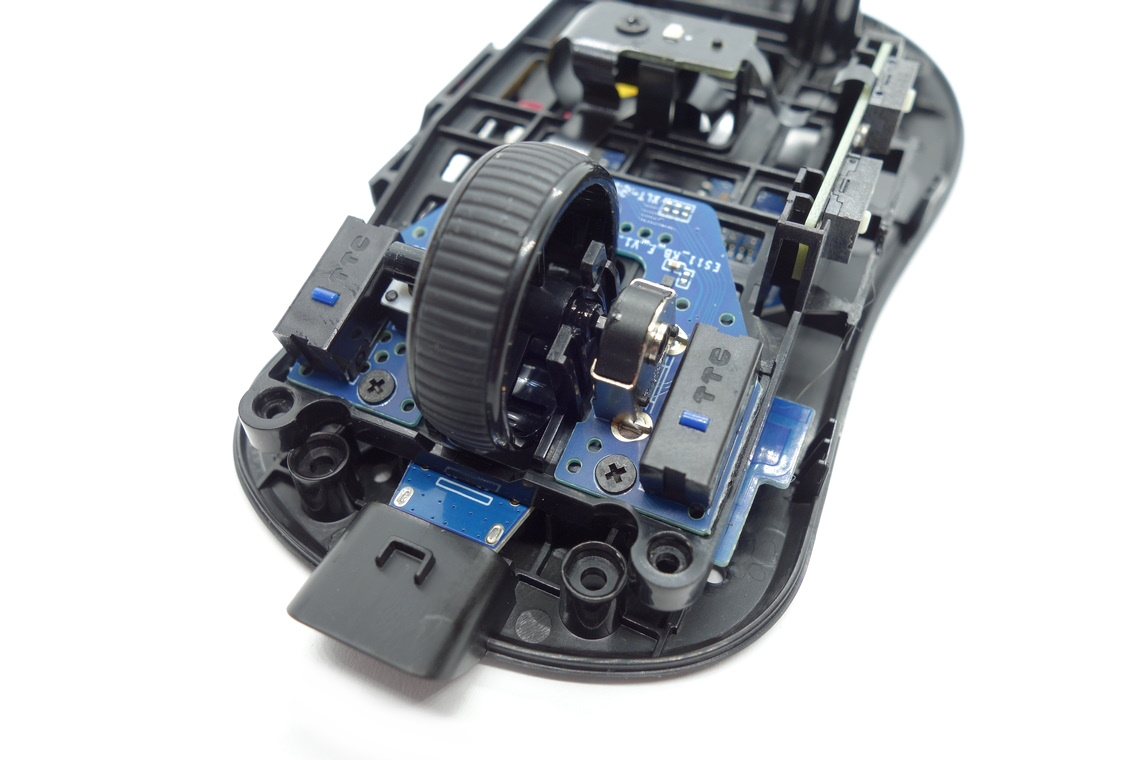
Main buttons on the Leviathan V4 are very good. Both pre- and post-travel are moderate to low, resulting in a firm and snappy button response. Being visually separated from the shell, button movement is low when provoked. Button stiffness is medium. A pair of TTC optical switches (blue plunger, 100 M) are used.

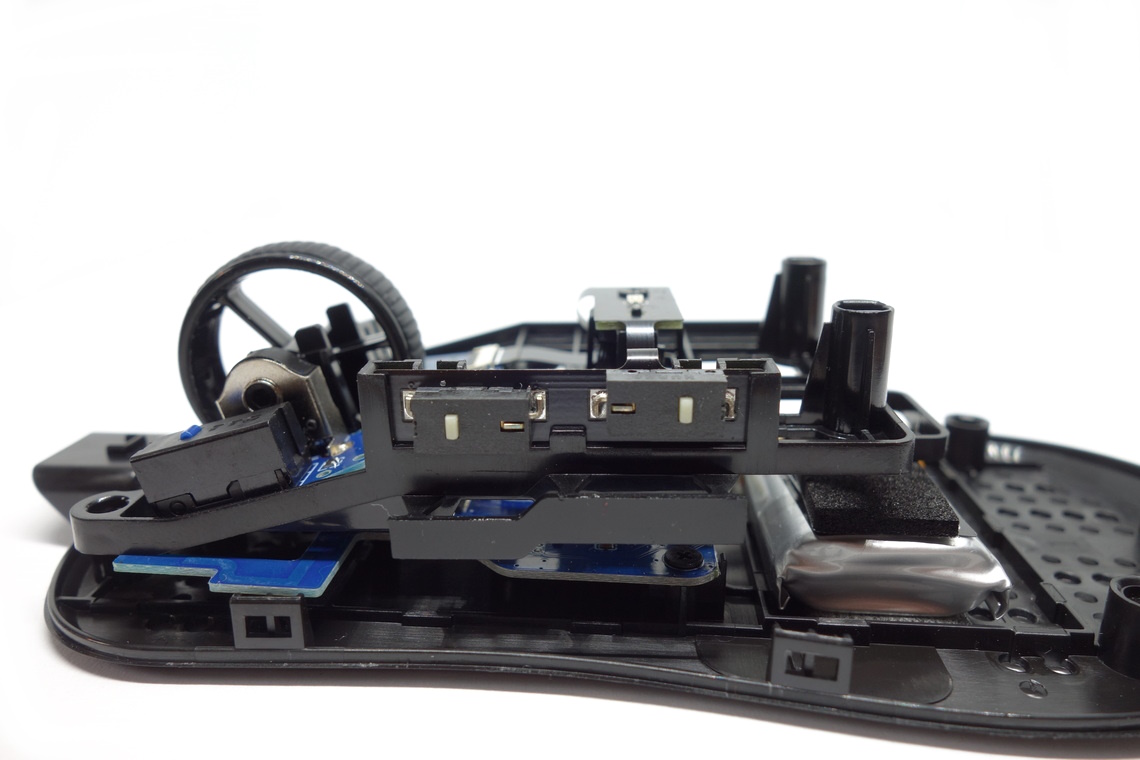
Side buttons are good to very good. Pre- and post-travel are very low, and the actuation point is even across the entirety of these, but feedback is rather muted and soft. Button size and placement are good, as actuation is possible rather easily by rolling one's thumb across. A set of surface-mounted Huano switches (white plunger) are used for these.
At the bottom of the mouse is a button for cycling through the set CPI levels when pressed and for turning the mouse on and off when held, which works fine. A seemingly unbranded tactile switch is used for this one.
Scroll Wheel
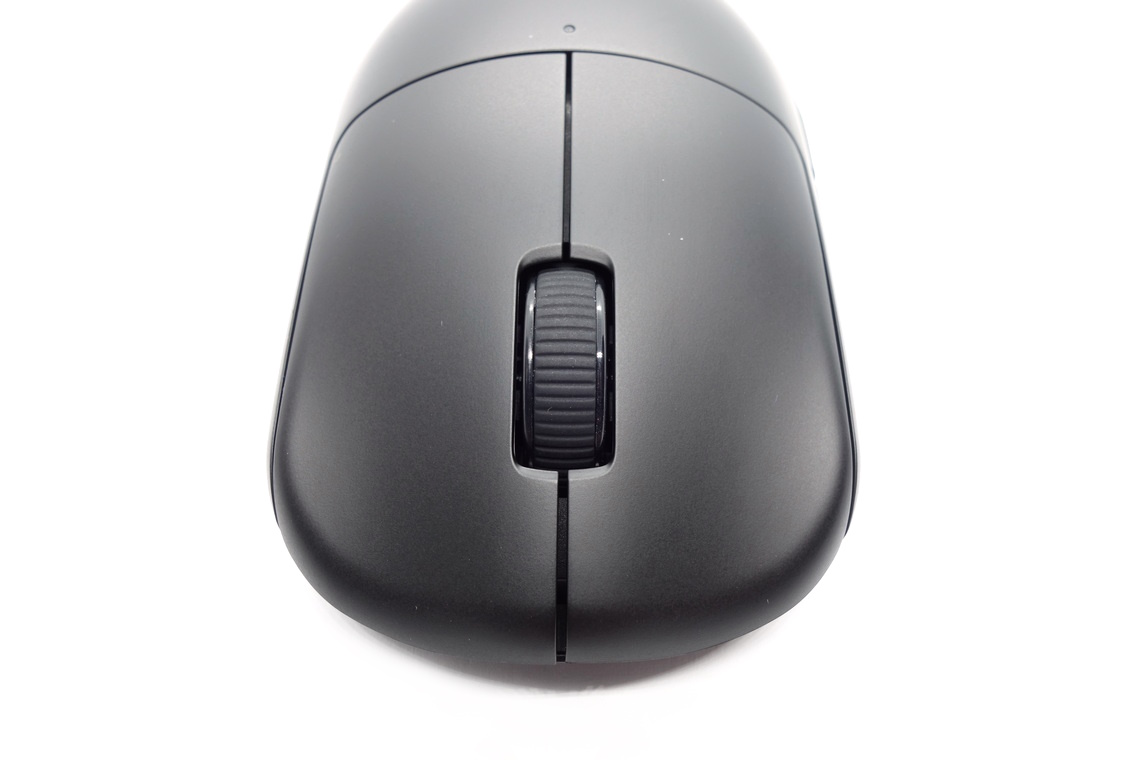
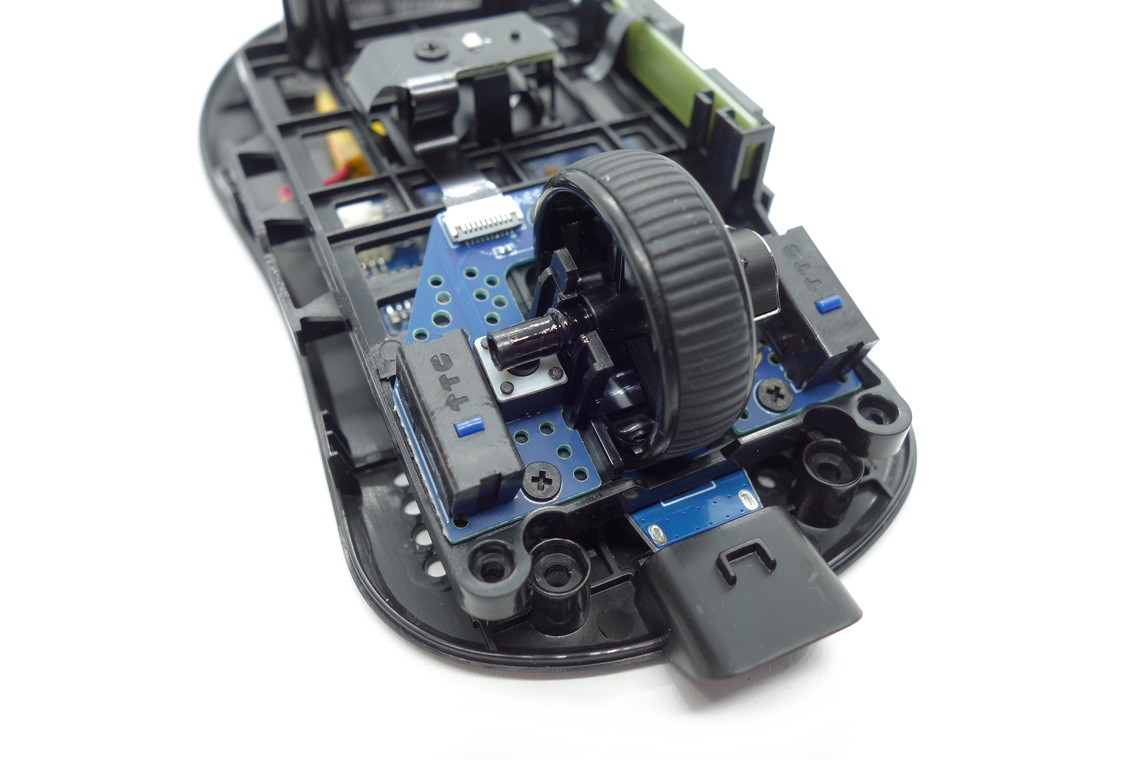
The scroll wheel is good to very good. Scrolling is noisy, whereas tactility is very good, with individual steps having clear separation. The encoder comes from RAESHA (black) and has a height of 7 mm. The middle (scroll wheel) click requires medium to high force for actuation. A seemingly unbranded tactile switch (black plunger) is used for this one.
Surface
The Leviathan V4 has a matte surface all over. Grip is fine, and it doesn't attract fingerprints or dirt too much. It is easy to clean, and there are no signs of wear left after doing so. All in all, excellent materials.Button Sound Test
Disassembly
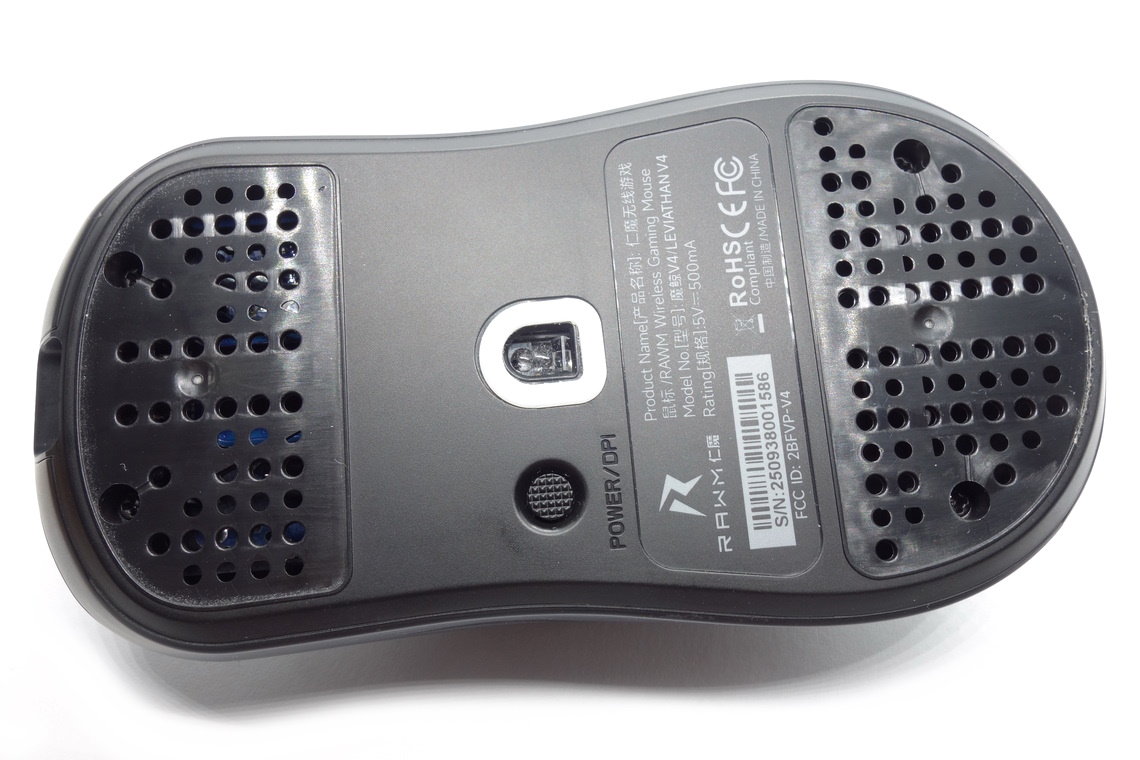
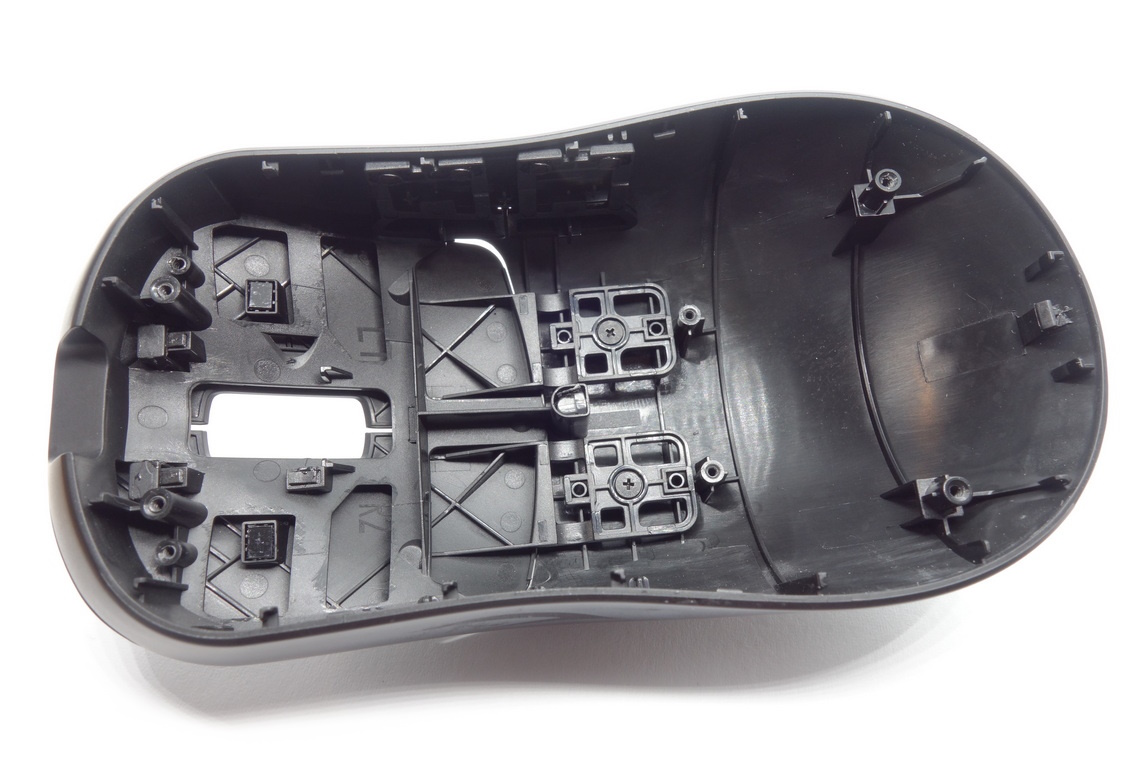
Disassembling the Leviathan V4 is easy. The screws are found beneath the front and rear skates, and after dislodging the five clips arranged around the base, top and bottom shell are easily separated. When doing so, make sure not to rip the cable connecting the two.
The internal design is fairly efficient. The main button switches along with the scroll wheel sit on their own PCB screwed to a plastic assembly in turn screwed to the top shell. Likewise, the side button switches also sit on their own PCB, which is slotted into said plastic assembly. Both of these PCBs are connected to the main PCB through an FFC, which also holds the LED for the top CPI indicator. The main PCB holds the sensor and MCUs, and has been affixed with four screws to the bottom. All PCBs are thin but not particularly compact. The battery sits on a sticky pad at the rear. Two MCUs are used: a Nordic nRF54L15 for wireless communication, whose datasheet can be found here, along with an Artery AT32F405 providing a USB high-speed PHY, whose datasheet can be found here. Production date for the main and main button PCBs is the 34th week of 2025.
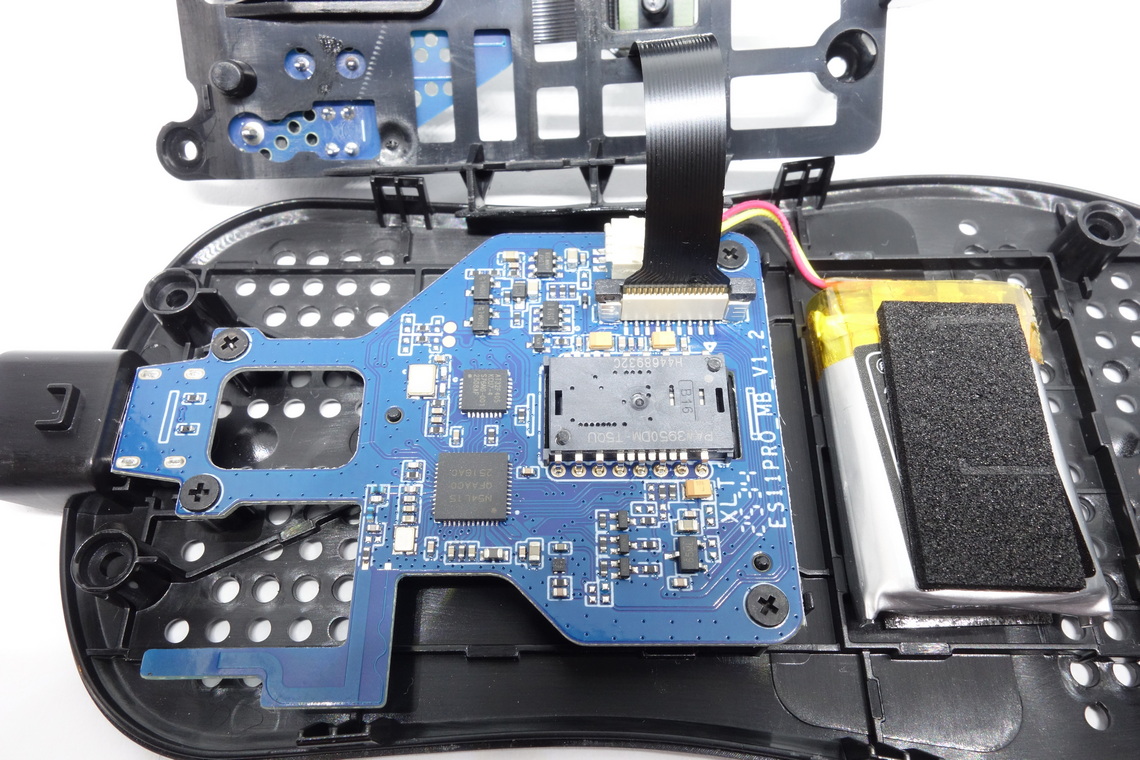
As for the soldering and general quality of the PCB, I'm unable to find any noteworthy flaws.
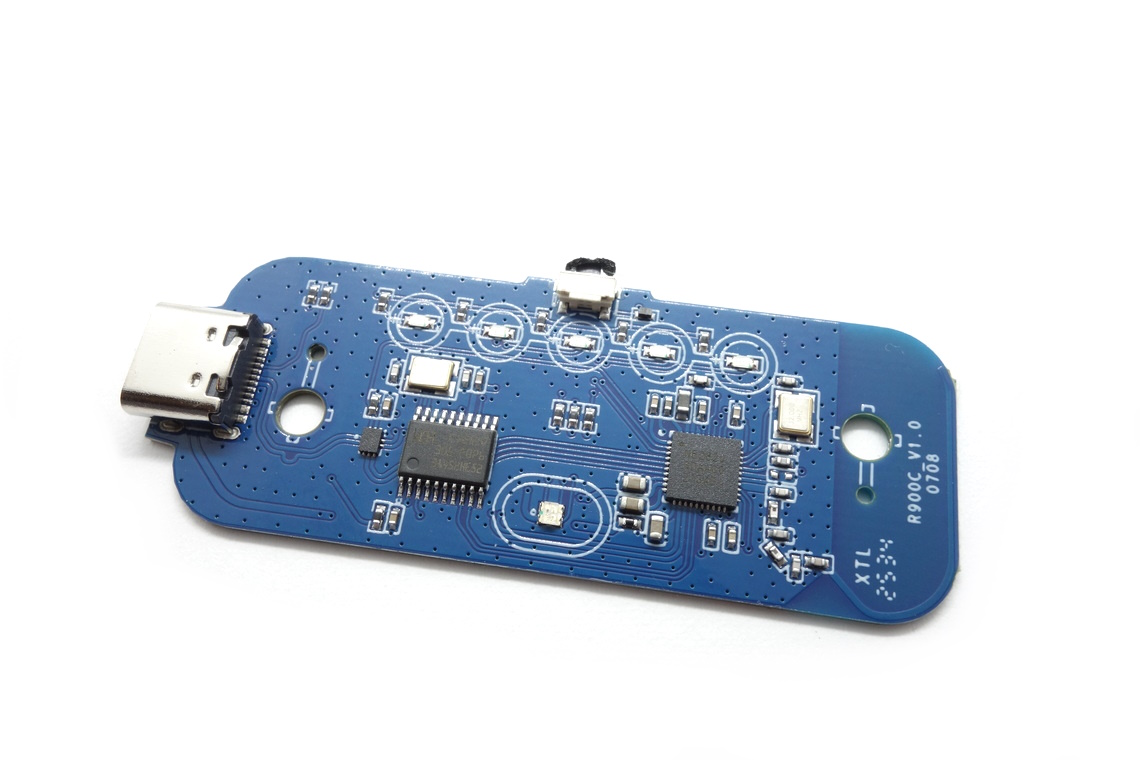
Of note is that the dongle PCB has different MCUs than the mouse PCB: a Nordic nRF52820 for wireless communication, whose datasheet is found here, and a WCH CH32V305 FBP6, whose datasheet is found here. Since the Nordic's 54 series MCU is capable of 4 Mbps wireless, yet the 52 series is not, the efficiency of the former is limited.
Nov 26th, 2026 09:57 CST
change timezone
Latest GPU Drivers
New Forum Posts
- What's your main Black Friday / Cyber Monday purchase? (18)
- Wireless Internet sharing between PC and router both-ways, is it possible? (24)
- Can you guess Which game it is? (366)
- Post your CrystalDiskMark speeds (658)
- Making a game in Godot engine (20)
- X79 and/or rampage IV OC'ing thread for those of us still left.... (2459)
- Exploring Local LLMs: Models, Hardware and Setup Experiences (4)
- Linpack Xtreme Released (513)
- Claude credits purchased on or after Dec. 7 now have an expiry date (20)
- Acer TravelMate P414-51 (i5-1135G7): CPU stuck at x4 / ~200 MHz effective under 100% load, no throttle flags. How to find who's clamping it? (1)
Popular Reviews
- ASRock X870E Challenger Wi-Fi White Review
- VZMORE AX9 Max Review
- Upcoming Hardware Launches 2027 (Updated Nov 2026)
- Microsoft Surface Laptop Ultra Review - The Next-gen Arm Laptop
- AMD Ryzen 7 9800X3D Review - The Best Gaming Processor
- AMD Zen 6 Technical Deep Dive
- Corsair RM1200e (Second Generation) Review
- Phantom Blade Zero Performance Benchmark Review - 35 GPUs Tested
- Montech CyberFlow ARGB 360 Review
- Pulsar Office Tour & First Look at P1 Dual-Sensor Mouse
TPU on YouTube
Controversial News Posts
- Jensen Huang Reinstated as CEO of NVIDIA (585)
- NVIDIA Co-Founder and CEO Jensen Huang Officially Resigns (492)
- Report: Jensen Huang Eyes NVIDIA Comeback (281)
- Open Letter Asking NVIDIA to Reinstate Jensen Huang Passes 115,000 Signatures (184)
- OpenAI CEO Argues Home PCs Waste the World's Limited DRAM Supply (152)
- NVIDIA Launches Investigation Into Jensen Huang's Relationship With Suspected Chinese Spy (136)
- Intel "Raptor Lake Next" 16-Core and 20-Core CPUs Surface (130)
- Intel Razor Lake Gets a 12 P-Core bLLC Chip With No E-Cores, Per Leak (94)