 2
Resident Evil Requiem Handheld Performance Review
(2 Comments) »Introduction
Almost five years after the last Resident Evil game (Resident Evil Village), it's time for a new entry in the series. Resident Evil Requiem is finally here, featuring two main protagonists: a newcomer, Grace Ashcroft, and Leon S. Kennedy, who we haven't seen in a new mainline Resident Evil game since 2012's Resident Evil 6.The two get more or less the same amount of screen time, with Grace's portions of the game playing like a classic survival horror, while Leon's missions play out more like high-octane third-person action in the vein of Resident Evil 4 Remake.
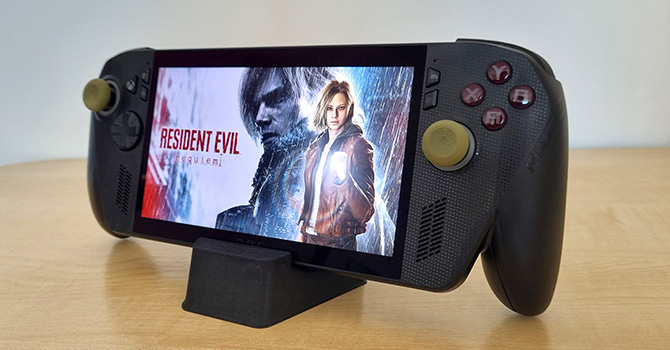
This is yet another game built on Capcom's RE Engine, which has been the go-to Resident Evil engine since 2017 and Resident Evil 6. Aside from support for ray and path tracing, the latest iteration of RE Engine includes a bespoke hair strand system, enabling physics-based individual hair rendering. Players on PC have access to two major upscalers (DLSS and FSR, including FSR 4 via driver override) and can use frame generation solutions alongside them.
Our handheld performance review will test how Resident Evil Requiem performs across a range of popular PC handhelds, including Steam Deck, ASUS ROG Xbox Ally X, ASUS ROG Ally X, and ASUS ROG Ally and will also provide optimized settings for these handhelds.
Screenshots
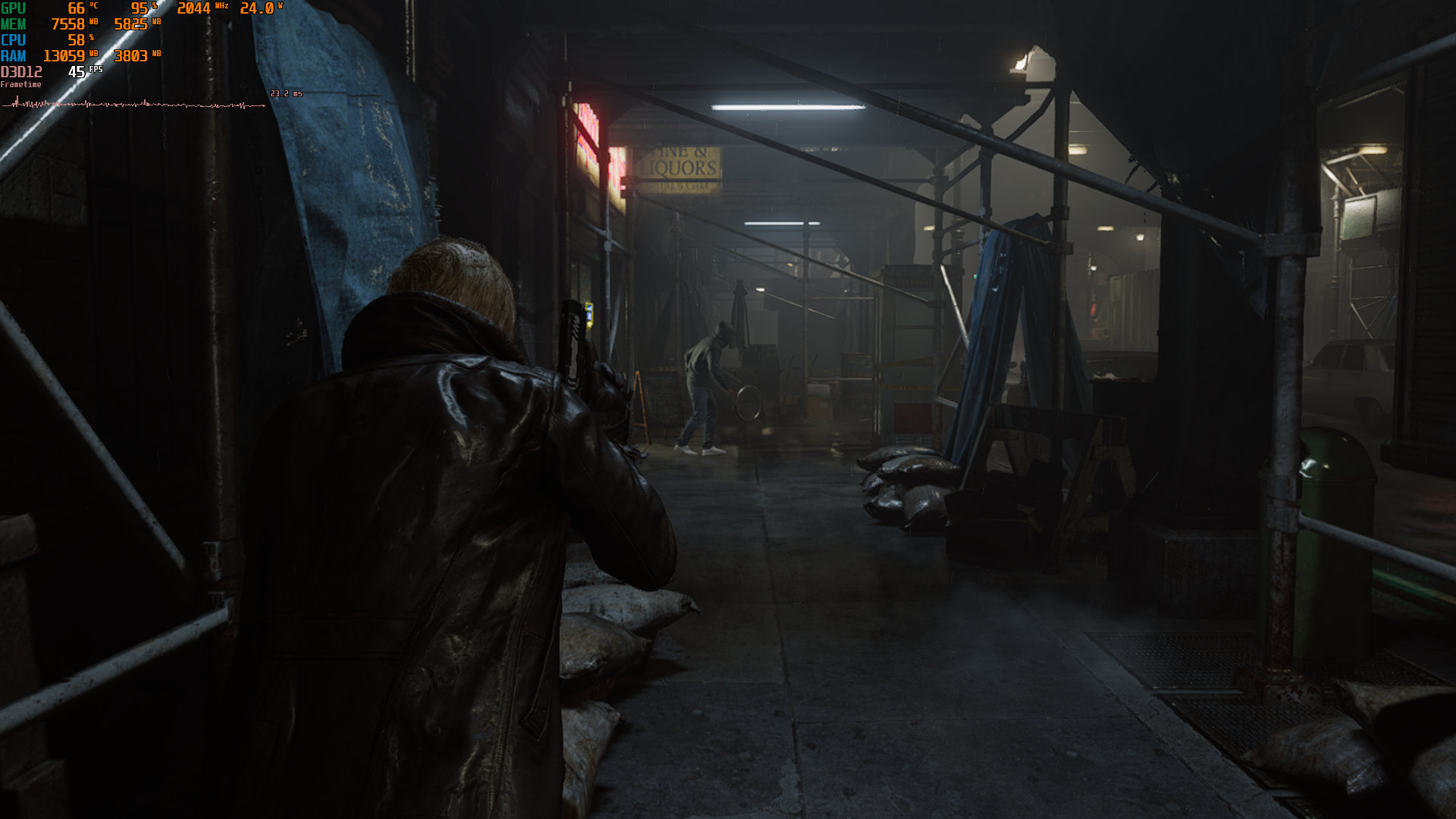
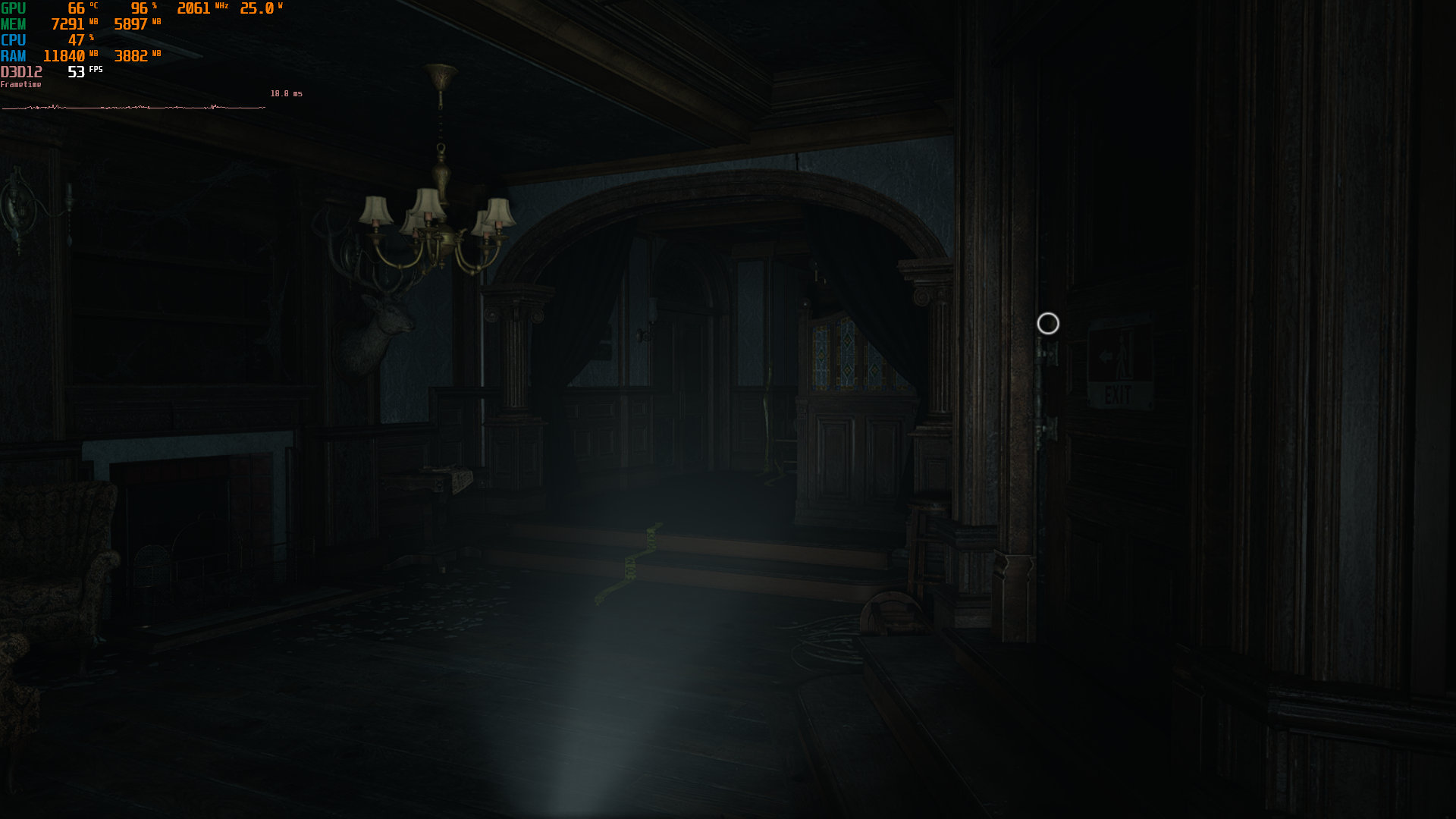
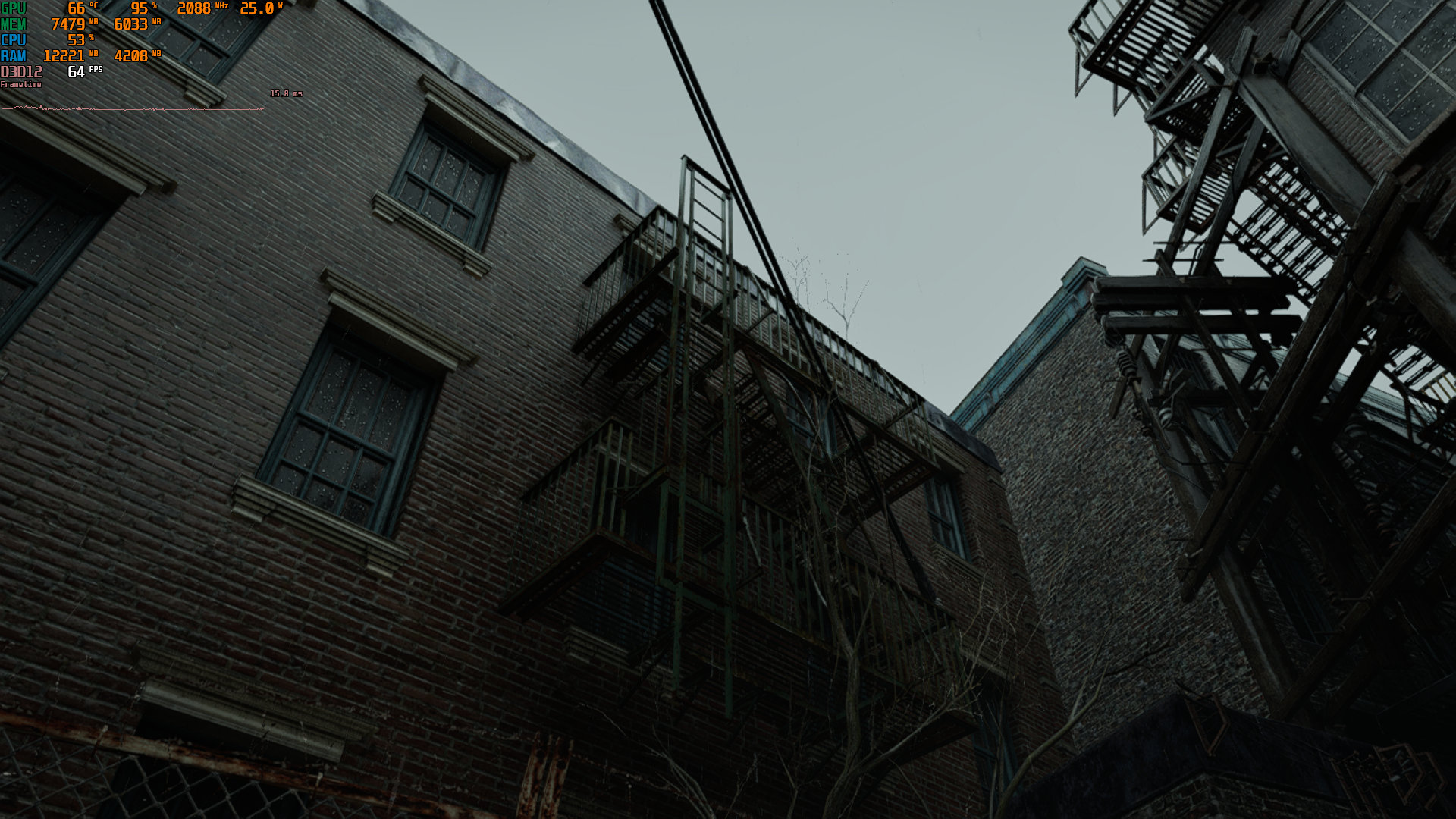
All screenshots were taken on an ASUS ROG Xbox Ally X (native 900p) and Steam Deck LCD (native 720p) with our optimized settings applied. To see the game at max settings, check out our Resident Evil Requiem PC performance benchmark review. You can navigate the gallery with cursor keys.ROG Xbox Ally X Screenshots



































































Our Patreon Silver Supporters can read articles in single-page format.
Nov 14th, 2026 17:54 CST
change timezone
Latest GPU Drivers
New Forum Posts
- X79 and/or rampage IV OC'ing thread for those of us still left.... (2451)
- Can you guess Which game it is? (317)
- What can the FX 8320 do today? Here is the answer. (43)
- Ryzen 7 8700G OC (8)
- auto-closed by somethings by actions (2)
- [Community Benchmark] MrH OpenCL Benchmark 2.0e (Windows Only – CPU & GPU) (2)
- Show us your collections thread!! (368)
- Recent hardware you've donated? (30)
- WarpCoreBench scores! (32)
- Id thank you and just like a moment of your time, what do you think about having to recover the r36s maxes/pros is it just china 5 dollar junk card? (0)
Popular Reviews
- AMD Zen 6 Technical Deep Dive
- ASUS ROG Strix B850-I Gaming Wi-Fi7 W Review
- Corsair HX1000i Shift Crystal Review
- NZXT C1200 Platinum Review
- Upcoming Hardware Launches 2027 (Updated Nov 2026)
- Montech King 95 3D PRO Review
- NZXT H7 RGB+ Review
- NZXT H5 Review
- Phantom Blade Zero Performance Benchmark Review - 35 GPUs Tested
- XPG NIMBUS PLUS Review - Mid-range Chair With Strong Competitors
TPU on YouTube
Controversial News Posts
- NVIDIA Co-Founder and CEO Jensen Huang Officially Resigns (405)
- OpenAI CEO Argues Home PCs Waste the World's Limited DRAM Supply (152)
- NVIDIA Launches Investigation Into Jensen Huang's Relationship With Suspected Chinese Spy (136)
- Intel "Raptor Lake Next" 16-Core and 20-Core CPUs Surface (130)
- Legendary Game Studio BioWare Shuts Down Following EA Layoffs (104)
- Dell CEO Says the Memory Shortage Will Get Worse in 2027 (95)
- NVIDIA GeForce RTX 50-Series Scheduled for up to $500 Price Hike This Week (89)
- Modder Fits RTX 5090 With Four 8-Pin Connectors, Halving Current per Wire (80)