 0
TOPPING ArpegEar Hane In-Ear Monitors Review
Value & Conclusion »Fit and Comfort
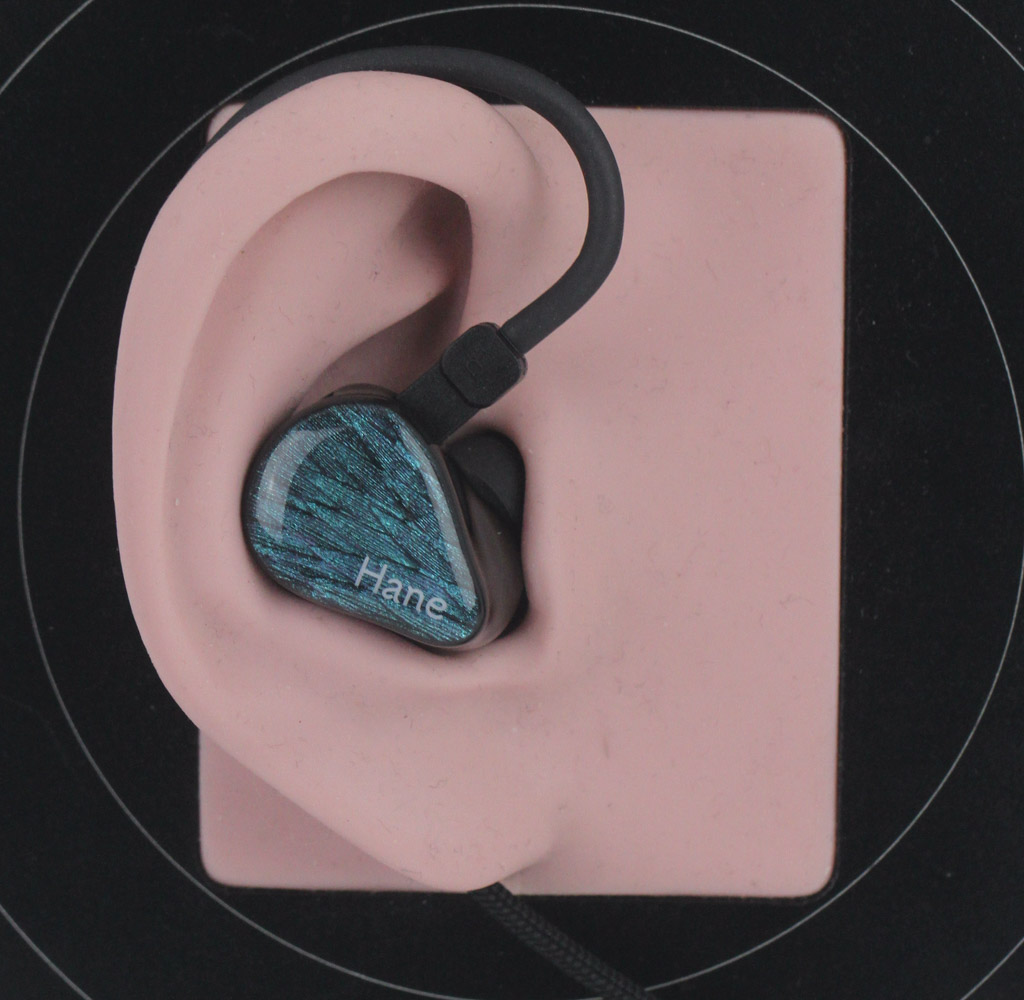
Seen above is the right channel of the ArpegEar Hane placed into an artificial ear mold with the included size M black bore silicone ear tip installed. I have average-sized ears, and the ear mold above represents my own experiences well enough as a proxy. Size M silicone tips are my go-to for testing, since foam tips are not included by some brands, and I found these tips to work plenty fine in terms of achieving a consistent seal as well as measuring how I hear the IEMs too. The relatively smaller size of the shells means they fit nicely in the concha, and now you can position the nozzle better to allow for good passive isolation in the ear canals. This in turn contributes to a good fit and seal, which is crucial to achieve the listening experience that the company intends you get. The relatively lower density from the plastic resin also means there is minimal physical fatigue, and the average-sized nozzle is welcome in an age of massive IEMs. One thing to note is that the pre-formed ear hooks in the cable may not work well out of the box. If so, you can use a hair dryer to gently re-shape the ear hooks to better fit around and over your ears. You can also replace the cable with one that you find is more supple and memory-prone, if you so desire. The shells have no direct vent from what I can see, although I did not notice built-up pressure in the ear canals over time.
Audio Performance
Audio Hardware
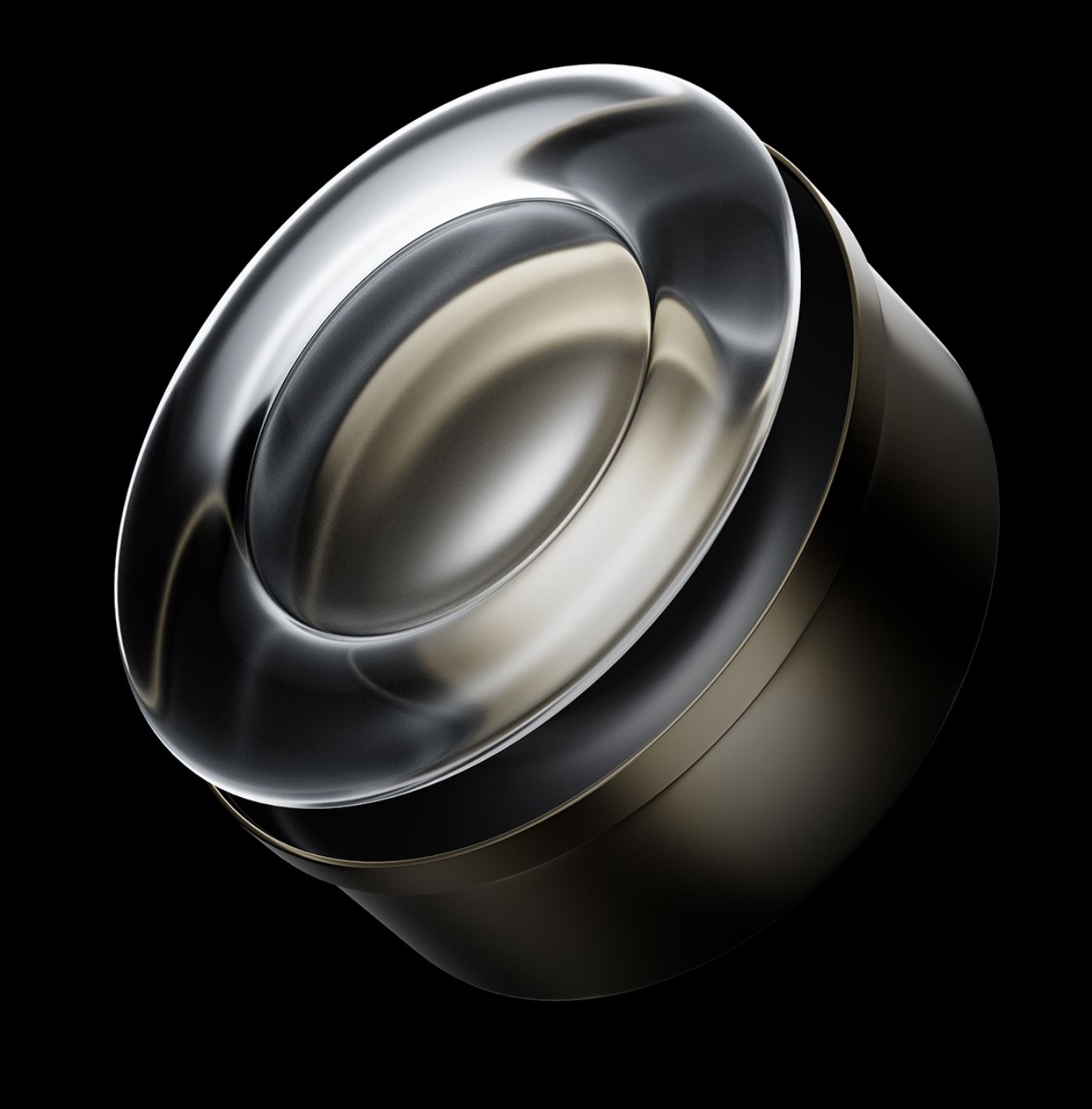
The Hane is a single dynamic driver set of IEMs, which in itself is nothing new. In fact, these are probably the most commonly seen IEMs in the consumer market today, with single balanced armature driver IEMs being more common in the professional market, as well as in hearing aids. In this case, ArpegEar is using a 10 mm diaphragm that has DLC (diamond-like carbon) composition for increased stiffness and response compared to the likes of mylar. ArpegEar claims this also helps extend the frequency response and dynamic range, but that remains to be seen. We saw the tuning switches in use as well, but what really makes the Hane different from the norm is the adoption of a higher impedance voice coil. IEMs tend to go with low impedance and relatively high sensitivity to make them easy to drive off just about anything. The Hane is ultimately not that different if you have a decent portable DAC/amp, however the 80 Ω impedance here is more analogous to over-ear headphones. It can help reduce signal noise if you have a good source, and also now introduces the potential of using portable tube amps/DAPs if you wish to.
Frequency Measurement and Listening
I will mention that I have a general preference for a warm-neutral signature with a slightly elevated bass, smooth treble range, detailed mids, and good tonal separation. I also generally prefer instrumental music over vocals, with favored genres including jazz and classical music.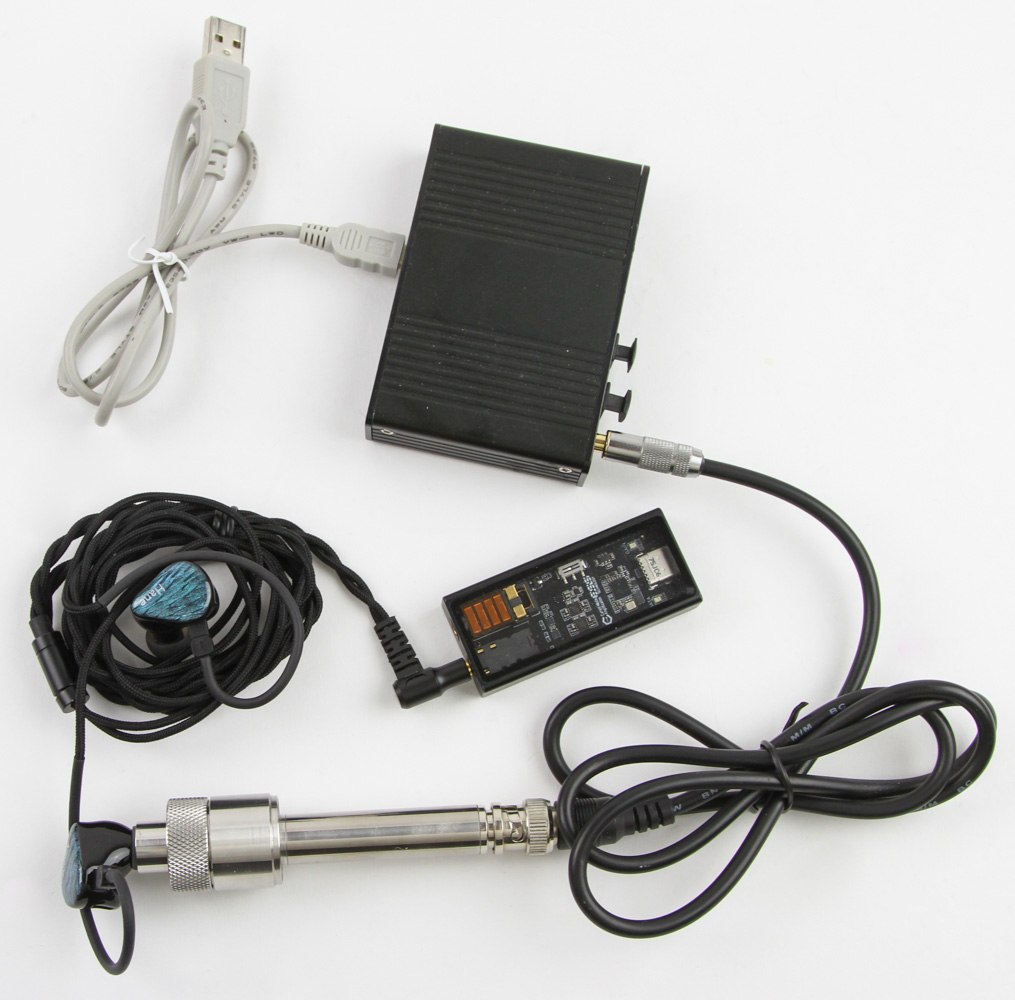
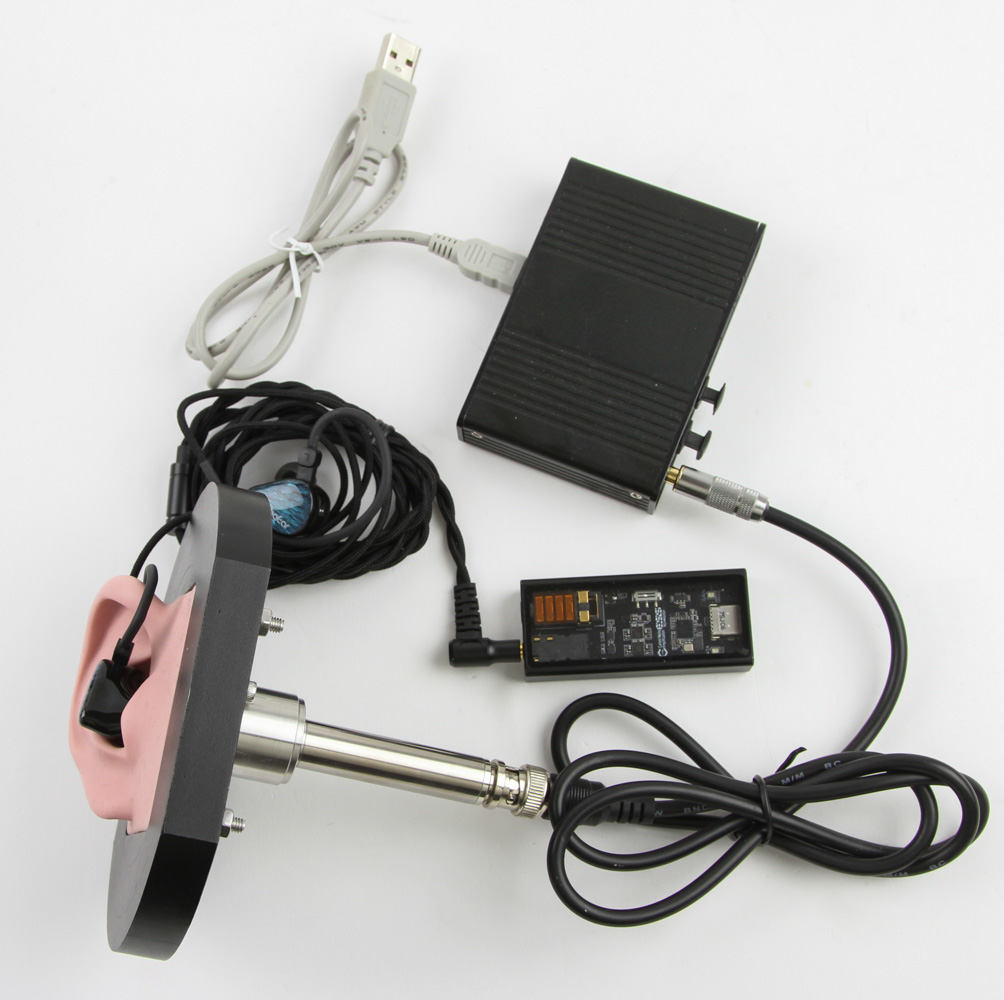
Our reproducible testing methodology begins with a calibrated IEC711 audio coupler/artificial ear that IEMs can feed into enough for decent isolation. The audio coupler feeds into a USB sound card, which in turn goes to a laptop that has ARTA and REW running and the earphones connected to the laptop through a capable and transparent DAC/amp—I used the Questyle M15 here. I begin with an impulse measurement to test for signal fidelity, calibrate the sound card and channel output, account for floor noise, and finally test the frequency response of each channel separately. Octave smoothing is at the 1/12th setting, which nets a good balance of detail and noise not being identified as useful data. Also, the default tuning was used for testing, and no app-based settings were chosen unless specifically mentioned. Each sample of interest is tested thrice with separate mounts to account for any fit issues, and an average is taken of the three individual measurements for statistical accuracy. For IEMs, I am also using the appropriate ear mold fitted to the audio coupler for a separate test to compare how the IEMs fare when installed in a pinna geometry instead of just the audio coupler. The raw data is then exported from REW and plotted in OriginPro for easier comparison.
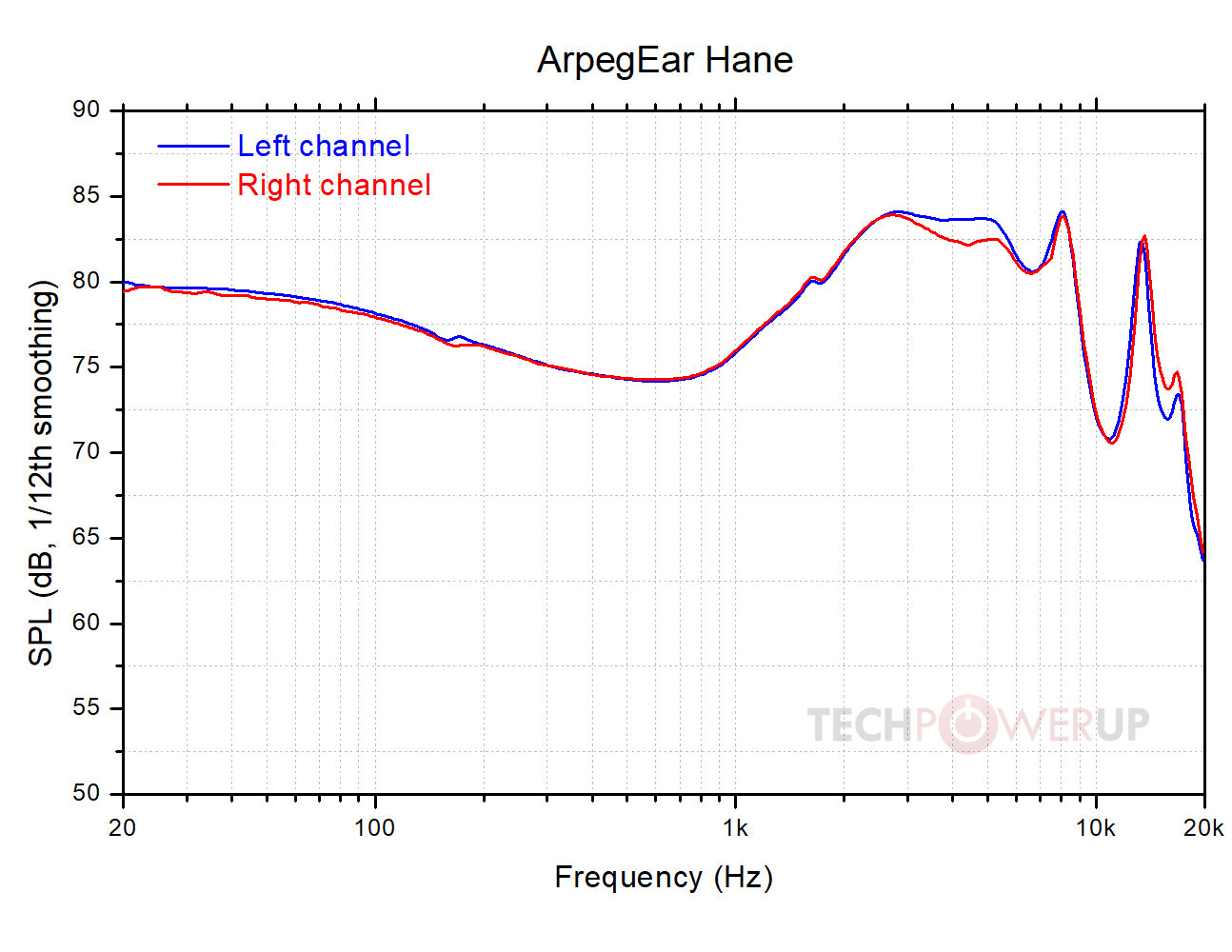
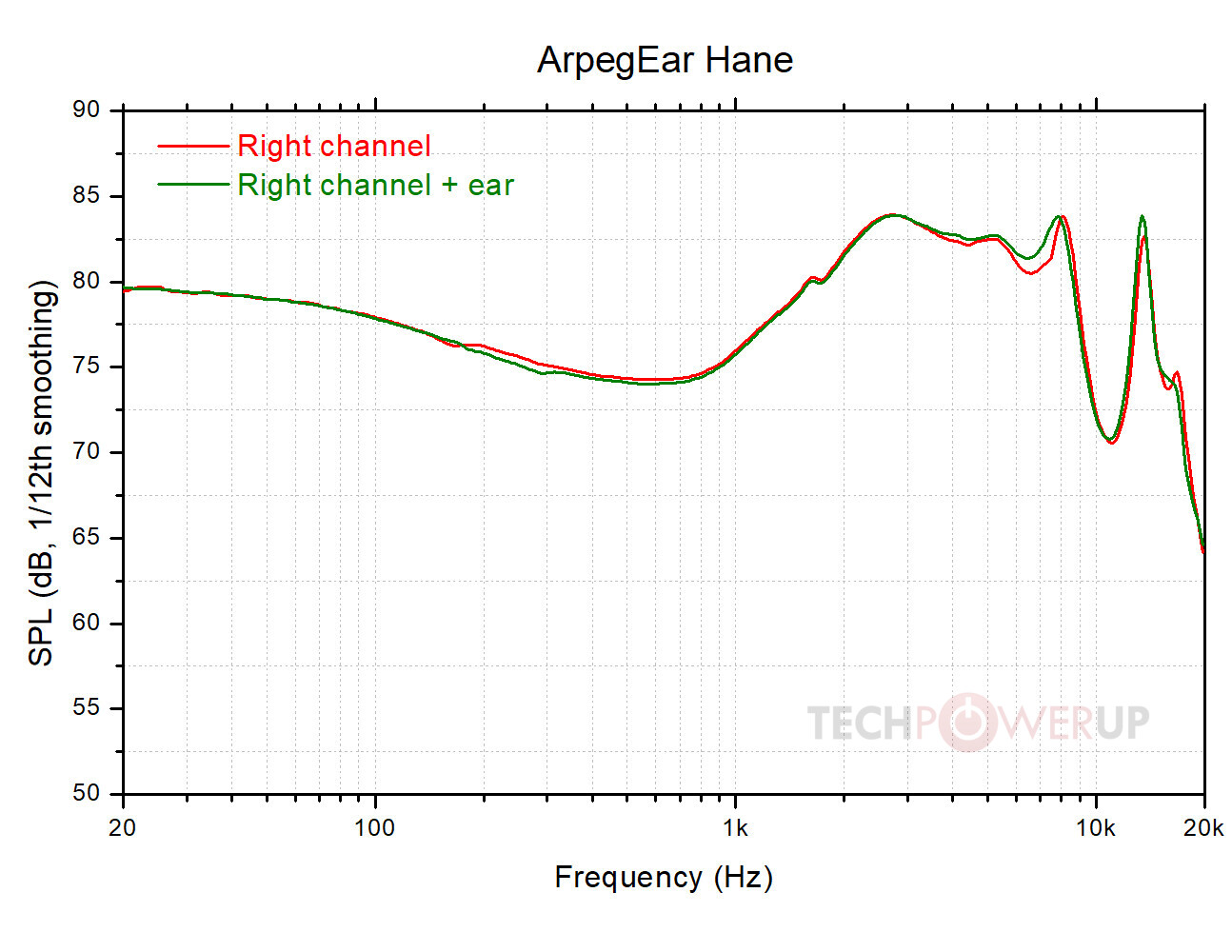
The IEC711 is such that you can't really compare these results with most other test setups, especially those using a head and torso simulator (HATS). The raw dB numbers are also quite contingent on the set volume, gain levels, and sensitivity of the system. What is more useful information is how the left and right channels work across the rated frequency response in the ArpegEar Hane. The left channel was separately tested from the right one, and colored differently for contrast. I did my best to ensure an identical fit for both inside the IEC711 orifice, so note how the two channels are quite close to each other throughout the frequency range, differing in the lower treble that itself can be affected by matching the resonance peak at 8 kHz, past which where the coupler is not the most reliable anyway. I can't say I perceived channel imbalance in my ears, and I've seen better channel matching from other products of course, yet there was nothing here to merit a complaint beyond simply pointing it out. Measurements taken after 50 hours of testing, which included these playing a mix of various songs as well as white or pink noise and sine sweeps, showed no difference. There was no perceived burn-in effect thus, and none was measurable, either. The response with the anthropomorphic pinna in place matched the ideal scenario in the coupler exceptionally well, and this is more an indicator of how well the IEMs can fit in a human-shaped ear, or at least one that doesn't complain about discomfort.
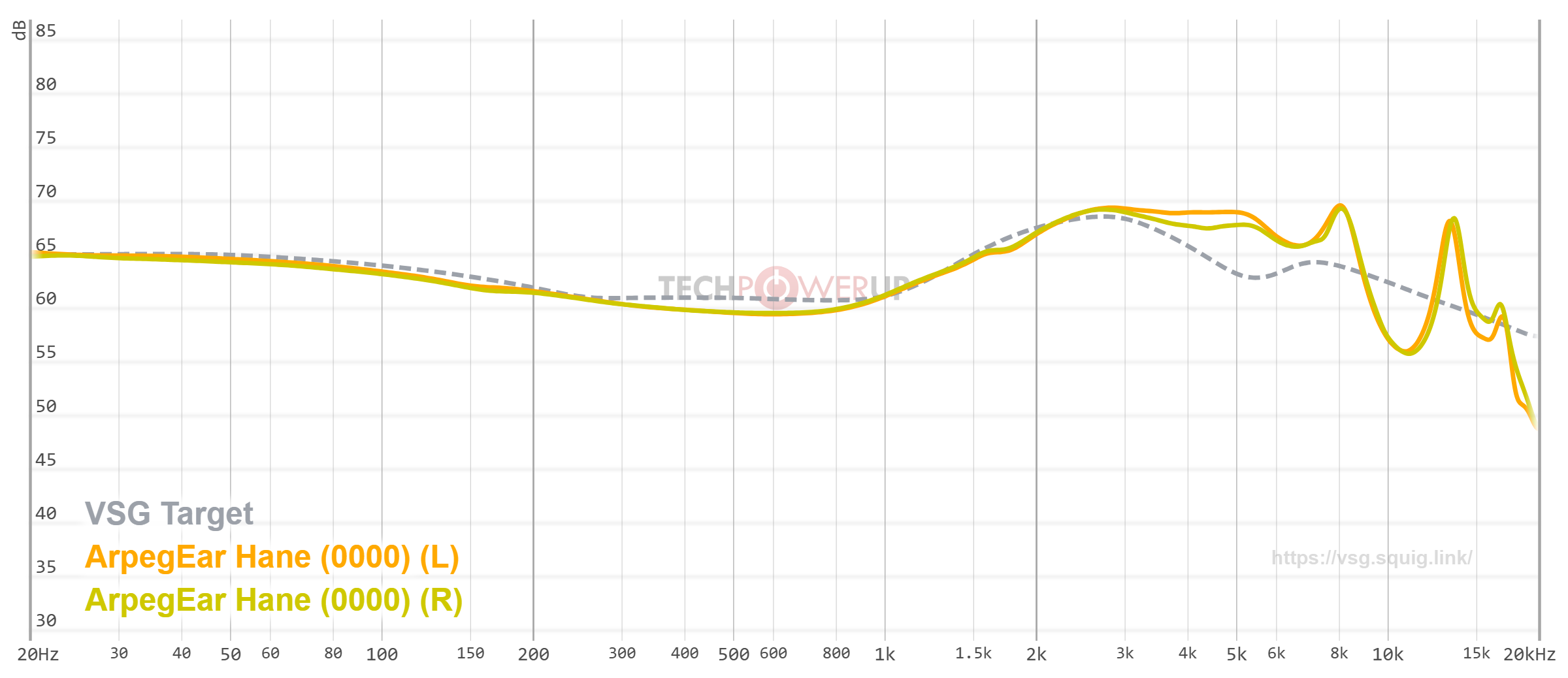
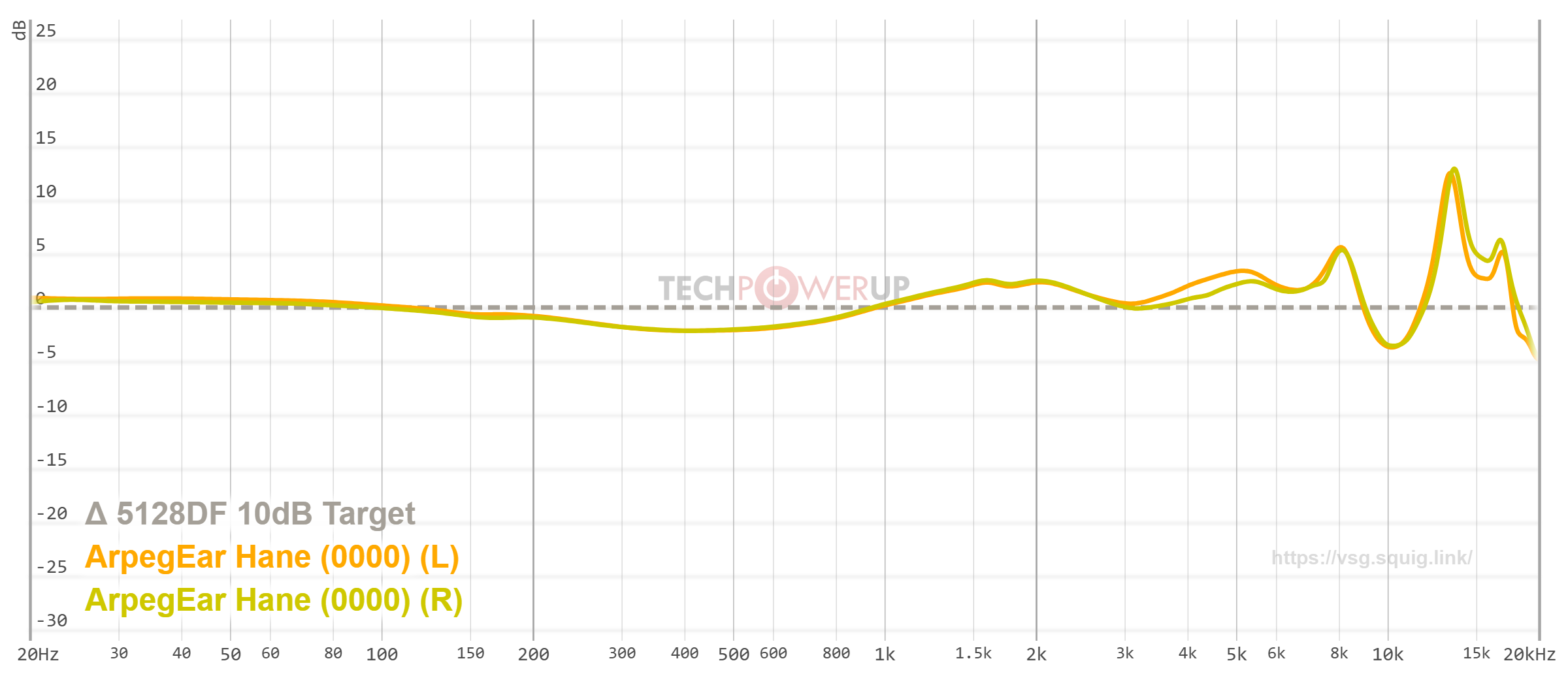
Here is the average frequency response for both channels of the ArpegEar Hane plotted against my personal target taken from VSG.squig.link, which also gives you an idea of my personal preferences to better correlate any possible biases. The tuning of a set of headphones or earphones does not have to match my target as long as it is tuned with some direction, makes sense, and is executed well. After all, no one set will appeal to everyone, and having different options is what makes this hobby so interesting and hard to quantify. This is in addition to a second graph using a newer target that's based on a more scientific methodology involving a -10 dB tilt (-1 dB/octave) applied to the diffuse field target for the newer, more reliable B&K 5128 but then compensated for my exact 711 coupler instead. Do scroll down to the targets in my database linked above and see the new 5128 section to the left where you can click on the yellow question mark for a brief primer. The bottom line is this target is closer to what many people are likely to prefer out of IEMs and headphones alike. I have chosen to plot this graph with the frequency response normalized/compensated to the target to make it easier to see how the Hane is tuned—neutral-bright, maybe light on the bass for some people and with a sharper treble response that accentuates it. However, this is but one of several options on hand.
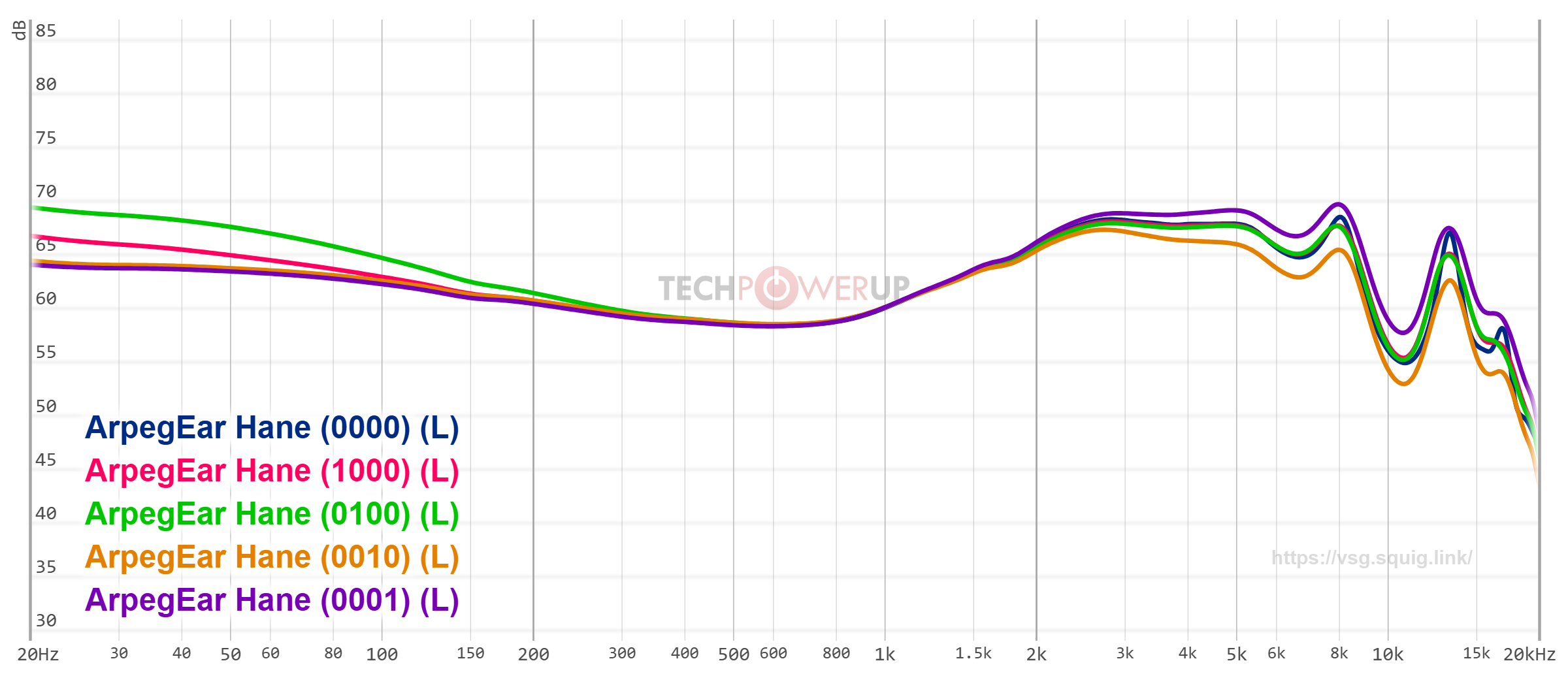
The reason I had the previous graphs with (0000) added in the name is to refer to the position of the four tuning switches on offer, with 0 being off and 1 being on. The Hane allows the end user to tweak the bass (and lower mids) and treble within a few dB up and down, and also change the tonal balance from the default neutral-bright to something more bassy, or even more forward in the treble depending on your preference. The frequency response can be effectively tilted based on your preference to where—while it's not as customizable as using parametric EQ—the Hane ends up being more than just one set of IEMs with one sound signature. This makes it hard to quantify in terms of what people will prefer, too. There are a total of 16 such tonalities thus, and my personal preference was 1010 that added slightly more sub-bass while also cutting down on what I perceived was a sharp and fatiguing treble out of the box. Those who prefer more bass might want to try 0100 or 1100, which does get the Hane rumbling.
So while tonally there are plenty of options, from a subjective point of view the Hane is decent, but not groundbreaking by any means. The treble is still going to be a potential annoyance purely because of how the Hane handles transient responses, with cymbals and triangles being the notable examples for their higher order harmonics. The silver lining is it helps provide an illusion of a larger sense of space here, and keeping the treble as-is might also create a sense of increased detail retrieval enough though careful discerning suggests otherwise. The Hane feels better suited for vocal-centric tracks than instrumental ones, especially the likes of orchestral recordings because imaging isn't super precise beyond the front and immediate sides.
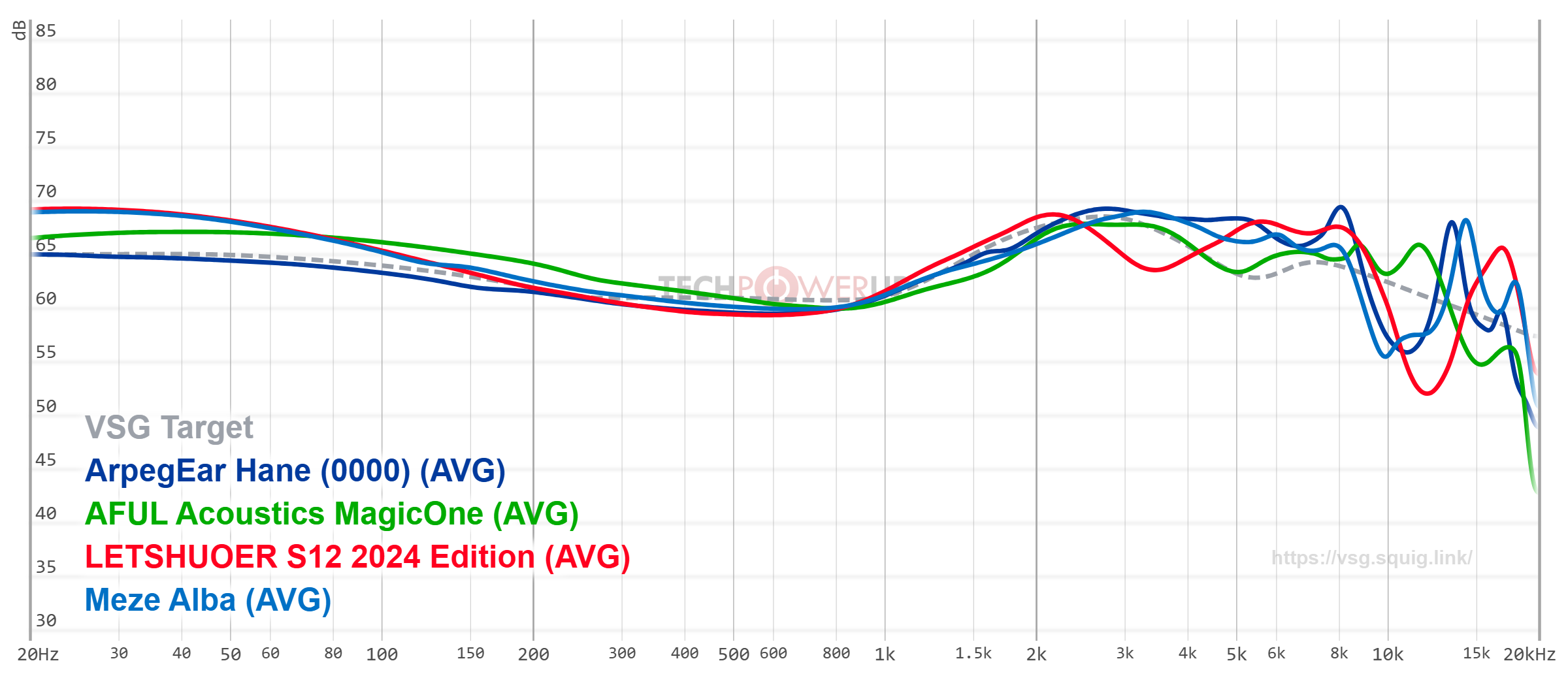
The ArpegEar Hane uses a single dynamic driver as previously mentioned, and we have certainly covered our fair share of such IEMs from $10 to nearly $1000, with some of the market that go far beyond too. The Hane is priced higher than your typical single DD sets from more popular Chinese audio brands, and I'd argue that if you just prefer a single tuning that's close to the default one (0000) here, then just go with one of those—the MOONDROP Aria 2, for example. Thanks to its tuning switches and higher impedance voice coil, the Hane offers a slightly more novel take and that also comes at a cost. The AFUL MagicOne is a single BA driver set that uses some of the cool engineering tech we saw in the AFUL P5 and then adds a Helmholtz resonator to give you some of the best bass without a dynamic driver inside. It's small and extremely comfortable too, and costs the same as the Hane. Tonally, I prefer the MagicOne out of the box and I'd even argue the two compete head on in the more subjective parameters. It's again the tuning switches on the Hane that help give it an edge here. Then there's also the now sold-out LETSHUOER S12 2024, an update to the original S12 which was a big hit when it launched over two years ago. The older S12 had the trademark hot treble response that all those single planar magnetic IEMs from that time exhibited, although LETSHUOER seems to have figured out how to dampen the driver, with the new S12 being a lot tamer. Perhaps too tame, if you are a lover of pop music and/or female vocals, in which case the Hane might well be to your liking. Go outside China and now you have the likes of Meze Audio with the Alba, giving you a single DD set in a fancier, yet perhaps not as future-proof, shell and providing a USB dongle with it. The Hane can actually be made to sound and measure very similar to the Alba with its switches, and I would not be surprised with the latter used components from a similar factory as what TOPPING sourced from for the Hane. Both sets have similar resolution, with the Hane winning on soundstage and the Alba handling layering better. I found the Alba to be more comfortable over longer listening sessions and it does have better accessories too.
Nov 16th, 2026 13:43 CST
change timezone
Latest GPU Drivers
New Forum Posts
- How much does an RTX 5090 cost in your area? (66)
- Without Jensen, PC gaming will be (14)
- TPU's Nostalgic Hardware Club (22166)
- Honestly, do you care about GTA VI? (72)
- CMP170HX turned to A100 using voltage glitching and fuse reprogramming (0)
- What phone you use as your daily driver? And, a discussion of them. (2447)
- Current Sales, Bundles, Giveaways (10447)
- I don’t know been building “by hand” for years and we at the point where “Server Quality” is mentioned, is this the future of it or will it continue? (42)
- What are you playing? (26226)
- Meeting point of those who broke their GPUs. Please share what GPUs you've burned, shattered, ionized or melted accidentally. (41)
Popular Reviews
- ASUS ROG Strix B850-I Gaming Wi-Fi7 W Review
- Corsair HX1000i Shift Crystal Review
- AMD Zen 6 Technical Deep Dive
- Acemagic Retro X3 Review
- Upcoming Hardware Launches 2027 (Updated Nov 2026)
- Montech King 95 3D PRO Review
- NZXT C1200 Platinum Review
- Phantom Blade Zero Performance Benchmark Review - 35 GPUs Tested
- AMD Ryzen 7 9800X3D Review - The Best Gaming Processor
- NZXT H7 RGB+ Review
TPU on YouTube
Controversial News Posts
- NVIDIA Co-Founder and CEO Jensen Huang Officially Resigns (431)
- Open Letter Asking NVIDIA to Reinstate Jensen Huang Passes 115,000 Signatures (184)
- OpenAI CEO Argues Home PCs Waste the World's Limited DRAM Supply (152)
- NVIDIA Launches Investigation Into Jensen Huang's Relationship With Suspected Chinese Spy (136)
- Intel "Raptor Lake Next" 16-Core and 20-Core CPUs Surface (130)
- Legendary Game Studio BioWare Shuts Down Following EA Layoffs (104)
- Report: Jensen Huang Eyes NVIDIA Comeback (100)
- Dell CEO Says the Memory Shortage Will Get Worse in 2027 (95)